-
-
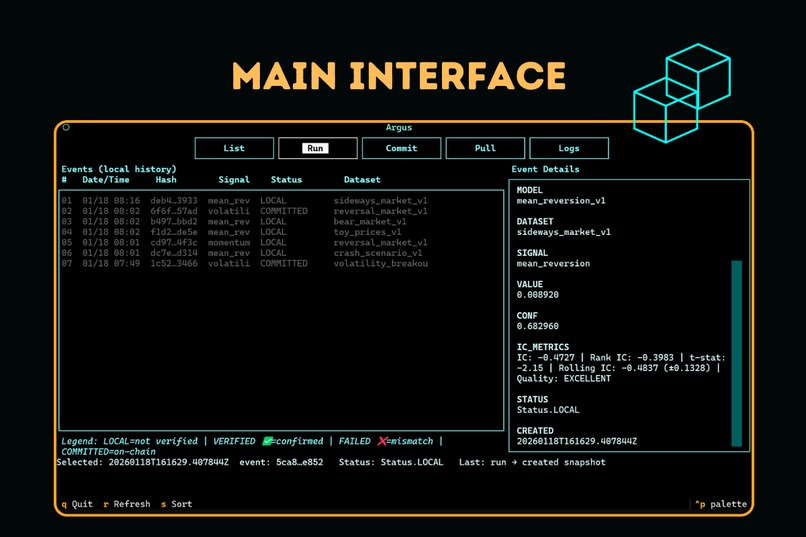
Main Page
-
-
-
-
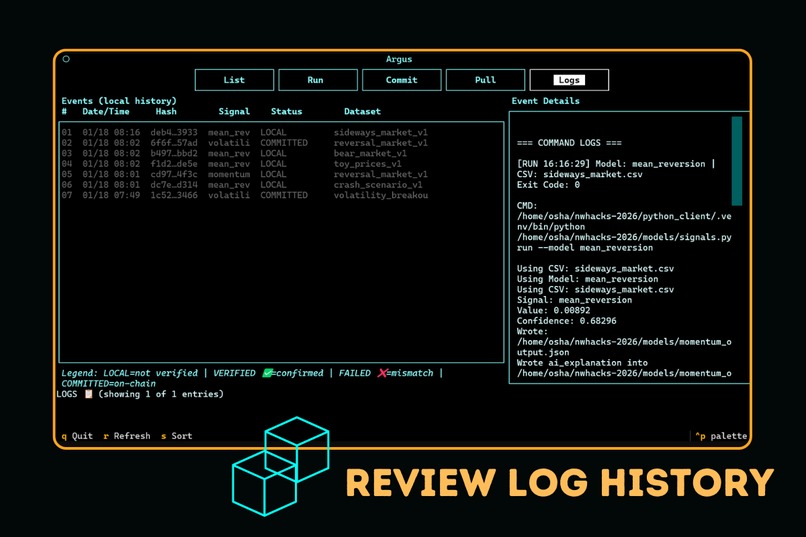
Log History
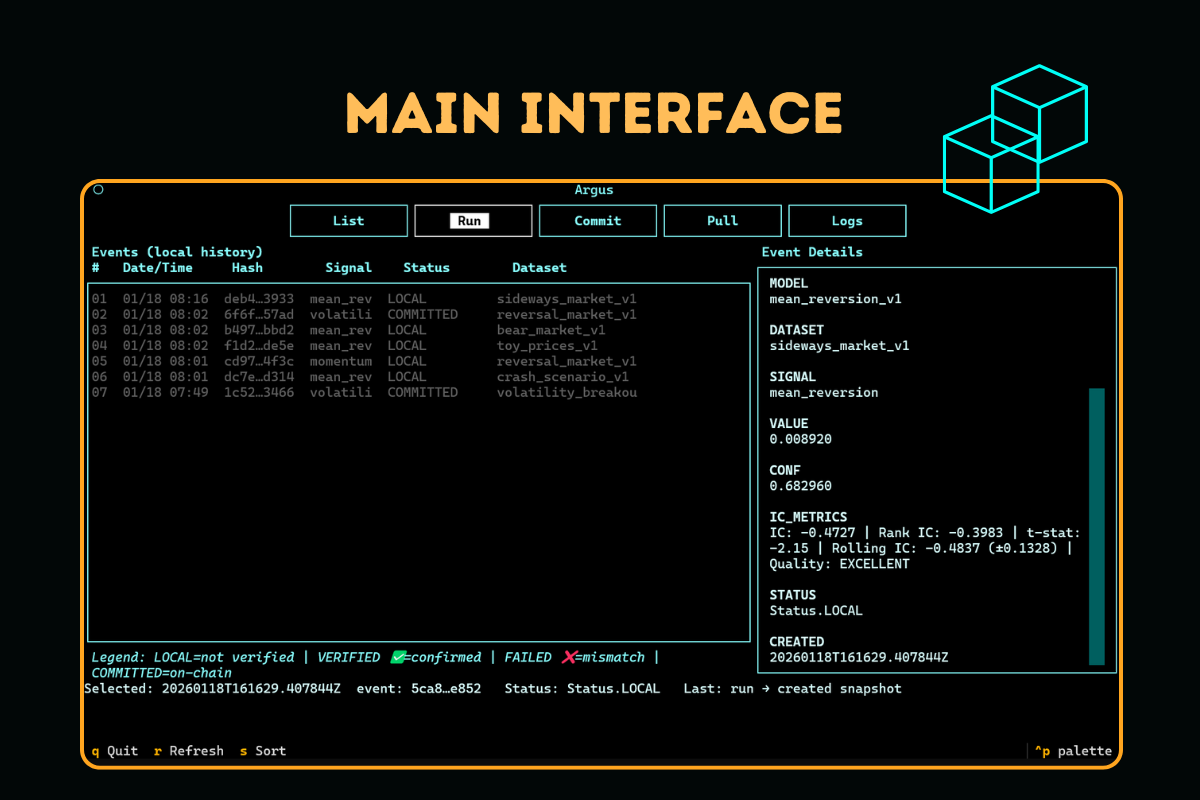
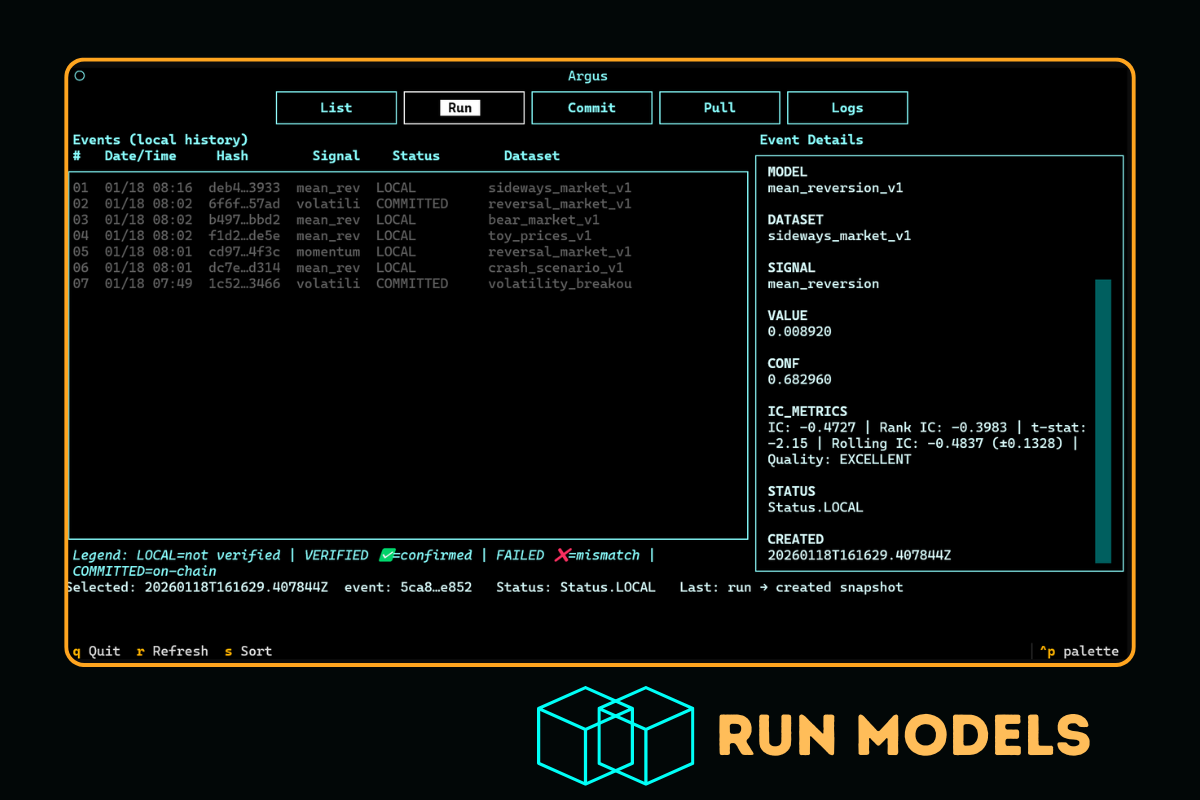
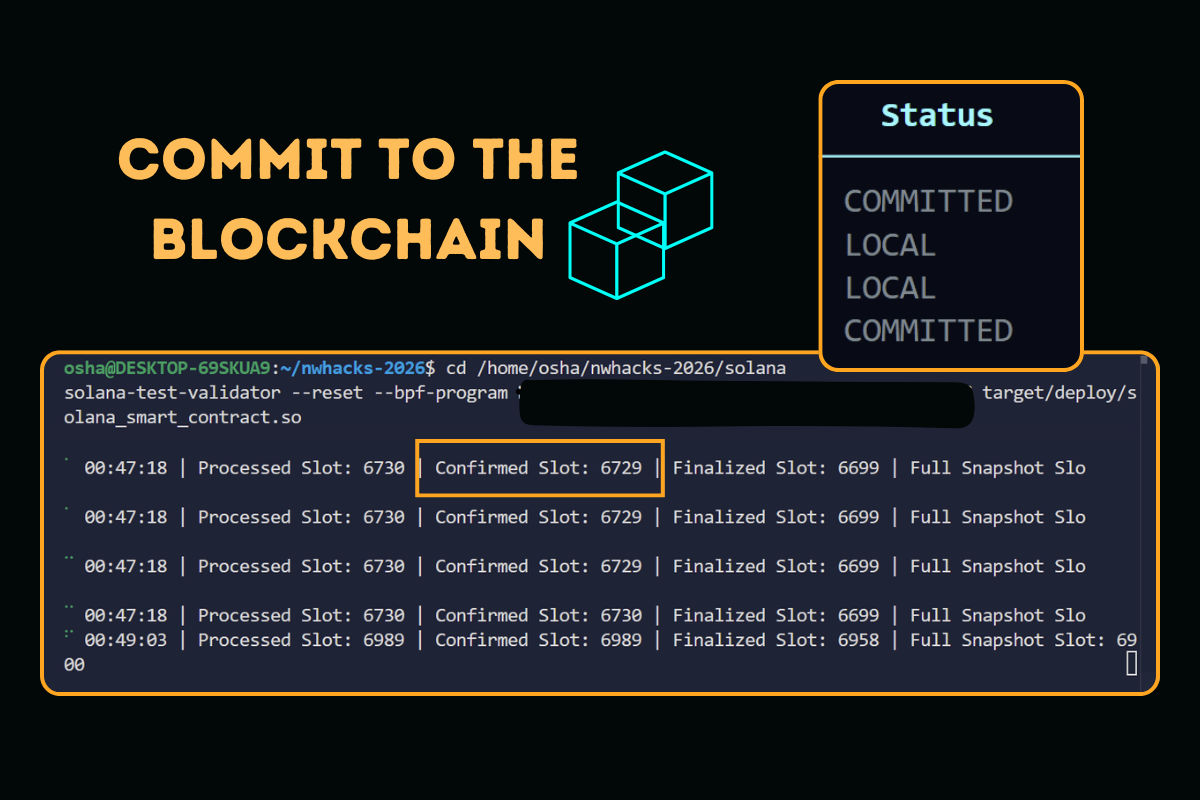
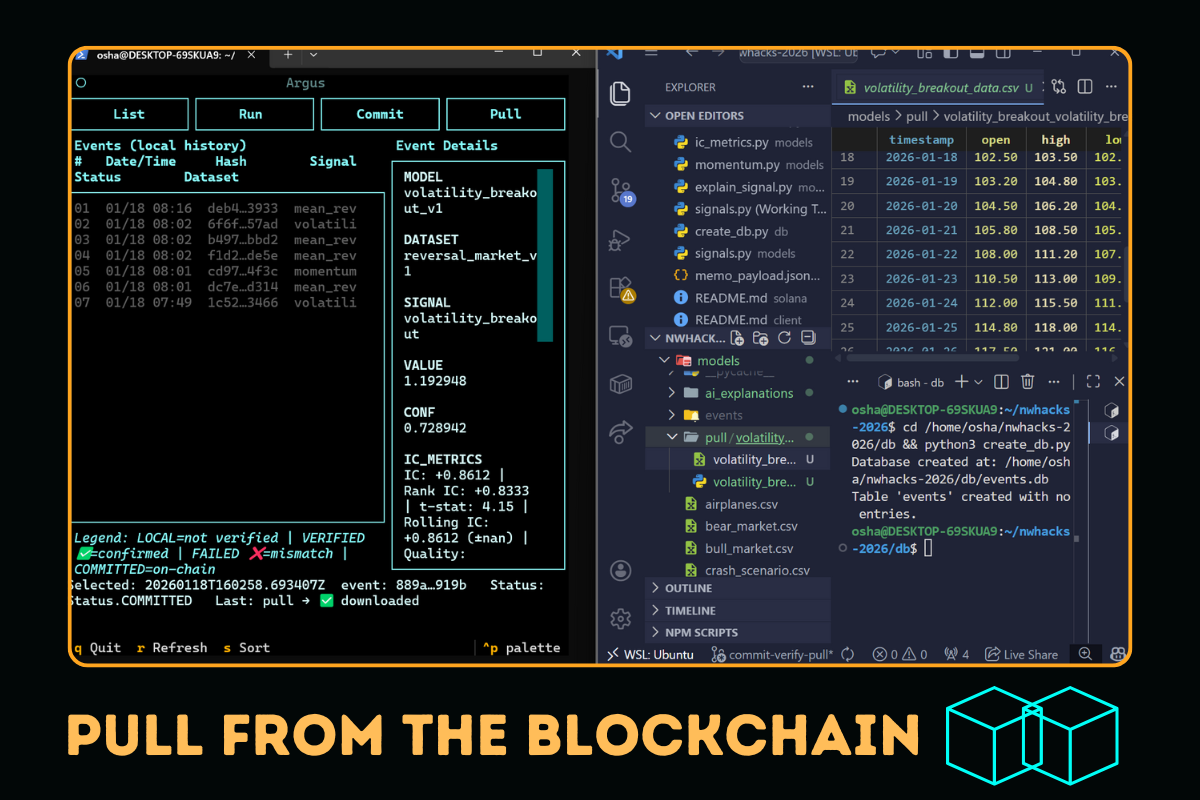
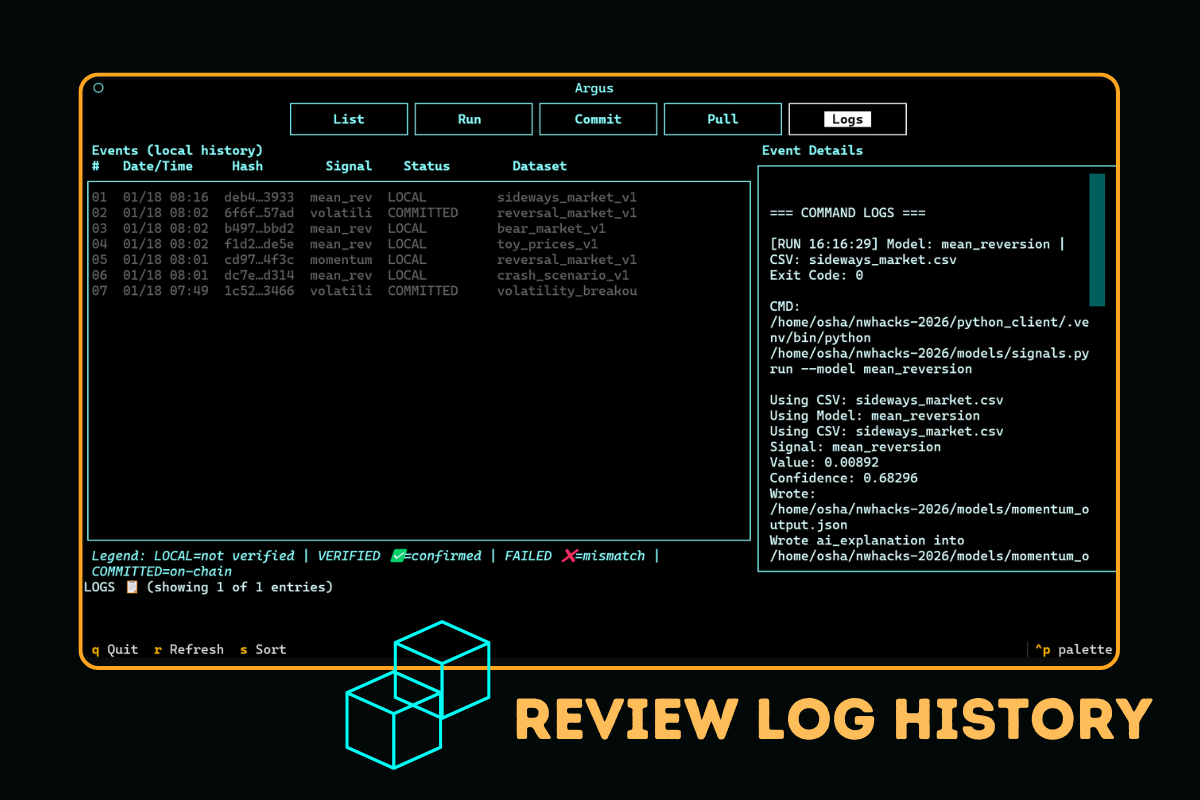
Inspiration
We attended the Connor, Clark & Lunn Investment Management panel session and realized that the Data and Research team often has to go through many iterations of figuring out what signals align best with the actual datasets. What we realized is that figuring out that in-between such rapid iterations of various models and datasets to confirm signals from hypothesis, many-a-times quant researchers would have to maintain multiple tools to track Information Coefficient (IC), Rank IC (Spearman) and IC t-stat across various runs, with ever changing datasets and models, whose data isn't accurately targeted by Git because it lies solely on the static code of the datasets and models but does not give us the ability to have a birds'-eye view of various signals and experiments and the corresponding static artifacts with it.
What it does
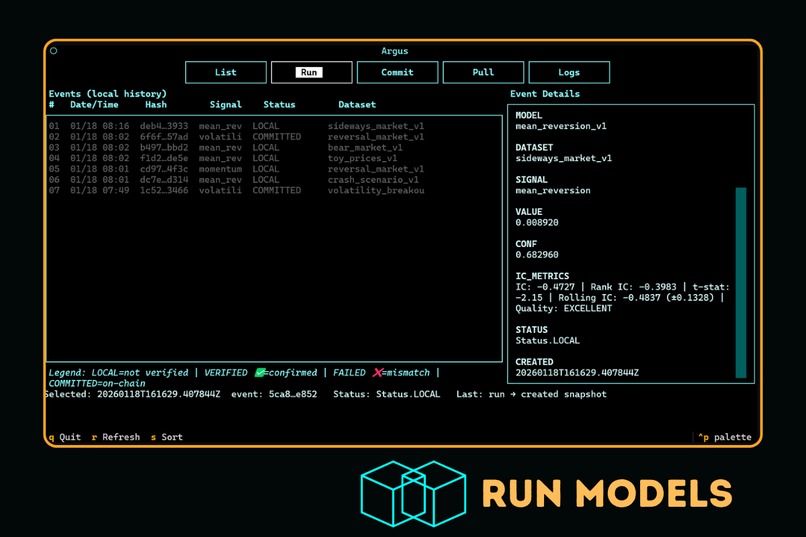
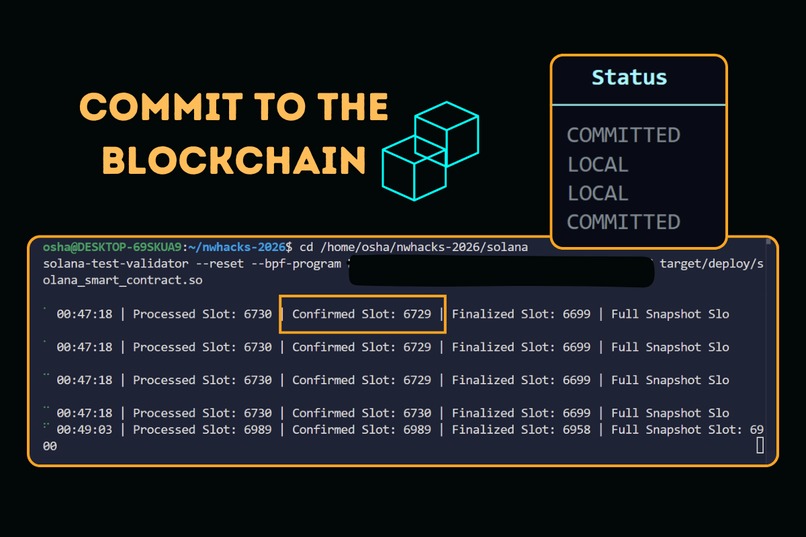
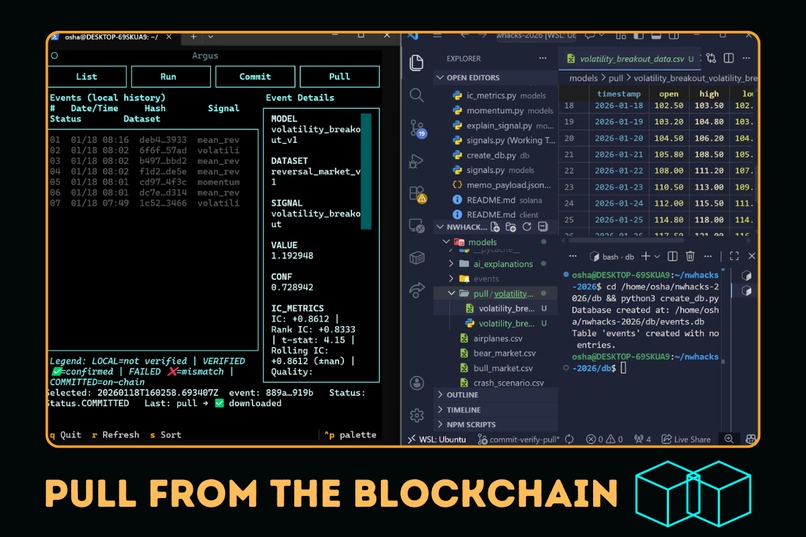
Argus is a dev tool that integrates models/dataset workflows with seamless and secure versioning - designed for quant researchers. It achieves this by utilizing the hashes of all your saved (committed) runs on the Solana Blockchain using custom Smart Contracts written in Rust, and allows you to effectively store and query the relevant models/datasets based on this.
How we built it
We used Rust for the Smart Contracts on Solana, Python and Textual for the frontend and middleware, Gemini AI API to effectively summarize the model run and the dataset and the relevant metrics, sqlite DB for local record strorage, and Vultr for scalable long term cloud storage of datasets/models.
Challenges we ran into
- First time using Solana
- Connecting frontend TUI with backend to ensure commands work in the terminal
Accomplishments that we're proud of
- Getting the Smart Contract working (version conflicts were a pain)
- Learning Quantitative Finance
- (locking in to finish the project)
- committing to the grind!
What we learned
- Terminals are cool ;)
- Blockchains are not just for cryptocurrency.
What's next for Argus
- We intend to build a native Jupyter Notebook integration to the project so that fits directly into the workflows for many Quantitative Researchers.


Log in or sign up for Devpost to join the conversation.