-
-
HEX 01 LABS / ARGUS
-
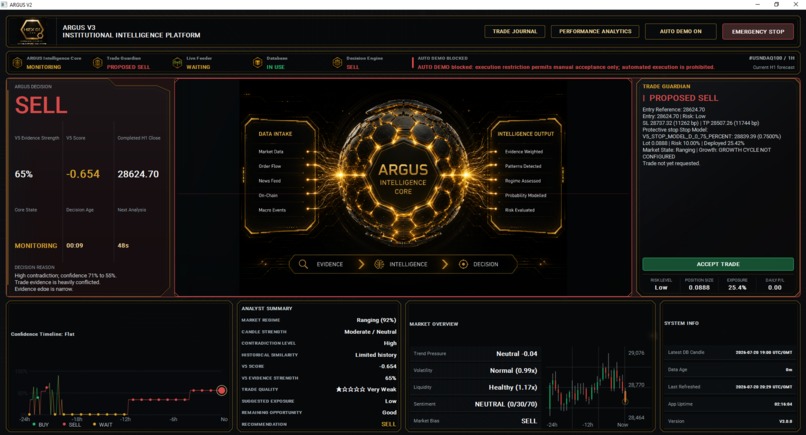
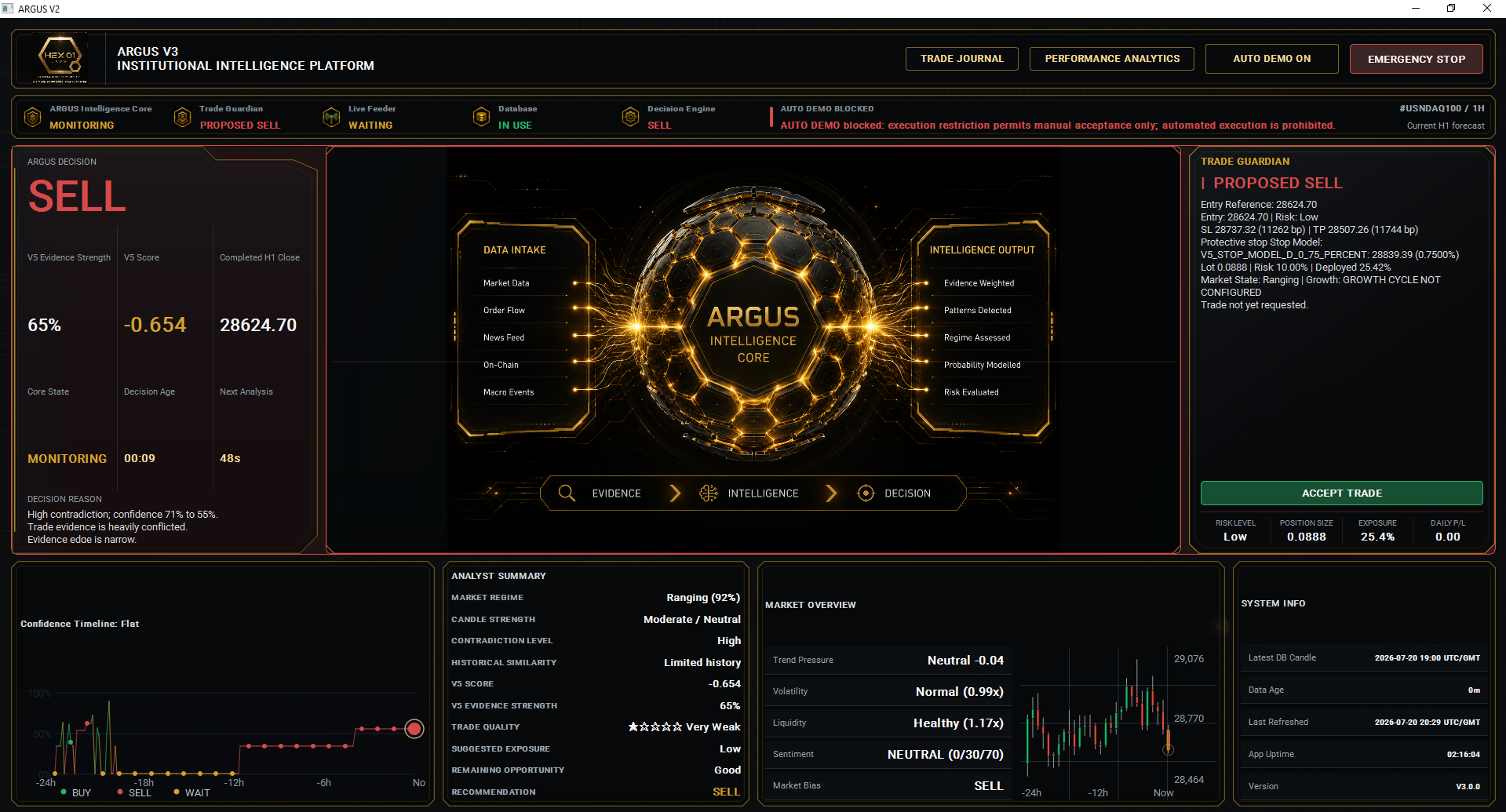
SELL Signal ARGUS User interface
-
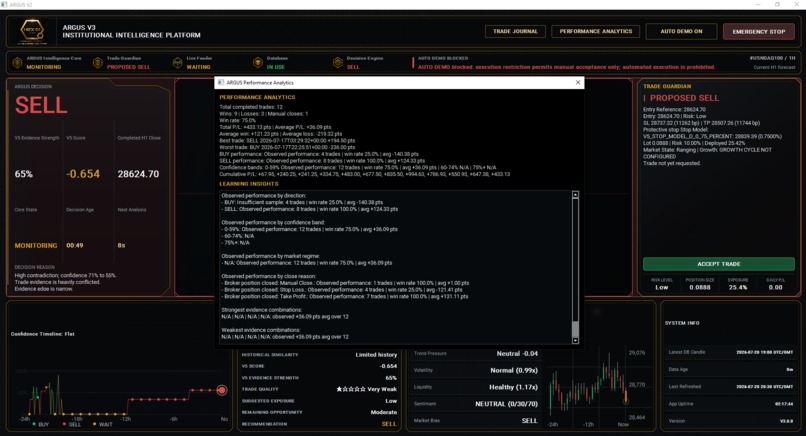
Trade Journal
-
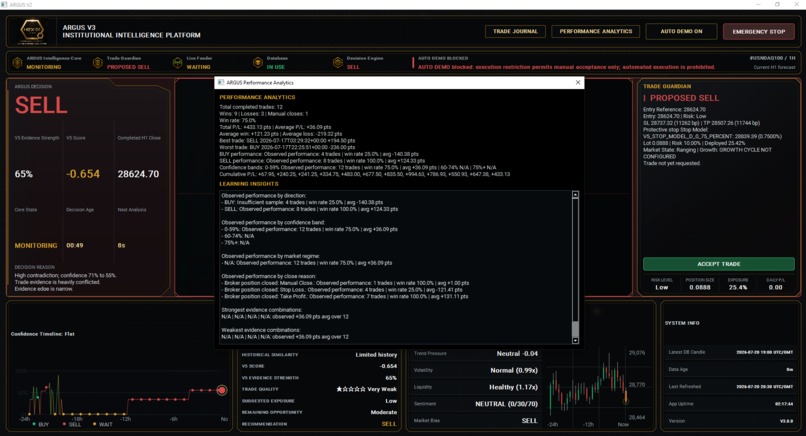
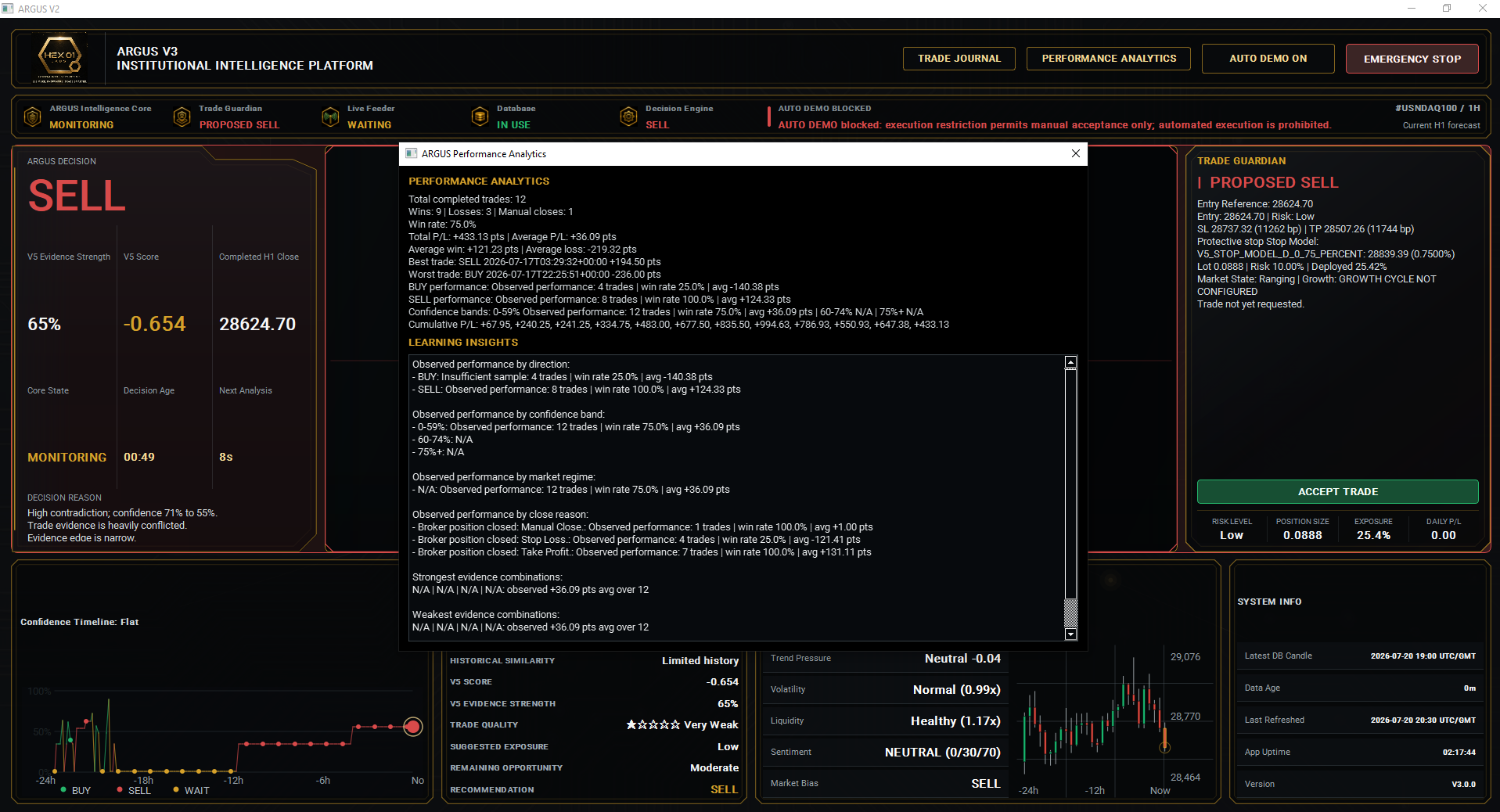
Performance Analytics
-
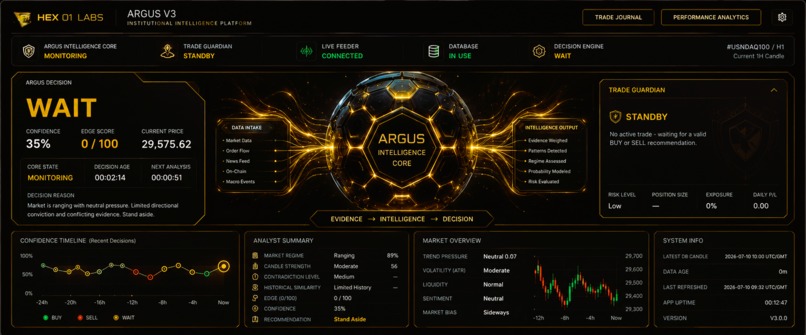
WAIT Signal User interface
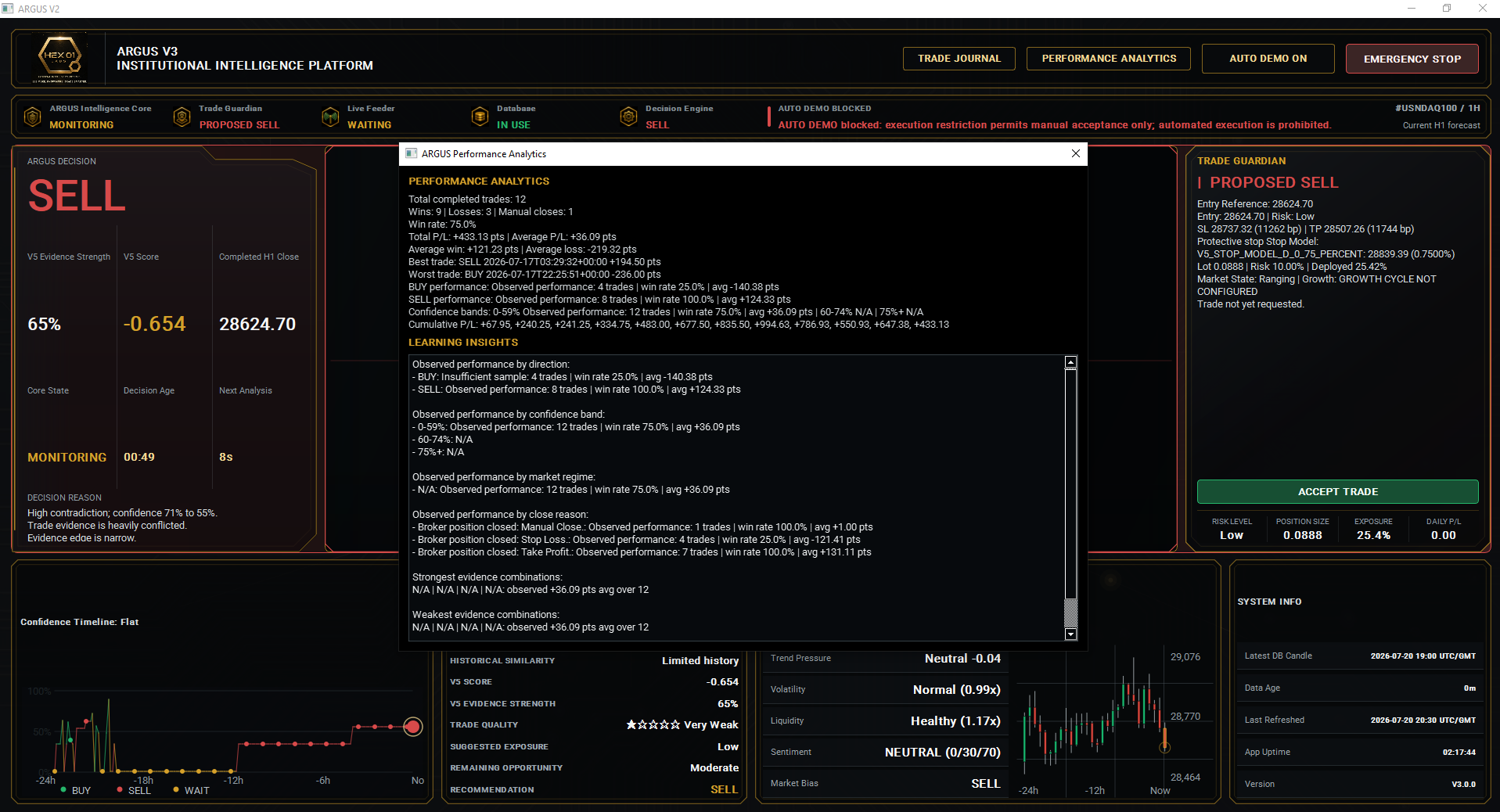
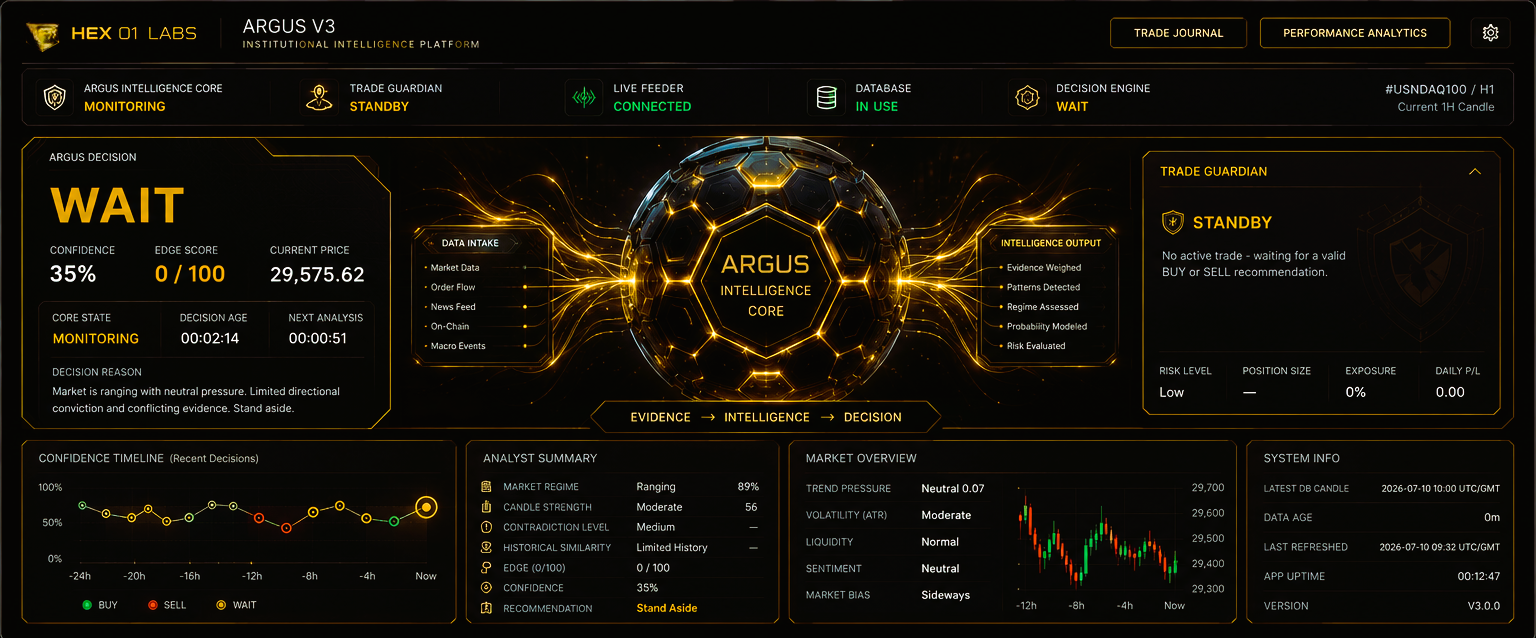
Inspiration
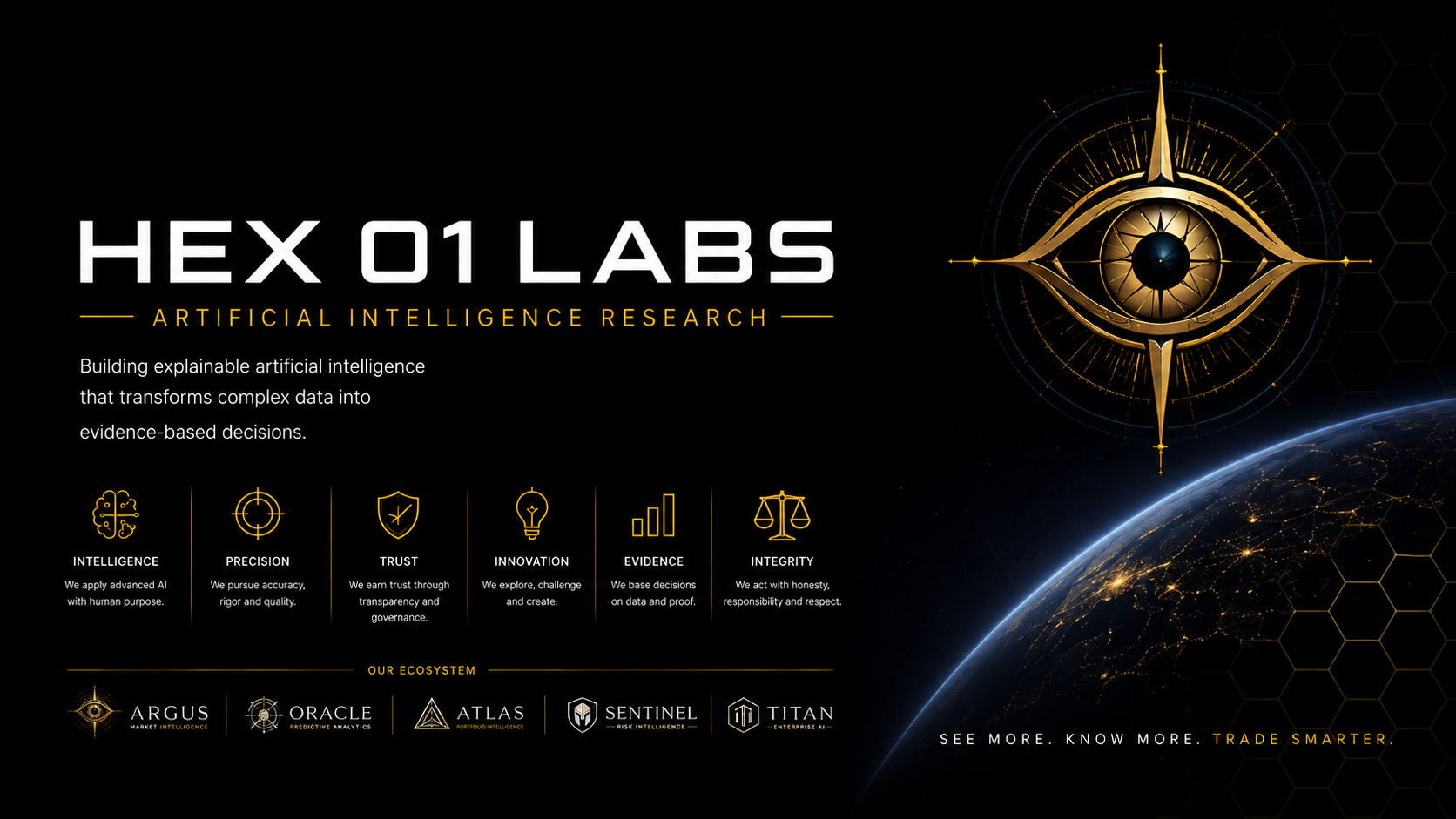
ARGUS – Autonomous Market Intelligence & Trade Governance
Inspiration
Most trading systems focus on predicting whether the market will go up or down.
ARGUS was built around a different idea:
The most important trading decision is often deciding not to trade.
Instead of generating simple BUY or SELL signals, ARGUS evaluates market evidence, measures contradiction, validates execution safety, and determines whether sufficient evidence exists before any trade is considered.
The project was created to demonstrate how AI can be used not only for prediction, but also for disciplined decision making and governance.
What it does
ARGUS is an AI-powered Market Intelligence and Autonomous Trade Governance platform.
It continuously analyses completed market data, evaluates multiple evidence sources, and determines whether current conditions justify taking risk.
The platform includes:
- Evidence-based market analysis
- Market regime detection
- Trade quality assessment
- Contradiction analysis
- AI-assisted decision reasoning
- Production safety validation
- Broker-aware execution controls
- Autonomous Trade Guardian lifecycle management
- Broker-authoritative trade reconciliation
- Autonomous trade exit management
- Historical replay and research capabilities
Rather than automatically producing BUY or SELL recommendations, ARGUS deliberately returns WAIT whenever evidence quality, execution safety or market conditions do not justify action.
How we built it
ARGUS was developed as a production-quality desktop application using Python together with GPT-5.6 and Codex.
Development followed a disciplined engineering workflow:
- Small isolated implementation tasks
- Focused automated testing
- Regression protection
- Independent safety reviews
- Controlled build validation
- Broker-safe execution validation
- Packaged application verification
This approach allowed complex functionality to be added incrementally while maintaining stability throughout development.
Challenges
One of the largest challenges was ensuring that intelligent behaviour never compromised execution safety.
Every decision had to remain consistent across:
- AI reasoning
- Dashboard presentation
- Manual acceptance
- Automated execution
- Broker validation
- Trade lifecycle management
Considerable effort was invested in fail-closed behaviour, restart recovery, broker-authoritative validation and deterministic testing to ensure the platform behaves safely even in unusual scenarios.
Accomplishments
The completed system now includes:
- Autonomous market intelligence
- Evidence-based reasoning
- Multi-stage decision governance
- Broker-authoritative execution validation
- Trade Guardian lifecycle management
- Autonomous trade exit engine
- Extensive automated validation
- Production-ready packaged desktop application
What we learned
Developing ARGUS reinforced that successful AI systems require more than accurate predictions.
Reliable AI also requires:
- Evidence evaluation
- Safety validation
- Execution governance
- Clear operator feedback
- Defensive engineering
- Continuous testing
GPT-5.6 and Codex significantly accelerated implementation while allowing development to remain structured and review-driven.
What's next
After Build Week we plan to continue developing ARGUS by expanding its market intelligence capabilities, improving decision explainability, extending autonomous execution management, and supporting additional asset classes while maintaining the same evidence-first philosophy that guided the initial design.


Log in or sign up for Devpost to join the conversation.