ArgOS Dog Trainer
By Matthew Thomas Beck
Click here for the story behind the build
Tech Stack
- Language: Python
- Libraries: PyTorch, NumPy, OpenCV, threading, queue, logging, collections, subprocess, socket, time, os
- Simulation: NVIDIA Isaac Sim (isaacsim, USD/Omniverse)
- Reinforcement Learning: PPO (Proximal Policy Optimization), Actor-Critic neural network
- Edge Deployment: OpenVINO (Intel Movidius NCS2)
- Robot Model: URDF / USD (custom ARES–Athena quadruped meshes)
Basic Information
In January 2024, I got my first 3D printer and set out to build my very own robot dog: something I knew would keep me entertained, busy, and far outside my comfort zone
That robot became Athena: a gait-adjusting, AI-powered quadruped built from the open-source ARES platform, running on a Raspberry Pi 4 and an Intel Movidius NCS2 at the edge
Hand-tuning a walking gait turned out to be a dead end fast, so I pivoted to the approach I should have started with: reinforcement learning inside NVIDIA Isaac Sim
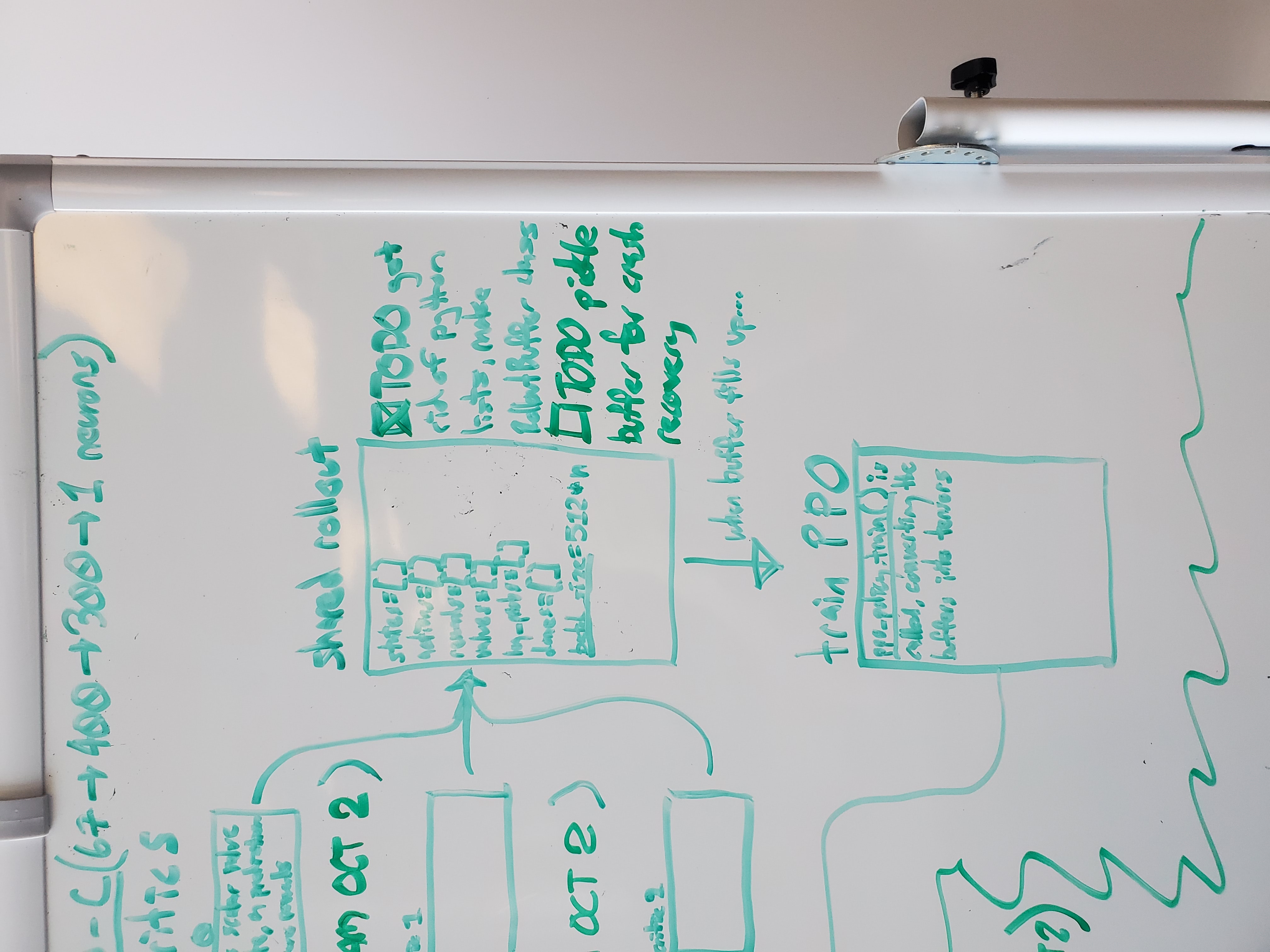
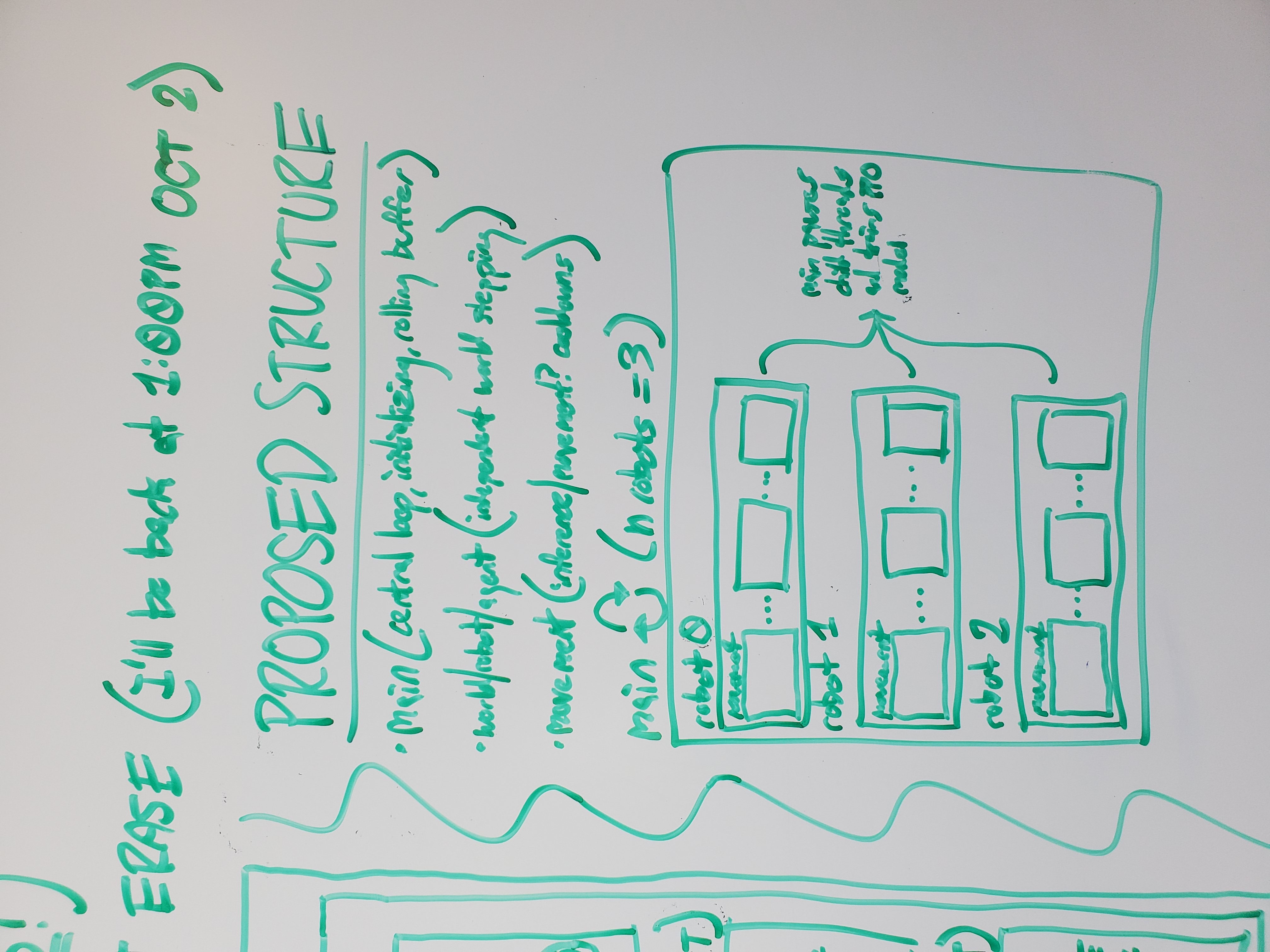
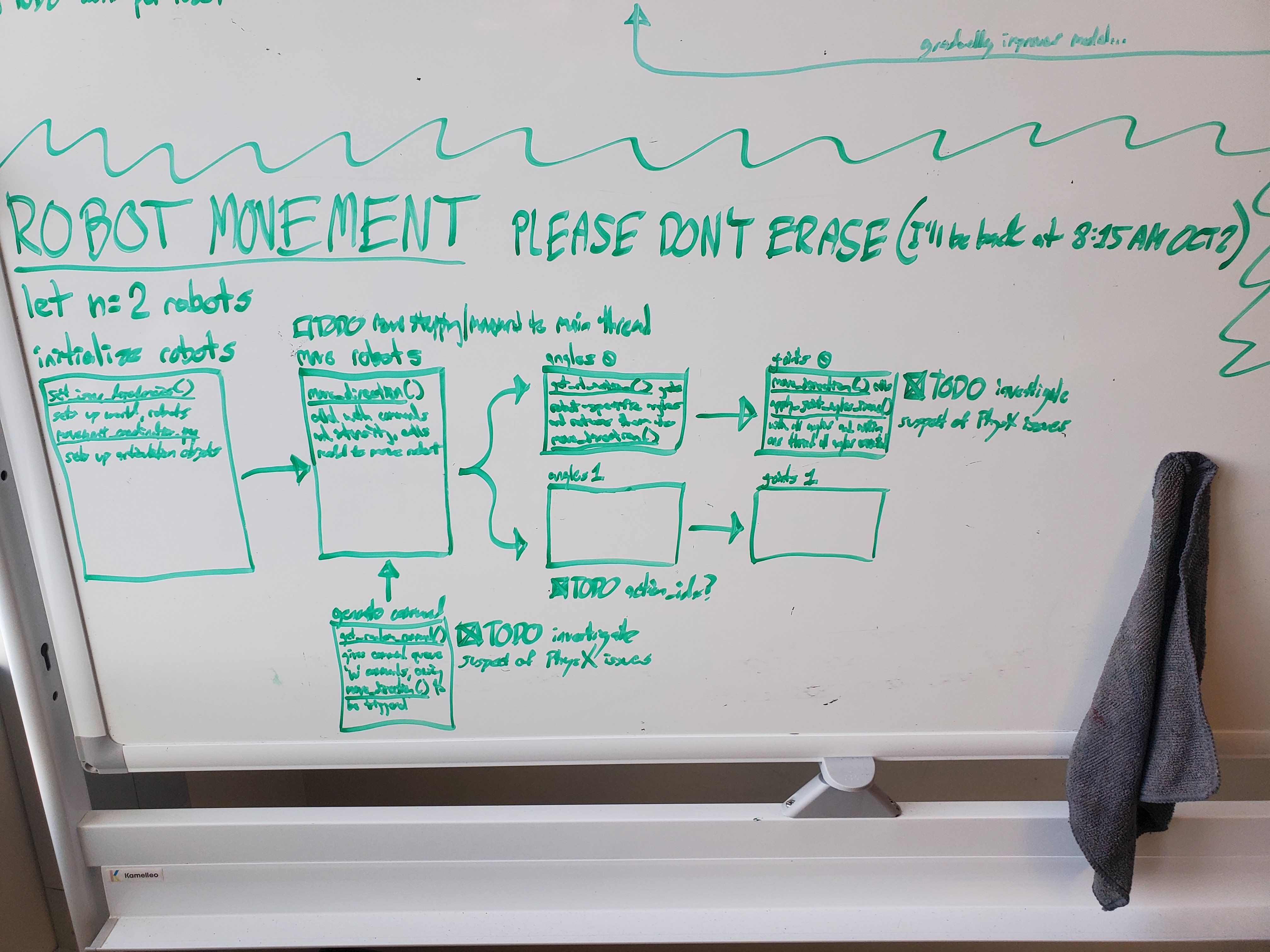
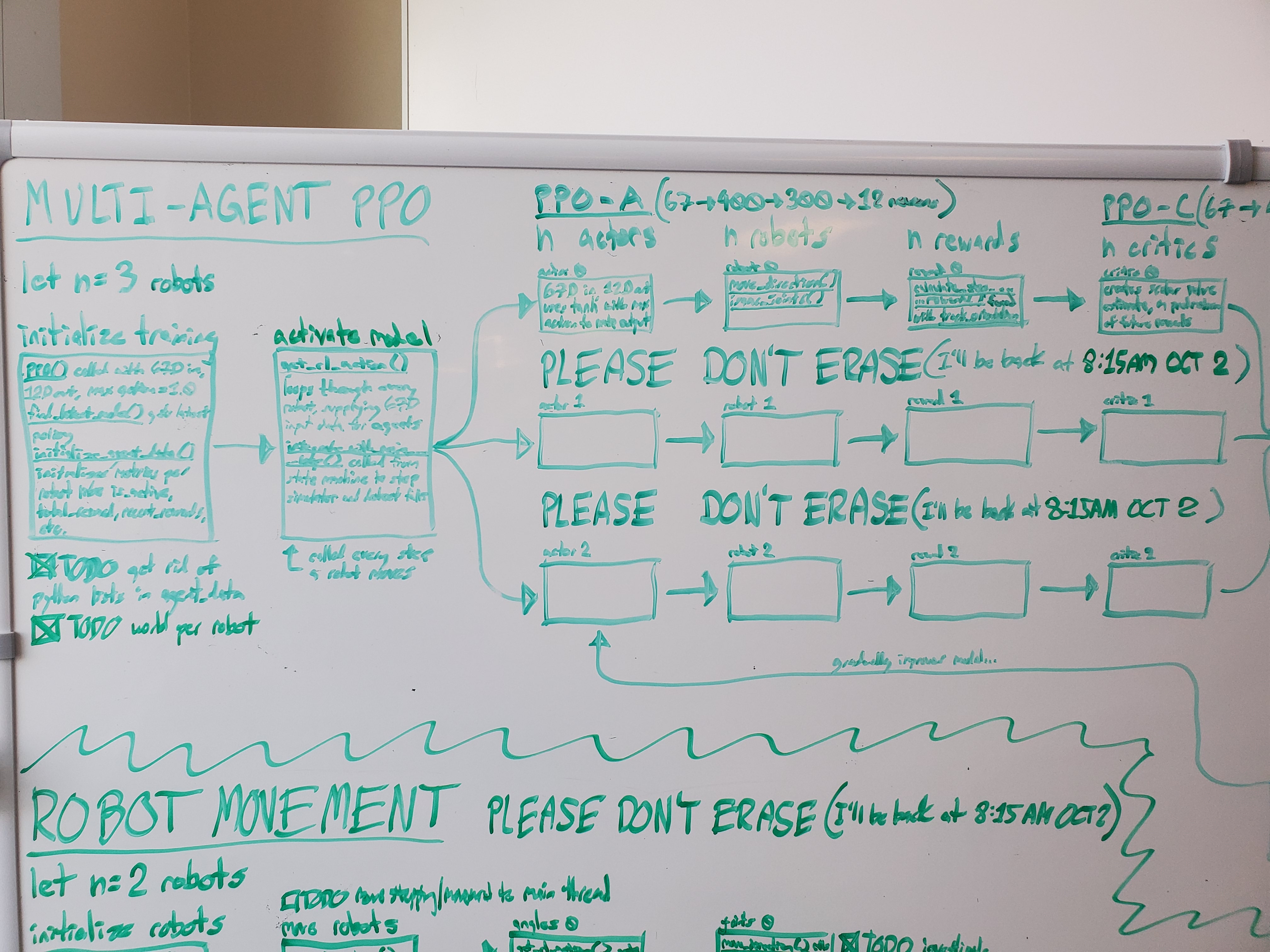
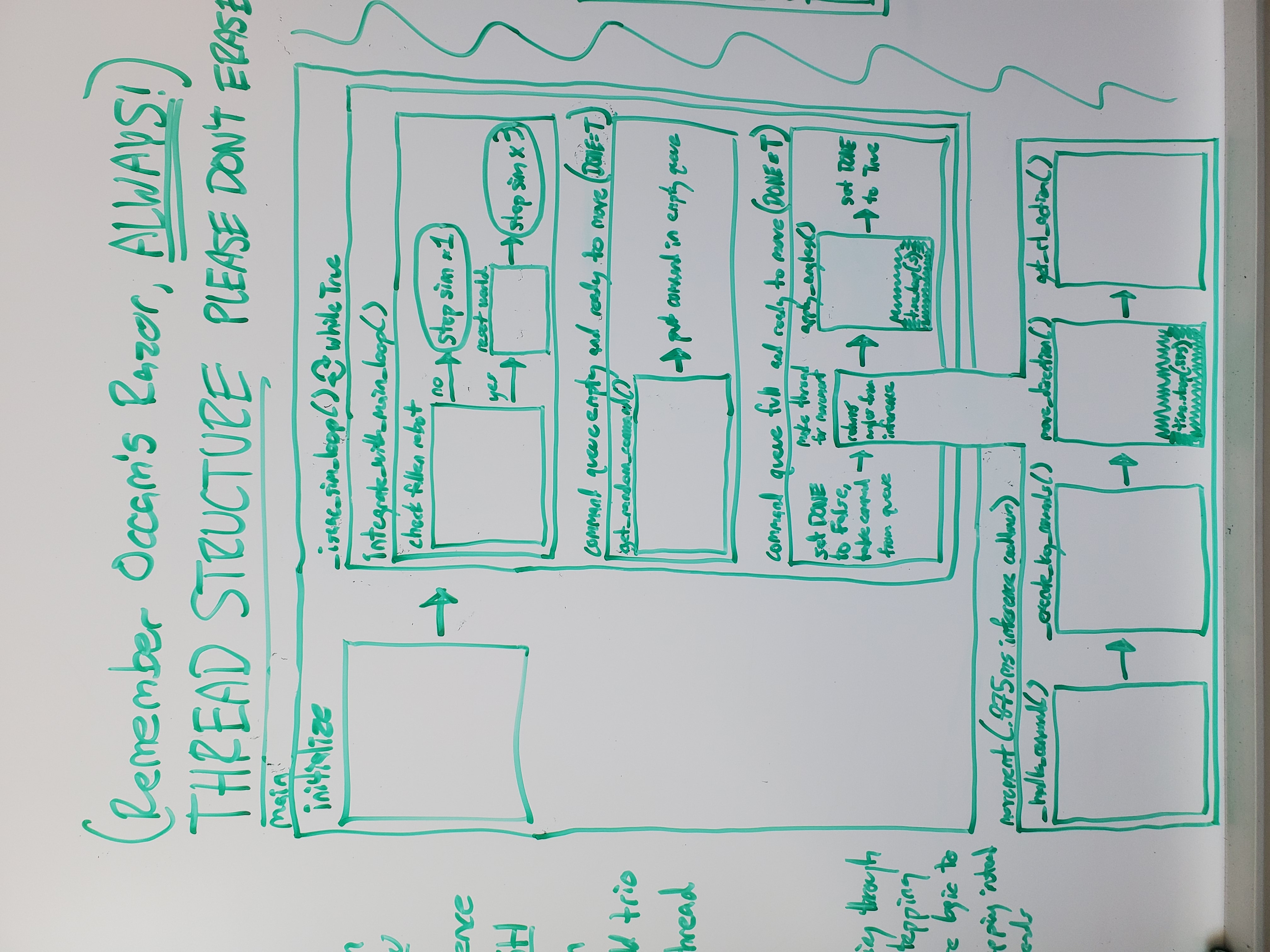
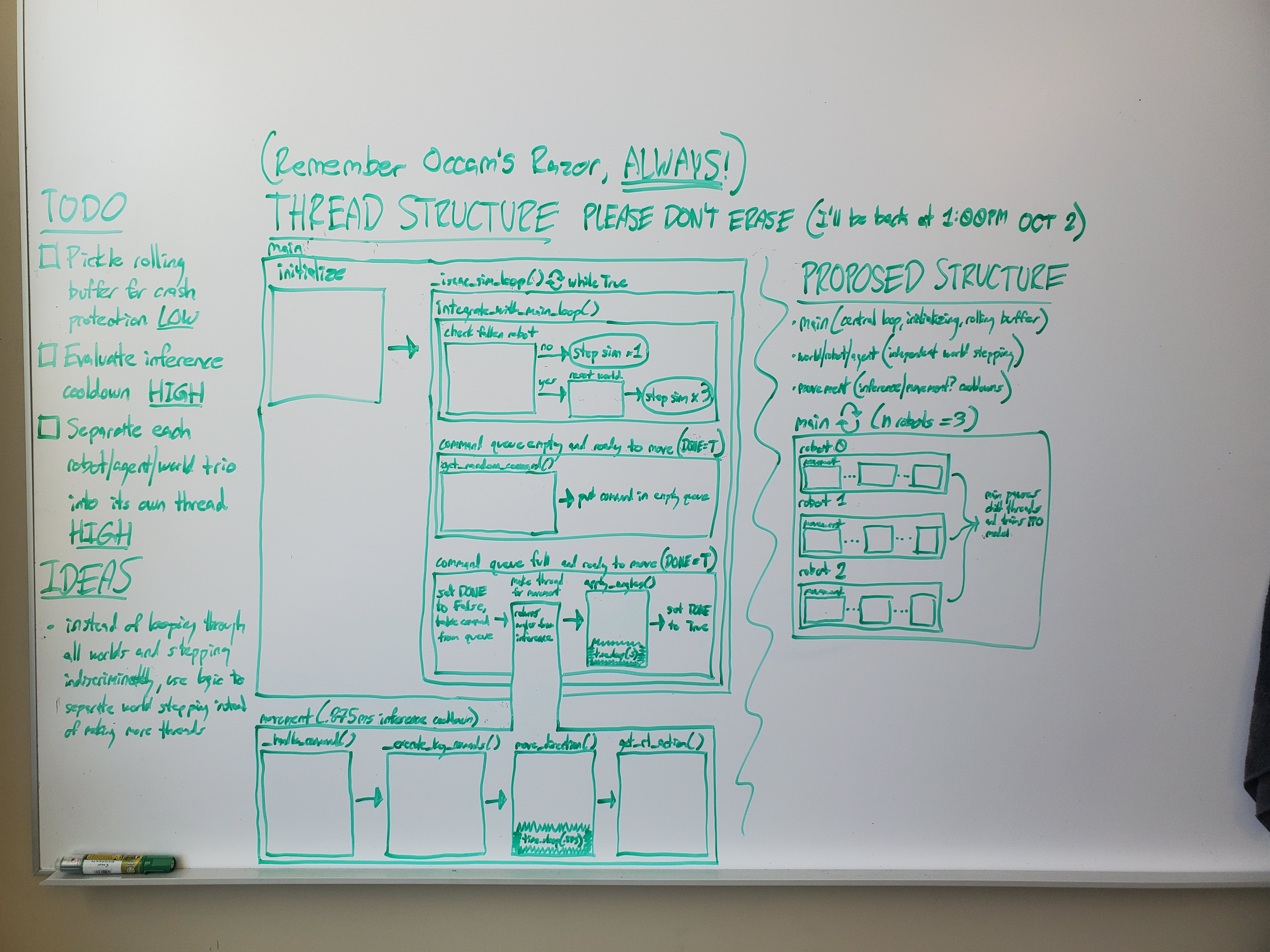
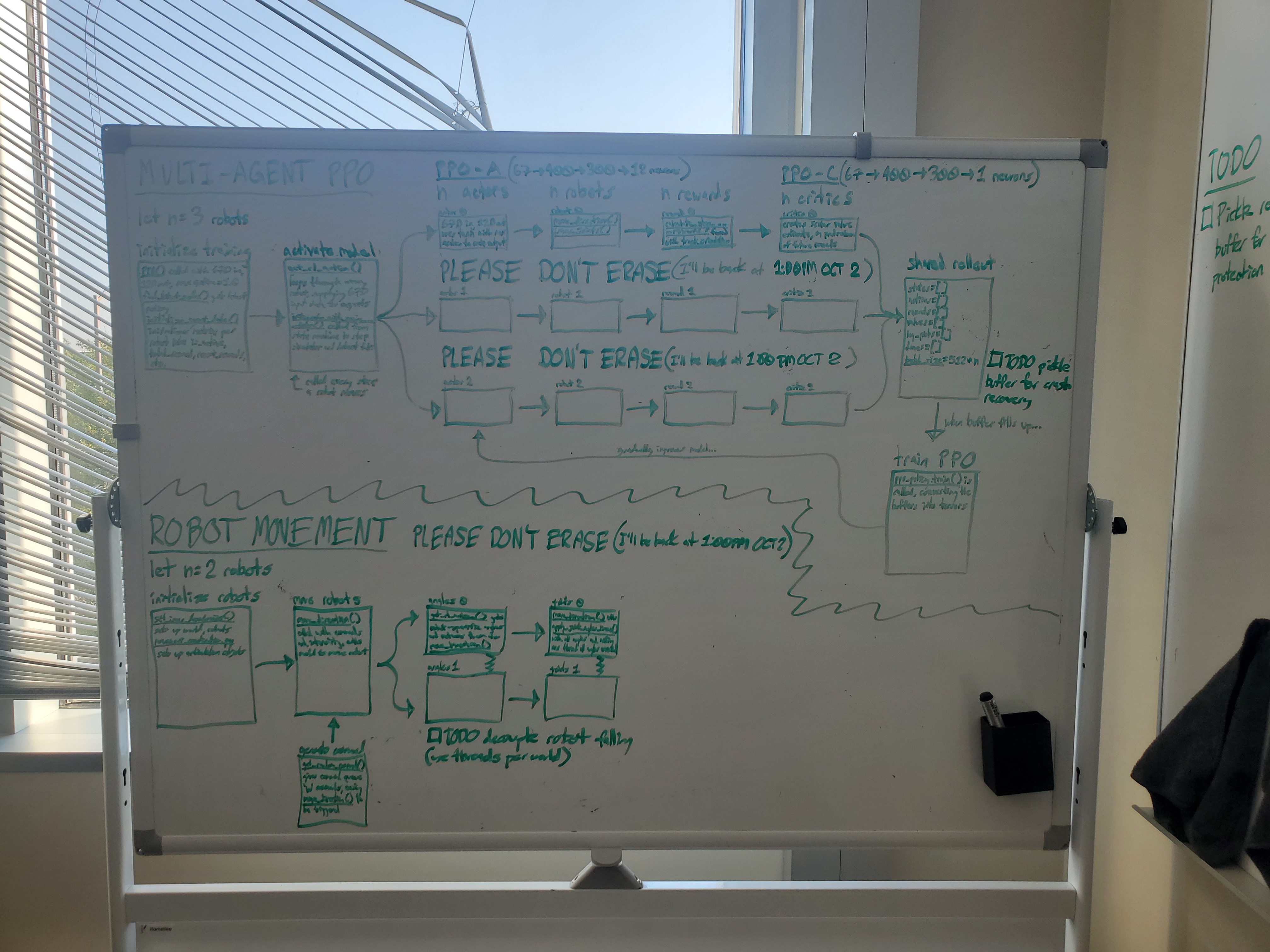
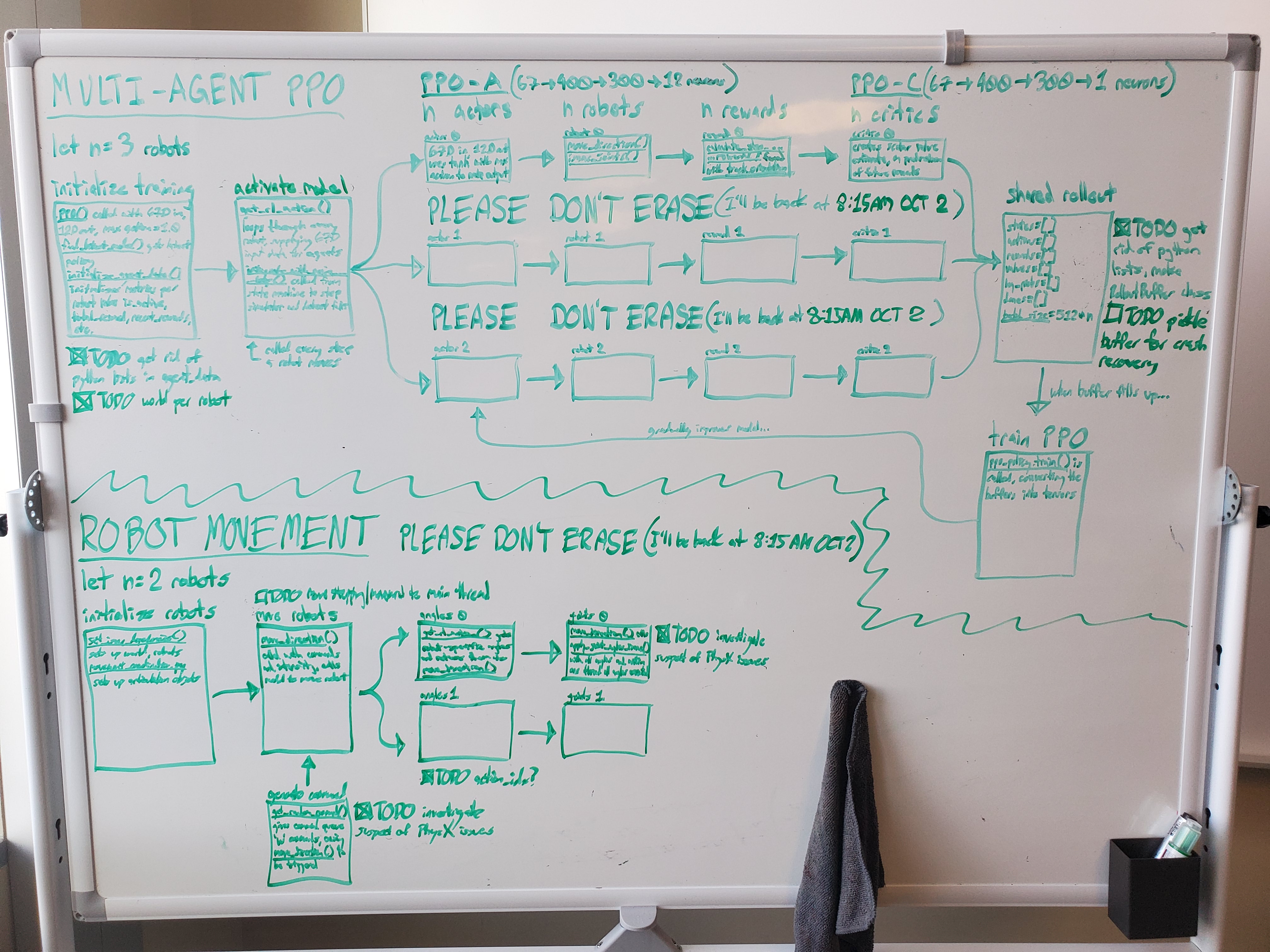
ArgOS Dog Trainer is the simulation and training codebase behind that pivot: a custom PPO pipeline that spawns dozens of robot instances in parallel, collects rollout experience from all of them at once, and trains a shared locomotion policy that outputs 12 joint-angle targets from a 67-dimensional state (joint history, movement commands, and intensity)
The training loop handles the messy real-world details too: fall detection, per-robot episode resets, phased command curricula, and reward shaping around balance, orientation, and commanded direction, so successful robots get more representation in the rollout buffer over time
Once a policy is trained, the model folder includes converters that export PyTorch checkpoints to OpenVINO IR (.xml / .bin) for static, FP16 inference on the NCS2, closing the loop from sim training to edge deployment on the physical robot
This repo represents many months of iteration: memory-leak fixes, URDF accuracy passes, multi-robot grid spawning, and more reverse-engineering of Isaac Lab conventions than I care to admit, but it is the software that finally got Athena walking
Honest to goodness, I thought the whole robot would take six-to-eight months; counting the edge AI module, it has been closer to nineteen (Hofstadter's Law strikes again)
But what is life without a challenge? I turned an open-source R/C curiosity, an edge-AI chip, and alphanumeric characters into thought and movement, and ArgOS is the trainer that taught it how
Log in or sign up for Devpost to join the conversation.