-
-
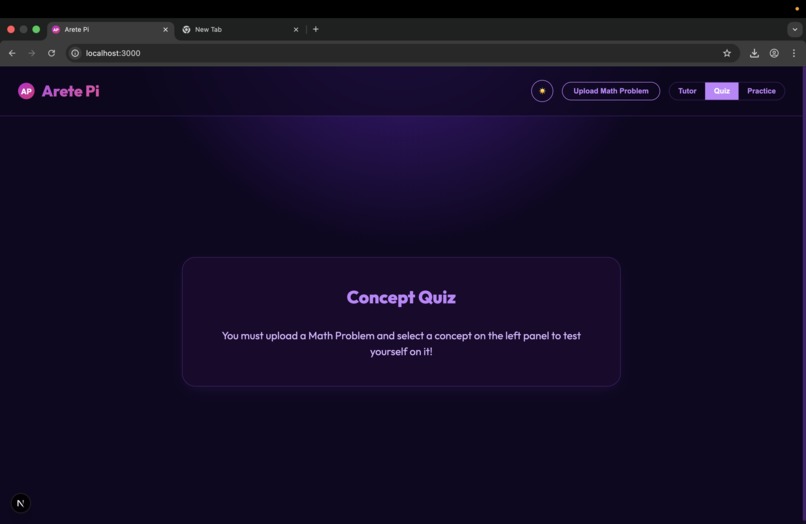
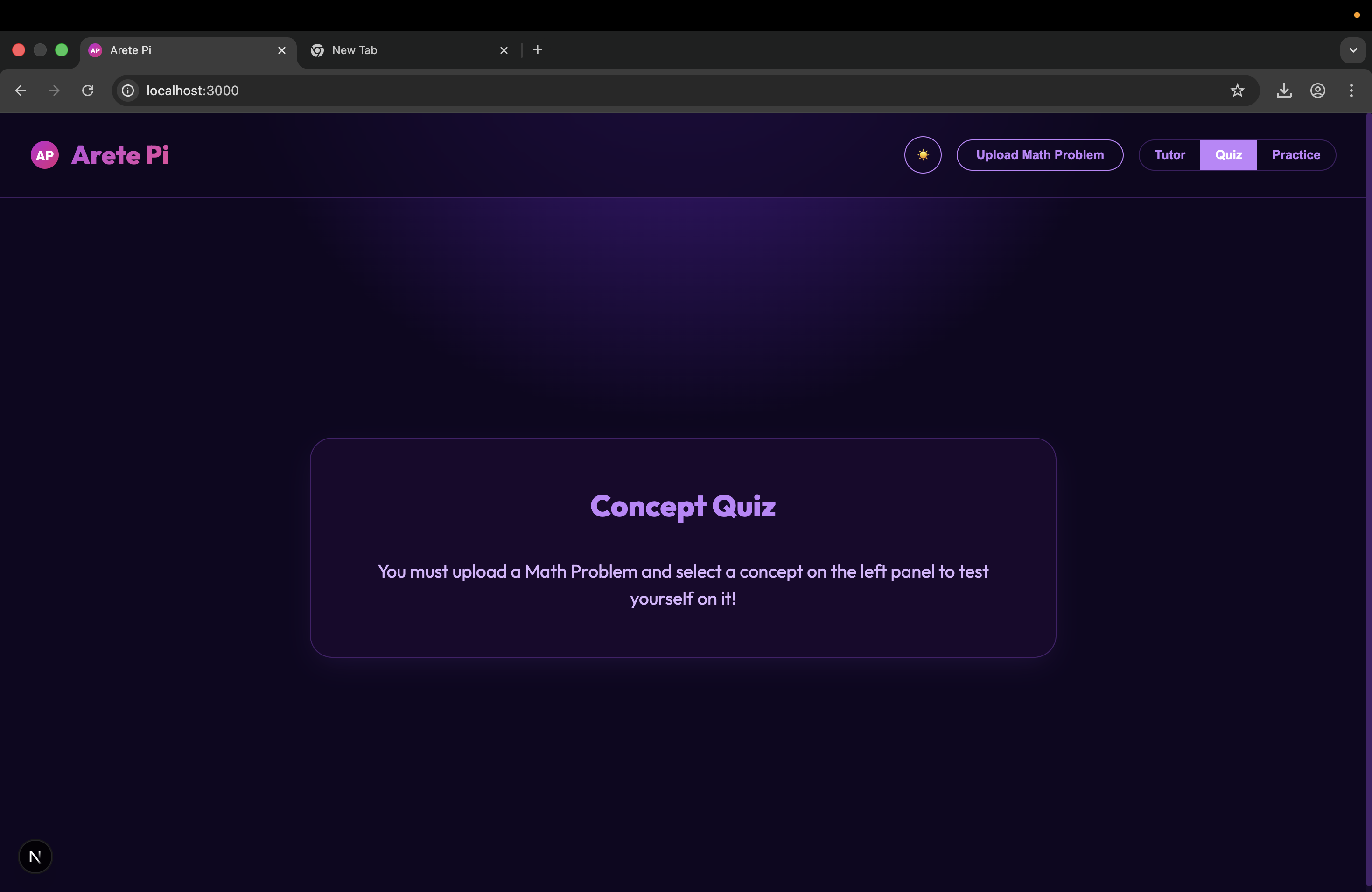
quiz
-
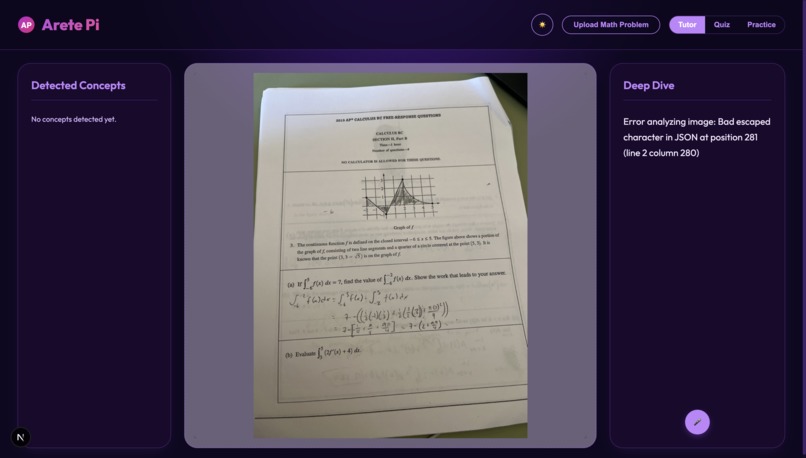
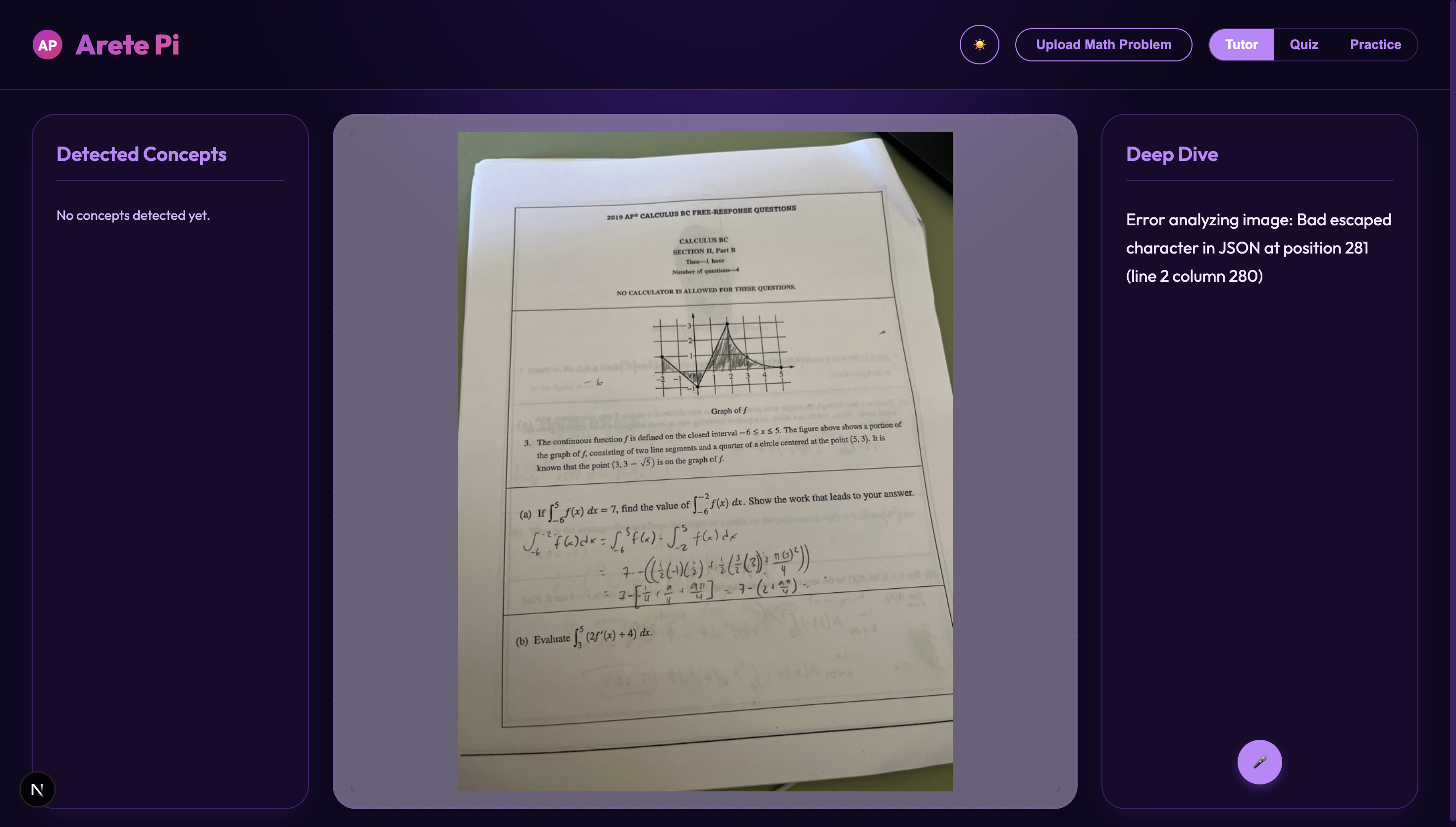
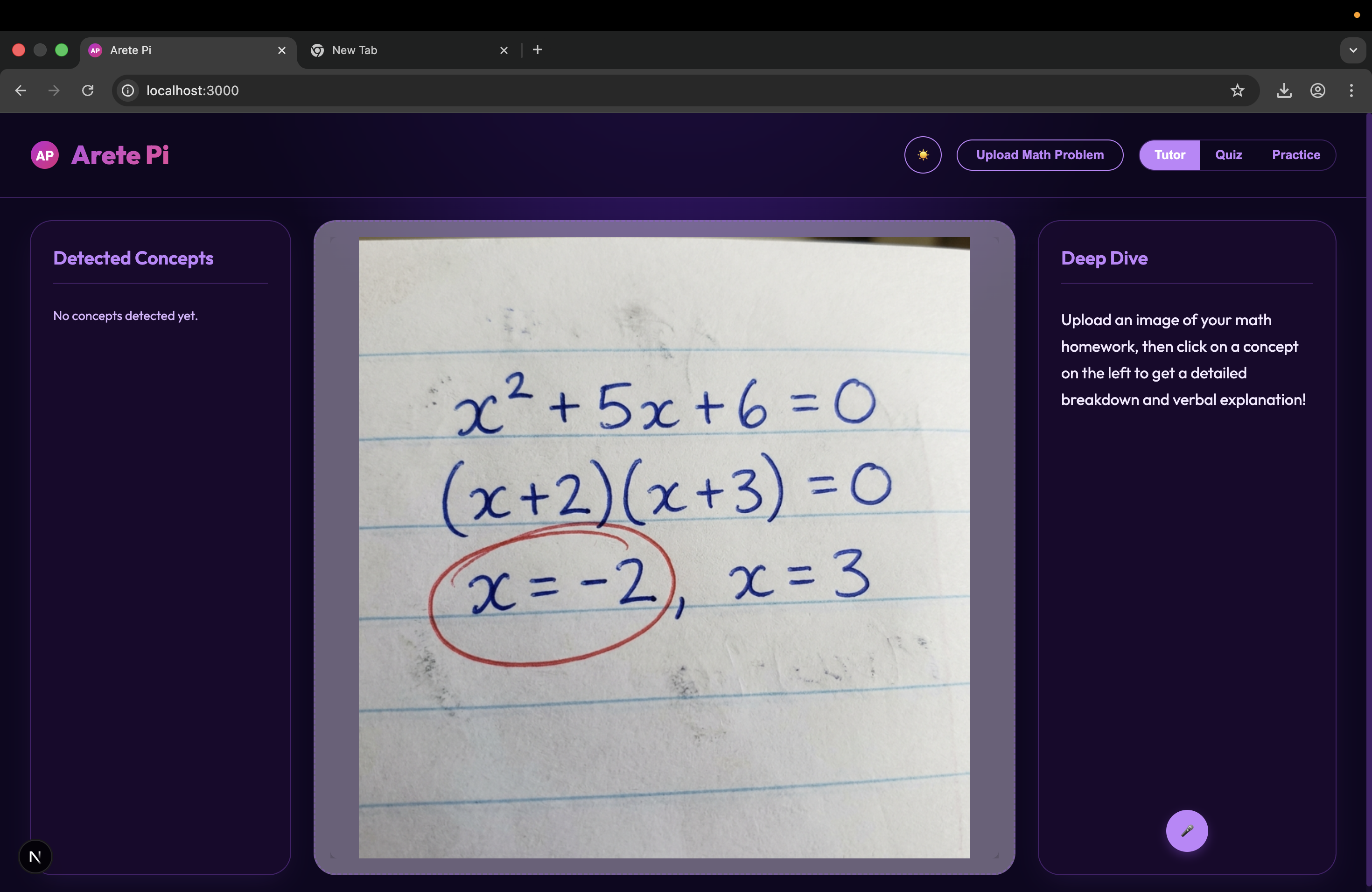
uploaded image
-
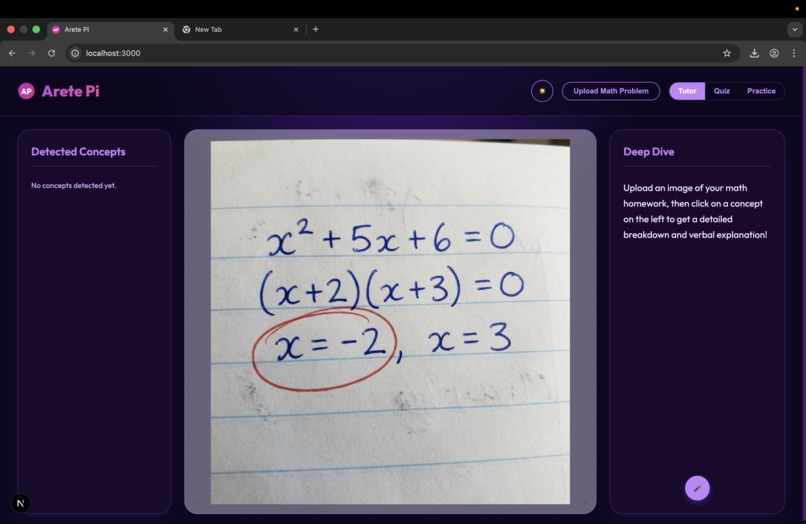
dark mode
-
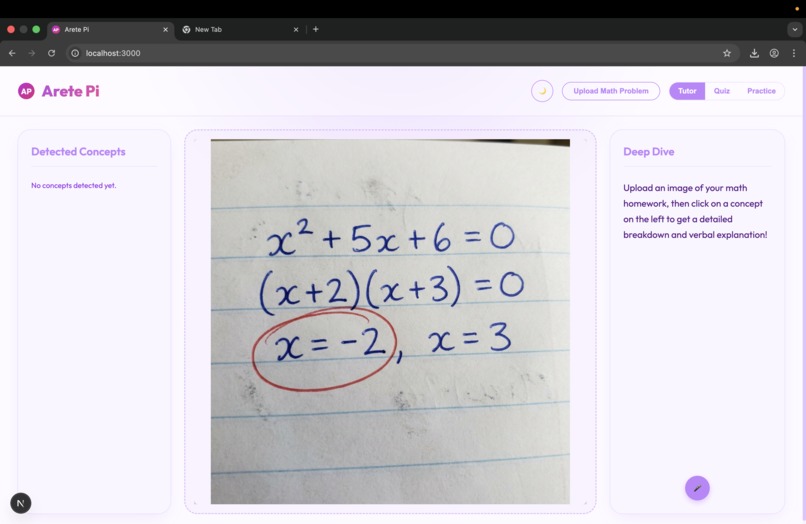
landing page
-
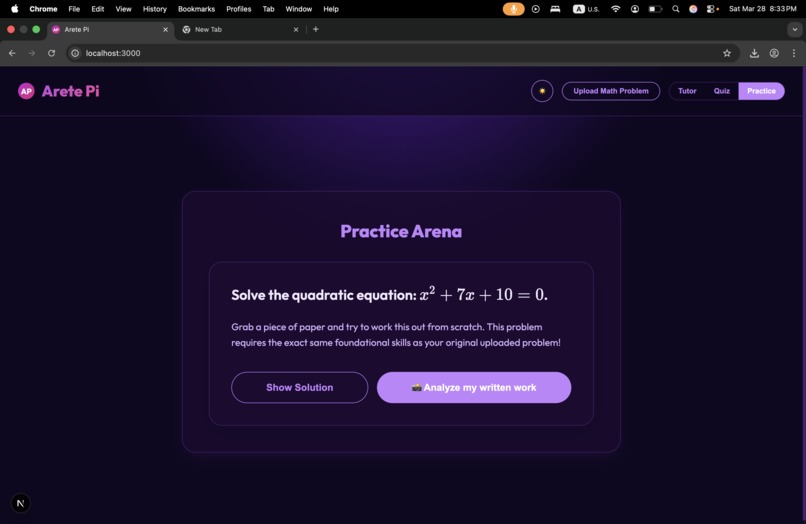
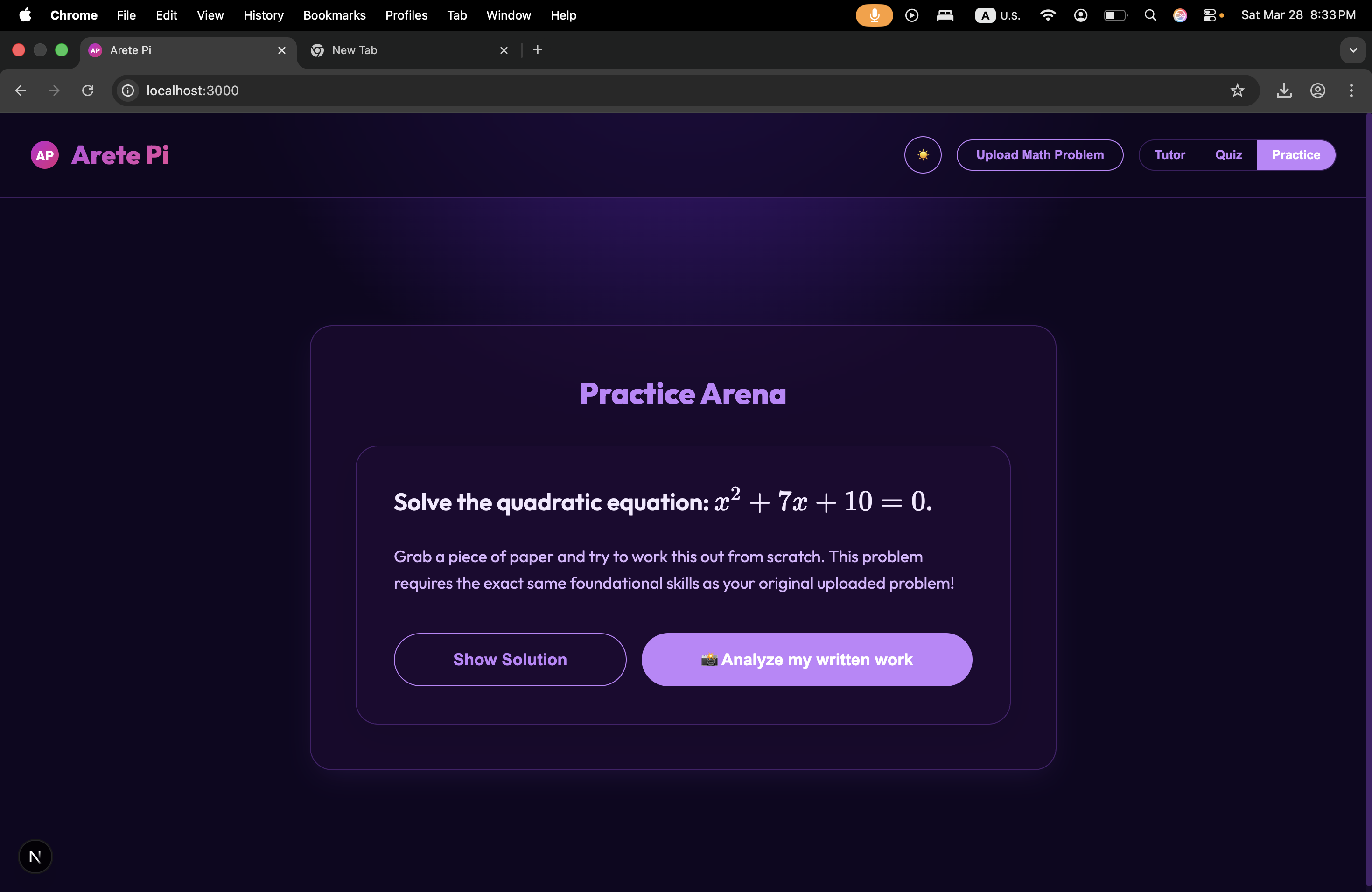
practice problem
Inspiration
Math is a challenging subject for many students, and the rise of AI tools has made it easy to get answers without actually learning. Most large language models solve problems using their own methods, which may differ from what a student is being taught in class. This often leaves students confused about where they made mistakes. We created Arete Pi to shift AI from a shortcut into a learning tool — one that helps students engage with their errors, understand concepts, and improve their problem-solving skills.
What it does
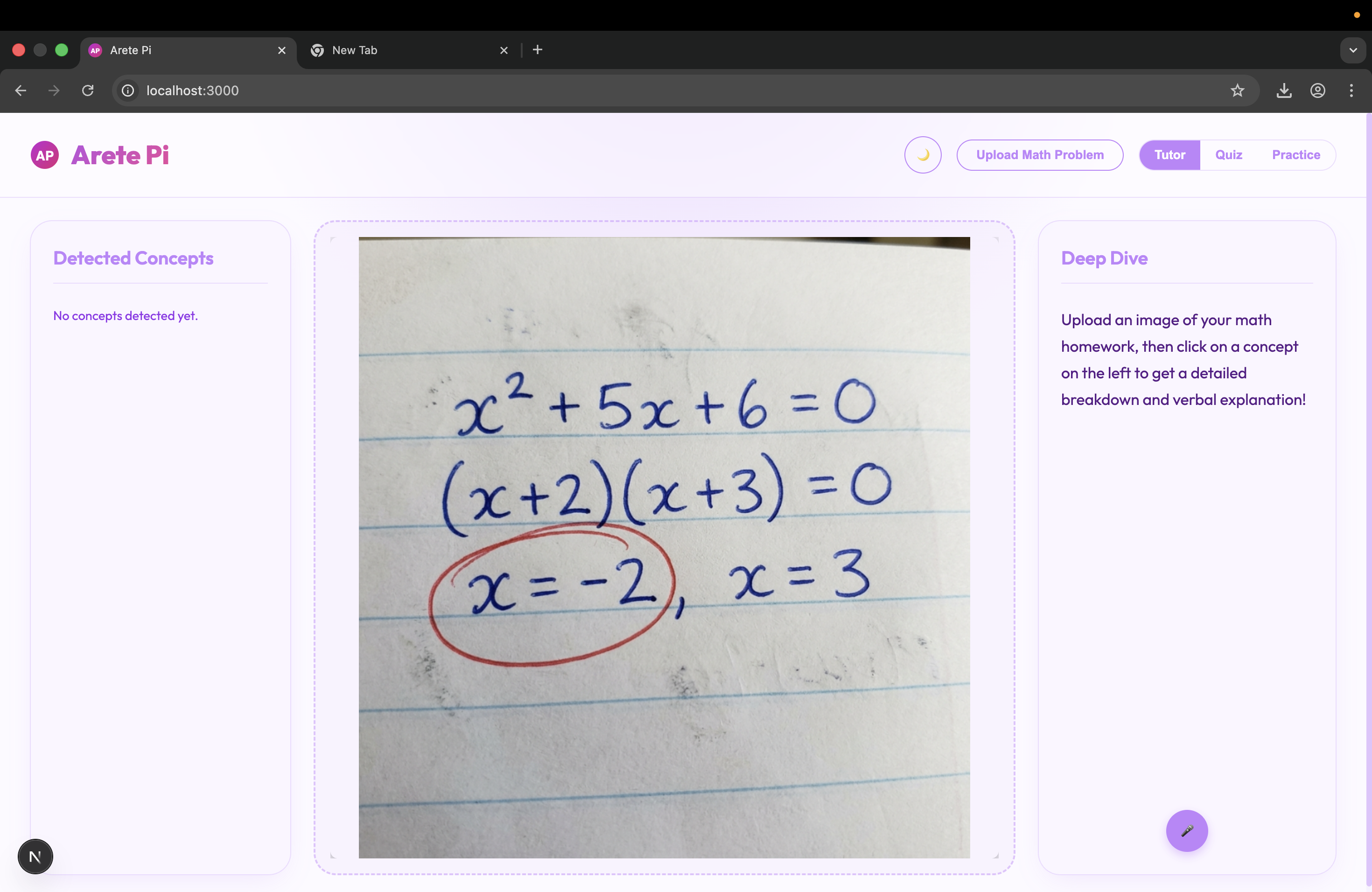
Arete Pi is an AI-powered math learning platform designed to help students truly understand their mistakes instead of just receiving answers. When a student submits a math problem along with their work, the system analyzes their steps, identifies where they went wrong, and explains the underlying concept behind the mistake.
Rather than solving the problem independently like most AI tools, Arete Pi focuses on the student’s approach, highlighting specific steps, breaking down the relevant concepts, and guiding the student toward the correct method.
How we built it
We use Gemini API for AI Processing, Antigravity for Framework / Platform, Node.js for backend, and JavaScript and CSS for frontend.
Challenges we ran into
One major hurdle was API limitations, as we didn’t have enough API keys to freely test all features, which made development slower and required careful planning. Integrating voice interaction into the platform was another challenge. Ensuring that real-time speech input and output worked alongside problem analysis and concept explanations required coordinating multiple systems simultaneously. We also faced the difficulty of connecting the frontend and backend for the first time, learning how to pass data, manage responses, and create a smooth user experience.
Accomplishments that we're proud of
Targeted Feedback: Focuses on improving the student’s method, not just giving the answer Voice Interaction: Enables real-time spoken communication, allowing users to ask questions and receive explanations through natural voice conversation Concept-to-Problem Mapping: Connects abstract concepts directly to the student’s specific problem Step Highlighting: Pinpoints exactly where the student made a mistake Concept Extraction: Identifies the key mathematical concepts used in the Concept Explanation: Clearly explains those concepts in an easy-to-understand way
What we learned
Through building Arete Pi, we learned how to design AI systems that go beyond simply generating answers and instead focus on understanding user intent and mistakes. As beginners in integrating multiple technologies, we explored using AI APIs, backend systems, and real-time voice interaction, and were better able to understand how AI can be used as a tool for learning rather than just a shortcut, and how to build systems that encourage deeper understanding instead of quick answers.
What's next for Arete Pi
With more time, we would optimize API usage by preventing repeated calls when users switch between concepts. Also, we would implement a database to cache generated explanations, allowing previously retrieved results to be reused instead of making redundant API requests, reducing latency and cost.
Built With
- claude
- css
- elevenlabs
- gemini
- html
- python
- typescript

Log in or sign up for Devpost to join the conversation.