Inspiration
I was watching a LaLiga match with my friends, like every weekend, when my dad called from Spain in the middle of the game: "How's your Spanish?" (The answer: nada.)
Then it struck me: what if I could learn Spanish while watching football? That would be so cool!
Then I saw the Meta VR trailer (buying it day one), and then this hackathon. It felt like destiny.
What it does
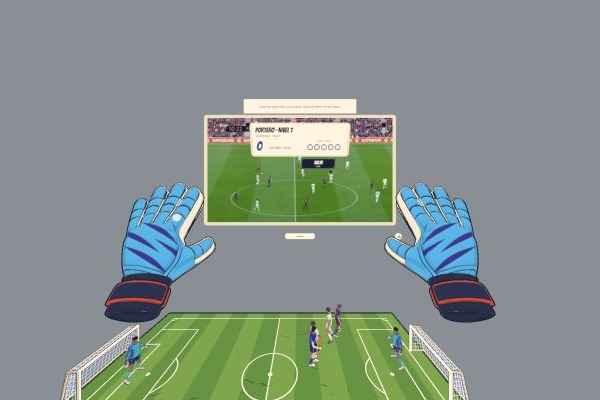
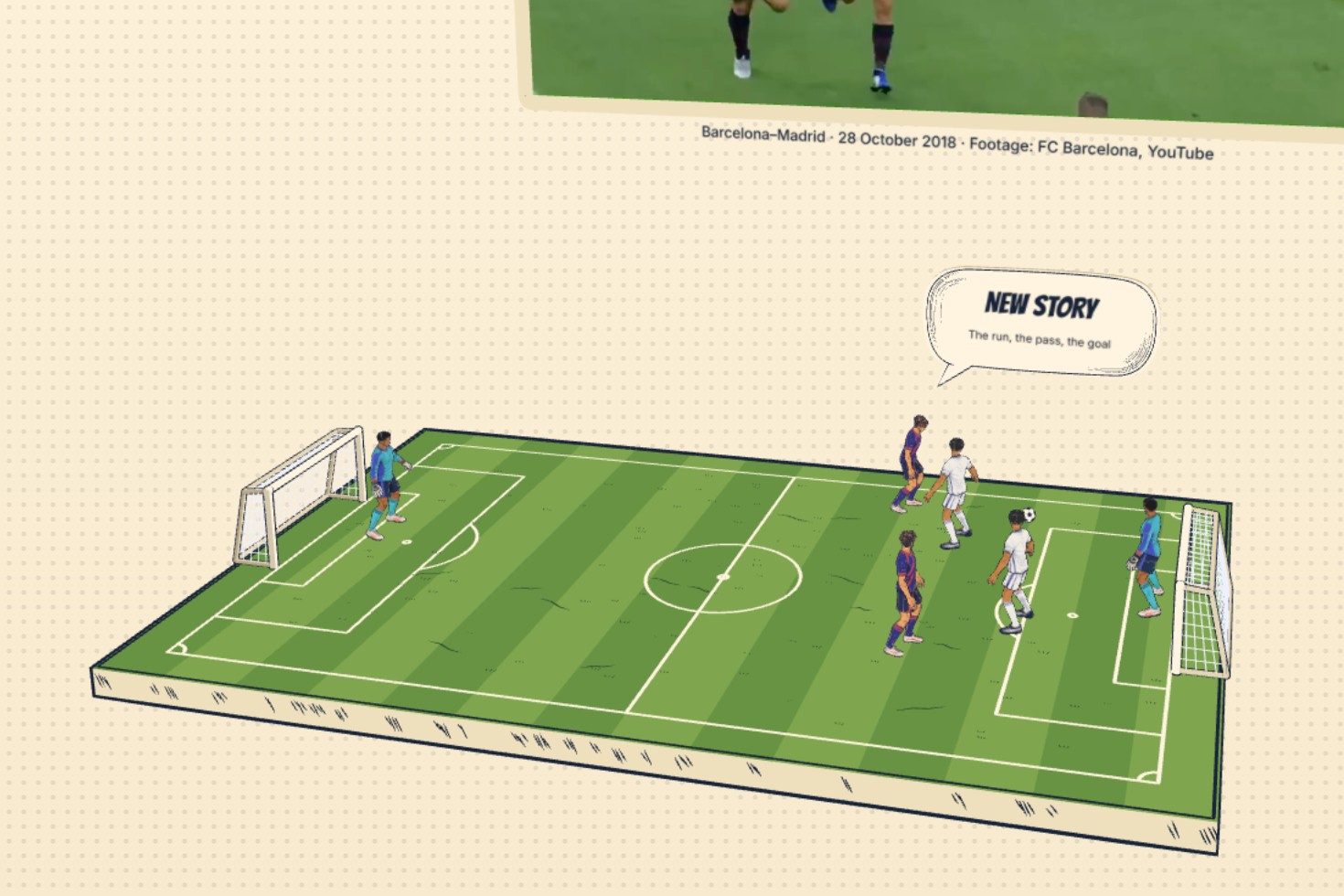
Sit down, relax, grab your popcorn or chips, put on your Quest 3 and step in. A TV floats in front of you with a real match moment, and a hand-drawn manga pitch lands on your table (so move the popcorn to the side).
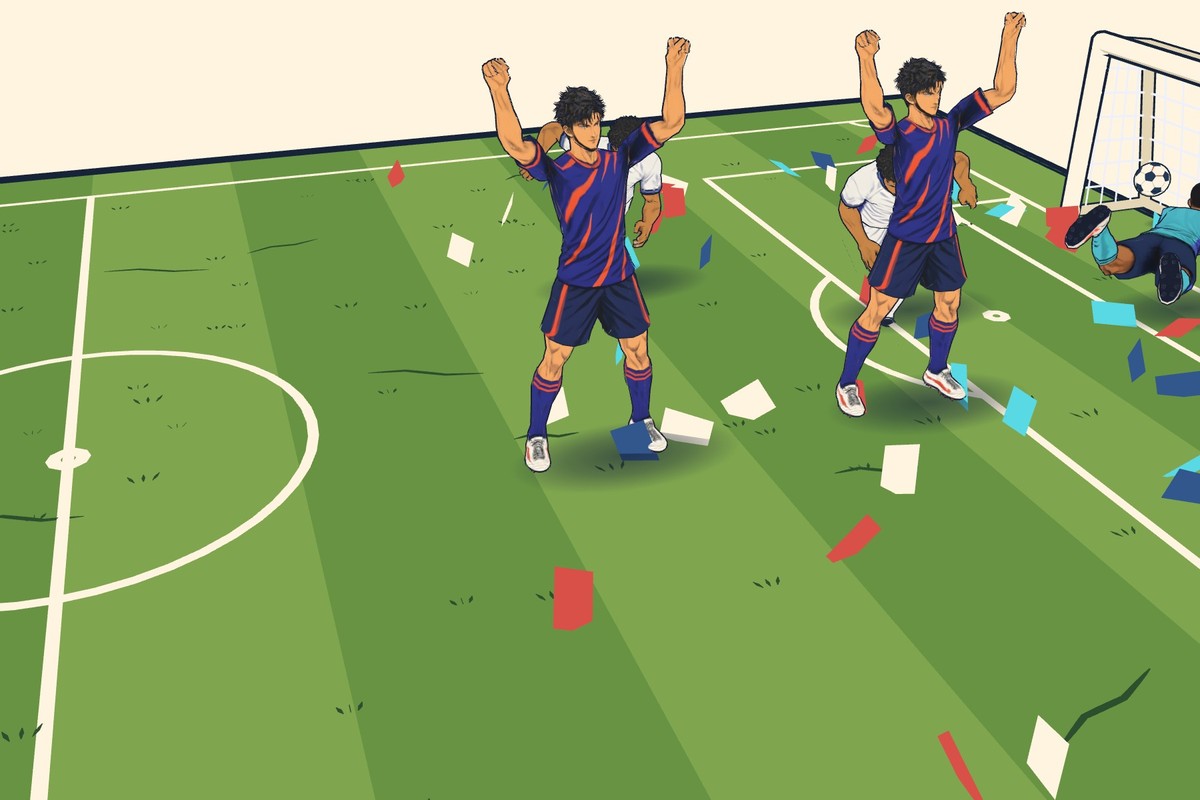
- Watch the clip. When the goal goes in, raise both hands to celebrate.
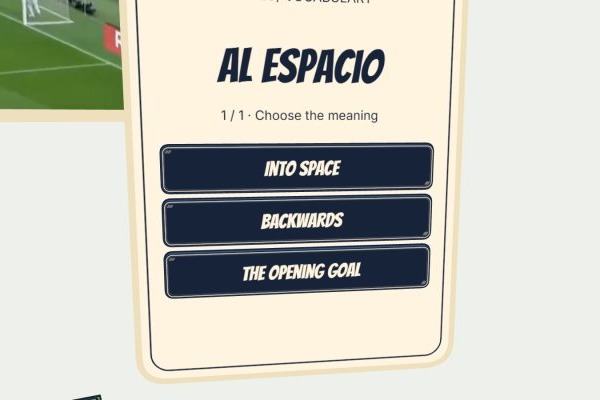
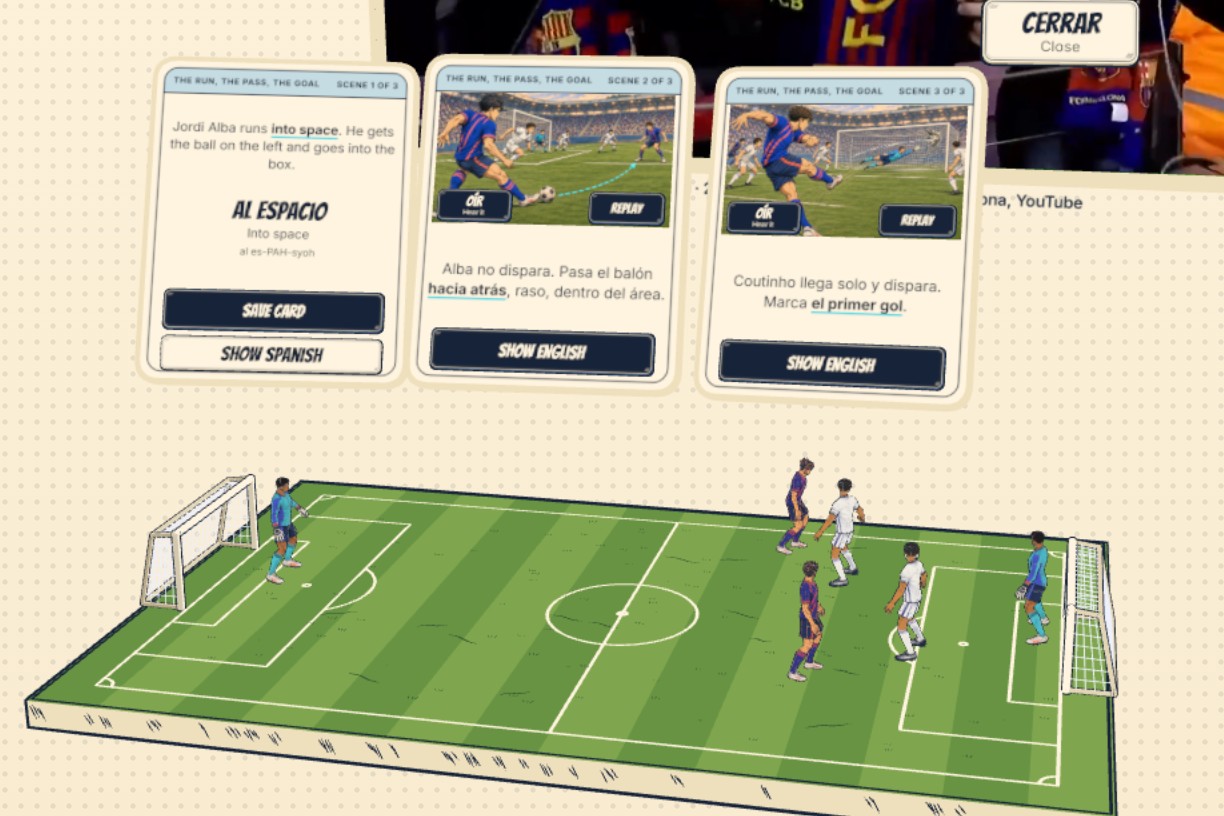
- Discover: a story bubble pops up as each key phrase happens. Pinch it to open a card in Spanish, reveal the English, hear it, save it.
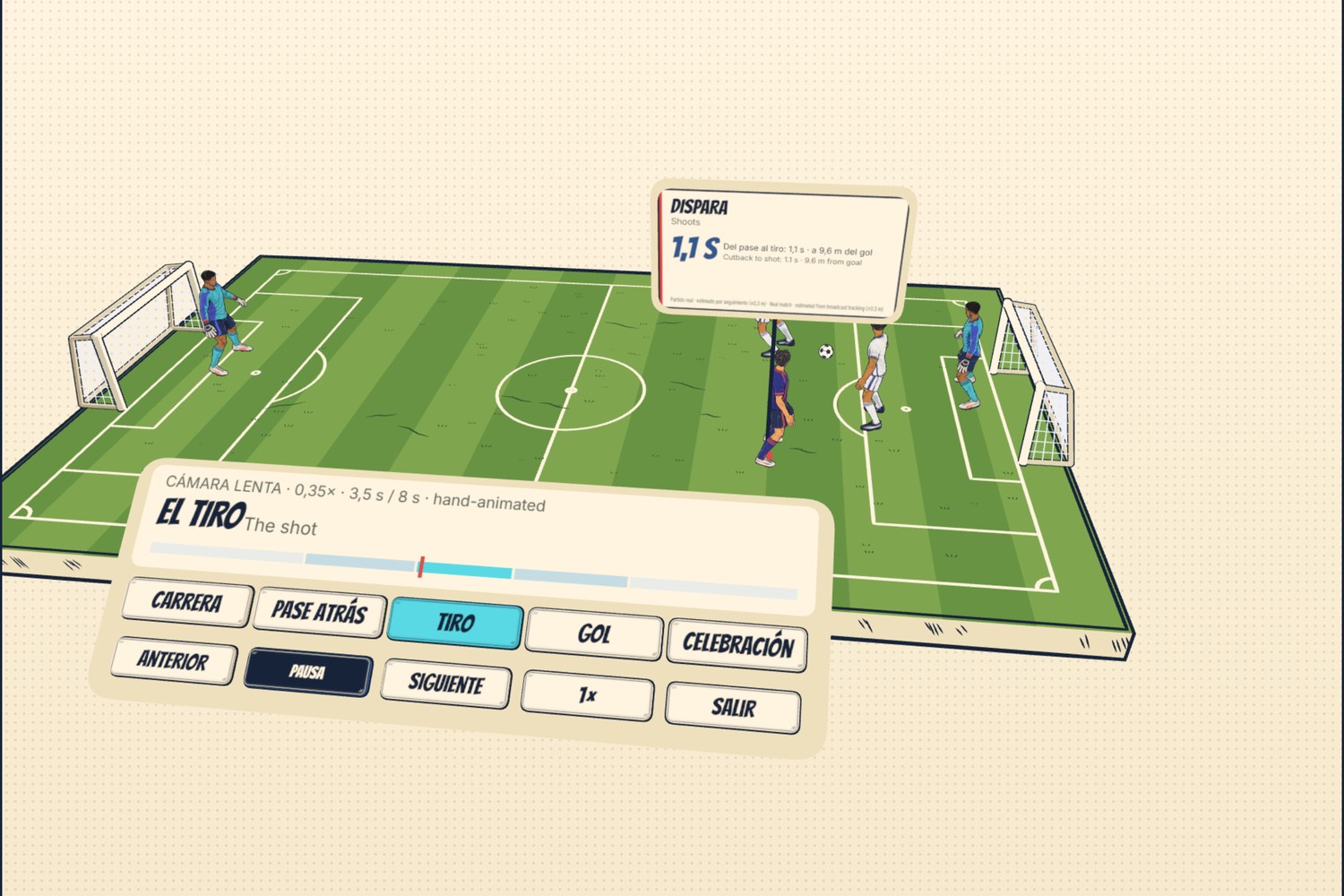
- Replay: tiny players re-run the move on your table, in slow motion, with each phase named in Spanish.
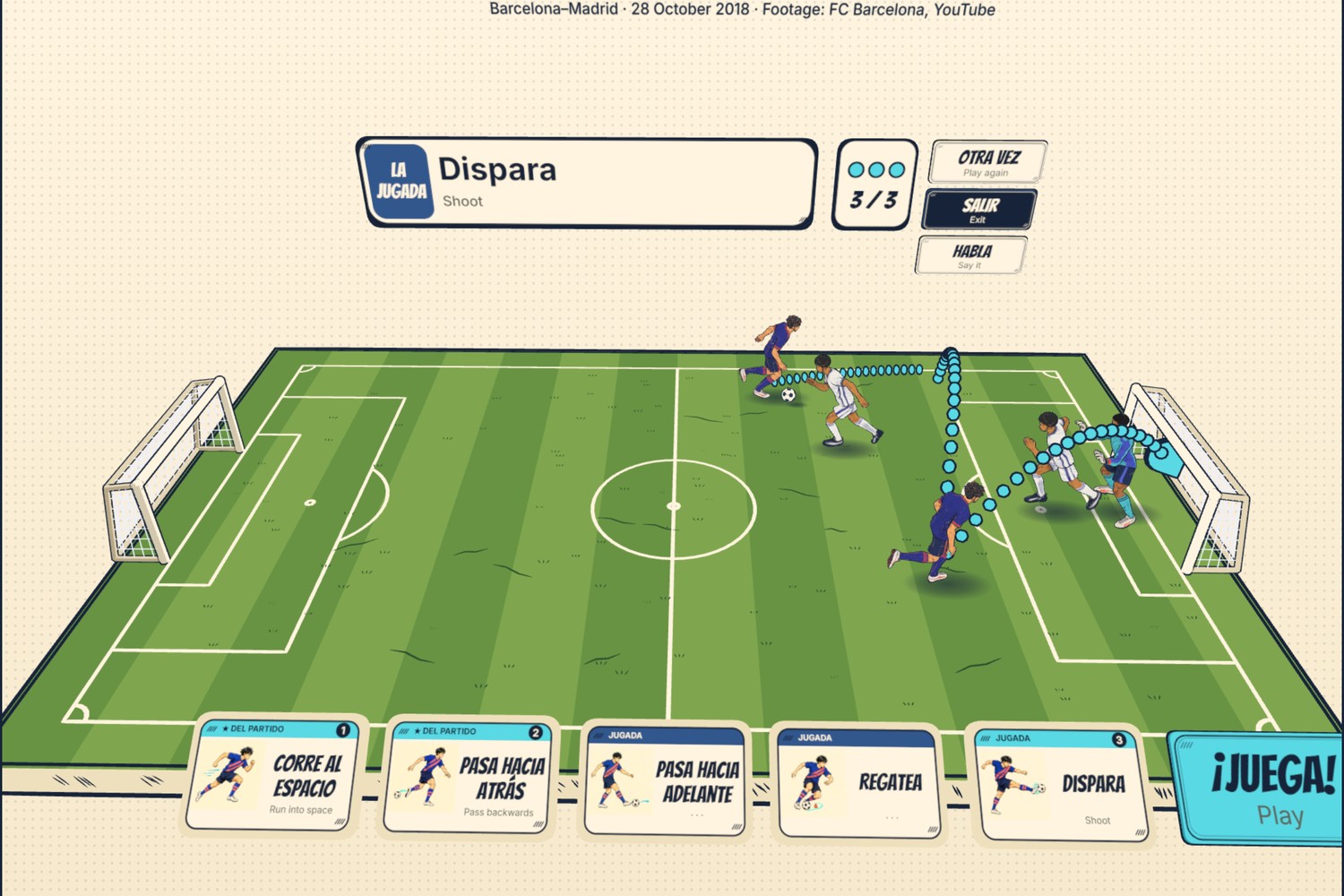
- Play La jugada: grab the players with your hands and play Spanish action cards. Each card only does what its Spanish says, and you have three plays to score.
- Come back: practise your saved words, and Repaso del día keeps your daily streak going.
No controller needed: everything works with your hands.
How I built it
- TypeScript, Vite and Meta's Immersive Web SDK (three.js): it's a WebXR site, so there's nothing to install. Open the link in the Quest Browser.
- Blender Grease Pencil for the manga pitch, frames and celebration, exported to lightweight 3D models.
- Tripo for the players, retargeted to one rig and animated with real run and kick clips.
- Hand tracking for pinch, poke, grabs and a palm-up menu, and spatial anchors so the pitch comes back on the same table next time.
- Real match data: the players' and ball's positions in the tabletop replay come from the actual broadcast, tracked offline with open-source tools: Roboflow's RF-DETR detector and trackers library (BoT-SORT, ByteTrack), plus supervision, PyTorch, OpenCV and SciPy for pitch calibration and smoothing. I labelled who's who by hand.
- Claude Code and Codex as my pair programmers, plus a voice feedback loop I built for testing: in the headset I hold a button and say what's wrong, the take reaches my PC with a screenshot and a transcript, and the fix often lands before I take the headset off.
Challenges I ran into
- Buttons that run away. The hand menu first followed my hand, so it moved under the finger trying to press it. Now it stays put, and you carry it by raising the back of your hand.
- Invisible things catching the ray. Hidden objects still caught the pointer, so a closed game blocked the Start button behind it.
- Players you couldn't grab. The run animations drifted the bodies away from where your hand reaches for them, so I rebuilt the runs in place.
- Testing inside a headset. A web page can't record passthrough, so I needed my own way to see and report what the player sees.
Accomplishments that I'm proud of
- The whole experience works hands-only, seated, from start to finish.
- A real hand-drawn manga look, from Blender's Grease Pencil to mixed reality in the browser.
- Fixing bugs from my own voice feedback while I was still in the headset.
- Presenting ArenaVocaVR to the community at Dev Day Brussels (5 November 2026): a 10-minute scrollytelling talk with the game running live inside the slides (post about the talk).
What I learned
Always give the player a way back. During my live demo at Dev Day, the pitch ended up on the floor and I couldn't bring it back in front of me :) The next day I made the Quest's own reset view (hold the Meta button) put the TV and the pitch right back in front of you.
I also learned that hands need targets that hold still, and that messages belong low in your view, not above the screen.
What's next for ArenaVocaVR
- More match moments, from more matches.
- A friend mode for La jugada, so I can finally beat my dad.
- Saying the Spanish out loud to make the play. It already works on my dev setup and needs on-device speech recognition to ship.
- ArenaVoca for Android and iOS, with the words you save on the Quest waiting on your phone. Pairing and sync already work on arenavoca.tech; the apps are on their way to Google Play and the App Store.
I started ArenaVoca on 12 October 2026 as a Quest prototype for this competition. I branched a Fire TV version from it for the Amazon App Developer competition, then rebuilt the Quest experience as ArenaVocaVR in a fresh repository. Match footage: FC Barcelona on YouTube, credited in the app.


