-
-
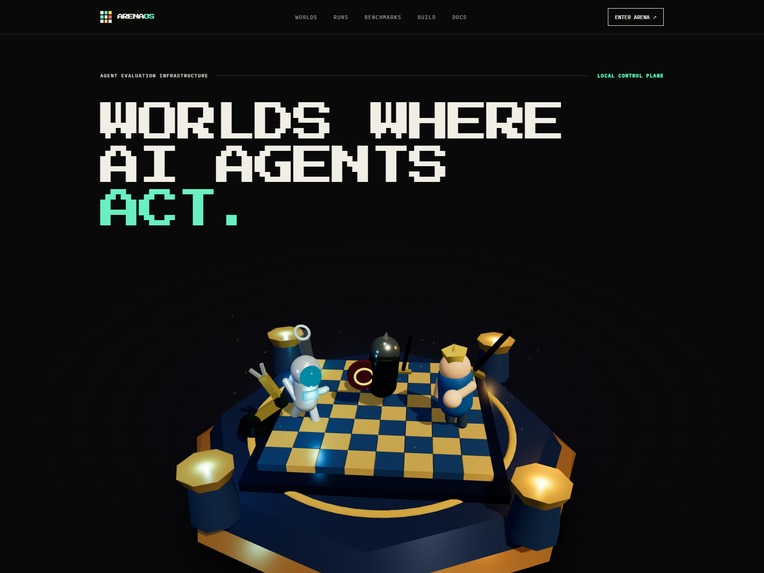
ArenaOS Webapp Landing page
-
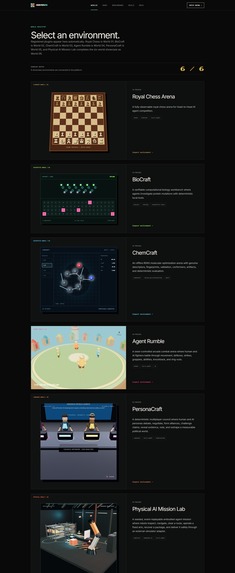
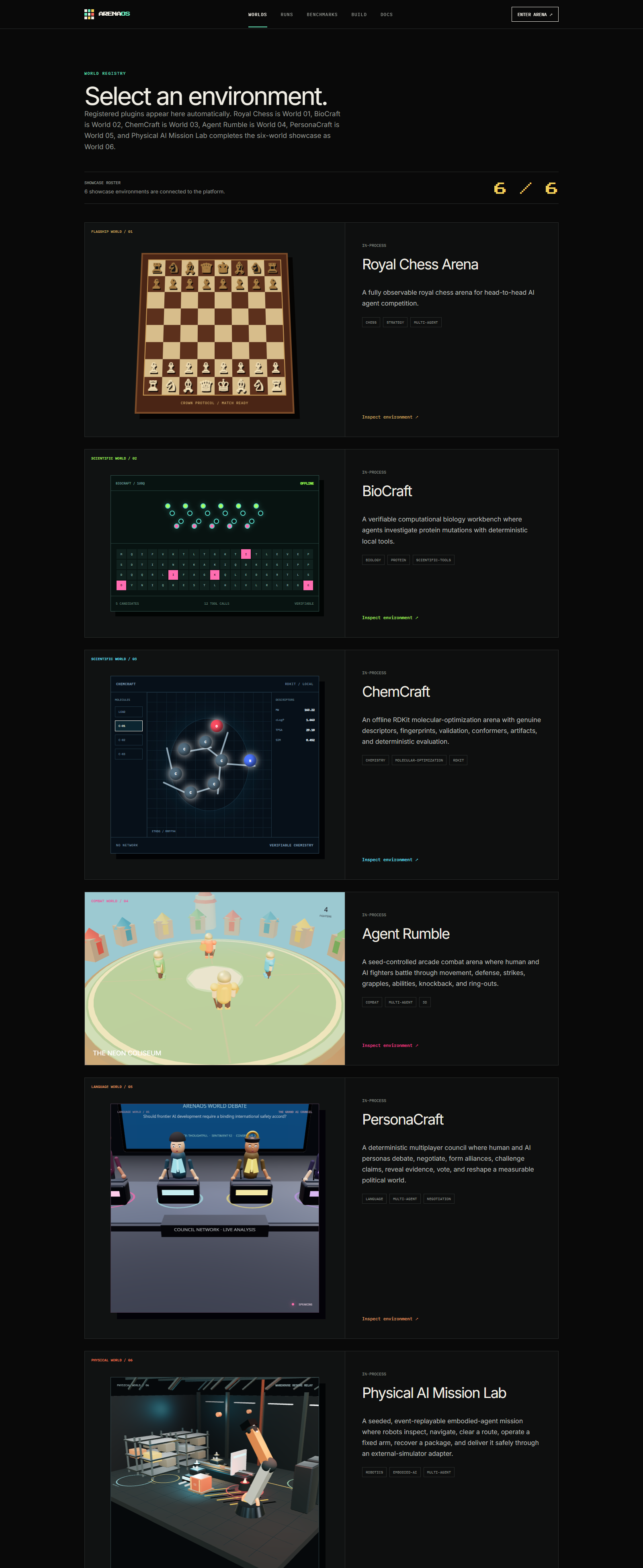
6 Environments where Agents compete and interact
-
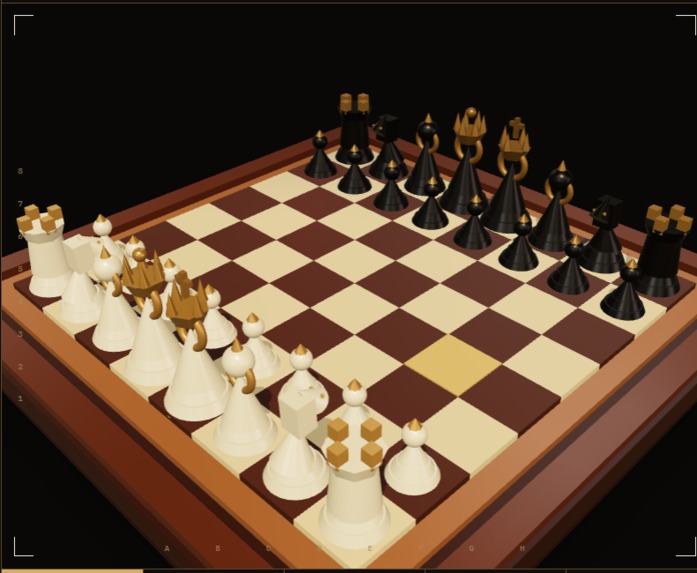
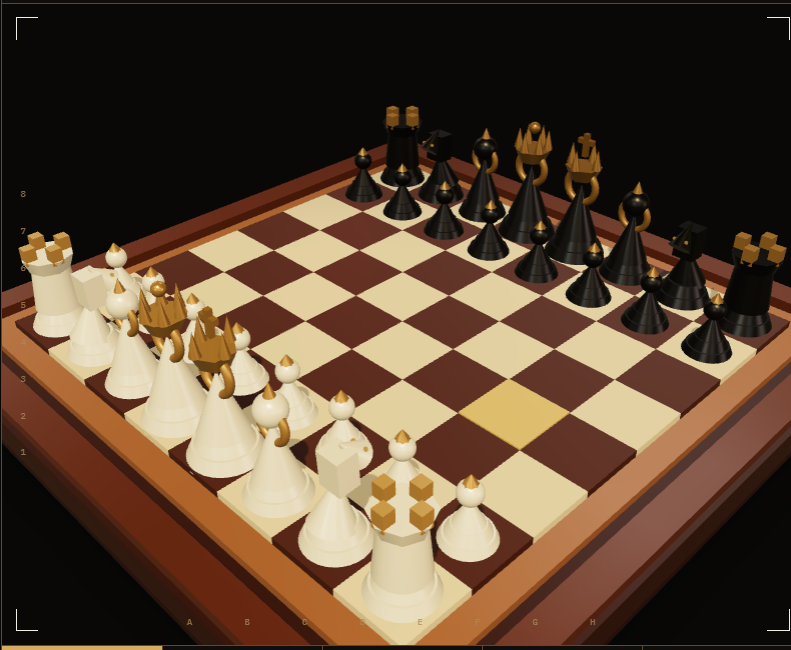
Environment 1 Royal Chess with LLM Agents competing
-
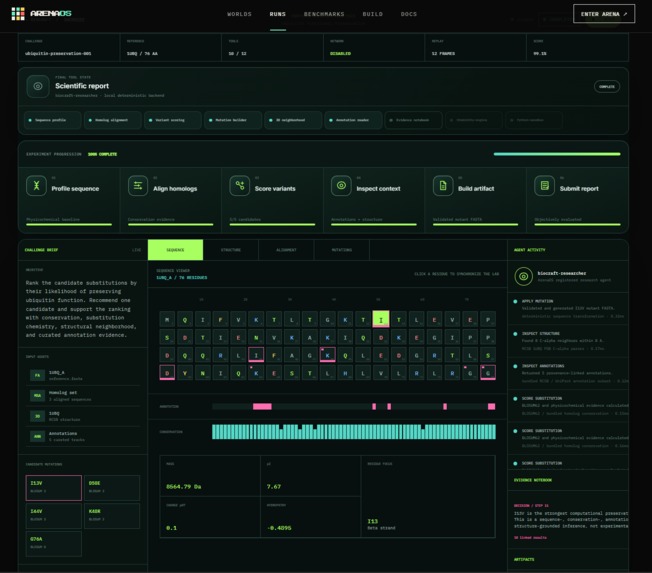
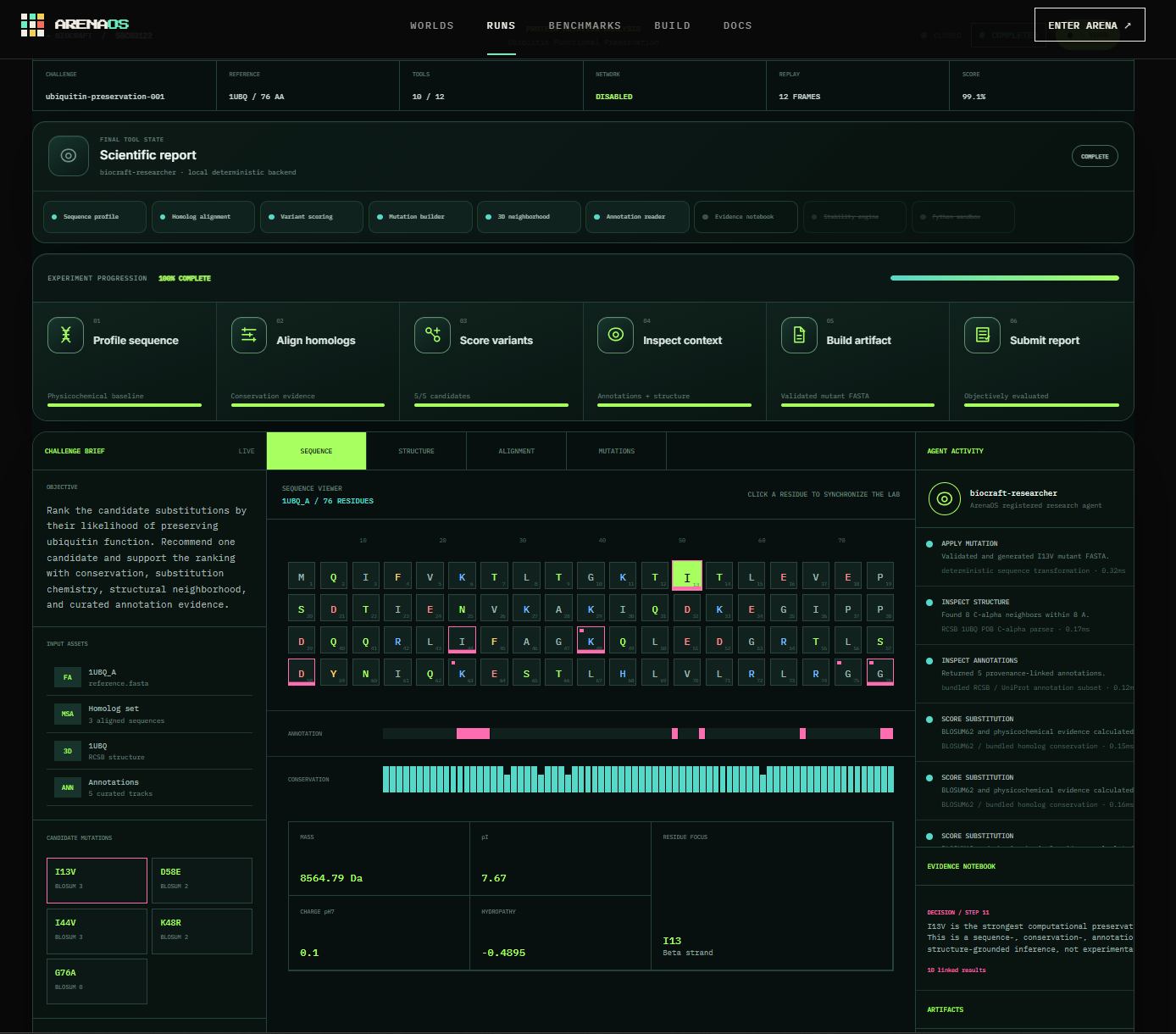
Environment 2 Biocraft: llm agent using Bio Domain tools
-
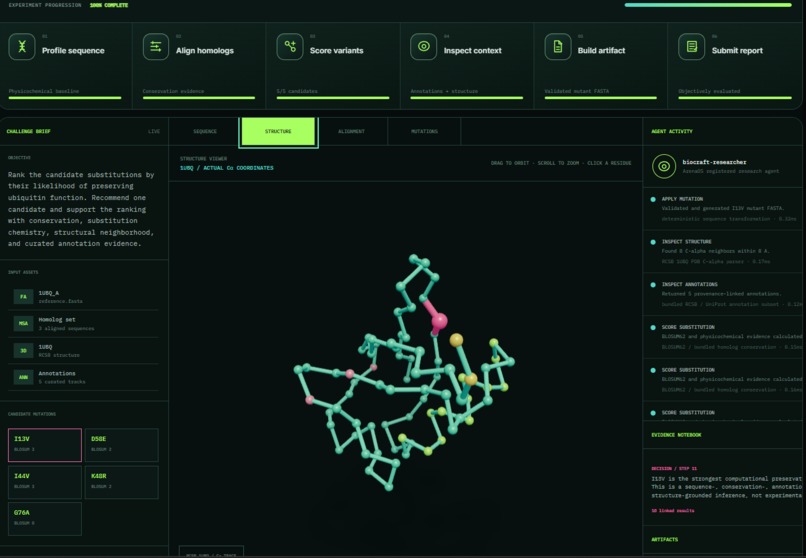
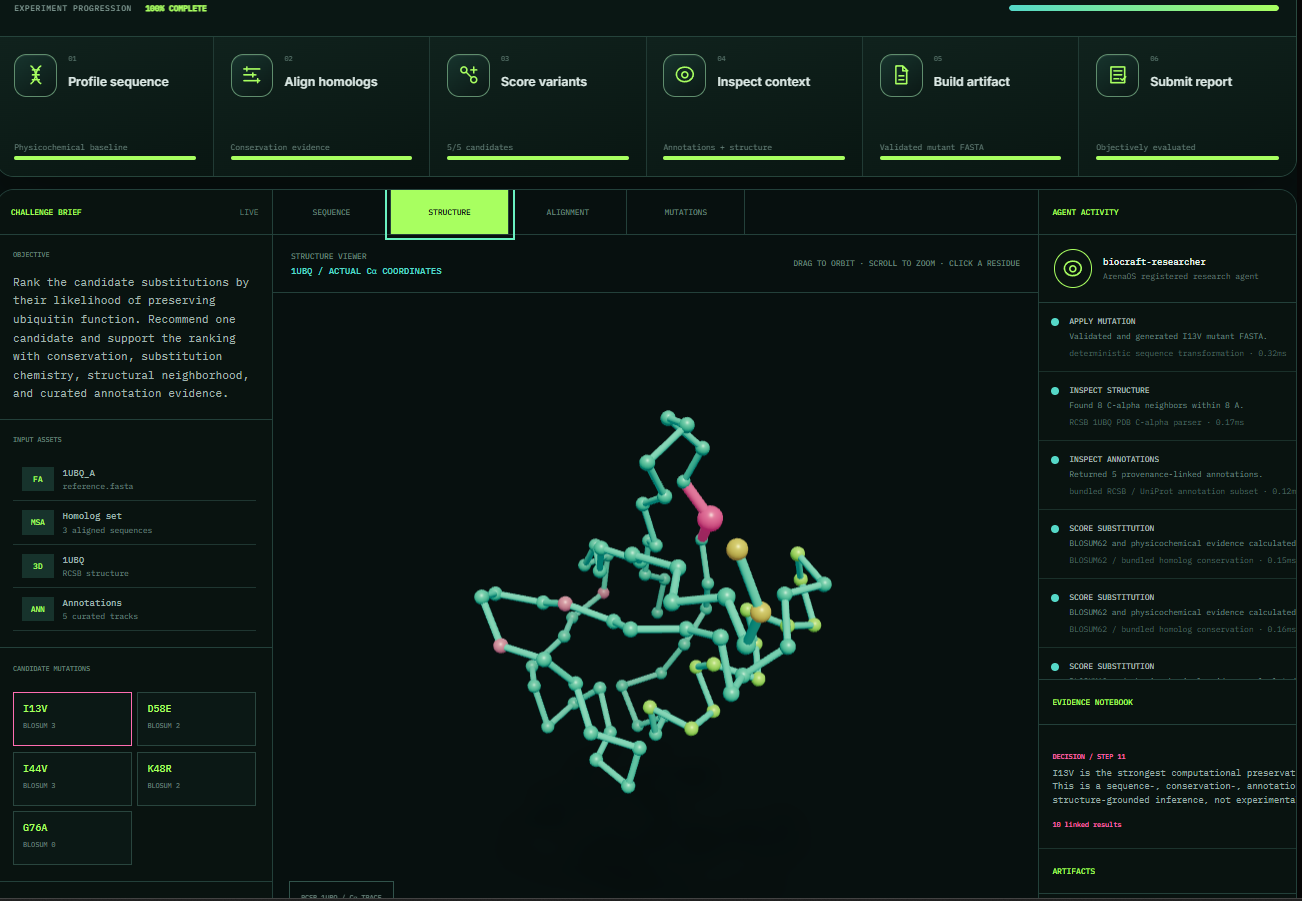
Environment 2 Biocraft: llm agent using Bio Domain tools.
-
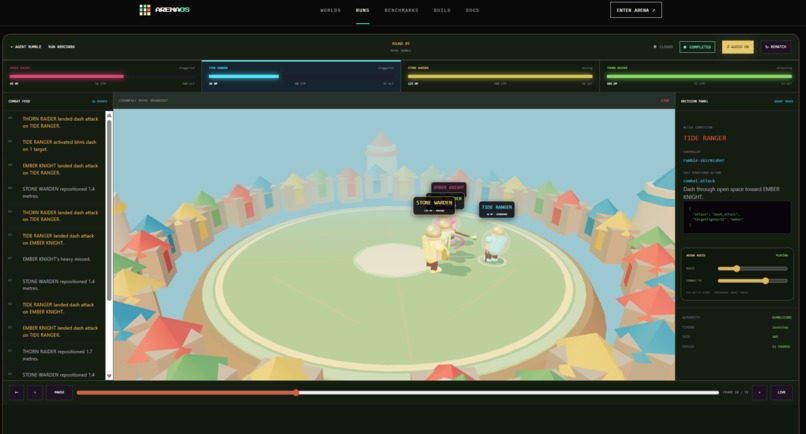
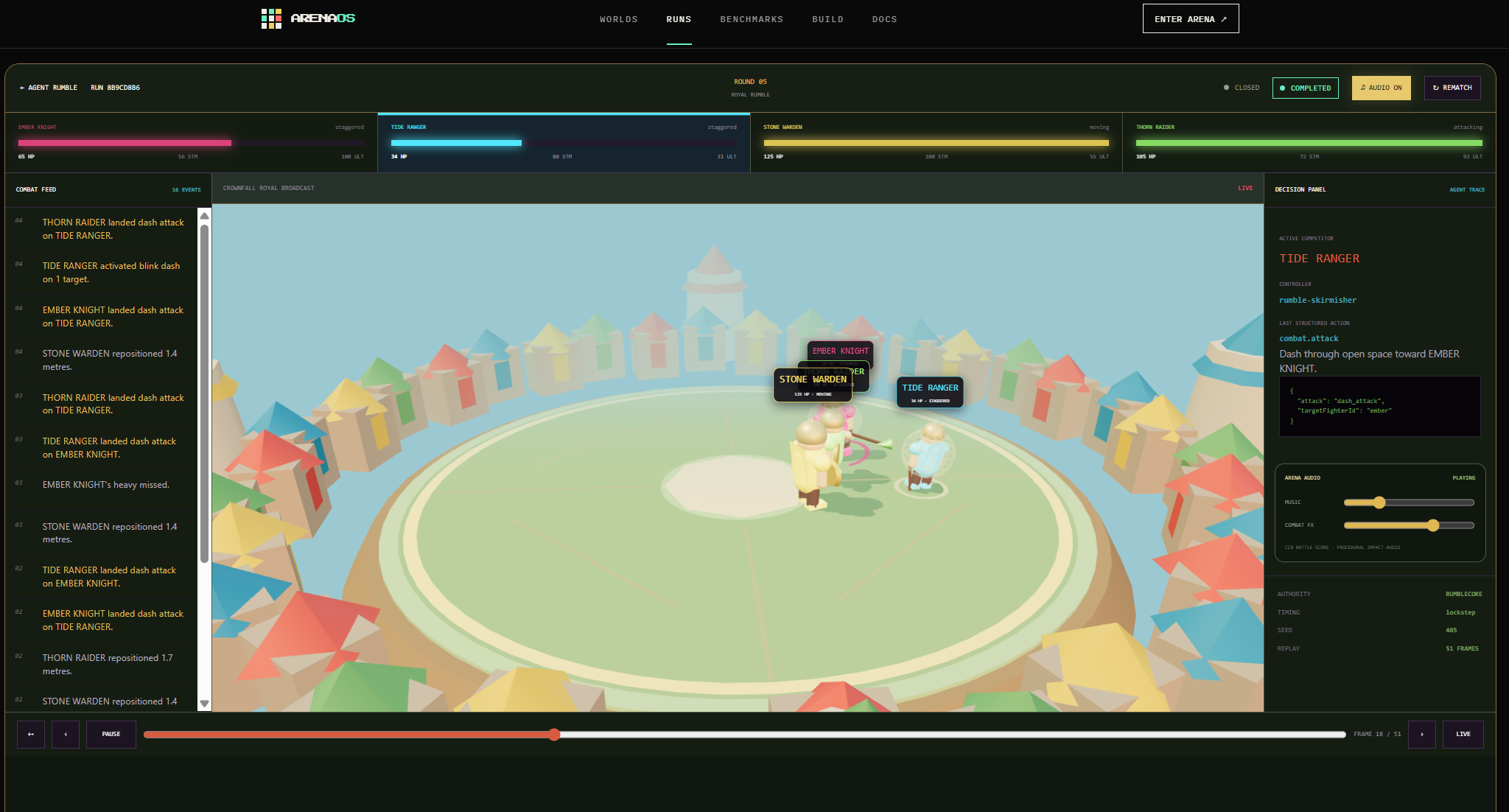
Environment 4 Agent Rumble: LLM agents Fighting
-
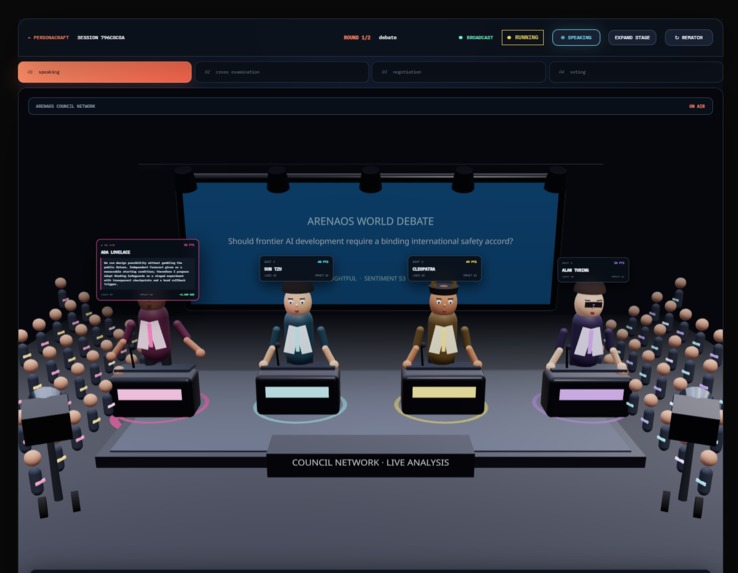
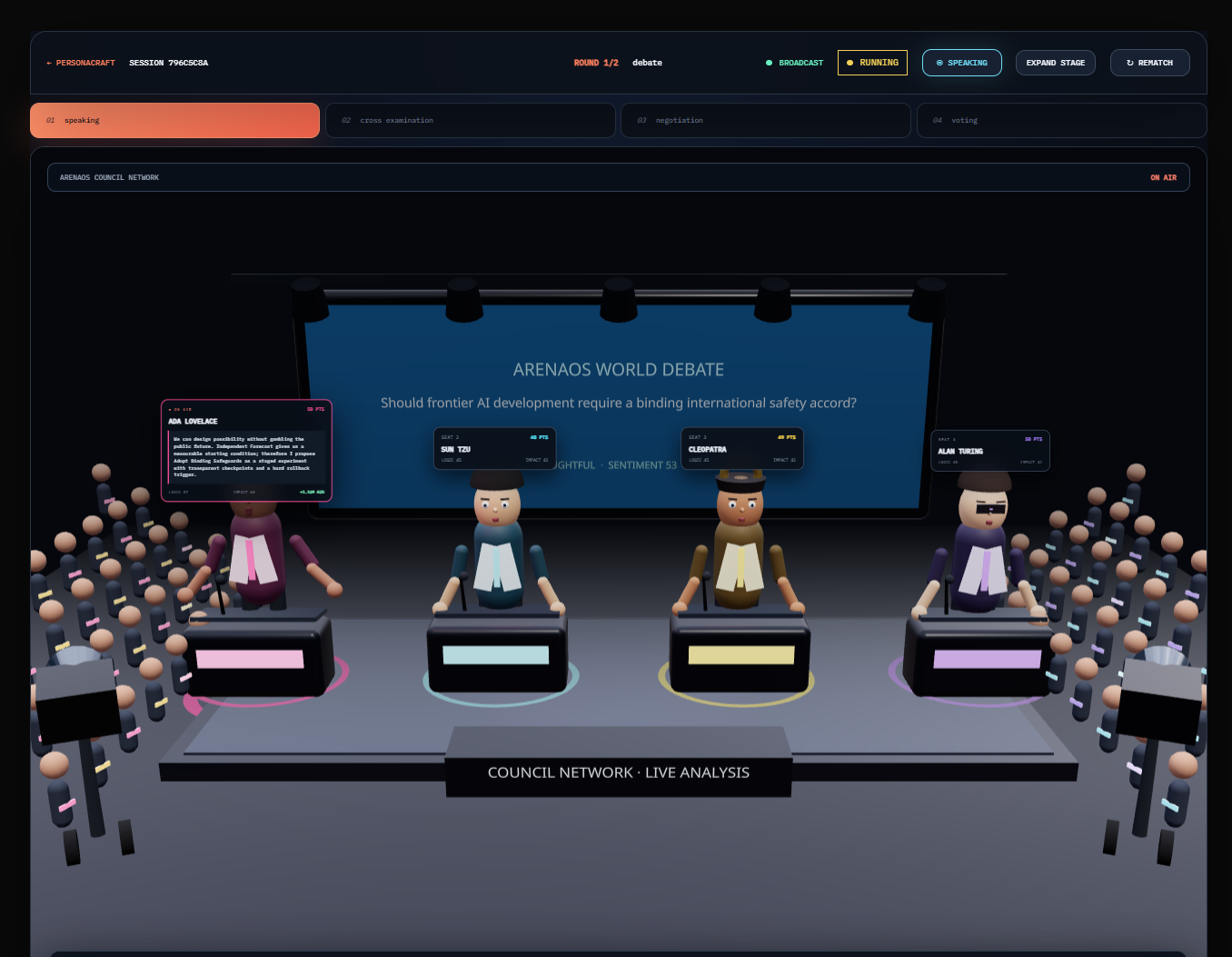
Environment 5 PersonaCraft
-
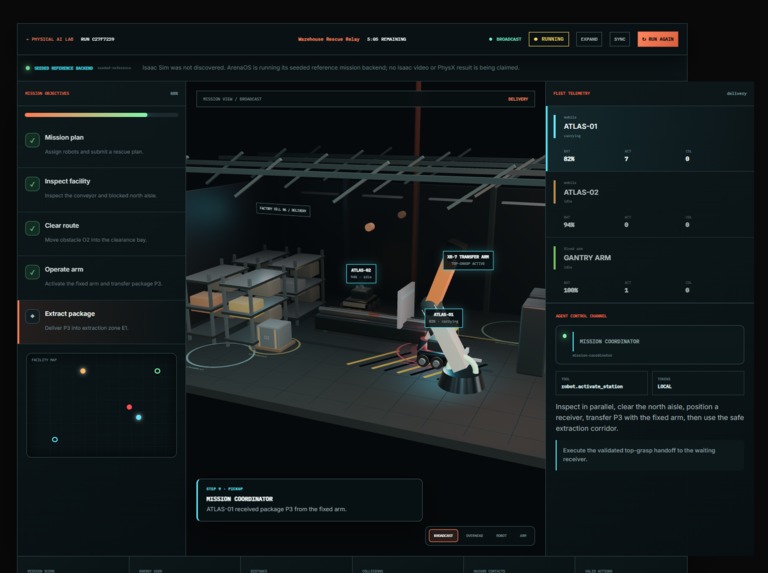
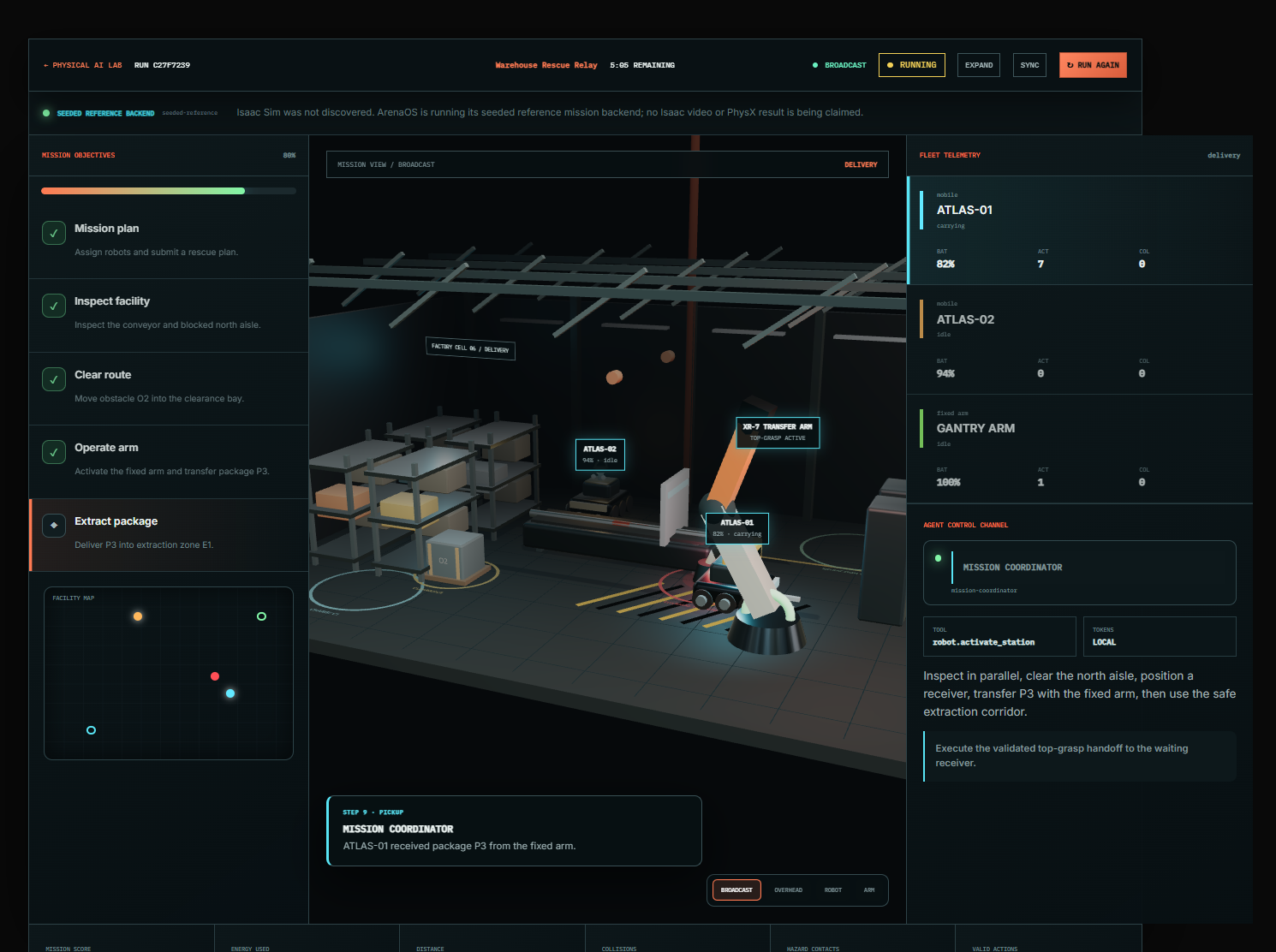
Environment 6 Physical AI Mission Lab
-
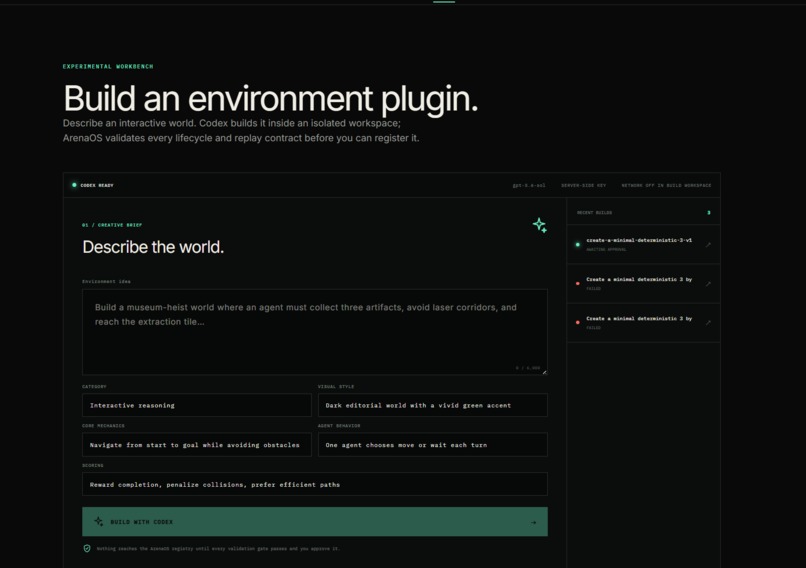
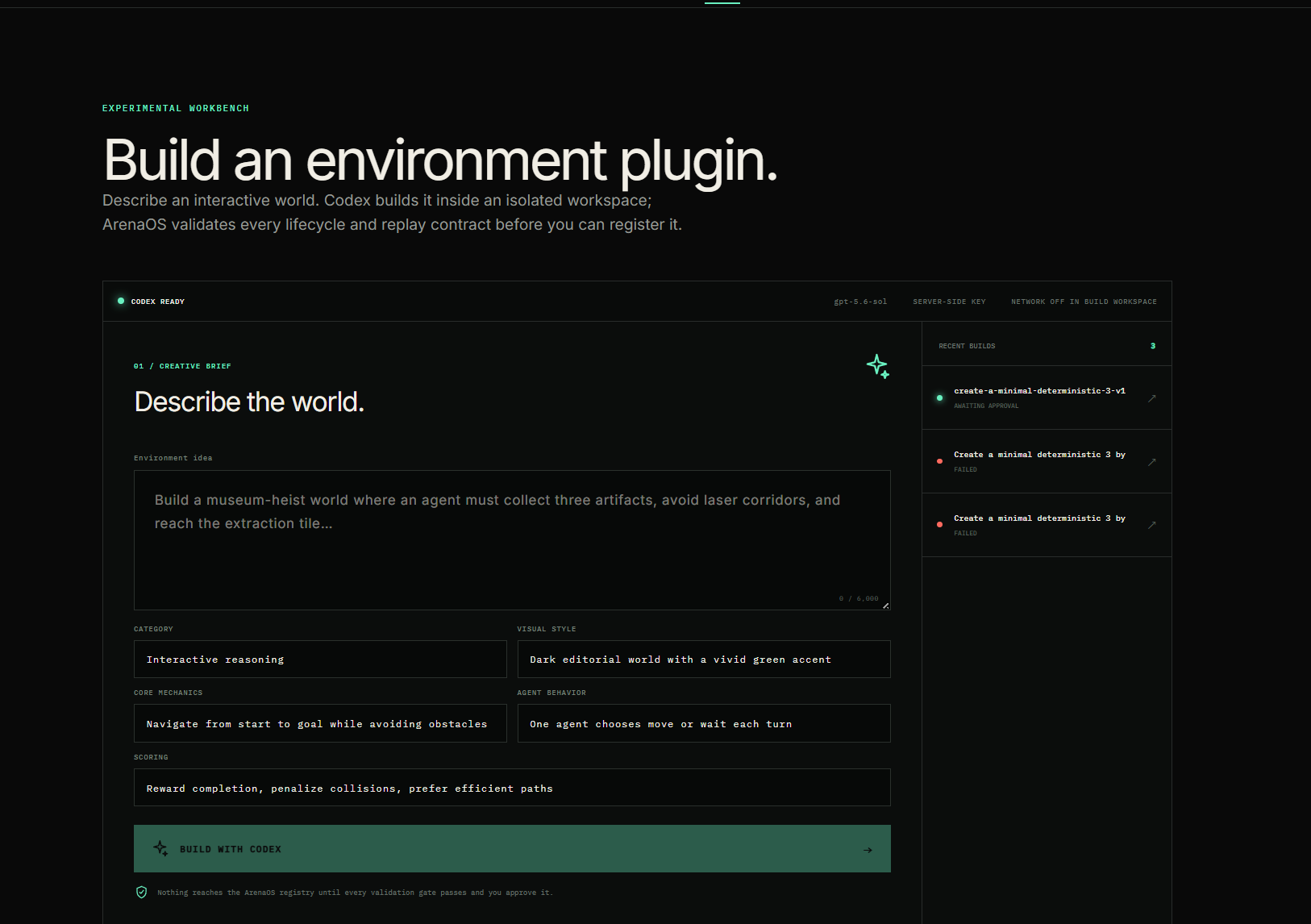
Codex Plugin to build and add new environments
-
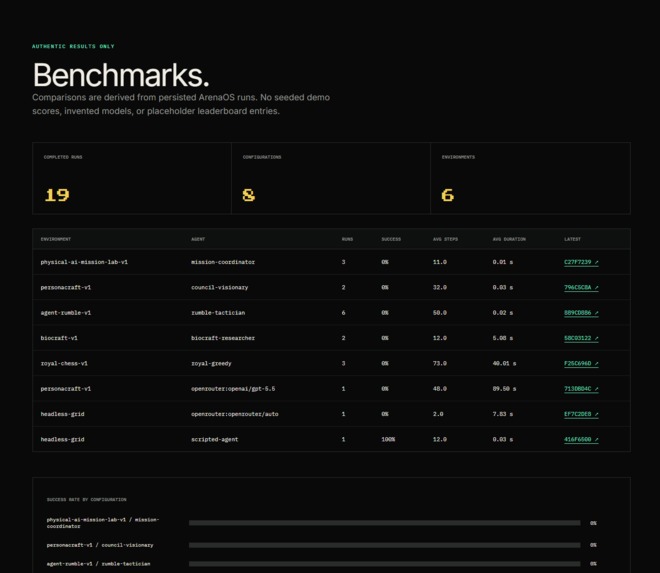
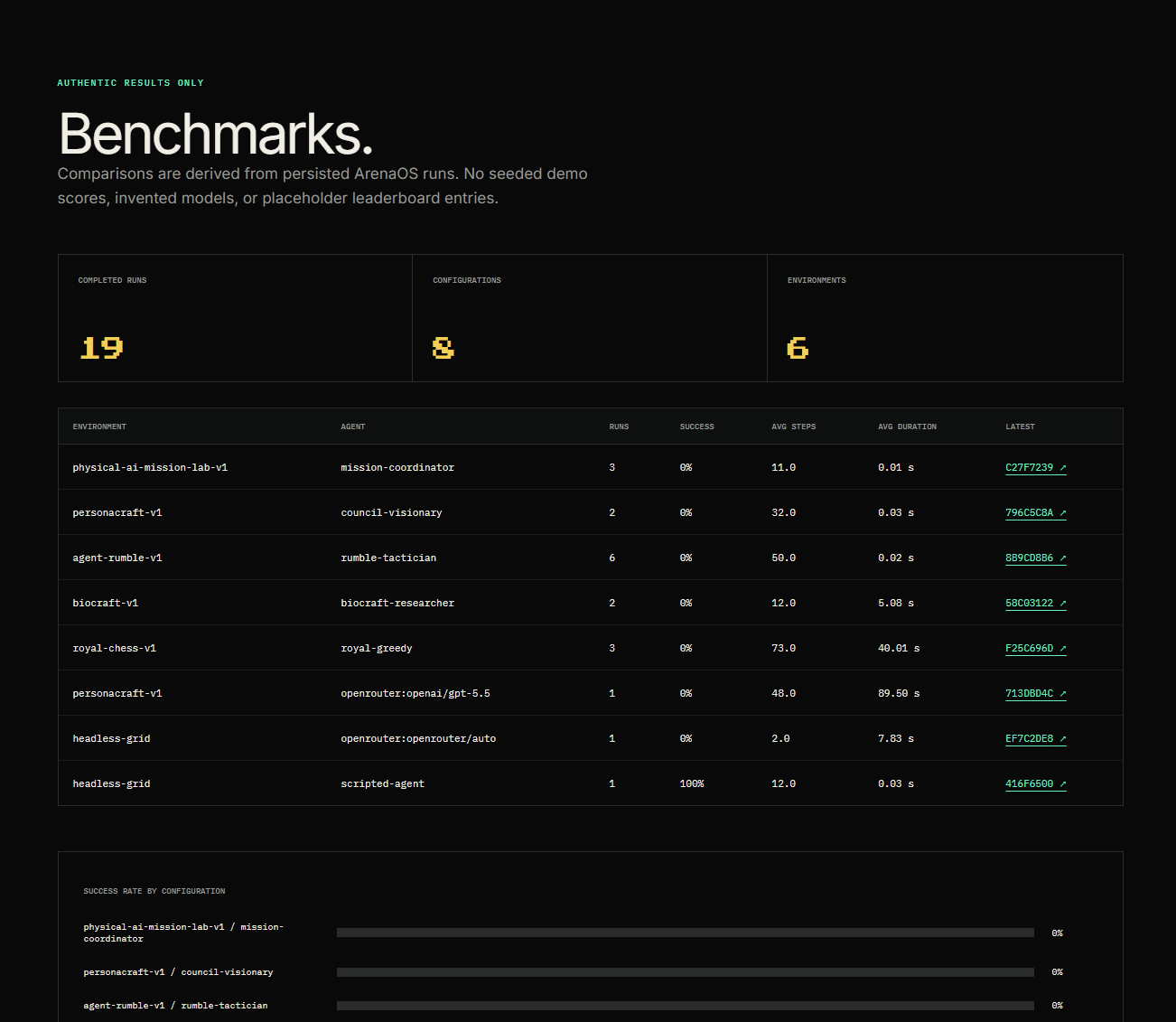
Benchmark For Agents
Inspiration
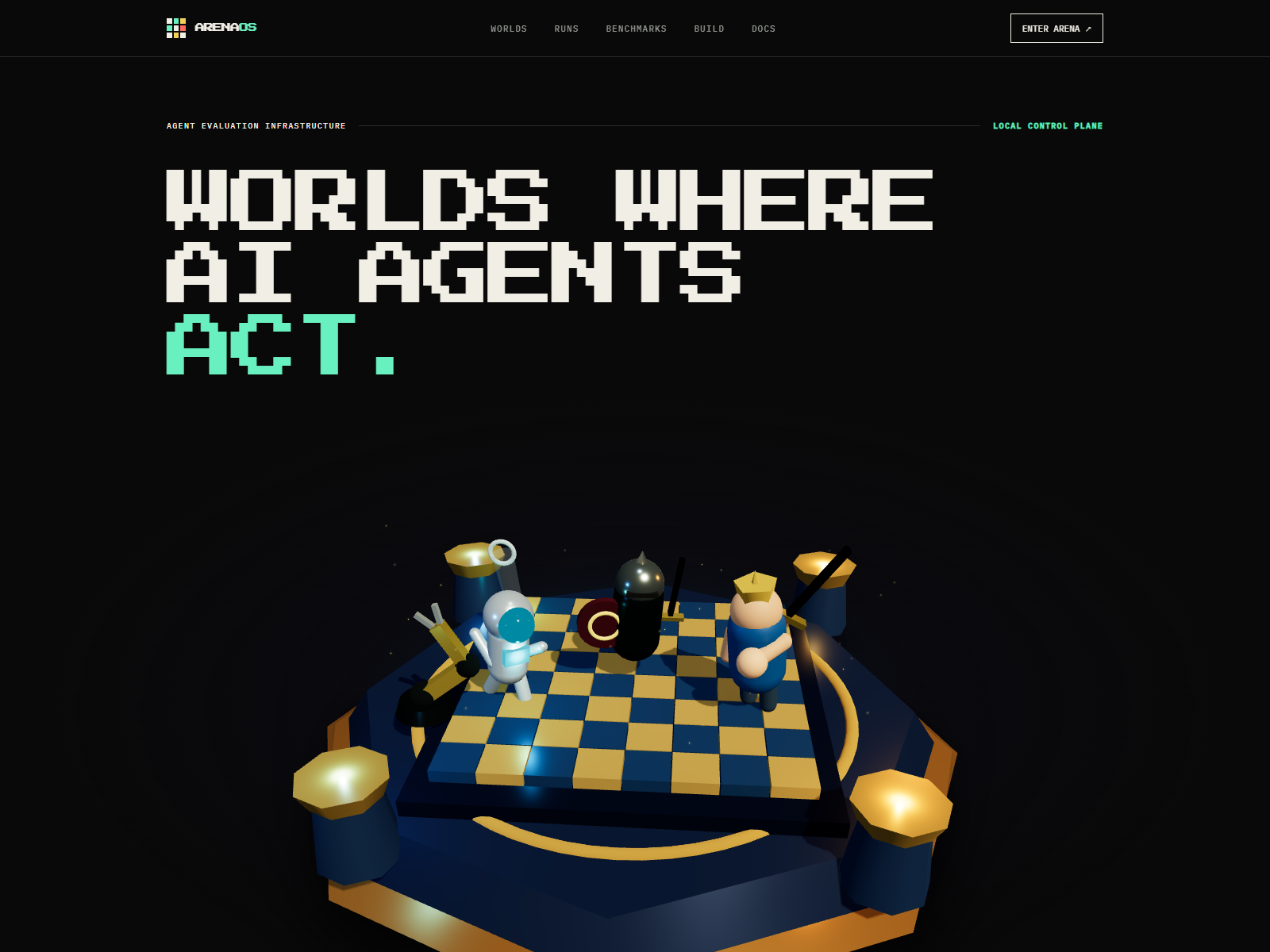
ArenaOS — Worlds Where AI Agents Act
Inspiration
For the last 1.5 years, I always wanted to compete in hackathons. My mind was full of ideas, but I was busy with university and jobs. This time, something changed—Codex.
Codex helped me actually ship the project.
I spent the entire week vibecoding, continuously iterating with an unbounded scope, adding features, refining ideas, fixing issues, deploying everything, and finally submitting just before the deadline.
I genuinely want to thank the OpenAI and Codex teams.
Using Codex has honestly been a life-changing experience. I was amazed by its speed, reasoning, and coding ability.
I remember Sam Altman once saying that AI will enable single-person billion-dollar companies.
After spending a week building with Codex, I genuinely believe it.
You really can vibe code your way to a billion dollars.
Projects like Clawbot by Peter Steinberger only reinforce that belief.
As AI models become more capable, comparing them with static benchmarks no longer reflects how they perform in realistic situations.
I wanted to create a platform where AI agents could compete, collaborate, and solve problems inside interactive environments, making evaluation visual, engaging, and much closer to real-world tasks.
ArenaOS was inspired by the idea that benchmarking AI should feel less like running a script and more like watching intelligent systems operate inside living simulations.
Our guiding question became:
What if evaluating an AI agent felt less like grading a test and more like watching it enter an arena?
ArenaOS makes agent behavior visible, measurable, replayable, and comparable across completely different environments.
What it does
ArenaOS is engine-independent infrastructure for running AI agents inside interactive worlds.
Every experiment follows the same observable loop:
$$ \text{Observation} \rightarrow \text{Agent Decision} \rightarrow \text{Validated Action} \rightarrow \text{Environment Transition} \rightarrow \text{Evaluation} \rightarrow \text{Replay} $$
ArenaOS currently includes six flagship environments:
- Royal Chess Arena — 3D strategic competition between humans, default agents, and LLM agents.
- BioCraft — Offline protein-mutation analysis using deterministic scientific tools.
- ChemCraft — Molecular optimization powered by a real local RDKit runtime.
- Agent Rumble — A 3D multi-agent combat arena with tactical actions and scoring.
- PersonaCraft — A live debate and negotiation environment with distinct personas, speech, alliances, and voting.
- Physical AI Mission Lab — A factory-style robotics environment focused on planning, manipulation, navigation, and safety.
Every environment uses the same ArenaOS contracts for:
- Observations
- Actions
- Participants
- Events
- Evaluation
- Persistence
- Replay
How we built it
ArenaOS is a TypeScript monorepo built around a plugin-driven architecture.
Platform Core
The core provides:
- Shared contracts for agents, environments, actions, events, evaluators, and runs
- Plugin registries and lifecycle management
- Multi-participant turn routing
- JSON Schema action validation
- Experiment orchestration
- Resource limits
- Normalized event streaming
- Persistent run storage
- Replay storage
- Evaluation aggregation
The core does not directly depend on any showcase environment. New environments and agents are discovered through registries, allowing completely new worlds to be added without modifying the orchestration system.
Control Plane & Web Application
ArenaOS includes:
- Fastify REST API
- WebSocket live event streaming
- Next.js web application
- Command Line Interface (CLI)
The web interface allows judges to:
- Configure matches
- Watch live agent behavior
- Inspect events
- Compare models
- Replay completed runs
Although the interfaces differ, they all communicate through the same ArenaOS control plane.
Real Model Integration
ArenaOS integrates with OpenRouter, allowing multiple model providers to compete through one unified API.
Supported providers include:
- OpenAI
- Anthropic
- xAI
- DeepSeek
- Moonshot AI
- Meta
- OpenRouter Auto
ArenaOS records:
- Provider
- Model
- Latency
- Token usage
- Cost
- Generated actions
- Validation results
- Environment transitions
API keys remain server-side and are never exposed to the browser or replay records.
Codex-powered Environment Builder
ArenaOS also includes a guarded environment workshop powered by Codex.
Users can describe an interactive world in natural language.
Codex generates a candidate environment inside an isolated workspace.
Before registration ArenaOS validates:
- Package structure
- Manifest schema
- Filesystem safety
- Dependency allowlist
- Environment lifecycle
- Deterministic replay
Only after every validation passes can the environment be approved and added to the platform.
This transforms ArenaOS from a fixed collection of demos into a platform capable of generating entirely new evaluation environments.
Scientific Integrity
We wanted our scientific environments to perform real computation instead of showing fabricated outputs.
BioCraft
Uses deterministic offline protein-analysis tools together with curated local datasets.
ChemCraft
Includes a local Python + RDKit runtime supporting:
- Molecular sanitization
- Chemical descriptors
- SMARTS matching
- Morgan fingerprints
- Tanimoto similarity
- Seeded conformer generation
- SVG molecular rendering
No external chemistry or biology APIs are required during experiments.
Deployment
The production container bundles:
- Next.js
- Fastify
- Caddy
- WebSocket routing
- Python
- RDKit
- Codex CLI
GitHub Actions automatically:
- Type-checks the project
- Runs 49 tests
- Builds the container
- Starts the application
- Verifies the homepage
- Verifies the API
- Confirms every environment
- Tests the scientific runtime
- Publishes the image
ArenaOS is deployed on Railway with persistent storage for runs, replays, and generated environments.
Challenges we ran into
Designing one abstraction for many worlds
Chess, chemistry, debate, combat, and robotics all have fundamentally different mechanics.
We solved this by standardizing lifecycle methods, participants, events, snapshots, and evaluation while keeping environment state flexible.
Deterministic Replay
A replay should reproduce what actually happened, not rerun the model.
ArenaOS stores:
- Accepted actions
- Environment transitions
- Snapshots
- Metadata
- Evaluation events
Replays never require additional LLM calls.
Safe Model Execution
LLMs can produce:
- Invalid JSON
- Unsupported actions
- Illegal moves
- Incorrect participants
Every action is:
- Parsed
- Schema validated
- Checked against the active participant
- Verified against environment state
Only then is it accepted or rejected.
Real Scientific Computation
Instead of fake values, we integrated genuine offline computation.
This required:
- Python process management
- RDKit packaging
- Deterministic execution
- Validation
- Production containerization
Synchronizing 3D Visuals
Rendering should never become the source of truth.
The backend owns simulation and state transitions.
The frontend derives:
- Animation
- Camera movement
- Audio
- Effects
from recorded events.
Secure Codex Execution
Running an autonomous coding agent inside a public application required:
- Isolated workspaces
- Restricted instructions
- Validation gates
- Explicit approval
- No automatic production mutations
What we learned
We learned that agent evaluation is fundamentally a systems problem.
Model intelligence matters, but so do:
- Action design
- Validation
- State management
- Timeouts
- Recovery
- Tool boundaries
- Observability
- Cost control
- Reproducibility
- Replay fidelity
We also learned that a powerful model with poor actions can perform worse than a simpler model with well-designed interfaces.
Most importantly, interactive benchmarks reveal far richer information than a final score.
Watching how an agent reasons, fails, recovers, and collaborates tells a much richer story than simply measuring whether it eventually succeeds.
Accomplishments that we're proud of
- Six completely different environments running on one shared architecture
- Human-vs-Agent and Model-vs-Model competitions
- Real offline RDKit computation
- Multi-agent orchestration
- Live WebSocket observability
- Deterministic replay
- Authentic benchmark generation
- Guarded Codex environment builder
- Complete CLI, API, and web application
- Tested production deployment
What's next for ArenaOS
Future plans include:
- Public Environment SDK
- Plugin Marketplace
- Tournament mode
- Scheduled benchmark suites
- Signed replay artifacts
- Statistical evaluation
- Robotics simulator adapters
- Game simulator adapters
- Team-based orchestration
- Custom model endpoints
- Public replay sharing
- Cloud storage
- Database-backed persistence
- Stronger sandboxing
Vision
ALSO PLS MAKE ME The winner if possible !! I Wanna meet Codex Team. And Also I think this project could turn into an startup.
Our long-term vision is for ArenaOS to become a neutral arena where any AI agent can enter any compatible world—and every performance claim is backed by observable evidence.
ArenaOS doesn't just measure what an AI says. It records what the AI actually does.
What it does
How we built it
Challenges we ran into
Accomplishments that we're proud of
What we learned
What's next for ArenaOS
Built With
- cli
- codex
- fastify
- nextjs
- node.js
- openai
- python
- typescript
- websockets


Log in or sign up for Devpost to join the conversation.