-
-
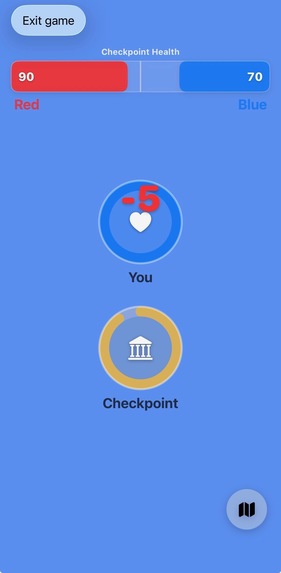
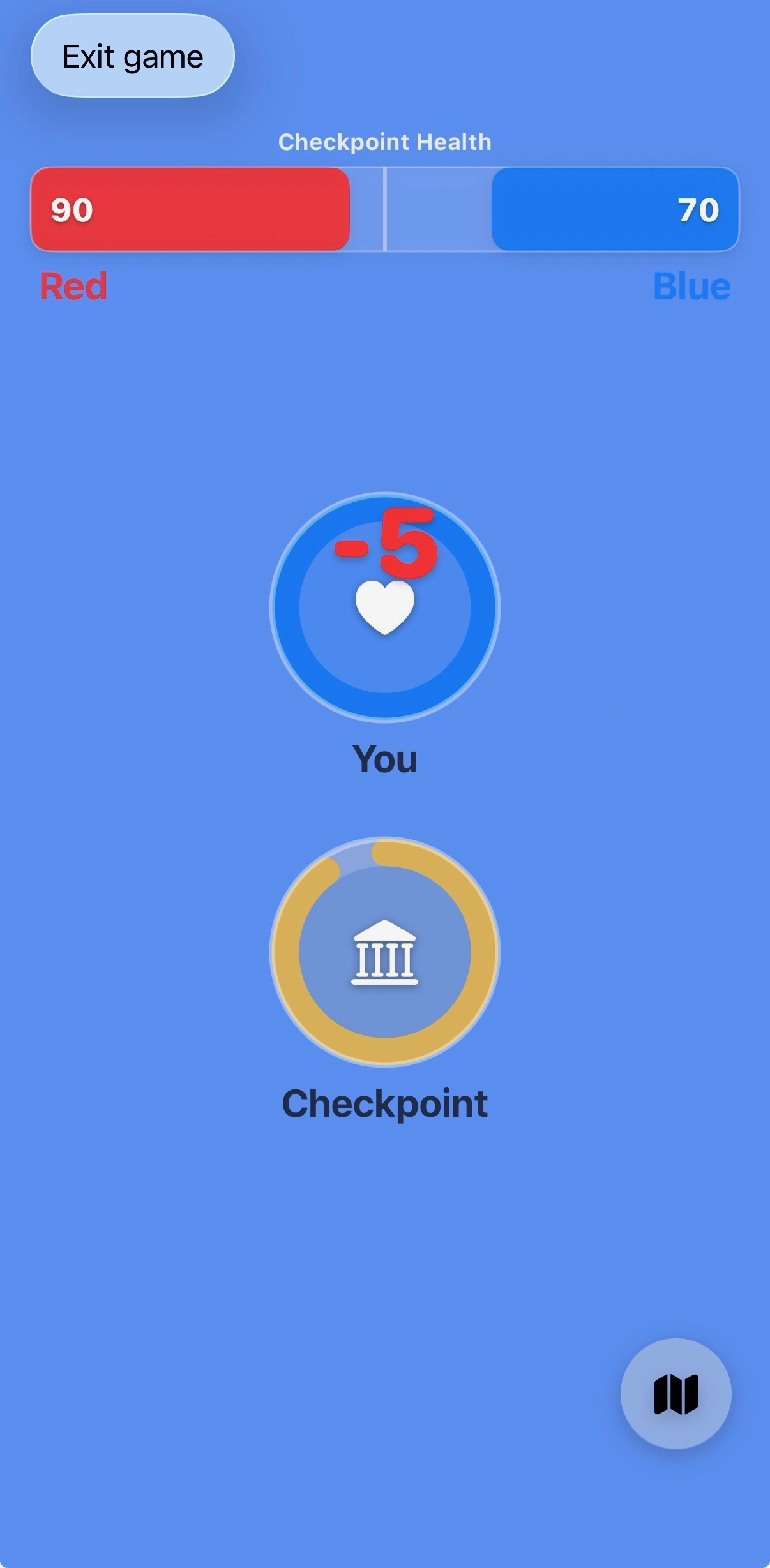
In game view
-
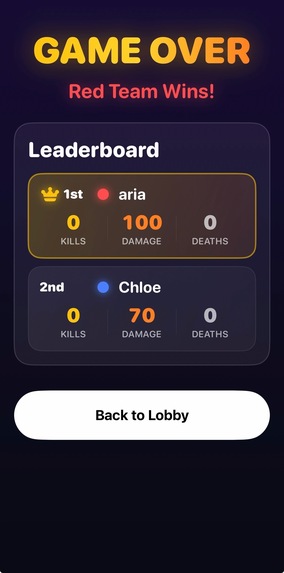
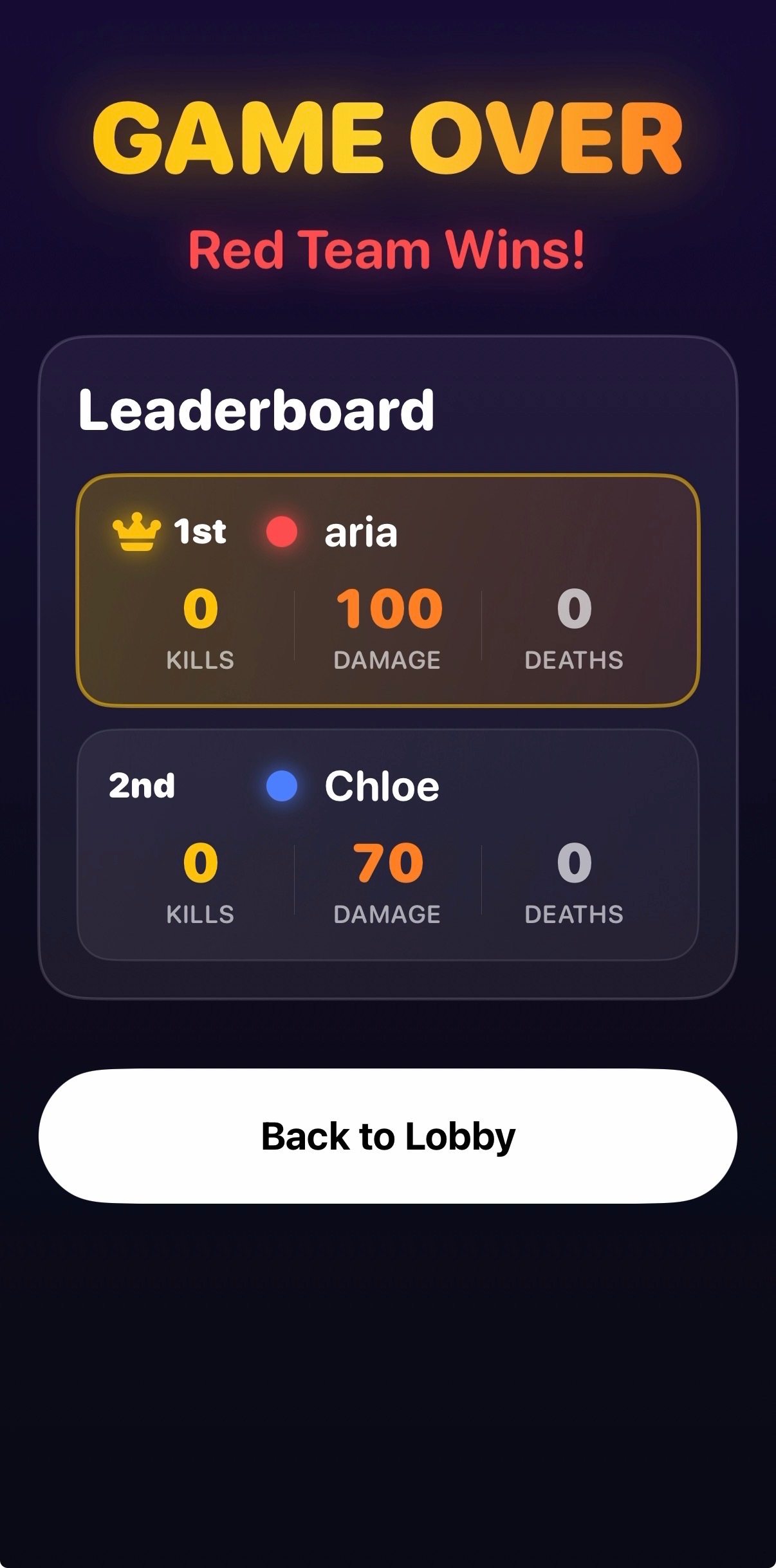
Game over view
-
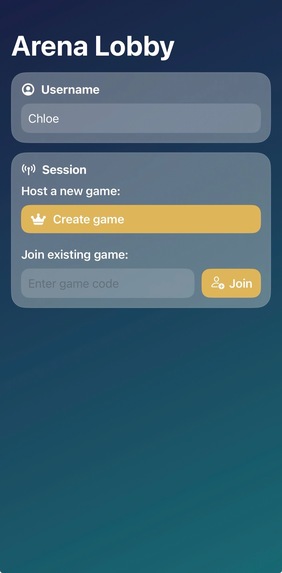
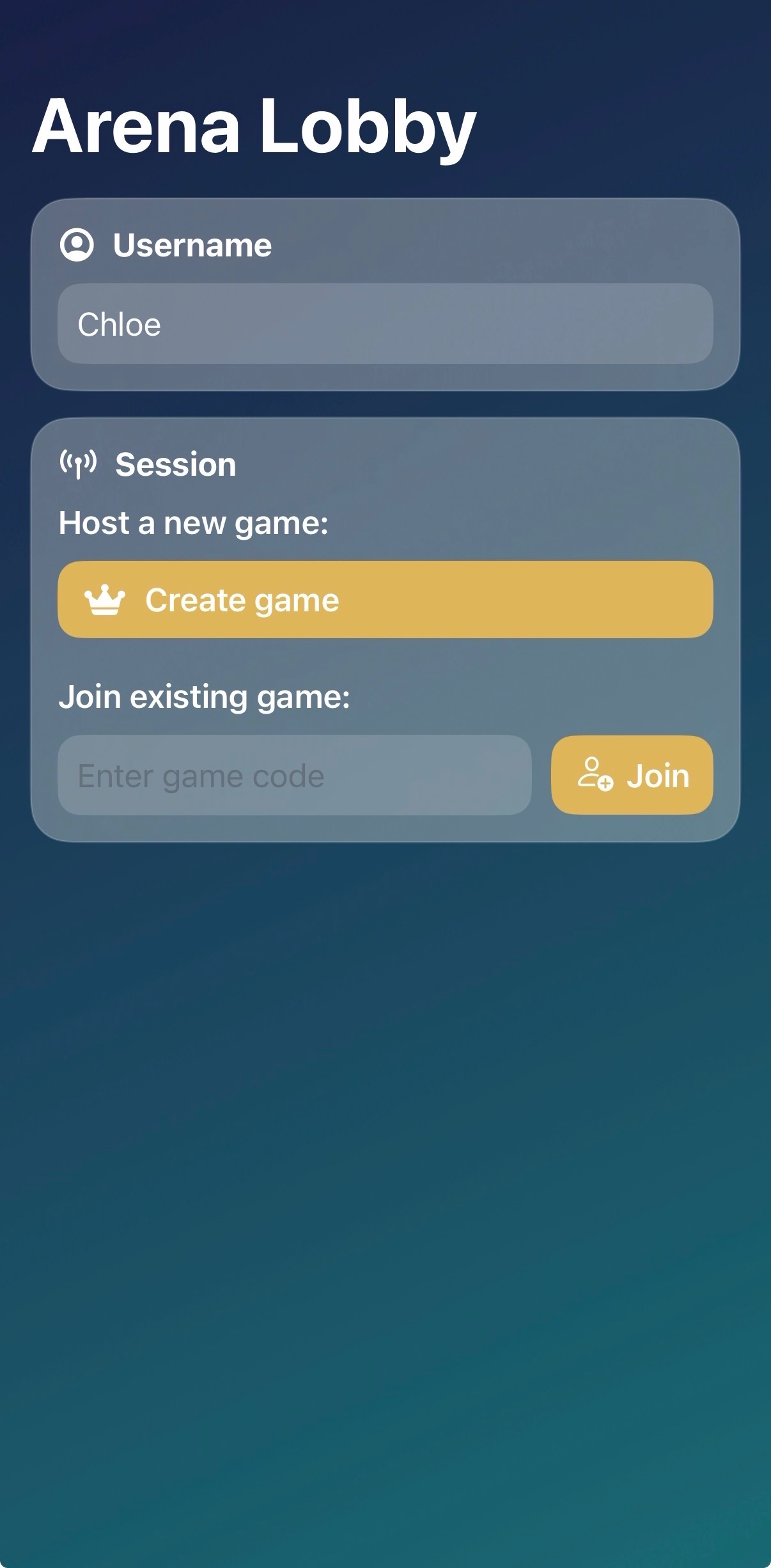
Lobby view
-
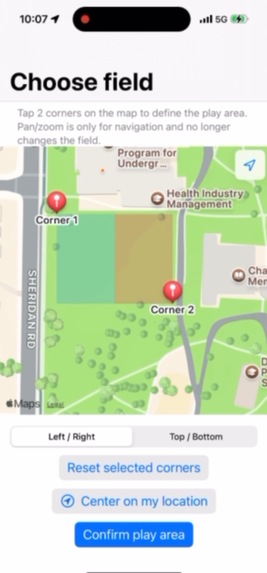
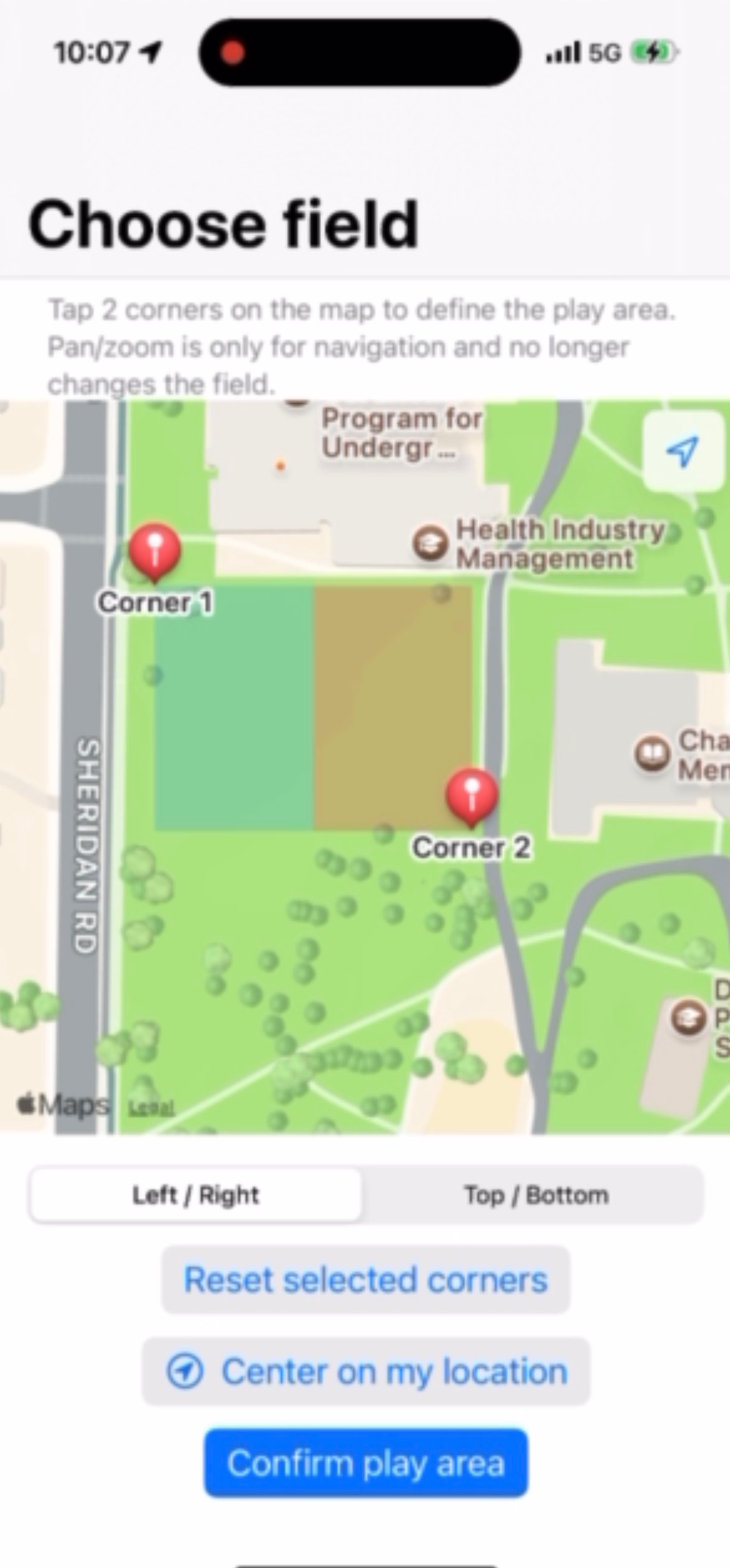
Field area selection view
-
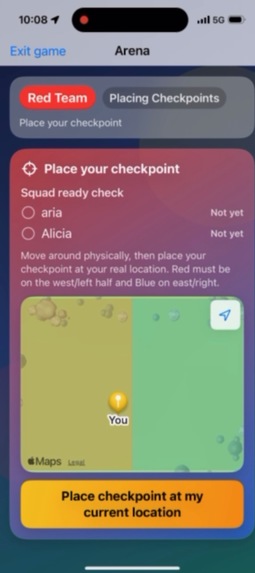
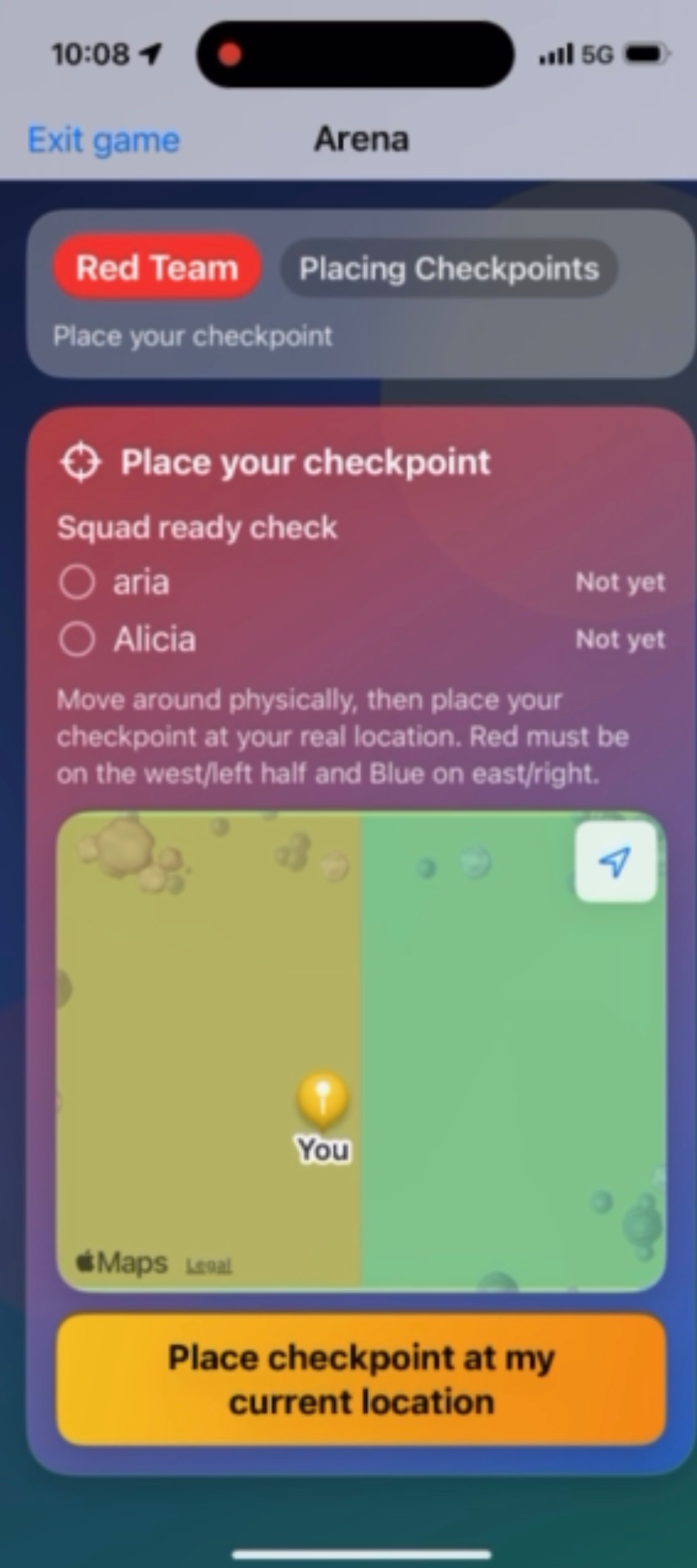
Checkpoint placement view
Inspiration
When was the last time you ran outside on a field with some friends? Games like tag or infection used to come naturally, but today, that kind of unstructured outdoor play is becoming less common. As technology becomes more accessible, it has also quietly replaced a lot of that movement with increasing screen time.
This shift isn’t just nostalgic, it’s measurable. Studies from organizations like the American Academy of Pediatrics show that children are spending 7+ hours a day on screens, while physical activity levels continue to decline. At the same time, fewer kids are meeting the recommended 60 minutes of daily exercise.
We want to get kids to go outside and move around more, something that was so simple a couple years ago that has now become a concern. We wanted to bring back that feeling of spontaneous, active play but in a way that fits today’s world. Instead of competing with technology, Arena uses it to recreate those experiences, turning familiar digital game mechanics into something that gets people moving, exploring, and interacting in real life again.
What it does
Arena transforms the real world into a live, interactive battlefield where players move, compete, and strategize in physical space. Using GPS and mobile gameplay, players join matches, navigate a shared map, and setting their checkpoint for their team based on their real-world location. As they move, their actions directly influence the game by finding their opponents checkpoints and bringing it down. Players can shoot by jumping up and down, either at each others' checkpoints or at their opponents. If a player is out, their health will slowly respawn but they will have to sit out while they wait.
How we built it
We built Arena as a native iOS app using Swift in Xcode, leveraging Apple’s location and motion frameworks to connect gameplay with the real world. We used Core Location to track player positions and dynamically place checkpoints on a shared map, allowing movement in physical space to directly impact the game. Motion detection (via Core Motion) powers interactions like attacking triggered by actions such as jumping or other physical gestures.
For real-time gameplay, we synced player states, checkpoint health, and match progress through a lightweight backend, ensuring that all players see updates instantly. The result is a seamless blend of mobile development and real-world interaction, where physical movement becomes the core game mechanic.
Challenges we ran into
Surprisingly, the hardest part of the project was getting multiple players to reliably connect to the same game room. There were inconsistencies with syncing together to start the game as one player would join but not be reflected on the host side.
Another challenge was making sure the real-world mechanics felt smooth and fair. Because the game relies on location and motion data, we had to think carefully about how to handle differences in GPS accuracy, movement detection, and response time between devices.
Accomplishments that we're proud of
The game itself is fully functioning. It was extremely cool and fulfilling to see the different components come together like field area selection on the map, live location tracking, and motion detection. Was also extremely proud of us for working with Swift and building an iOS app when we all lacked experience with it but was still able to get something out of it.
What we learned
We learned how to build an iOS app in a short span of time. We also learned how to utilize GPS tracking and motion detection within the app.
What's next for Arena
One component that we wish we had time to implement was teammate healing, where you can shorten the amount of time it takes to revive by having a teammate come heal you. The idea is for you to hold your phone level for a given amount of time until your teammate is healed. This allows the game to feel more team-oriented and collaborative.

Log in or sign up for Devpost to join the conversation.