Inspiration
A GP has minutes. In that time they ask about symptoms, history and lifestyle. They almost never see the air you breathe on your commute, the damp in your flat, or how different your last neighbourhood was from your current one. It isn't that nobody cares. The data is public, but it sits across a dozen sites in formats no one has time to decode mid-appointment.
We asked: what if the environment showed up in the consultation as naturally as blood pressure does?
What it does
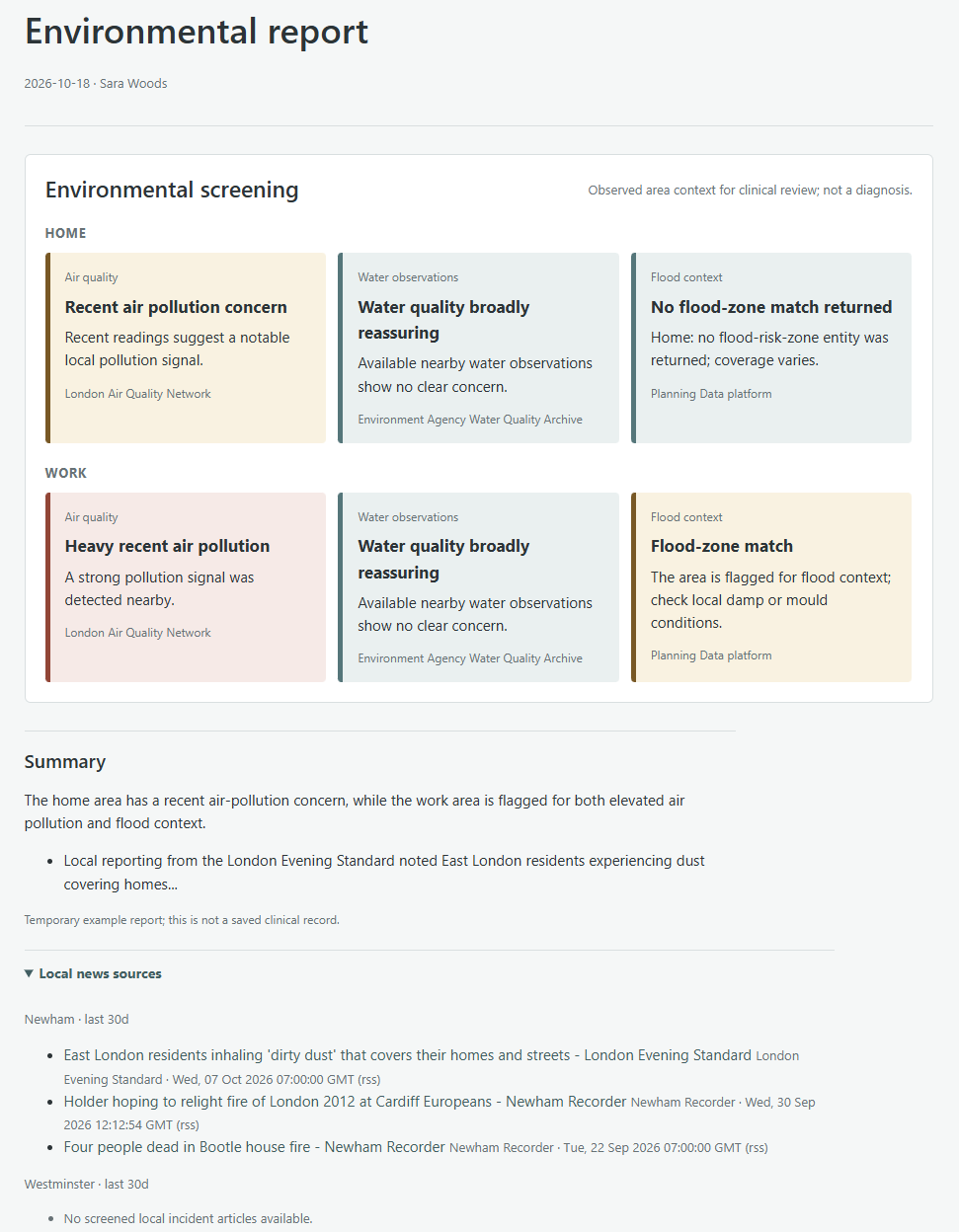
AreaMD turns a London postcode into a one-page environmental briefing for the doctor. Take Susan, our fictional patient: 34, asthma since childhood, a non-smoker who lives in Marylebone and works near Luton Airport. Her symptoms have been worse for six weeks, and she says they feel worse on workdays. Her history can't answer whether her home or workplace area deserves a closer look, however, AreaMD can.
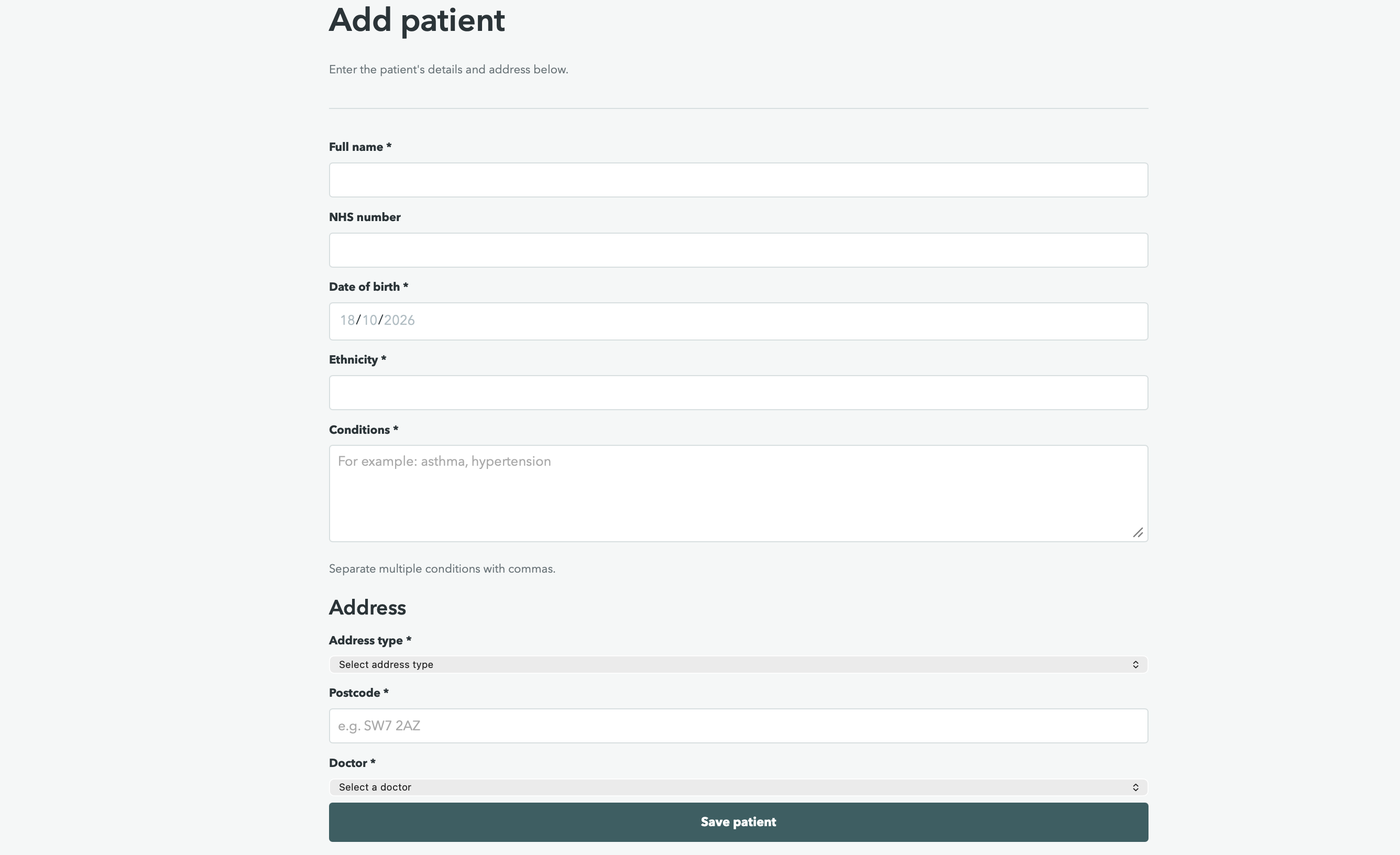
The doctor enters where the patient lives and works, and AreaMD shows both places side by side with:
- Air quality from the London Air Quality Network
- Water observations from the Environment Agency Water Quality Archive
- Flood context from the Planning Data platform
- A short plain-language summary of the key points
- Data limitations, so the doctor knows what the readings can and can't say, for example that they come from nearby monitoring sites, not exact addresses
- Local news sources and source details
Every card names its source. The report is observed area context for clinical review- It does not diagnose, and it describes the area, not the patient's personal exposure.
How we built it
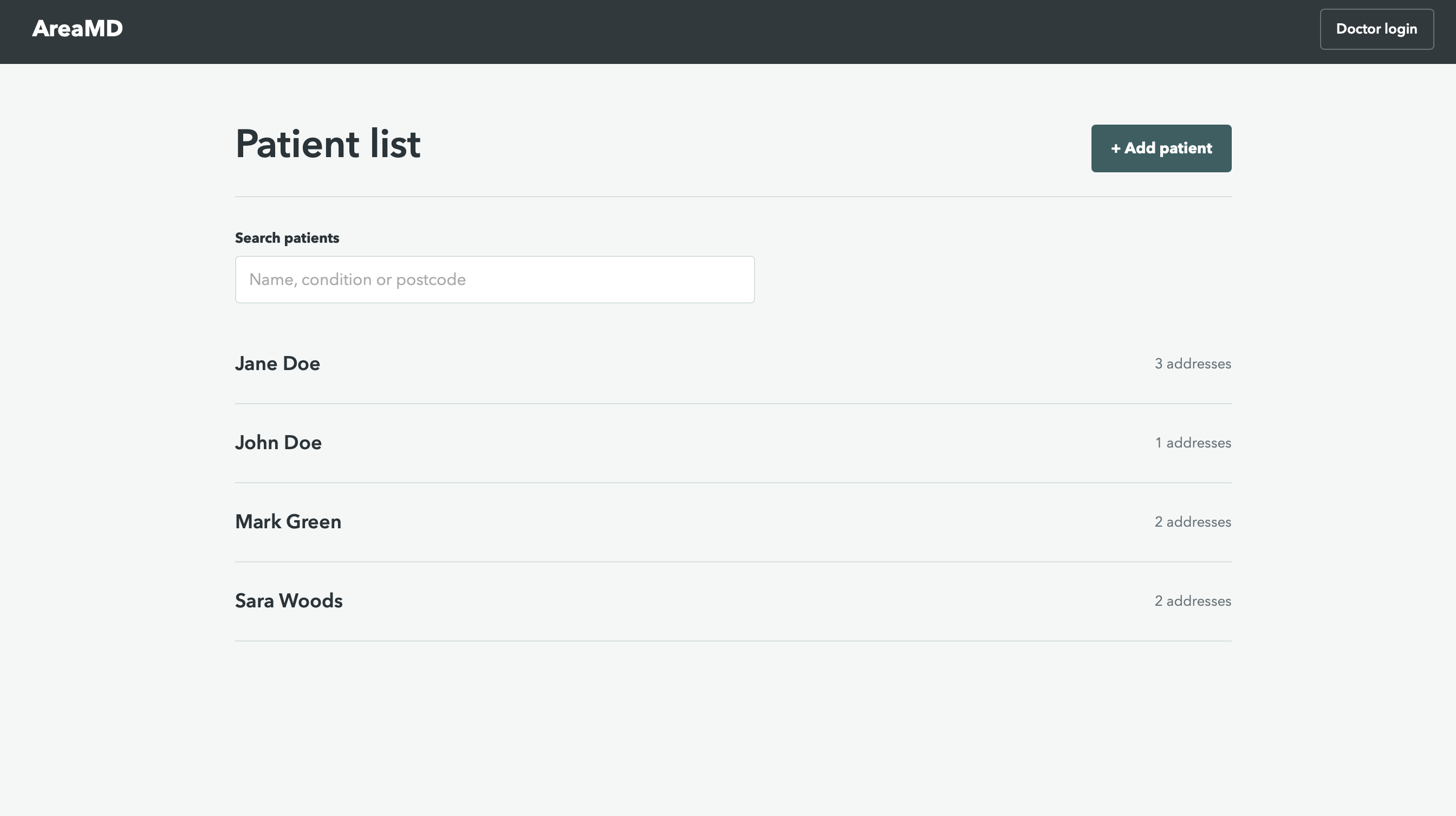
- Written in Python, running on a Flask server and using Tiger Data to store doctor and patient details.
- Fetched data about various environmental factors using government data sources and other reliable sources e.g. London Air Quality Network.
- Transformed the data into a structured format, to generate a risk profile from.
- The evidence collected is passed to the Gemini API to generate a summary both from the structured data from the water, air and planning datasets, but also from a free news API and Google RSS feeds if environmental articles relevant to the patient's home or work are found.
Challenges we ran into
- Validating data from the various data sources, making sure they reliably return relevant information for the reports was time consuming.
- Limited data for certain environment factors.
- We initially intended to have the Gemini API search for relevant news in the area but ran into a block as we were using the free tier which does not allow this. Worked around this by using a free news API to fetch relevant articles for a patient.
- The API used for news did not reliably return articles, therefore we connected a Google RSS feed to fetch articles. We had to be careful to make sure that only relevant, reliable articles were used to generate the summary as using the more general RSS feed meant that any article could potentially be used regardless of the quality or reputation of the source.
Accomplishments that we're proud of
- Integrating multiple different sources to create a report, using guardrails to make sure that only relevant information is used and Gemini does not attempt to diagnose or make any comment on the patient's health.
- A working report that shows a patient's home and workplace side by side, with the source of every card shown
- Turning separate public datasets into plain language a GP can read in seconds
- A design that keeps the doctor in control: area context for review, not a diagnosis
- First ever hackathon, built in 24 hours
What we learned
- Validating data is most of the work because fetching public data was the easy part. Making sure each source reliably returned something relevant for a given postcode took far longer.
- Some environmental factors have little data, readings come from nearby monitors, and flood coverage varies by area, so showing those limits in our tool and being honest about what it can't tell us creates more trust than hiding them.
We learned that useful health tech comes from restraint: a few relevant signals, plain explanations and visible limitations work best.
What's next for AreaMD
- More environmental factors: building age, green space, so the report covers more of what GPs ask about.
- More clinical focus areas. consider the patient's health conditions to look more specifically for news and factors that may affect them, e.g. for an asthma patient, looking more deeply for particular evidence of smog, pollution, construction work.
- Testing with real GPs. We believe this could save time and improve history-taking, but we haven't shown it yet. Ideally we would integrate our tool with the current NHS tools, so patient details can be imported and don't need to be entered multiple times in an appointment.


Log in or sign up for Devpost to join the conversation.