Inspiration
For this project I wanted to challenge myself with an arduino. I have very little experience using arduinos so I figured a binary clock would be a good project to get to know the arduino more. I am also in Engineers Without Borders where my project is to work on a robot that uses a raspberry pi so I figured some circuitry experience would be helpful.
What it does
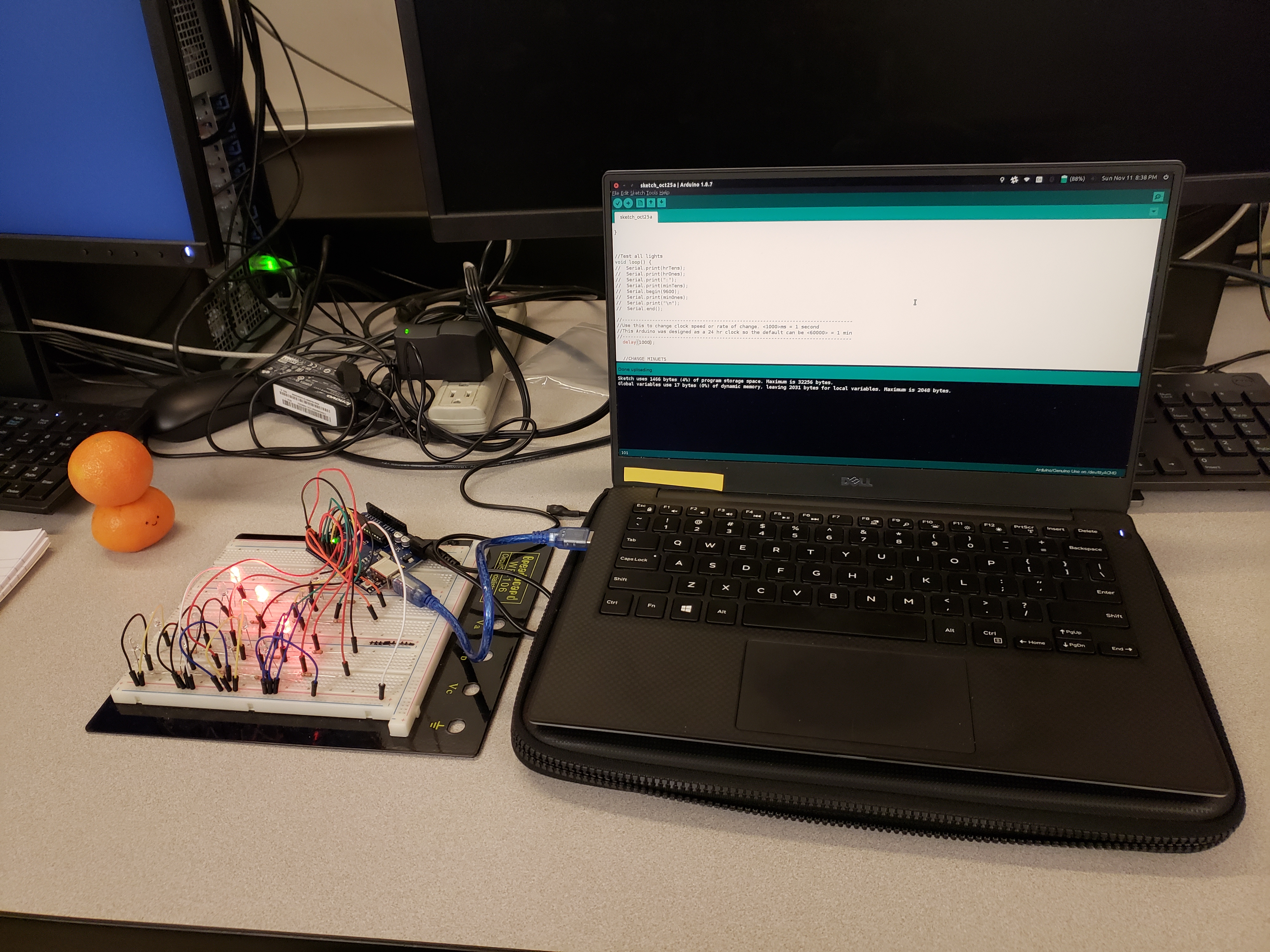
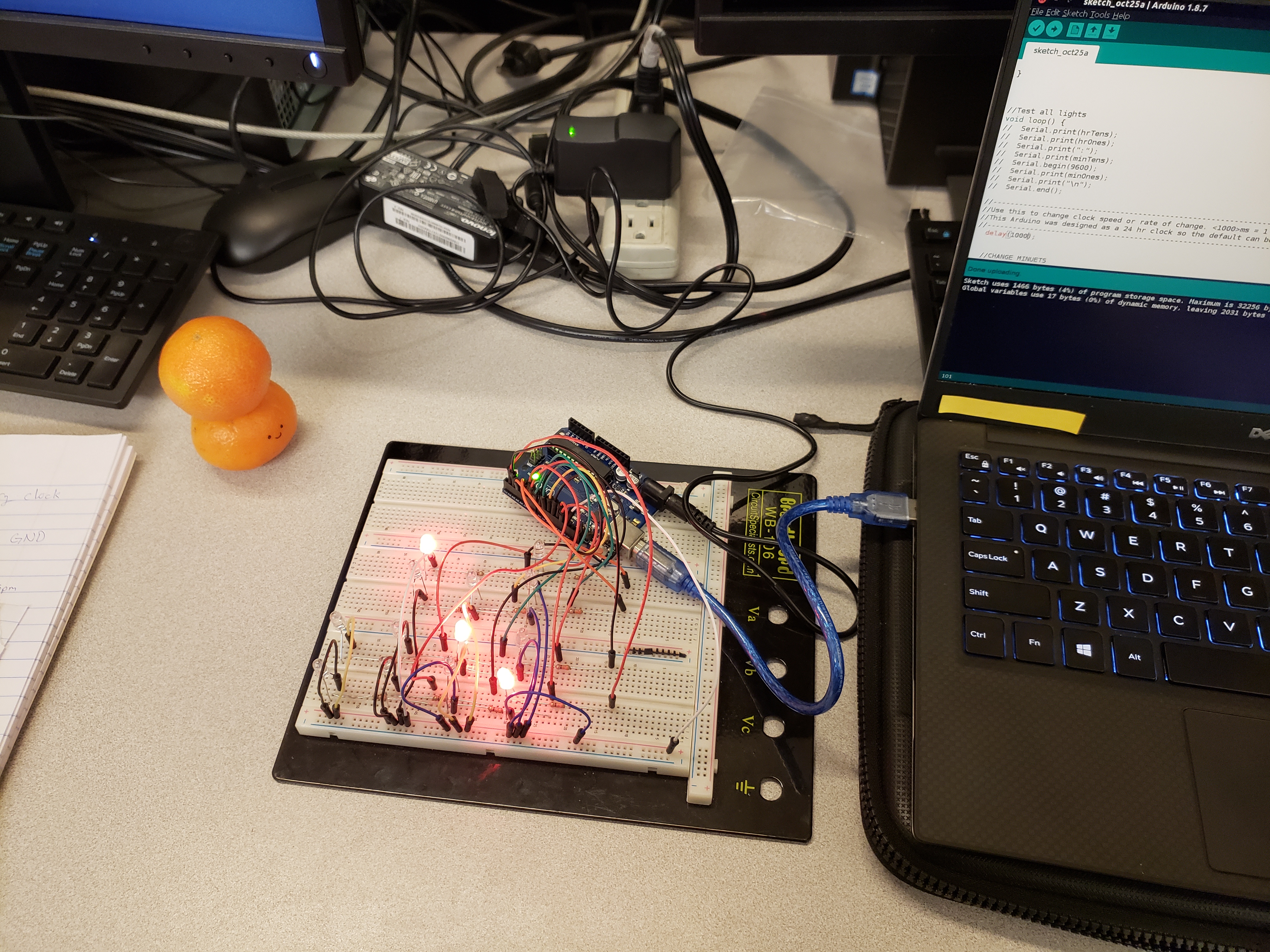
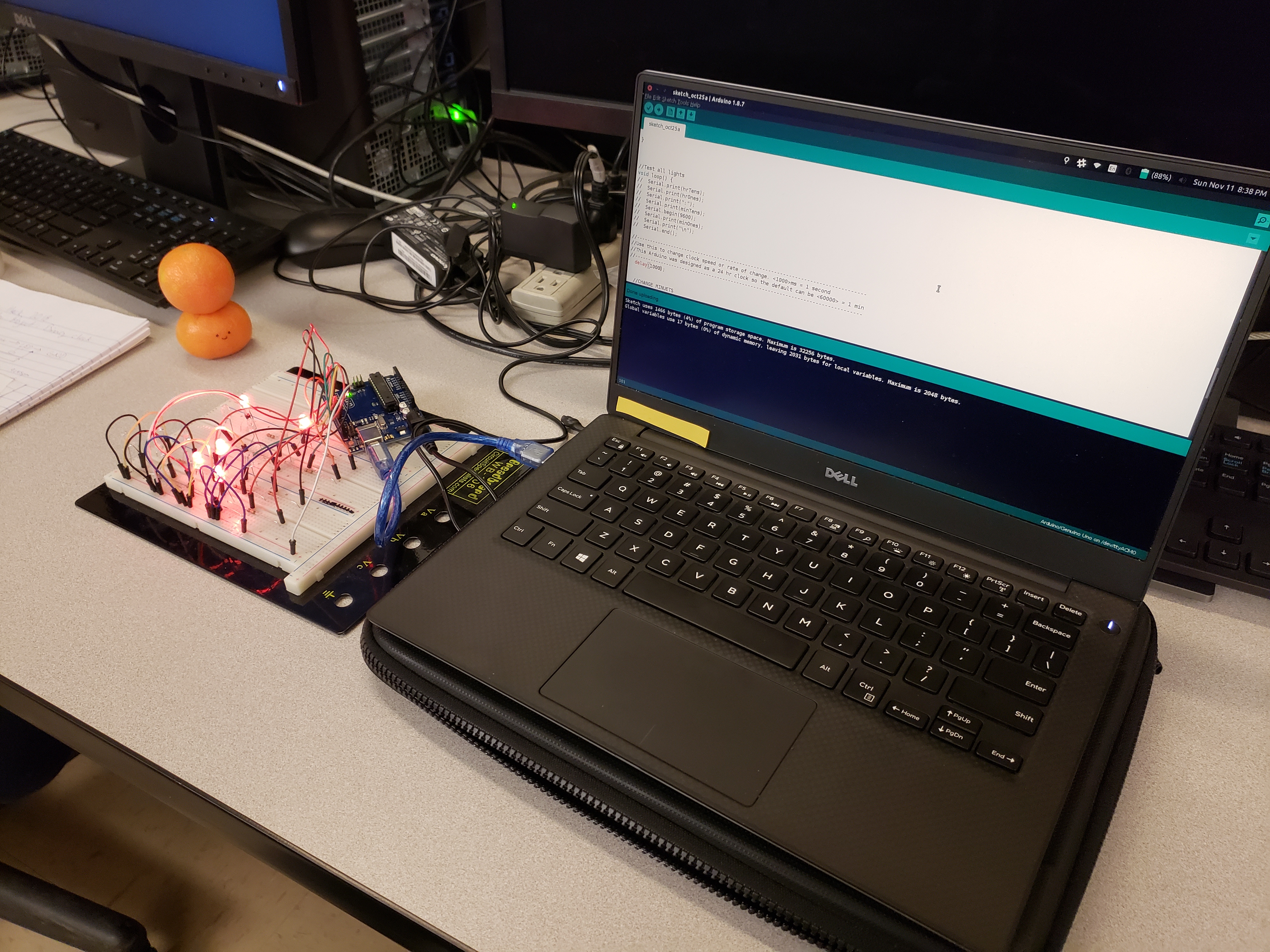
This project is a 24hr binary clock. It shows the time formatted in HH:MM (at delay 60000) in binary. This project uses 1 Arduino UNO with at least 13 pins, 13 leds, 13 resistors @ 320 Ohms, 1 large breadboard, lots of wires. The LEDs are made into an matrix each column of LEDs representing a digit in binary.
How I built it
With my knowledge of a basic light build on arduino I wanted to make something a little more difficult. This arduino utilizes the basic lights into an matrix of lights.
Challenges I ran into
One of our limitations is that we only had 13 pins on this arduino and so we couldn't implement a seconds column although if we had the parts we probably could have.
Accomplishments that I'm proud of
It can be manipulated to be MM:SS if the delay is changed to 1000. Overall I am very proud of the the fact I was able to make something that wasn't just software, something that was very hardware focused.
What I learned
I have never used circuits to make something before, so I learned a lot in hardware implementation.
What's next for Arduino UNO Binary Clock
I really show seconds on my binary clock next time and when I have access to more pins or more components I will definitely show seconds on the clock.
Built With
- arduino-ied
- arduino-uno
- breadboard
- jumper-wires
- led
- resistors


Log in or sign up for Devpost to join the conversation.