-
-
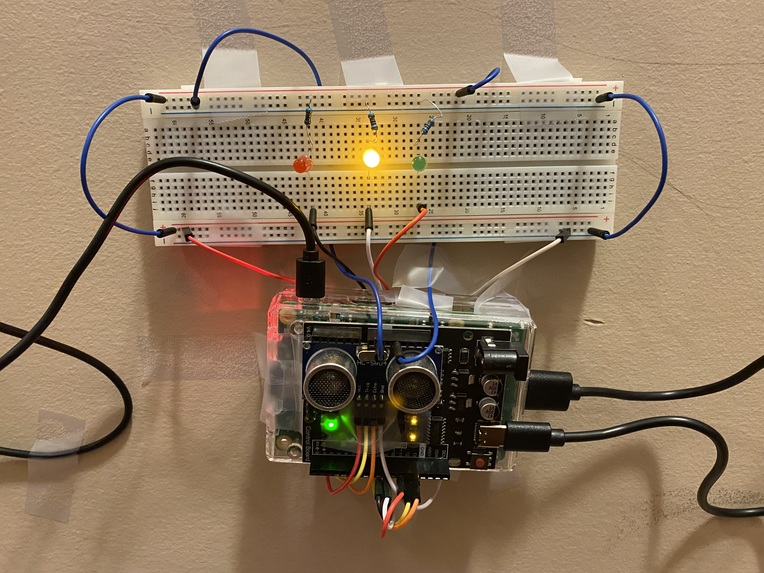
Wall mounted setup of portable security system.
Inspiration
With a keen interest in the links between hardware and software, we took it upon ourselves to make the best project we could that was a culmination of the two.
What it does
The device senses acts as a smart home alarm system and sends the owner and email should the alarm be tripped by an unauthorized individual.
How we built it
We made the best possible use of hardware and software that we could; using Arduino, Raspberry Pi, Python and C++.
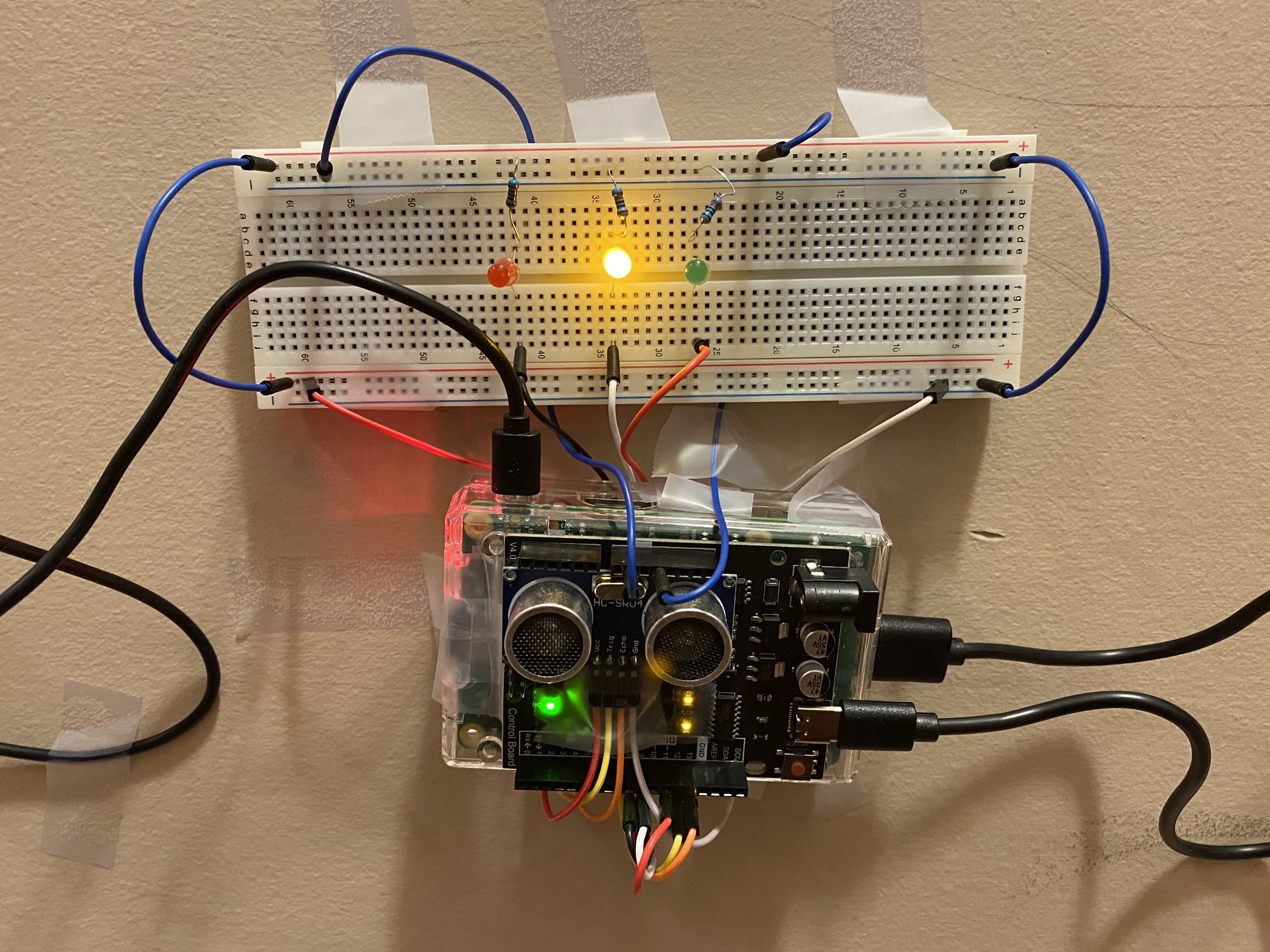
The Raspberry Pi is used as a host system to run the scripts that send emails to owners, and the Arduino acts as a controller to interface with the indicator LEDs and ultrasonic ranging module. We used premade C++ libraries to allow us to connect the Arduino's firmware to the Raspberry Pi via Python.
To handle emails, we made use of the smtplib libraries in Python when the alarm was triggered. To handle the C++ to Python conversions, we used pymata4 Python libraries and FirmataExpress Arduino firmwares.
Challenges we ran into
Initially, our ultrasonic ranging module was not compatible with the available libraries. After some deep digging, we were able to find an Arduino firmware that luckily had support for our specific module.
Accomplishments that we're proud of
We made this project with virtually all materials that we had on hand from our classes and personal hobby collections. We spent lots of time and we found that we were able to work extremely well together.
What we learned
The most important thing we learned was the interfacing between our two boards, the Raspberry Pi and Arduino. With the help of open source libraries, we were able to improve our knowledge within the subject of the two hardware pieces.
What's next for Arduino Security System
We both plan to continue working on ways to make Arduino Security System more secure than ever. This includes special methods to turn it off, such as custom RFID cards or code-locked keypads. We also plan to make a full-stack website to view the logs of when the alarm had been tripped.
These are all things that we planned to do this weekend during HoyaHacks, but only so much can be done in 36 hours, and we are grateful for the experience we had. We very much look forward to incorporating these things and improving Arduino Security System in the future.
Our contributions
All in all, both of us put in an equal effort. Nishan played a large part in the generation of new ideas and the overall scripting, especially the setting up and testing of the email protocols. Nihal worked on the interfacing aspects using Python between both the Raspberry Pi and Arduino boards. When either of us ran into problems, we would hop in a video call and share our screens. This helped us to debug our problems and not spend lots of time along the way.
We hope you enjoy our project! Nishan and Nihal.
Built With
- arduino
- c++
- firmata
- python
- raspberry-pi
- sensors
- stmptlib


Log in or sign up for Devpost to join the conversation.