-
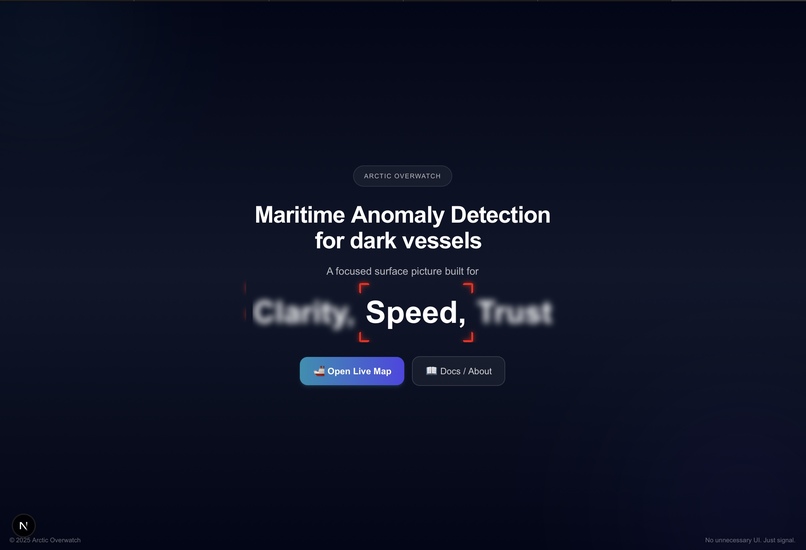
landing page
-

globe detection
-
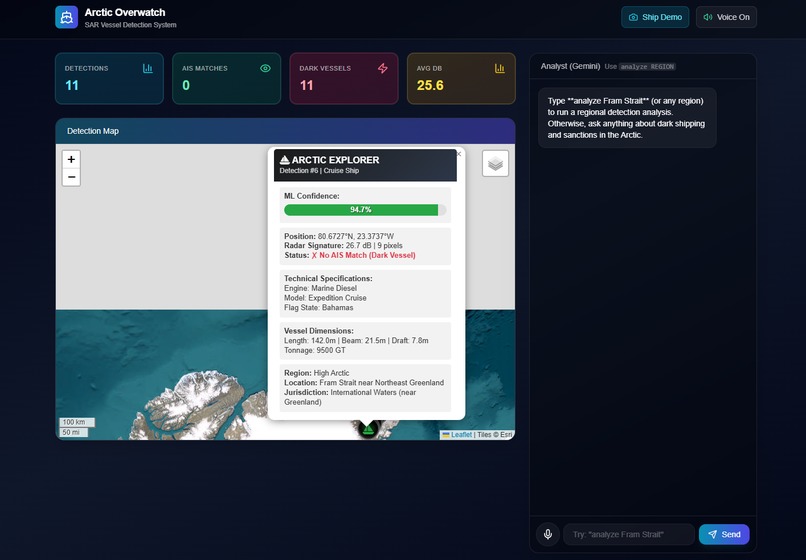
ship details
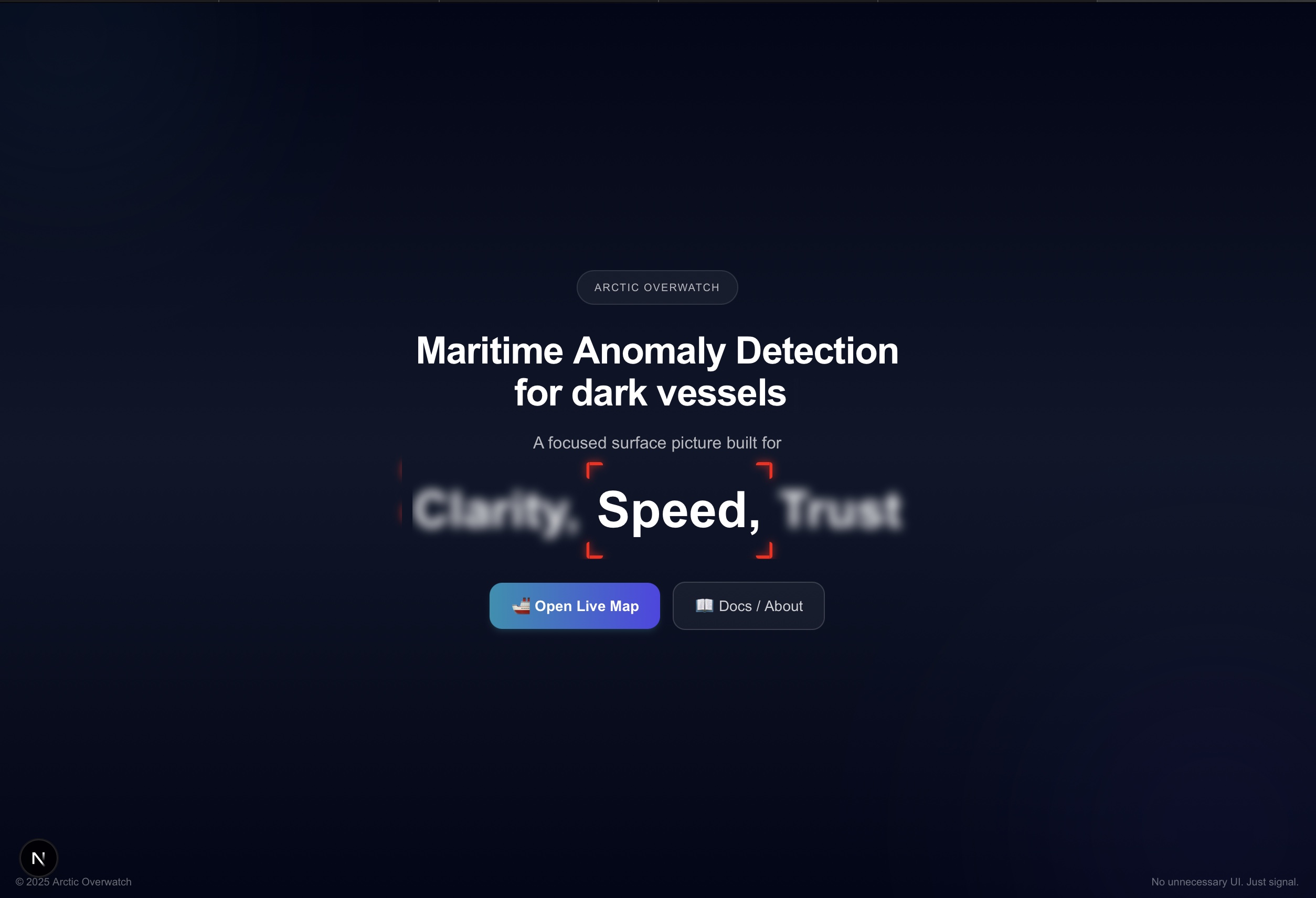

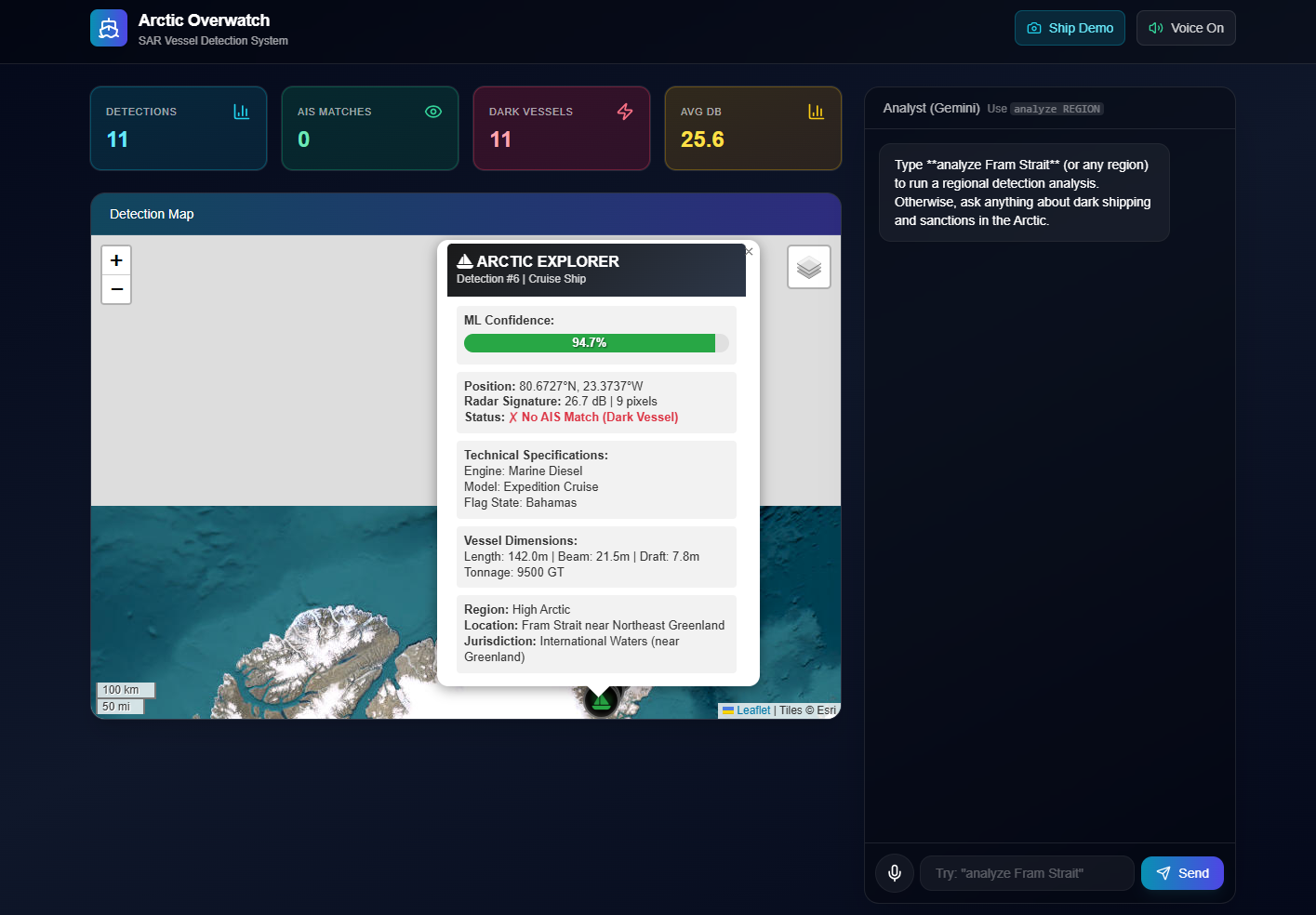
Arctic Overwatch
Team Members: Omid Latifi, Pratik Das, Miran Qarachatani, Adam Wang
🚢 Problem Statement
- 44% of shadow vessels change their key identifying information to evade detection.
- Traditional vessel tracking using AIS (Automatic Identification System) fails when ships deliberately turn off or spoof transponders.
- This creates a major gap in maritime surveillance, especially in sanction evasion and illegal activity in the Arctic.
💡 Solution – Wake Fingerprinting with AI
We propose using Synthetic Aperture Radar (SAR) imagery to fingerprint ships by their wake.
- Every vessel produces a unique wake signature, like a fingerprint.
- By training an AI model to detect and classify wake patterns, we can identify ships even without AIS data.
Core Components:
Custom Detection Model
- Trained on 458 SAR images of ships.
- Focused on analyzing wake patterns instead of just vessel hulls.
- Trained on 458 SAR images of ships.
Wake Fingerprinting
- Extracts the unique wake pattern of each ship.
- Compares and validates against AIS when available.
- Extracts the unique wake pattern of each ship.
Validation Pipeline
- Input: Raw SAR GeoTiff images.
- Step 1: Noise reduction.
- Step 2: Custom AI-based wake detection.
- Step 3: Generate unique wake fingerprint.
- Step 4: Validate against AIS records.
- Input: Raw SAR GeoTiff images.
📊 Inspiration
- Inspired by research on wake detection from the University of Bristol.
- Extended into a real-time maritime anomaly detection system for Arctic waters.
✅ Key Features
- Detect ships even if AIS is spoofed or disabled.
- Scalable for wide-area Arctic monitoring.
- Built for clarity, speed, and trust in maritime intelligence.
Built With
- next
- python


Log in or sign up for Devpost to join the conversation.