# ARCS AI — Machine & Development Overview
## 1. What is ARCS AI?
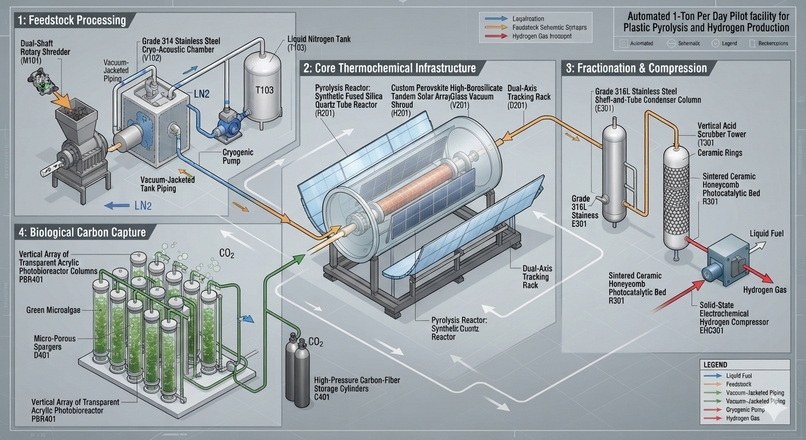
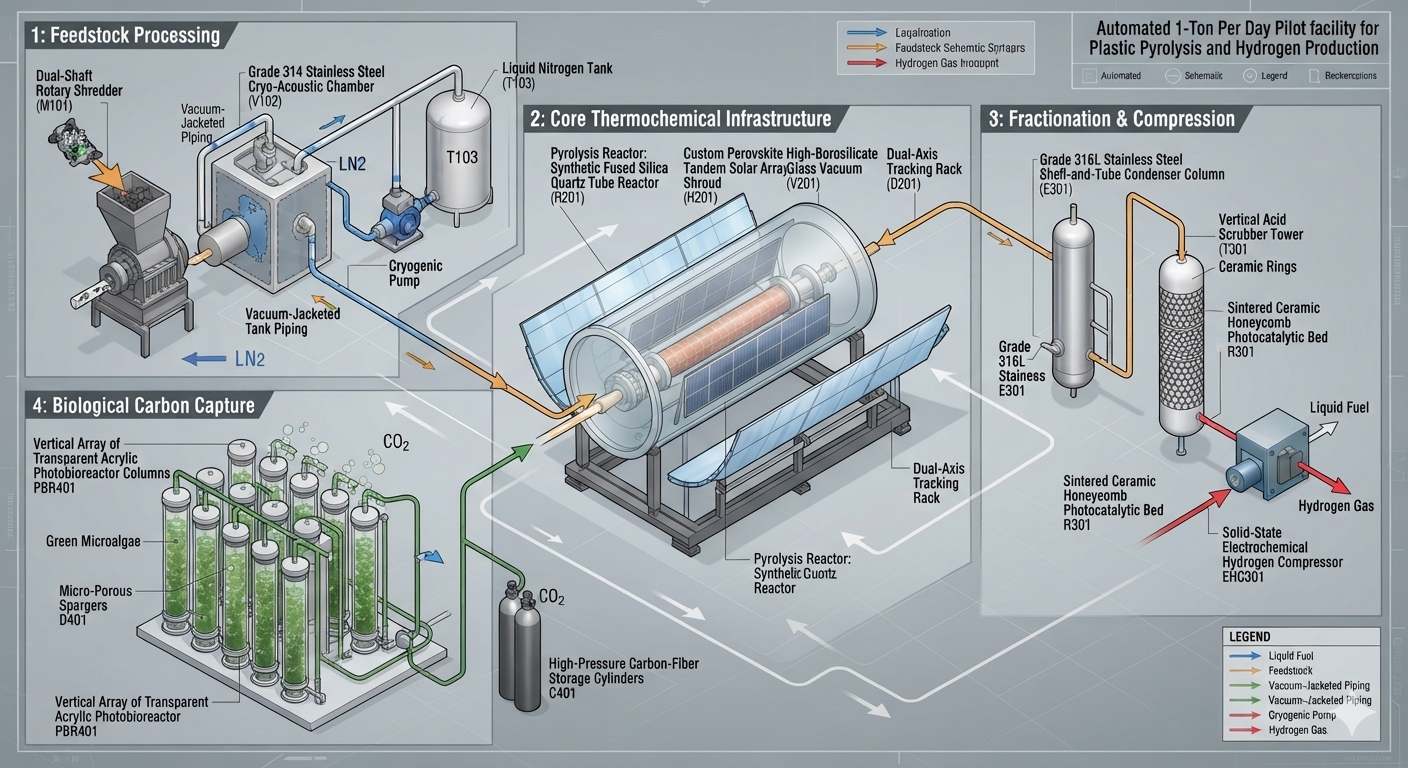
ARCS AI (Autonomous Recycling & Circular Systems) is a proposed intelligent plastic-waste processing system combined with an AI-powered digital twin.
The physical machine is designed as a modular processing line, while the digital twin provides a visual representation of the equipment, process stages, sensors, and AI monitoring system.
The current version is a digital prototype. The sensor values shown in the interface are simulated demonstration data, not measurements from a physical machine.
---
## 2. Main Machine Architecture
The proposed processing system is divided into several stages:
### Stage 1 — Feedstock Processing
Plastic waste enters the system through a controlled feed section.
A primary shredder reduces larger plastic pieces into smaller flakes so that the material can move through later processing stages more consistently.
### Stage 2 — Cryogenic / Controlled Feed
The processed plastic moves through a controlled feed system.
The purpose of this stage is to regulate material flow and prepare the feedstock for the main processing section.
### Stage 3 — Quartz Reactor
The central reactor is represented as a controlled processing chamber.
The concept uses a quartz-based reactor section because quartz can provide optical transparency and can be useful in systems involving light-based processing.
The exact chemistry and operating conditions would need to be experimentally validated before construction.
### Stage 4 — Condensation
Gaseous or vapor-phase products leaving the reactor are directed toward a condenser.
The condenser represents a cooling stage designed to separate condensable material from the gas stream.
### Stage 5 — Gas Scrubbing
The remaining gas stream is directed through a gas-treatment section.
The purpose is to represent treatment and monitoring of process gases before the exhaust stage.
---
# 3. Sensor System
The digital twin contains a simulated sensor dashboard representing possible future instrumentation.
The monitored parameters include:
- Temperature
- Pressure
- Flow rate
- Vibration
- Motor current
- Gas-related index
In a future physical prototype, these values could come from real industrial sensors connected to a controller or IoT gateway.
The current prototype does NOT claim that these are real physical measurements.
---
# 4. AI Control Concept
The proposed AI layer receives process information from the digital twin.
A future system could use the data to:
1. Monitor machine conditions
2. Detect abnormal operating patterns
3. Identify possible equipment problems
4. Compare operating parameters
5. Recommend process adjustments
6. Maintain historical process data
7. Provide operator alerts
The AI layer is currently demonstrated conceptually rather than through a deployed industrial AI controller.
---
# 5. Digital Twin
Instead of building the physical machine first, I created a digital representation of the proposed system.
The digital twin contains:
- Machine modules
- Process flow
- Interactive components
- Sensor indicators
- Monitoring panels
- AI status information
- Component descriptions
Users can select machine components to understand their purpose.
---
# 6. How I Created It
I started by designing the machine architecture as a modular process line.
I then created a 3D concept model using Tripo Studio.
After that, I built a mobile-friendly web interface using:
- HTML
- CSS
- JavaScript
The website contains the digital control dashboard, process architecture, sensor visualization, AI status system, and component information.
I hosted the source code on GitHub and designed the project so it can be accessed through GitHub Pages.
---
# 7. Sensor Simulation
Because I do not currently have a physical industrial machine or connected sensor hardware, I created simulated sensor values for the prototype.
The simulation demonstrates how a future physical system could display changing operating conditions.
For example:
Temperature → simulated reactor temperature
Pressure → simulated process pressure
Flow → simulated material/gas flow
Vibration → simulated mechanical vibration
Motor current → simulated motor load
Gas index → simulated gas-monitoring indicator
This allows the digital twin to demonstrate the control concept before physical hardware is available.
---
# 8. AI Decision Concept
The prototype can interpret simulated conditions and generate an AI-style system status.
For example, abnormal temperature or vibration patterns can trigger a warning state.
In the future, this logic could be replaced by a trained machine-learning model or an AI system connected to real sensor streams.
---
# 9. Technology Stack
Frontend:
HTML + CSS + JavaScript
3D:
Tripo Studio
Hosting / Source Control:
GitHub + GitHub Pages
Data:
Currently simulated sensor data
Future:
Real sensors + IoT gateway + database + AI/ML system
---
# 10. Why I Built It This Way
Building the complete industrial machine physically would require significant equipment, materials, testing, safety systems, and funding.
The digital twin allowed me to develop and communicate the architecture first.
It also makes it possible to test the user interface, monitoring concept, process visualization, and AI-control workflow before moving toward physical prototyping.
---
# 11. Future Development
The next version would focus on:
- Real sensor hardware
- Microcontroller/industrial controller integration
- Real-time data transmission
- Database logging
- AI anomaly detection
- Machine-health prediction
- More accurate 3D simulation
- Physical prototype development
- Laboratory validation
- Safety and environmental testing
The ultimate goal is to develop ARCS AI into an intelligent monitoring and control platform for advanced plastic-waste processing and circular-economy systems.

Log in or sign up for Devpost to join the conversation.