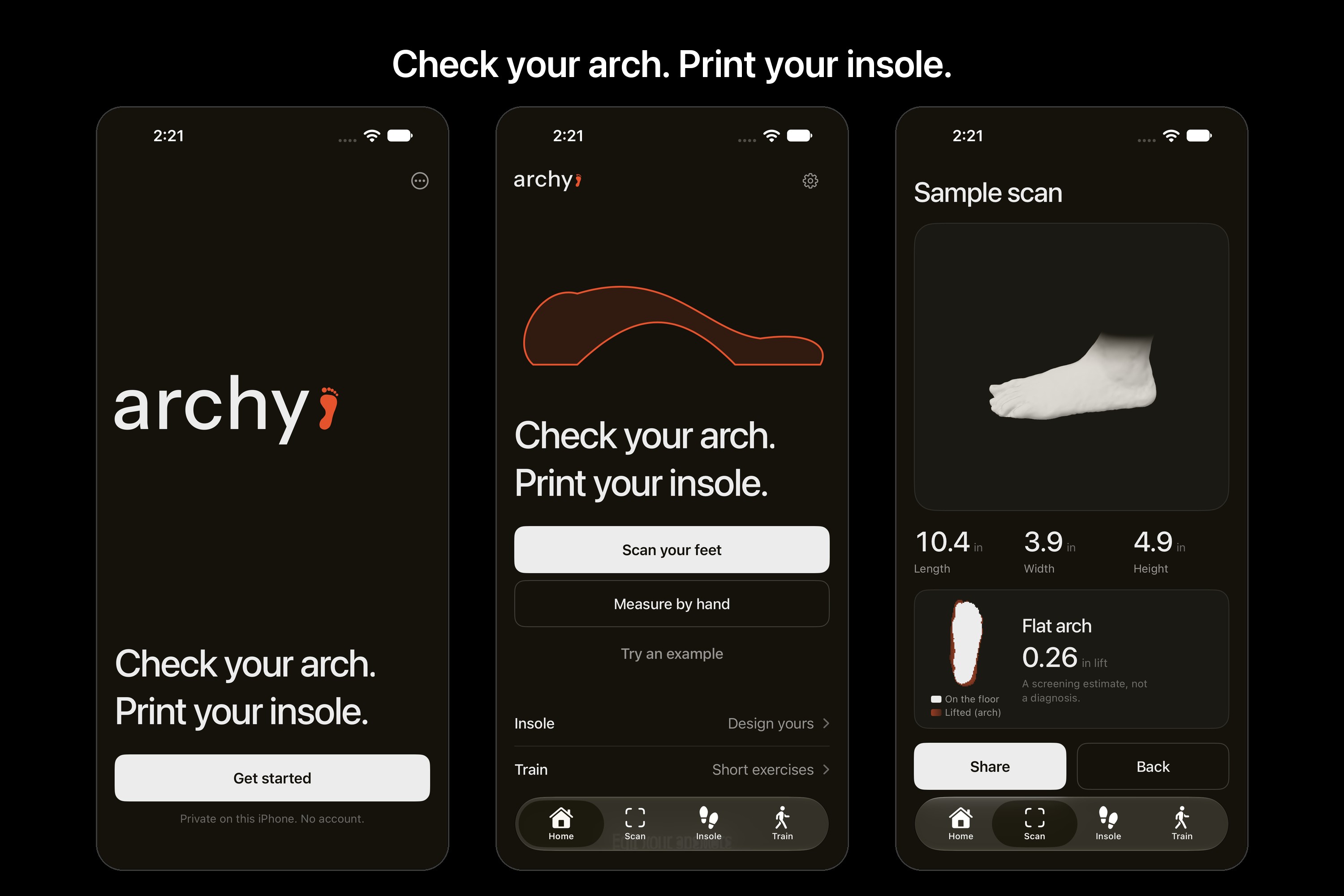
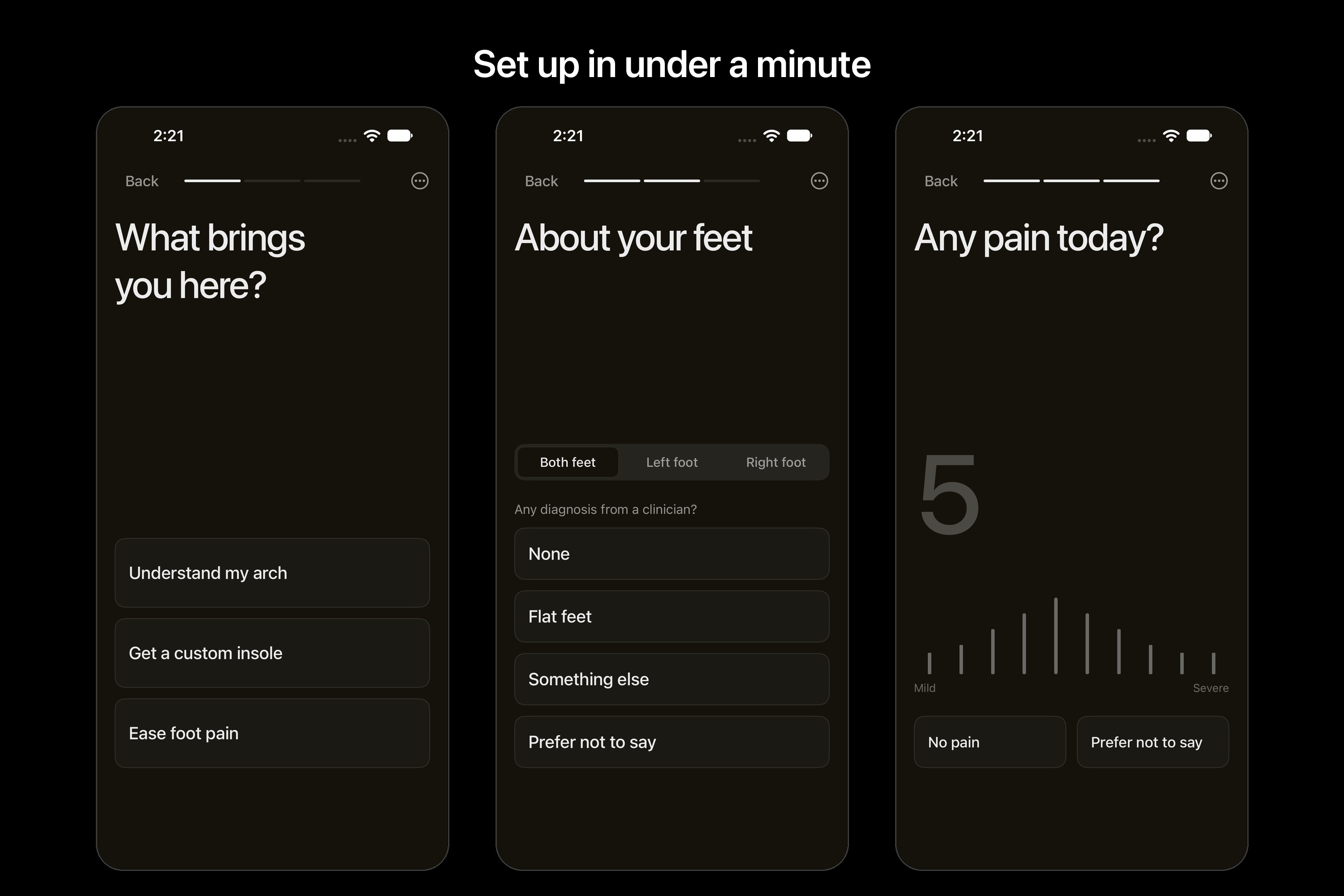
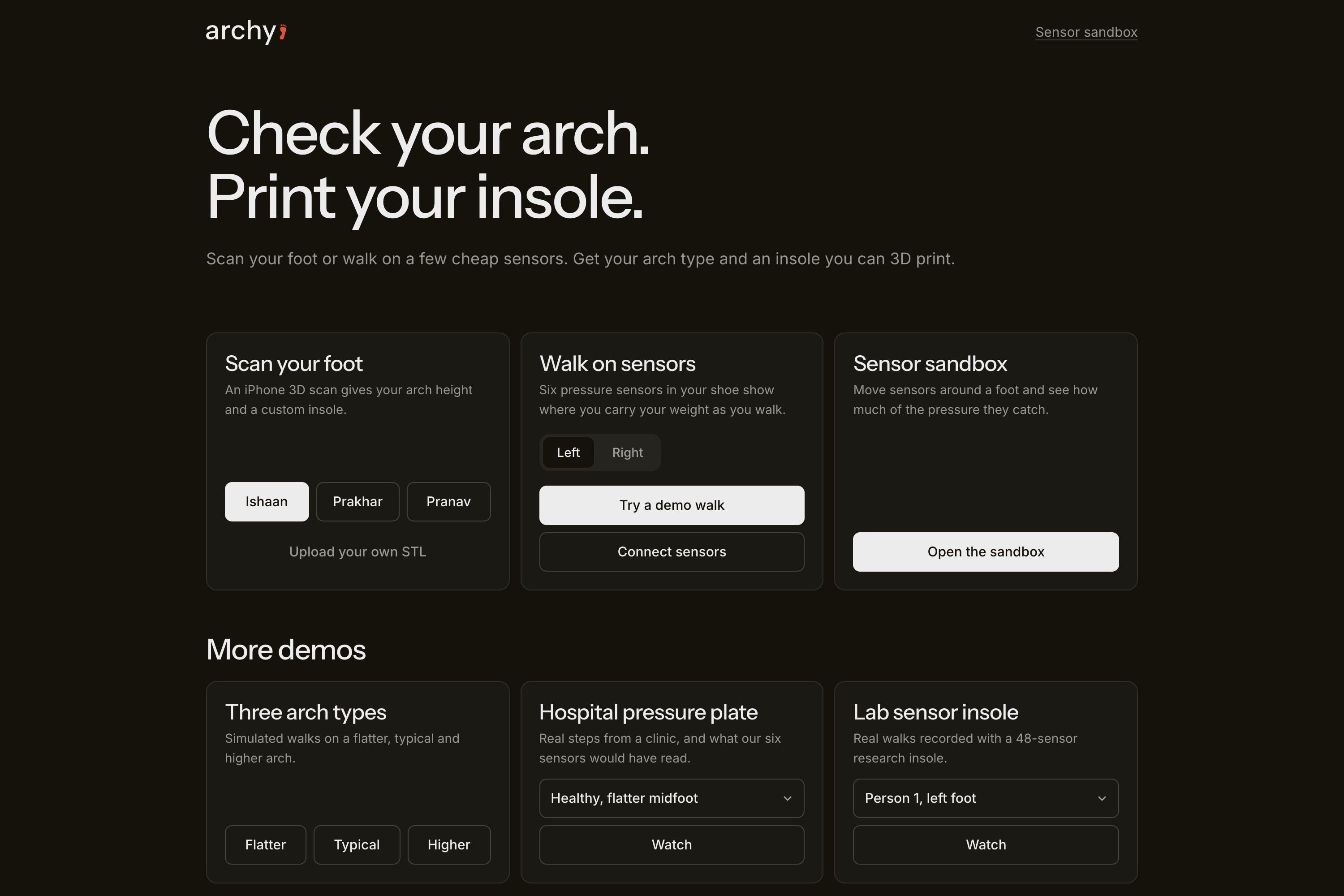
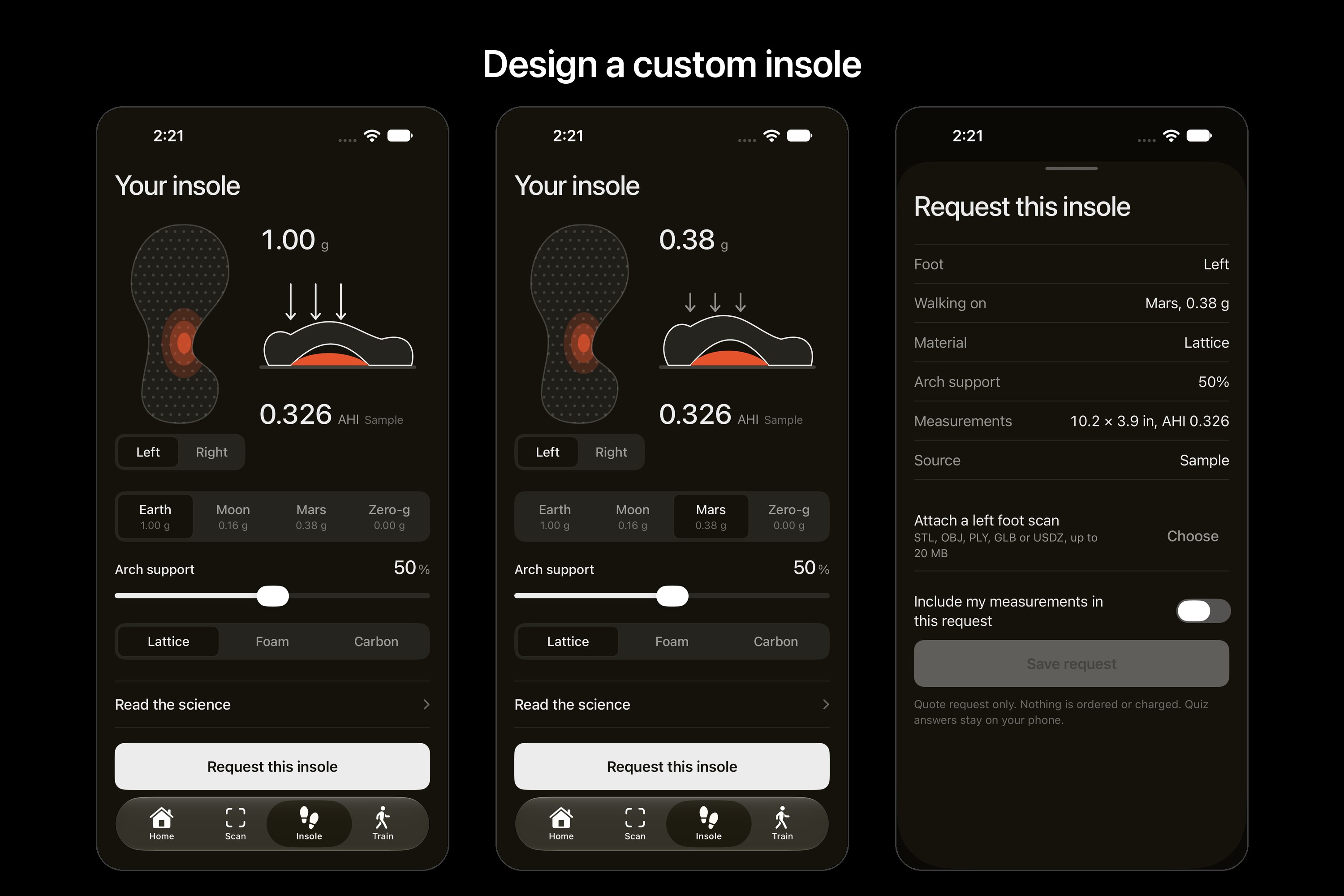
Custom orthotics cost hundreds of dollars and a doctor visit. archy scans your feet with LiDAR, checks for flat feet, designs a custom insole you can get at home, and has exercises for your arches.
Inspiration
To give a bit of background on this project, all three of us brainstormed common problems we have in healthcare, and surprisingly, we all have serious flat feet issues. All three of us have used custom orthotics and still require expensive shoes with good arch support. Because of our flat feet, we have all had limitations in certain sports and in the way we go about our lives (for example, one of our team members couldn't do track and field in high school because it would cause too many foot and knee issues). Because we noticed these issues early in our lives, we had extensive medical consultations and spent thousands of dollars on custom orthotics as our feet grew.
Our goals
For the Community Kitchen track, we wanted to make archy accessible while also having freemium features. Similar to existing health-issue detection apps (e.g., amblyopia, or lazy eye, detection software), we wanted to accurately diagnose and give assistive medical therapy. For us, this would look like accurately scanning your feet with a phone, building custom orthotics cheaply, and providing doctor-grade medical therapy.
What it does
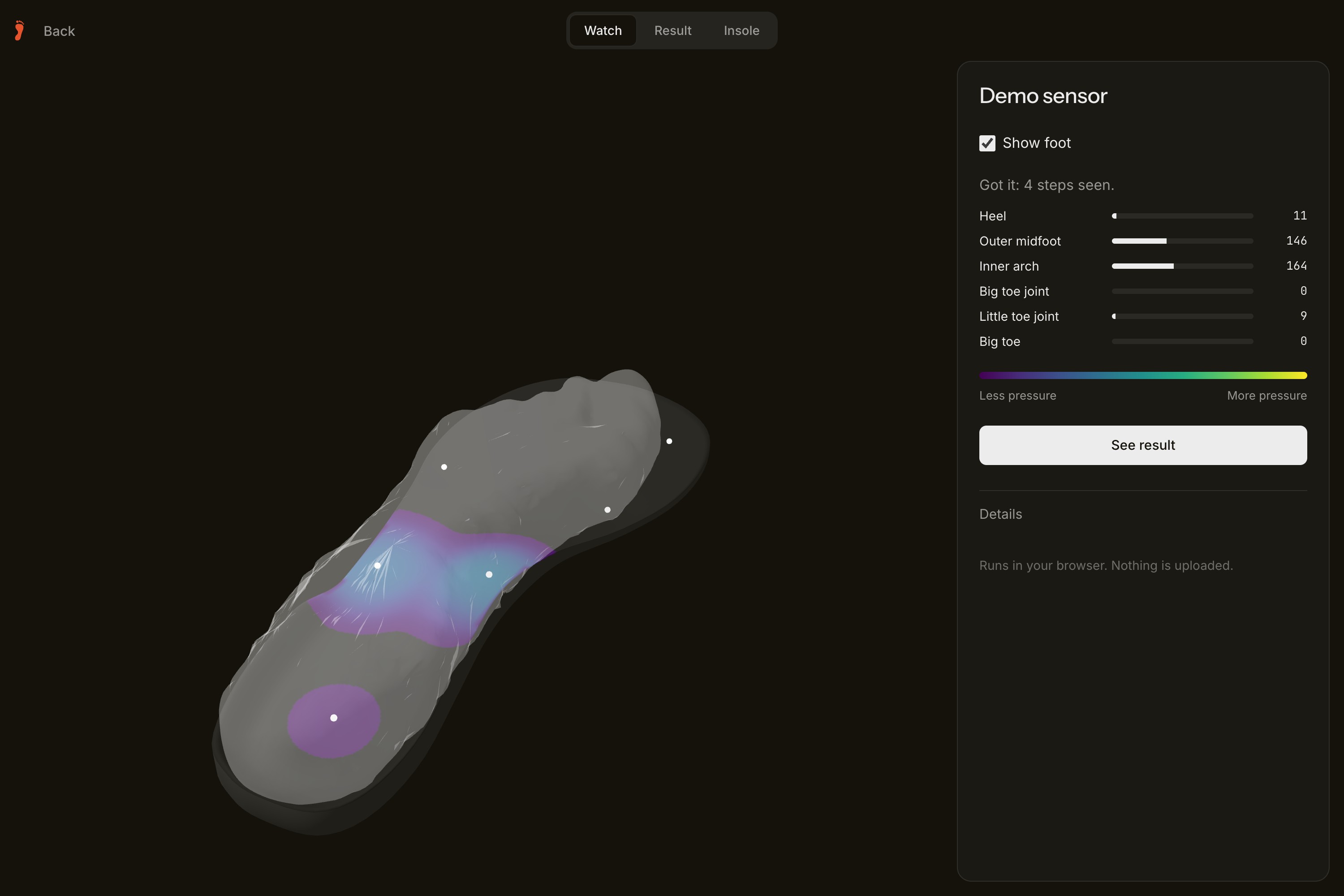
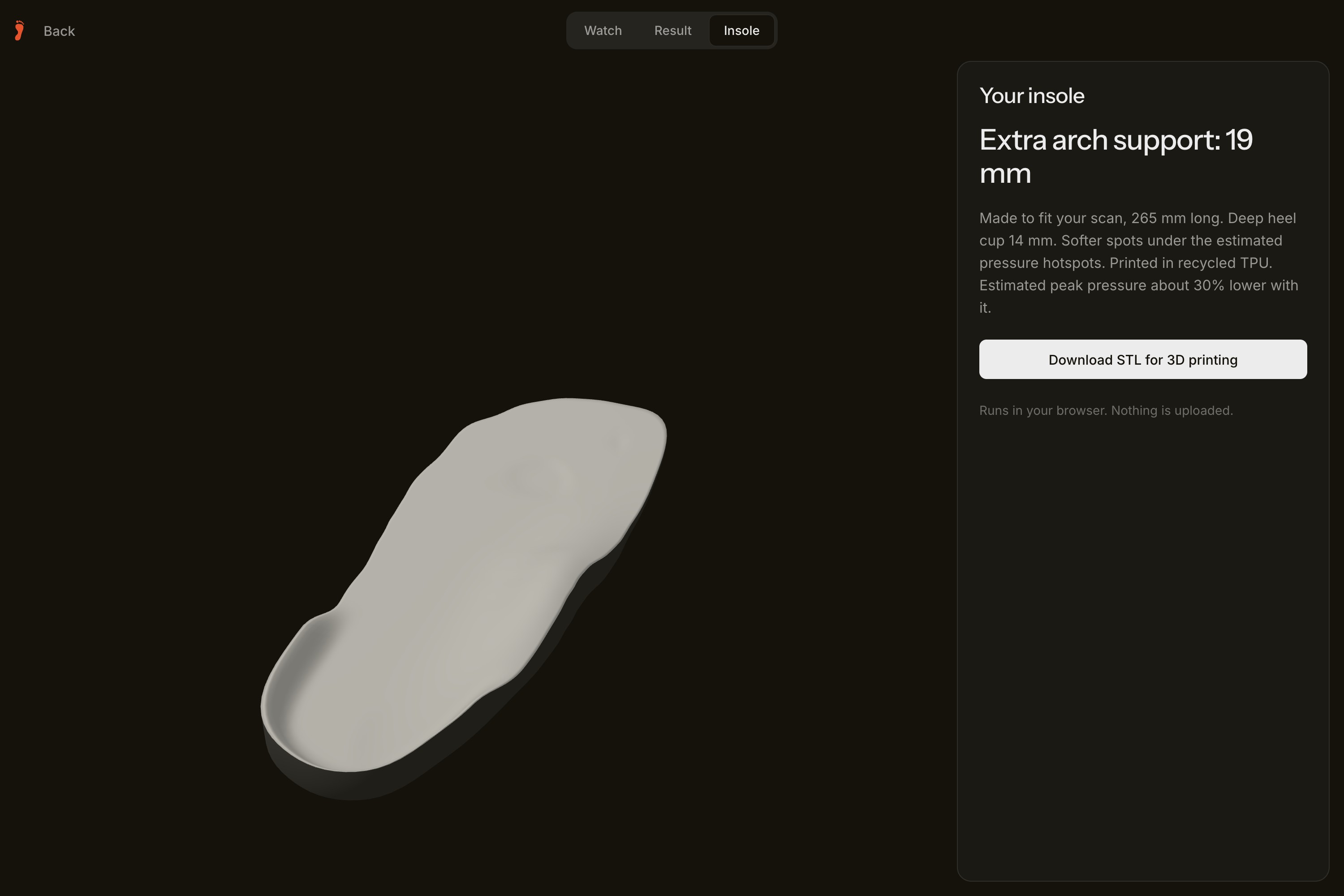
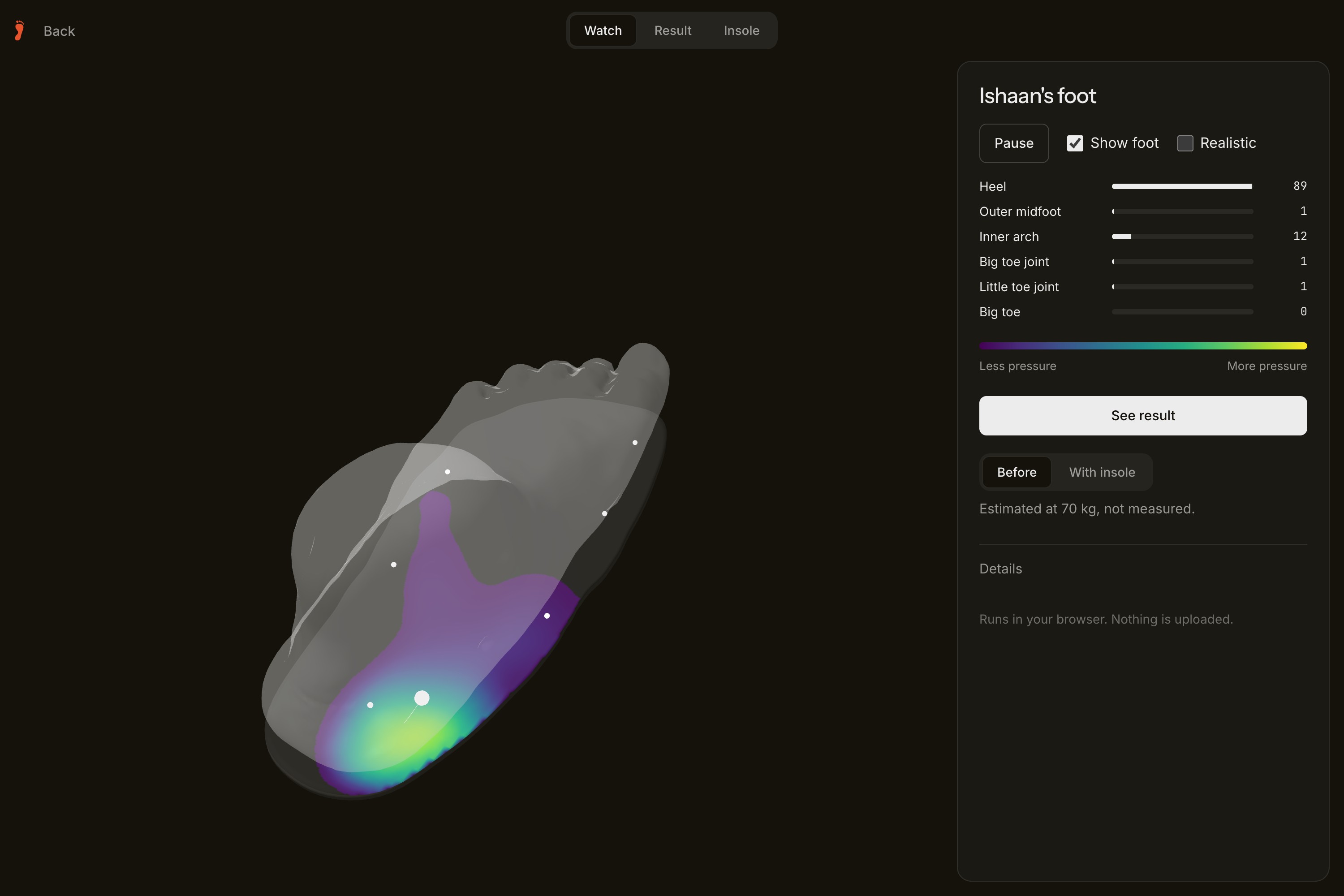
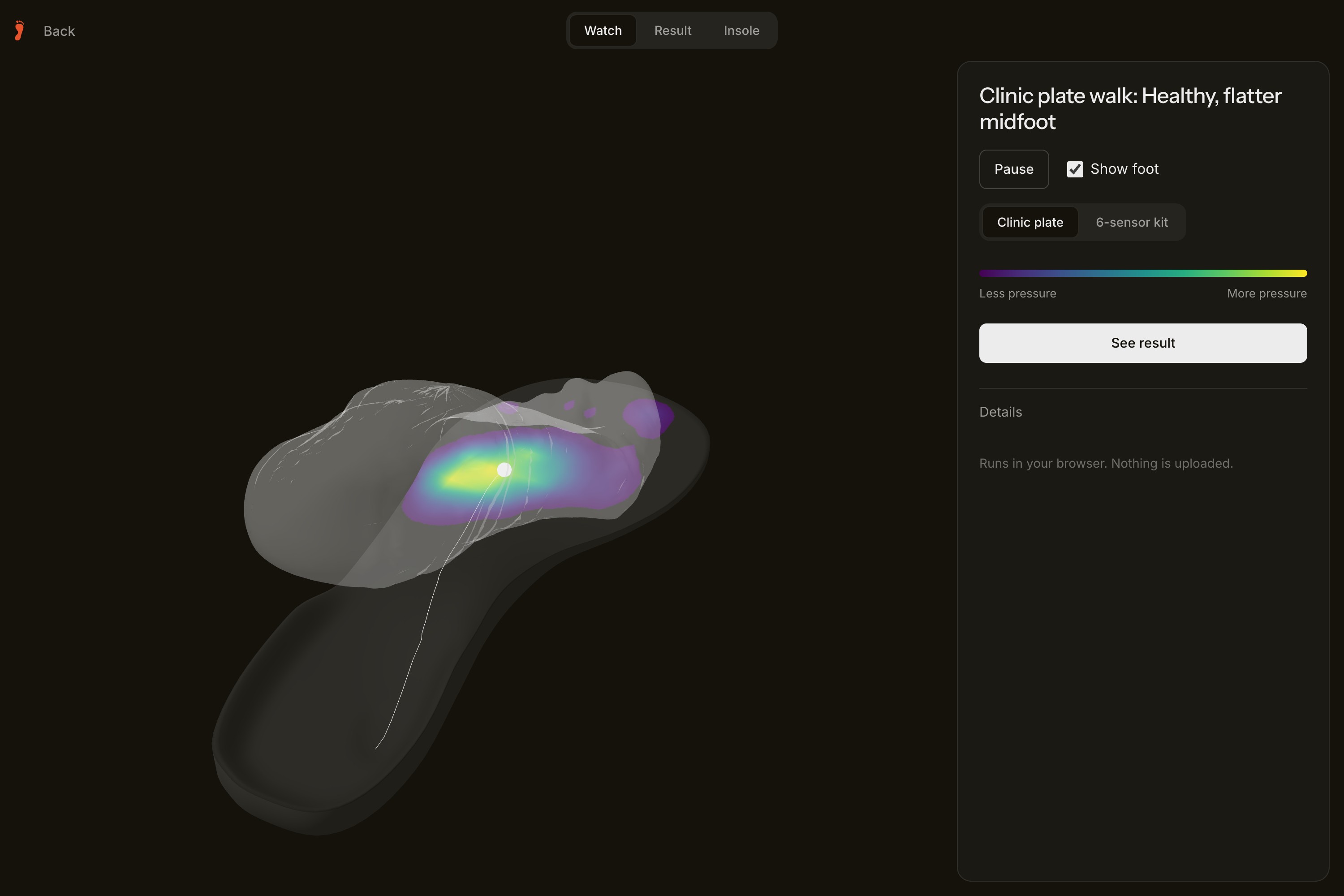
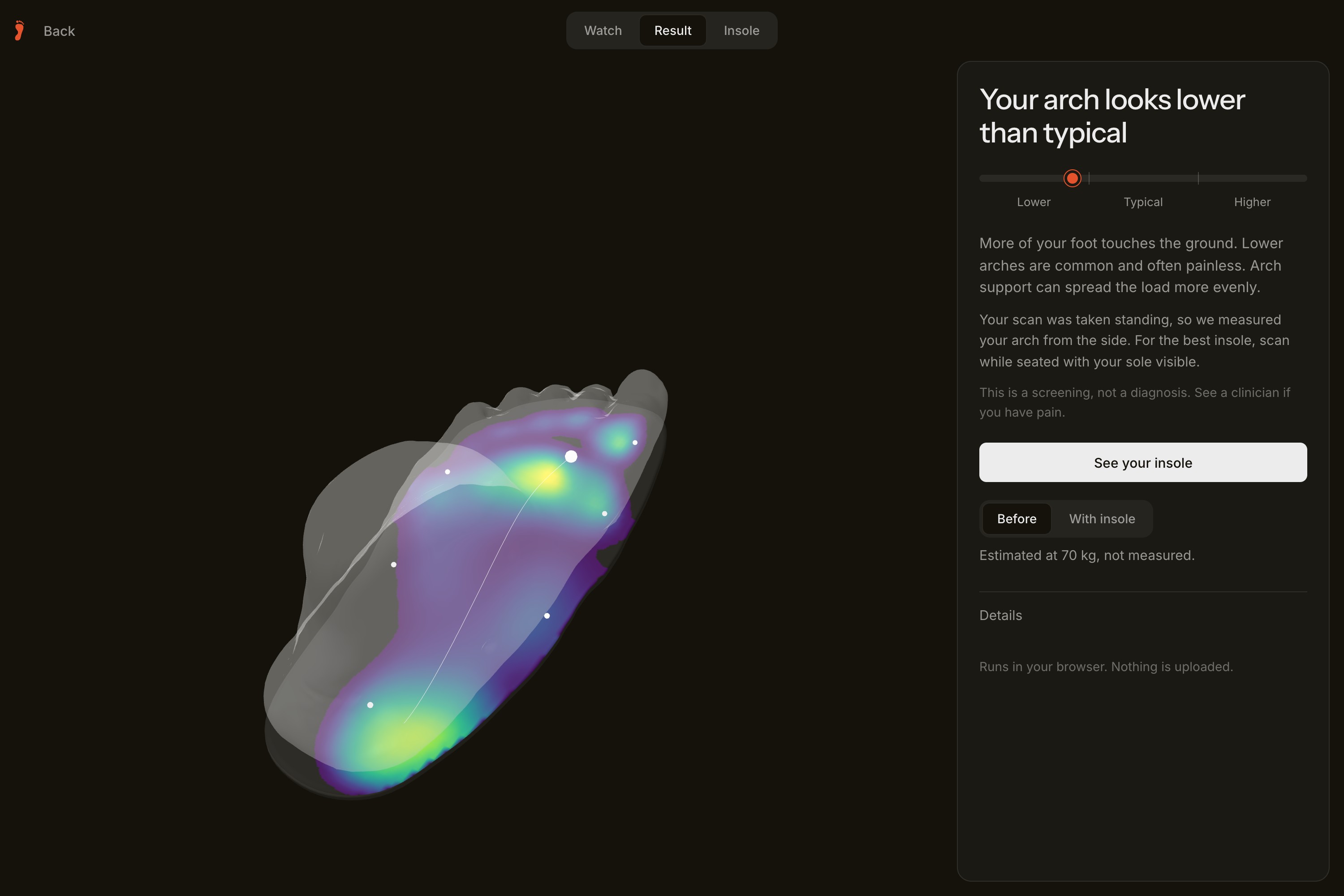
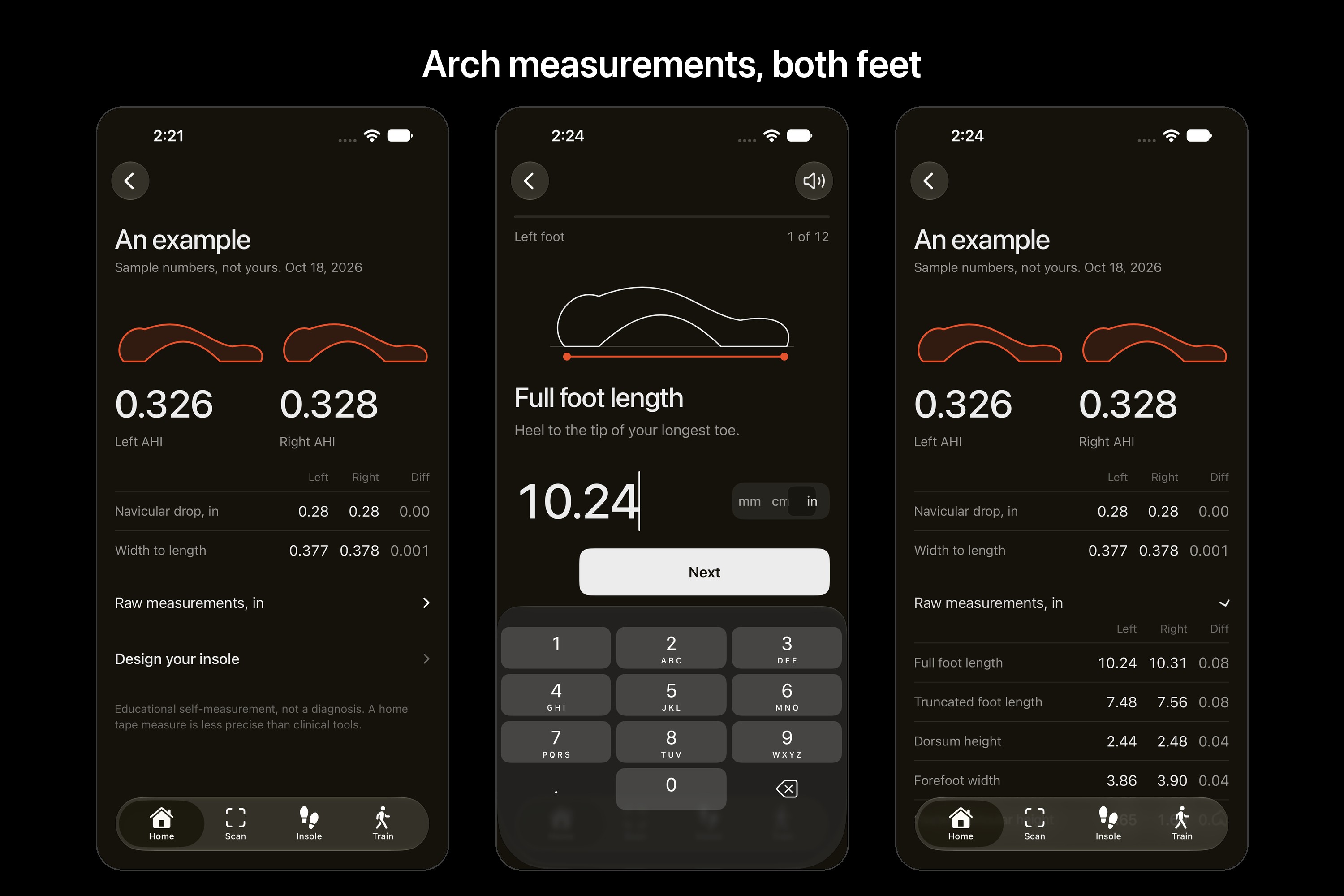
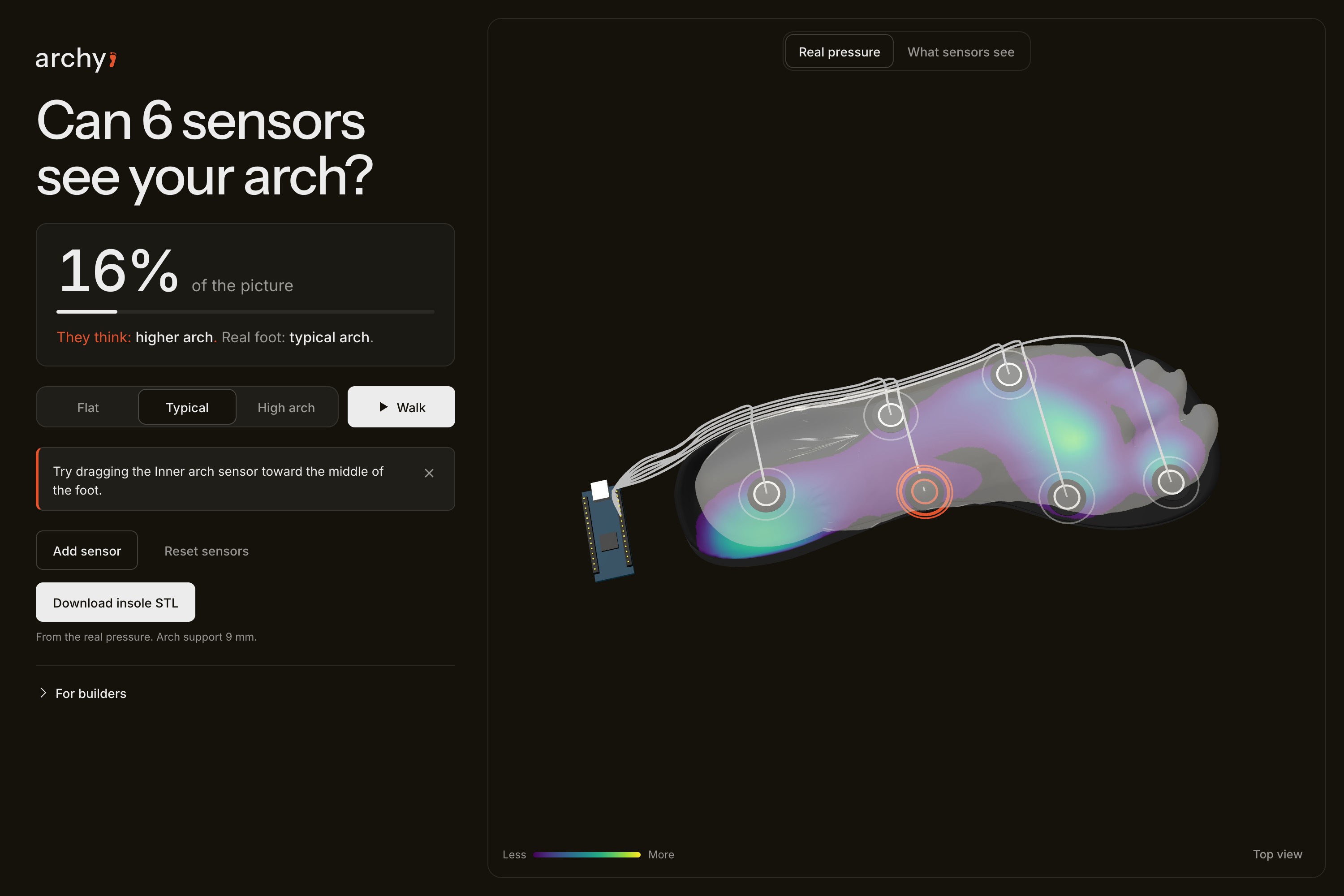
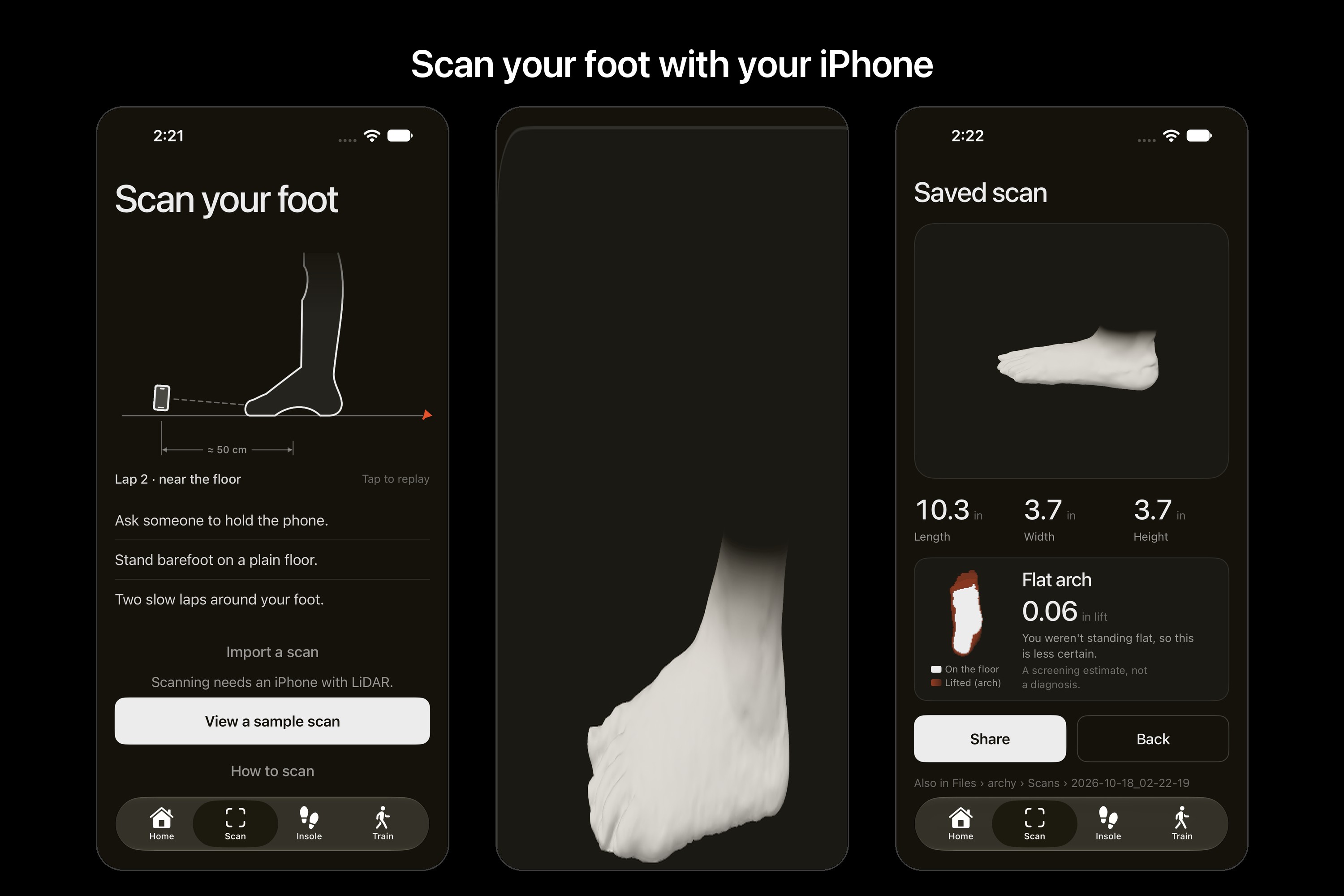
Our product, archy, achieves all of these goals. We have many intricate features, but as a general laundry list: we scan your feet with a smartphone camera, generating a 3D model that is 98.5% accurate compared to what doctors use. Using the model, we generate custom model files, and through medically backed algorithms, we find your specific measurements and generate pressure simulations to ultimately create your custom orthotic. That orthotic is then saved as an exportable 3D file for printing comfortable insoles. In addition to scanning, we also support basic tape measurements of key ratios with 95% accuracy and save your progress over time.
Premium features
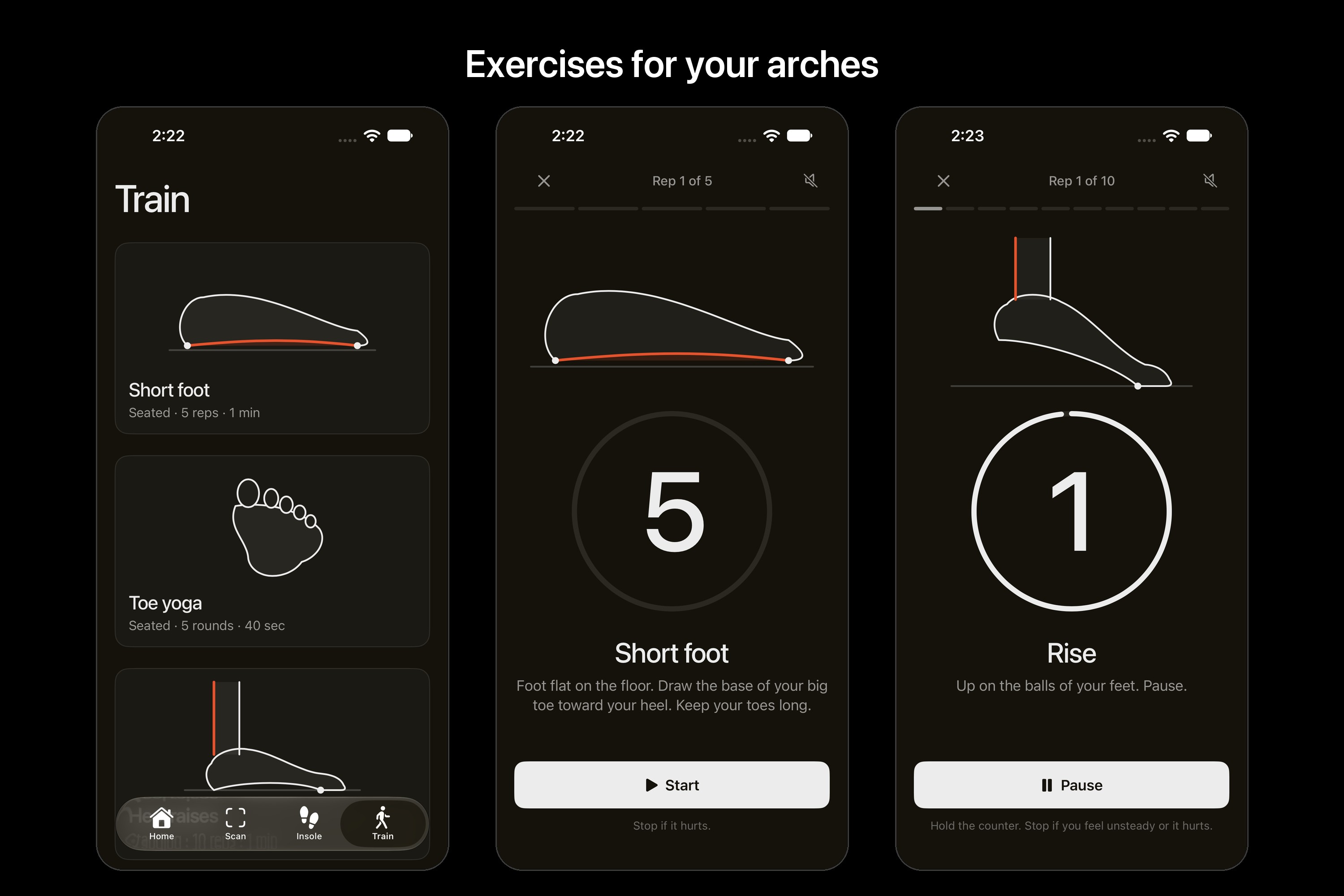
In terms of premium features, we have a library of medical therapy exercises that you would find at actual podiatrists, as well as a monthly plan where we send your custom orthotics to you.
Another premium feature lets you tailor your insole to literal spaceflight and custom gravity environments! Based on NASA standards, we generated estimates that an astronaut could use, alongside options to change materials to real-world lattices used in space. Our app is a one-stop shop for anyone in any environment to treat their flat feet. Anyone can play around with this, but ordering the insoles is a premium feature.
How we built it
On the technical side, we use the LiDAR sensor present in phones to generate a highly accurate 3D model within minutes of scanning. We used Apple developer kits for this, writing in Swift with RealityKit's Object Capture to build a 3D mesh and reading the mesh for measurements. For rendering on the web page, we load STL files into Three.js for custom rendering. All of our data on how the foot moves and walks is backed by official datasets from real studies.
Most of the code was written by Cursor agents running Opus orchestrators and Grok implementers to save cost and increase development speed. We used Grok Bot for planning and researching the many different datasets and approaches before settling on one. Our branding and logos were also done with Grok Bot.
Challenges we faced
We faced quite a few development challenges, most notably working together as three people on this ambitious project. Ishaan worked on rendering and experimenting on the website, Pranav worked on LiDAR, and Prakhar worked on actually integrating the app and making all the components communicate. Because we worked in three different branches, with 10+ agents and many subagents allocated to each of us, many implementation details were different. So we set up one issues board that our agents added to, and started a new subagent for each issue until our merge conflicts were resolved and everything integrated well together.
To make our app look tasteful and playful (not AI slop :p), we used skill files from Emil Kowalski, which made following the best iOS practices and UI super easy.


Log in or sign up for Devpost to join the conversation.