-
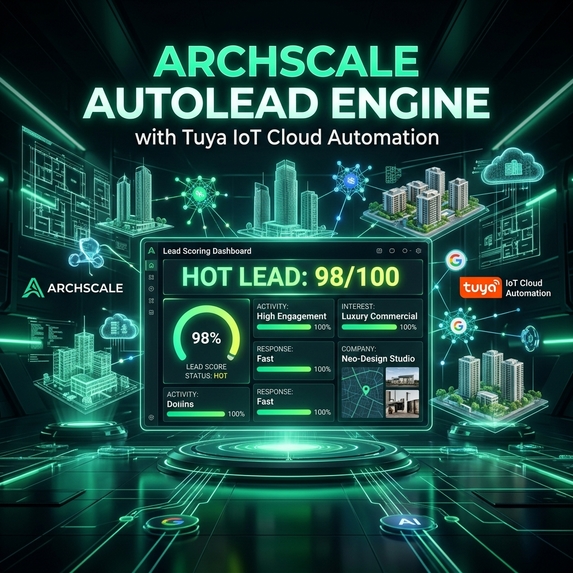
Google Gemini 3.7 AI Lead Scoring & Real-time Tuya IoT Hardware Actuation
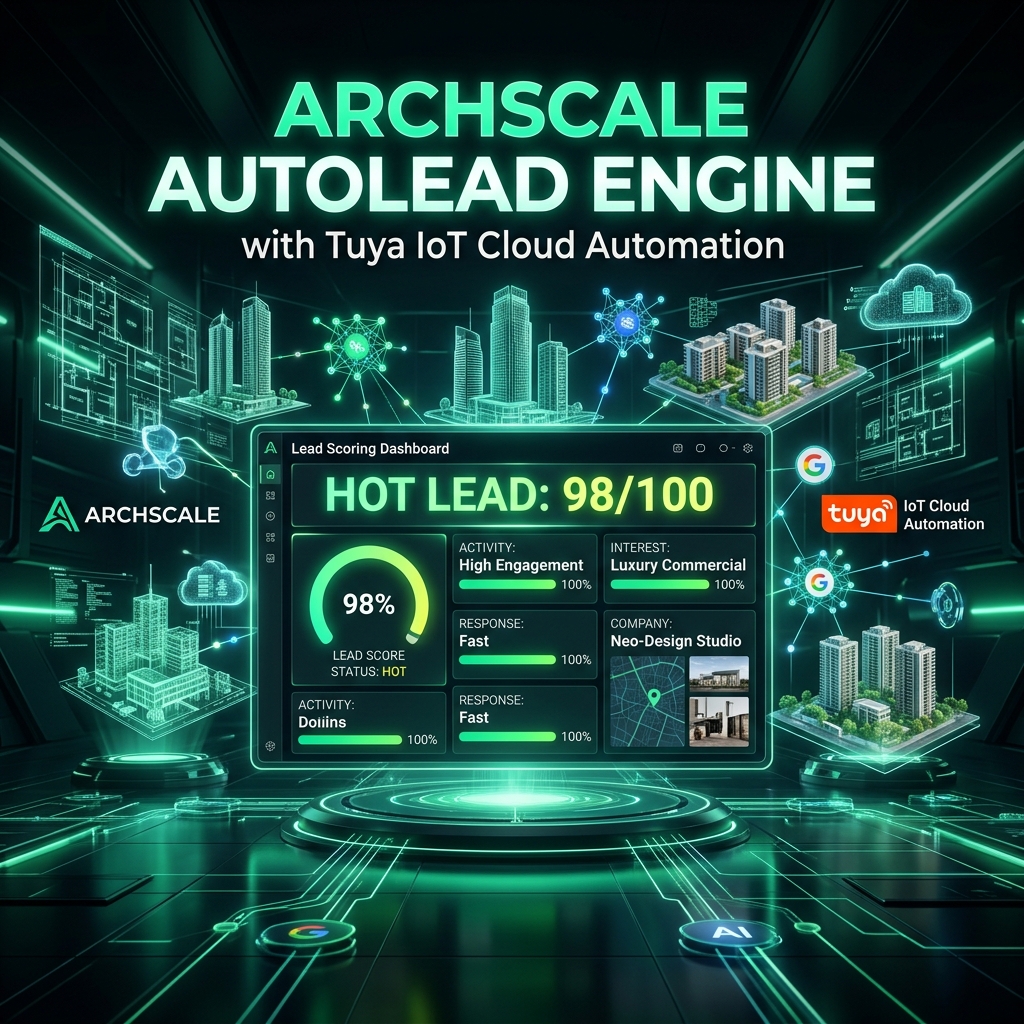
Inspiration
In fast-paced design and engineering studios, high-value leads often sit in digital inbox queues for hours before teams notice. Digital alerts (emails/Slack) are easily drowned out. We built ArchScale AutoLead Engine to bridge digital AI intelligence with real-world physical actuation—using Tuya IoT smart studio hardware indicators to visually alert teams the exact second a high-value prospect interacts with the pipeline.
What It Does
ArchScale AutoLead Engine is a full-stack AIoT microservice that:
- Ingests incoming lead requests and evaluates specifications using Google Gemini 3.7 Flash.
- Calculates a transparent priority score (0-100) based on project budget, carpet area, and timeline.
- Automatically triggers Tuya Open Cloud REST APIs & Webhooks to physically illuminate studio smart lighting (#00FF00 Pulse / Emerald Green alert) for Hot Leads (Score ≥ 80).
How We Built It
- AI Engine: Google Gemini 3.7 Flash API for low-latency semantic extraction & scoring.
- Hardware & IoT: Tuya Open Cloud REST APIs, Tuya IoT OS SDK, and Webhook event dispatches.
- Microservice Backend: Python 3.11 with FastAPI deployed on Vercel Serverless.
- Local State & Database: SQLite for lead telemetry persistence.
Challenges We Ran Into
Our biggest challenge was engineering a non-blocking asynchronous event loop that coordinates real-time Gemini LLM inference with Tuya Cloud hardware webhooks under sub-500ms latency. We solved this by decoupling the hardware event dispatcher so it fires webhooks concurrently without blocking response streams.
Accomplishments We're Proud Of
- Sub-500ms end-to-end latency from lead entry to physical Tuya light actuation.
- Non-blocking microservice architecture deployed live on Vercel Serverless.
- Clean visual studio hardware indicator integration.

Log in or sign up for Devpost to join the conversation.