Inspiration
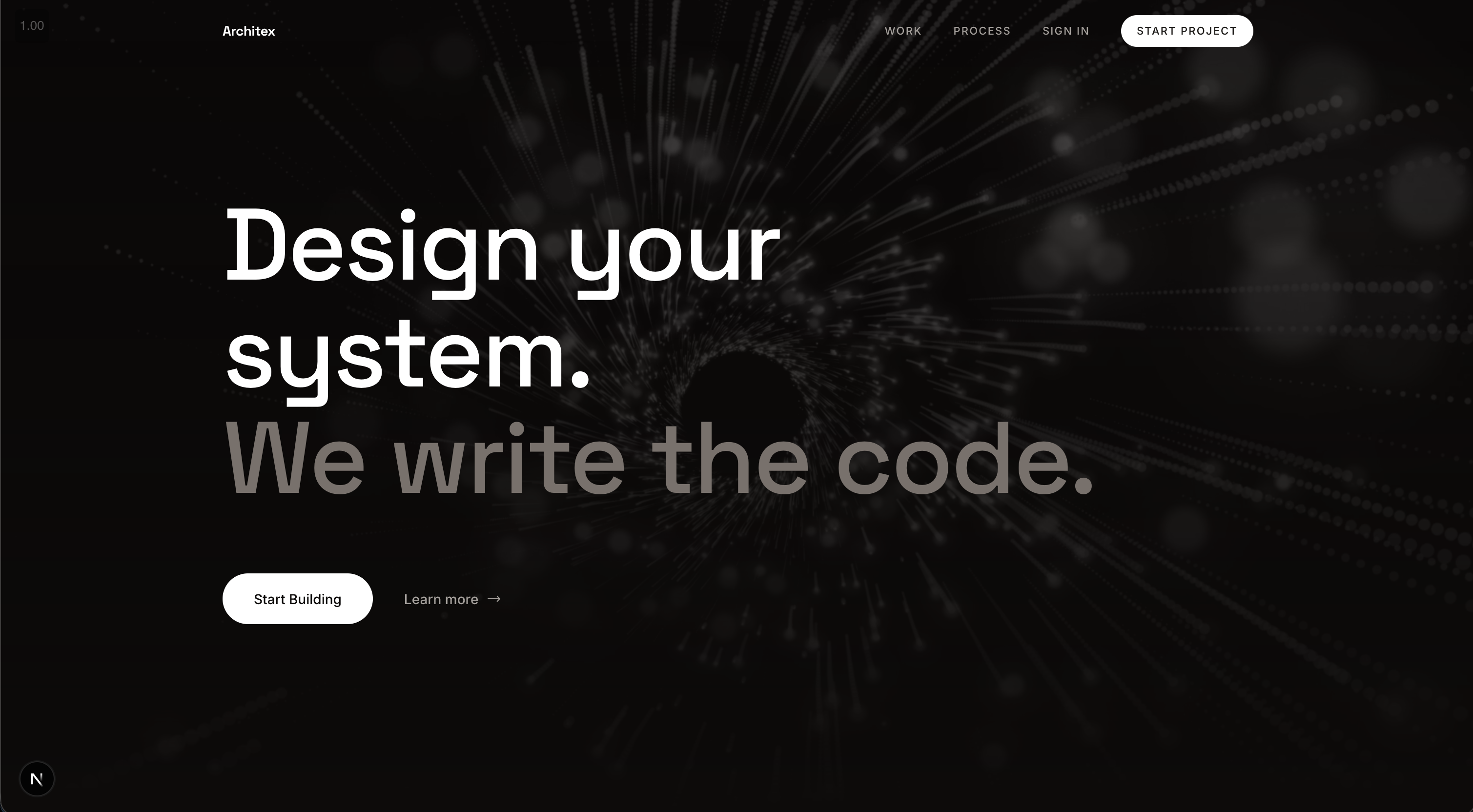
Our goal is to make software design more accessible and beginner-friendly, empowering everyday people to become creators and not just consumers of technology. We believe that anyone with an idea should have the ability to bring it to life, without needing years of coding experience.
By lowering the barrier to entry, we help people turn the ideas in their heads into real, working software.
What it does
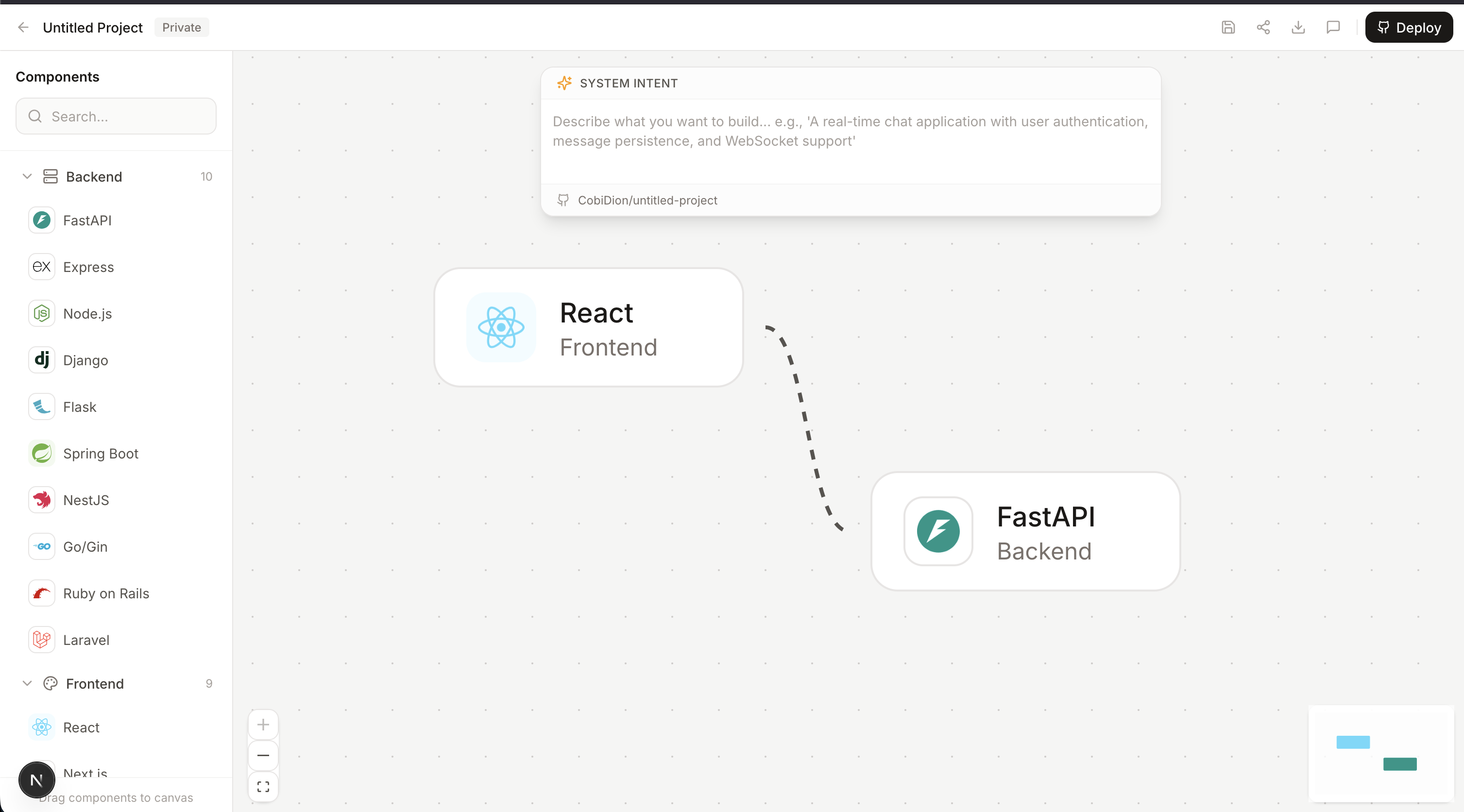
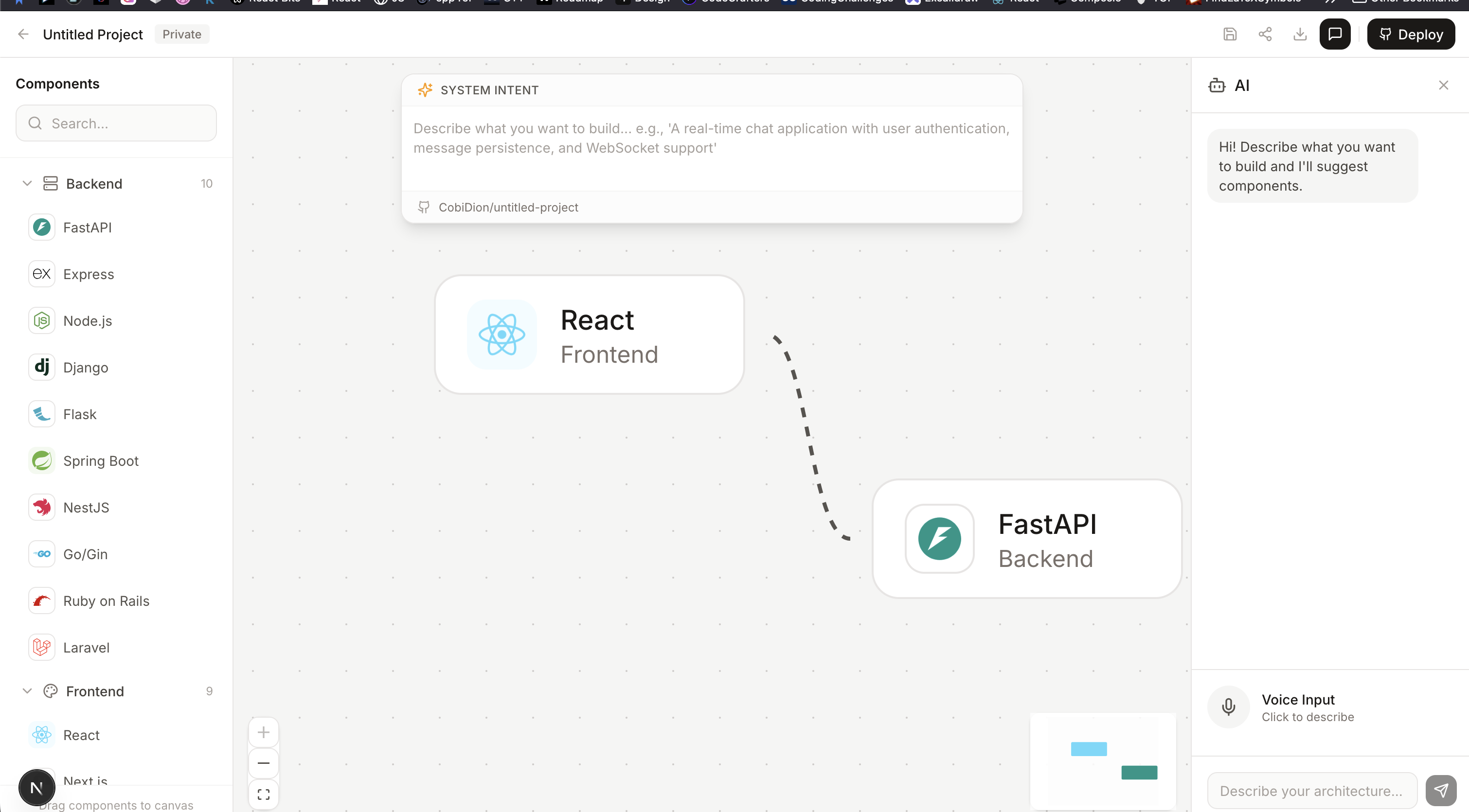
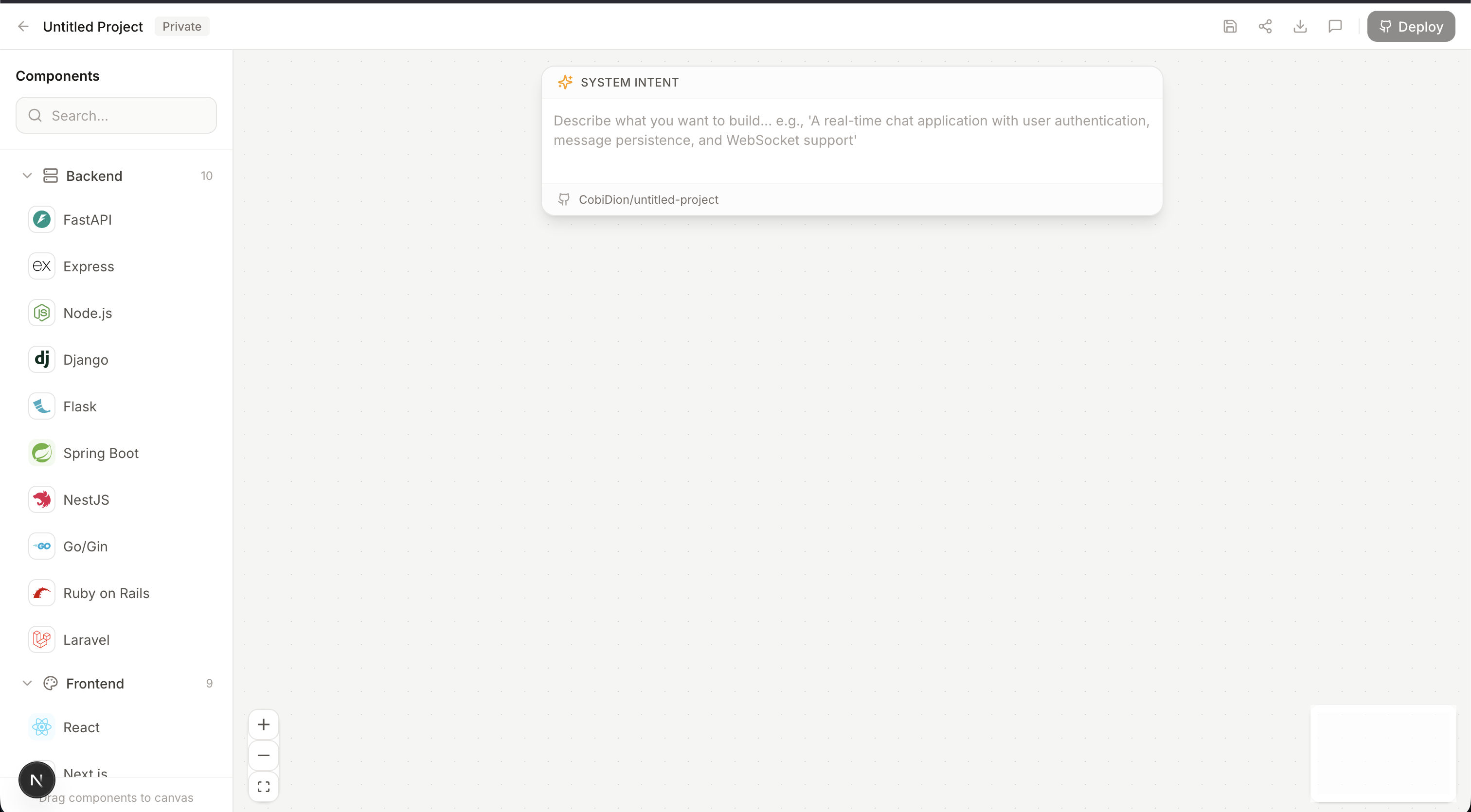
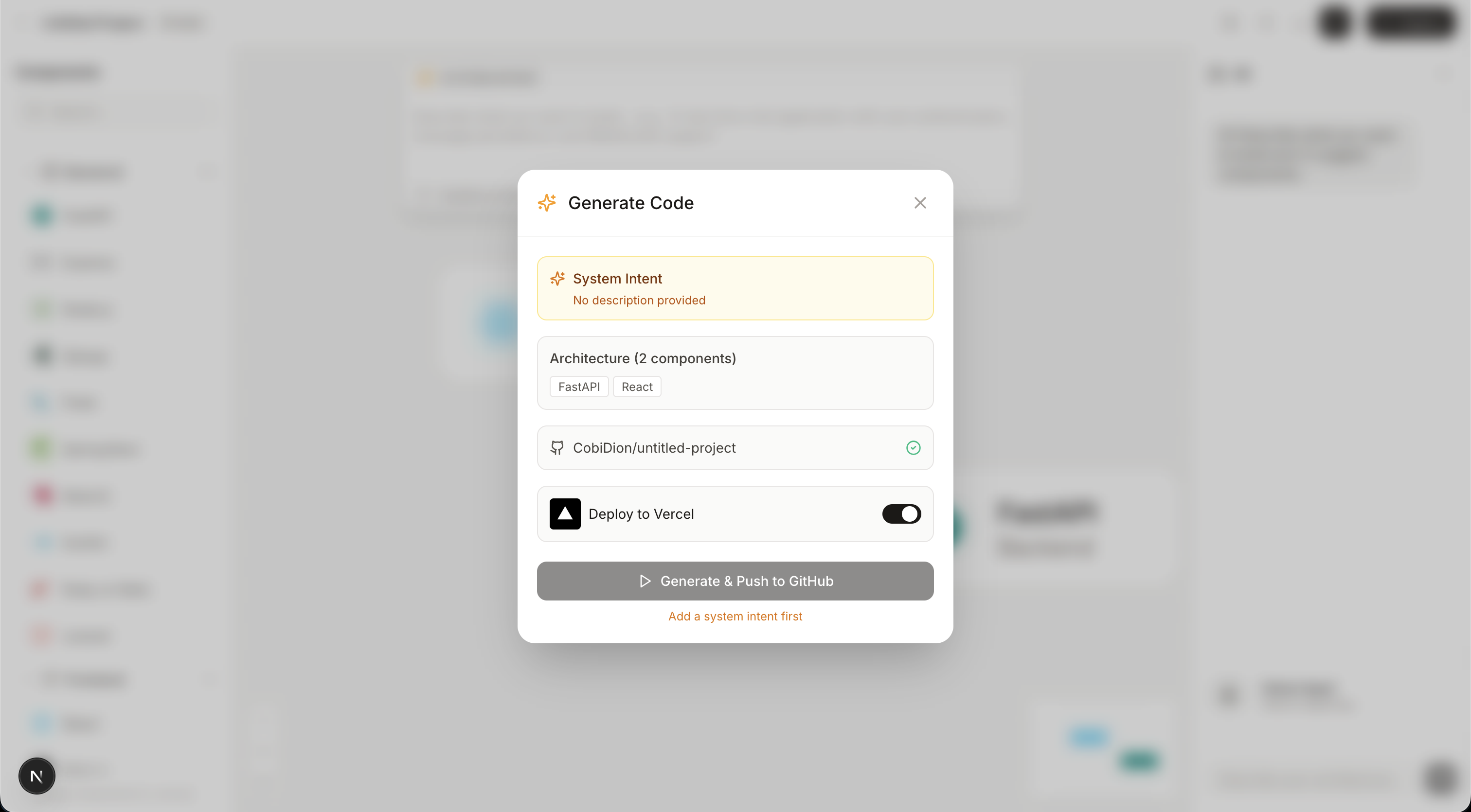
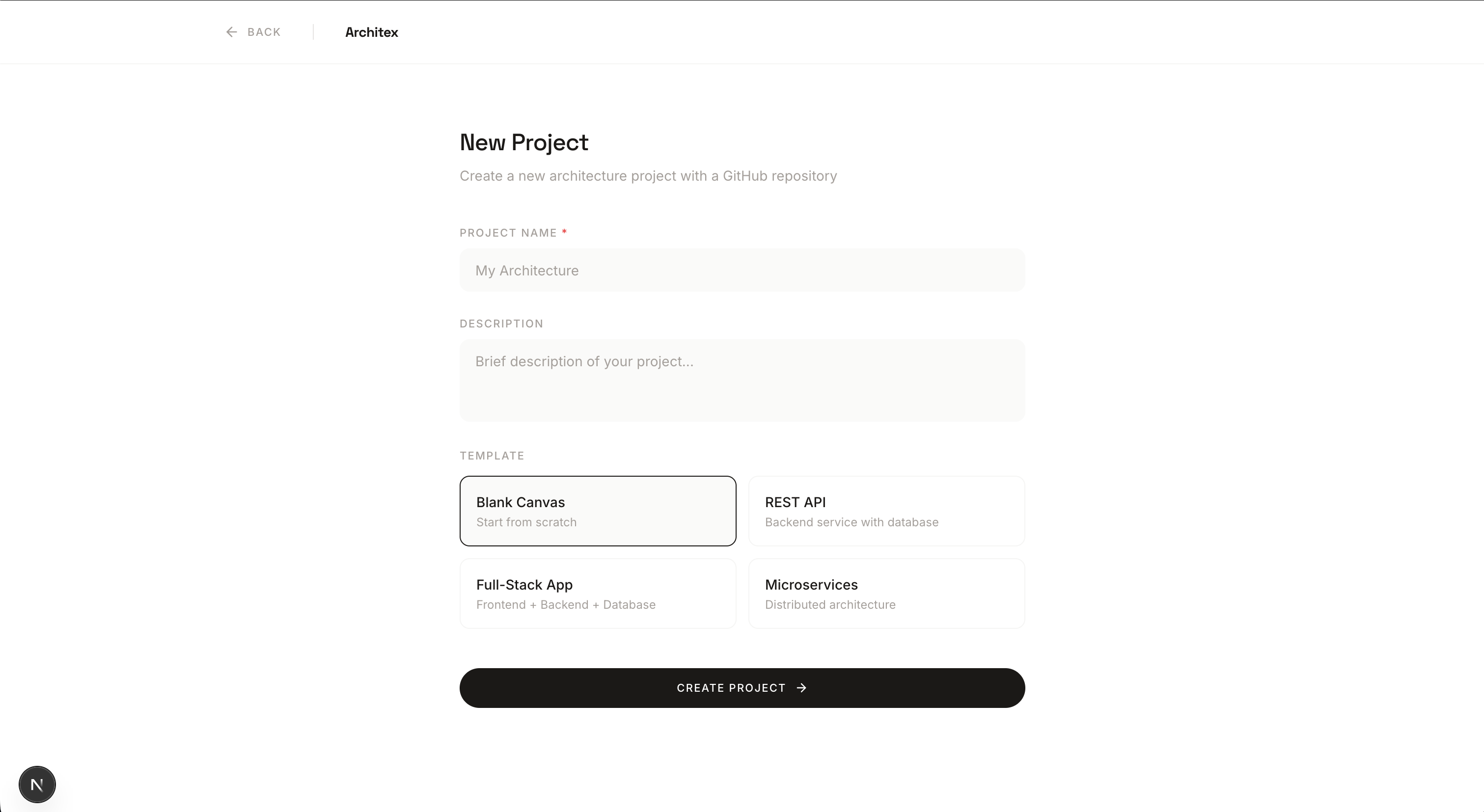
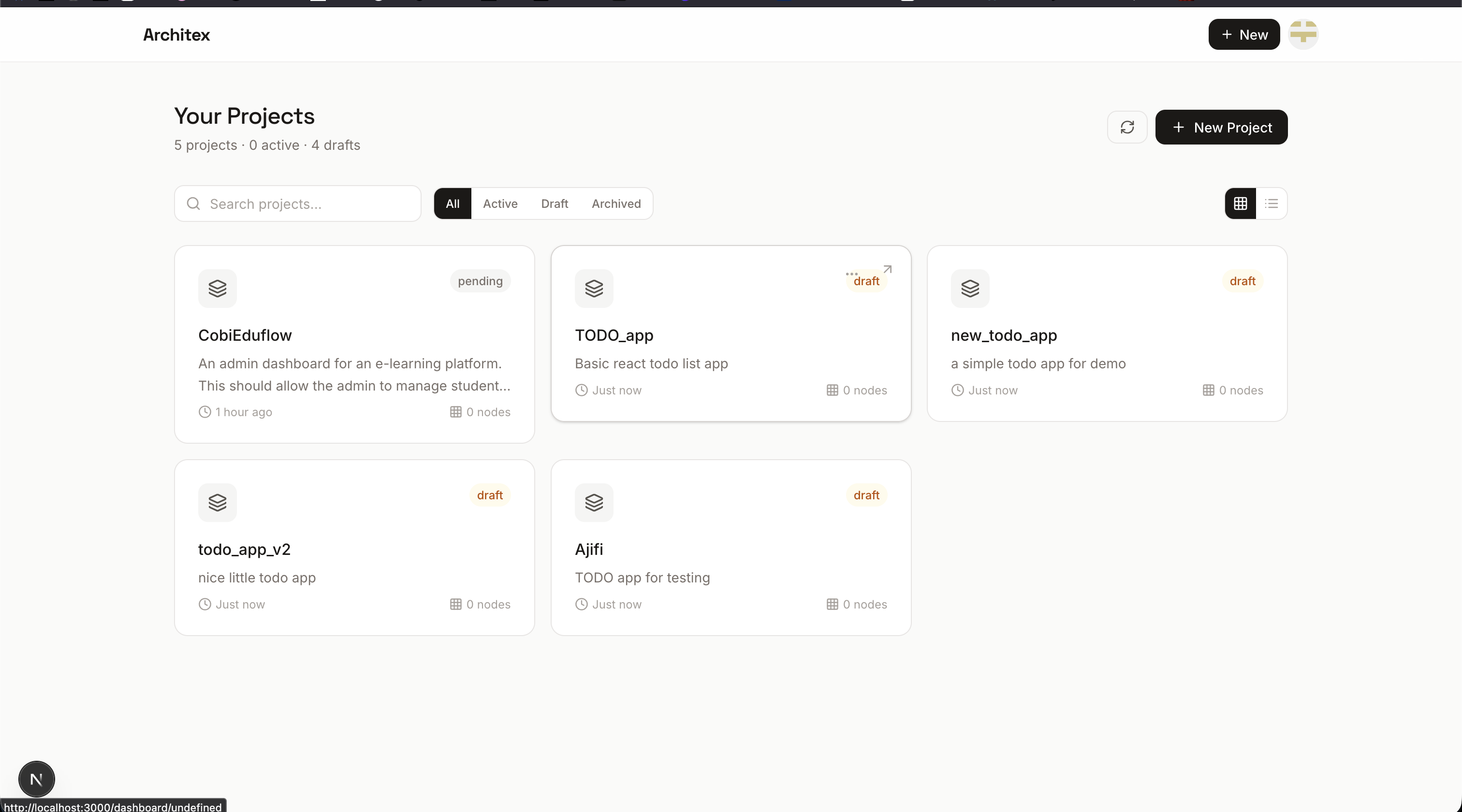
Architex is a full-stack web application that helps users turn ideas and natural-language descriptions into real software components and workflows. Through a visual design interface, users can map out system architecture and describe features without needing deep technical knowledge.
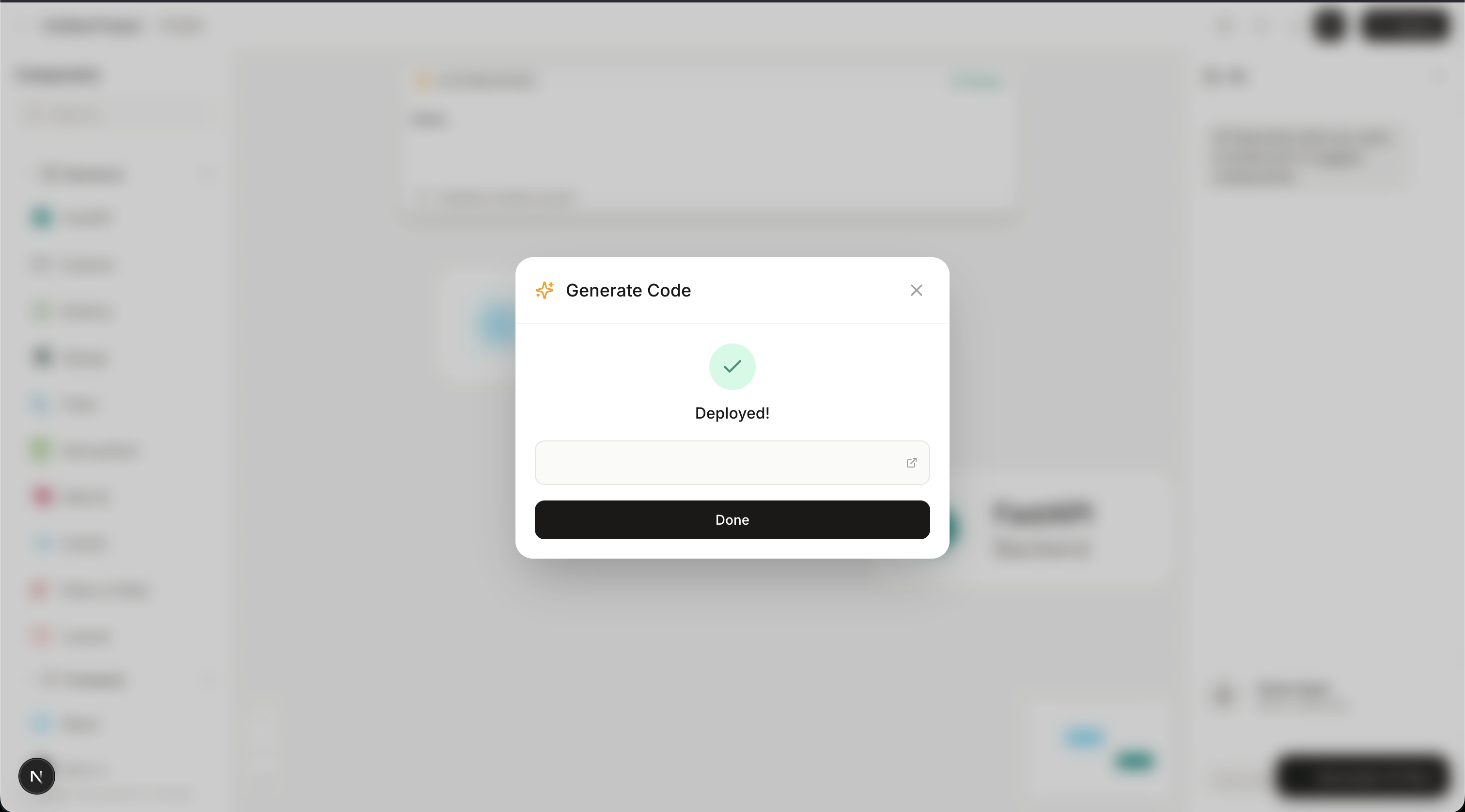
Using AI-powered backend services and GitHub integration, Architex helps convert concepts into working code and project structure, allowing users to move from idea to implementation faster. The goal is to lower the barrier to software development and make building applications more accessible to beginners and non-developers.
How we built it
We built Architex using a full-stack architecture with a modern web frontend and a scalable backend. The frontend is developed with Next.js and React, using React Flow to create an interactive, visual workflow builder where users can design and connect software components directly in the browser.
The backend is powered by FastAPI (Python), which handles AI requests, project logic, and integrations. We connected the system to AI models to generate code from natural-language prompts, and added GitHub integration so users can create, update, and manage repositories directly from the platform. Data and user information are stored using MongoDB Atlas, enabling persistent projects and authentication workflows.
To keep the system modular and scalable, we separated concerns between the frontend, API services, and background processing, allowing each part of the stack to evolve independently while staying tightly integrated.
Challenges we ran into
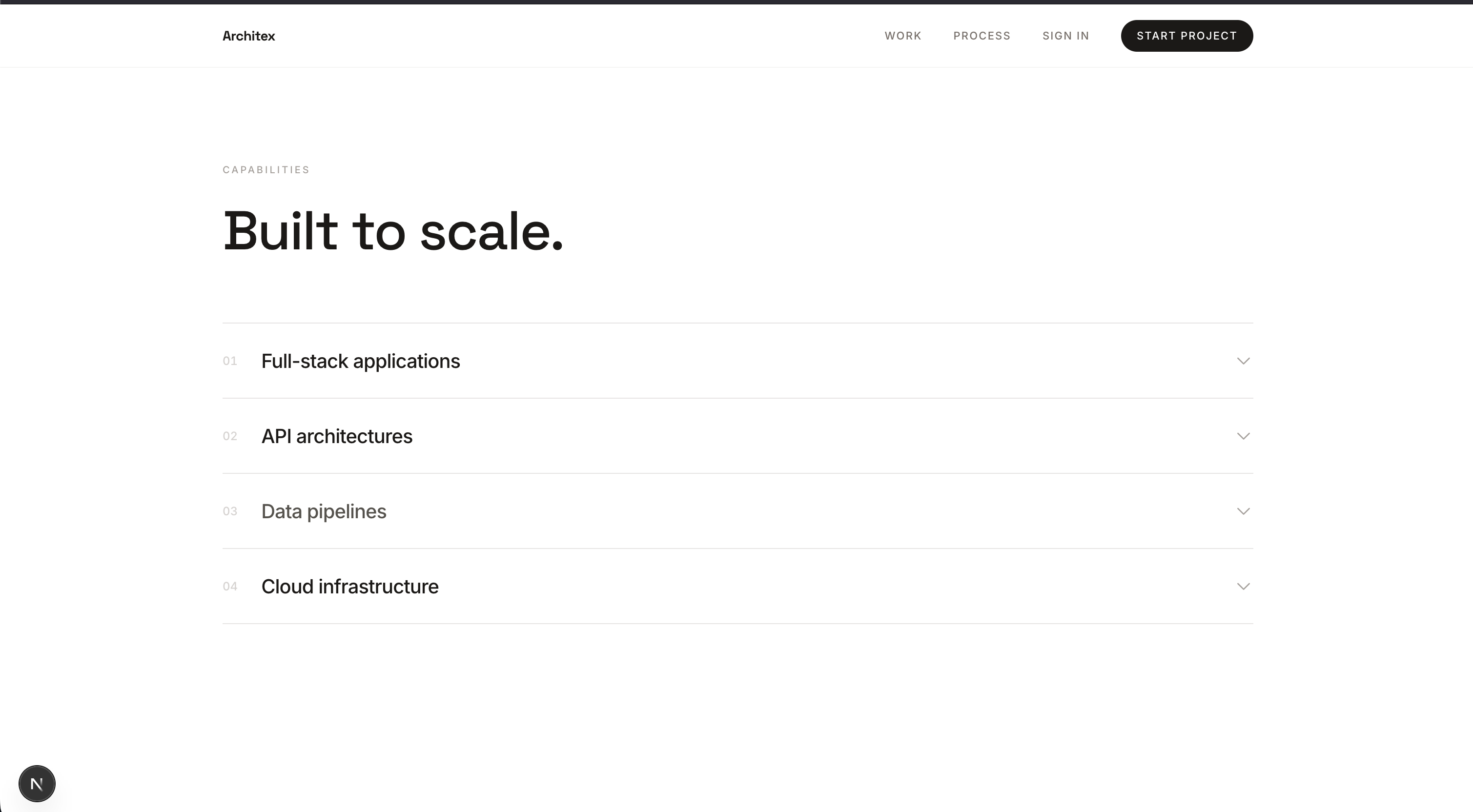
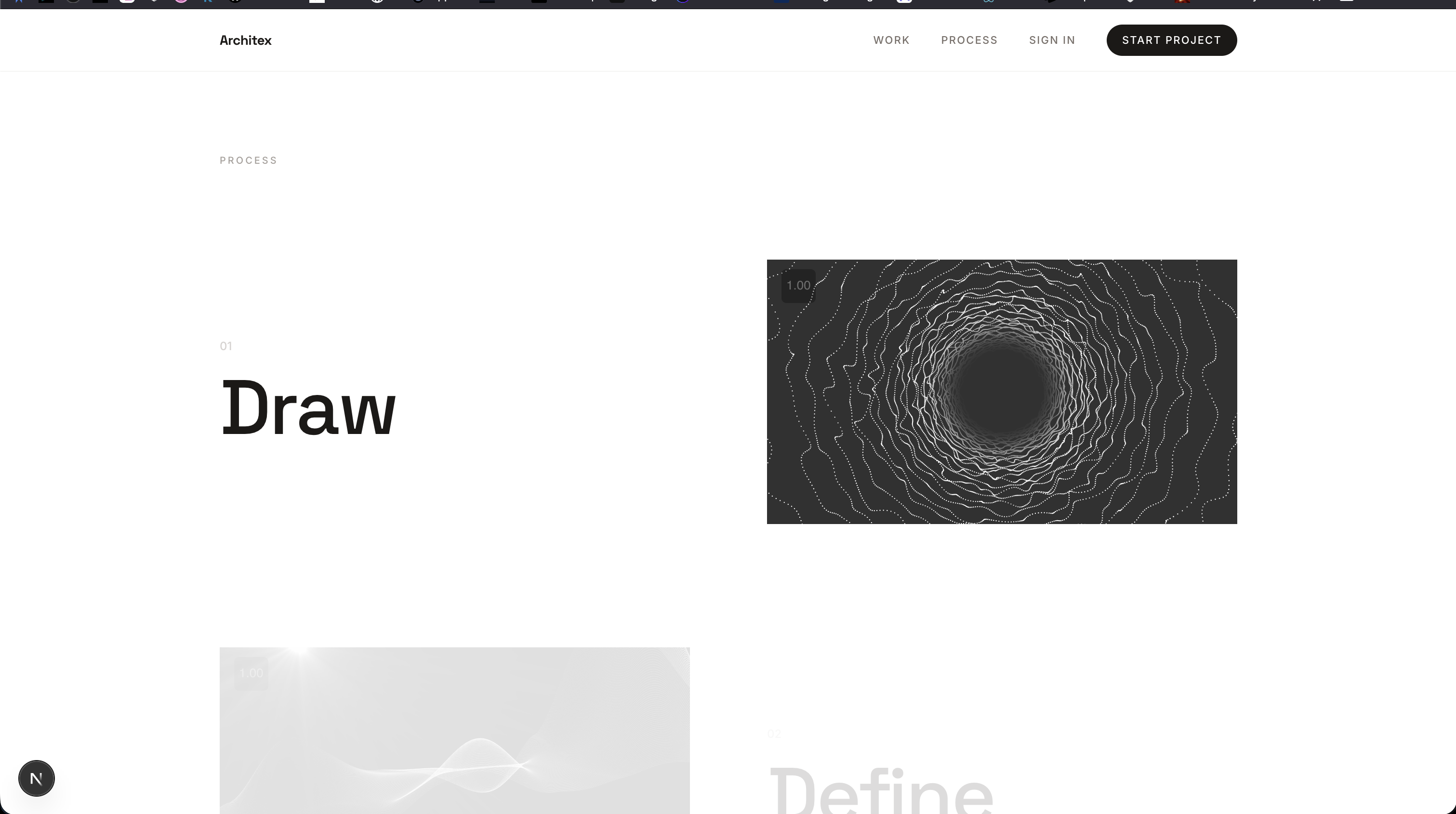
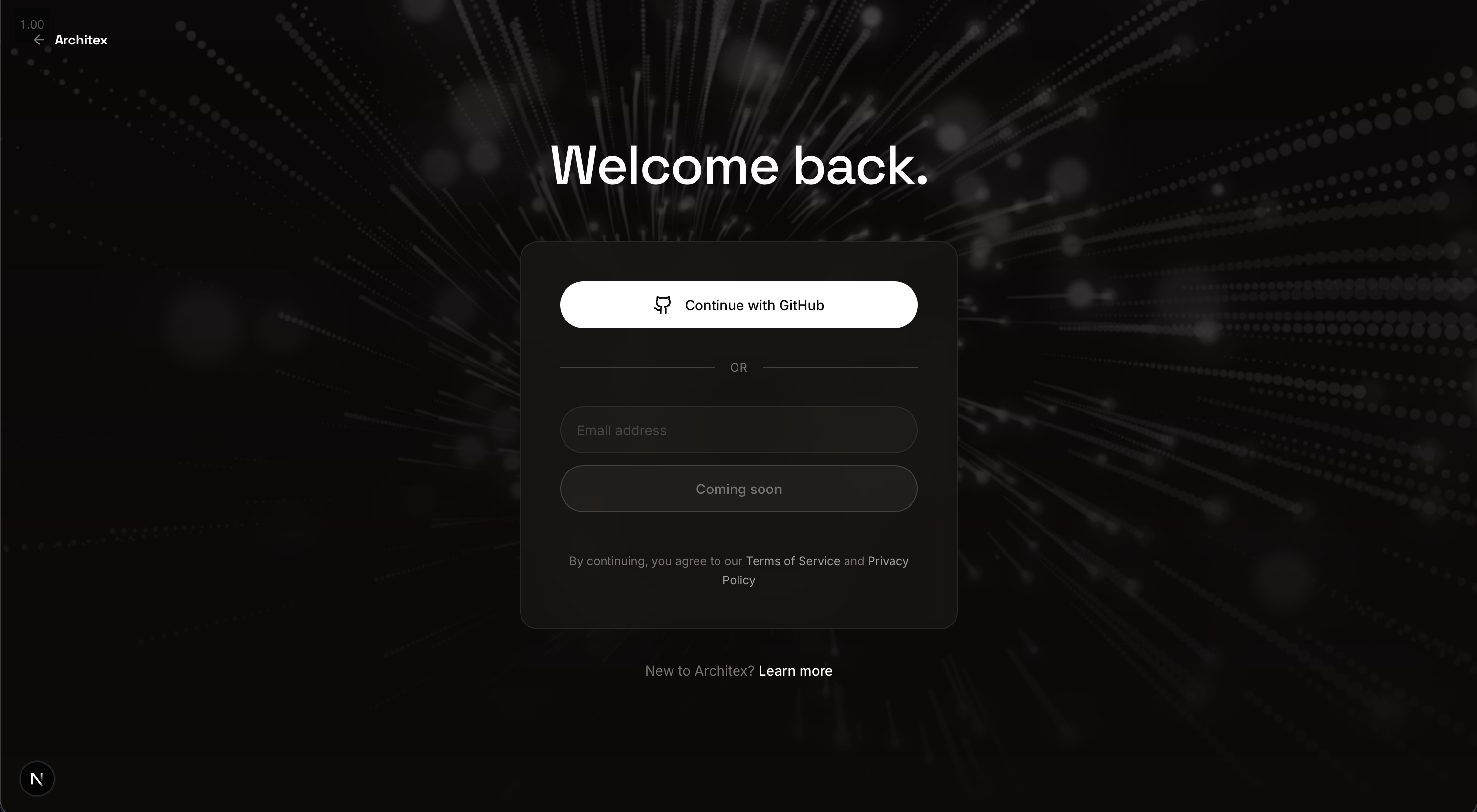
Frontend was great and done with mainly gsap animations. tailwindcss helped prototype visual styles, and the full UI/UX was designed according to senior frontend design principles.
However, a huge issue occurred when git tracking was messed up, funnelling hours of work into a separate remote repo that was later disconnected and unaccessible. the local latest frontend was wiped when switching back to the main branch of the github repo, and all the frontend work was lost and forcibly replicated from scratch. that was mentally exhausting and a pain, but we got it back.
As a team we learned that good work can be done great if run 2 times over.
Accomplishments that we're proud of
We are proud of how we approached system design and planning before jumping into development, which allowed us to build a well-structured frontend and backend that work smoothly together. The team delivered a clean, intuitive, and visually polished user interface while also implementing a scalable backend architecture to support AI features and integrations.
Most importantly, we are proud of how well we worked as a team. we delegated tasks effectively, communicated clearly, and adapted quickly to complications, ensuring that any issues did not stop overall progress.
What we learned
Through building Architex, we gained hands-on experience with a wide range of technologies across the full stack. On the frontend, we learned how to build complex interactive interfaces using Next.js, React, and React Flow, focusing on state management, component design, and user experience.
On the backend, we learned how to design and scale APIs using FastAPI (Python), connect services to AI models for code generation, and manage persistent data with MongoDB Atlas. We also gained experience with GitHub APIs and OAuth, as well as structuring projects using feature-based architecture to keep the system modular and maintainable. Overall, the project helped us strengthen both our technical skills and our system design mindset.
What's next for Architex
Moving forward, Architex will integrate more powerful AI models to produce higher-quality frontend and backend designs, enabling users to launch more complete and production-ready repositories directly from their ideas.
In addition to technical improvements, we plan to build a support system and community around the platform, where users can share projects, get help, and collaborate.
Built With
- cline
- elevenlabs
- fastapi
- gemeni
- github
- githubapi
- google-cloud
- mongodb
- nextjs
- oauth
- react
- reactflow
- tailwindcss


Log in or sign up for Devpost to join the conversation.