-

Landing page
-
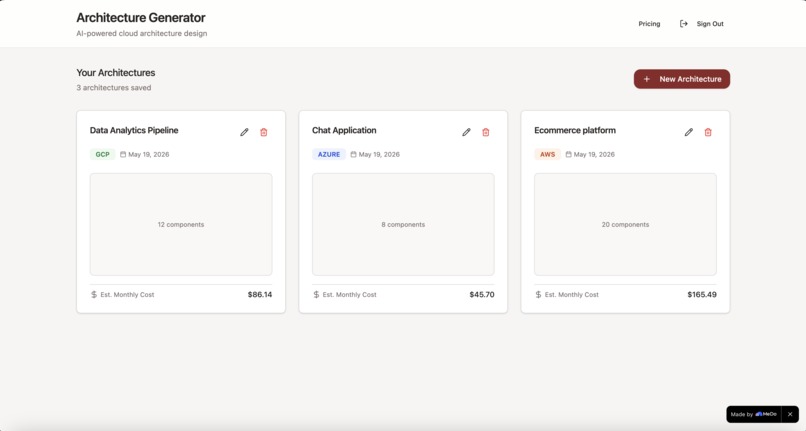
Home page
-
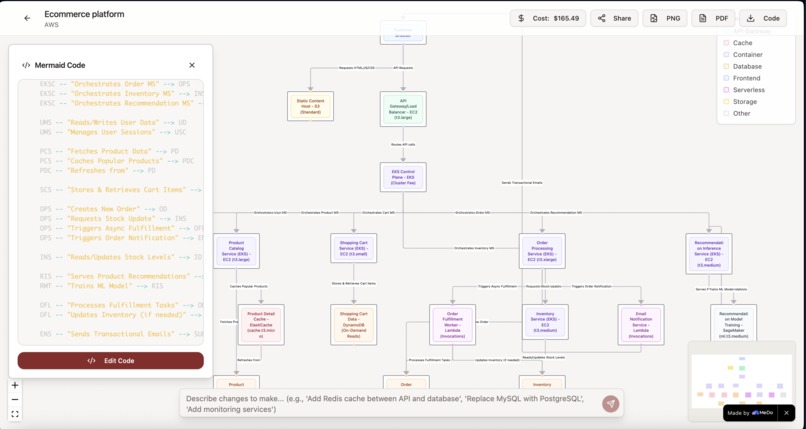
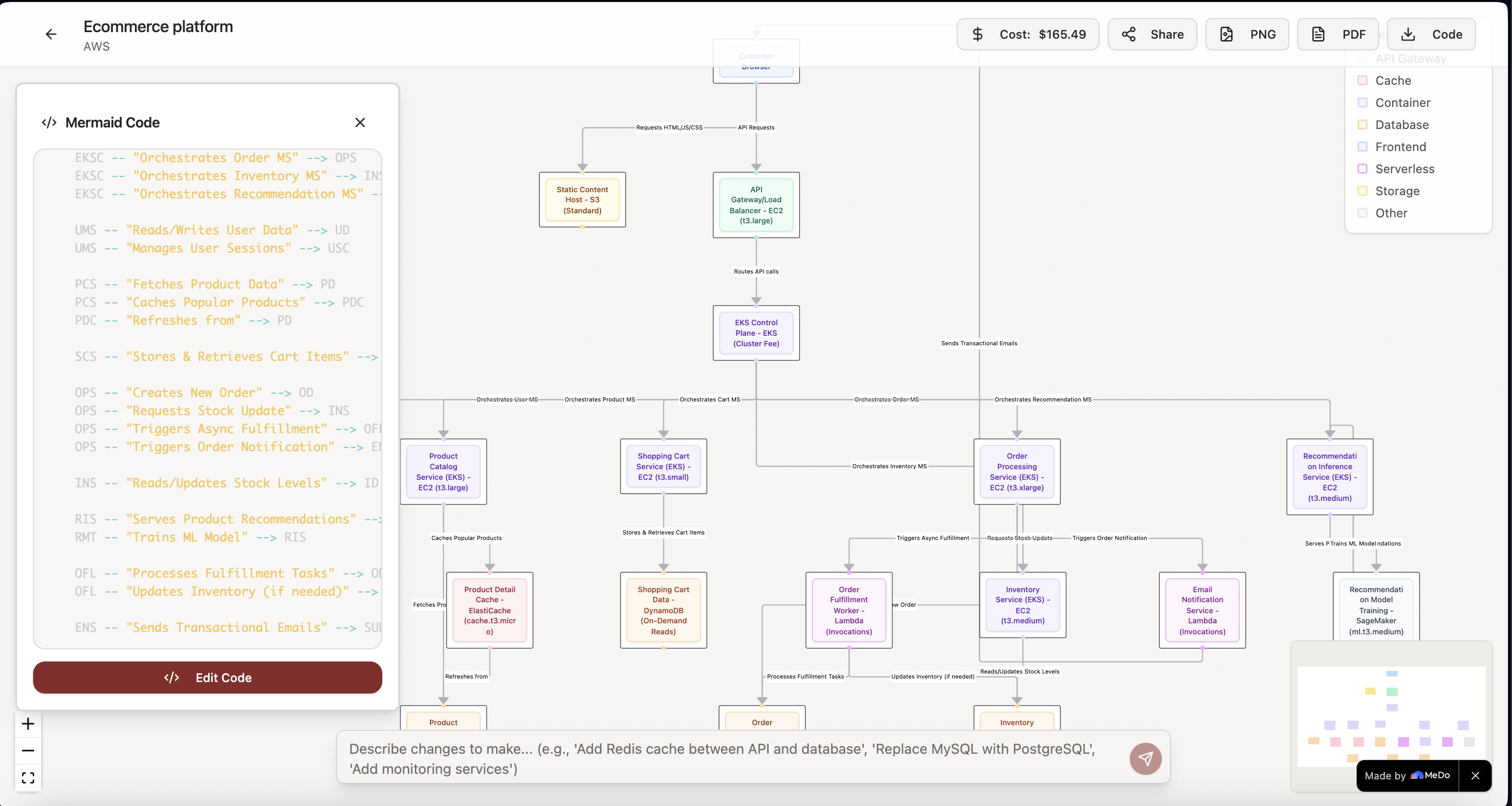
Architecture canvas
-
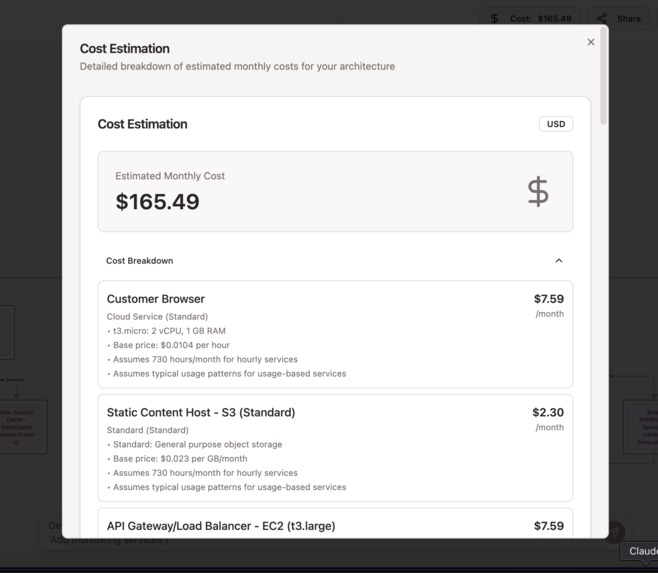
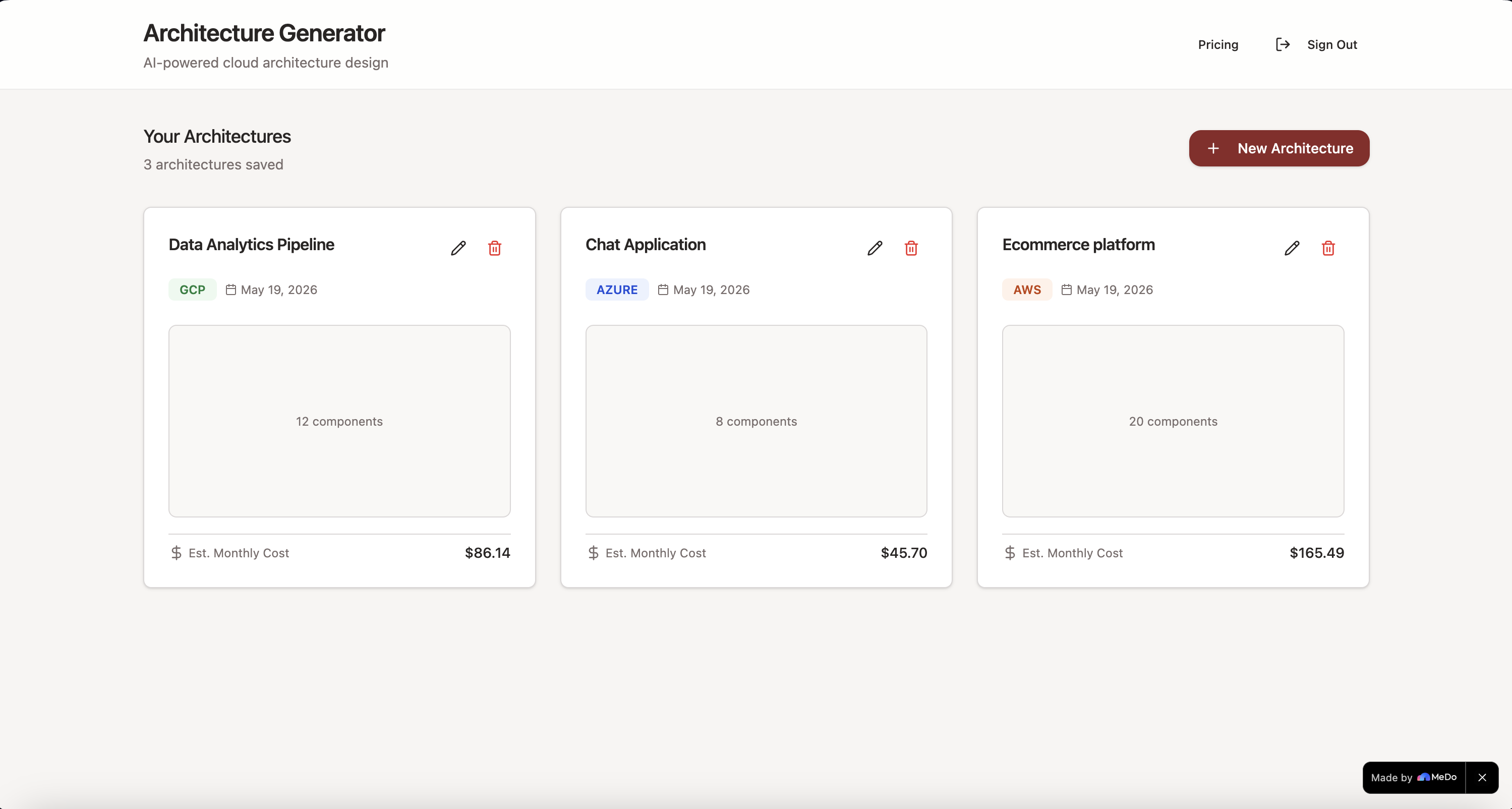
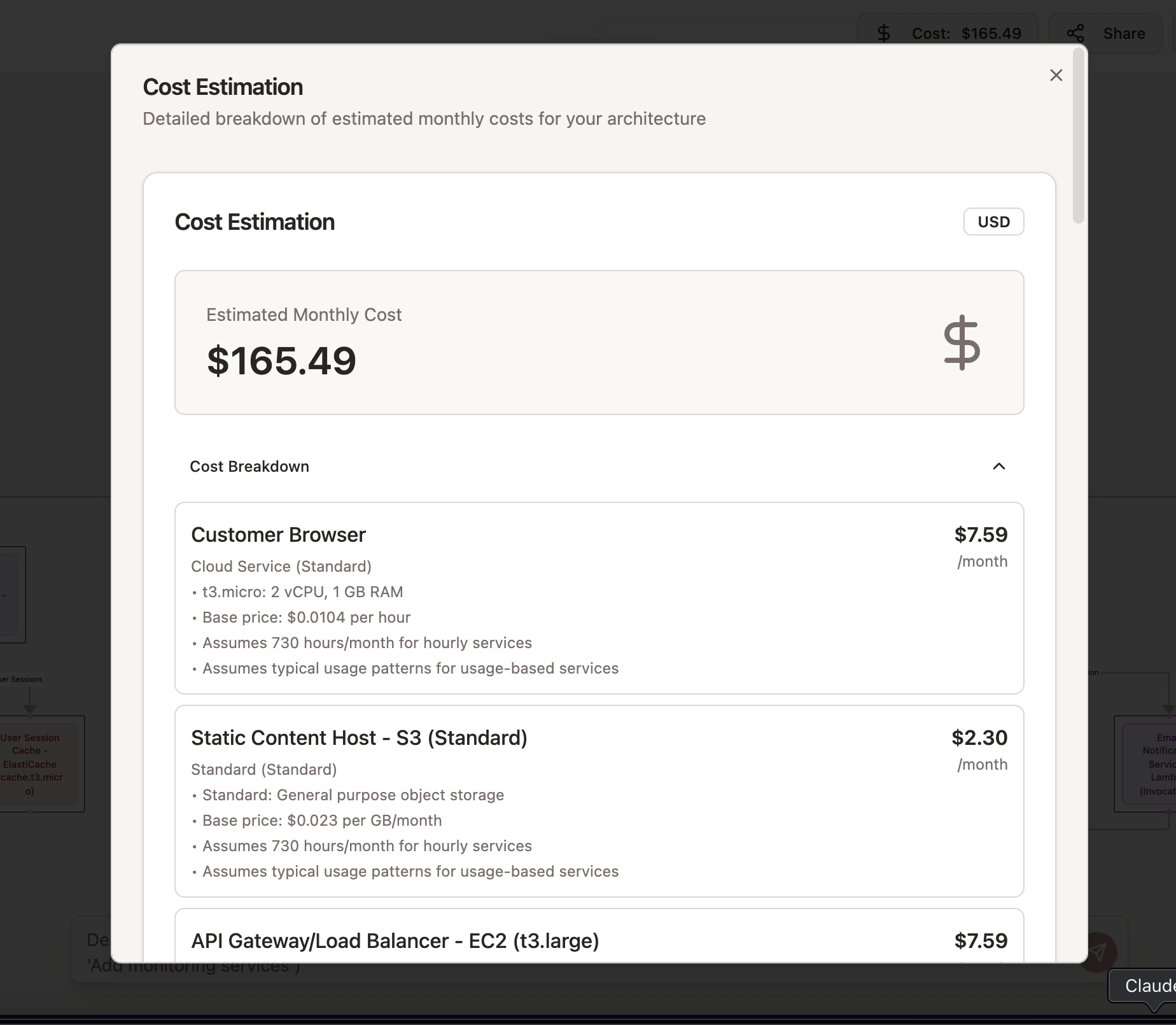
Architecture cost estimates
-
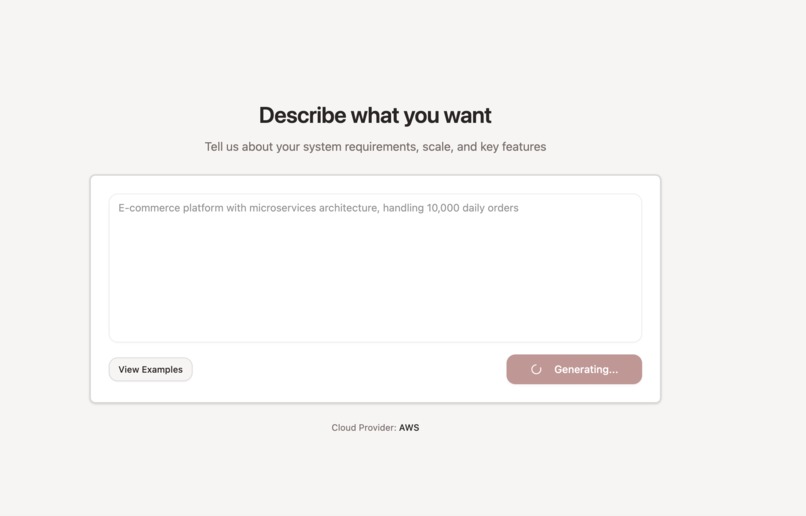
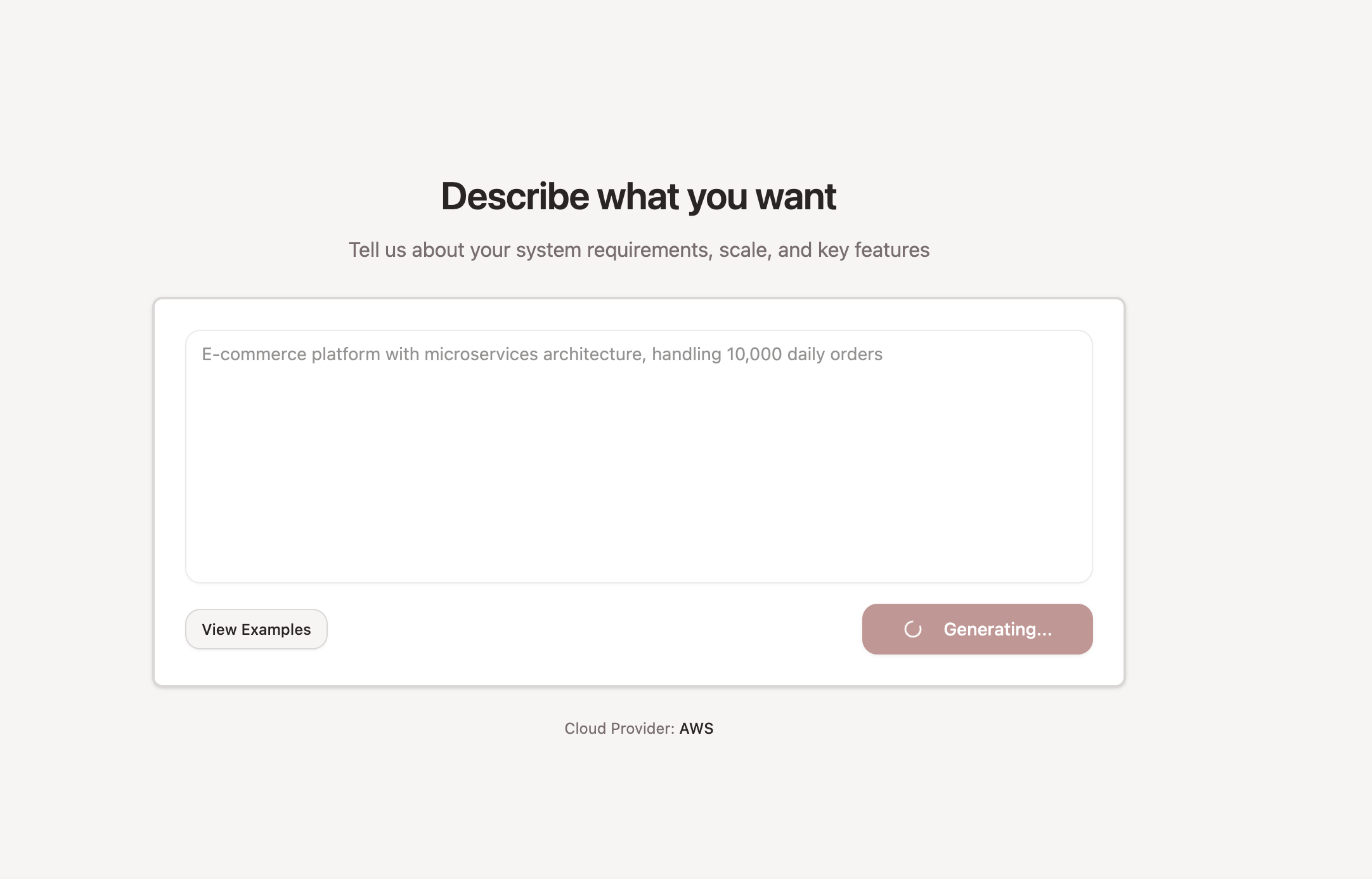
Prompt page
-
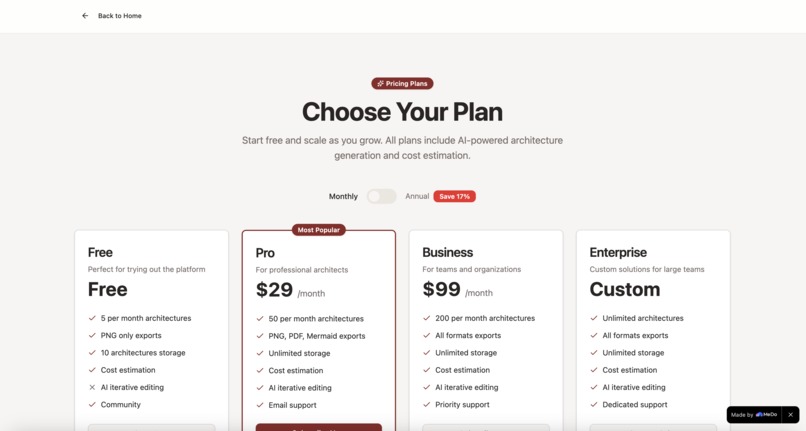
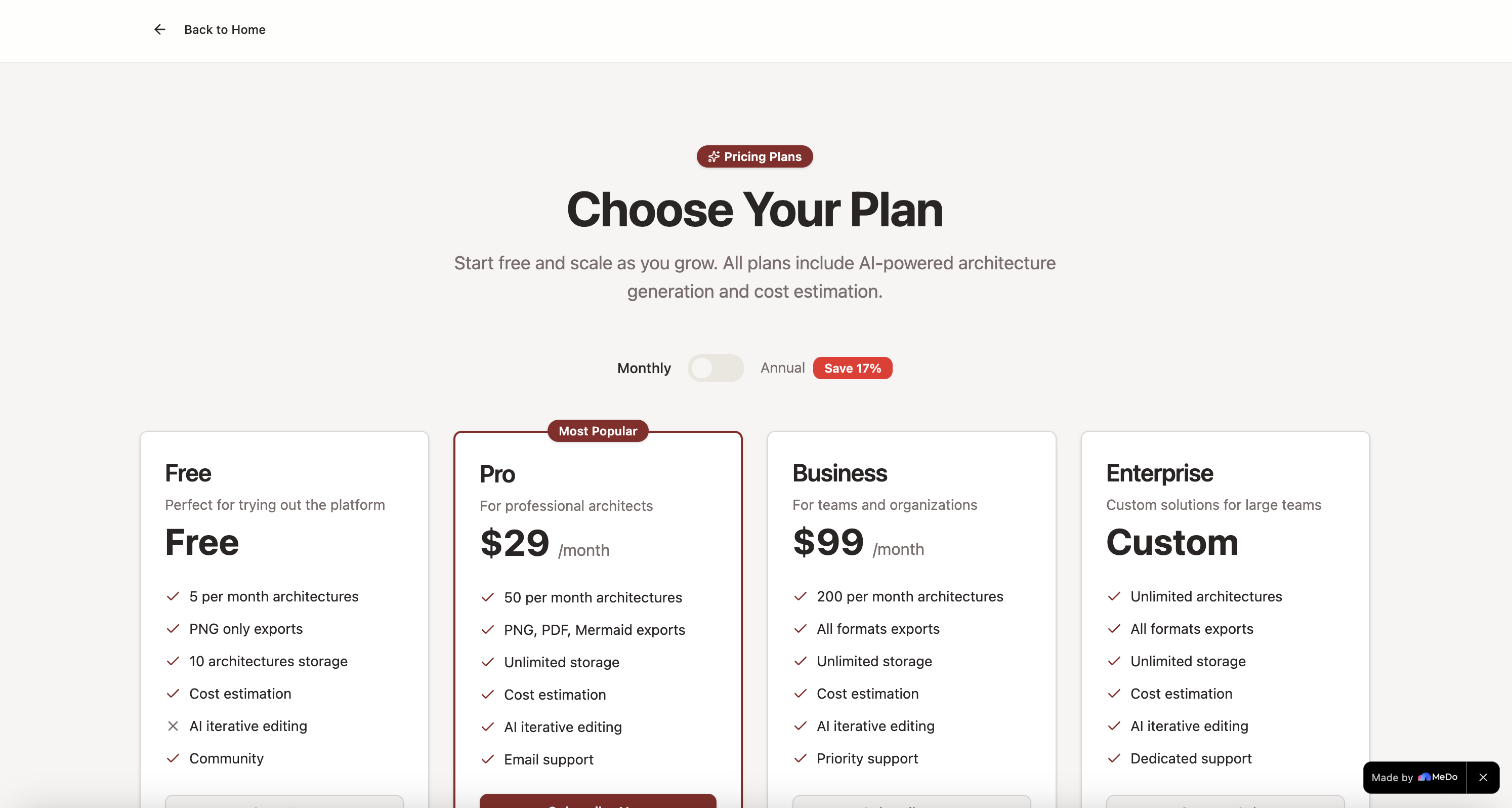
Pricing page (with stripe)
-
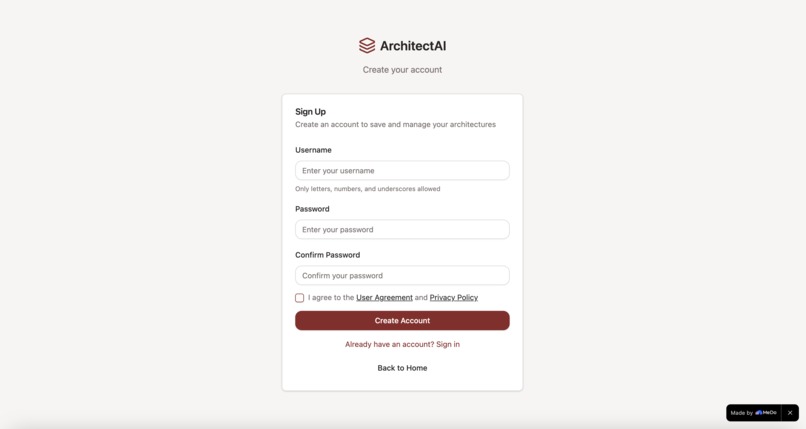
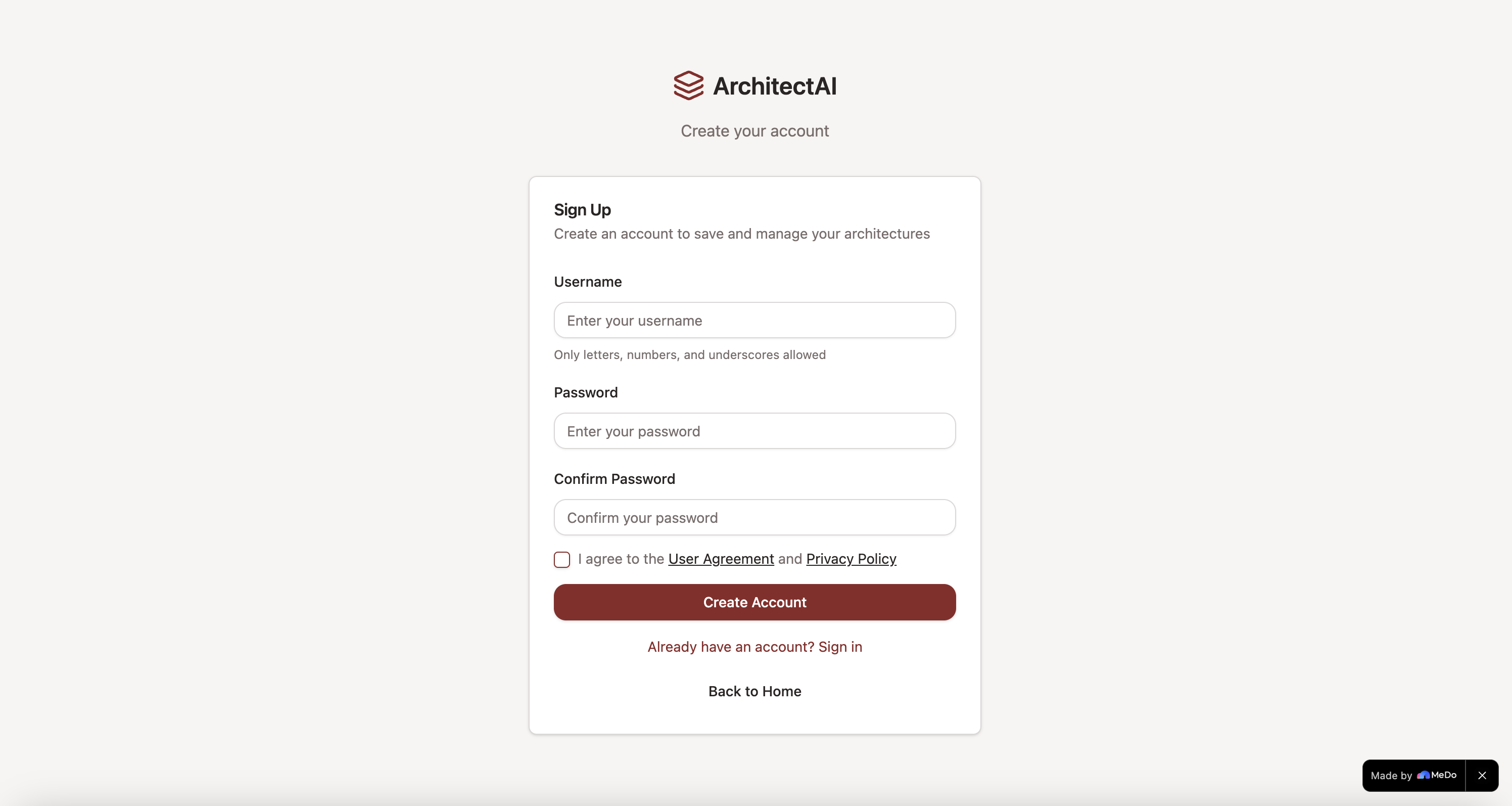
Signup page
-
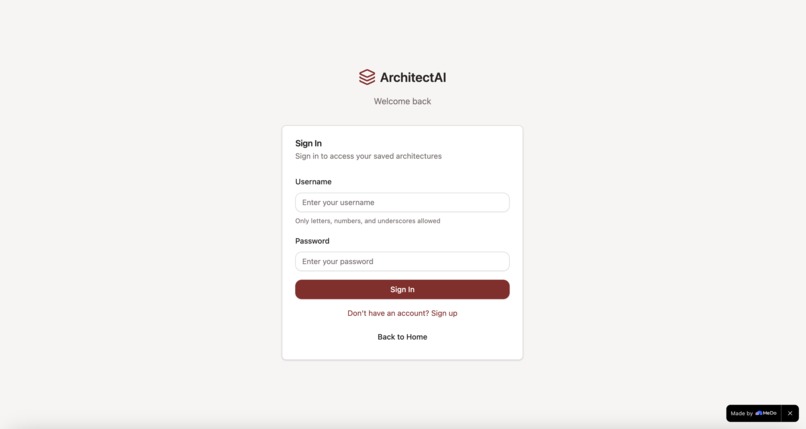
Login page

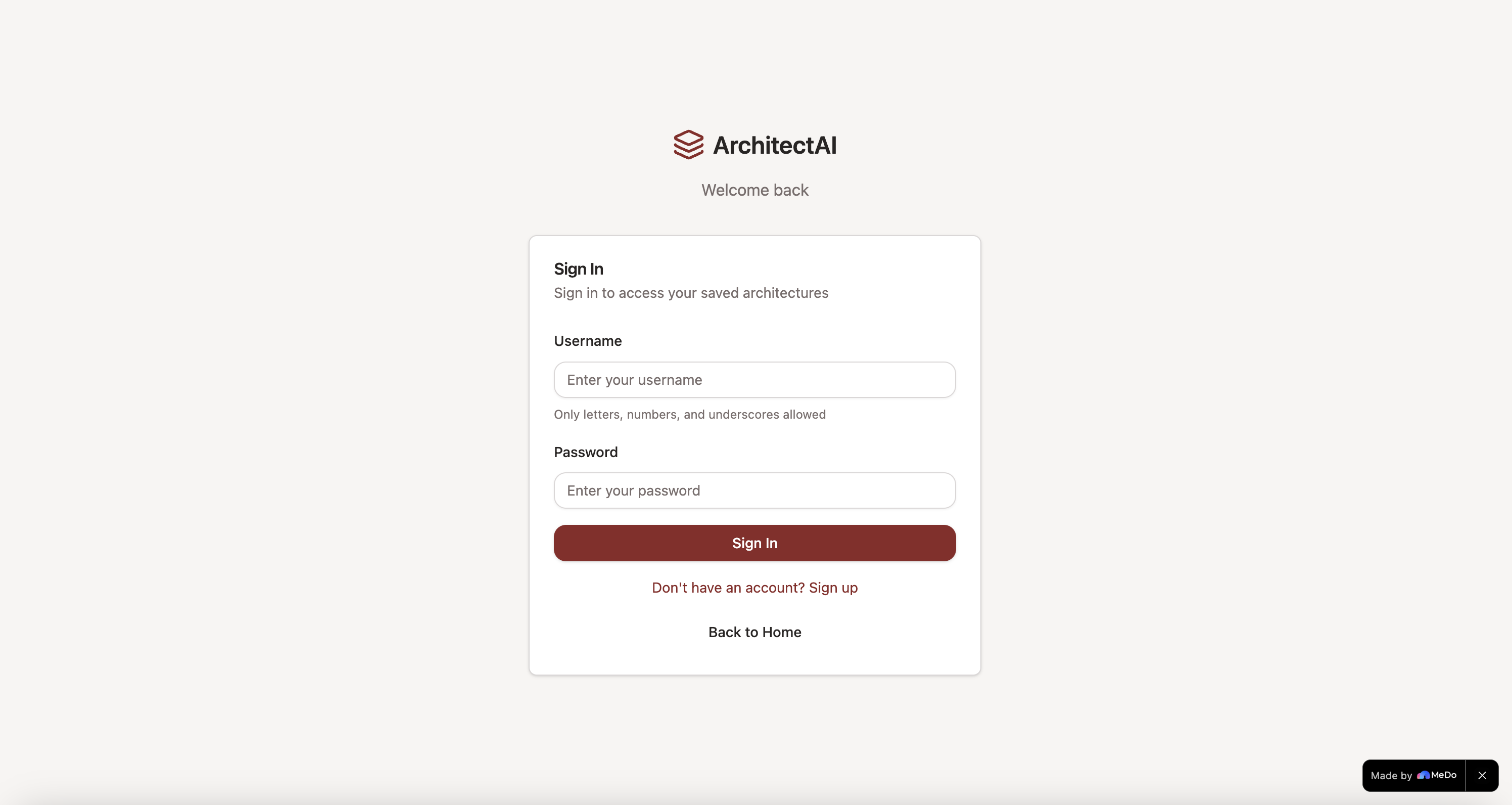
Test login details: username: kehetel637 | password: KEbWaCYRb4wpytx
How I Used MeDo to Build My Project
Problem & Motivation
Designing system architecture is one of those things that sounds straightforward—until you're staring at a blank canvas wondering how to piece together services, estimate costs, and document everything in a way others can actually understand.
My app solves that.
It transforms plain English ideas into:
- Professional system architecture diagrams
- Realistic cost estimates
- Export-ready technical documentation
I built it because early-stage builders and even experienced engineers waste too much time going from idea → architecture → documentation. I wanted to compress that entire workflow into a single prompt-driven experience.
How I Structured Conversations with MeDo
I treated MeDo like a collaborative system designer rather than just a code generator.
My approach:
Start with intent, not implementation
I described the product idea, target users, and constraints (e.g., scalability, budget sensitivity).Iterative refinement
Instead of asking for everything at once, I broke it down:- “Design a high-level architecture”
- “Now break this into services”
- “Estimate infrastructure costs for this setup”
- “Generate documentation for this architecture”
Constraint-driven prompts
I explicitly asked MeDo to optimize for:- Cost efficiency
- Scalability
- Simplicity
- Cost efficiency
Feedback loops
If something felt off, I pushed back and asked MeDo to justify or improve decisions—almost like a real architecture review.
Most Impressive Feature MeDo Helped Create
The standout feature was automated architecture generation with cost estimation. Backend services providing database, user management and functions Vault for storing keys and secrets
With a single prompt, MeDo helped:
- Translate abstract ideas into structured system components
- Suggest appropriate cloud services and infrastructure patterns
- Generate cost estimates based on usage assumptions
That combination—design + reasoning + estimation—felt like having a senior architect on demand.
Plugins & API Integrations
To extend functionality, I integrated:
- Stripe payment plugin
- Gemini API via Genkit SDK
This allowed me to:
- Enhance reasoning for architecture generation
- Improve natural language understanding of user prompts
- Generate richer, more context-aware outputs
The integration worked seamlessly alongside MeDo, effectively turning the app into a multi-model AI system.
Best Part MeDo Generated
The best output wasn’t just code—it was structured thinking.
MeDo produced:
- Clean, modular architecture breakdowns
- Logical service relationships
- Clear documentation that could be exported and shared
It didn’t just build—it explained, which is what makes it powerful.
Built With
- gemini
- medo
- superbase
- typescript

Log in or sign up for Devpost to join the conversation.