-
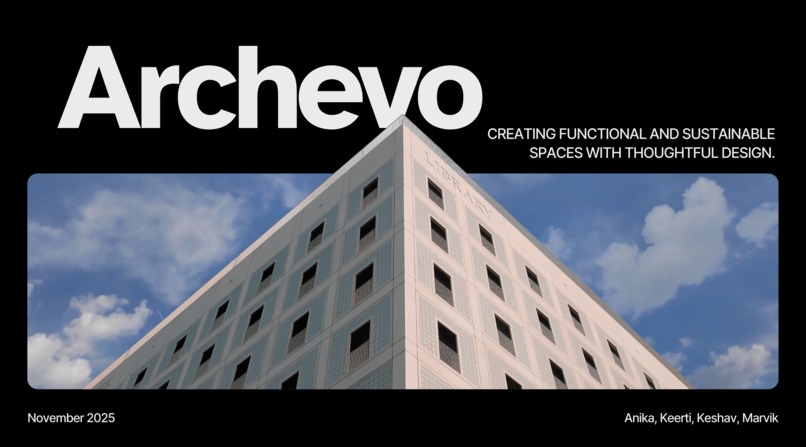
Archevo: Architecture Evolution
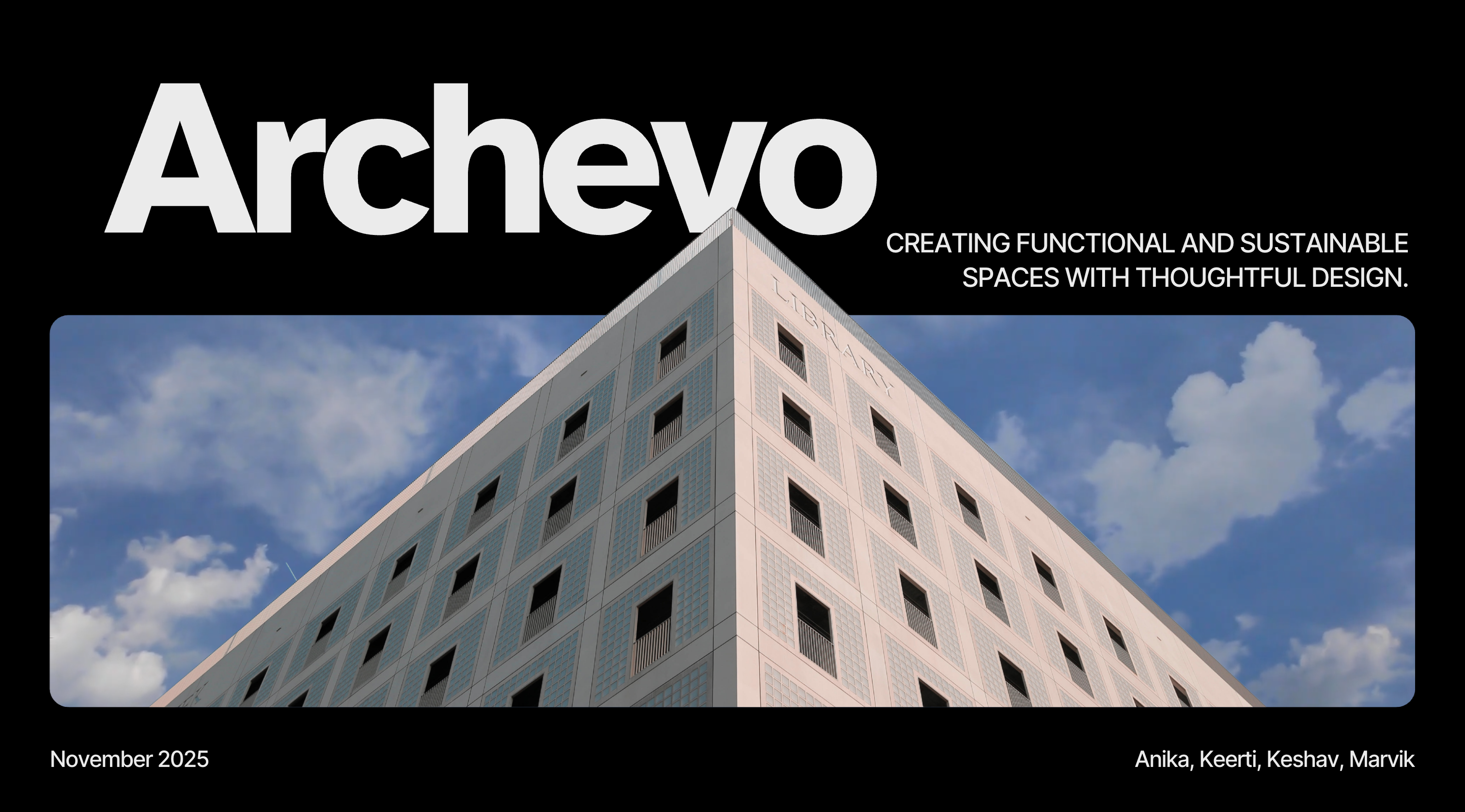
Inspiration
Traditional architecture starts with designing structure and form first, and only reviewing impact and consequences later.
We are challenging this standard through abstractionism: breaking conventional barriers and following an intent-first and impact-based approach
What it does
Archevo is an AI-powered environmental design platform where users enter the impact they want to have with their building/project and the system analyzes site and environmental data. A simulator shows the 10 / 20 / 50-year consequences of design choices, incorporating not just metrics, but what it means in human terms
How we built it
FastAPI backend, Python, NumPy, Pandas, StrucPy, Gymnasium environment (SizingEnv), Stable-Baselines3 (PPO), TensorBoard, React frontend, TypeScript, Tailwind CSS, shadcn/ui, Three.js, React Three Fiber, Recharts, Framer Motion, Render backend hosting, GitHub Actions CI/CD, Poetry, npm, Docker, S3 storage, TensorBoard experiment tracking, AWS Lambda, Google Gemini API, VSCode
Challenges we ran into
Balancing creativity with feasibility: Generating structures that were both architecturally flexible and met real-world environmental and safety standards.
Complex metric integration: Combining sustainability, structural safety, and cost evaluation into a single cohesive scoring system.
Simulation realism: Translating environmental data (like sunlight, wind, and energy usage) into an intuitive visual “ripple” impact model.
UI/UX complexity: Designing a drag-and-drop interface that remained clean and responsive while handling detailed engineering data.
Data sourcing: Finding accurate environmental and structural datasets that matched different geographic contexts for realistic modeling.
Accomplishments that we're proud of
Developed an AI-assisted blueprint generator that produces sustainable building layouts based on site data and structural constraints.
Built a ripple simulation engine that translates environmental metrics into human impact over 10/20/50 years.
Created a drag-and-drop sustainability toolkit (solar panels, roof gardens, recycled materials, smart ventilation, etc.) that automatically recalculates impact and cost.
Integrated real-time scoring for sustainability, safety, and affordability, helping users make data-driven design decisions.
What we learned
Sustainability design isn’t a “nice-to-have” — it’s required now by regulation and funding. Environmental engineers, architects, and developers all want impact-first decisioning, not form-first guesswork. Asking “why are we building this?” leads to better outcomes than “what should it look like?”
What's next for Archevo
Expand data integration to include real-time environmental datasets (climate, soil, energy grids) for site-specific accuracy.
Develop AI-driven design suggestions that auto-generate optimized blueprints based on desired sustainability or cost goals.
Partner with city planning and architecture firms to pilot the platform on real urban development projects.
Build a community dashboard where users can share, compare, and iterate on sustainable design ideas.
Transition from prototype to MVP, focusing on usability testing and industry feedback to refine the product’s core engine.
Built With
- aws-lambda
- docker
- fastapi-backend
- framer-motion
- github-actions-ci/cd
- google-gemini-api
- gymnasium-environment-(sizingenv)
- npm
- numpy
- pandas
- poetry
- python
- react-frontend
- react-three-fiber
- recharts
- render-backend-hosting
- s3-storage
- shadcn/ui
- stable-baselines3-(ppo)
- strucpy
- tailwind-css
- tensorboard
- tensorboard-experiment-tracking
- three.js
- typescript


Log in or sign up for Devpost to join the conversation.