-
Architype page1
-
Page1.2
-
Page1.3
-
Page2.1
-
Page2.2
-
-
-
-
-
-
-
-
Inspiration
Every film or TV release runs on partnerships: the snack brand at the screening, the fashion label in the press tour, the song in the trailer. Big studios have agencies and research teams for this. Independent distributors and streamers usually have a spreadsheet, gut feel, and lately a chatbot.
We tried the chatbot route first. A plain AI writes a confident partnership brief in seconds, but it guesses who the audience is. In our tests it misjudged demographics, couldn't say whether interest in a title was rising, and suggested "obvious" brands that scored poorly against the real audience. We wanted the speed of AI with the evidence of real taste data, so every recommendation could be defended in a partner meeting.
What it does
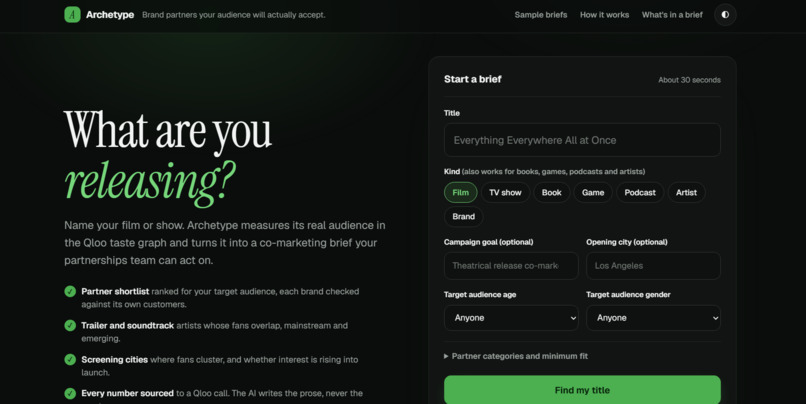
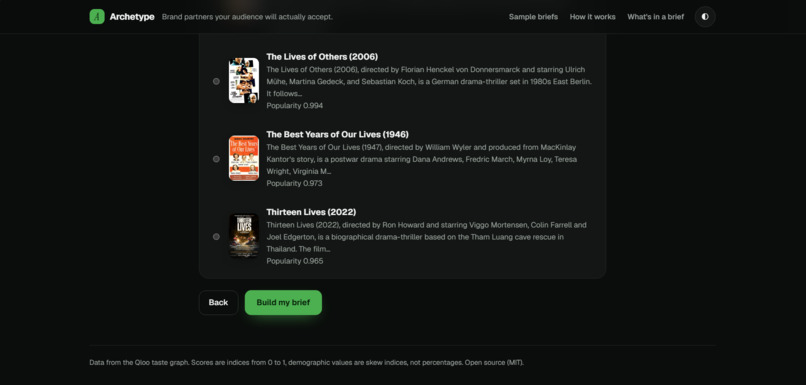
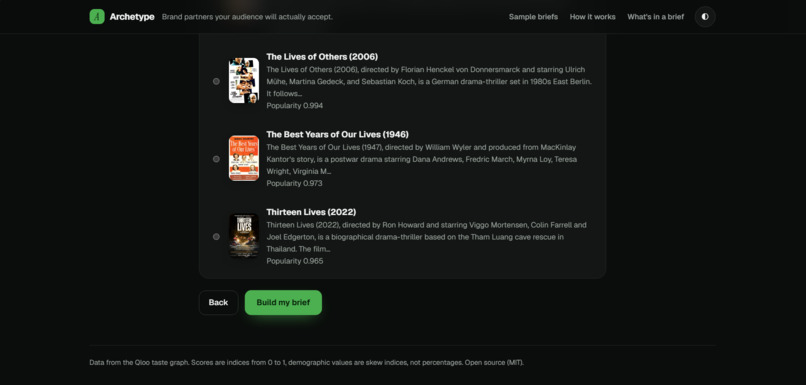
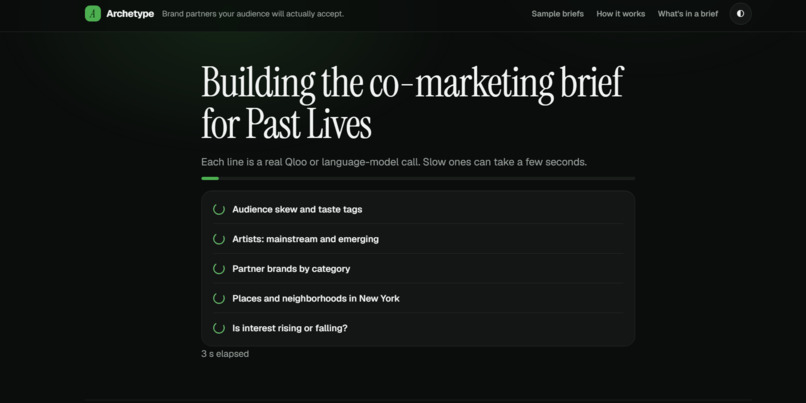
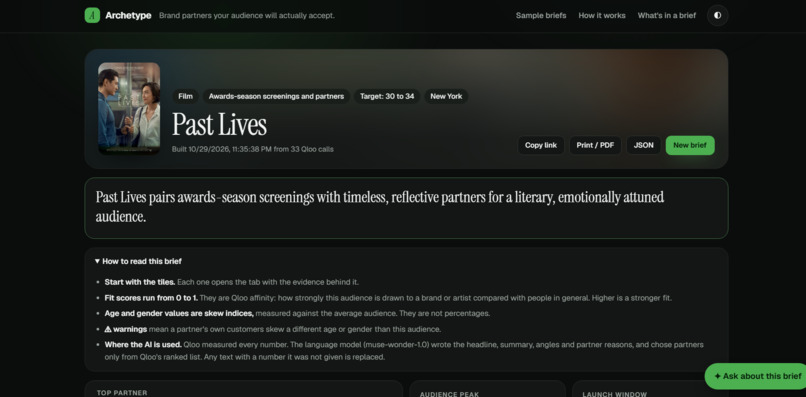
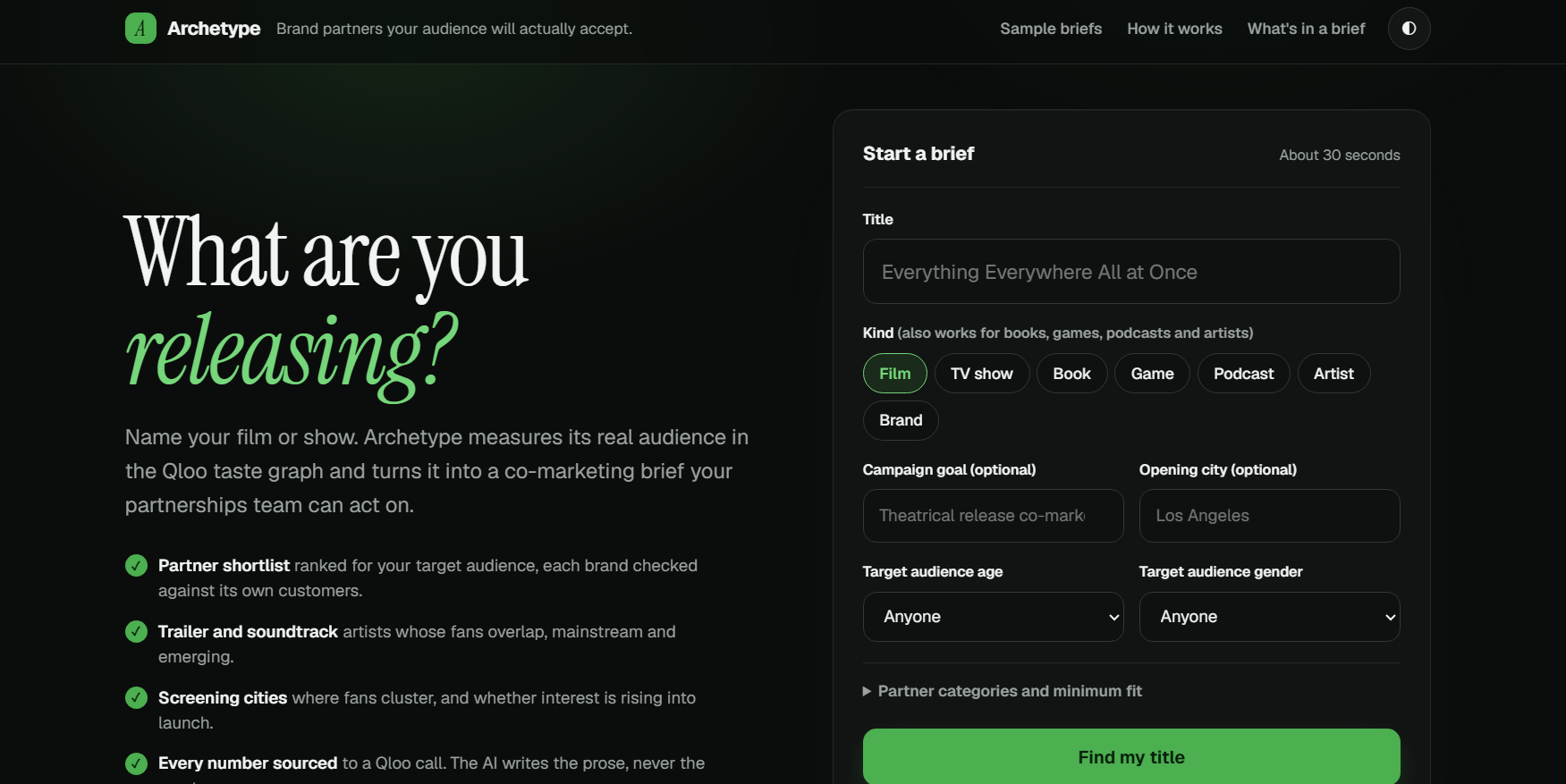
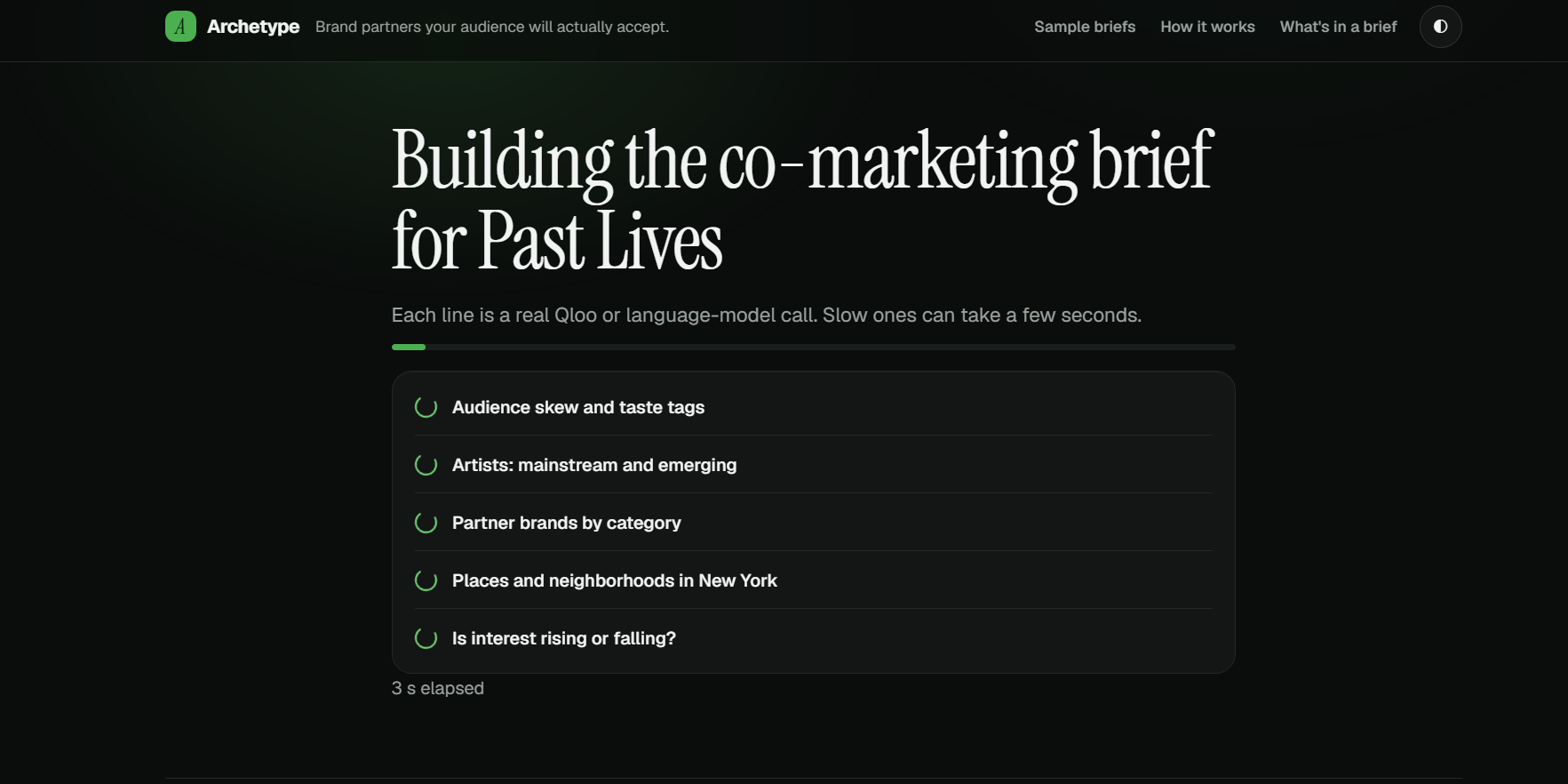
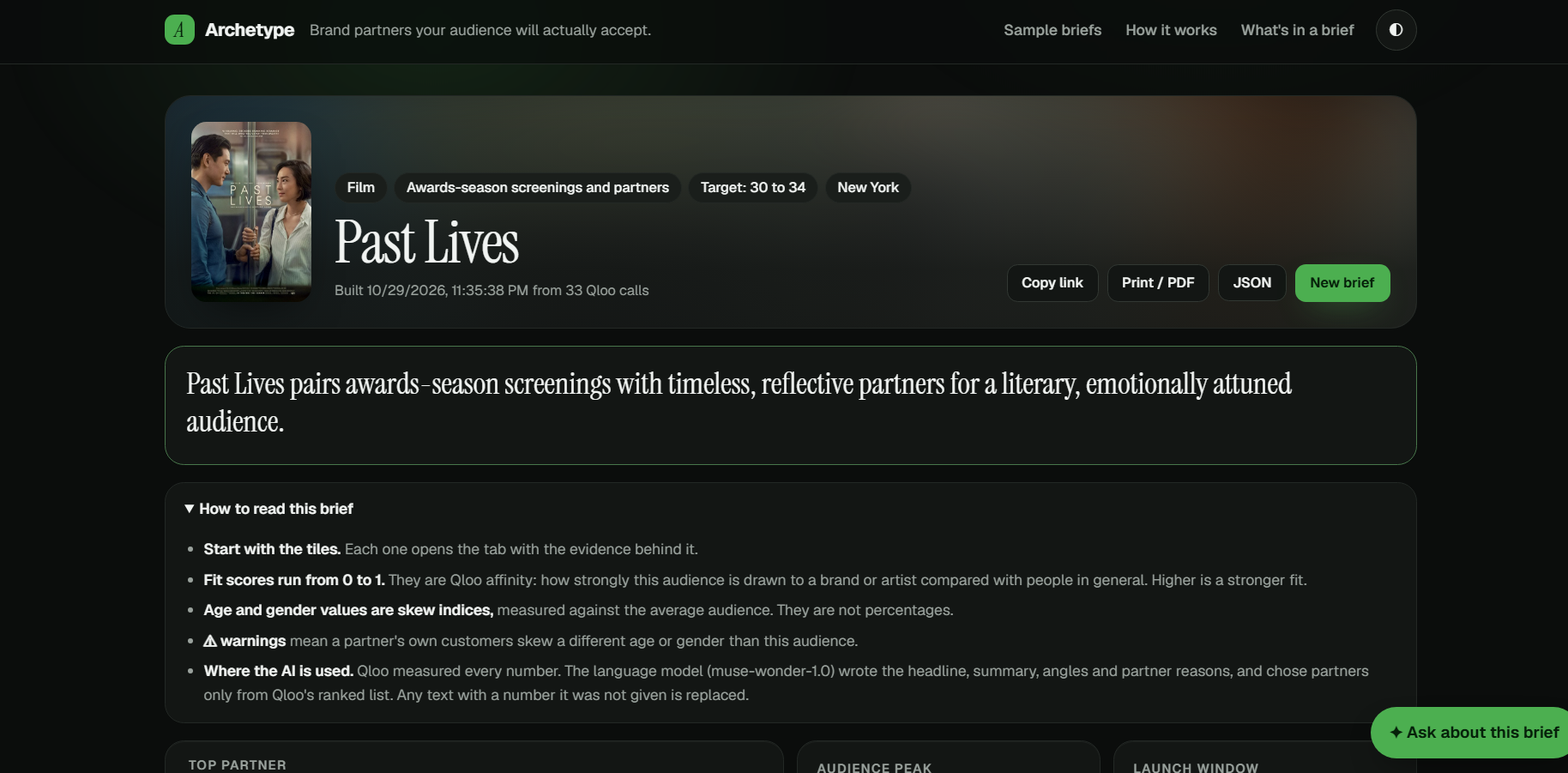
Archetype turns a film or show into a co-marketing brief for the person who signs the partnership deals. Name the release, choose a target age, gender and opening city, and in about 30 seconds you get:
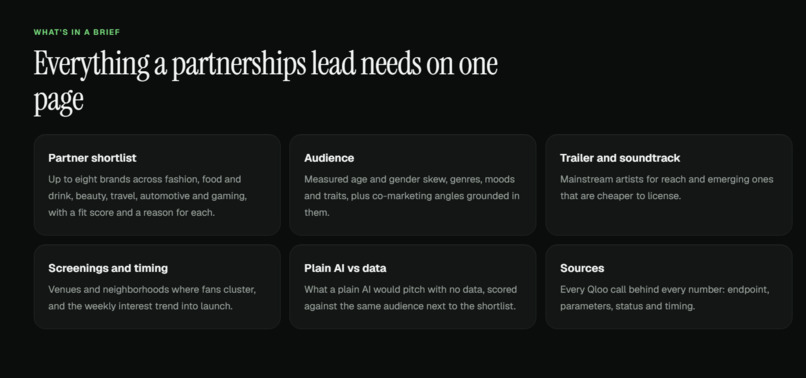
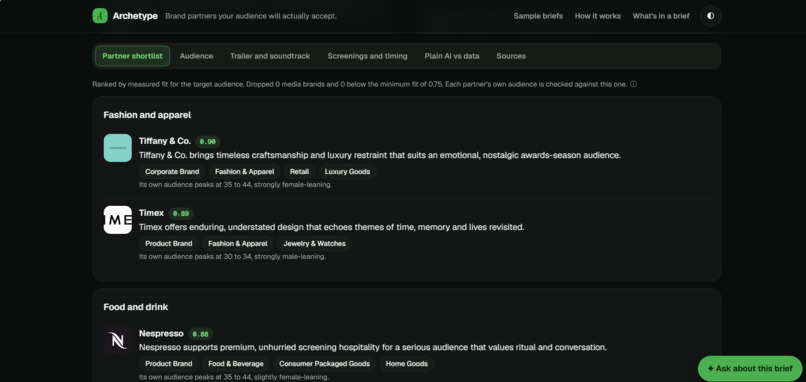
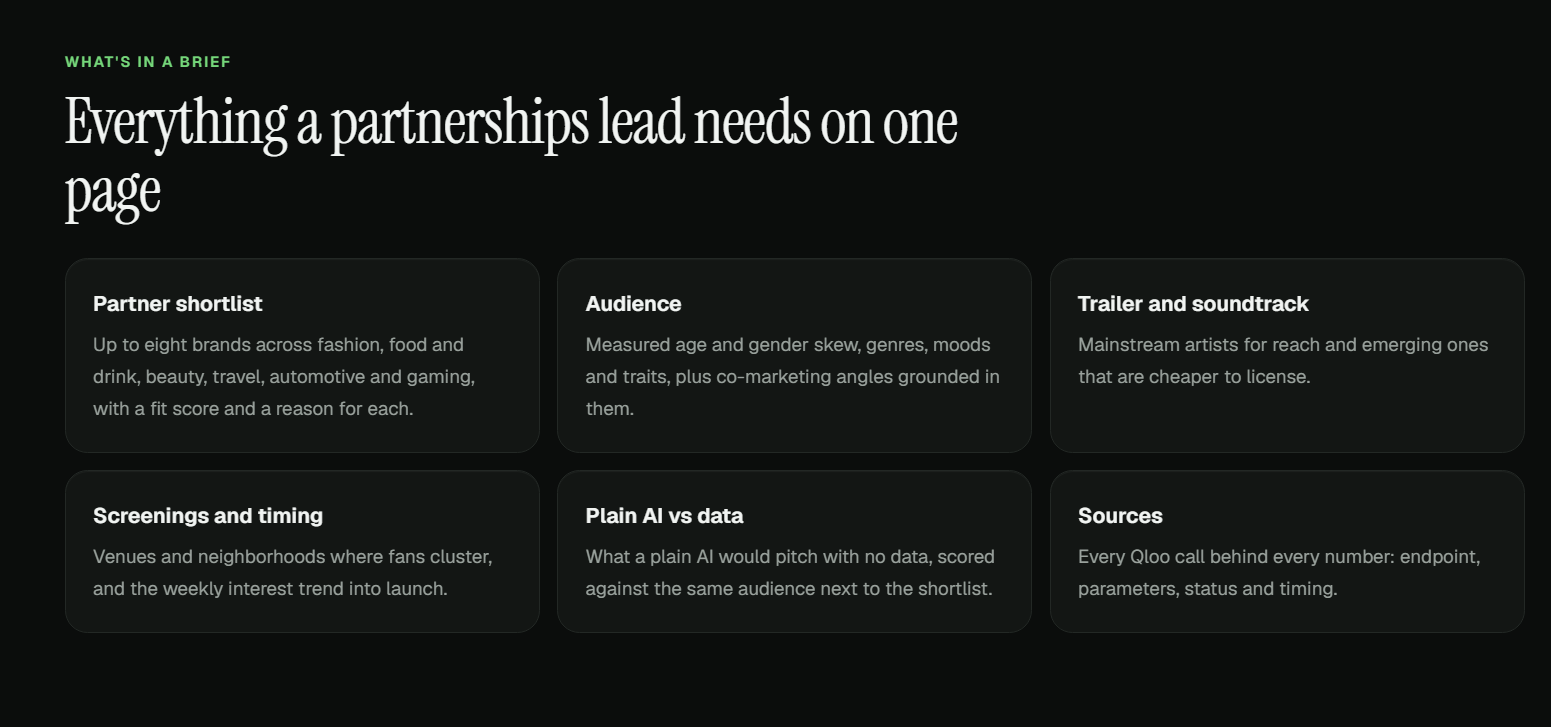
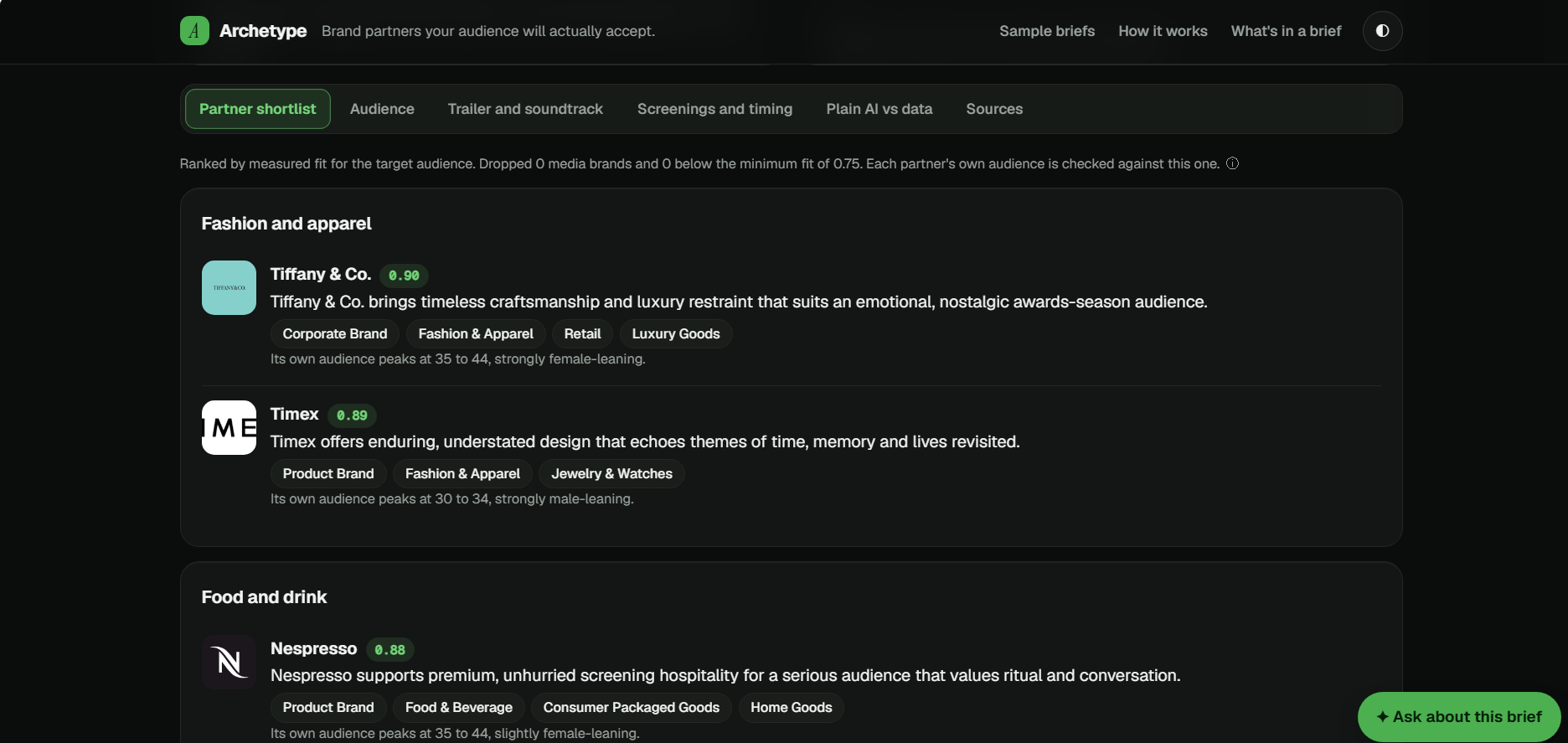
- Partner shortlist: up to eight brands across fashion, food and drink, beauty, travel, automotive and gaming, each with a Qloo fit score, a one-line reason, and a ⚠ warning when the brand's own customers skew a different age or gender than your audience.
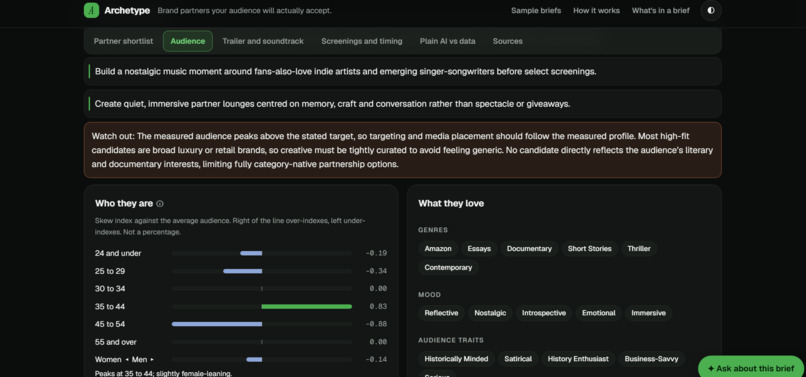
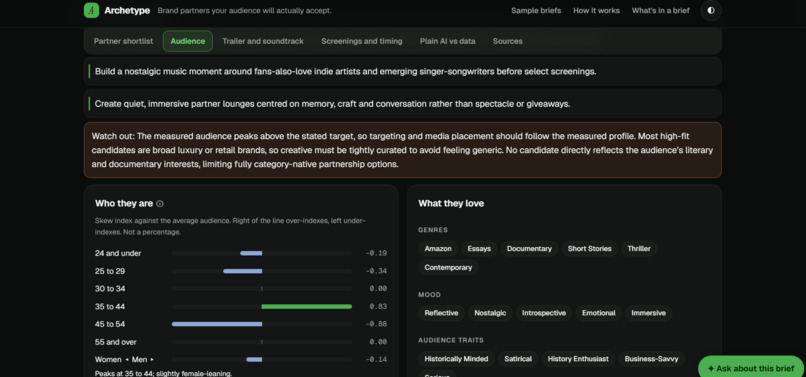
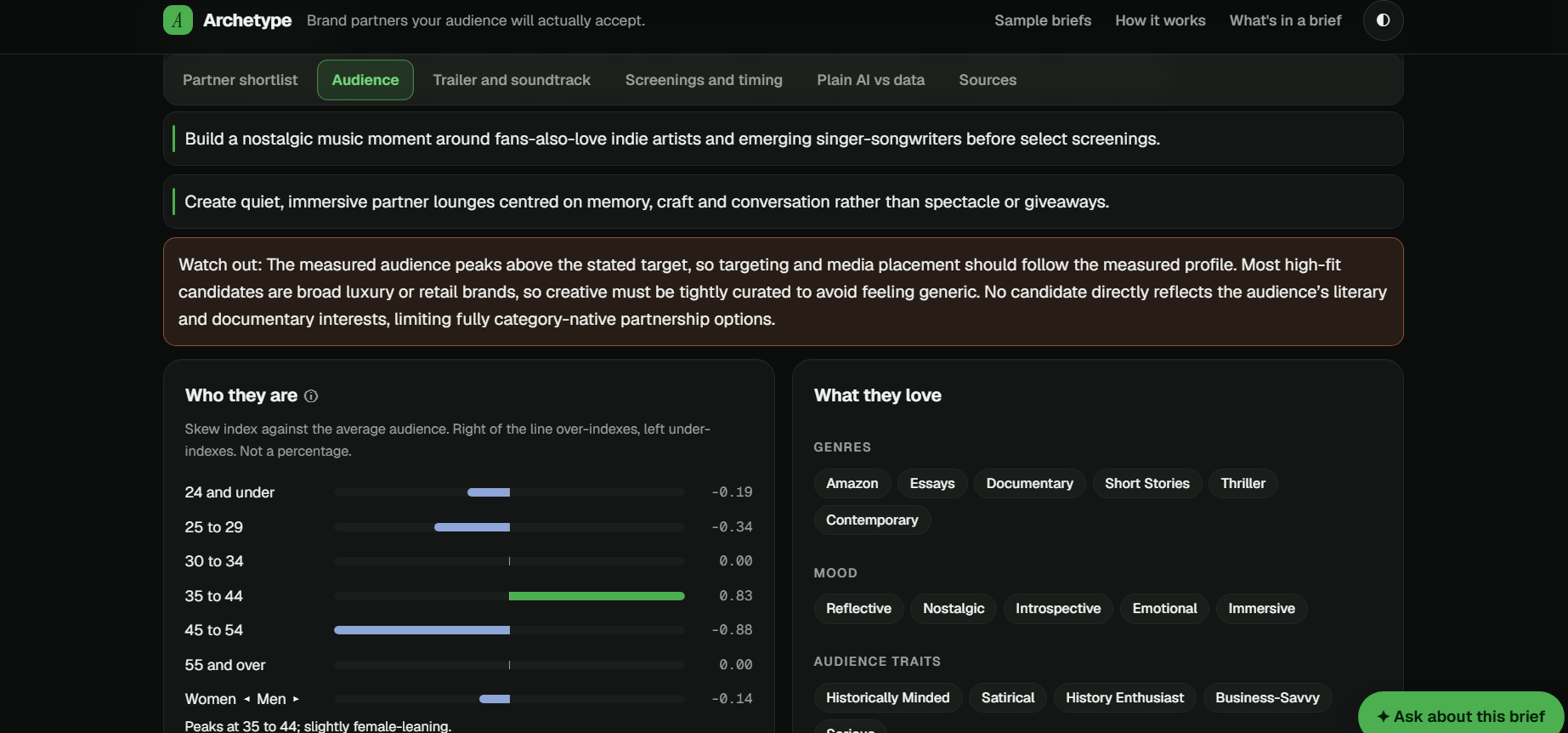
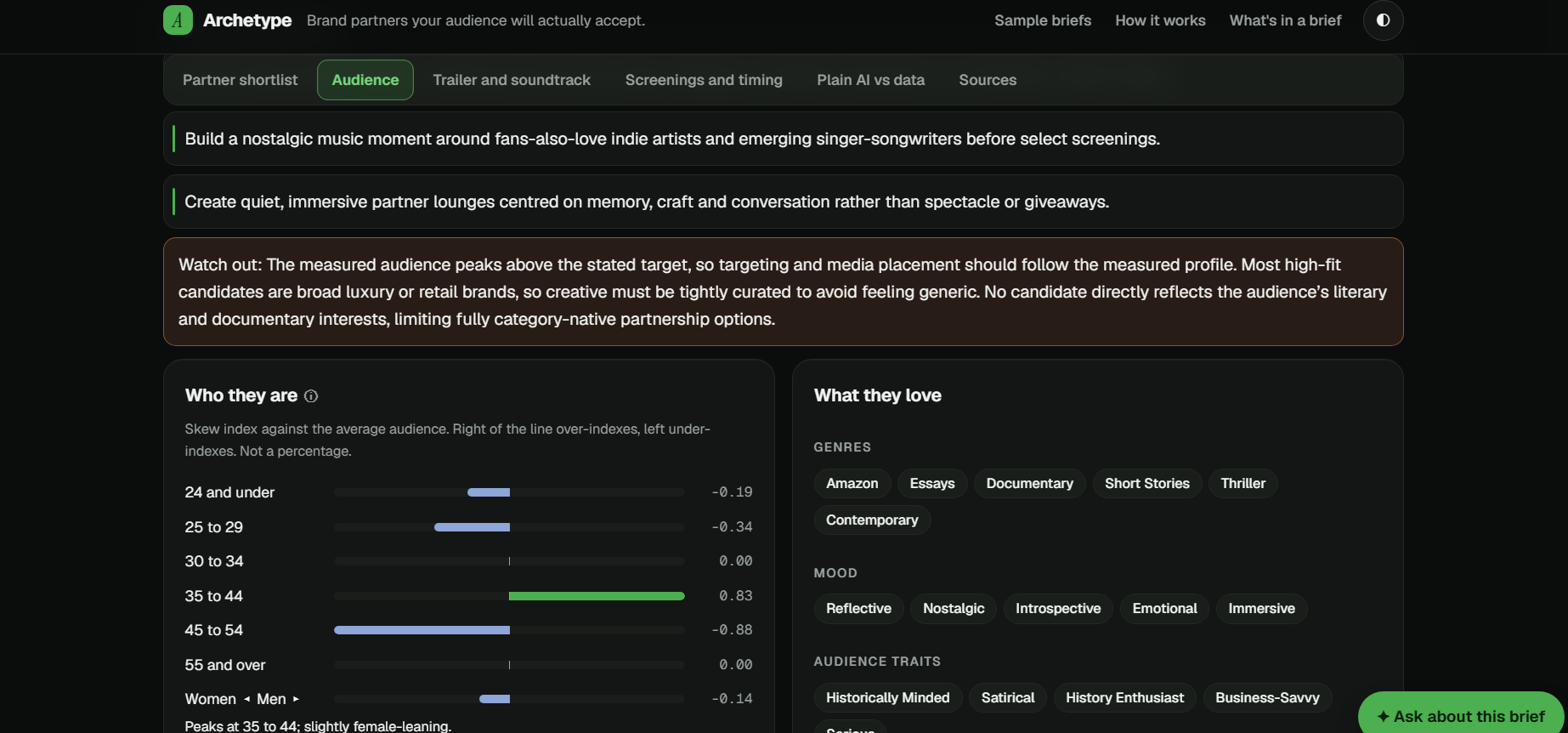
- Audience: measured age and gender skew, genres, moods and traits, plus co-marketing angles grounded in them.
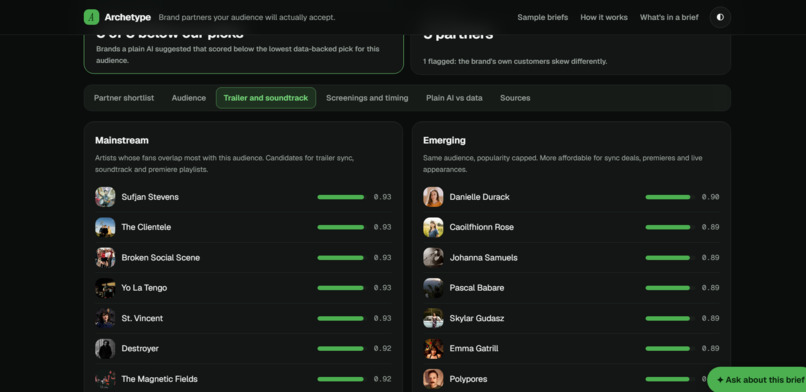
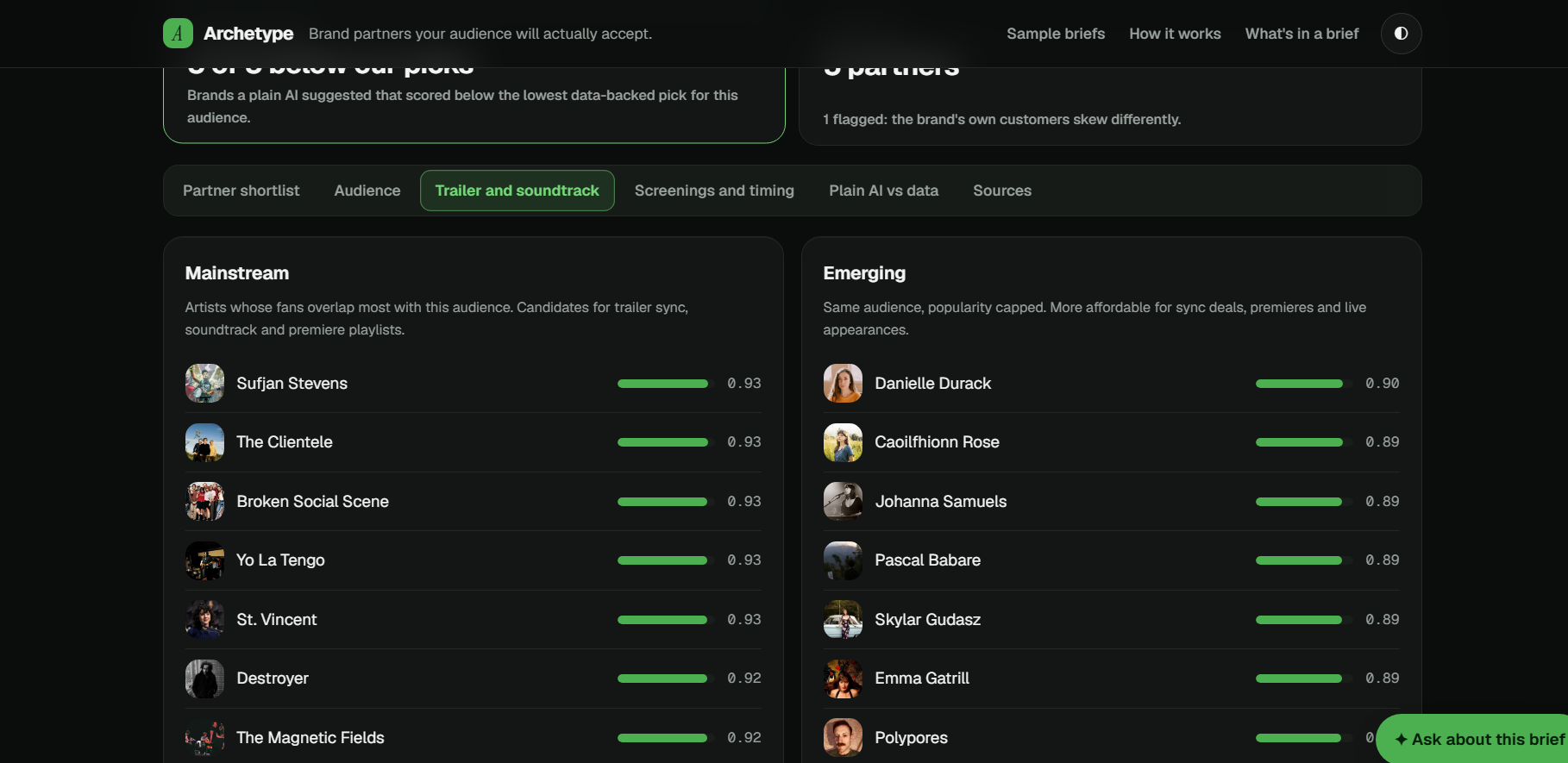
- Trailer and soundtrack: mainstream artists for reach and emerging ones that are cheaper to license.
- Screenings and timing: venues and neighborhoods where fans cluster, and whether interest is rising into the launch window.
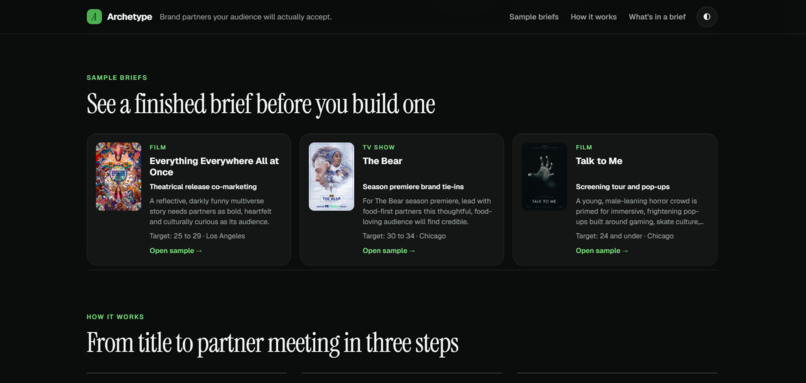
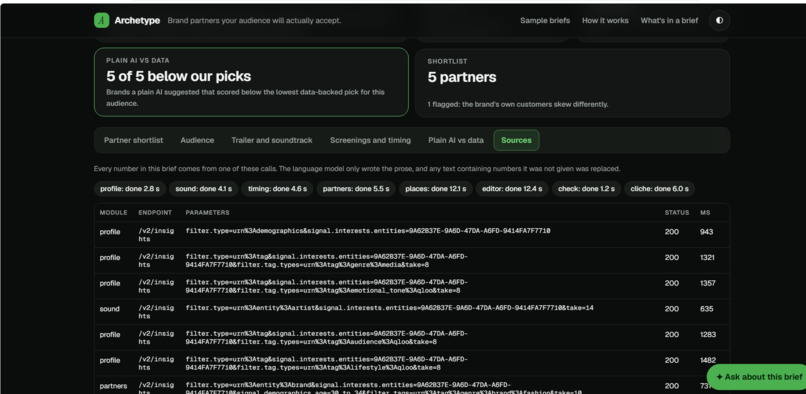
- Plain AI vs data: we ask a plain AI the same question with no data, then score its suggestions in Qloo against the same audience. In our Talk to Me sample, all 5 brands the plain AI suggested scored below our lowest data-backed pick.
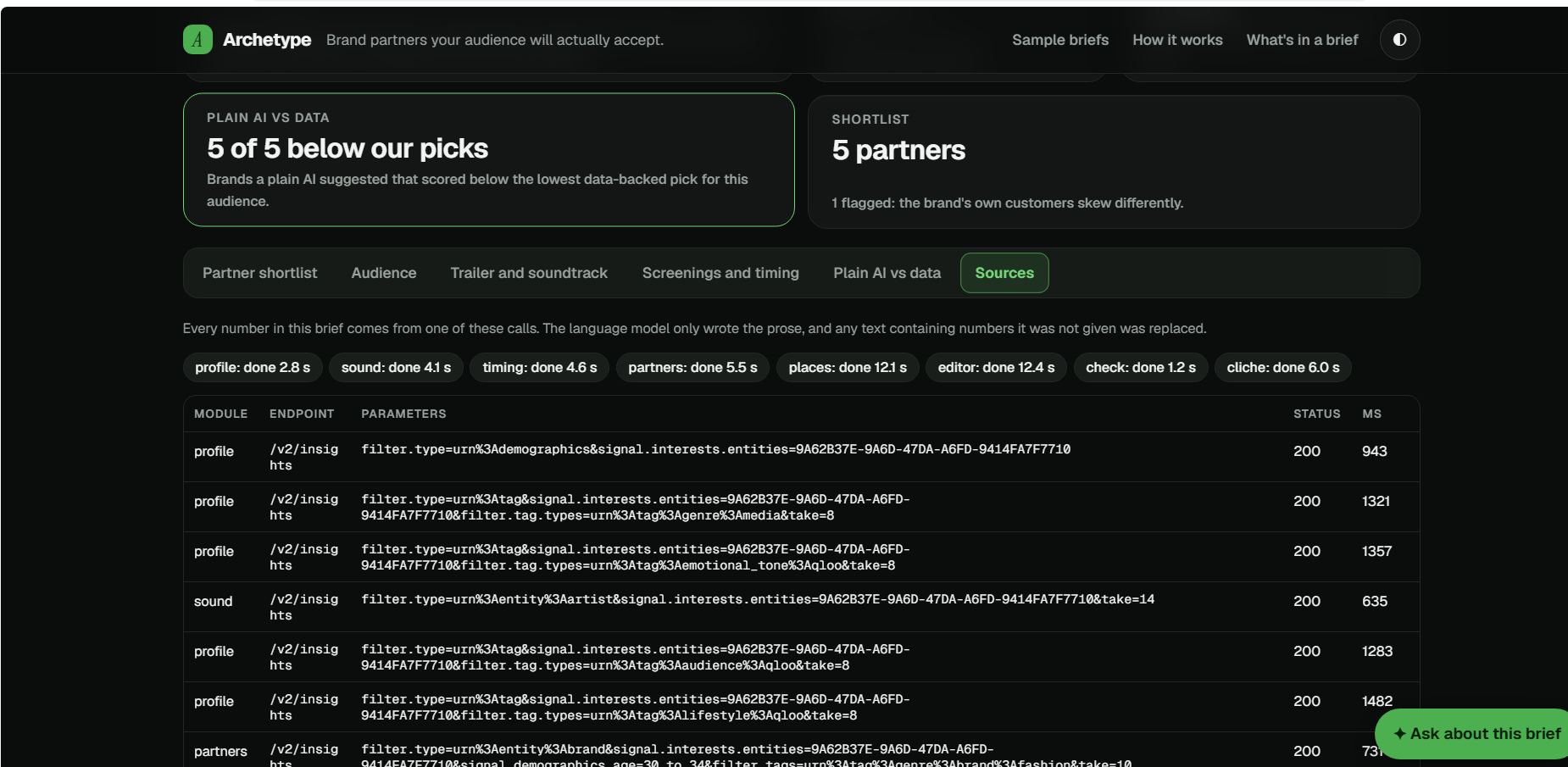
- Sources: every Qloo call behind every number: endpoint, parameters, status and timing.
- Ask about this brief: a streaming chat that explains any part of the brief in plain words, answering only from that brief's data.
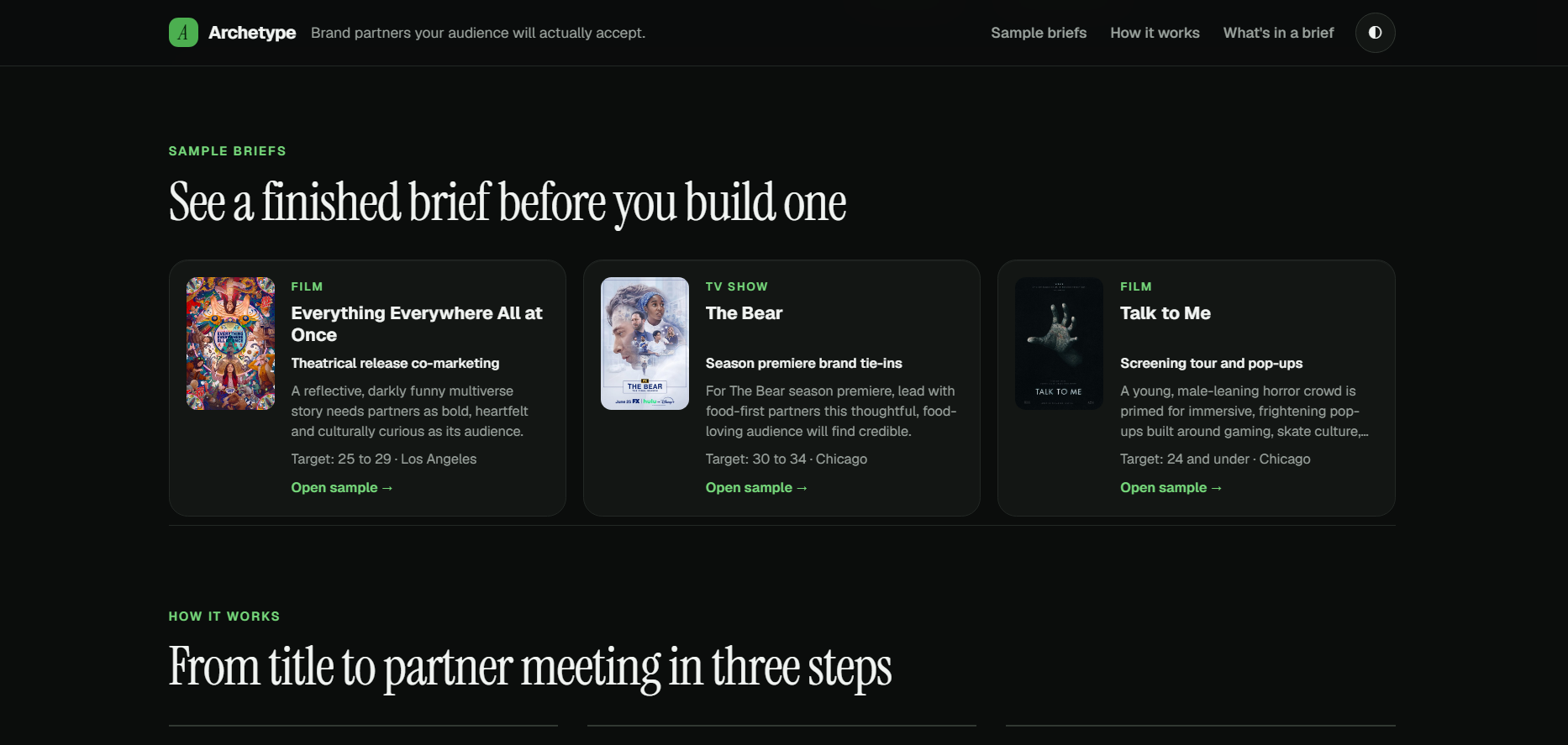
Judges and first-time users can open a sample brief instantly, or take a skippable one-minute guided tour that fills in an example and walks through a finished brief.
How we built it
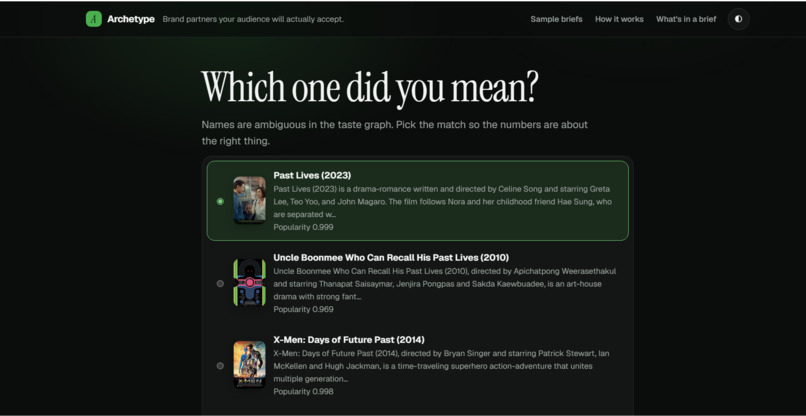
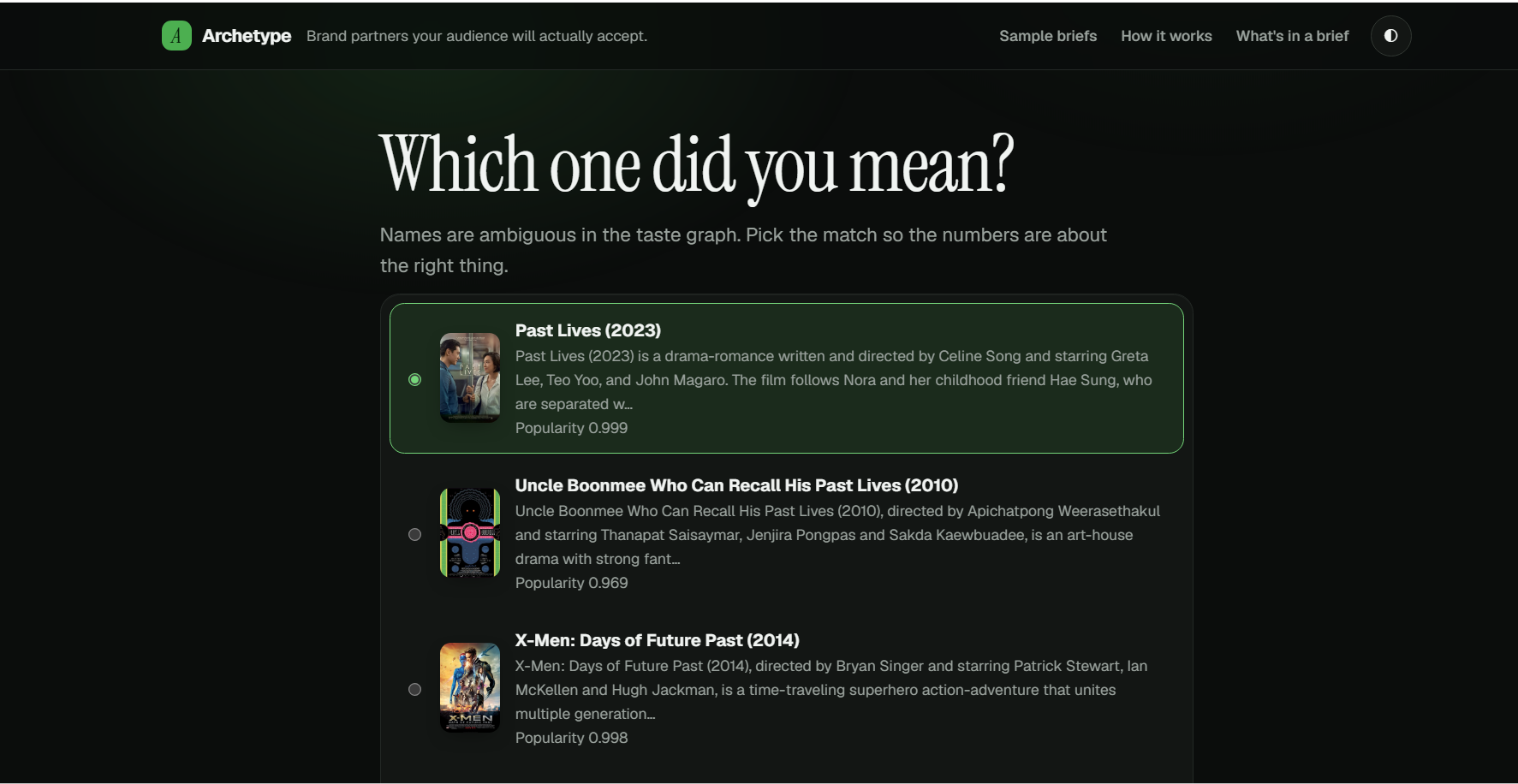
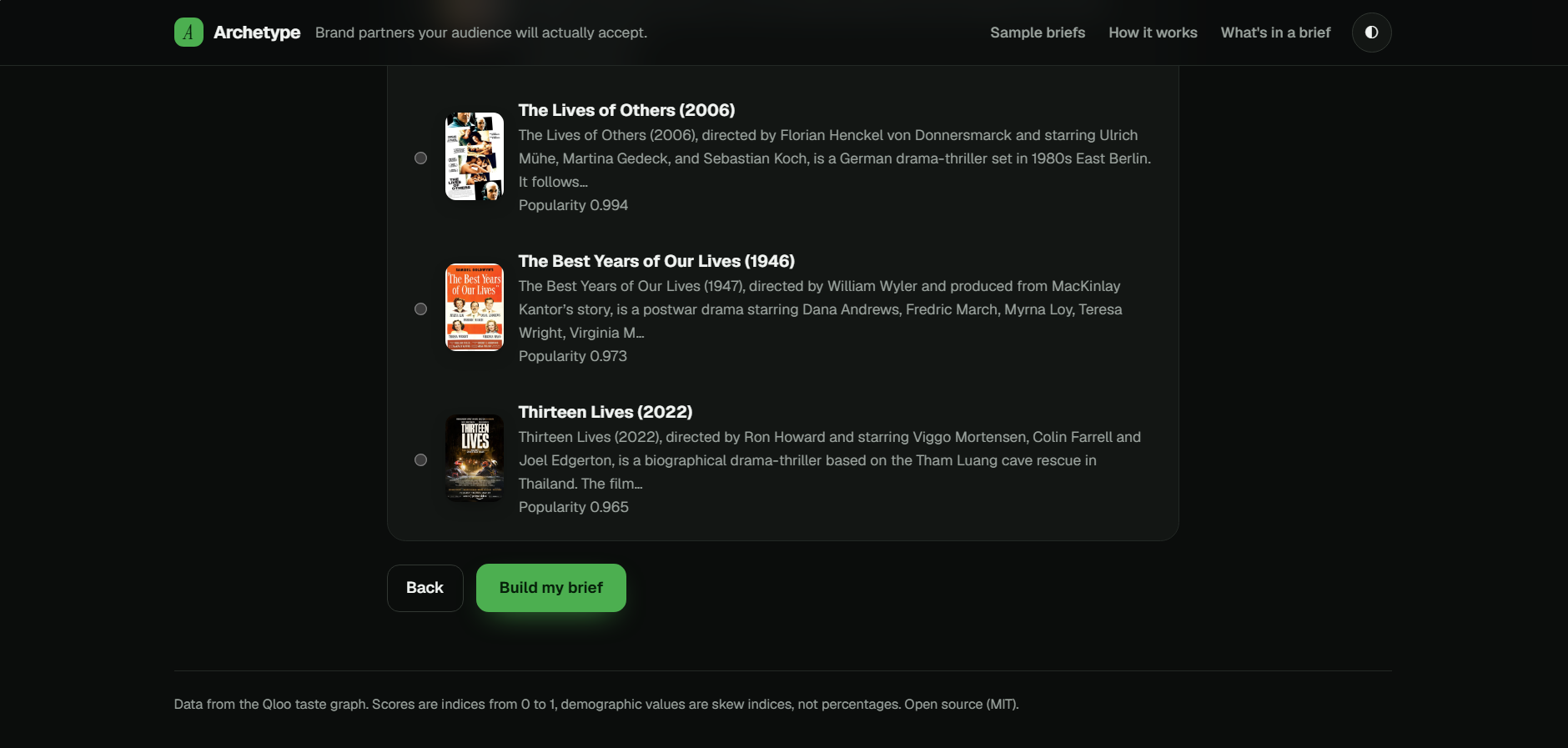
- Qloo taste graph for every number. Entity search resolves the title (with a confirm step, since names are ambiguous). Insights calls then fetch demographics, tags, artists with and without a popularity cap, brands per category with target-audience signals, places, neighborhood heatmaps and the weekly trend. Each brand on the shortlist then gets a second demographics call to check its own audience.
- A language model as editor, not oracle. Meta's Muse model (via the Meta API, with Baseten as an automatic backup) receives the measured data and Qloo's ranked candidates. It returns JSON: a headline, a summary, angles, and partner picks with reasons. We validate everything: partner ids it invents are dropped, picks are capped per category, and any sentence containing a number that wasn't in the data is replaced with template text.
- Grounded chat. The browser sends only a brief id; the server loads the brief itself, builds a compact context, and streams the answer. Any number in a reply that doesn't appear in the brief is flagged under the answer.
- Plain Node.js, no framework, no build step, zero npm dependencies. A small HTTP server streams build progress and chat over server-sent events. Qloo responses are cached for 24 hours, and calls run with concurrency limits and per-visitor rate limits to respect the API quota.
- Front end in vanilla JavaScript with a token-based light/dark design system, a summary tile grid, sample briefs committed to the repo, and an opt-in tour.
- CI/CD with GitHub Actions: tests run on every push and pull request, and merges to
masterdeploy to an EC2 server behind nginx with HTTPS.
Challenges we ran into
- Keeping the AI honest about numbers. Language models love statistics. Instructions alone weren't enough, so we enforce it in code: the editor's output is validated, and the chat flags any unsupported number.
- Generic partners. Unfiltered brand results drift toward the same giant names, and media brands such as magazines crowd the list. Querying per category with the target audience as a signal, and filtering out media brands, produced much more specific partners.
- Reading the data correctly. Qloo's demographic values are skew indices, not percentages, and "no clear age peak" is a real answer. We had to word the brief (and teach the chat) so it never turns an index into a fake percentage.
- A fair comparison. The plain-AI check scores guesses with the same graph that ranked our picks, so we present it as "does the guess hold up in the data", not as an independent contest, and say so in the app.
- Real-world plumbing. Browser blockers broke Qloo images (we now serve them through our own server), titles arrived HTML-encoded, and nginx buffered our streams until we disabled buffering for those responses.
Accomplishments that we're proud of
- Every number is traceable to a specific Qloo call on the Sources tab.
- The Plain AI vs data view makes the value of taste data visible in one glance instead of asking judges to take it on trust.
- A chat that refuses to make things up. Asked "what percentage of the audience is female?", it explains that the brief has a skew index, not a percentage, instead of inventing one.
- Resilient by design. Automatic fallback between AI providers, template text when no model is available, and sample briefs that open even if an API is down.
- Zero dependencies and a codebase small enough to read in an afternoon.
What we learned
- Language models are excellent writers and unreliable witnesses. The winning pattern was to let data decide and let the model explain.
- Guardrails belong in code, not only in prompts. Validation turned "please don't invent numbers" into a guarantee.
- Taste data changes the conversation from "this feels right" to "this audience over-indexes on this brand, and here's the call that shows it."
- For a product people try in two minutes, the demo path matters as much as the feature list. Sample briefs and the tour made the app understandable instantly.
What's next for Archetype
- A benchmark page: run the plain-AI comparison across dozens of releases and publish the aggregate results.
- Pitch-ready exports: a one-page partner deck and grounded outreach email drafts, clearly labelled as AI-written.
- Audience comparisons: compare a release with its comparable titles, or test several target audiences side by side.
- More partner categories and markets, including international cities.
- Team workspaces to save, share and track partnership shortlists across a release slate.
Built With
- metaapi
- node.js
- openai
- qloo

