-
-
Archbro WebMCP thumbnail
-
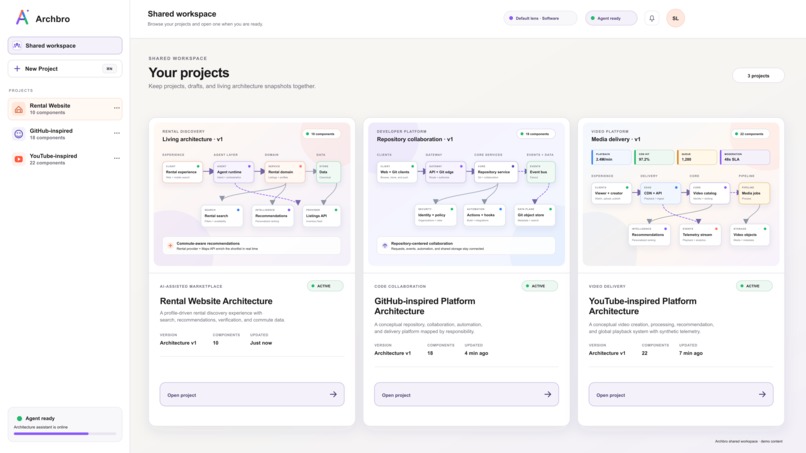
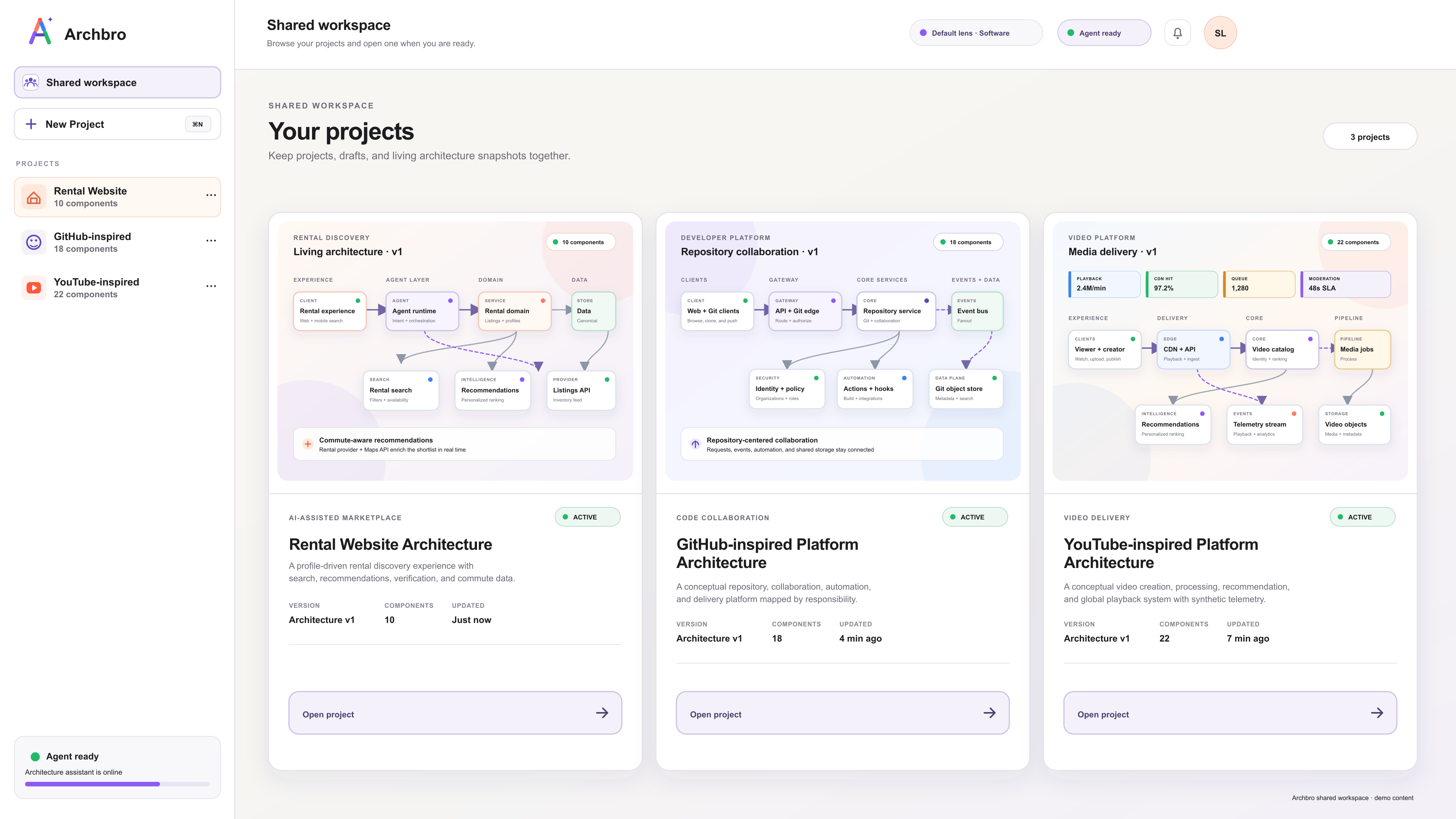
Archbro Shared Workspace Demo
-
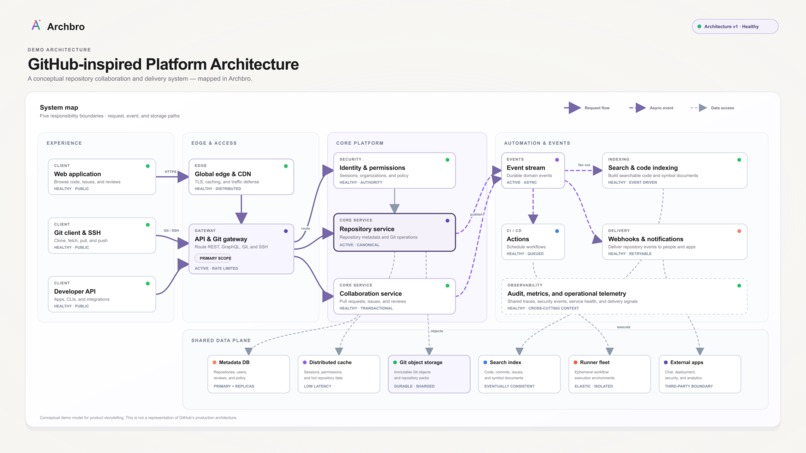
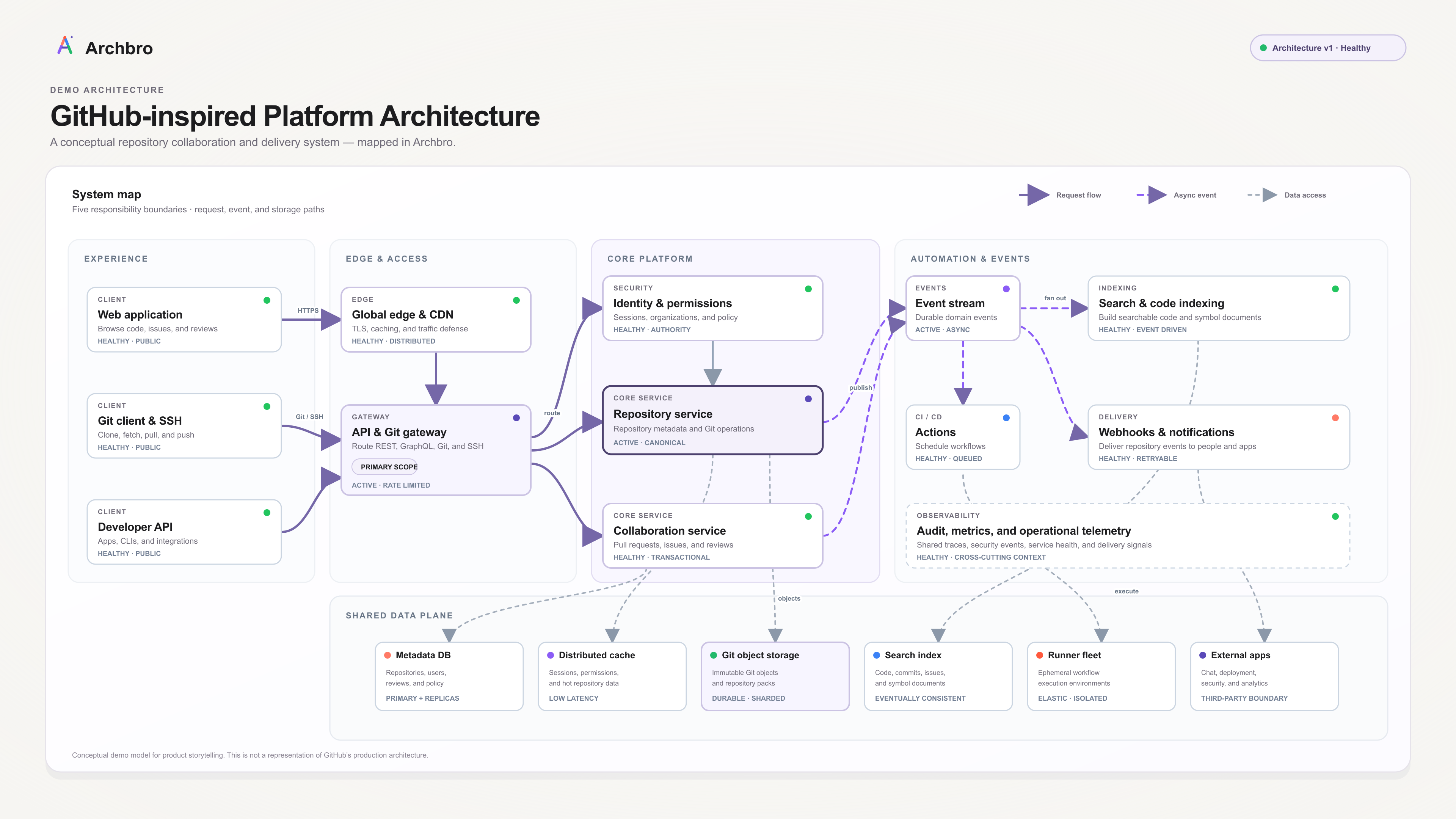
Archbro Living Architecture Demo
-

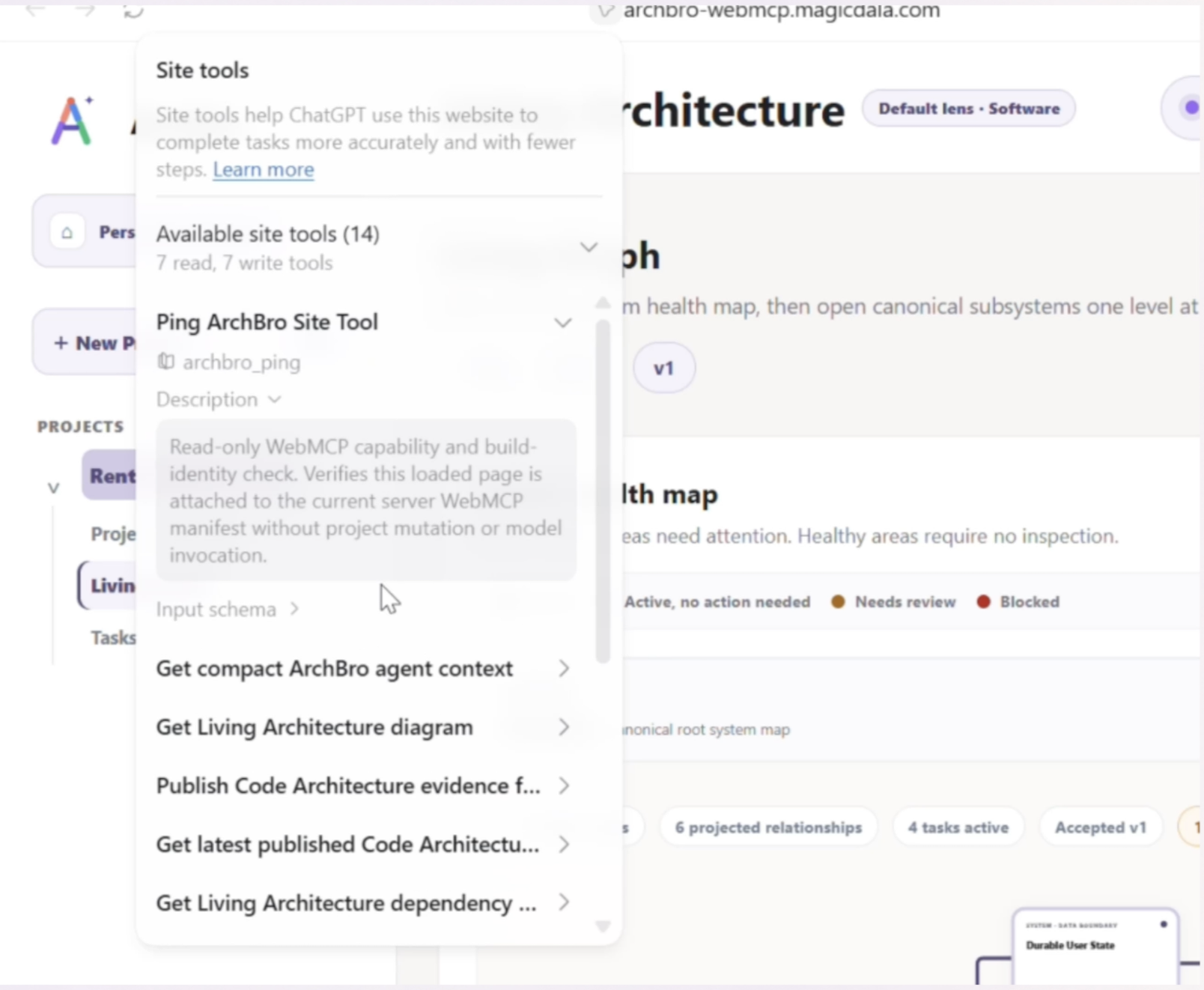
Archbro WebMCP URL function
-
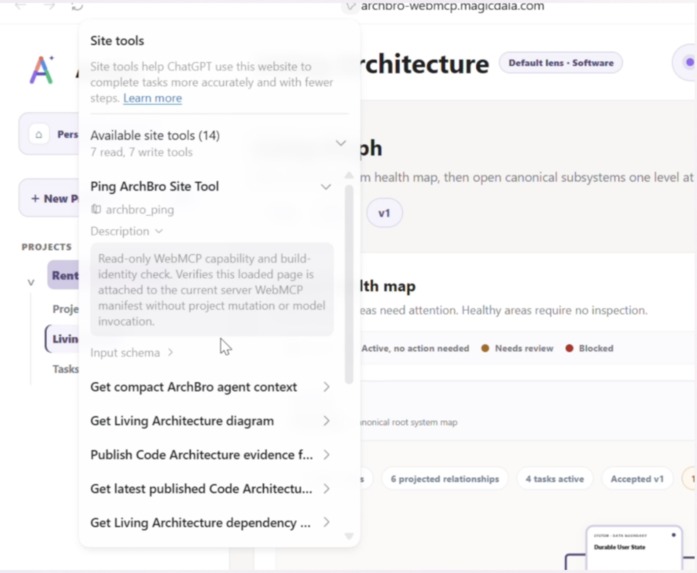
Archbro WebMCP List

Inspiration
Archbro started as a living system architecture map for understanding components, dependencies, tasks, and project changes.
With WebMCP, we realized that map could also become a structured interface for external AI agents — without embedding agents or model-specific APIs inside Archbro.
What it does
Archbro turns a living system architecture map into a semantic WebMCP workspace.
Understand architecture → inspect dependencies → manage tasks → collect evidence → compare reality → recommend changes → human review
External AI Agent
       ↓ WebMCP
      Archbro
       ├─ Living Architecture
       │  └─ Dependencies · Tasks · Evidence
       │
       └─ Authorized MCP Bridge
          └─ Connected MCP Services
             (e.g. GitHub)
The Living Architecture provides the shared project context, while connected MCP services extend what the agent can inspect and use.
How we built it
We mapped Archbro's core concepts into native WebMCP tools using document.modelContext.registerTool(...).
Instead of exposing clicks and UI actions, we expose semantic engineering operations for architecture, dependencies, tasks, evidence, recommendations, and connected MCP capabilities.
Challenges we ran into
The hardest part was designing the right WebMCP tool surface.
Too few tools force agents to guess. Too many low-level tools simply recreate the UI as an API.
We also had to keep the frontend, backend, authentication, persistence, MCP connections, and WebMCP contracts aligned while building quickly as a team.
Accomplishments that we're proud of
We turned Archbro's architecture map into a WebMCP-native engineering workspace covering a meaningful end-to-end workflow.
External agents can work from the same Living Architecture while important architecture changes still require human review.
We also extended WebMCP beyond Archbro itself by allowing agents to use MCP services already authorized by the user.
What we learned
WebMCP works best when it exposes product meaning instead of UI behavior.
We also learned that AI does not always need to live inside the product — the product can provide shared context and capabilities while external agents provide the reasoning.
What's next for Archbro-WebMCP
We want to expand Archbro's WebMCP surface across more engineering workflows and connect more MCP services — including Miro, Figma, Notion, Slack, Microsoft Teams, Google Drive, and more.
This will let the Living Architecture bring together more of the tools and project context teams already use every day.
One living architecture, accessible to humans, agents, and the tools they already use.
Built With
- cloudflare
- css3
- docker
- fastapi
- firebase
- firebase-authentication
- gemini
- github
- github-actions
- google-cloud
- google-compute-engine
- html5
- javascript
- model-context-protocol-mcp
- postgresql
- pytest
- python
- strands-agent-sdk
- webmcp


Log in or sign up for Devpost to join the conversation.