-
-
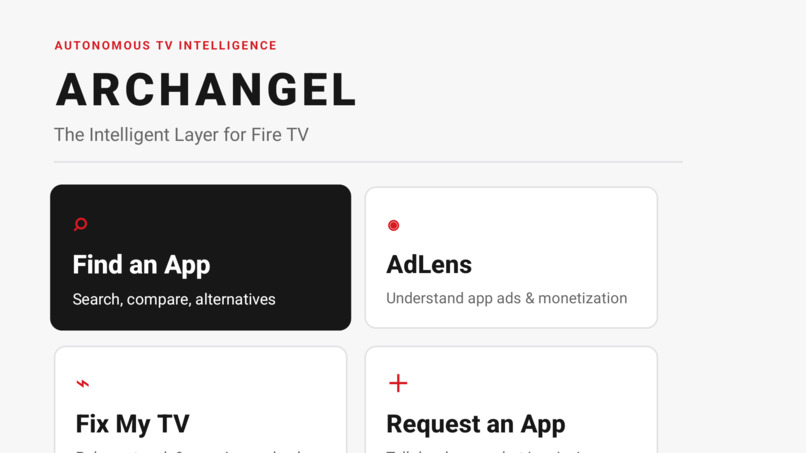
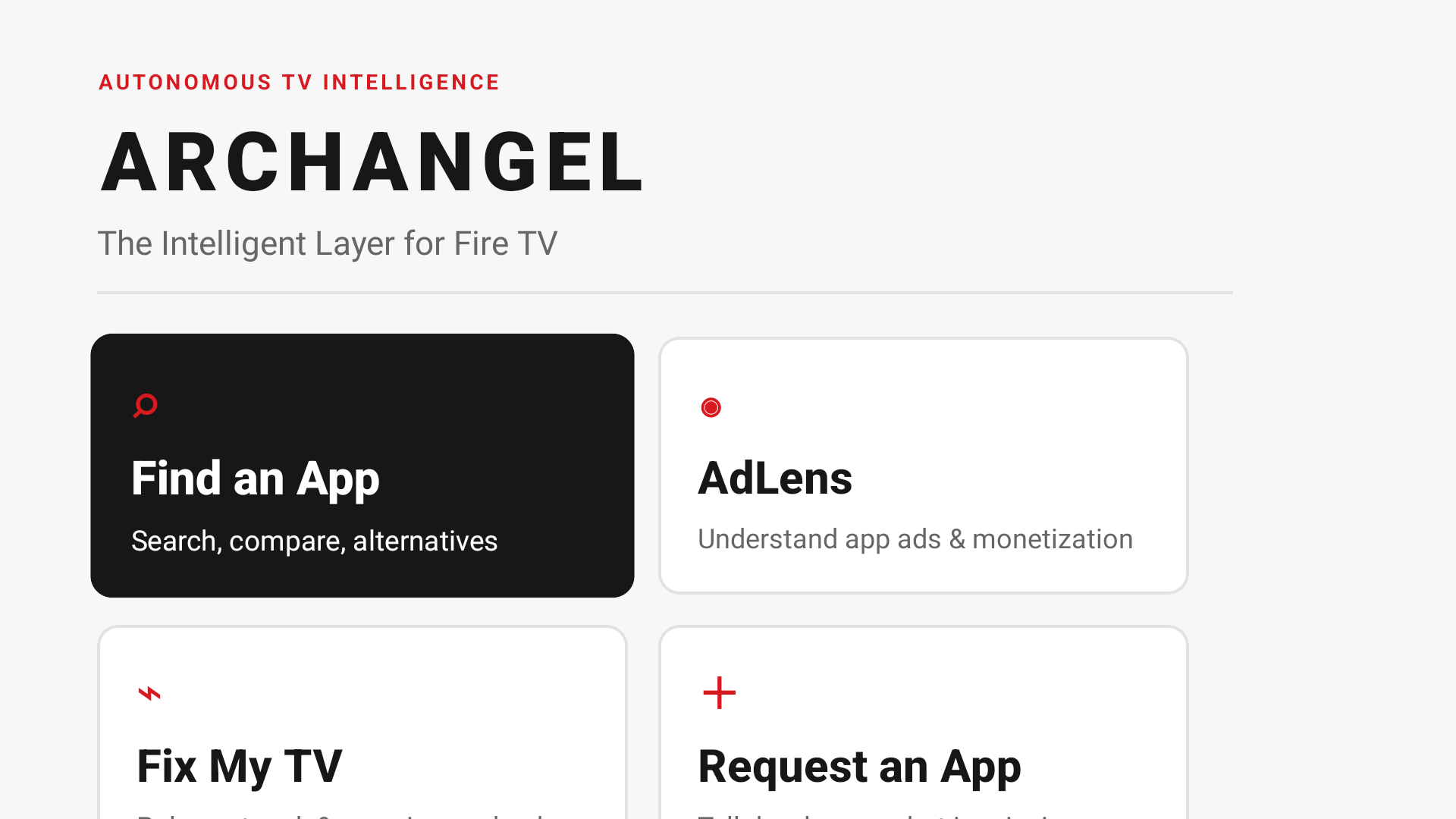
ARCHANGEL Home Page
-
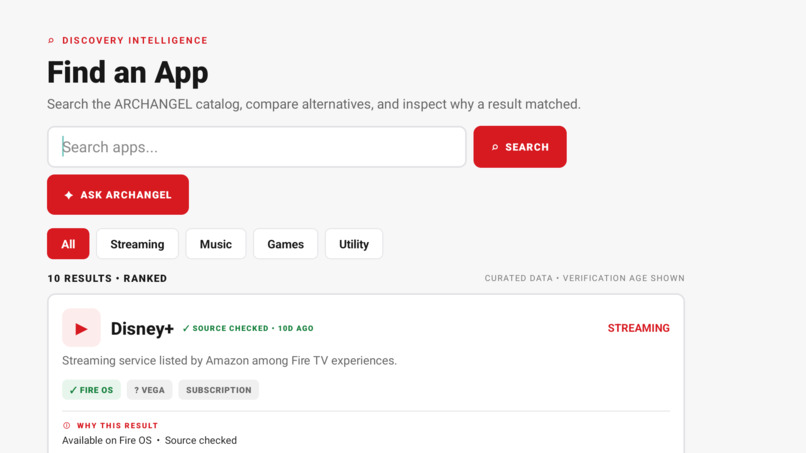
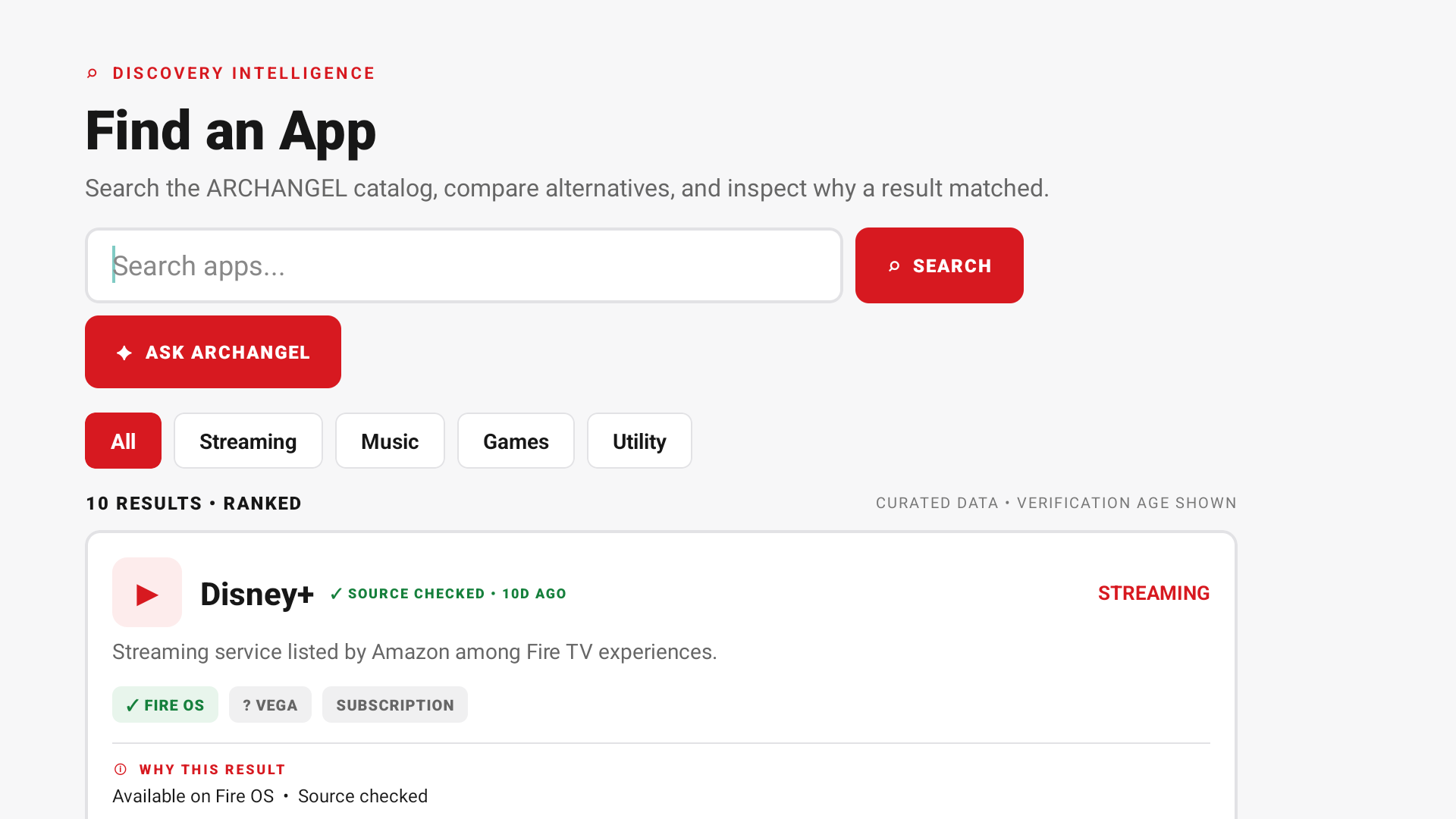
Find App Page
-
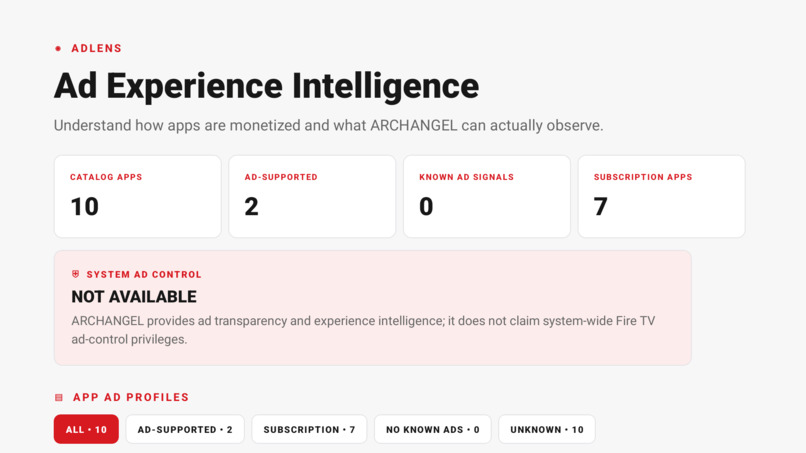
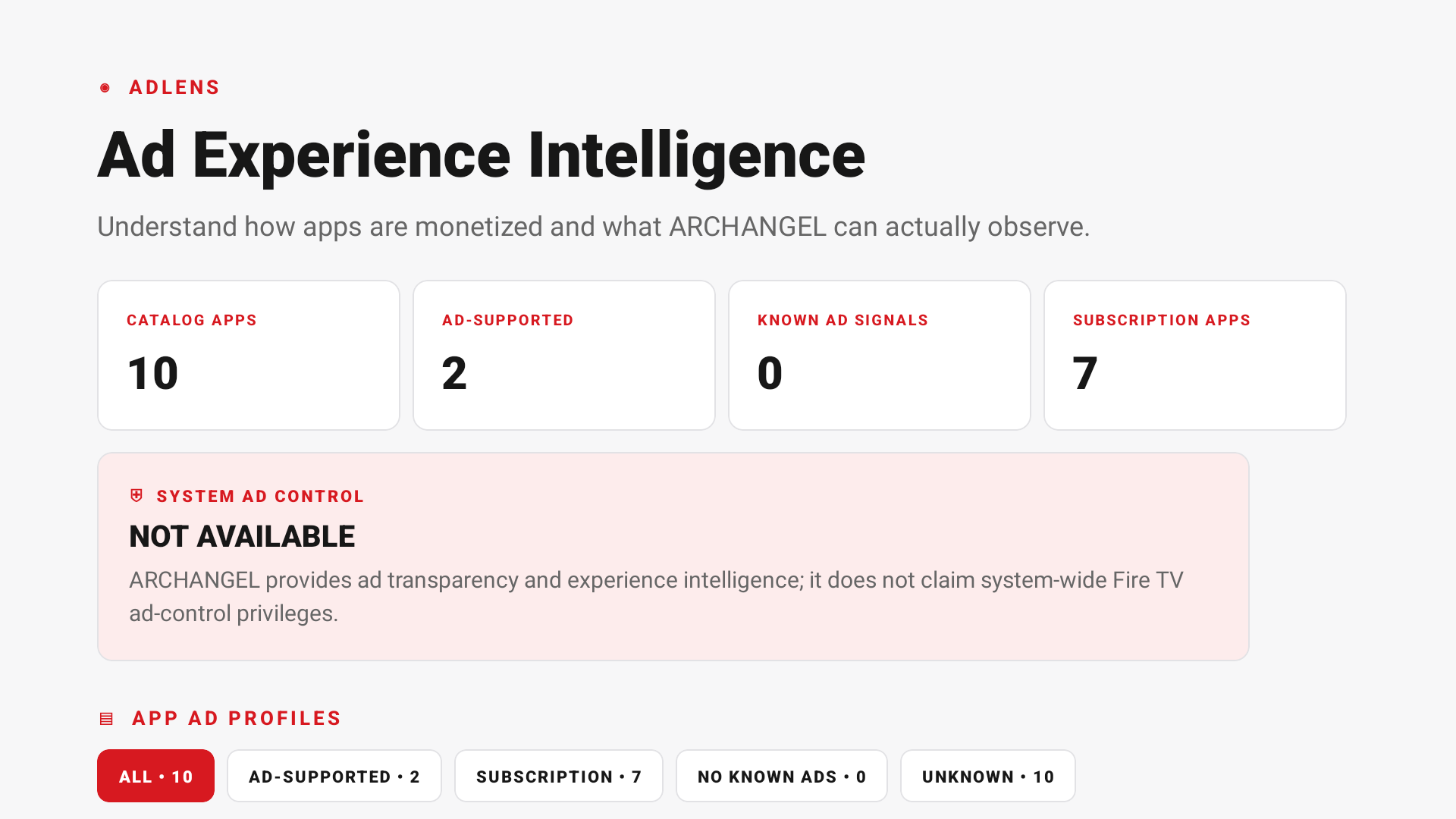
AdLens Page
-
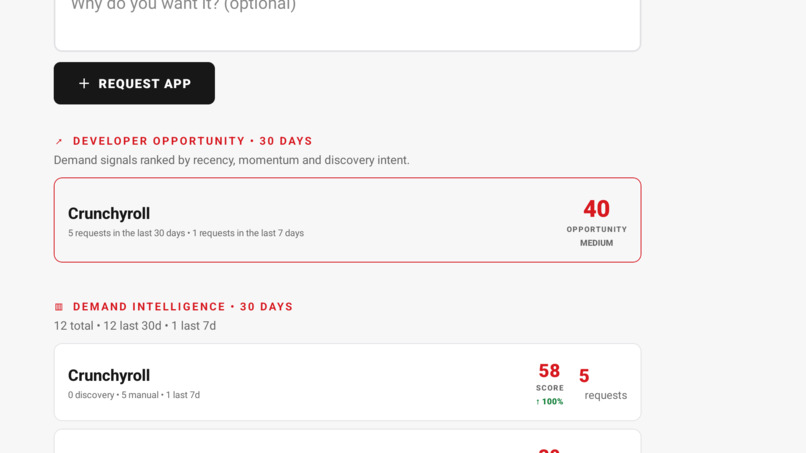
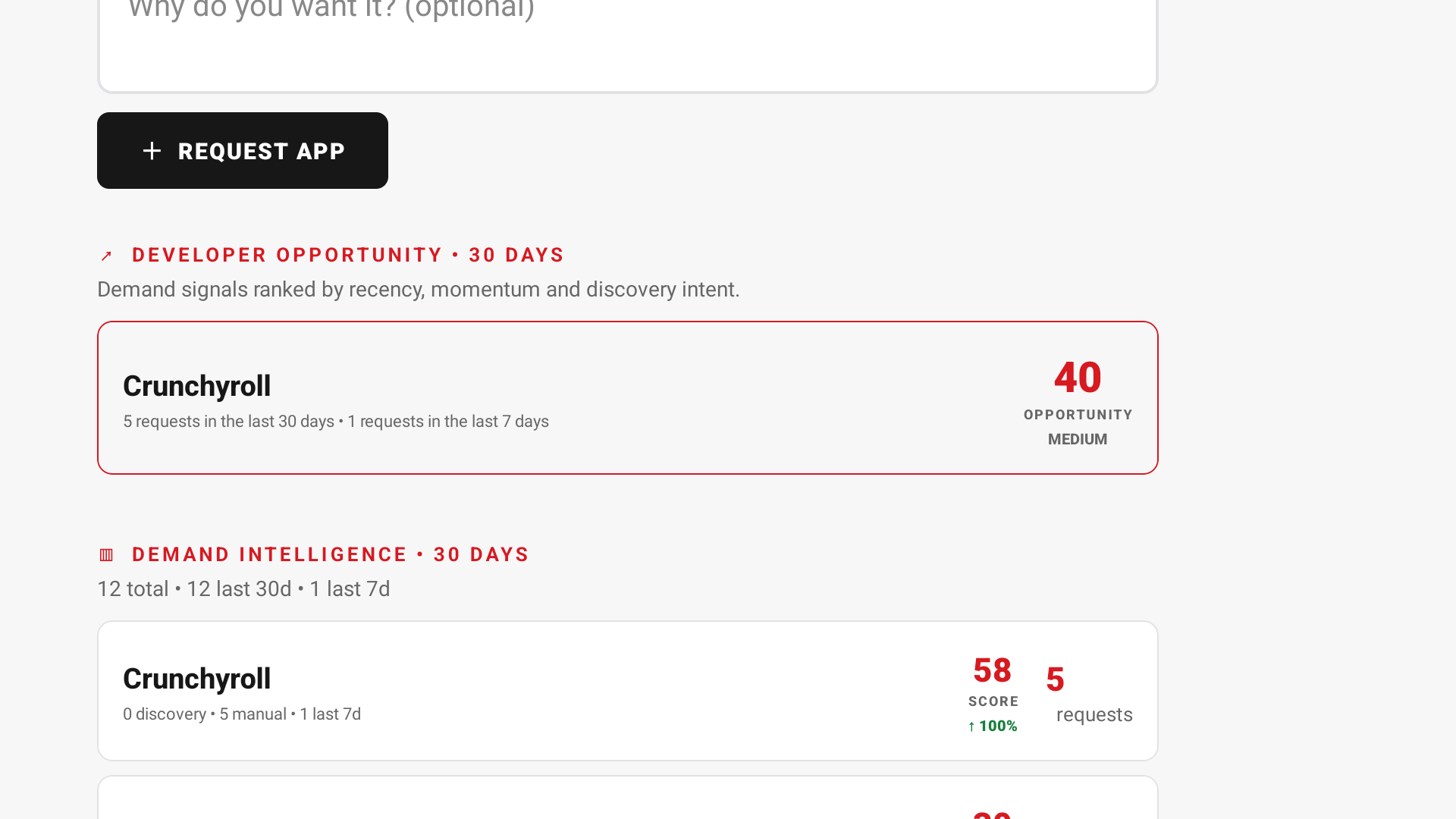
App Request Page
-
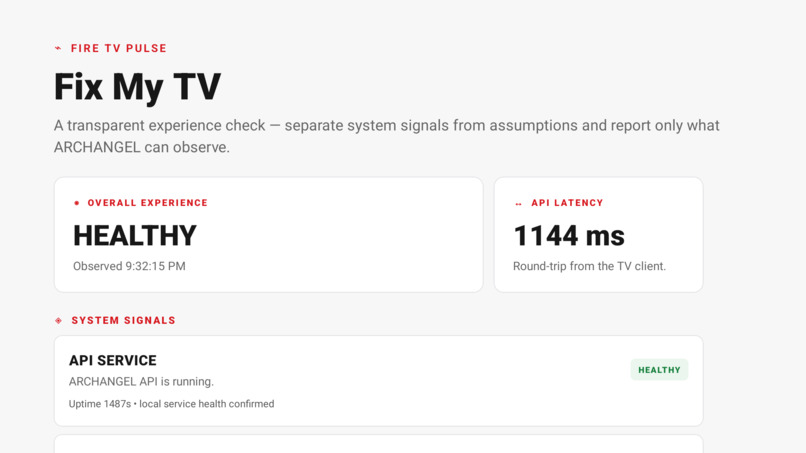
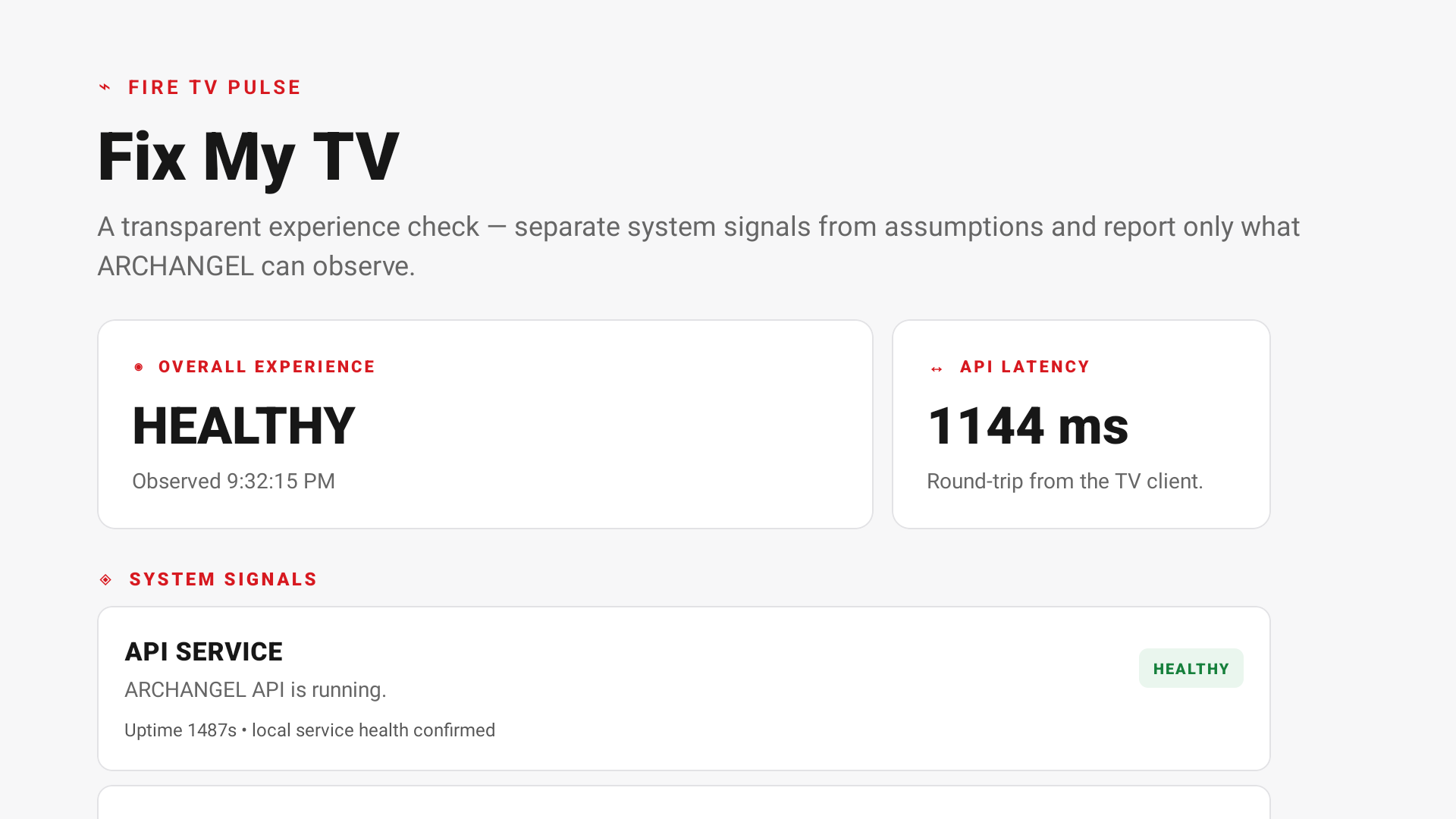
Pulse Diagnostics
-
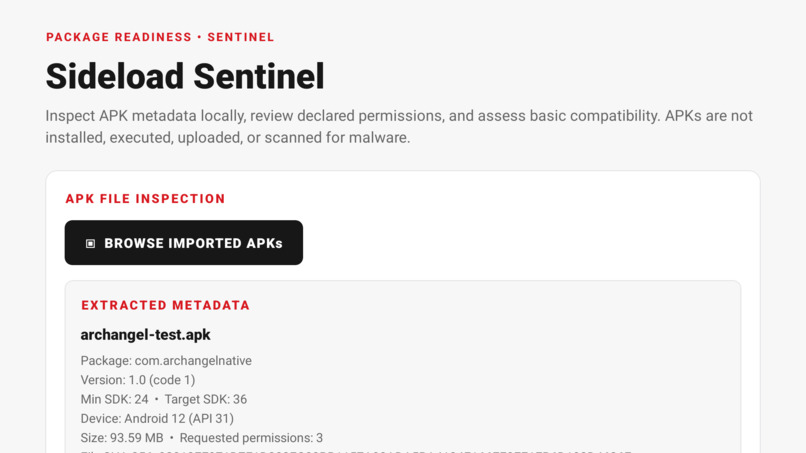
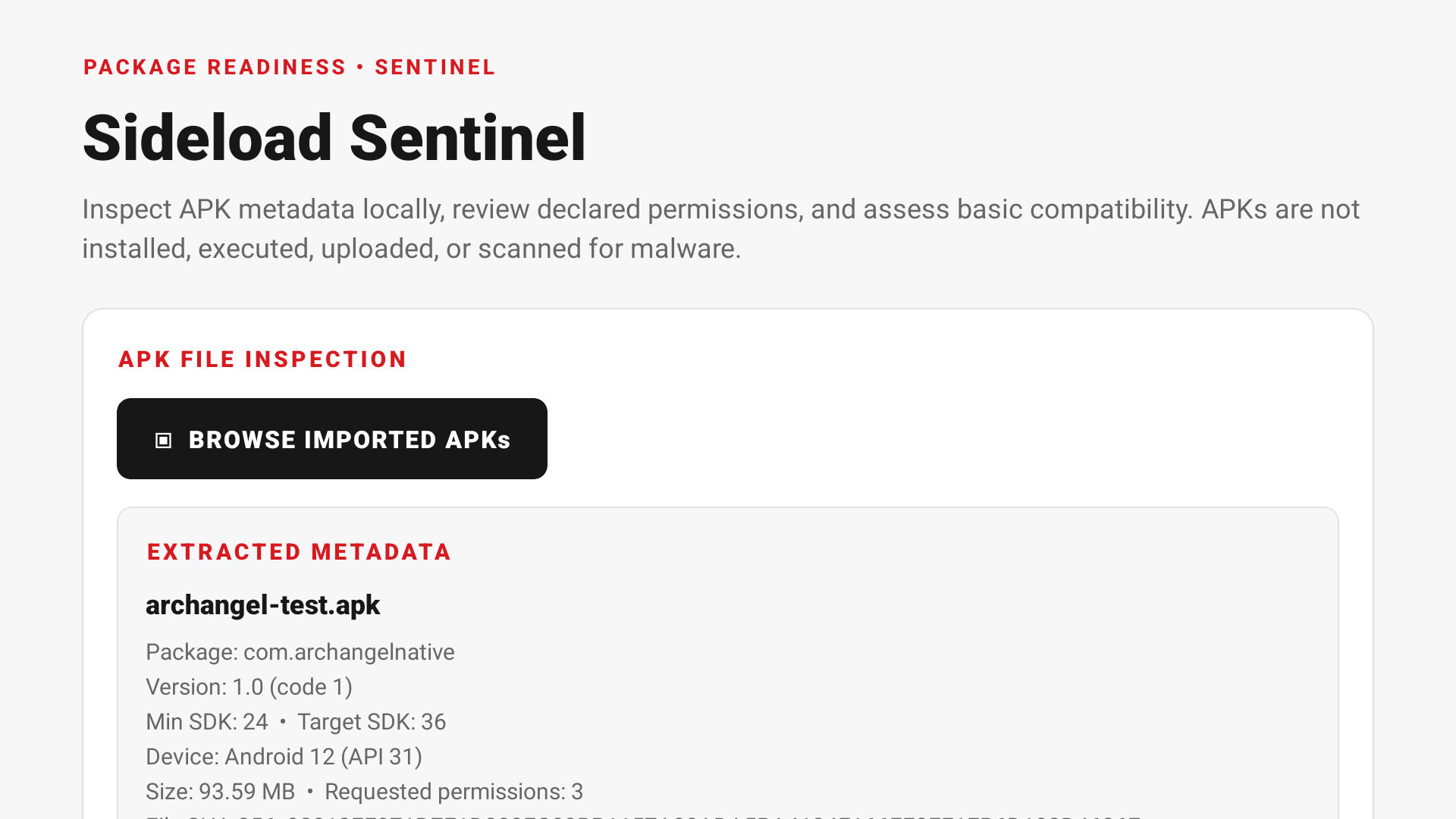
Sideload Sentinel
Inspiration
ARCHANGEL was inspired by the idea of making Fire TV app discovery and management more intelligent, transparent, and accessible. We wanted to build more than an app launcher: a unified assistant that helps users discover apps, understand their options, inspect APK files, and diagnose common issues.
What it does
- App Discovery: Search a curated catalogue of applications, find relevant alternatives, and identify apps that are missing from the catalogue.
- AI Concierge: Interpret natural-language requests and provide catalogue-grounded recommendations.
- Request Network: Capture requests for unavailable apps and aggregate demand to help identify what users want.
- AdLens: Provide an interface for advertising-related profiles and history.
- Pulse Diagnostics: Present diagnostic checks and system-health information.
- Sideload Sentinel: Inspect local APK files, review package metadata and permissions, calculate file hashes, and verify available signature and integrity information.
How we built it
We built ARCHANGEL using a React Native-based Fire TV client and a Node.js backend. The client uses a television-oriented navigation experience, including remote-control and directional-pad interactions. The backend exposes APIs for app catalogue data, discovery, request management, diagnostics, and related functionality. We developed the app catalogue and discovery workflow to combine exact matches, intent-based recommendations, and alternatives. The AI integration uses a configurable provider architecture, allowing the backend to work with different model providers without tightly coupling the client to one provider. Amazon Bedrock is configured as an AI integration target for the Concierge and App Discovery capabilities. We tested the Android build using an emulator, ran backend smoke tests, and prepared release-signing and submission documentation.
Challenges we ran into
One major challenge was developing and testing a television-first interface without access to a physical Fire TV device. We used an Android emulator to test navigation, focus behaviour, screen transitions, and the main application workflows. Integrating multiple features into one application also introduced challenges around API responses, catalogue validation, navigation consistency, and error handling. We needed to make sure that discovery results remained grounded in available catalogue data and that missing applications were handled as requests rather than presented as confirmed catalogue entries. Another significant obstacle was AWS account verification. Although we received confirmation that customer verification had succeeded, Bedrock access and AWS CloudShell remained blocked. With the submission deadline approaching, we prioritised a reproducible build, functional application workflows, and transparent reporting of integration status.
Accomplishments that we're proud of
- Built a unified Fire TV-focused application instead of a single-purpose discovery tool.
- Implemented app discovery, alternatives, missing-app requests, and demand aggregation.
- Integrated a configurable AI-provider architecture for natural-language discovery.
- Developed Sideload Sentinel to help users inspect APK metadata, permissions, hashes, and signature information.
- Added Pulse Diagnostics and AdLens as part of the wider application experience.
- Established backend smoke tests and catalogue validation to catch implementation issues.
- Prepared release-signing documentation, a submission checklist, and a friction log to document technical obstacles and decisions.
What we learned
We learned that building for a television requires a different approach from building for a phone or desktop. Remote-control navigation, focus visibility, predictable movement, and readable layouts are central to the user experience. We also learned the importance of separating AI-generated recommendations from verified catalogue information, designing clear fallback behaviour, and testing backend contracts independently of the user interface. Finally, we learned that external account and service dependencies can become critical project risks. Configuring a cloud integration is not the same as proving that it works live. Documenting that distinction helped us make more reliable decisions under a tight deadline.
What's next for Archangel
- Resolve AWS account verification and validate live Amazon Bedrock inference.
- Test the application on physical Fire TV hardware and additional supported devices.
- Expand and maintain the app catalogue, including better alternatives and missing-app workflows.
- Improve AI discovery evaluation, response reliability, and fallback behaviour.
- Extend diagnostics and strengthen APK inspection while keeping security claims appropriately scoped.
- Improve automated testing, release validation, accessibility, and documentation.
- Gather user feedback and use aggregated app requests to guide future catalogue improvements.

Log in or sign up for Devpost to join the conversation.