-
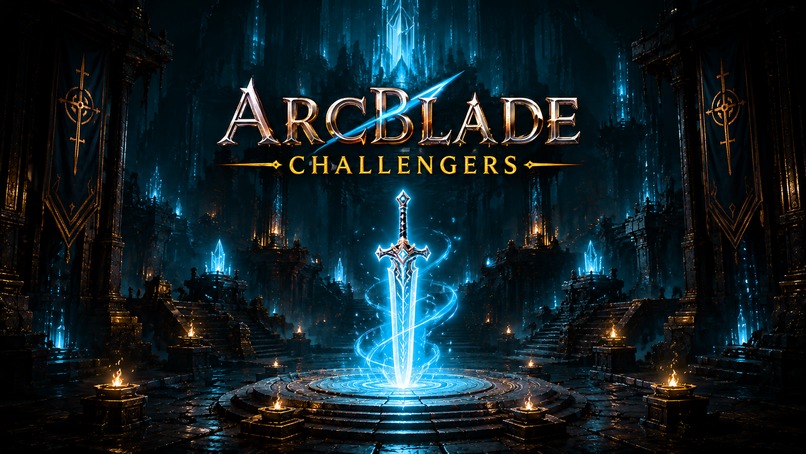
Cover
-
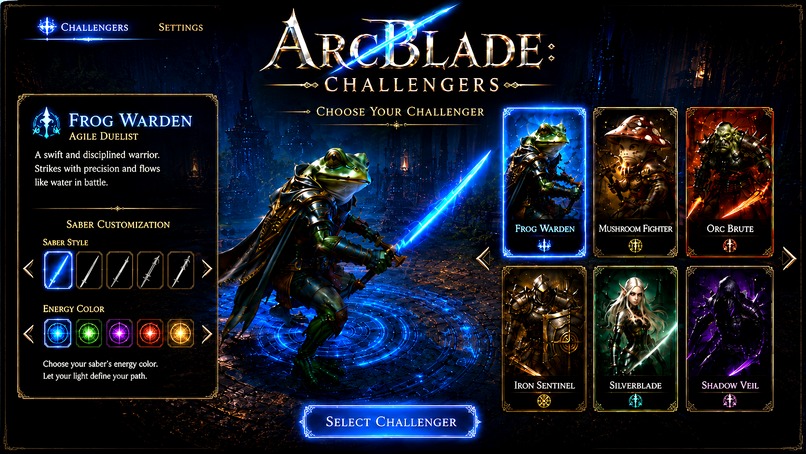
Challengers
-
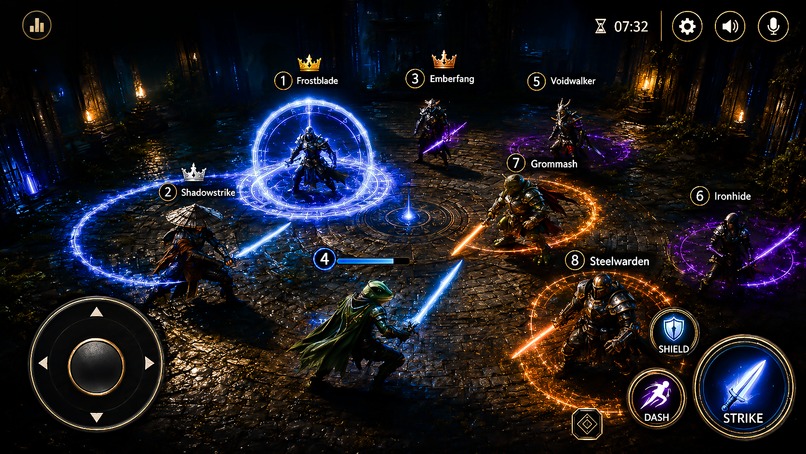
Gameplay1
-
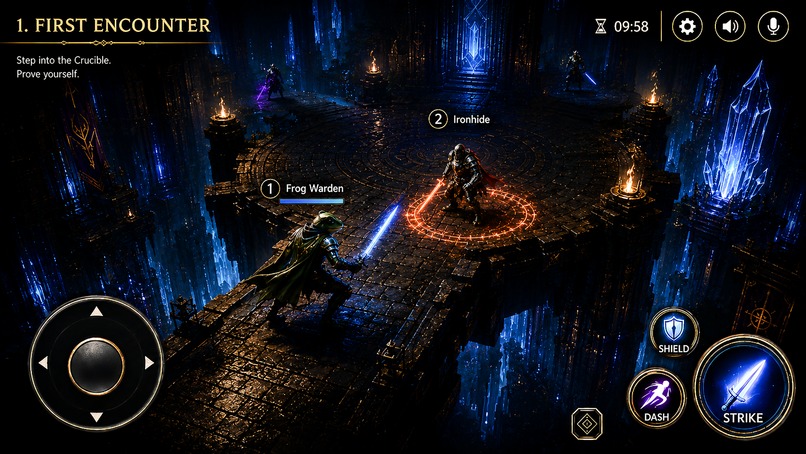
Gameplay2
-
Map
-
Notes
Inspiration
ArcBlade: Challengers was inspired by my love of fantasy, world building, and fast competitive games. I wanted to create a mobile sword-fighting game that felt magical, easy to play, and simple to understand, while still having depth.
The main idea came from imagining Arc Energy as more than a power source. In this world, Arc Energy is the force challengers must control to survive. It fuels their strongest moves, protects them in battle, and creates the risk behind every decision.
From there, I imagined ancient ruins where challengers enter the arena to prove themselves, surrounded by glowing blades, shield sigils, and crowns marking the strongest players. The inspiration was not just sword fighting, but the feeling of stepping into a magical contest where every choice could help you survive, fall, or claim the crown.
What it does
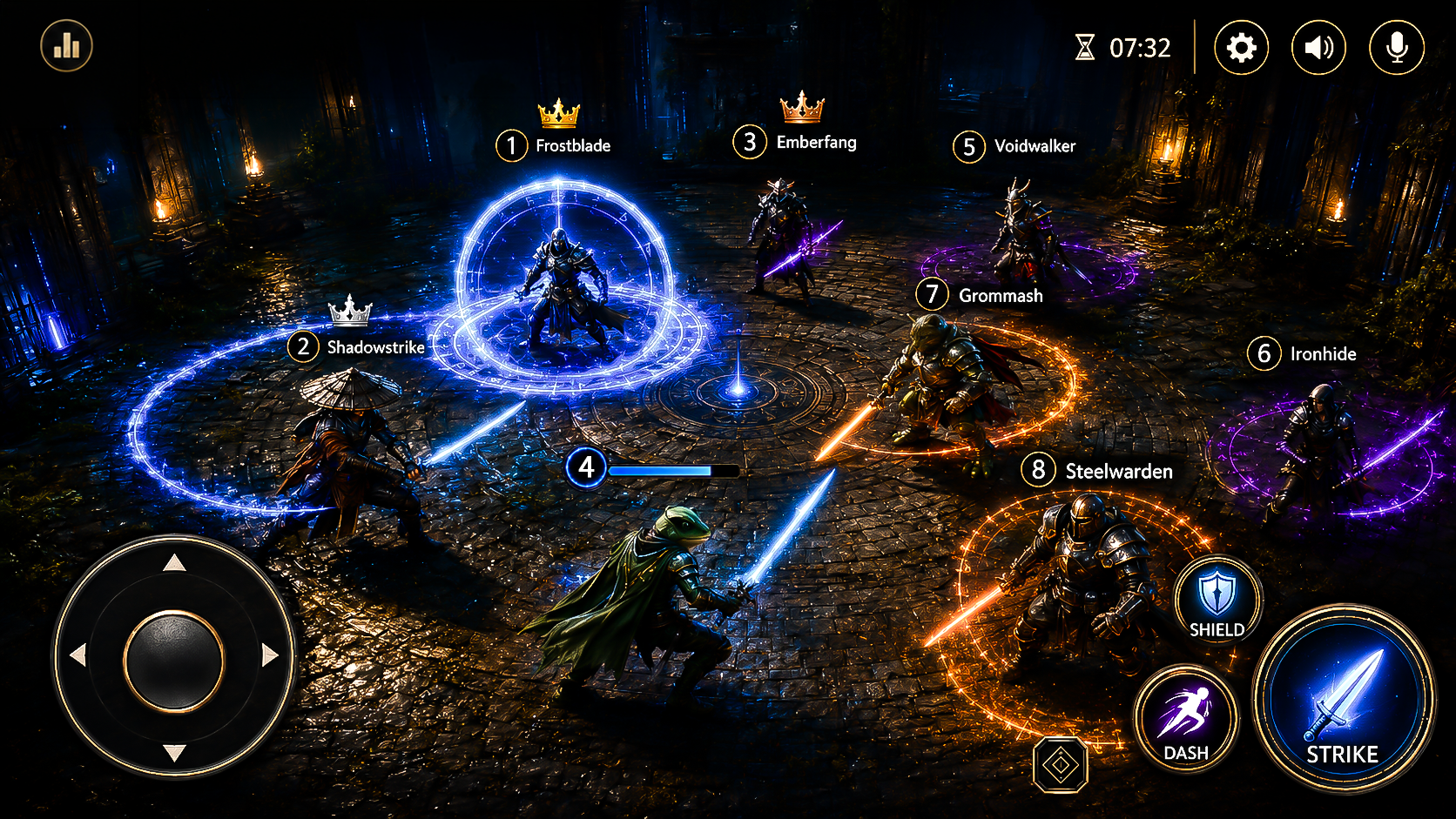
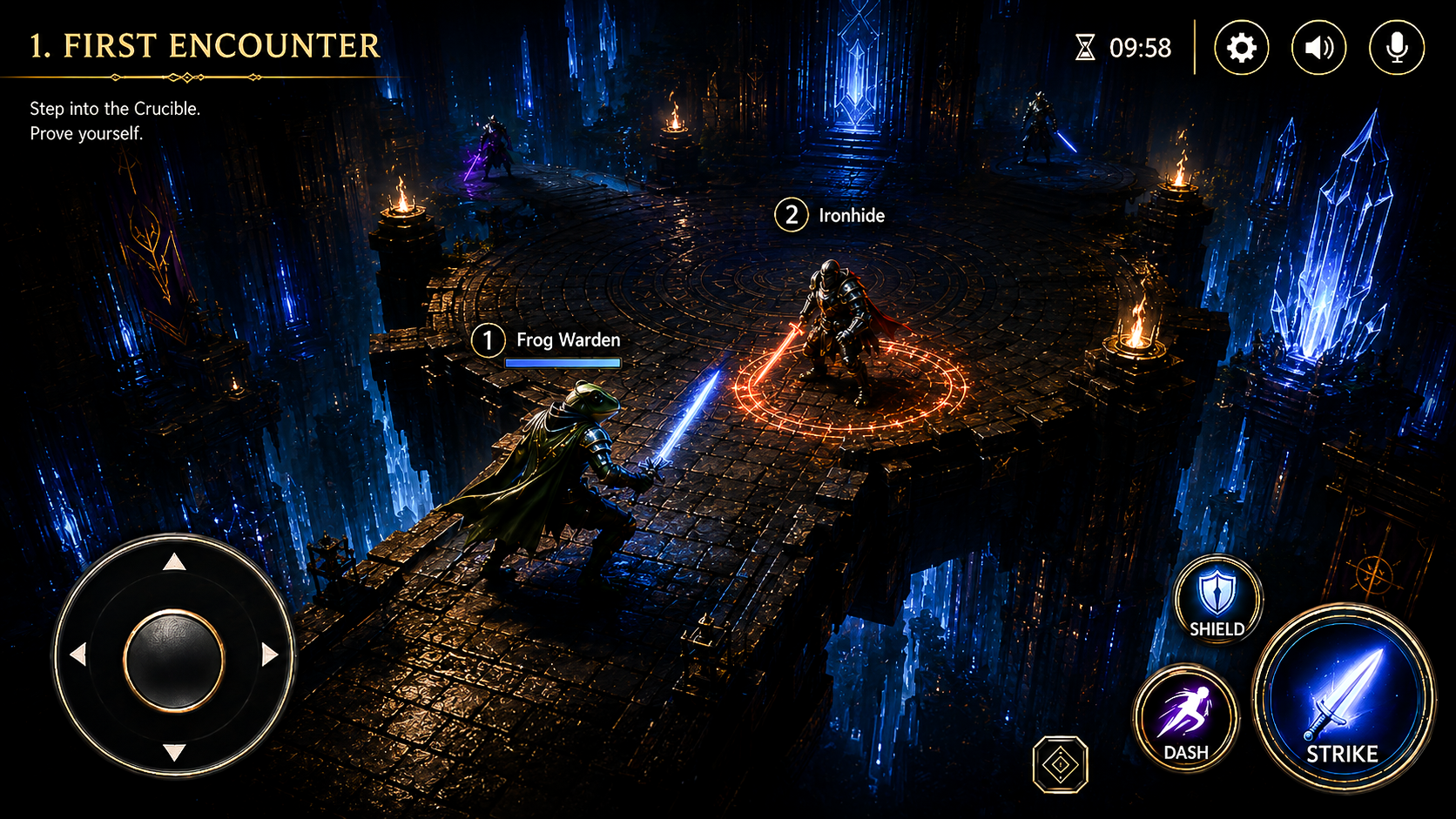
ArcBlade: Challengers is a mobile fantasy sword-fighting arena game where players battle in timed free-for-all matches. Each player enters the arena as a challenger and uses three core actions: strike, shield, and dash.
The main system is Arc Energy. Arc Energy is both the player’s health and power source:
Arc Energy = Health + Power
Players lose Arc Energy when they are hit, and they also spend Arc Energy when using stronger powered actions. This makes Arc Energy a resource the player has to manage during every fight. A player can use energy to attack harder, shield longer, or dash farther, but spending too much can leave them vulnerable.
The game also uses a point-based scoring system. Players build score by landing hits, blocking correctly, and eliminating opponents. Taking damage can lower a player’s score, and being eliminated can create an additional score penalty. This rewards players for fighting well, defending at the right time, and avoiding careless risks.
These two systems work together. Arc Energy controls survival, while score controls placement and rewards. If a player gets hit, they lose Arc Energy and may lose score. If they manage Arc Energy well, block at the right time, collect recharge pickups, and choose the right moments to attack, they can survive longer and climb the leaderboard.
During the match, the top three players are marked with gold, silver, and bronze crowns. This makes the leaders easy to find, but it also turns them into targets.
At the end of the round, the player’s score converts into Victory Shards. First, second, and third place receive bonus multipliers. Victory Shards can be used to unlock cosmetics and support items, but players can only spend shards they earned from previous completed rounds.
How I built it
I built the concept around a mobile-first control scheme with a rolling D-pad on the left and strike, shield, and dash buttons on the right. Each action has a simple tap version and a stronger hold version that spends Arc Energy.
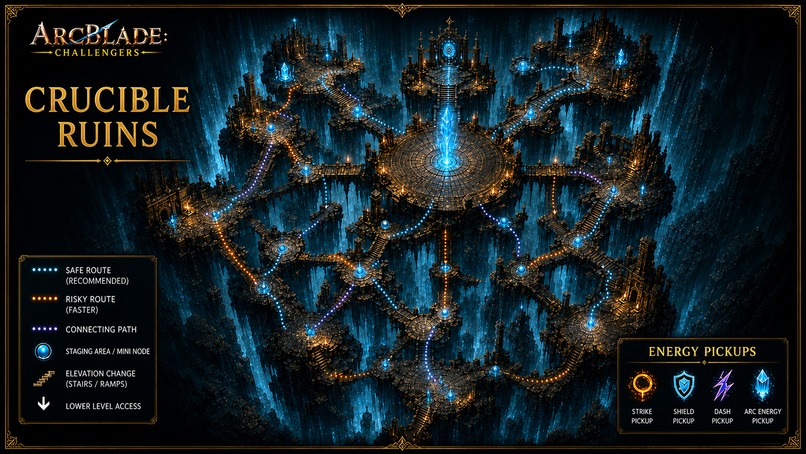
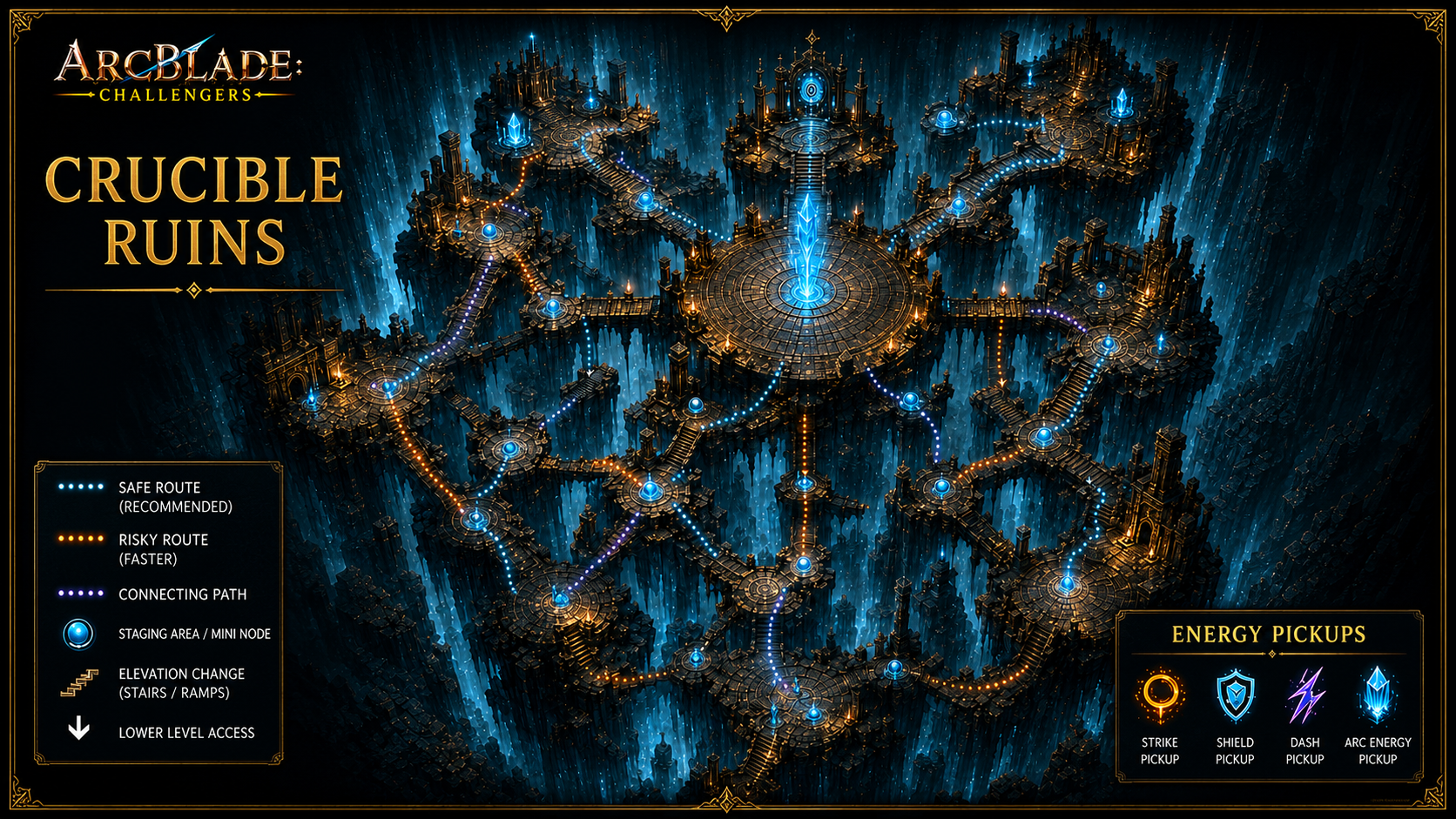
The visual direction was built around a dark fantasy battleground set inside ancient cave-like ruins. The map funnels players toward a central combat zone, while outer areas give players space to respawn, recover, collect Arc Energy pickups, and re-enter the fight.
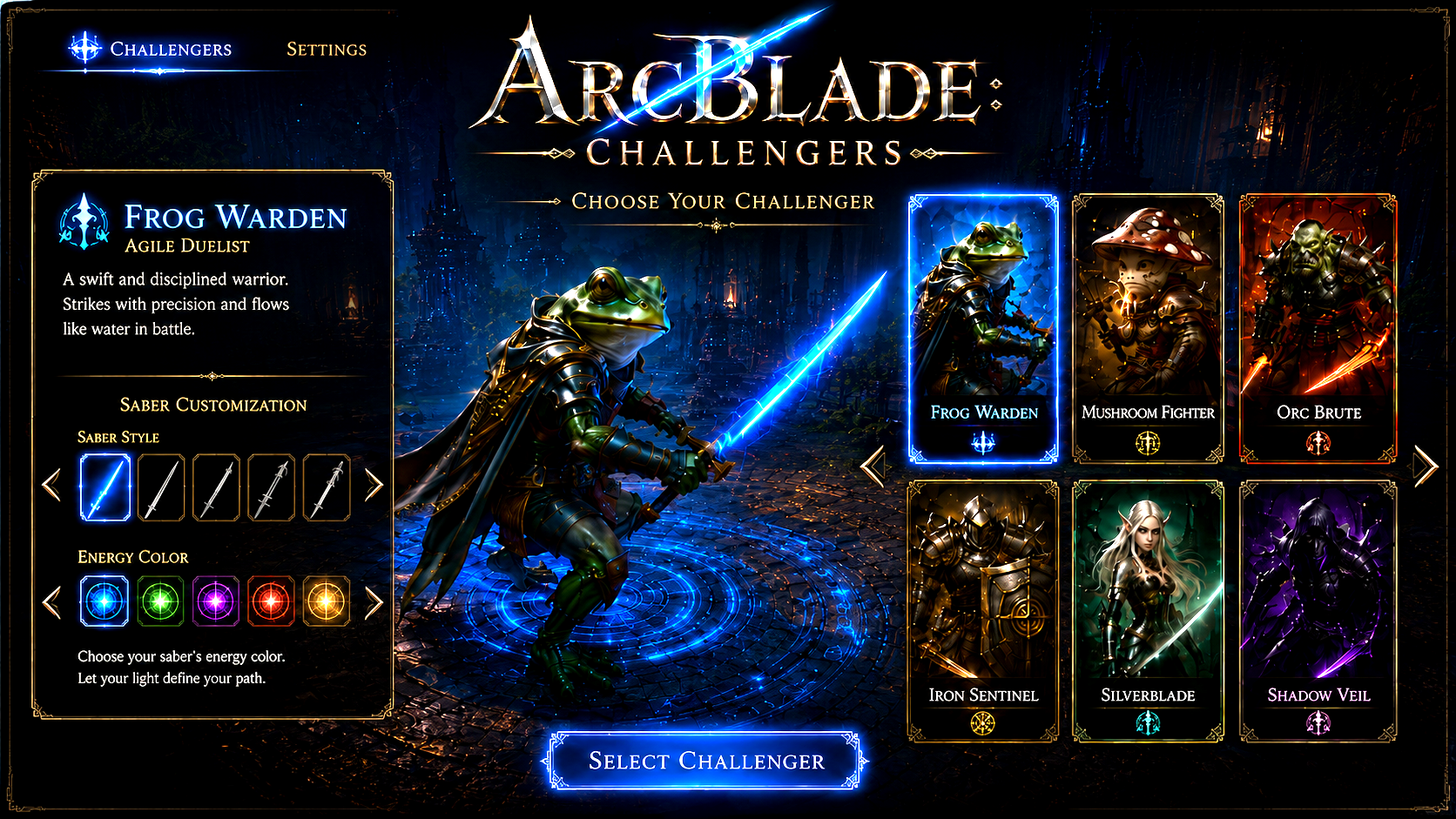
I also created gameplay UI, character concepts, environment concepts, mood boards, key moment panels, and a world overview to show how the game would look and feel.
Challenges I ran into
One challenge was making the game feel visually exciting without hurting readability. Since this is designed for mobile, players need to understand the battlefield quickly. The characters, crowns, energy pickups, buttons, score feedback, and Arc Energy meter all need to be clear at a glance.
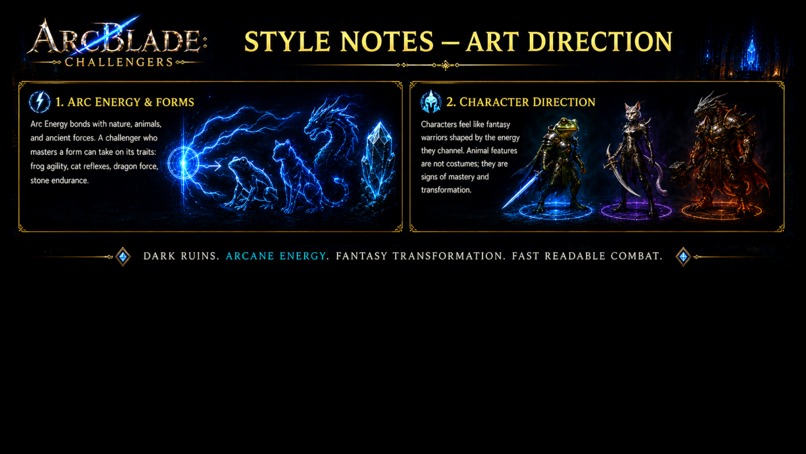
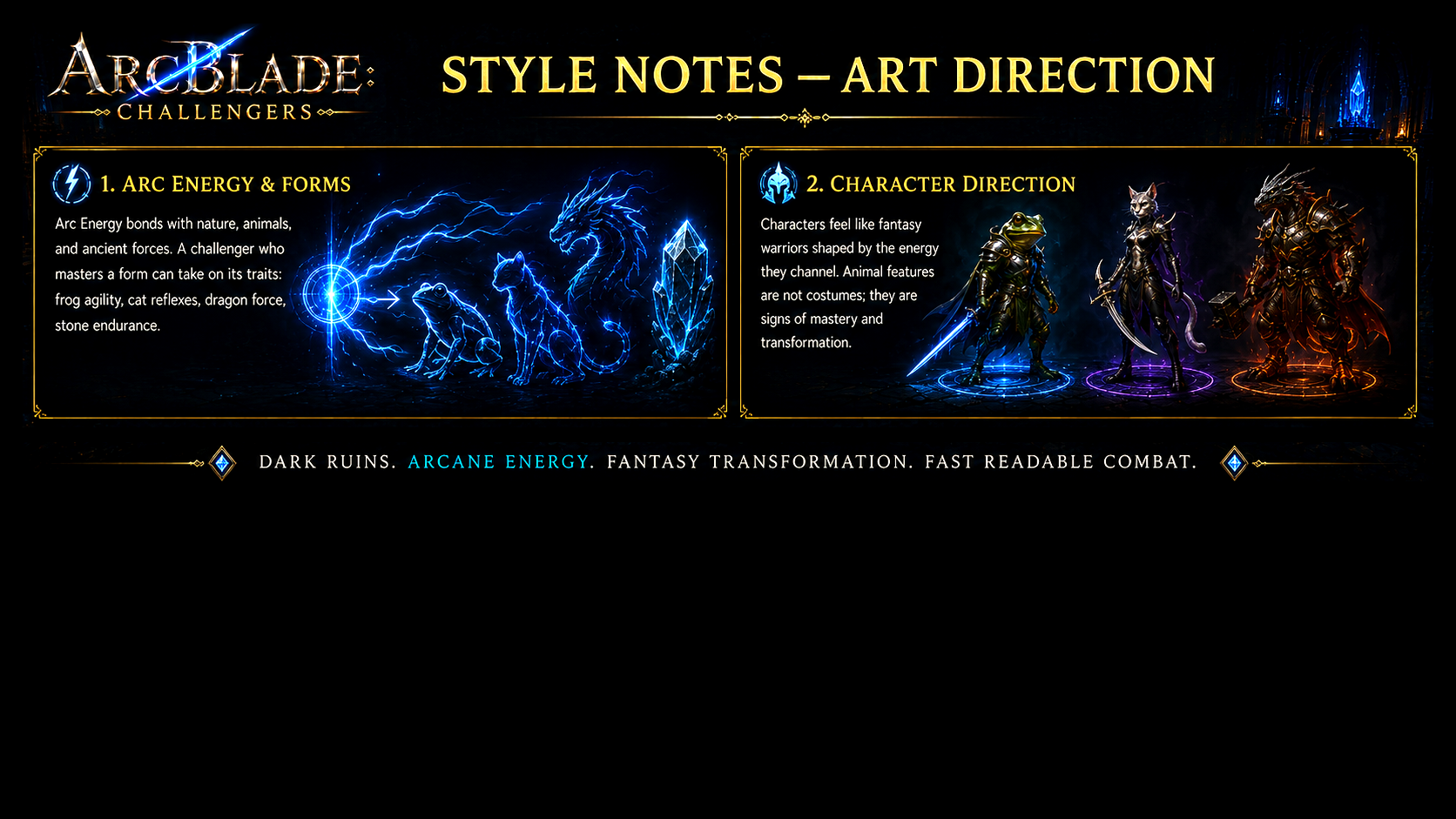
Another challenge was making the character designs feel original without feeling random. The solution was to connect every character back to the same world rule: Arc Energy can shape a challenger’s visual identity while keeping the gameplay fair.
I also had to keep the scope focused. ArcBlade could grow into a bigger world with campaign missions, bosses, and story, but the first version needed to focus on one strong competitive mode.
Accomplishments that I'm proud of
I’m proud of creating a clear game identity around Arc Energy. It connects the combat, characters, UI, progression, and world together.
I’m also proud of the core combat idea because it is simple to understand but creates meaningful choices. Players only need to learn strike, shield, and dash, but the way they manage Arc Energy and score points gives the game depth.
The scoring system also helps reward more than just eliminations. Players are encouraged to attack, defend, survive, and make smart decisions instead of only chasing final hits.
The visual concept package also helped bring the project together by showing the characters, environment, UI, mood, map, and key gameplay moments as one cohesive direction.
What I learned
I learned that simple controls can still create deep gameplay when the systems are connected clearly. Arc Energy works because it gives every decision a consequence.
I also learned how important visual clarity is for mobile action games. A cool fantasy style is not enough by itself. The art direction has to support gameplay by making enemies, pickups, attacks, crowns, score changes, and player status easy to read.
What's next for ArcBlade: Challengers
Next, I would build a playable prototype focused on movement, sword combat, Arc Energy, recharge pickups, scoring, and the crown system. The goal would be to test whether the combat feels fun, readable, and balanced on mobile.
After that, I would expand with more characters, blade styles, energy colors, shield visuals, Arc Stabilizers, maps, seasonal rewards, and eventually a cooperative Campaign Mode with enemies, bosses, story, and character progression.
Built With
- chatgpt
- photoshop


Log in or sign up for Devpost to join the conversation.