-
-
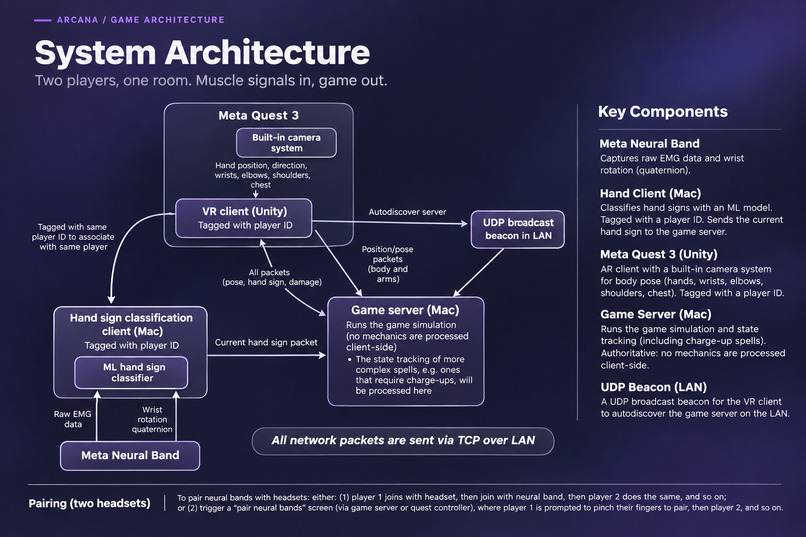
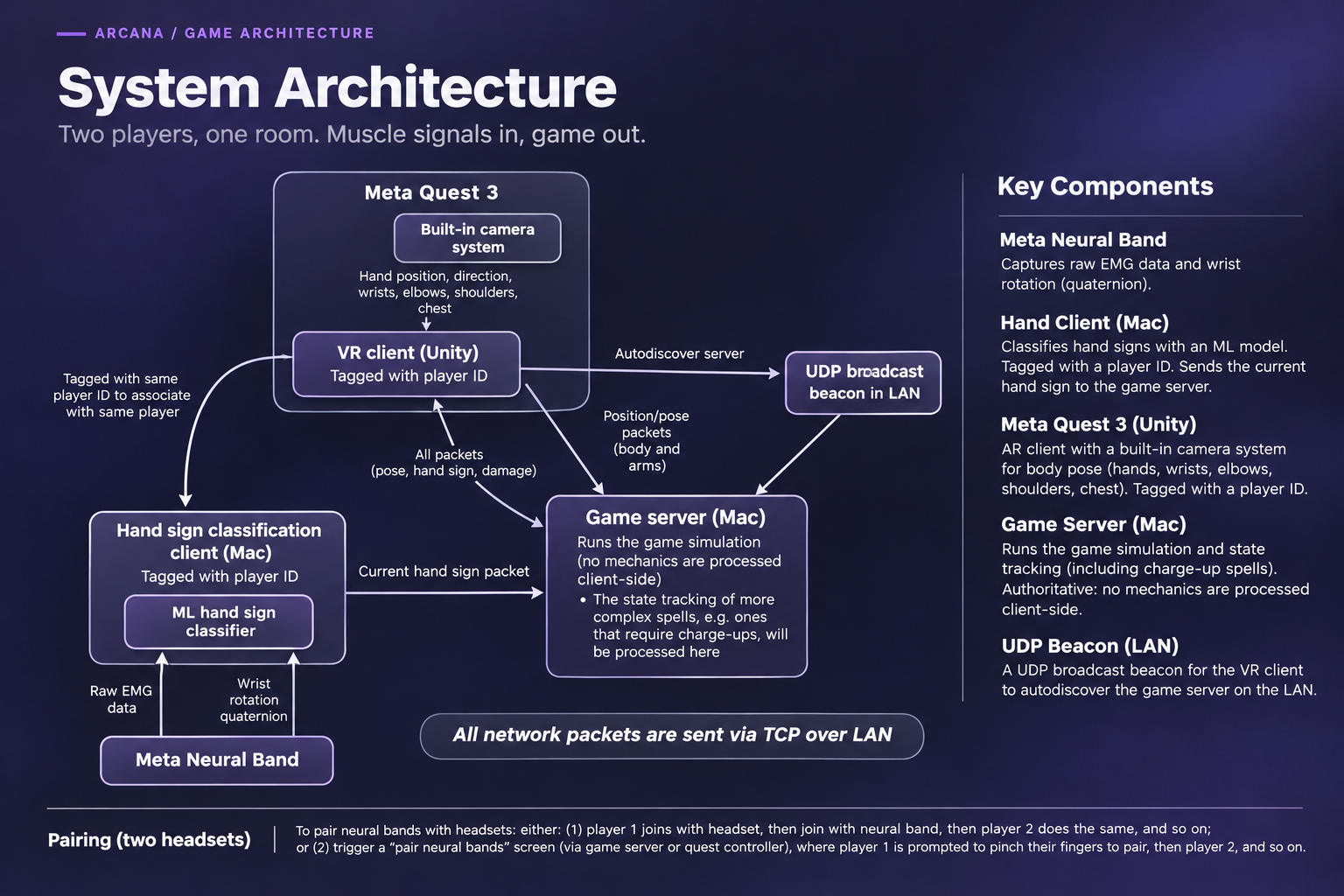
System Architecture
-
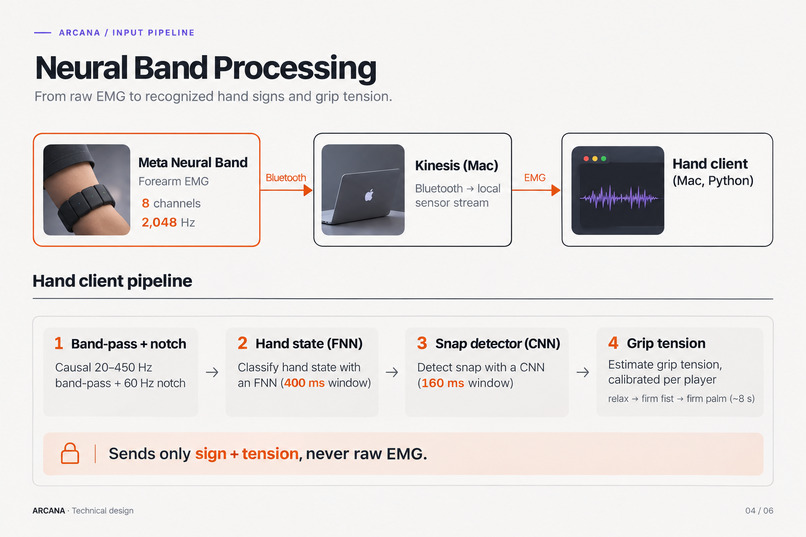
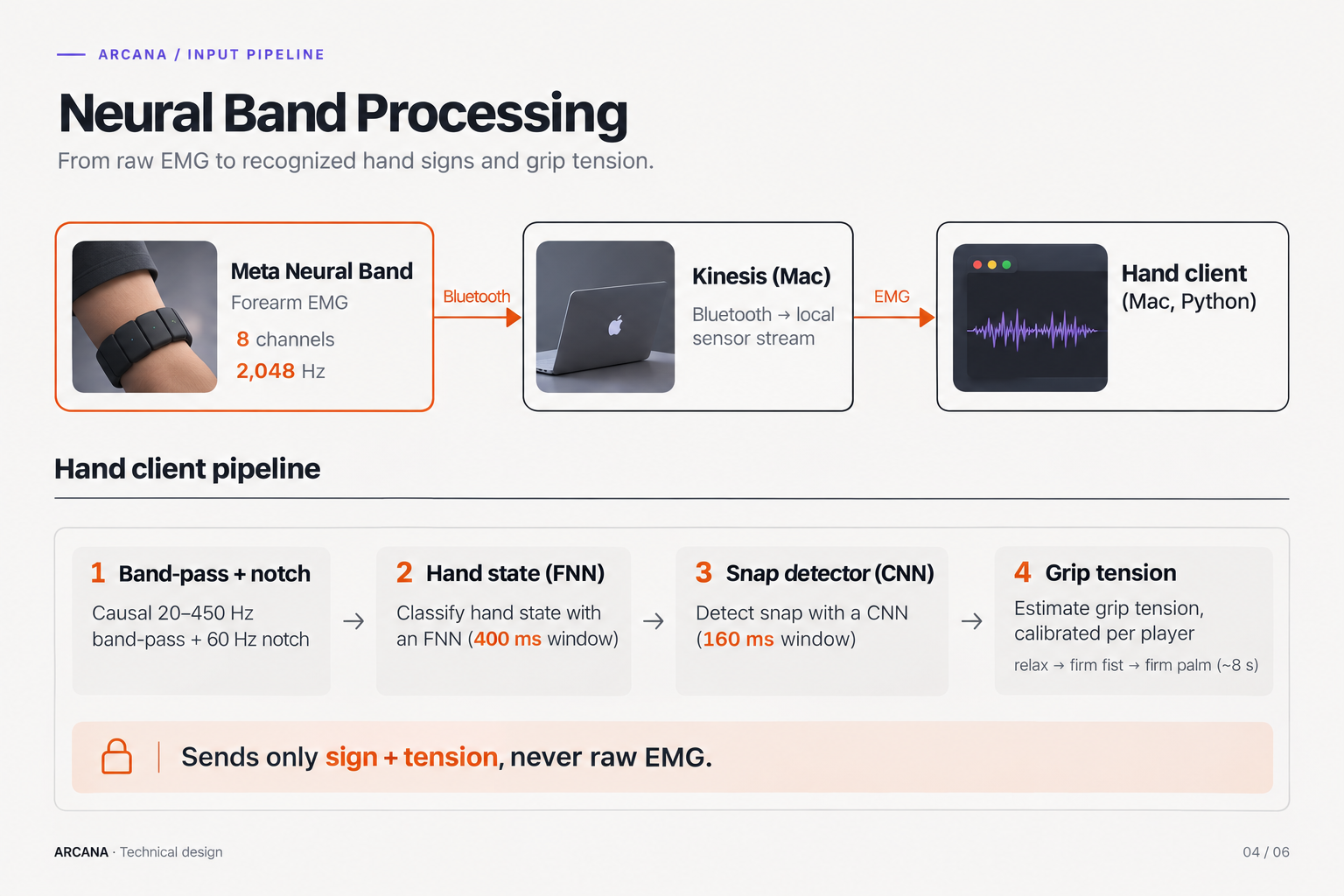
Neural Band Processing
-
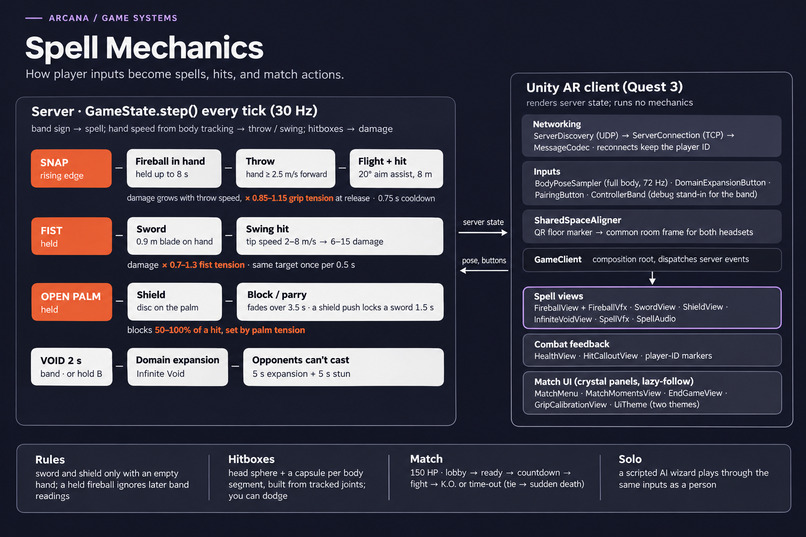
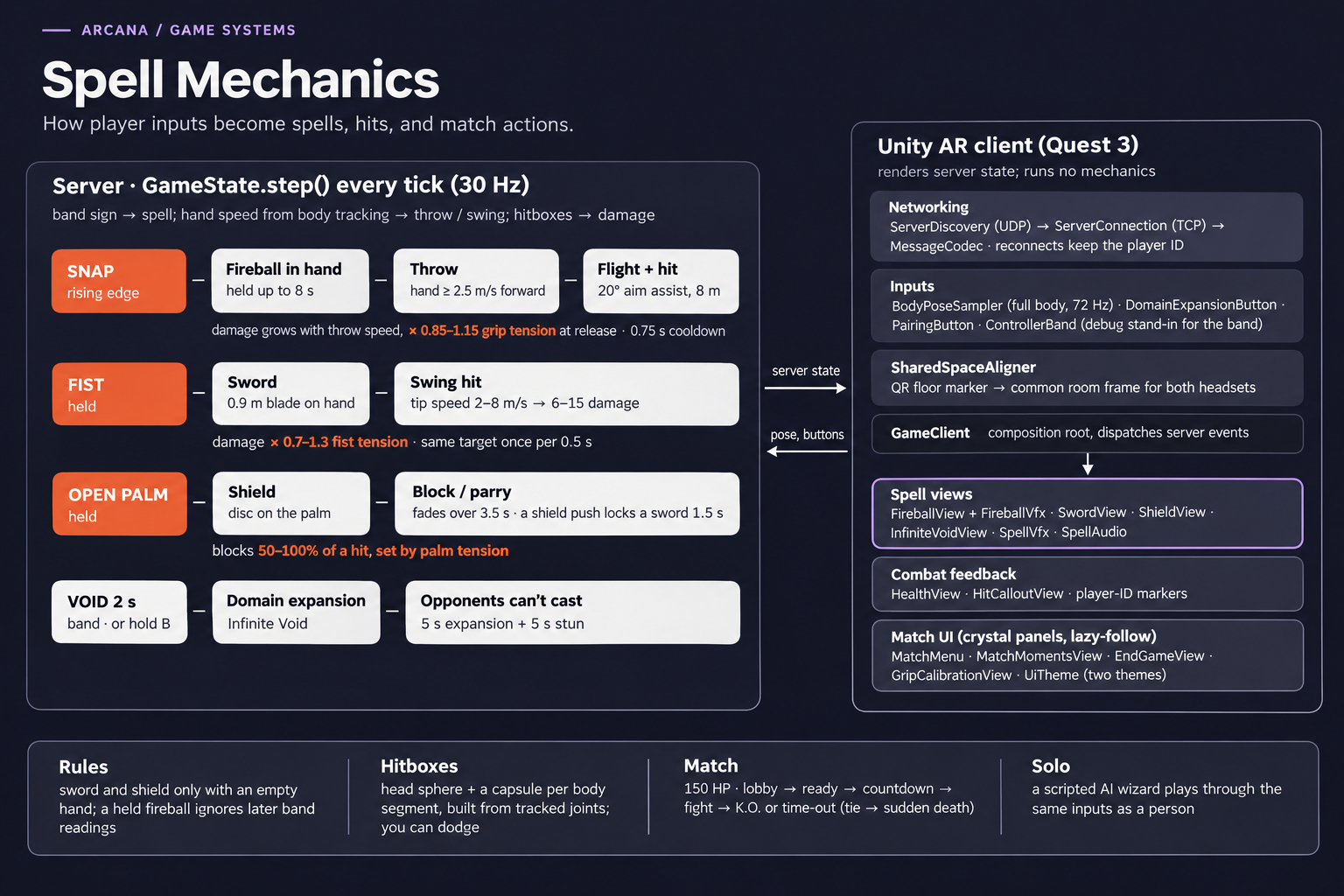
Spell Mechanics
-
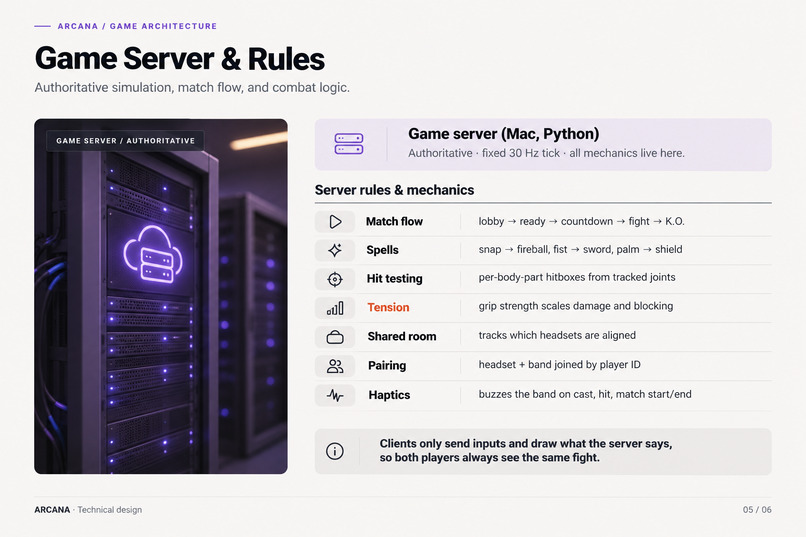
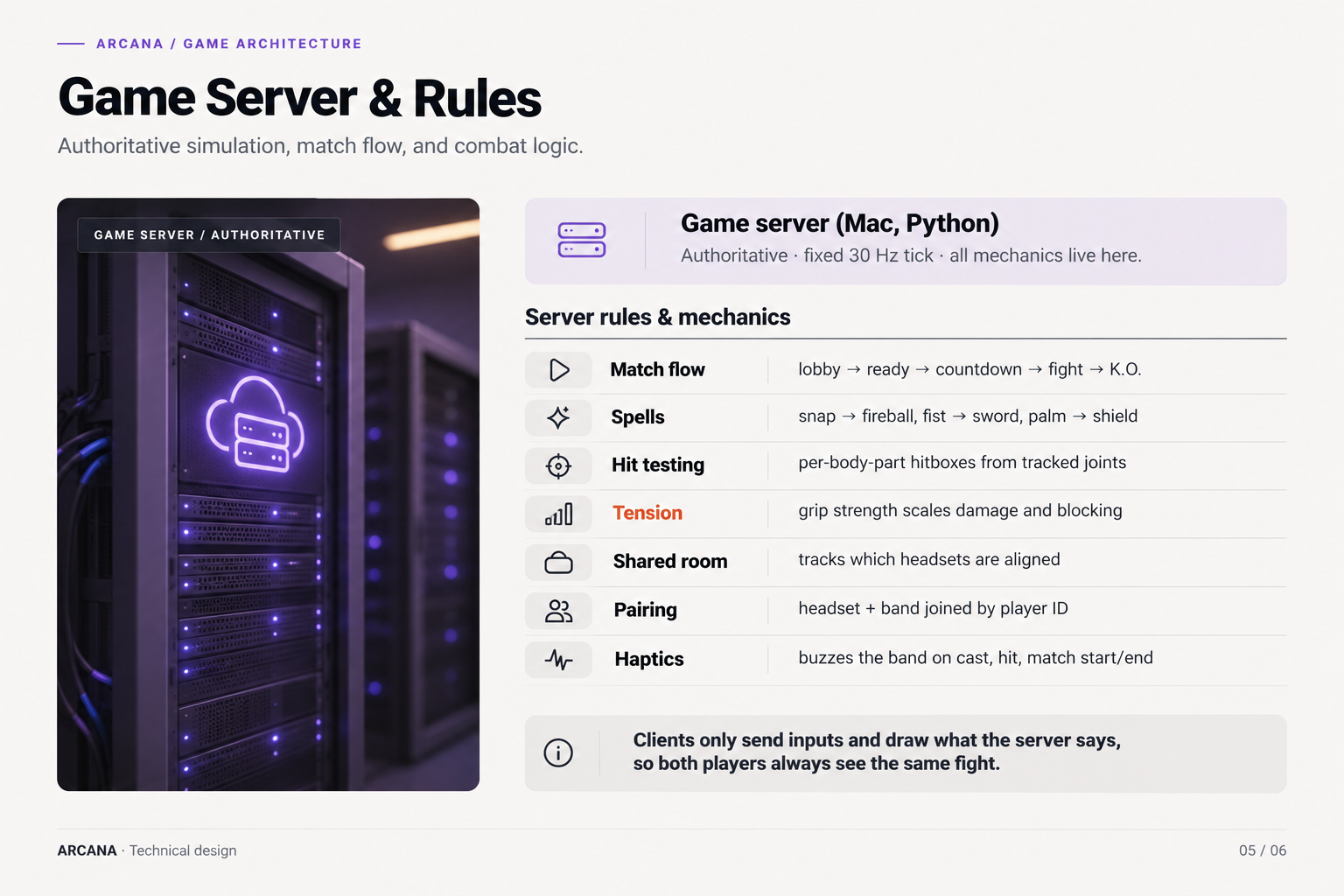
Game Server and Rules
-
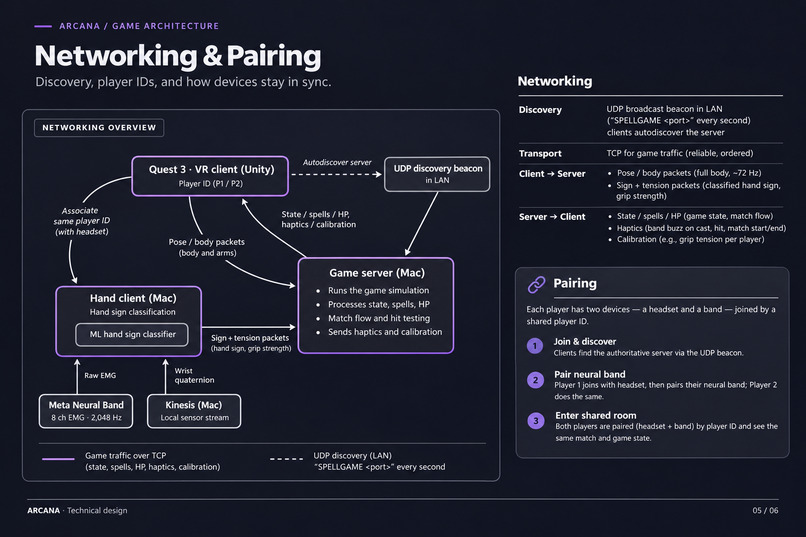
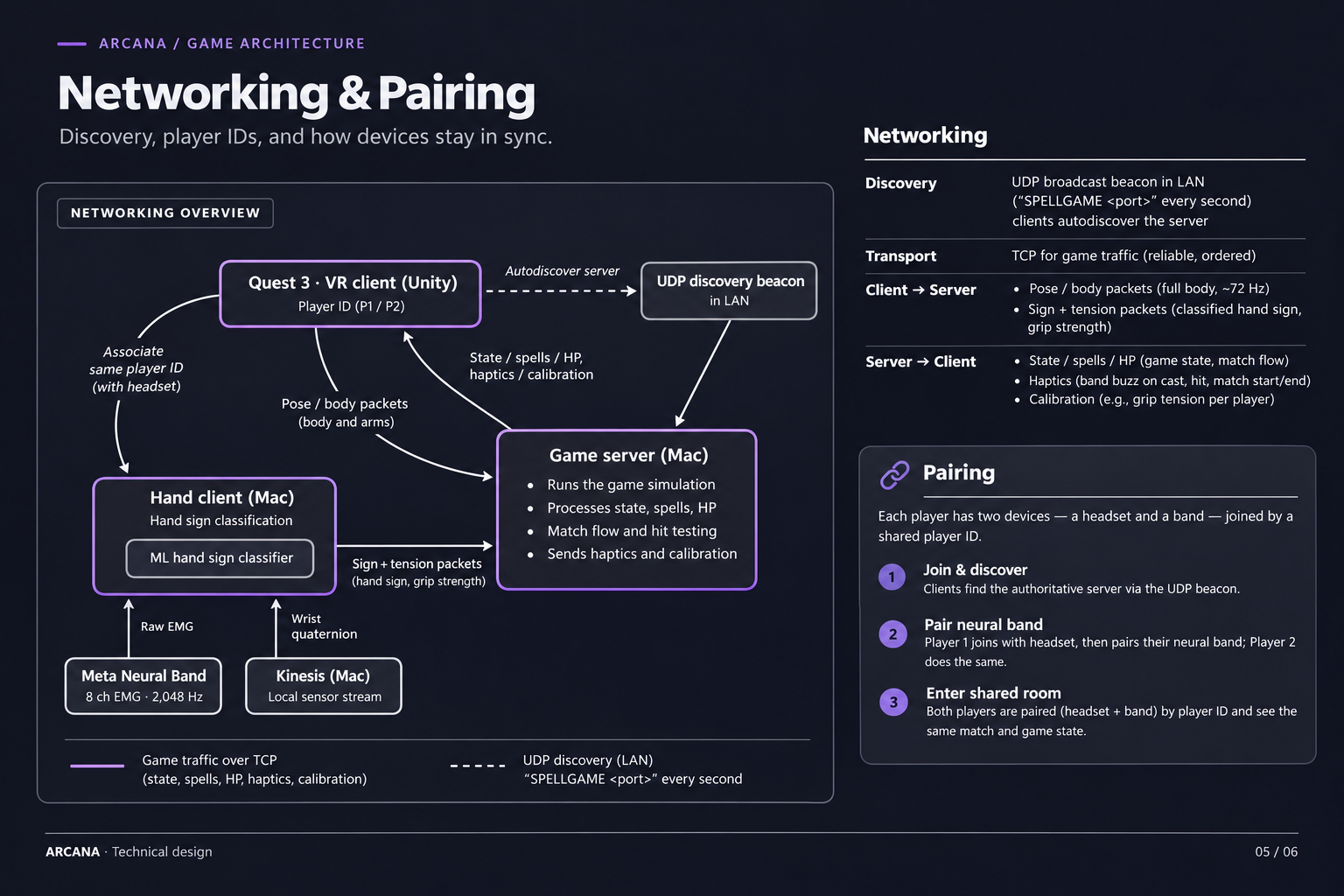
Networking and Pairing
-
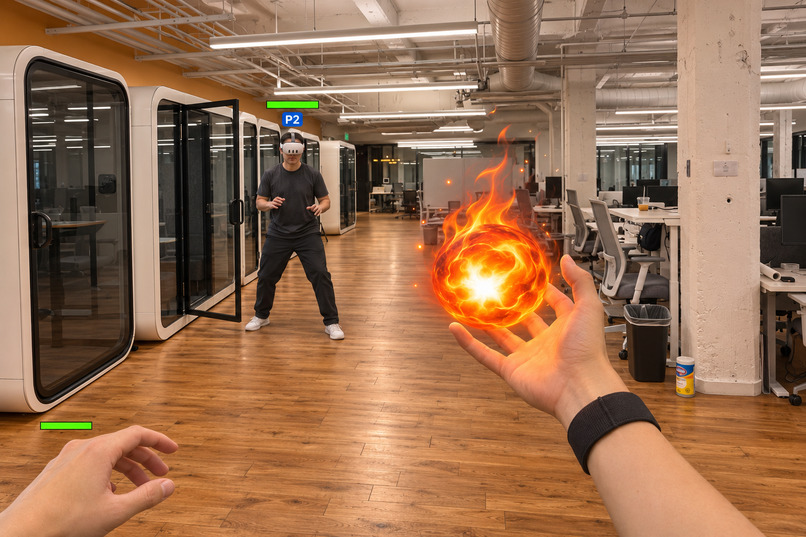
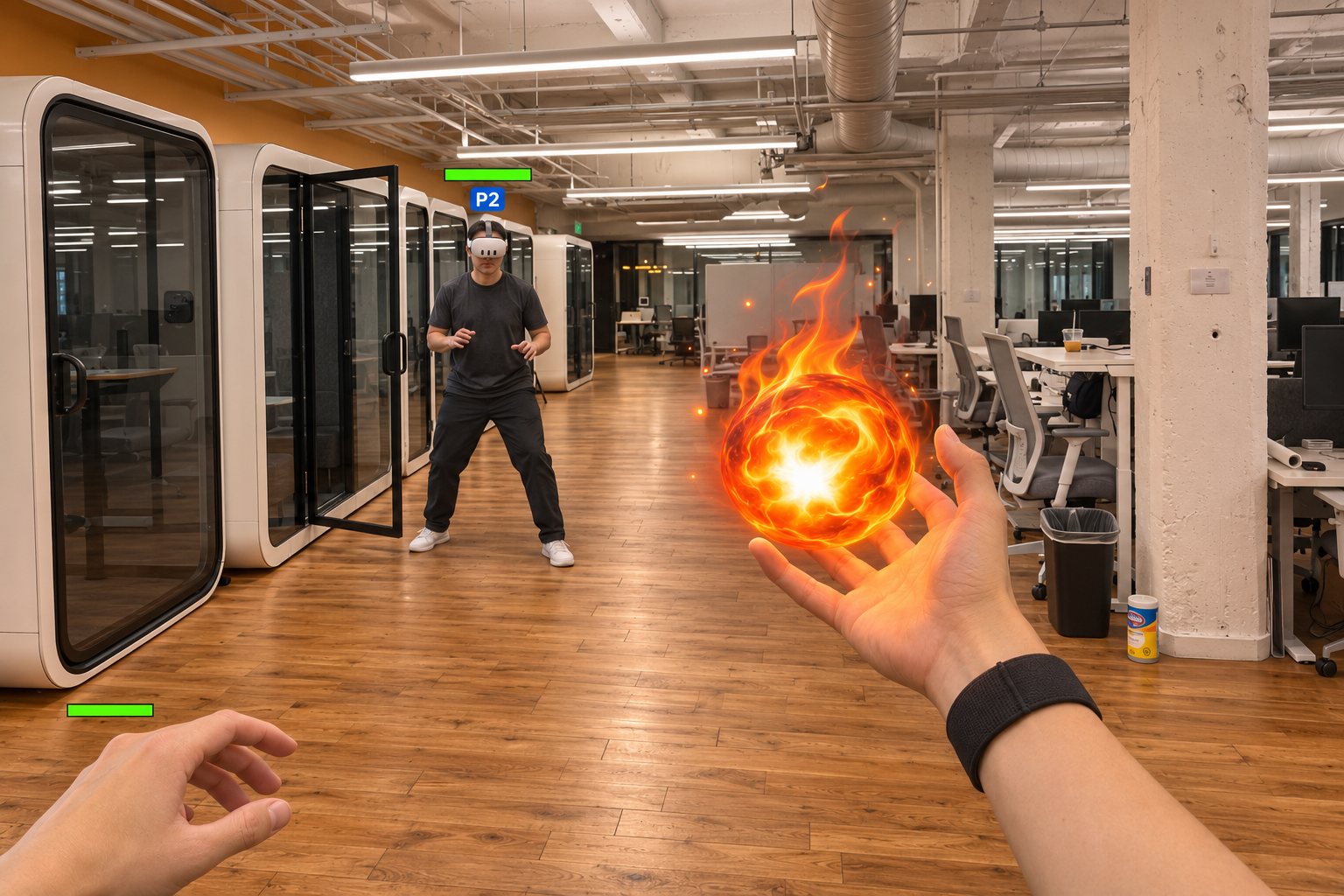
Player POV of Fireball
-
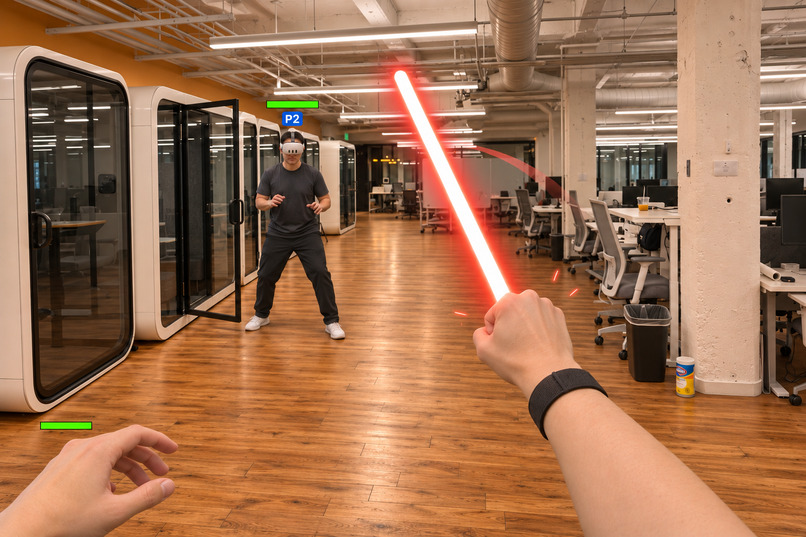
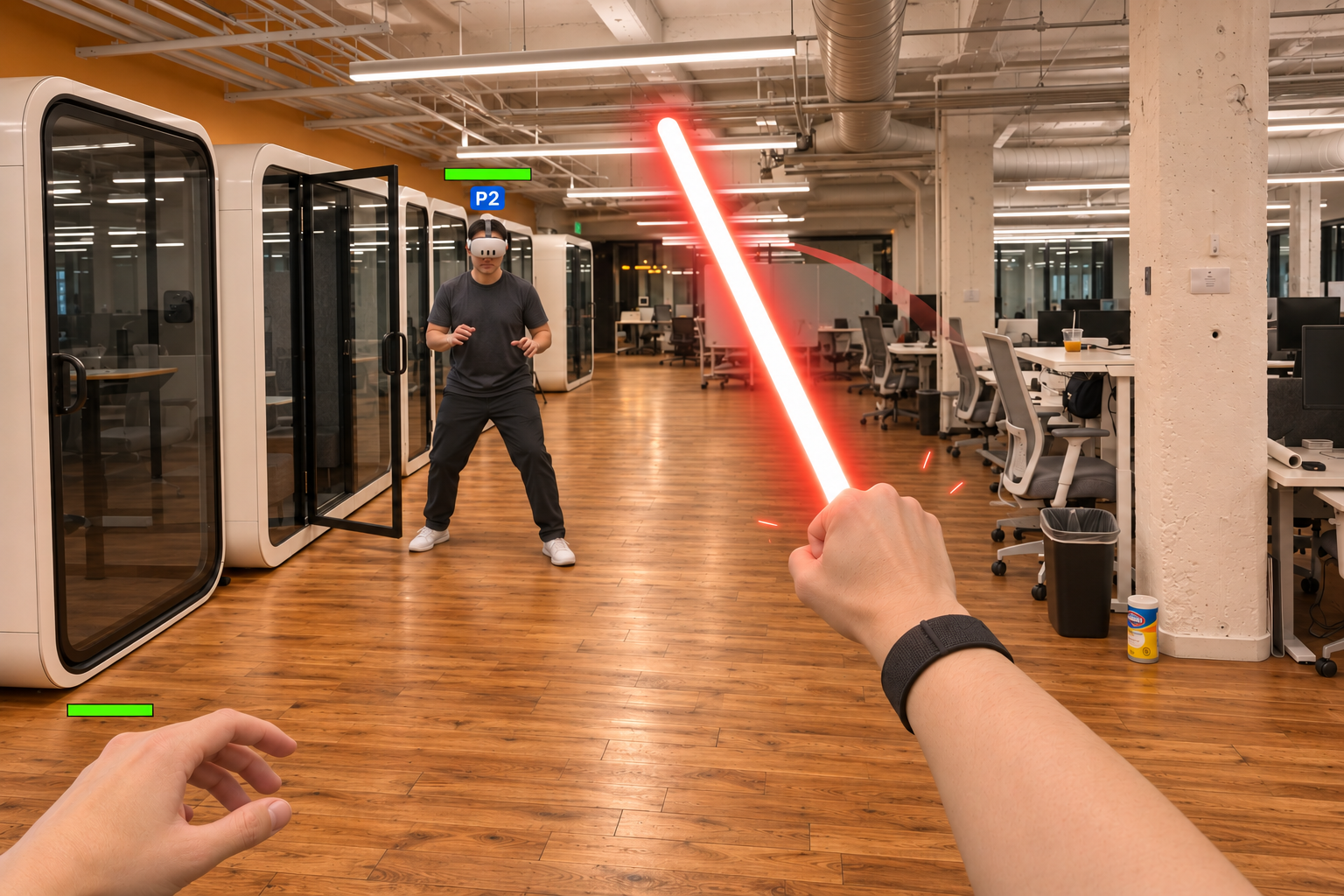
Player POV of Sword
-
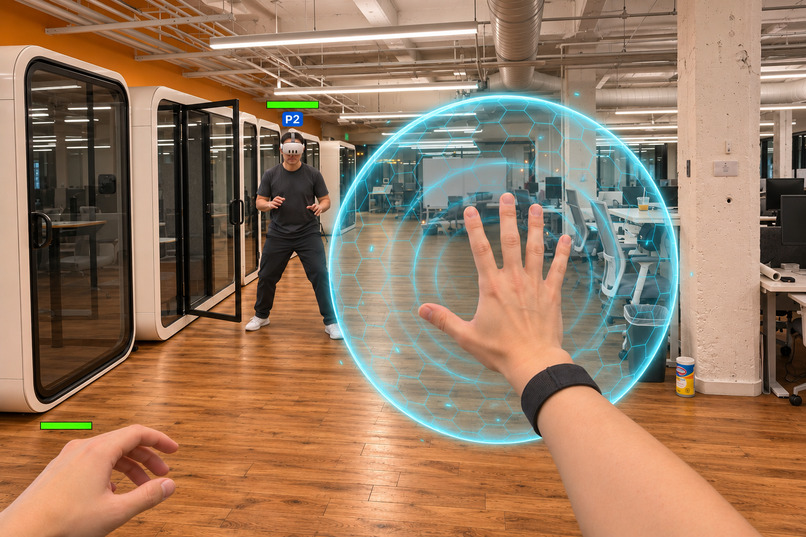
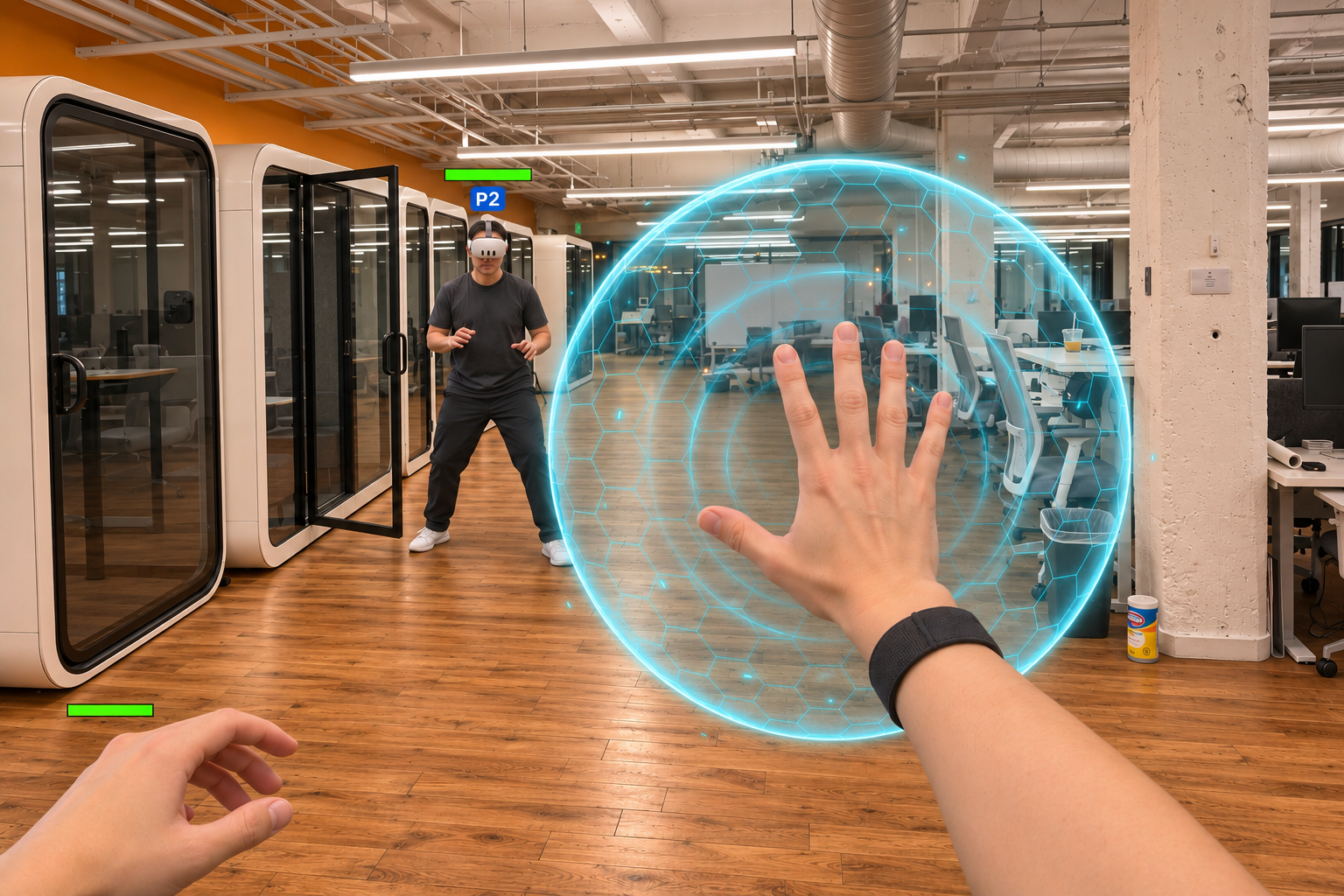
Player POV of Shield
Inspiration
It's 9 p.m., and we're still in the office, sitting across from each other working on our laptops. Growing up, we'd always imagined what it would be like to cast spells, throw fireballs, and have the kinds of battles we'd only seen in movies and video games. And after a long day of work, we've all had those moments where we wish we could escape reality for a bit and step into a world where magic is actually possible.
That's why we created Arcana. We wanted to turn your office into a magical fantasy world where you could finally have the powers you dreamed of as a kid. With just a snap of your fingers, you can summon a fireball, wield a sword with a clenched fist, or raise a shield with an open palm, turning an ordinary room into a wizard arena where you can battle your friends.
What it does
Arcana is a two-player mixed-reality wizard duel using Meta Quest 3 headsets. Players see their real surroundings while casting virtual spells at each other.
Snap your fingers to throw a fireball, make a fist to wield a sword, or open your palm to raise a shield. You can dodge attacks and use real furniture as cover.
Instead of controllers, we use a Meta Neural Band to read electrical signals from your forearm muscles. It recognizes gestures and measures how strongly you contract your muscles. A tighter fist means a stronger attack, while a firmer palm makes your shield stronger. Each player calibrates their muscle strength to keep the game fair.
How we built it
We built Arcana around three main systems: mixed reality, EMG gesture recognition, and multiplayer synchronization.
We used the Meta Quest 3's passthrough to place virtual spells into the real world. For spellcasting, we processed electromyography (EMG) signals from the Meta Neural Band to classify gestures and estimate muscle activation strength.
For multiplayer, we used a QR code to align both headsets to the same coordinate system. An authoritative server manages spell interactions, collisions, and damage so both players experience the same fight.
Challenges we ran into
One challenge was keeping both headsets synchronized. Even small positioning errors could make spells appear in different locations for each player.
Another was interpreting EMG signals consistently. Everyone's muscle signals are different, so we needed calibration to recognize gestures and measure their intensity reliably.
We also had to minimize latency so spells felt responsive to physical movements.
Accomplishments that we're proud of
We're especially proud of going beyond basic gesture recognition. By measuring muscle activation, we made physical effort part of the gameplay rather than treating gestures as simple button presses.
We're also proud of bringing multiplayer combat into a shared physical space instead of relying on virtual avatars.
What we learned
We learned how challenging it is to turn noisy EMG signals into reliable controls, and how important calibration is when designing for different users.
We also gained experience with shared spatial coordinates, real-time networking, and mixed-reality interactions.
What's next for Arcana
We want to add more spells, improve gesture recognition, and introduce new combat mechanics. Eventually, we'd love for anyone to put on a headset, invite a friend, and turn almost any room into a wizard arena.
Built With
- c#
- css3
- html5
- javascript
- kinesis-axo
- meta-neural-band
- meta-quest-3
- meta-xr-sdk
- numpy
- openxr
- python
- pytorch
- scikit-learn
- scipy
- unity
