-
-
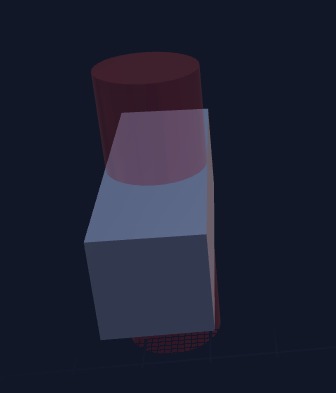
-
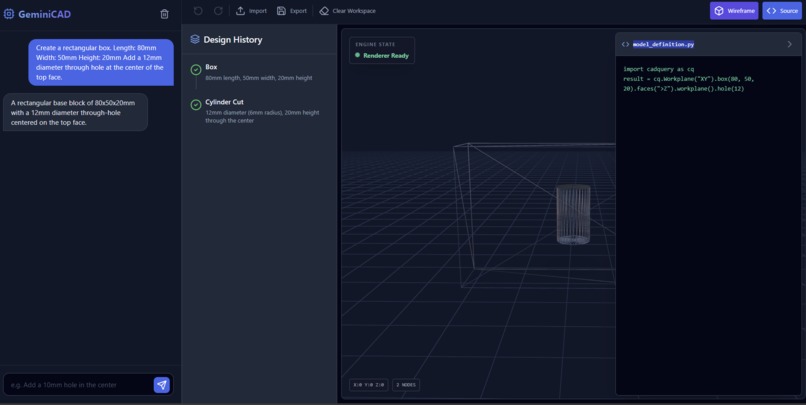
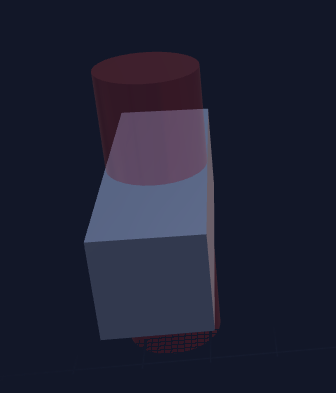
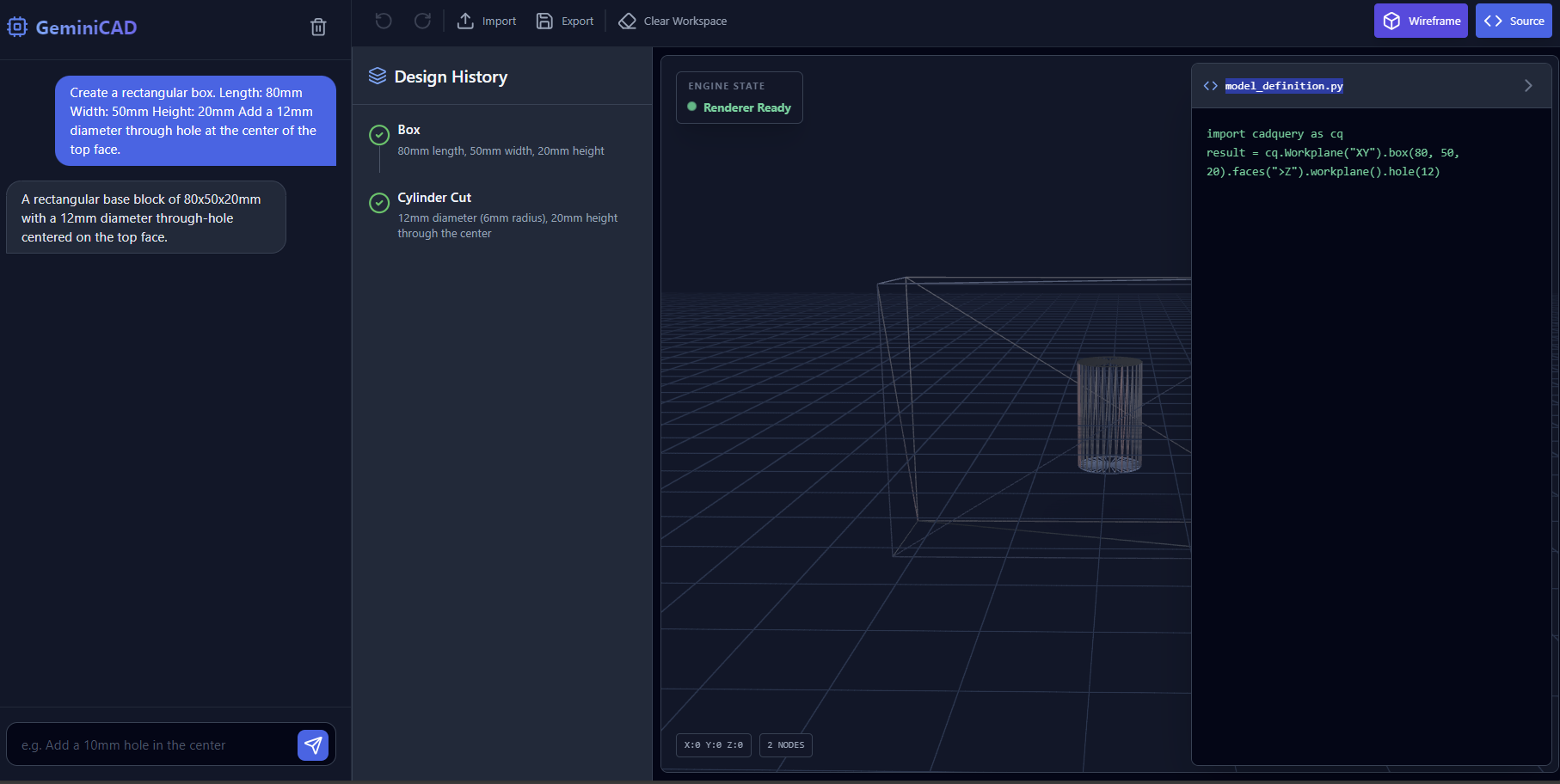
Wireframe/Mesh view with Cadquery code window
-
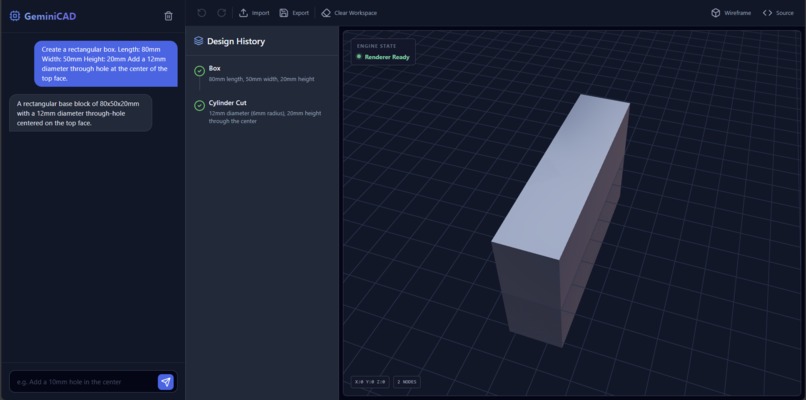
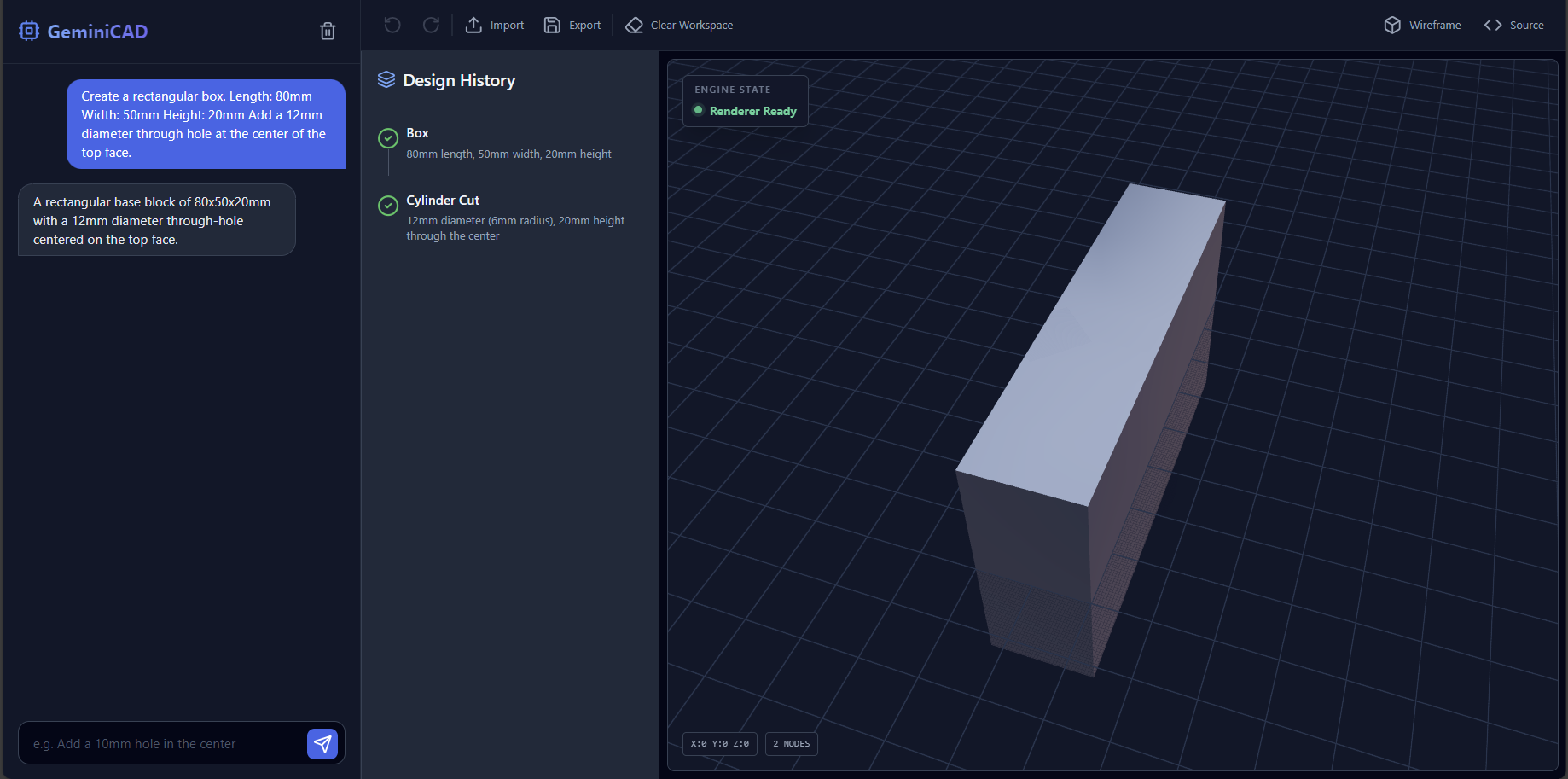
Prompt chat box and workspace view
-
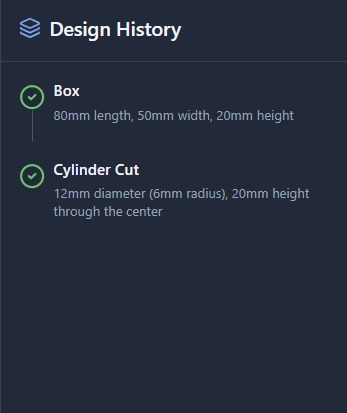
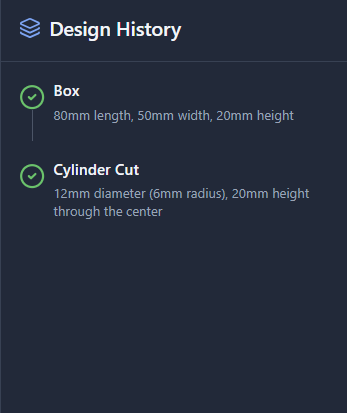
Design History view shows steps of design implementation
Inspiration
As a mechanical engineer with a strong interest in AI models, I was motivated by the gap between how engineers think about designs and how they are forced to build them in CAD software. Mechanical design often starts with simple ideas—dimensions, features, and constraints—but translating those ideas into CAD requires many manual steps. I wanted to use AI to bridge this gap by allowing engineers to express design intent in natural language and quickly convert it into structured, parametric CAD geometry.
What it does
ARC (AI-Reconstructed CAD) converts natural-language design descriptions into structured, CAD-ready geometry. Users can describe a mechanical part in plain text, and ARC interprets the intent, extracts dimensions and features, and reconstructs a parametric design workflow. This enables faster concept generation, easier iteration, and supports early-stage design optimization without requiring deep CAD expertise at every step.
How we built it
ARC was built using Google AI Studio as the core AI platform. The system uses prompt engineering to guide the model into extracting explicit parameters, implicit constraints, and feature logic from user input. The AI outputs a structured representation of the design, which mirrors standard CAD operations such as sketching, extrusion, and feature creation. The workflow is designed to align closely with real mechanical design practices rather than just producing visual models.
Challenges we ran into
One of the biggest challenges was handling ambiguity in human language, as design descriptions often lack precise dimensions or constraints. Balancing the creativity of AI models with the precision required for mechanical design was another major hurdle. Ensuring correct feature ordering and maintaining manufacturable geometry also required careful validation and constraint handling.
Accomplishments that we're proud of
We successfully created a system that translates engineering intent into structured CAD logic rather than just generating shapes. ARC demonstrates that AI can meaningfully assist mechanical design by reducing repetitive work and accelerating iteration. The project also proves that large language models can be guided to reason in a way that aligns with real-world engineering workflows.
What we learned
Through ARC, we learned how to control AI outputs for precision-critical tasks, the importance of constraints in mechanical design, and how engineering context dramatically improves AI usefulness. We also gained deeper insight into prompt engineering, structured data extraction, and the limitations of AI when applied to exact geometric problems.
What's next for ARC (AI Reconstructed CAD)
Future plans for ARC include adding constraint-based optimization, deeper manufacturability checks, integration with simulation tools, and direct export to standard CAD formats. The long-term goal is to evolve ARC into an intelligent design assistant that supports rapid iteration, optimization, and decision-making throughout the mechanical design process.

Log in or sign up for Devpost to join the conversation.