-
-
Title
-
-
-
-
Inspiration
Market gaps won’t wait for you to overthink. They disappear the moment someone decisive acts.
We were inspired by that urgency. By the idea that the world is not perfectly aligned and that even in highly sophisticated systems, inconsistencies exist. And where there is inconsistency, there is opportunity.
This project was born from ambition: the drive to compete at the edge of speed, precision, and discipline. We were not interested in predicting the future, but rather in identifying structural inefficiencies and acting before they disappear. In a system where milliseconds matter, hesitation is loss. We built Arbittron because we believe opportunity favors those prepared to seize it.
What it does
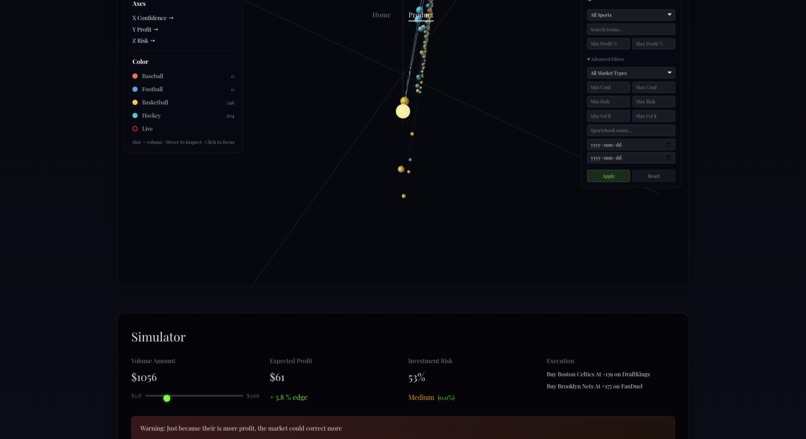
Arbittron is more than a sports betting arbitrage calculator. It's a real-time opportunity engine designed to detect and quantify pricing inequalities across sportsbooks. By taking live odds from platforms such as DraftKings and FanDuel, Arbittron instantly identifies arbitrage windows and calculates the precise stake allocation required on each side to mathematically lock in profit, regardless of the outcome.
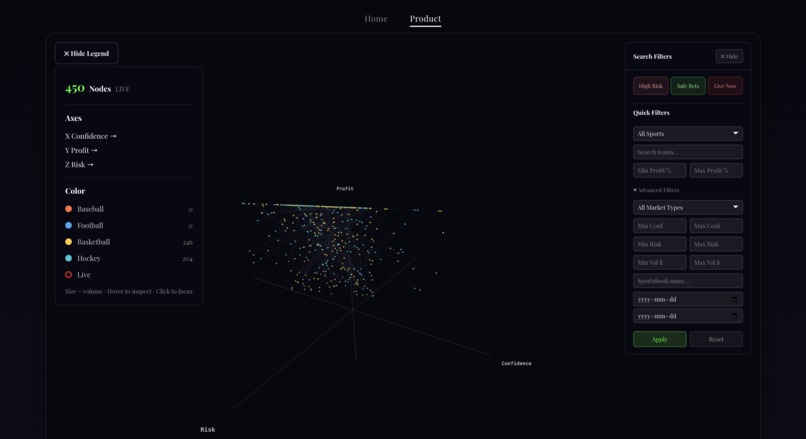
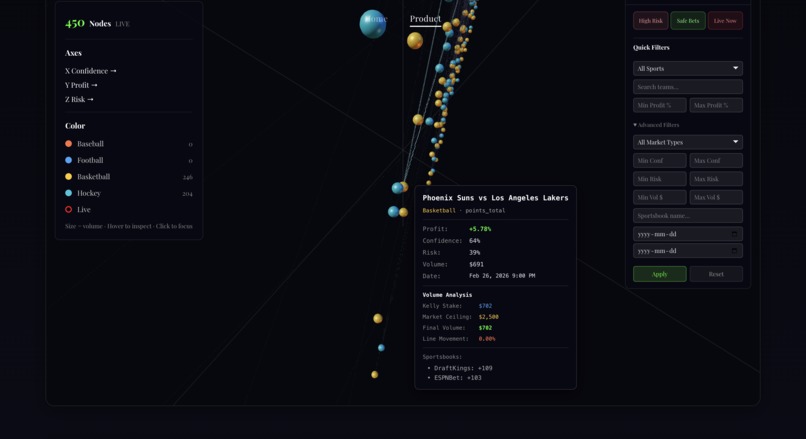
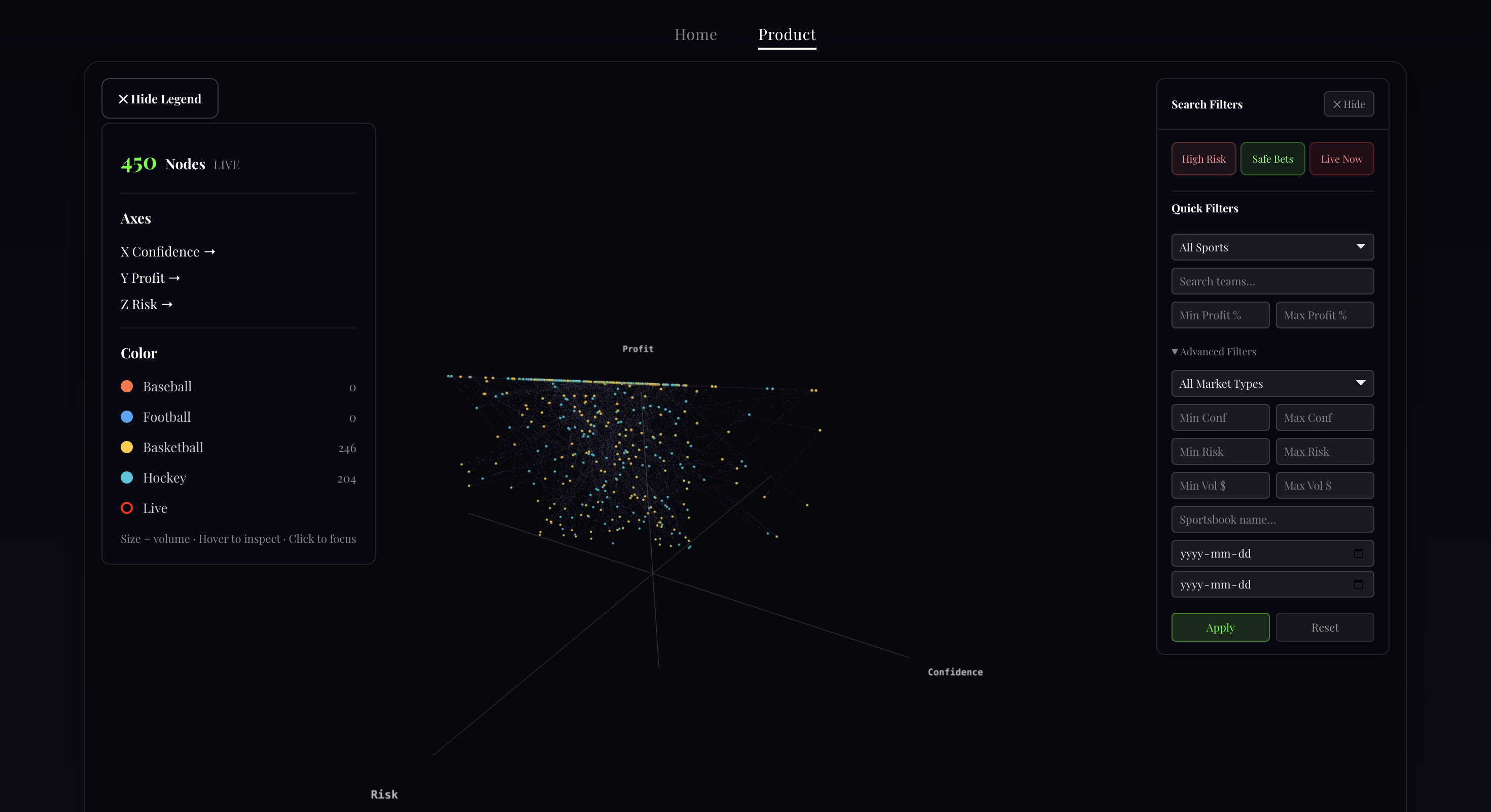
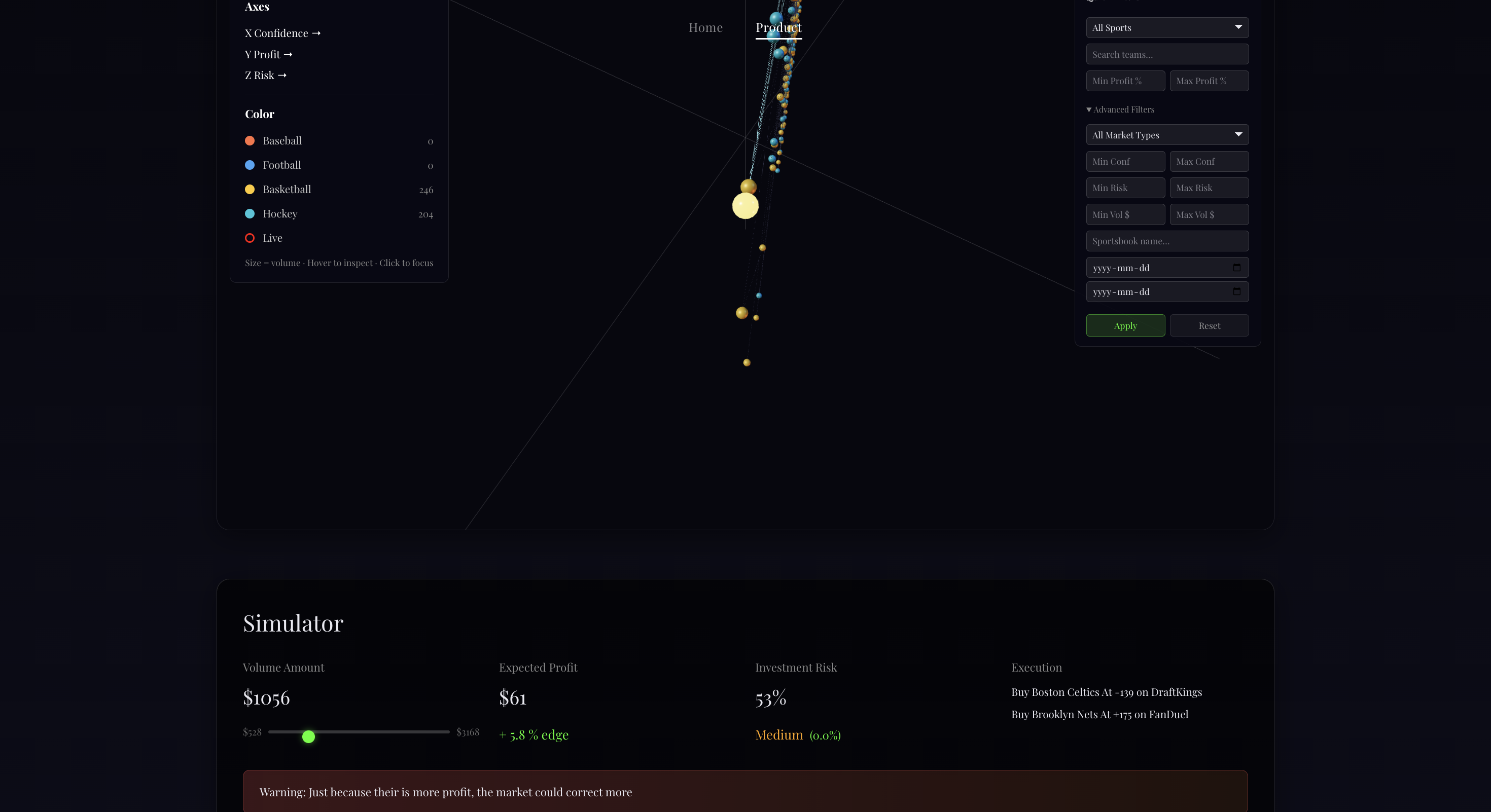
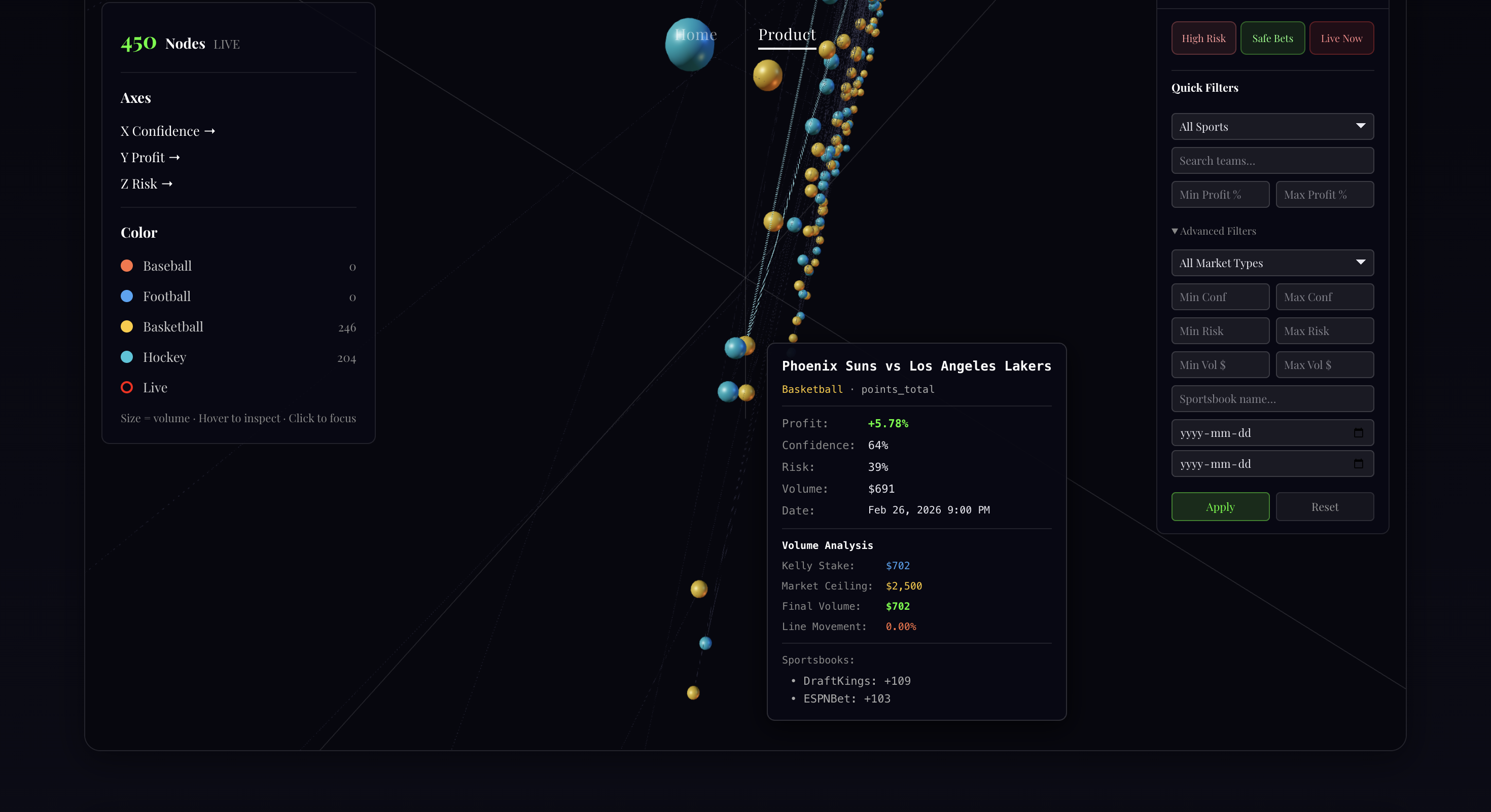
Beyond calculation, Arbittron transforms data into insight. Its interactive 3D scatter plot visualizes opportunities across dimensions such as projected return, implied probability spread, and market volume. Users can filter by profit targets, risk tolerance, and liquidity, enabling them to quickly surface opportunities aligned with their strategy and execute with confidence.
How we built it 🏗️
Frontend: Built using React, Vite for dev server, Three.js and Figma for design, Tailwind for styling
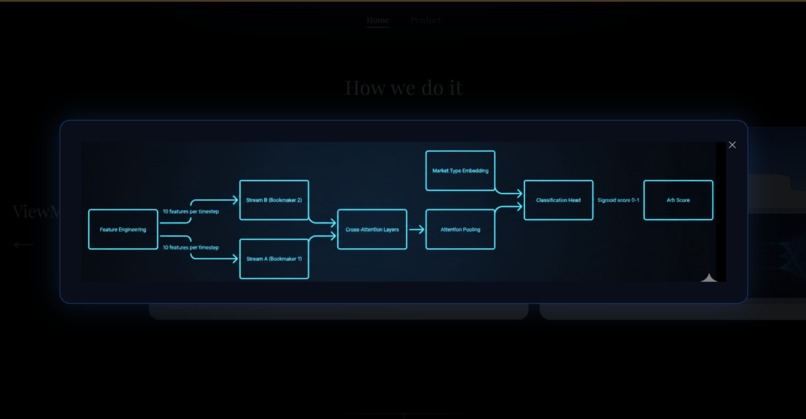
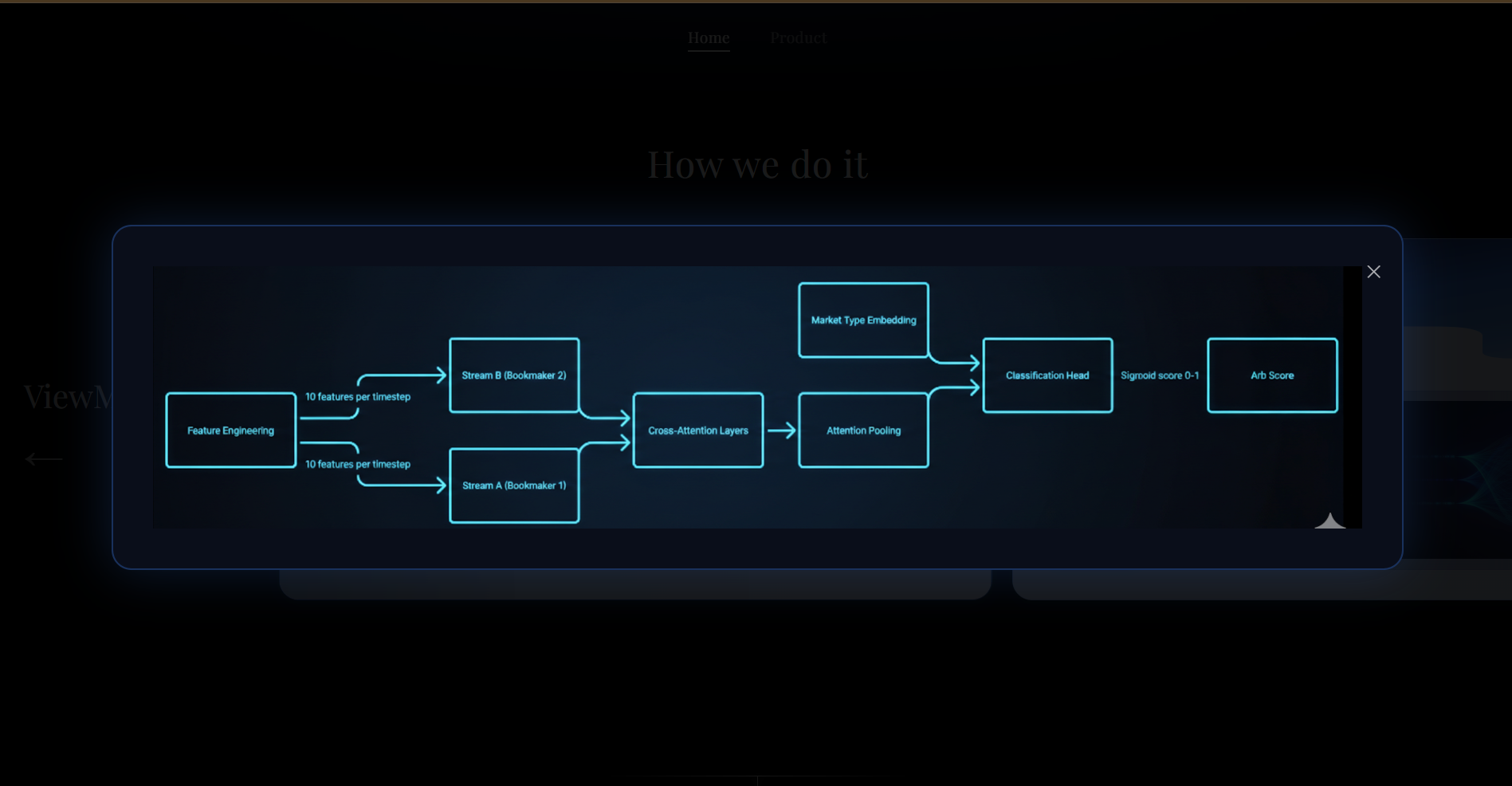
Backend: Python, FastAPI, Uvicorn, Pytorch, and Spark
API: Sportsbook API, which contains historical odds data for MLB, NFL, NHL, NBA games with minute level resolution.

Challenges we ran into
Our main challenge was deploying the machine learning model to a serve endpoint in Databricks' free tier. Since these models, especially deep learning models, are much larger in size than your typical web application or file, we had difficulties in ensuring that the model could be deployed on low-cost infrastructure while maintaining low inference latency that is paramount to our use case.
Accomplishments that we're proud of 💪
Defining a clear API contract between the frontend and backend components early in our development of Arbittron, that made integration a relatively easy process.
What we learned
Throughout this project, we learned how to effectively bring our ideas to life using Figma make, and deepened our understanding of training AI models. Over 36 hours, we've become knowledgeable in probability markets, optimization modeling, systems integration and anomaly detection.
What's next for Arbittron ✨
Our goal is to broaden our data aggregation to much more than just sportsbooks. We have our scopes set on arbitrage opportunities through Kalshi and Polymarket, with focus on U.S. politics for our next step. Why the U.S. election market? Historical data indicates the U.S. election market drew the most participation. Higher market volume means consistent execution.


Log in or sign up for Devpost to join the conversation.