Inspiration
DataHub already gives AI agents context — lineage, ownership, quality, glossary. What it doesn’t do is own the decision. Schema and dbt PRs still ship on gut feel and Slack threads; agents still query sensitive tables because they can. After an incident, the “why we blocked this” rarely becomes durable metadata, so the same failure repeats. We wanted a system that doesn’t just answer questions about the graph — it judges change and agent action, then writes that judgment back so the organization accumulates institutional memory, not tribal lore.
What it does
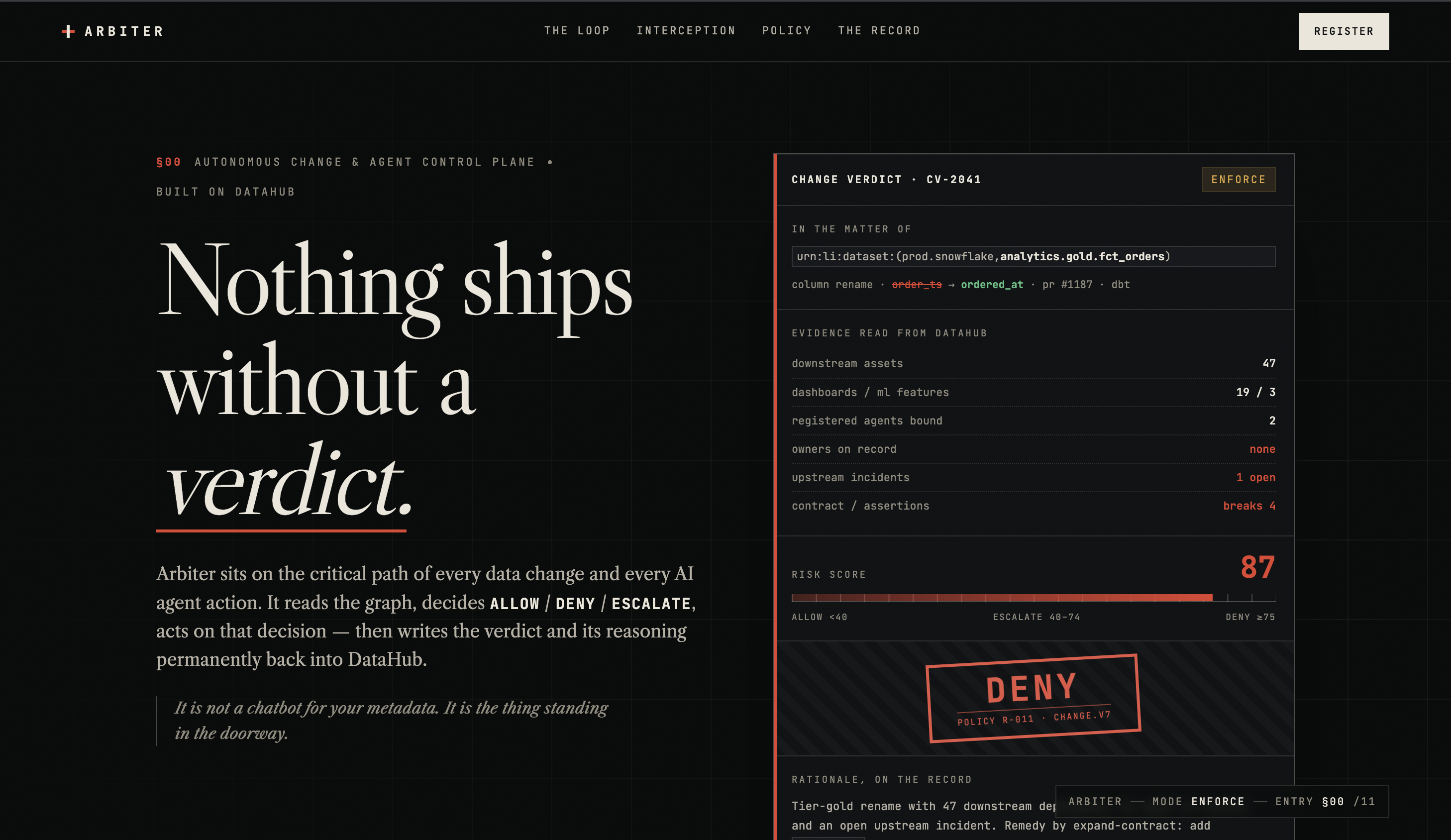
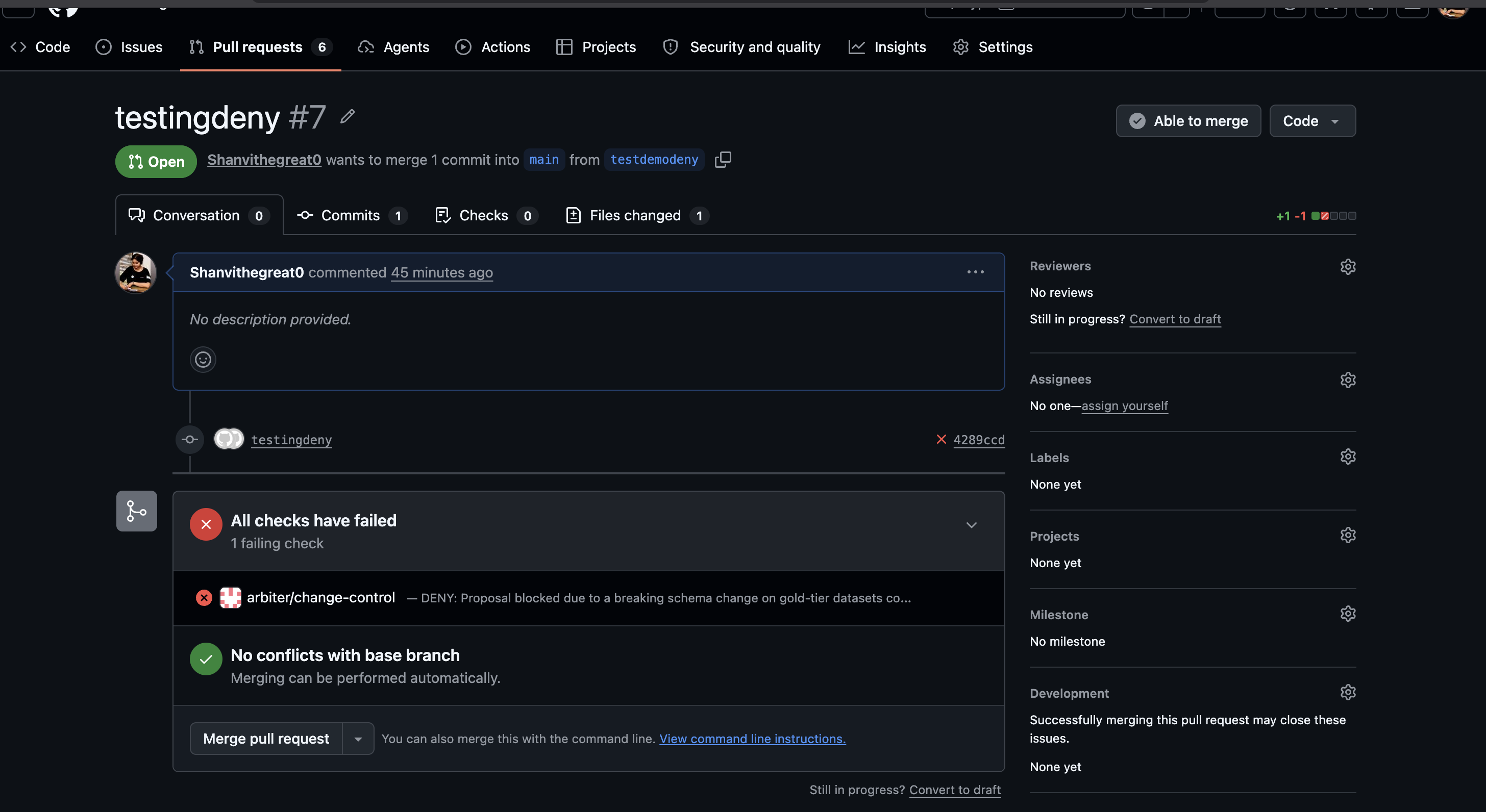
Arbiter is an autonomous change & agent control plane for DataHub. It sits on the critical path of data changes (PRs, schema/dbt diffs) and AI agent tool calls, then runs a closed loop:
Signal → Read DataHub → Decide (ALLOW / DENY / ESCALATE) → Act → Write-back → Verify
- Scores blast radius from real lineage, ownership, tags, and policy
- Blocks unsafe merges or quarantines rogue agent actions
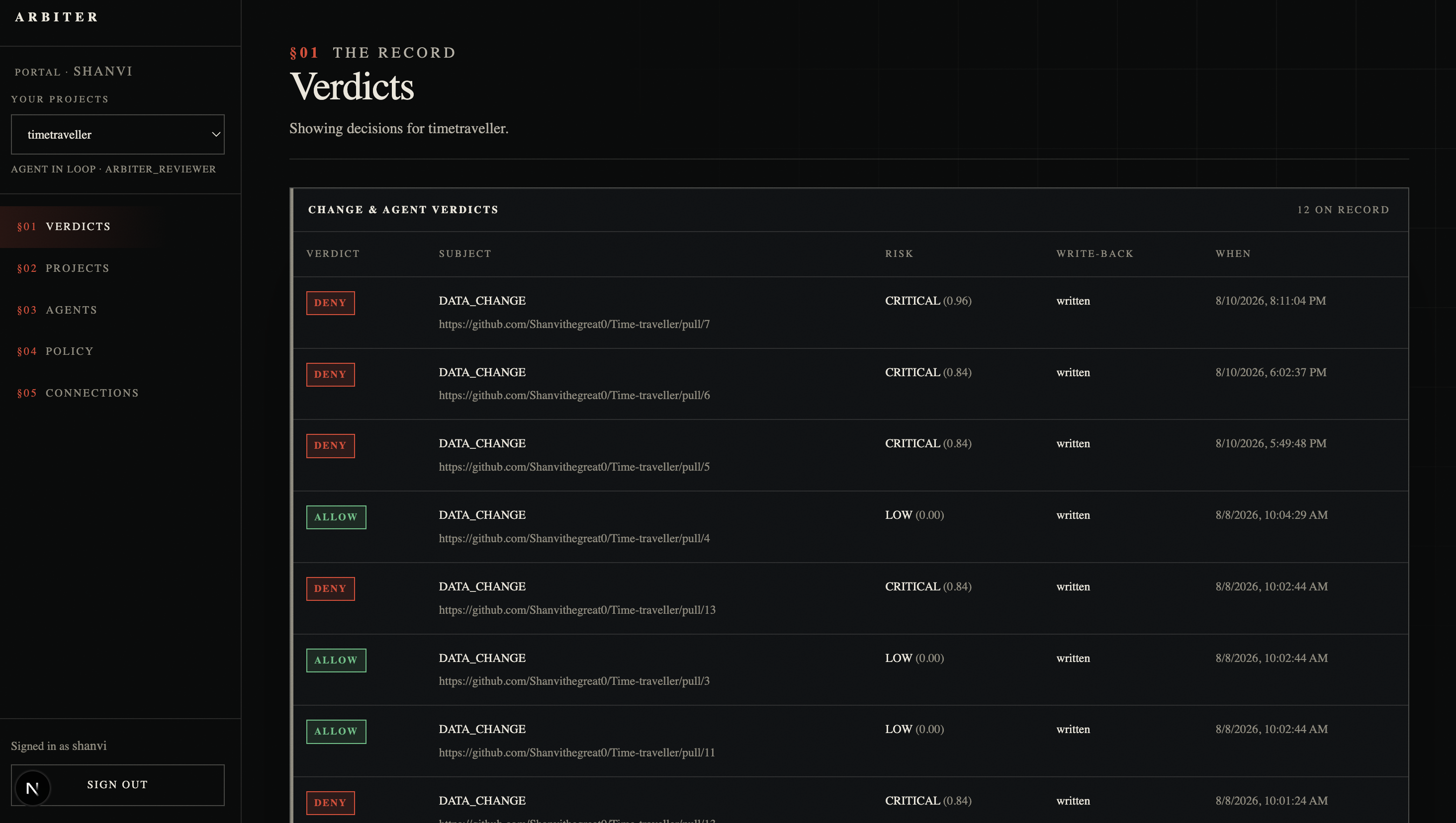
- Writes every verdict and rationale back to DataHub so the next human or agent inherits why, not just what
- Runs in
enforce,shadow, ordry_runmodes with a production console, GitHub webhook checks, and an agent gateway SDK
How we built it
- FastAPI arbitration service (
/v1/arbitrate/change,/v1/arbitrate/agent) with JWT/API-key auth - DataHub client package for live GMS reads/writes, plus offline fixtures for reliable demos
- Versioned YAML PolicyPack for hard rules — the LLM explains and proposes remediation; it never owns the gate alone
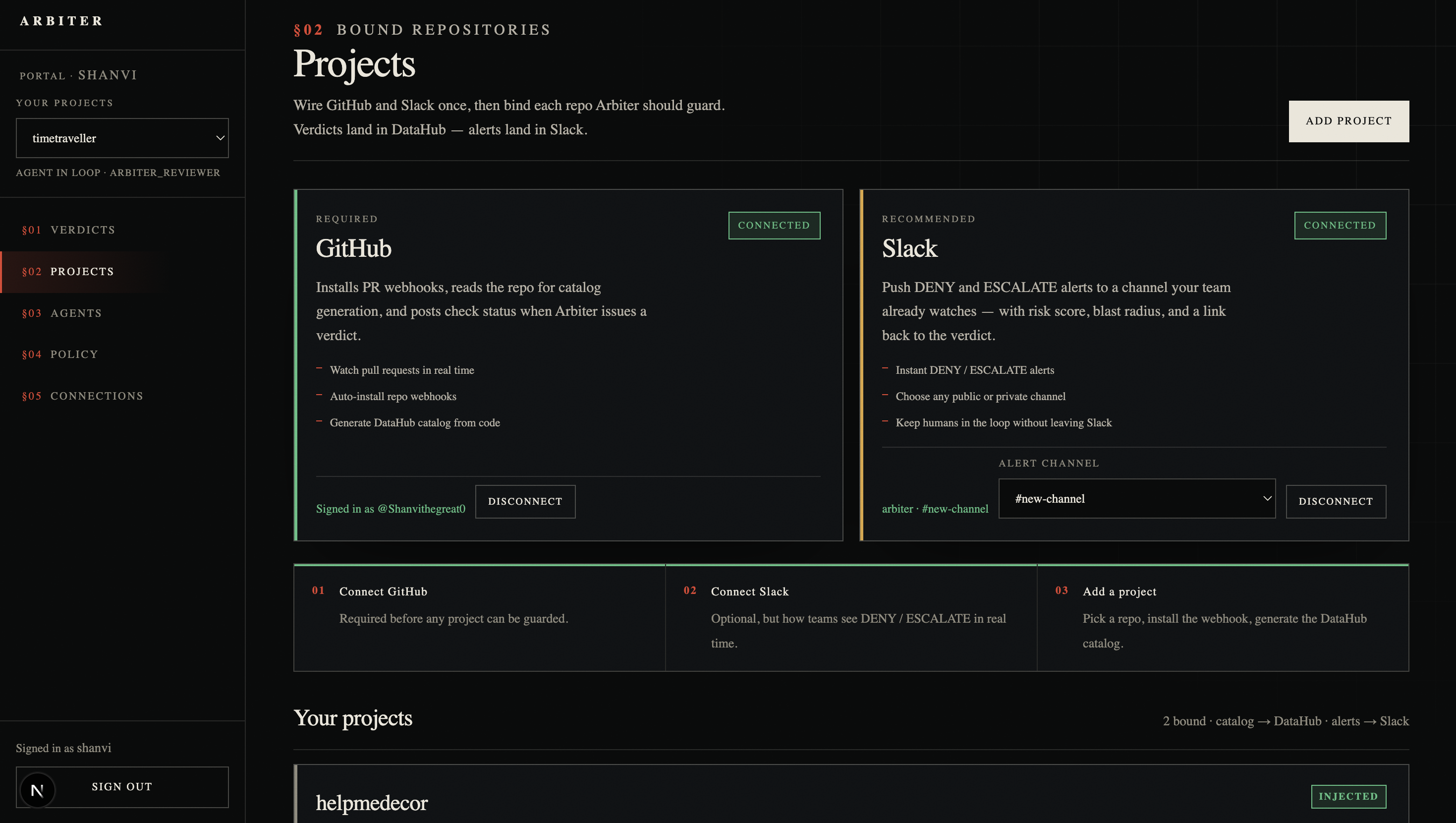
- Next.js console for verdict timelines, demo launcher, agents, policies, and API keys
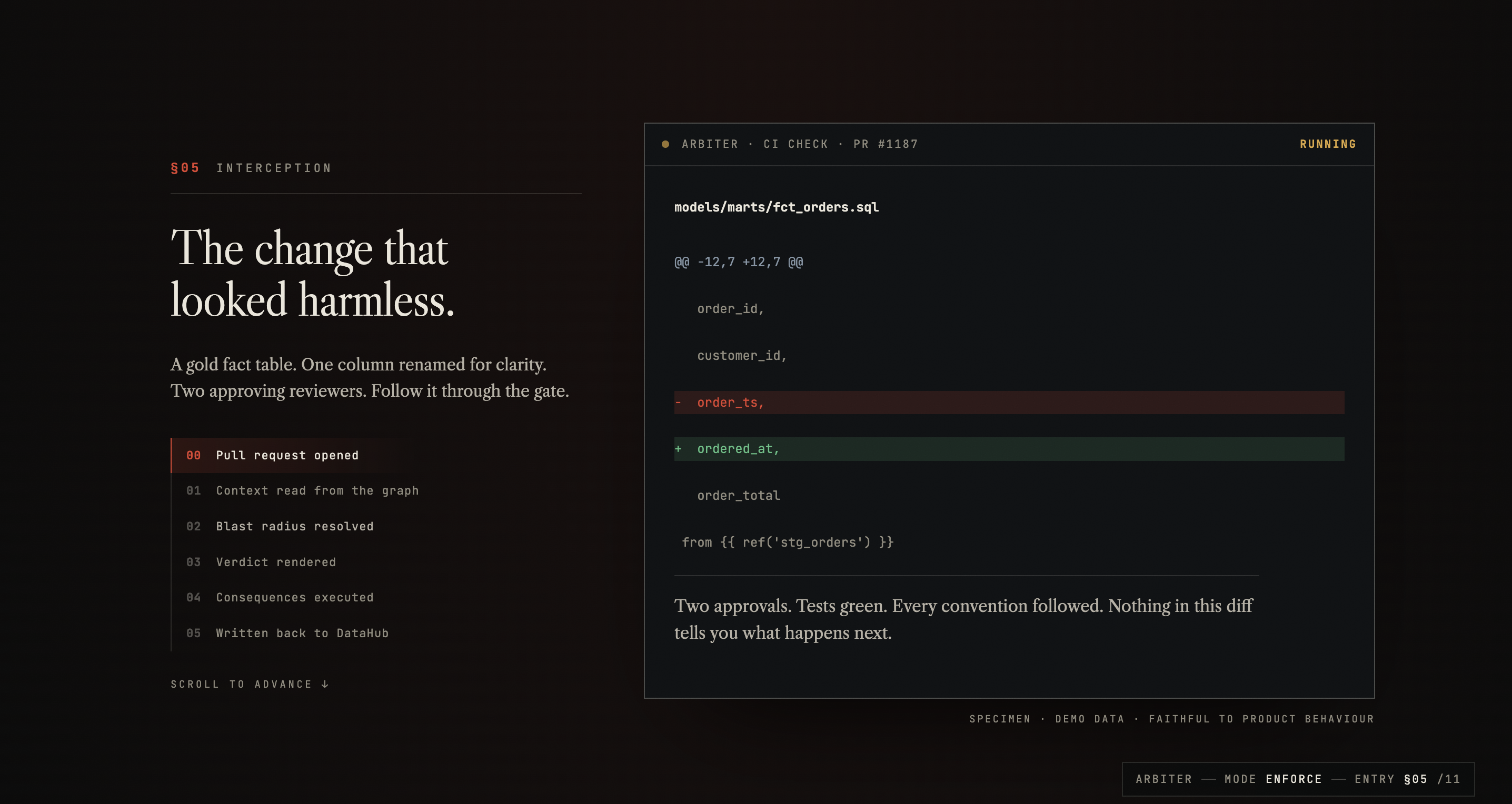
- GitHub webhook + Check Runs for PR arbitration;
arbiter_gatewaySDK to gate agent tools pre-call - Optional Anthropic/OpenAI enrichment for grounded rationales; Prometheus metrics and structured logs for ops
Challenges we ran into
- Making demos work with and without a full DataHub quickstart — fixtures vs live GMS without lying about the product
- Mapping messy PR/asset names to stable DataHub URNs so lineage and owners actually resolve
- Keeping risk scoring transparent and policy-driven instead of a black-box LLM “feels risky”
- Designing write-back so every run leaves the graph different — verdicts as first-class metadata, not chat logs
- Balancing autonomy with trust: high blast radius must escalate to humans, not auto-merge everything
Accomplishments that we're proud of
- A working end-to-end loop: breaking PR and rogue-agent demos that produce real allow/deny/escalate verdicts
- Deep DataHub use on both sides — read for evidence, write for institutional memory
- Agents as first-class subjects, not just pipelines and dashboards
- A shippable console + API + CLI + gateway SDK, not a slideware agent
- Policy-first design that judges can audit: hits, risk factors, and rationale grounded in URNs
What we learned
Context without authority still fails. Impact analysis is evidence; enterprises need a verdict. Write-back is the product bar — if the graph looks the same after a run, you built a chatbot. Hard policy + grounded LLM explanation beats either alone. And treating AI agents like production consumers (registry, purpose, attestations) is how “context for agents” becomes safe self-serve in practice.
What's next for Arbiter
- Richer DataHub aspects for ChangeVerdict / attestations and prior-verdict memory that compounds risk over time
- Deeper CI integrations and post-deploy verify loops tied to freshness, contracts, and incidents
- Stronger MCP / Agent Context Kit / Skills packaging so any agent can gate through Arbiter by default
- Broader change types (Airflow/Dagster DAGs, warehouse schema events) and ML lineage gates for model→deploy risk
- Shadow-mode rollouts in real data platforms so teams earn trust before flipping to enforce


Log in or sign up for Devpost to join the conversation.