At every hackathon, we noticed the same problem: engagement tools feel disconnected from the actual event. Check-ins live in one place, submissions live in another, and rewards are usually just a spreadsheet or a bot with no real context. We wanted to build something that made the hackathon itself feel alive, where participation, competition, and submissions all live inside one playful system.
Arbit is that system. Hackers earn HackPoints by participating in the event, use those points in prediction markets about what’s happening around them, and redeem rewards from an in-app store. Submissions are recorded on Solana devnet for permanent proof of authorship, and every wallet becomes a live hacker identity with a visible history of participation and progress.
We built Arbit, a full-stack hackathon engagement platform where Phantom Wallet is the identity layer. Instead of usernames and passwords, hackers authenticate with their Solana wallet and earn HackPoints through real participation: attending workshops, joining activities, helping other teams, winning trivia, and submitting projects.
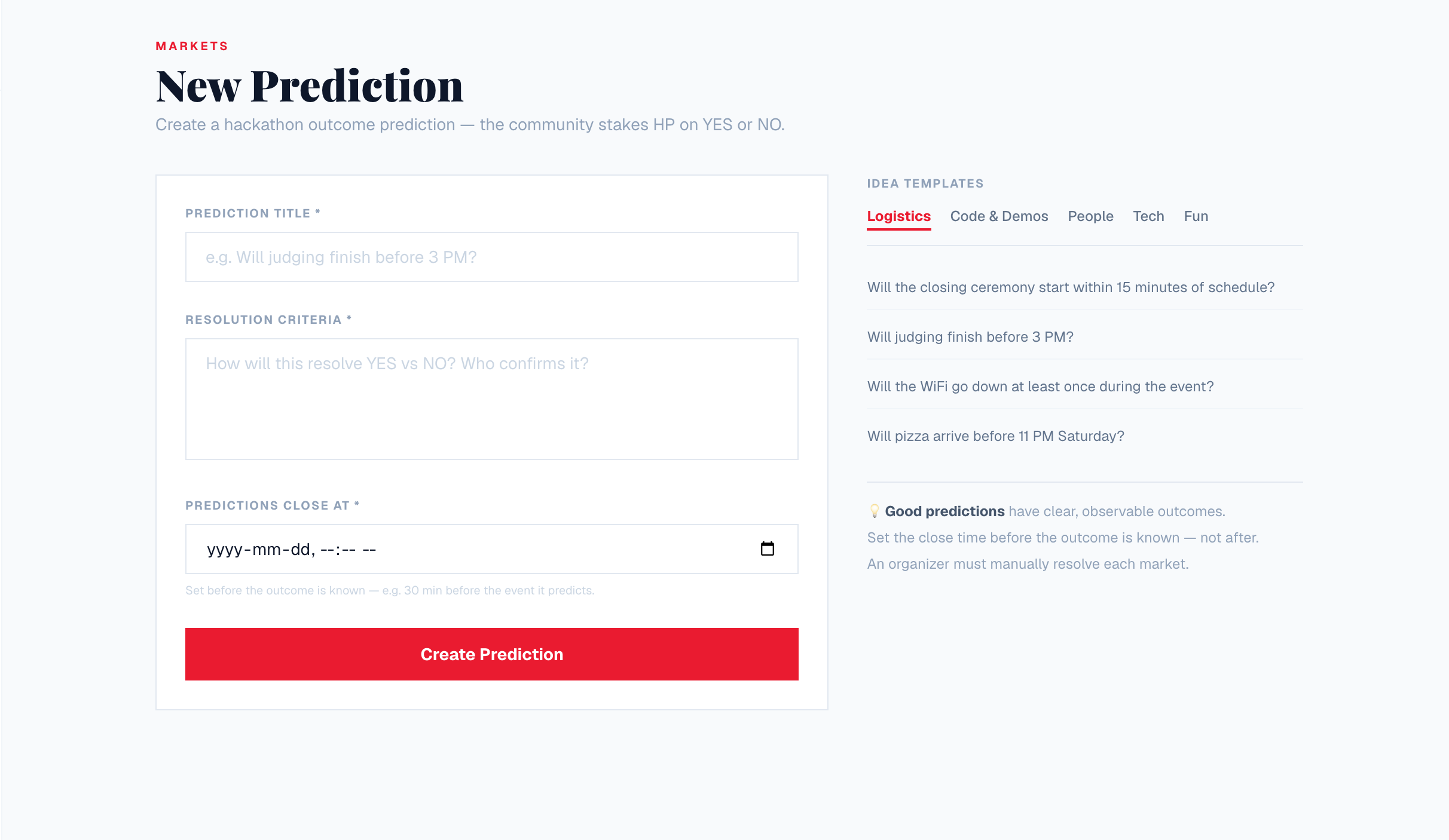
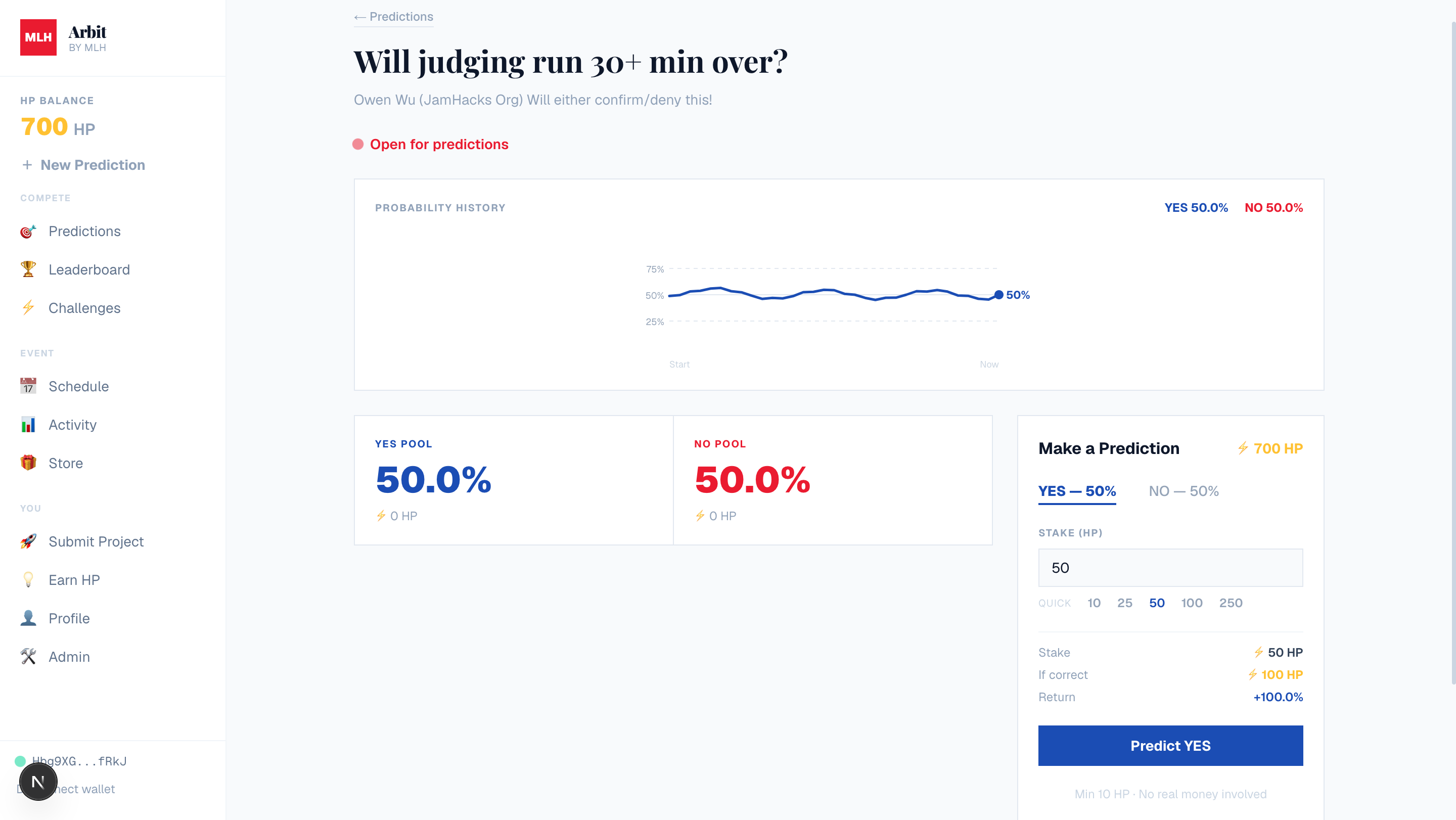
Arbit also includes hackathon prediction markets. Users can stake HackPoints on event outcomes like whether judging will run late, which team submits first, or which workshop draws the biggest crowd. Correct predictions pay out from the losing pool, adding strategy and excitement to the event.
When hackers submit a project, Arbit records the submission on Solana devnet through a Memo transaction, creating immutable proof that the project came from that wallet at that time. The platform also includes a merch store, live leaderboard, public hacker profiles, and organizer tools for awarding points and resolving events.
Arbit is built with Next.js App Router, TypeScript, TailwindCSS, MongoDB Atlas, Mongoose, Phantom Wallet, and Solana devnet. Wallet signatures authenticate users, MongoDB stores event and point state, and Solana Memo transactions provide public proof of project submission.
One of the hardest parts was designing a system that felt instant to hackers but still had verifiable on-chain proof. We had to balance fast UX with Solana confirmation times, so project submissions write to MongoDB immediately while the on-chain Memo transaction confirms in the background.
Another challenge was authentication. We wanted Phantom to feel like a true identity layer, so we built a signature-based login flow instead of using passwords or email accounts. That gave us a cleaner security model and made wallet ownership the source of truth.
We also had to protect HackPoint balances from race conditions when multiple predictions happened quickly. Using atomic database updates ensured balances never went negative, even under concurrent requests.
We learned that hackathons are better when the platform itself becomes part of the game. A wallet-based identity system feels more natural than accounts, the Memo program is a simple but powerful way to create public proof, and prediction mechanics become much more compelling when they are tied to real event moments instead of random betting.
Most importantly, we learned that building for a live event forces better product decisions. Every feature had to answer one question: does this make the hackathon more engaging right now?
Built With
- solana

Log in or sign up for Devpost to join the conversation.