-
-
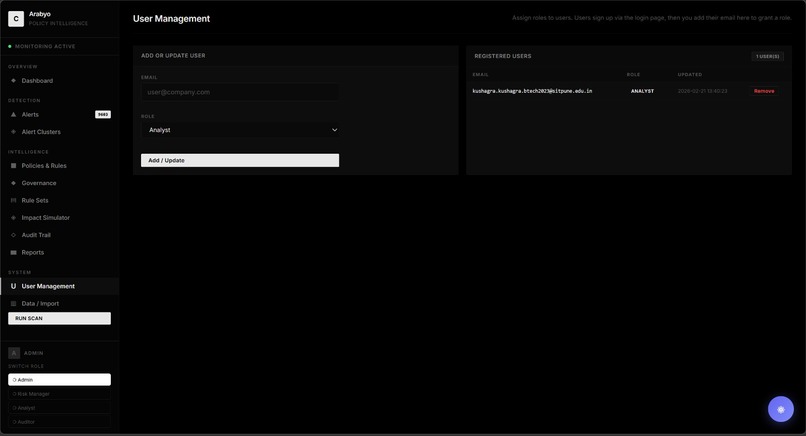
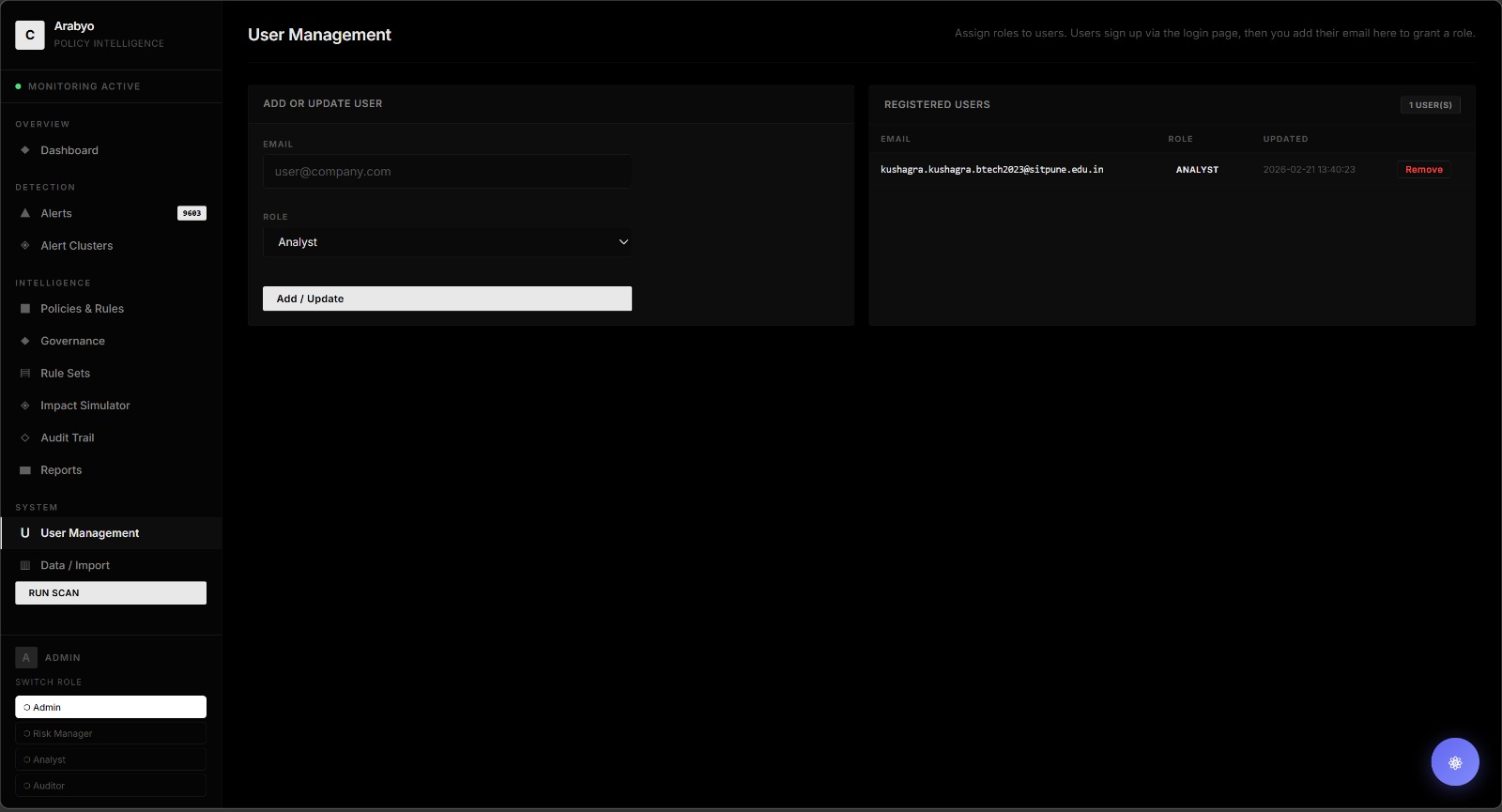
User Privilages
-
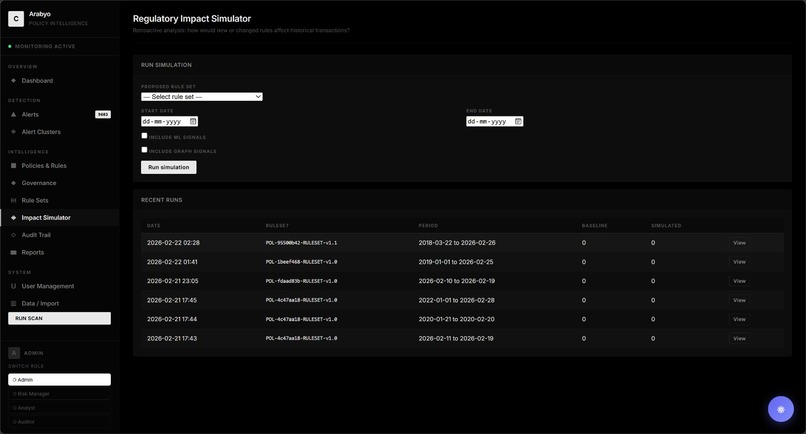
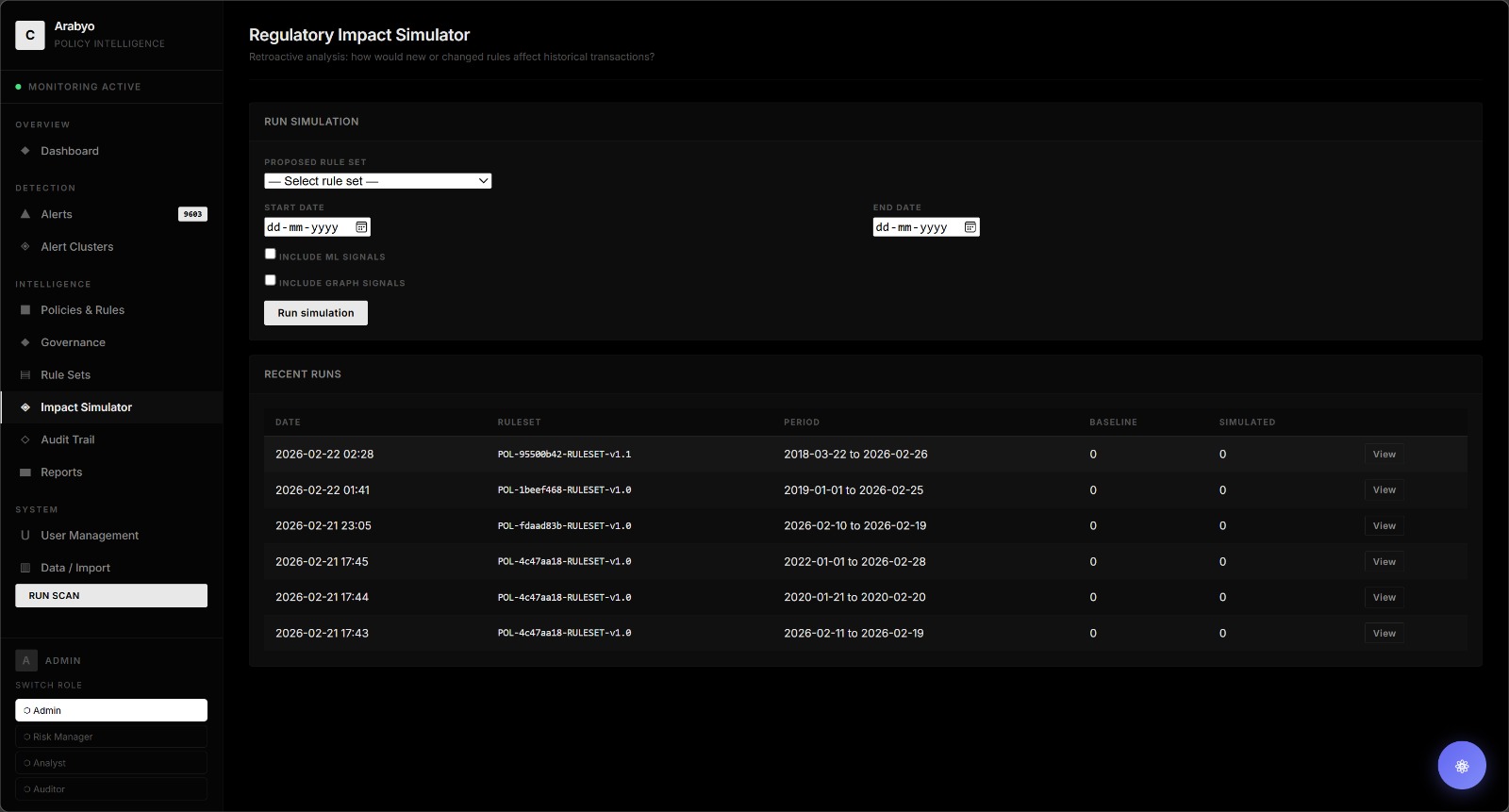
Impact Simulator
-
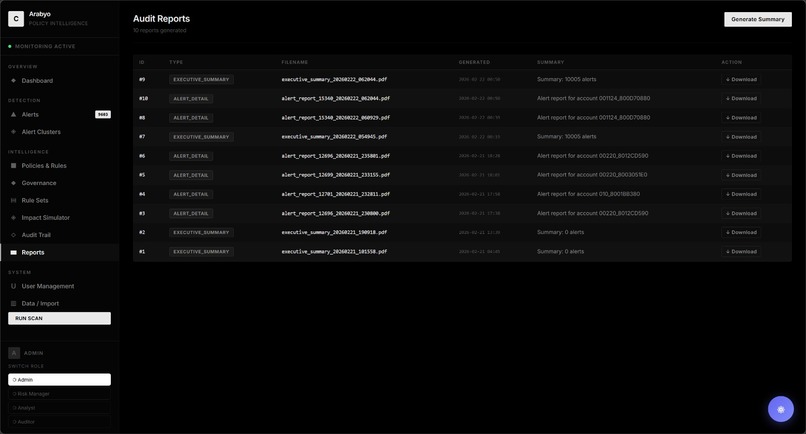
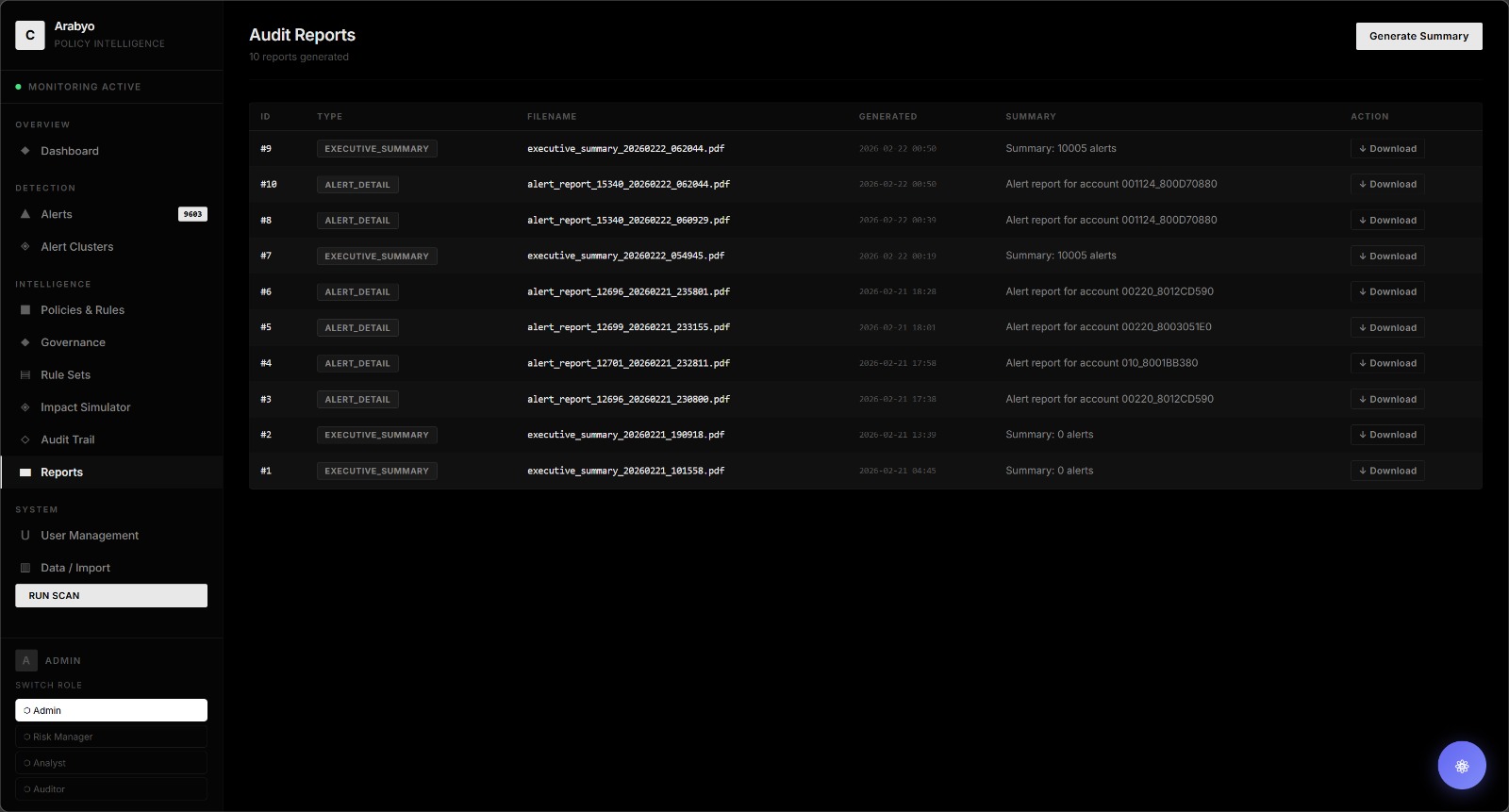
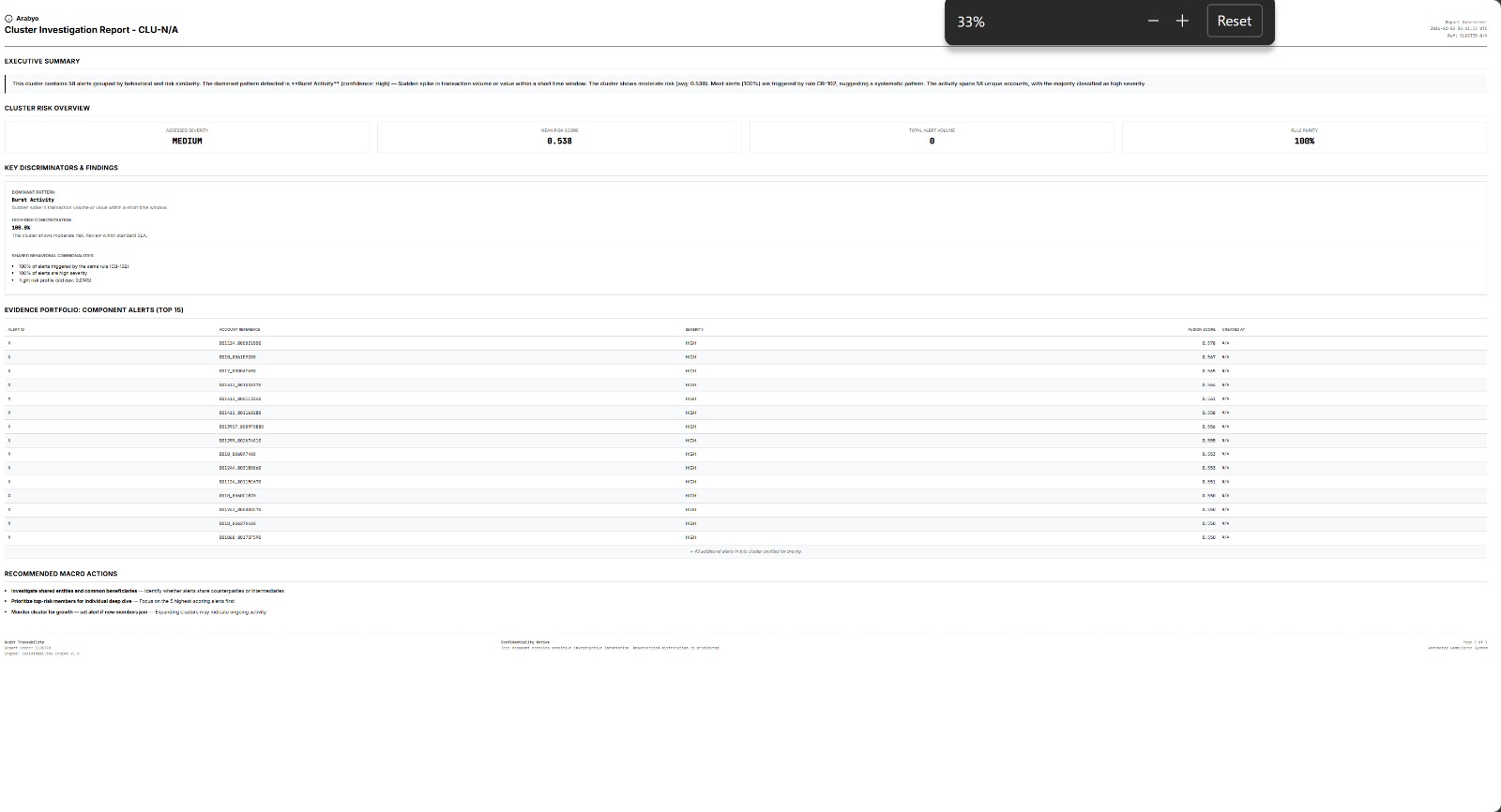
Audit Reports
-
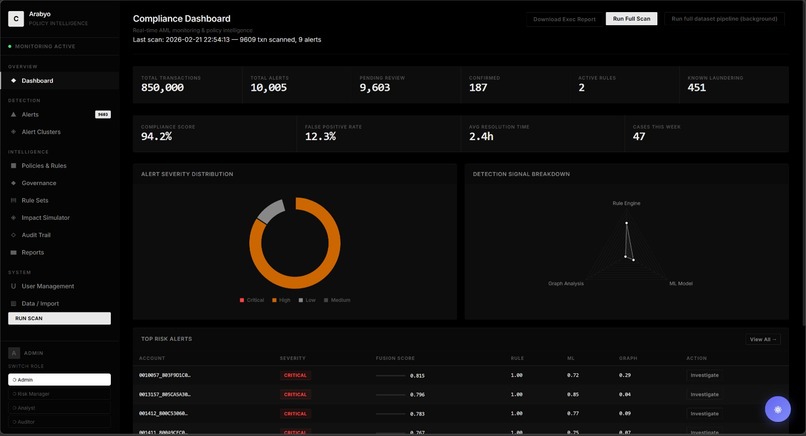
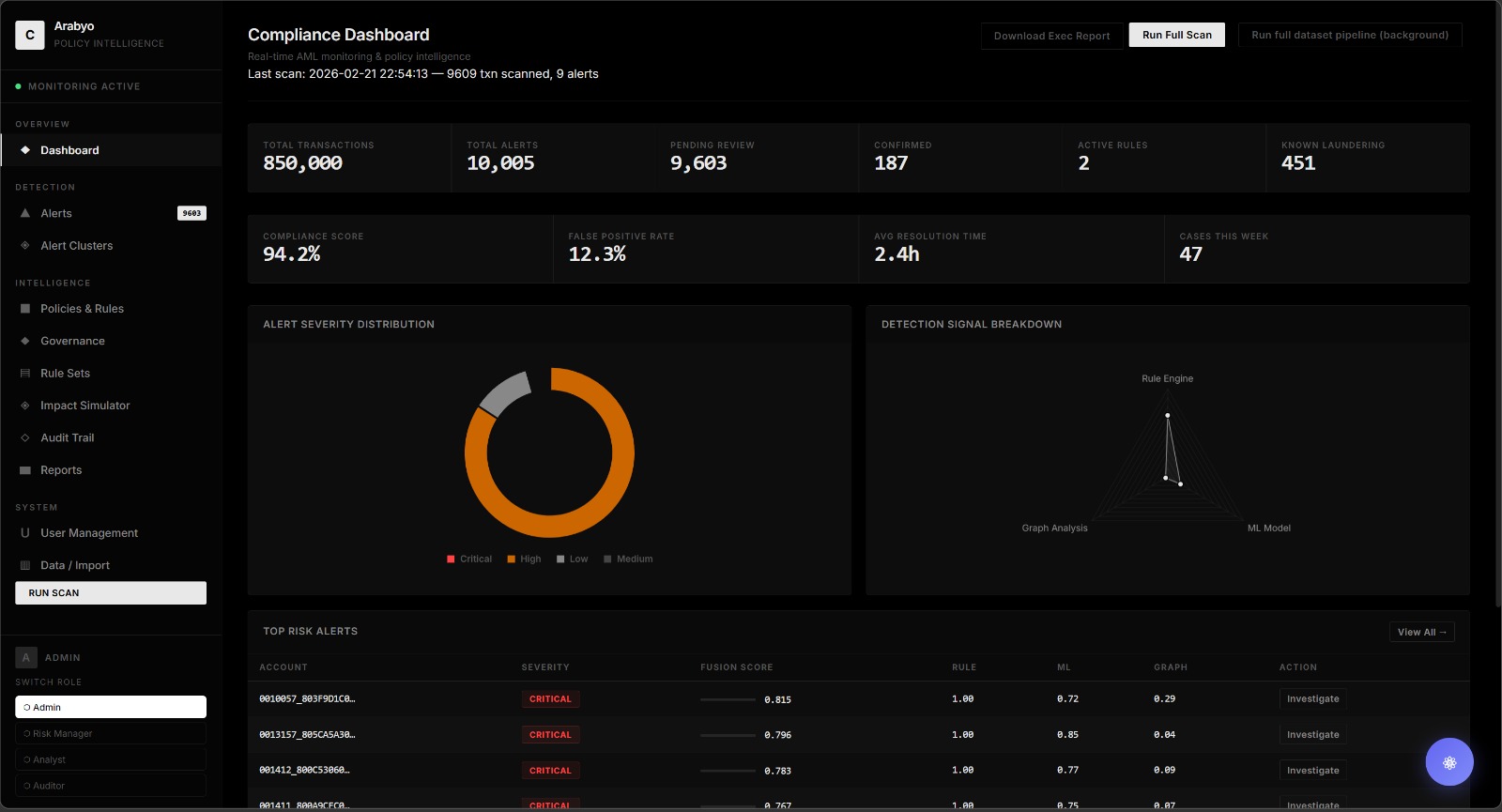
Dashboard
-
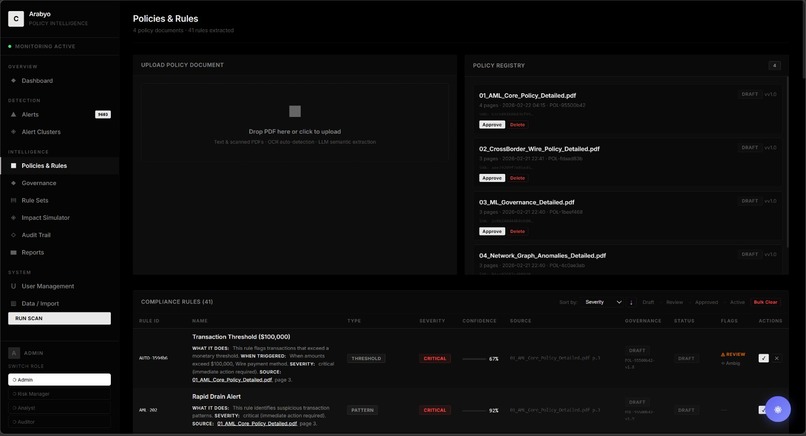
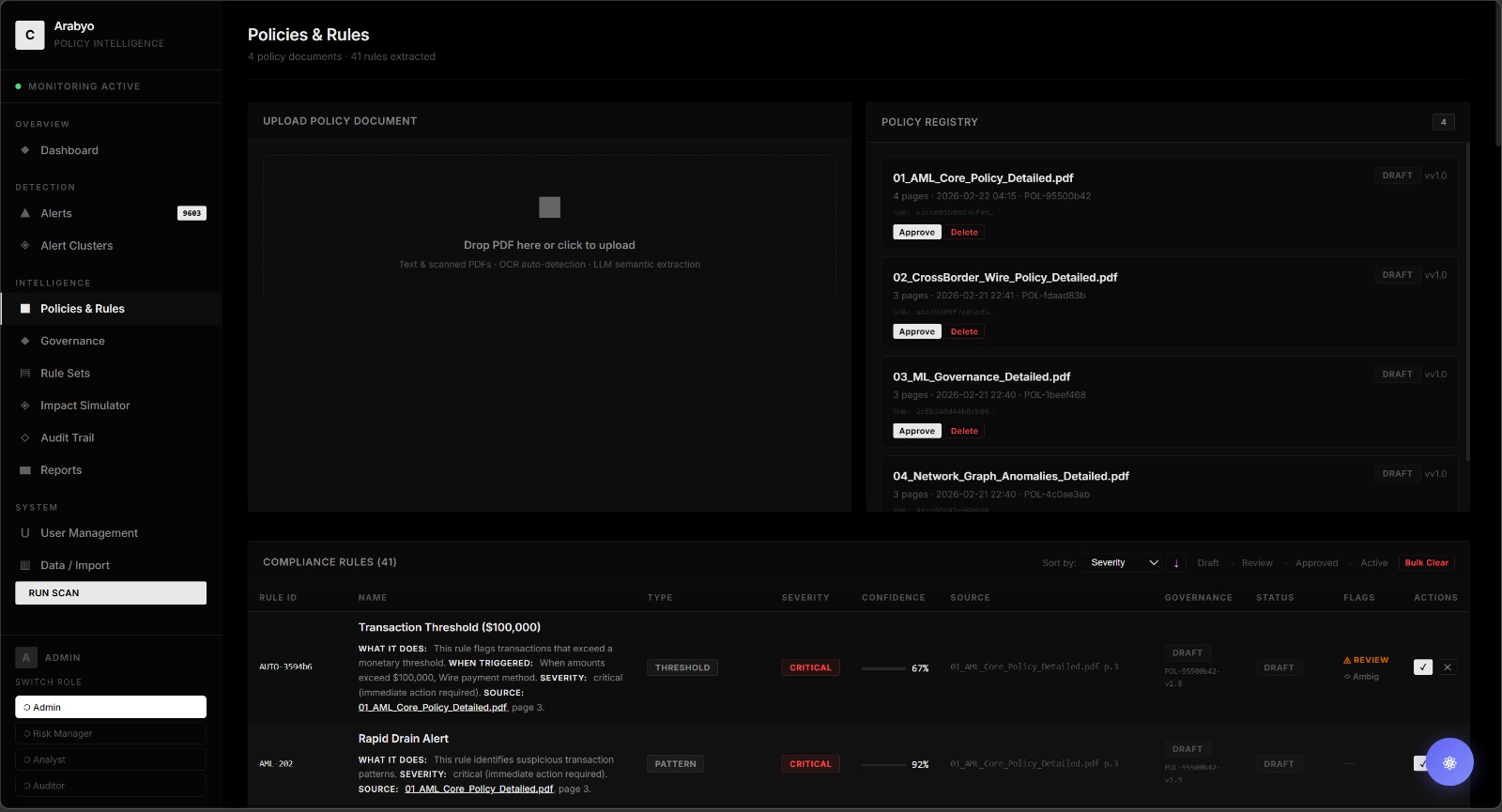
Policy & Rule Extarction
-
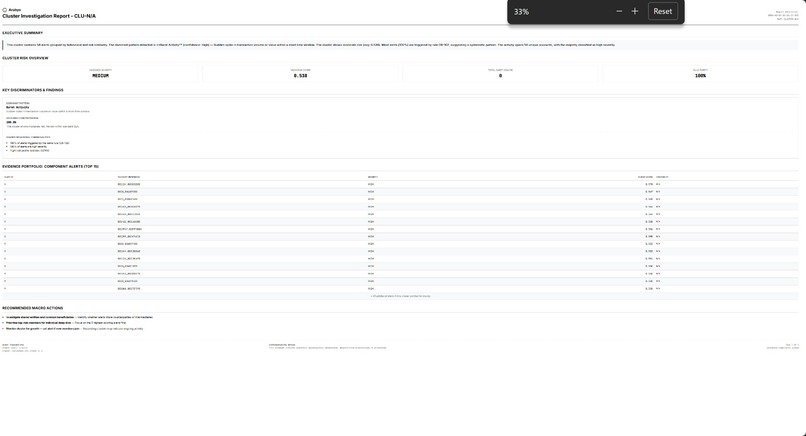
Report Generation 2
-
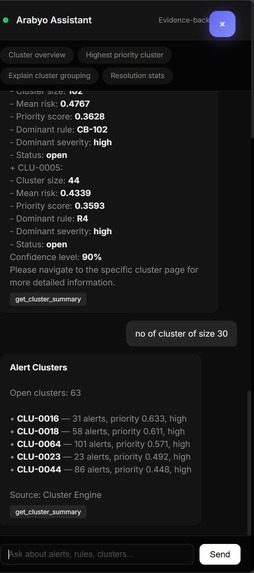
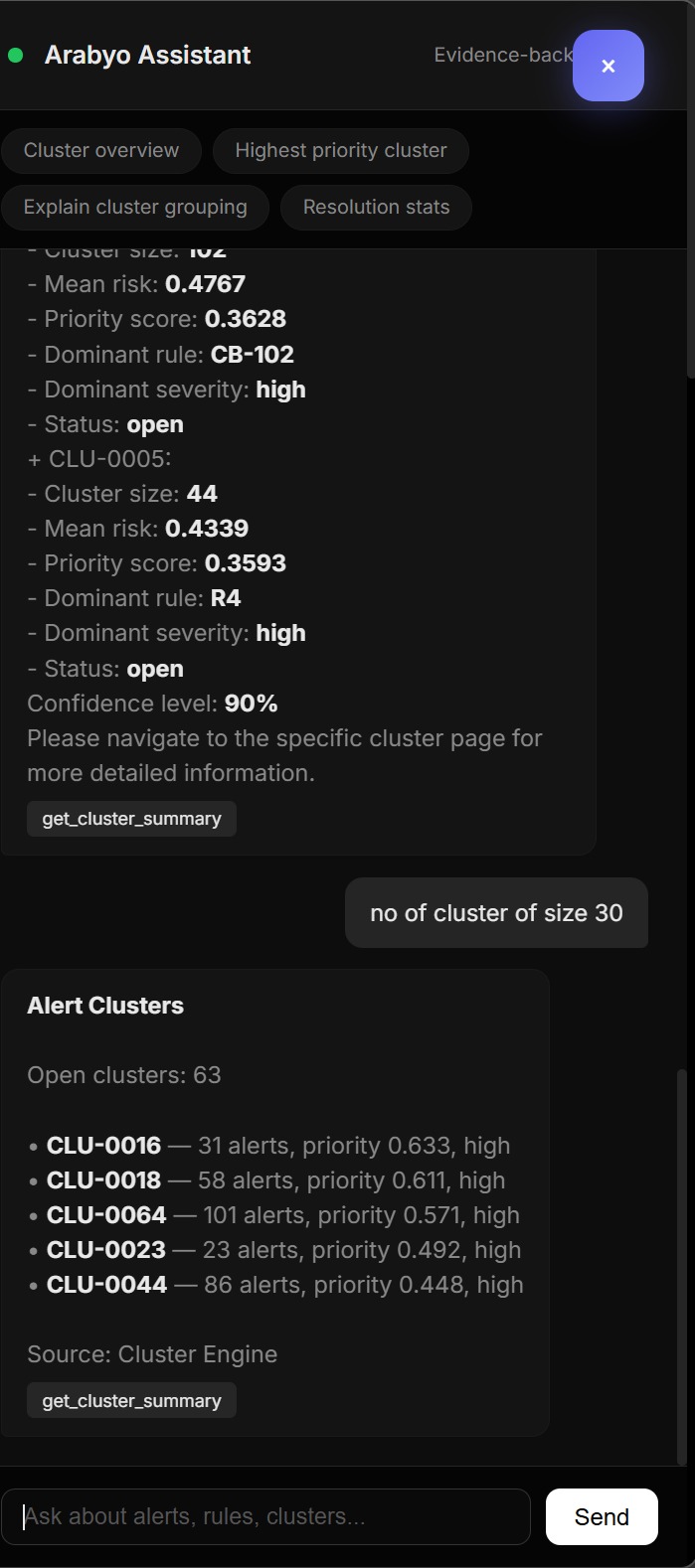
NLP Assistant with integrated to Database
-
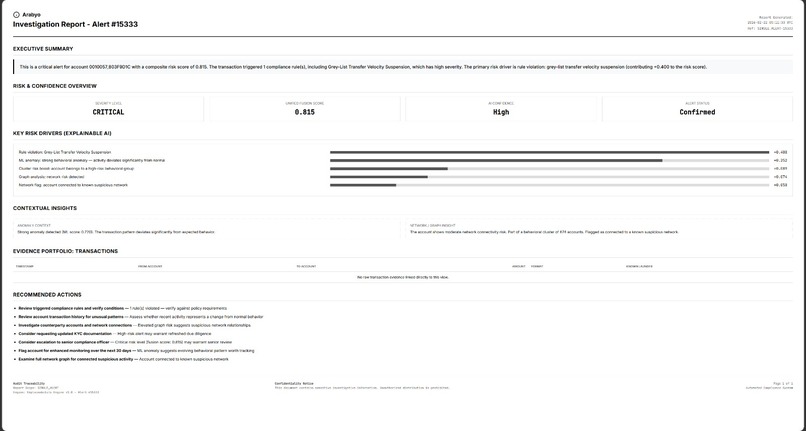
Report Generation
-
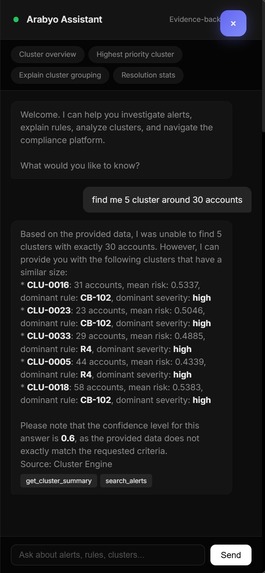
NLP Assistant
-
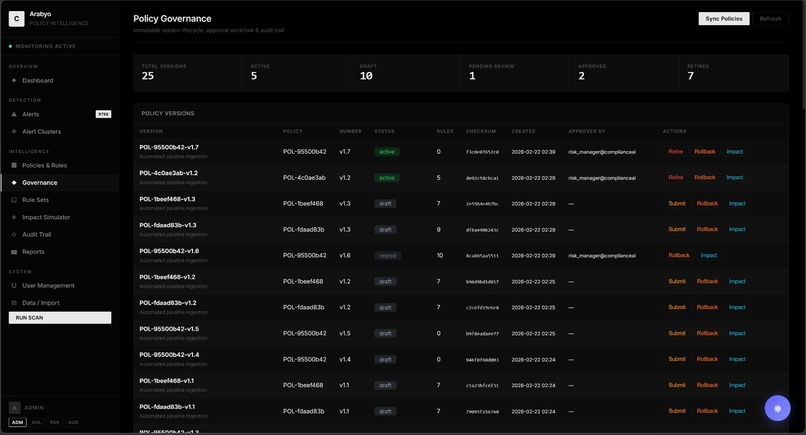
Policy Handling
-
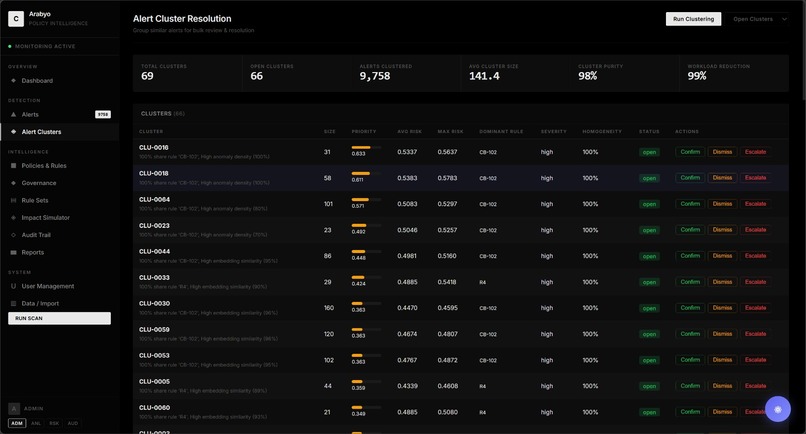
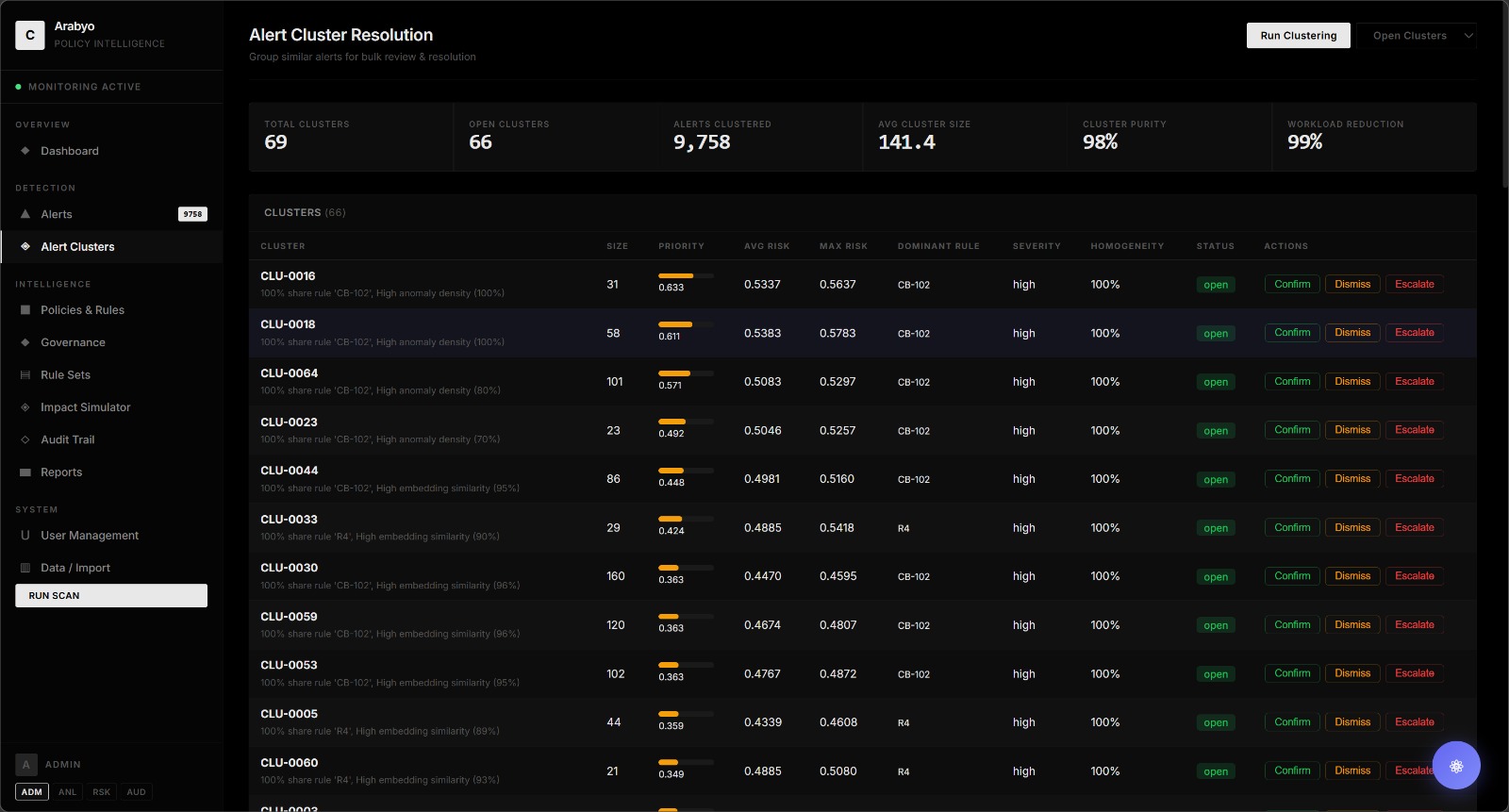
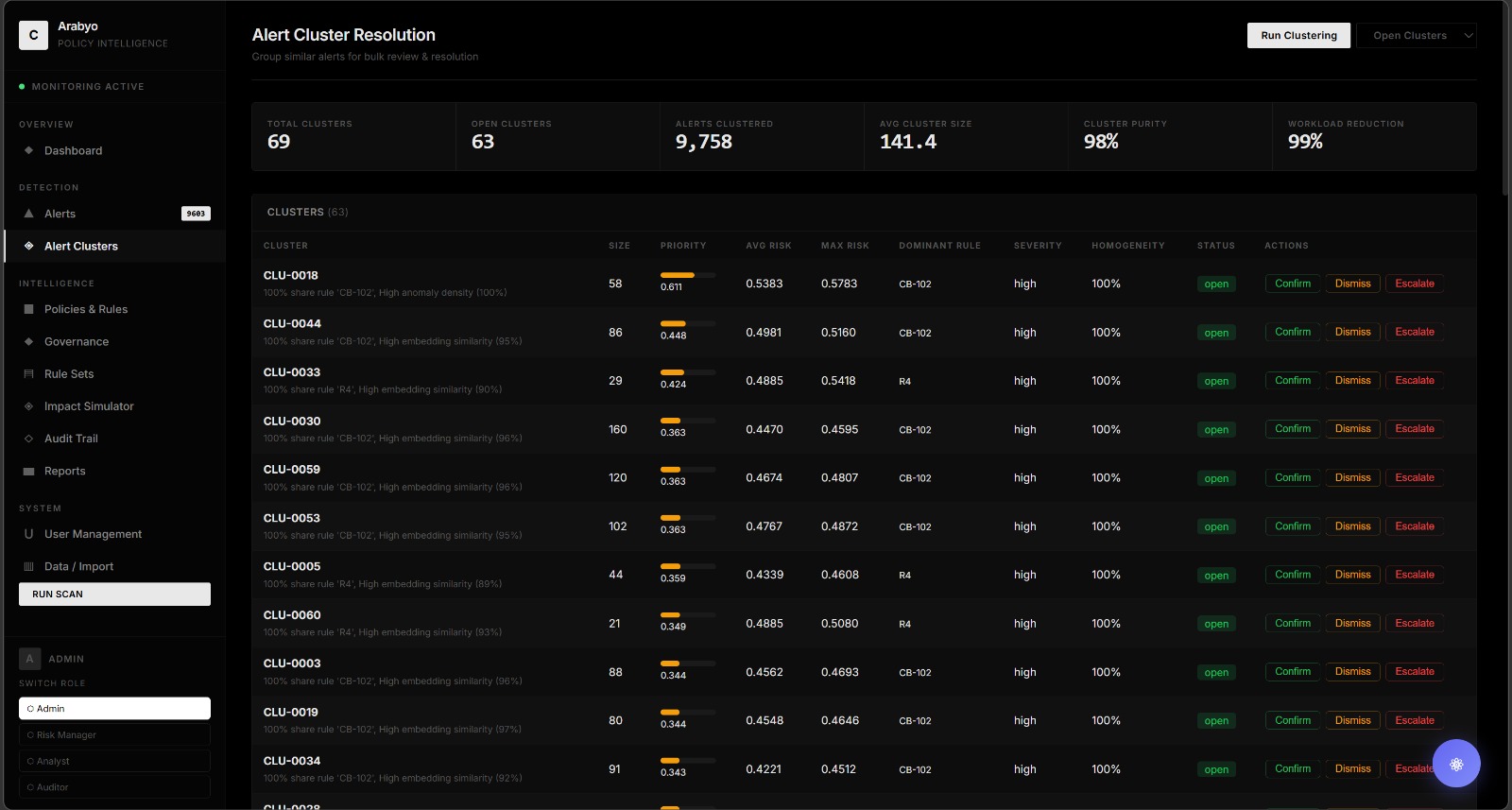
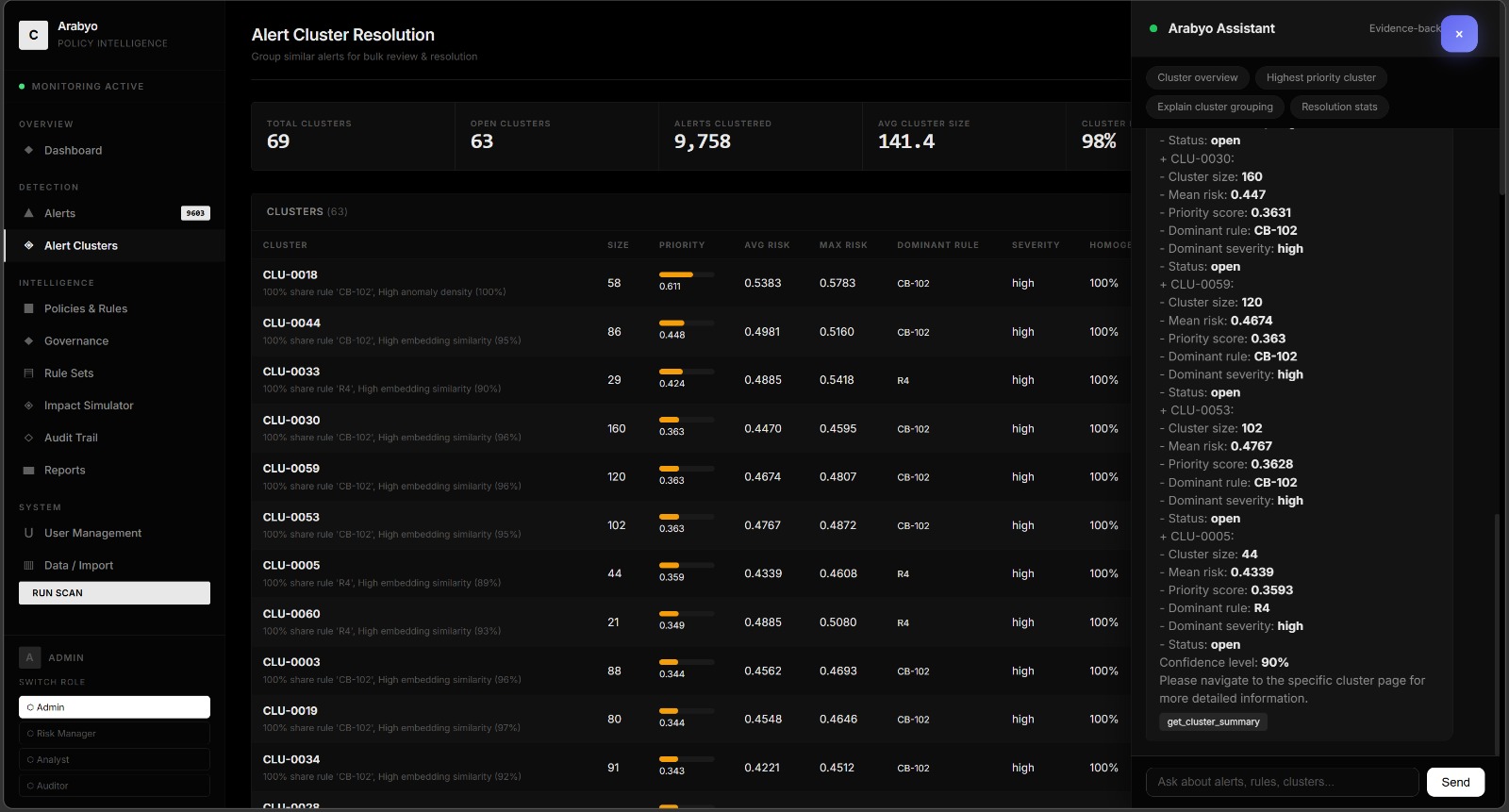
Alert Cluster
-
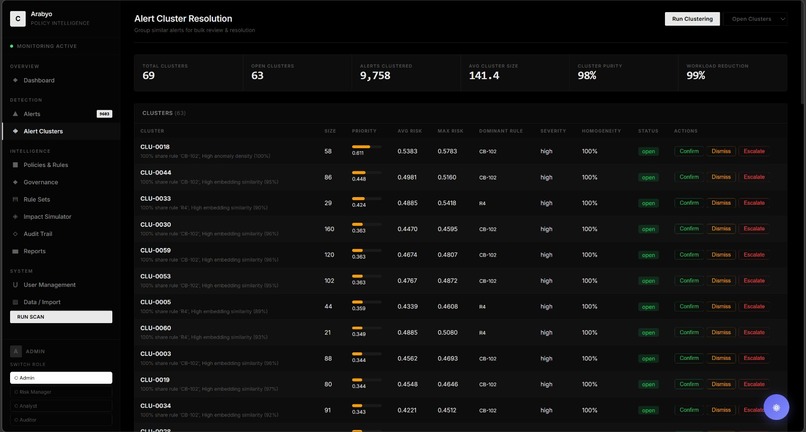
Cluster Resolution
-
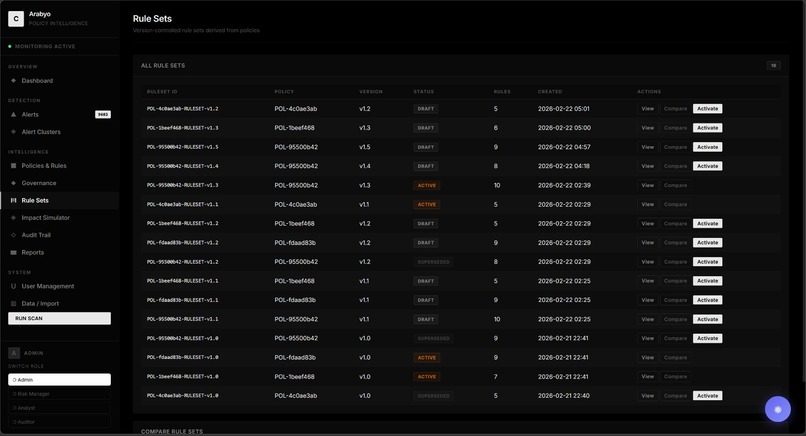
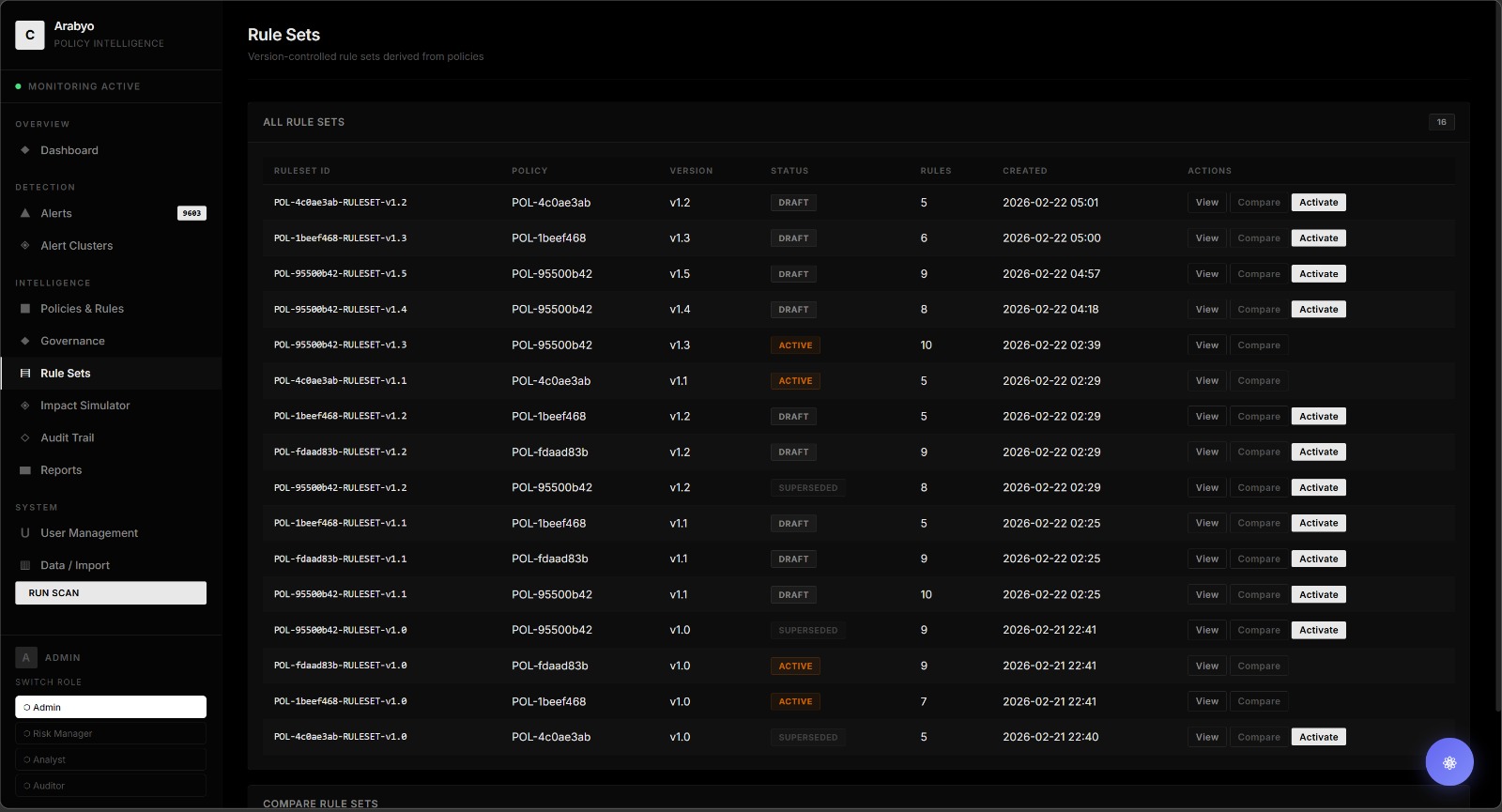
Rule set Handler
-
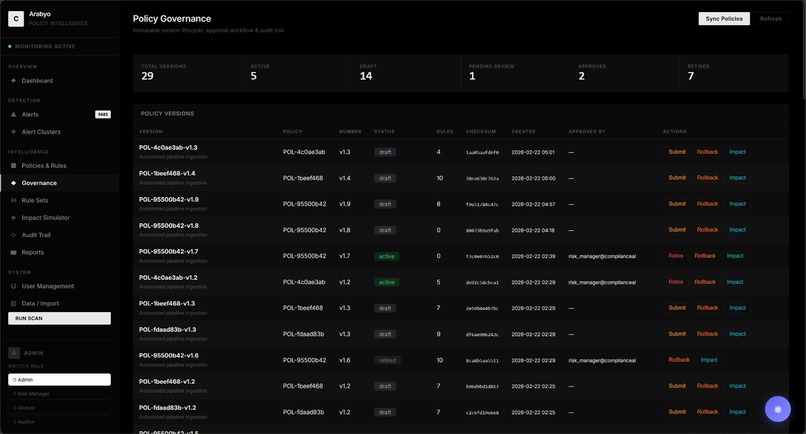
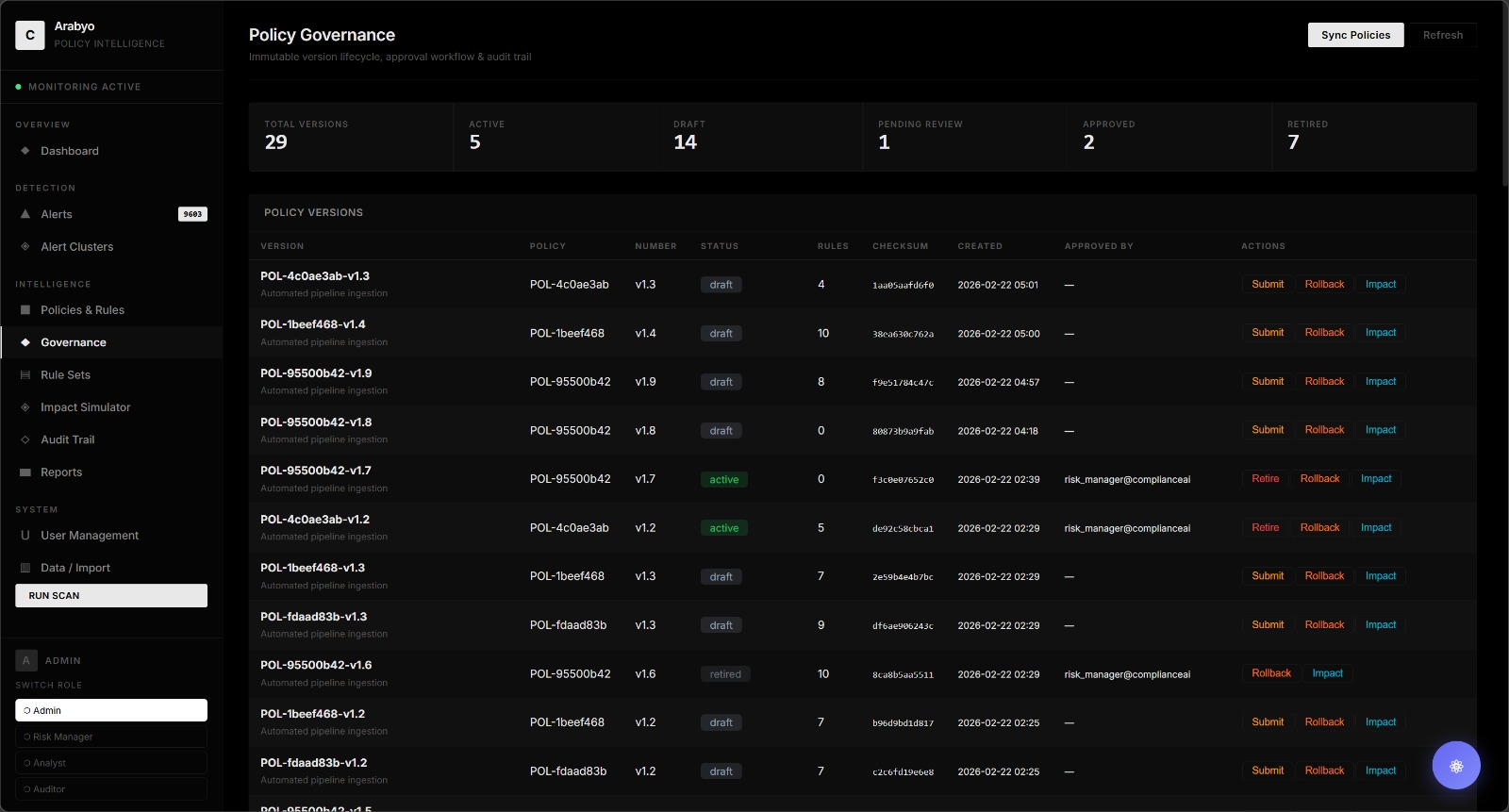
Policy Manager
-
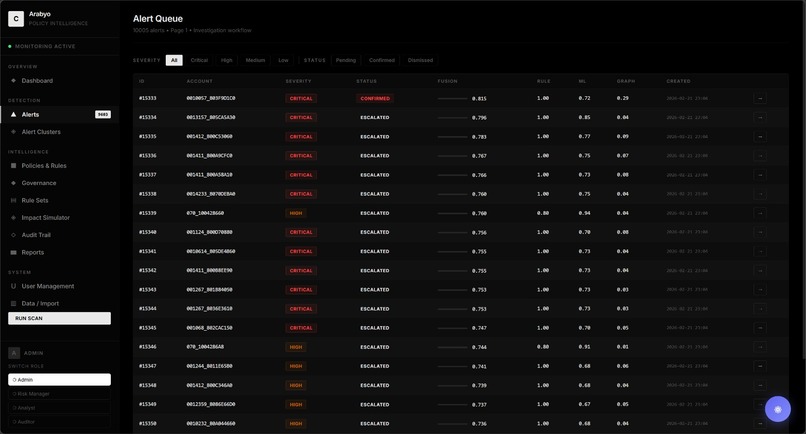
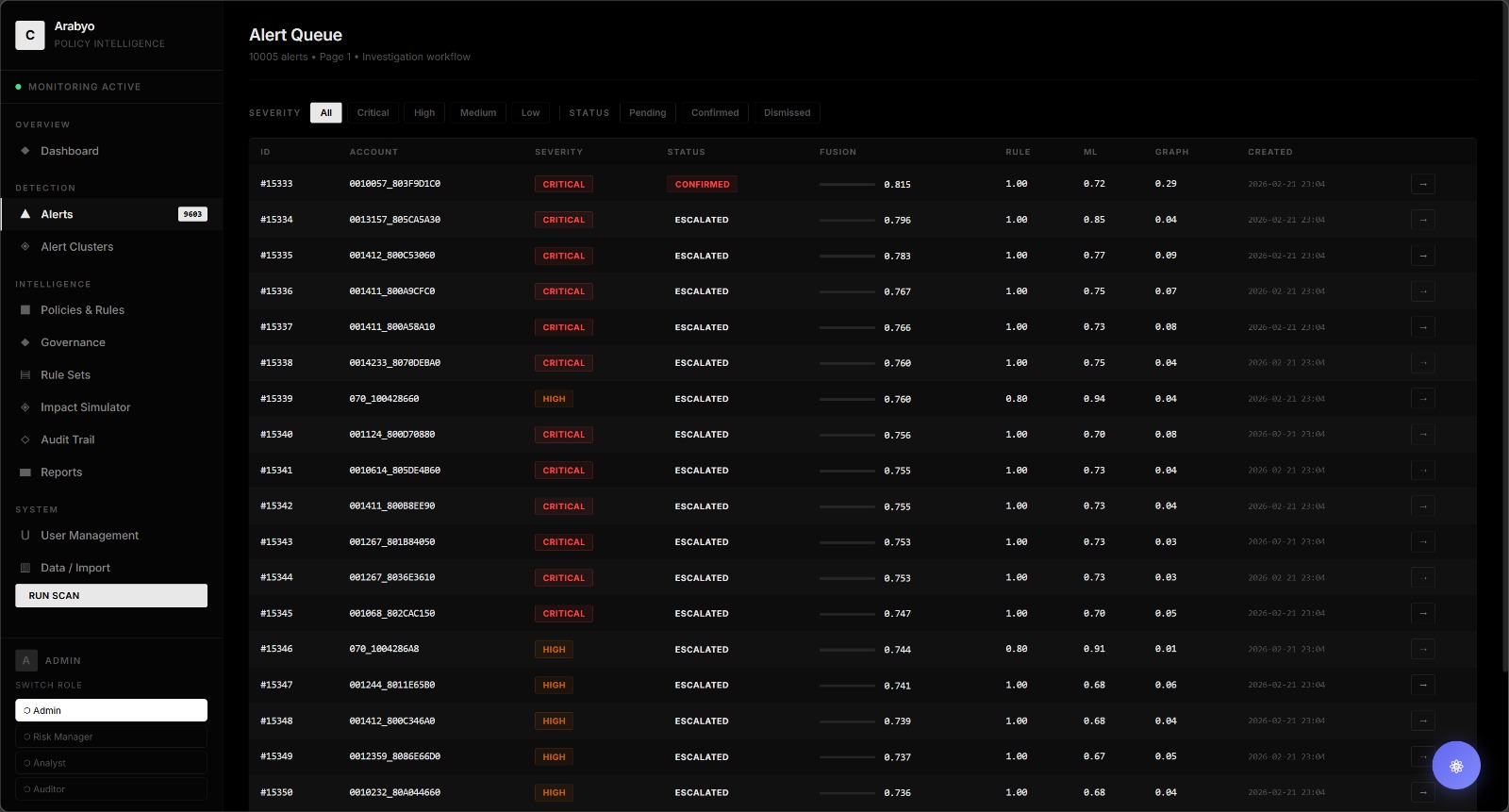
Alert Queue
-
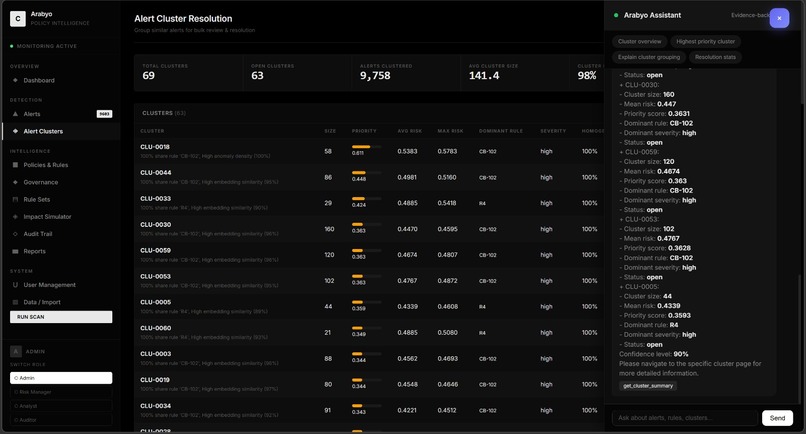
-
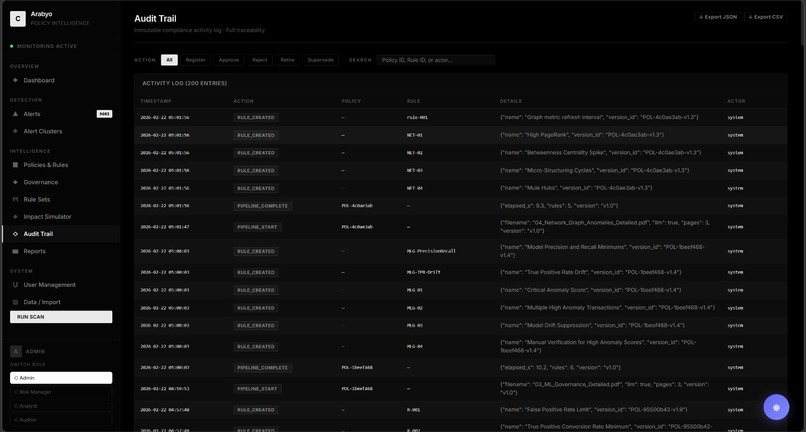
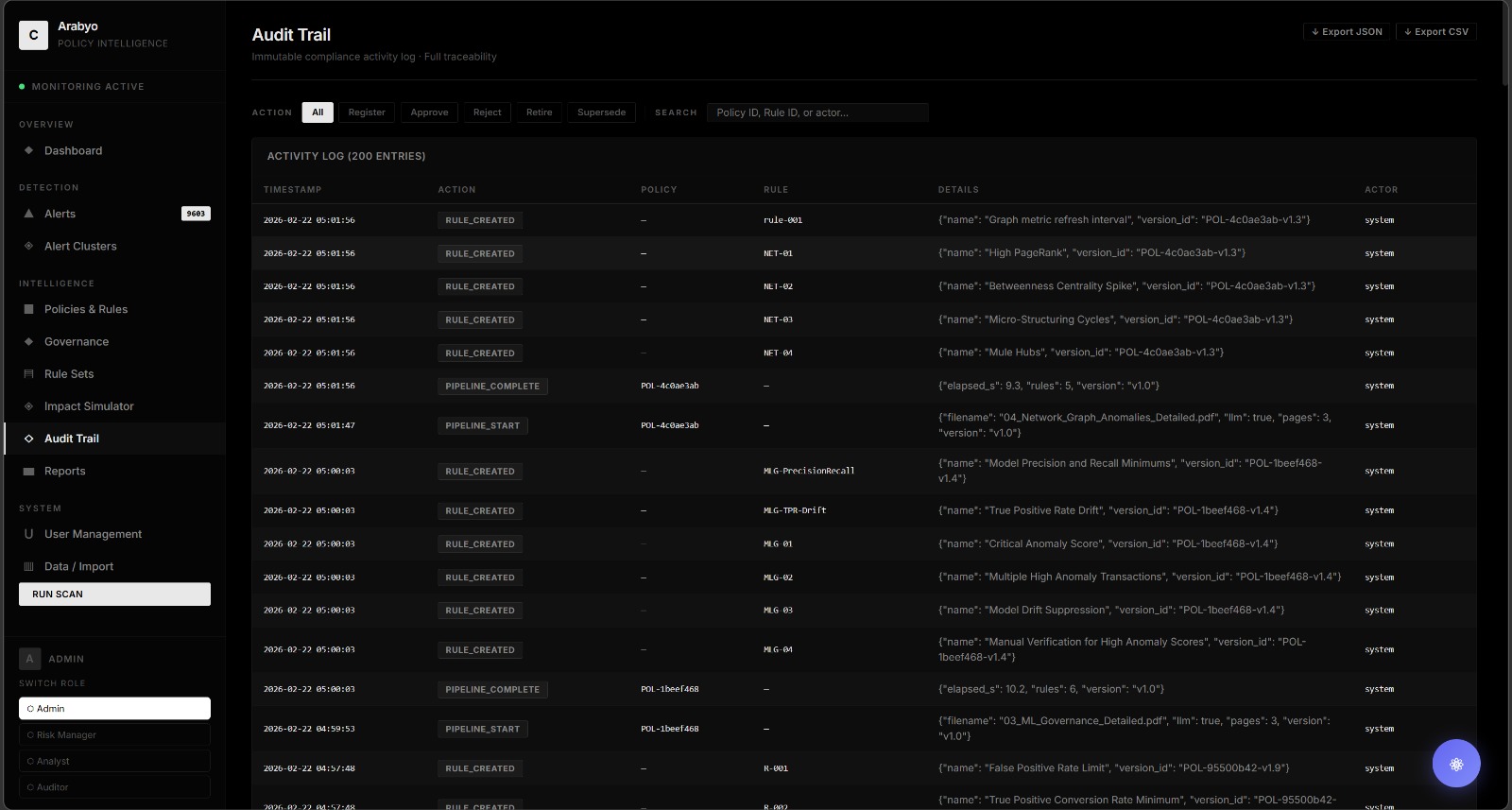
Audit Trail
Arabyo Agent – Autonomous AI Compliance Agent
Inspiration
Financial crime such as money laundering, fraud networks, and suspicious financial transfers costs the global economy billions of dollars every year. Financial institutions rely heavily on compliance teams to monitor transactions and enforce regulatory policies such as Anti-Money Laundering (AML) and Know Your Customer (KYC) rules.
However, most compliance systems today are still based on manual rule creation and static monitoring systems. Analysts must read long regulatory documents and translate them into monitoring rules. This process is slow, error-prone, and difficult to scale.
At the same time, transaction monitoring systems generate large volumes of alerts, many of which are false positives. Analysts spend significant time investigating alerts without clear explanations of why they were triggered.
We asked a simple question:
What if an intelligent AI agent could read regulatory policies, monitor transactions in real time, explain suspicious activity, and simulate policy changes before deployment?
This idea inspired us to build Arabyo Agent, an autonomous AI-powered compliance assistant designed to improve financial crime detection and regulatory intelligence.
What it does
Arabyo Agent is an AI-driven compliance intelligence system that combines regulatory understanding, machine learning risk detection, and explainable AI.
The system performs five key functions:
1. Regulatory Policy Extraction
Arabyo Agent reads regulatory documents and automatically extracts structured compliance rules using large language models.
Example rule extracted from a regulatory document:
{
  "rule_name": "High Risk Country Transfer",
  "condition": "transaction_country in high_risk_list",
  "threshold": 10000,
  "risk_level": "High"
}
These rules are transformed into machine-readable monitoring policies that can be applied directly to transaction monitoring pipelines.
2. Real-Time Transaction Monitoring
Incoming transactions are analyzed using a hybrid detection pipeline that combines:
- Rule-based compliance checks
- Machine learning risk scoring
- Graph-based transaction analysis
The final risk score is calculated using a fusion model:
$$ RiskScore = \alpha \cdot RuleScore + \beta \cdot MLScore + \gamma \cdot GraphScore $$
This multi-layer detection approach improves accuracy while maintaining transparency.
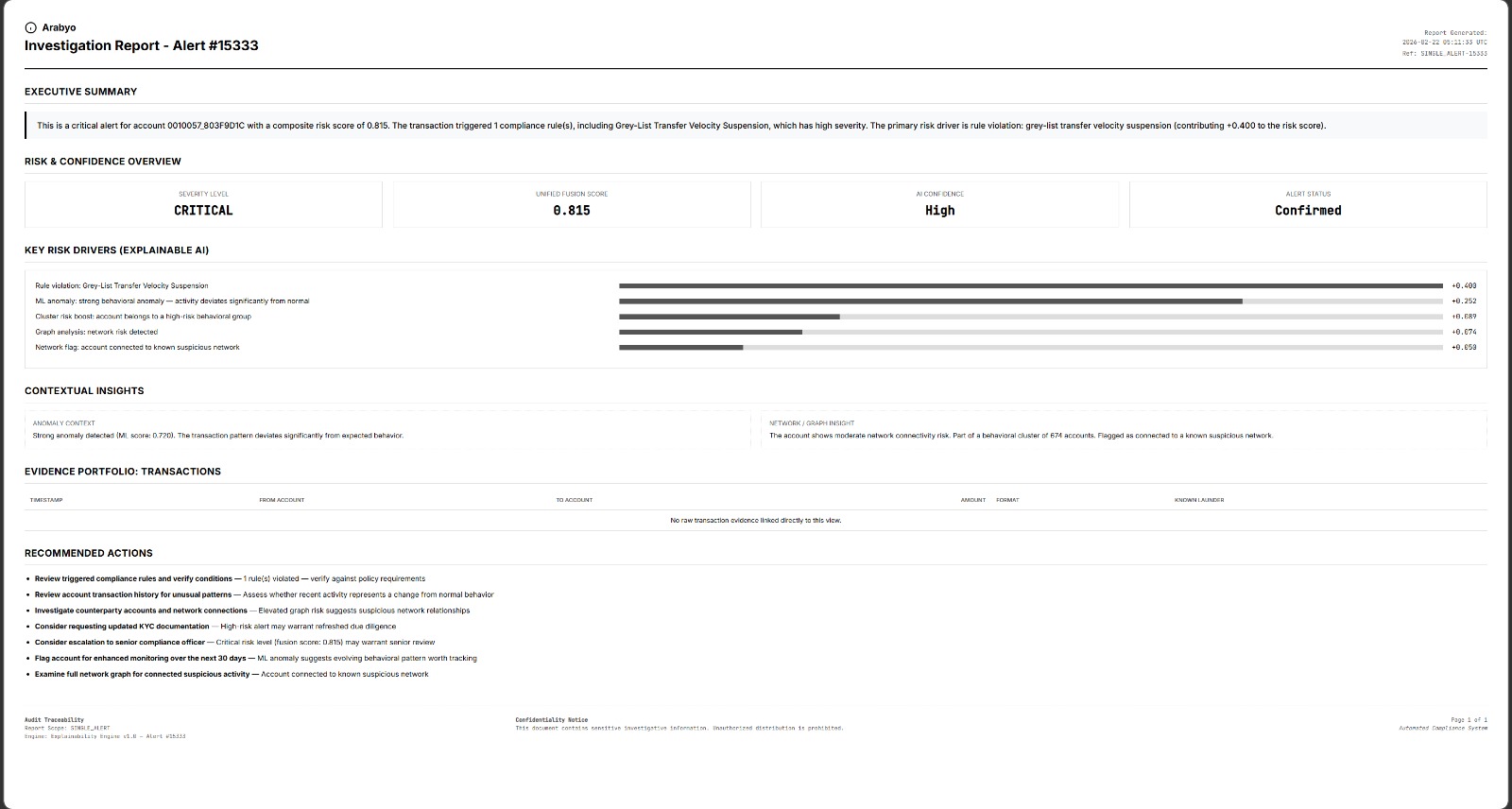
3. Explainable AI for Alerts
Every alert generated by the system includes explainable insights using SHAP feature attribution.
Example explanation output:
Transaction flagged due to:
- High transaction amount (+0.42)
- Transfer to high-risk country (+0.35)
- Unusual transaction frequency (+0.18)
This allows analysts to clearly understand why a transaction was flagged, improving investigation efficiency.
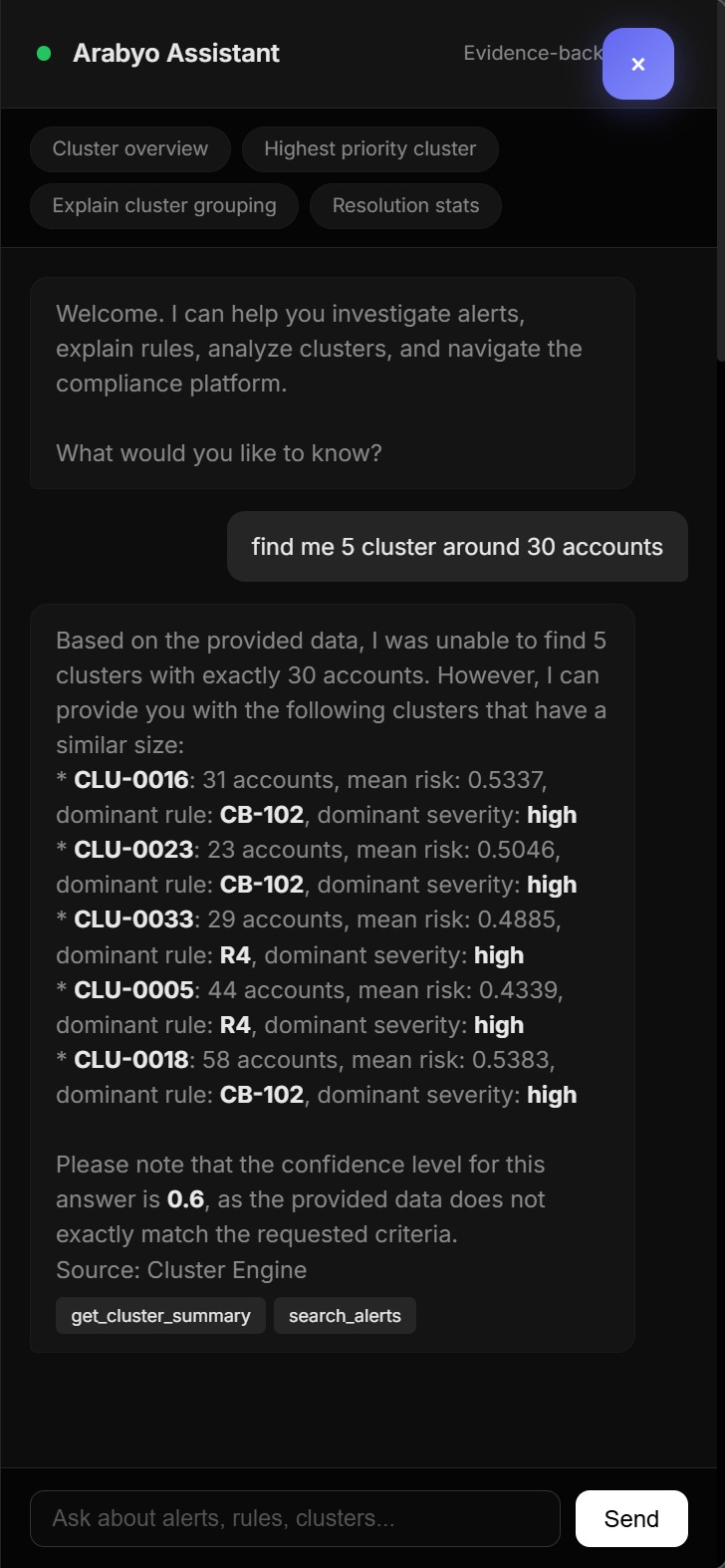
4. AI Compliance Assistant
Arabyo Agent includes a natural language assistant that allows analysts to interact with the system.
Example queries include:
- Why was this transaction flagged?
- Which rule triggered this alert?
- What happens if we increase the risk threshold?
The assistant references extracted regulatory clauses and model insights to generate contextual explanations.
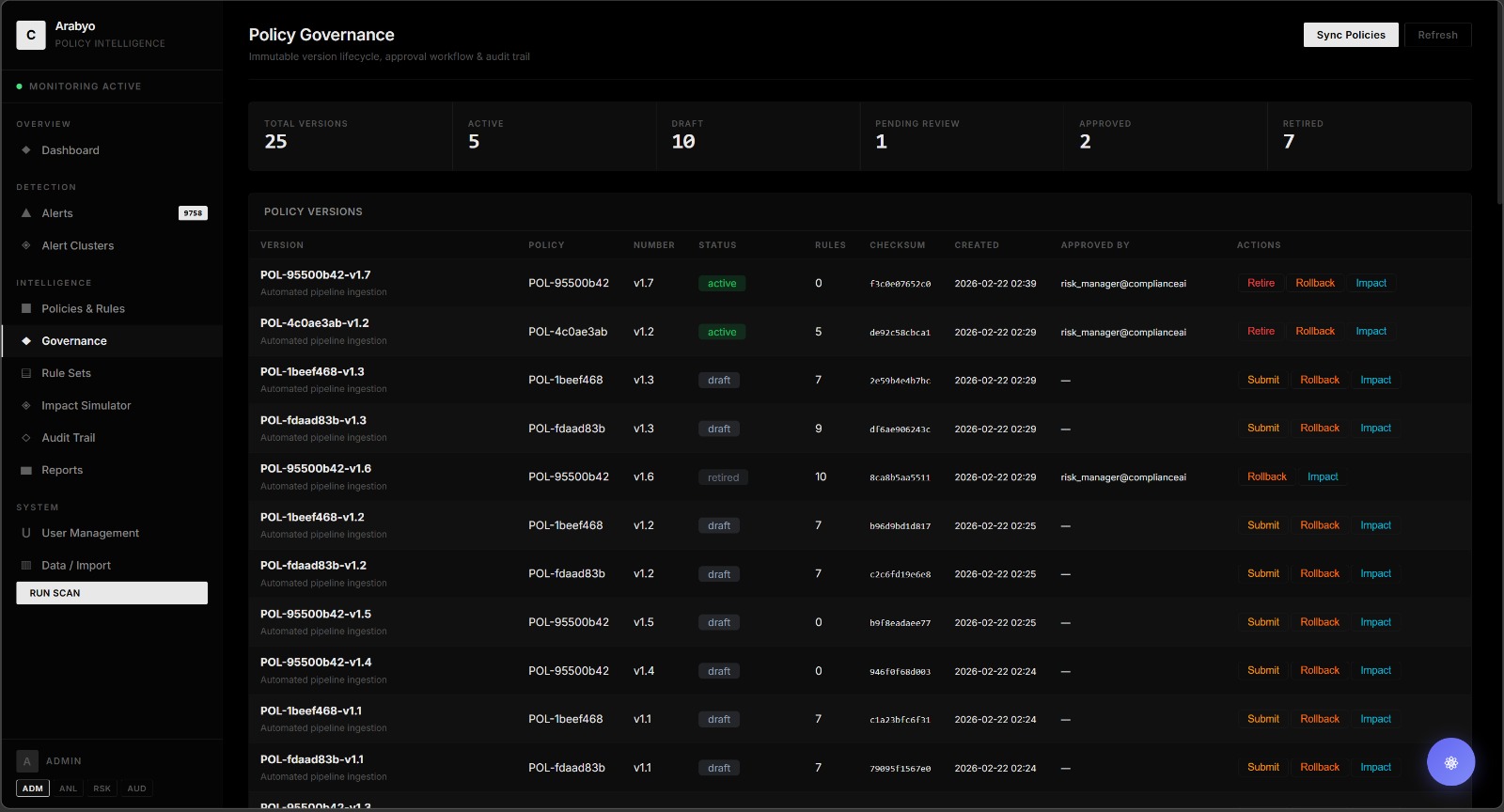
5. Policy Simulation and Governance
Before deploying new monitoring rules, Arabyo can simulate their impact using historical transaction data.
This allows compliance teams to evaluate:
- Alert volume changes
- Potential false positives
- Risk detection coverage
Policy changes follow a maker-checker governance workflow to ensure regulatory safety and transparency.
How we built it
Arabyo Agent is built using a modular architecture designed for scalability and explainability.
Policy Extraction Layer
Regulatory documents are processed using large language models that extract policy rules and convert them into structured JSON.
Detection Pipeline
Transactions are analyzed using a hybrid system combining:
- Rule-based compliance checks
- LightGBM machine learning models
- Isolation Forest anomaly detection
- Graph-based network analytics
Explainability Engine
SHAP-based explainability techniques generate interpretable feature contributions for each alert.
AI Agent Interface
A natural language assistant enables analysts to query the system and receive context-aware responses based on regulatory rules and model explanations.
Governance and Audit
All policy changes are version-controlled and logged with an audit trail to ensure regulatory accountability.
Challenges we ran into
Developing Arabyo Agent required solving several technical challenges.
One challenge was extracting structured compliance rules from complex regulatory documents. Regulatory text is often ambiguous and varies significantly in format.
Another challenge was combining rule-based compliance systems with machine learning models while maintaining explainability and transparency.
We also focused heavily on ensuring that the system remains interpretable for compliance analysts and regulators, which required integrating explainable AI techniques.
Finally, implementing policy simulation mechanisms was essential to allow safe evaluation of rule changes before deployment.
What we learned
Through this project we learned several key lessons:
- AI systems used in regulated industries must prioritize transparency and explainability
- Combining rules with machine learning significantly improves fraud detection
- Natural language interfaces can simplify interaction with complex compliance systems
- Policy simulation is critical for reducing operational risk
This project demonstrated how AI agents can augment human decision-making rather than replace it, enabling analysts to work faster and more effectively.
What's next for Arabyo
Future improvements to Arabyo could include:
- Multi-bank fraud intelligence networks
- Advanced graph-based fraud detection
- Automated suspicious activity report generation
- Deeper integration with banking transaction infrastructure
Our long-term vision is to create a fully autonomous AI compliance intelligence platform capable of detecting and preventing financial crime at scale.

Log in or sign up for Devpost to join the conversation.