-
-
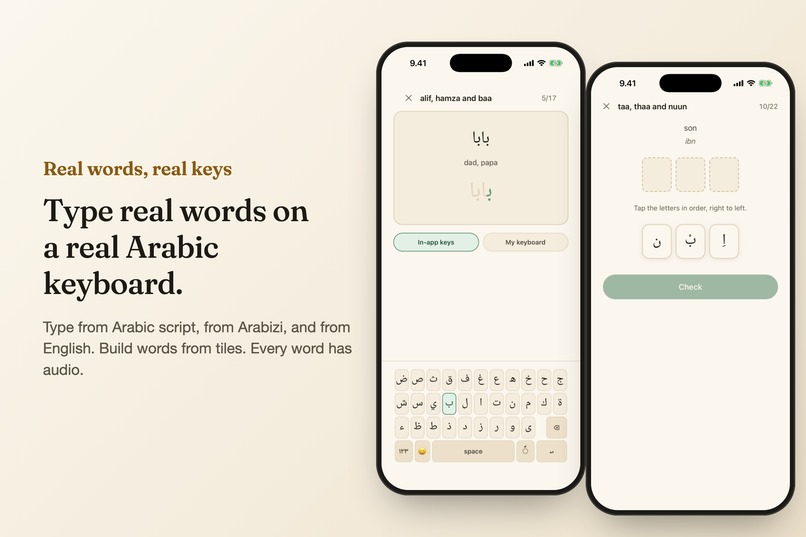
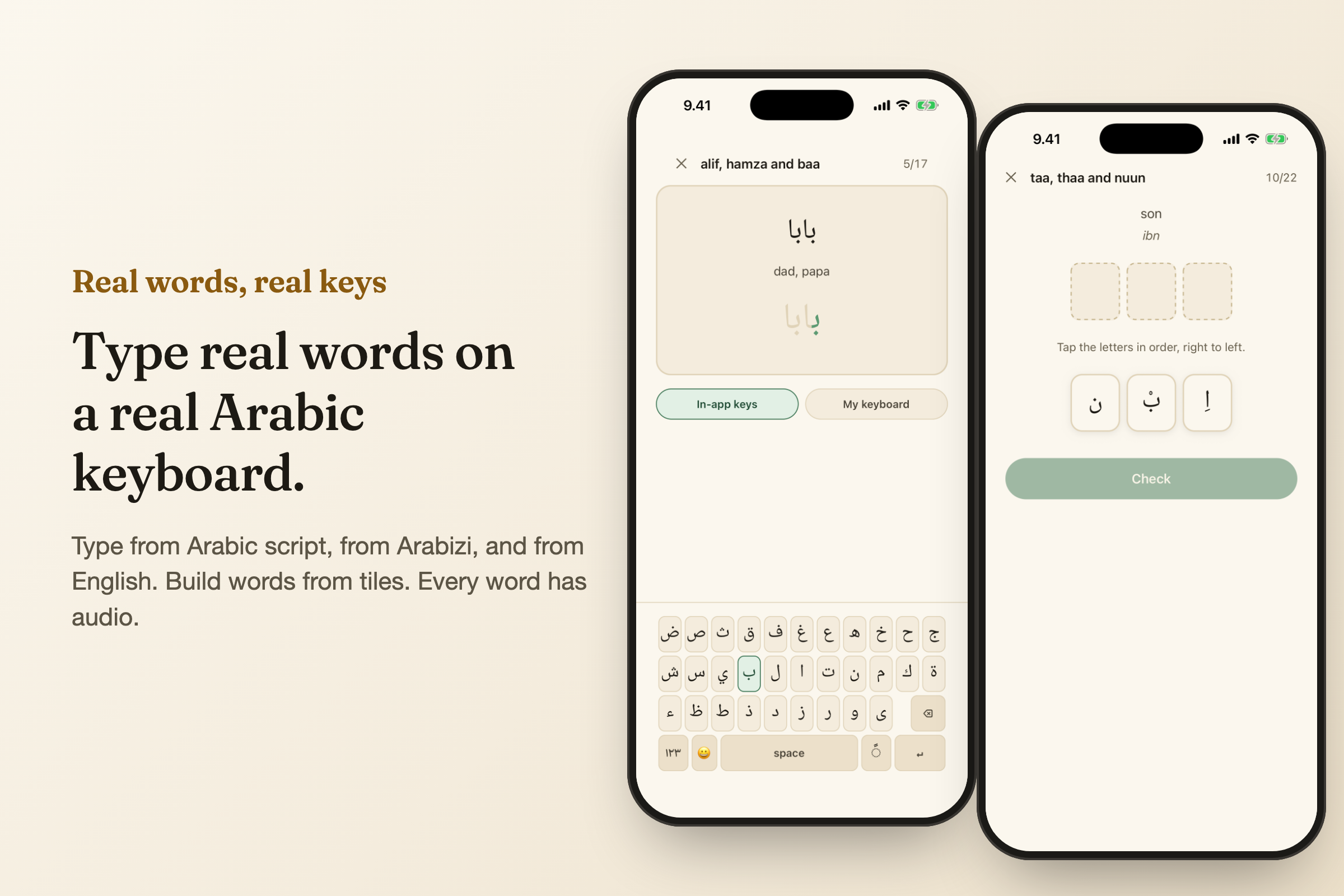
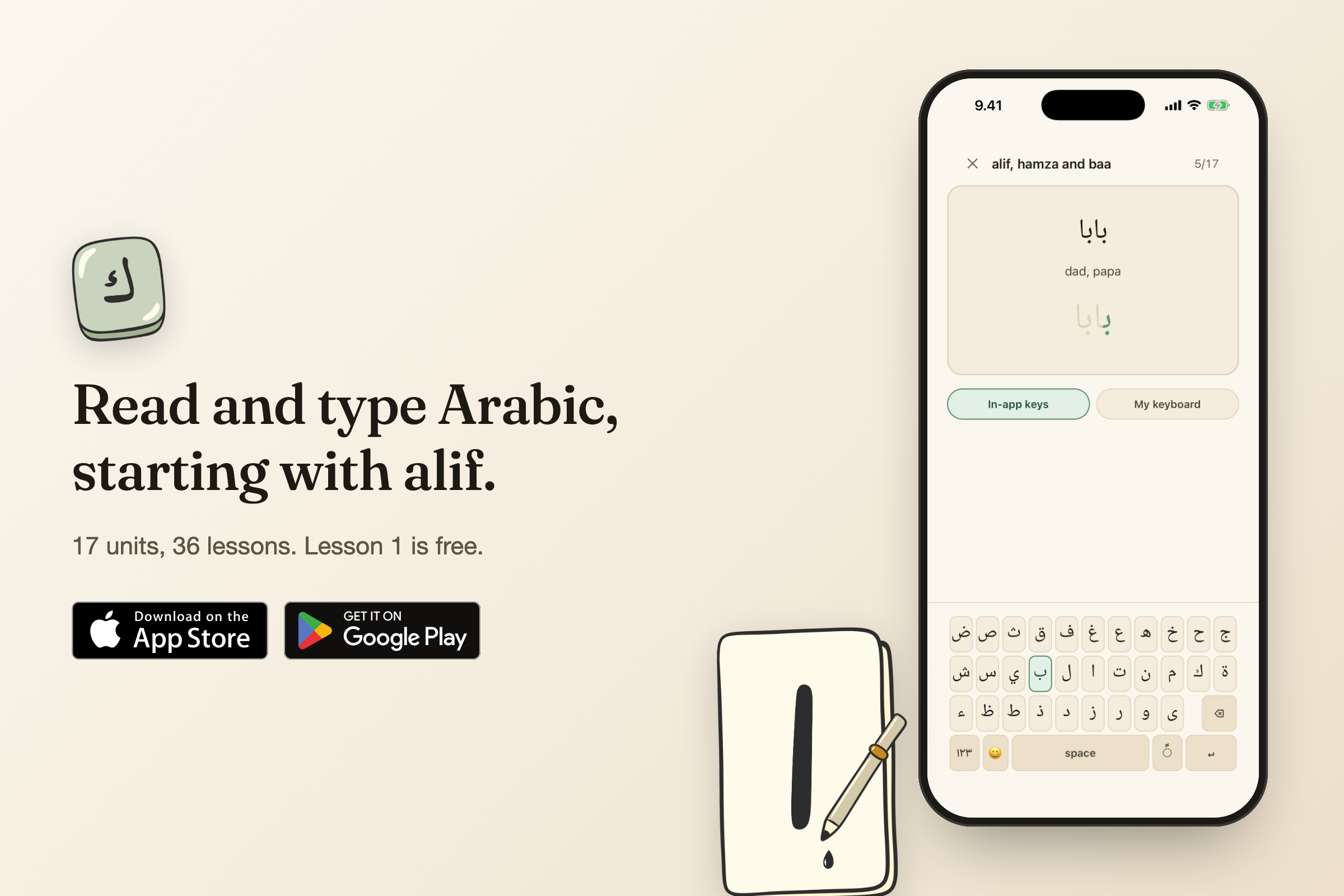
Type real words from Arabic script, Arabizi and English on the app's own Arabic keys or your phone's keyboard. Every word has audio.
-
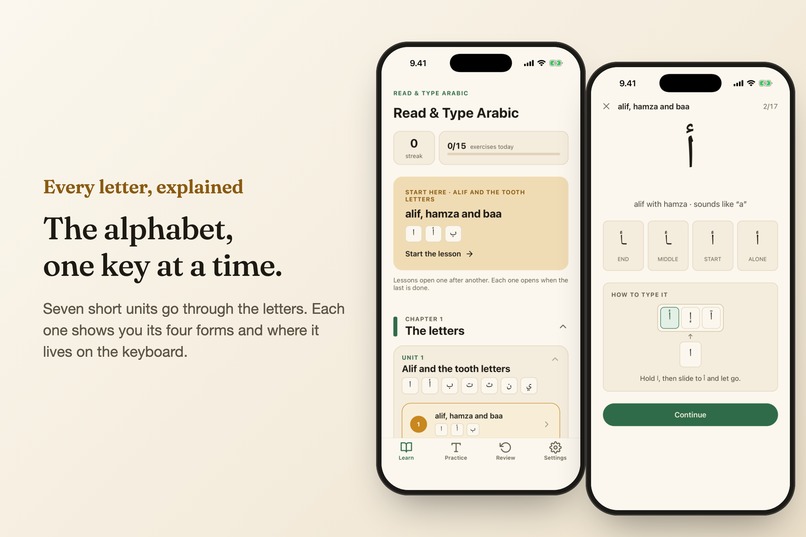
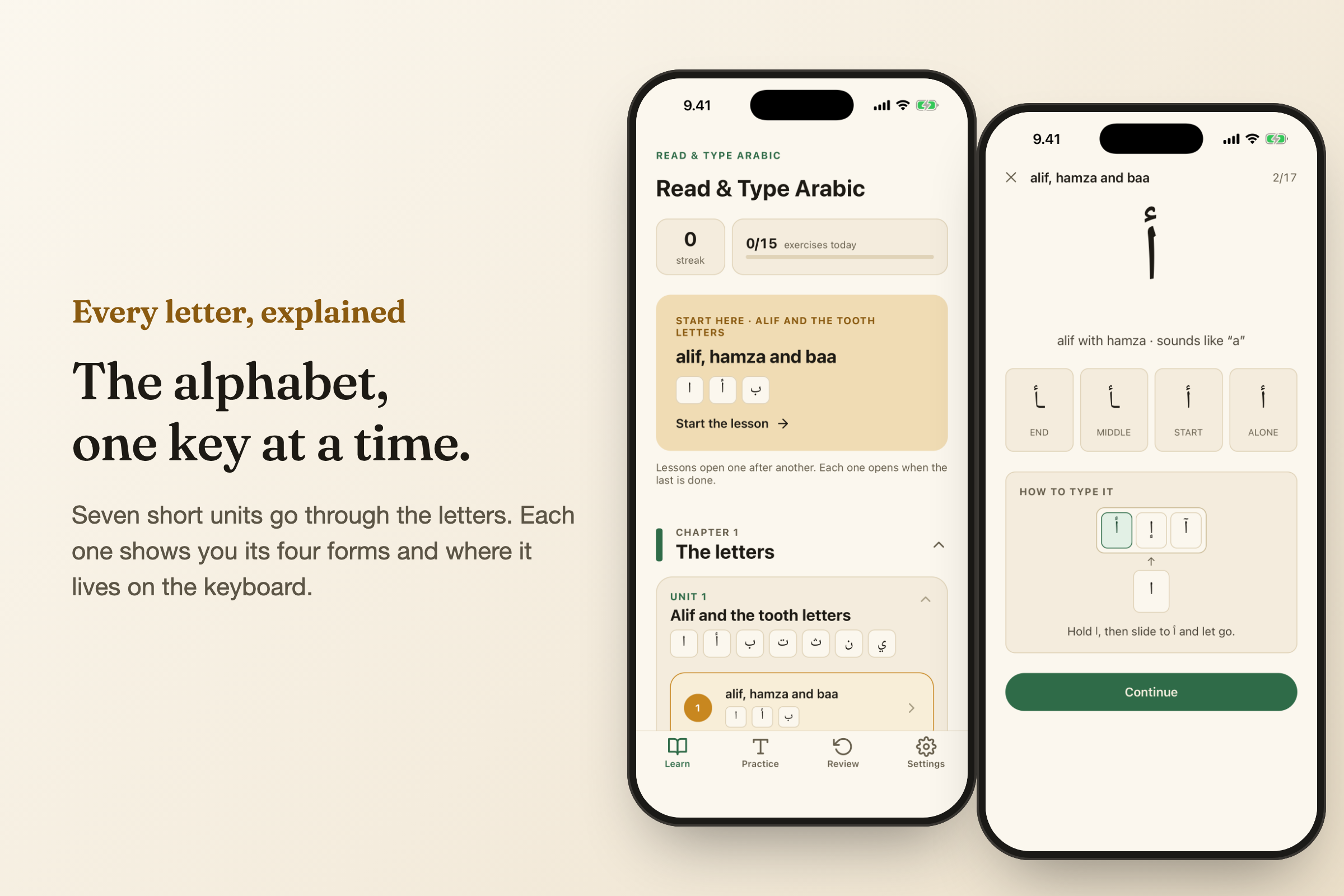
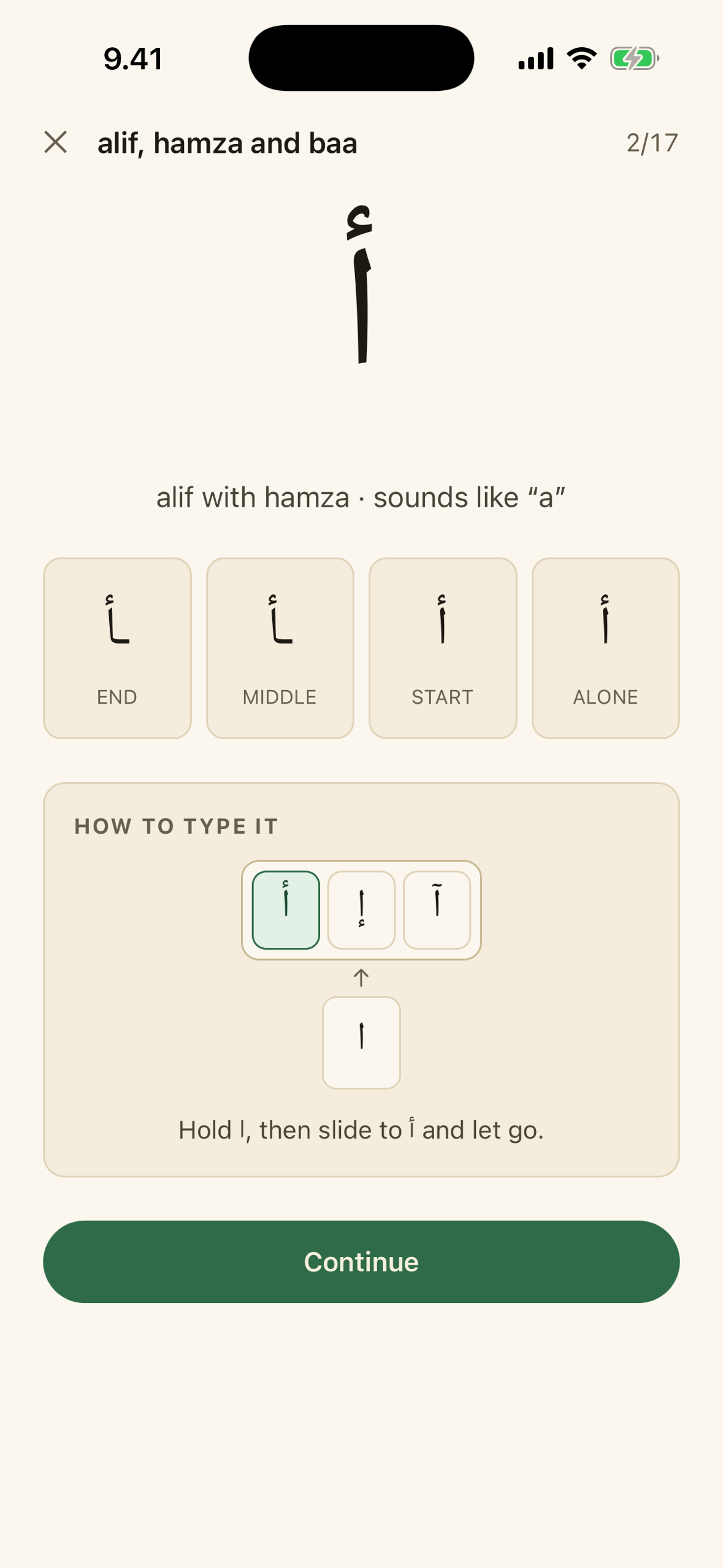
Seven units go through the alphabet. Each letter card shows its four forms and where it sits on the keyboard.
-
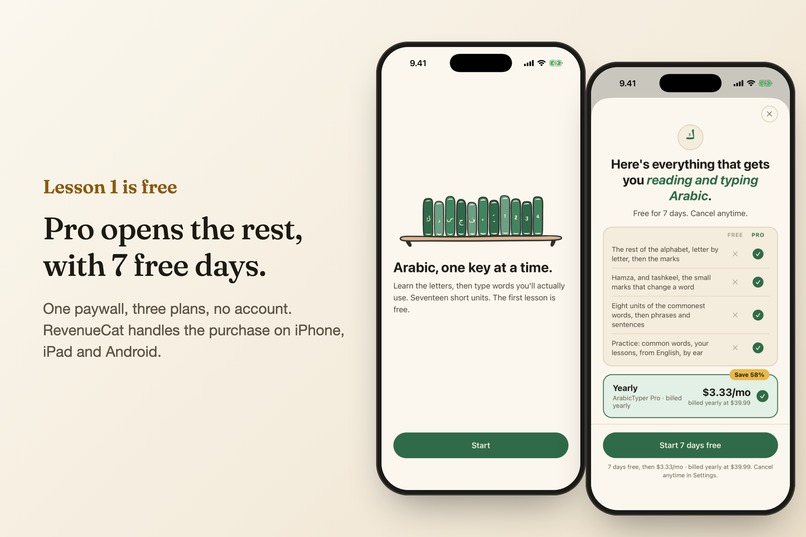
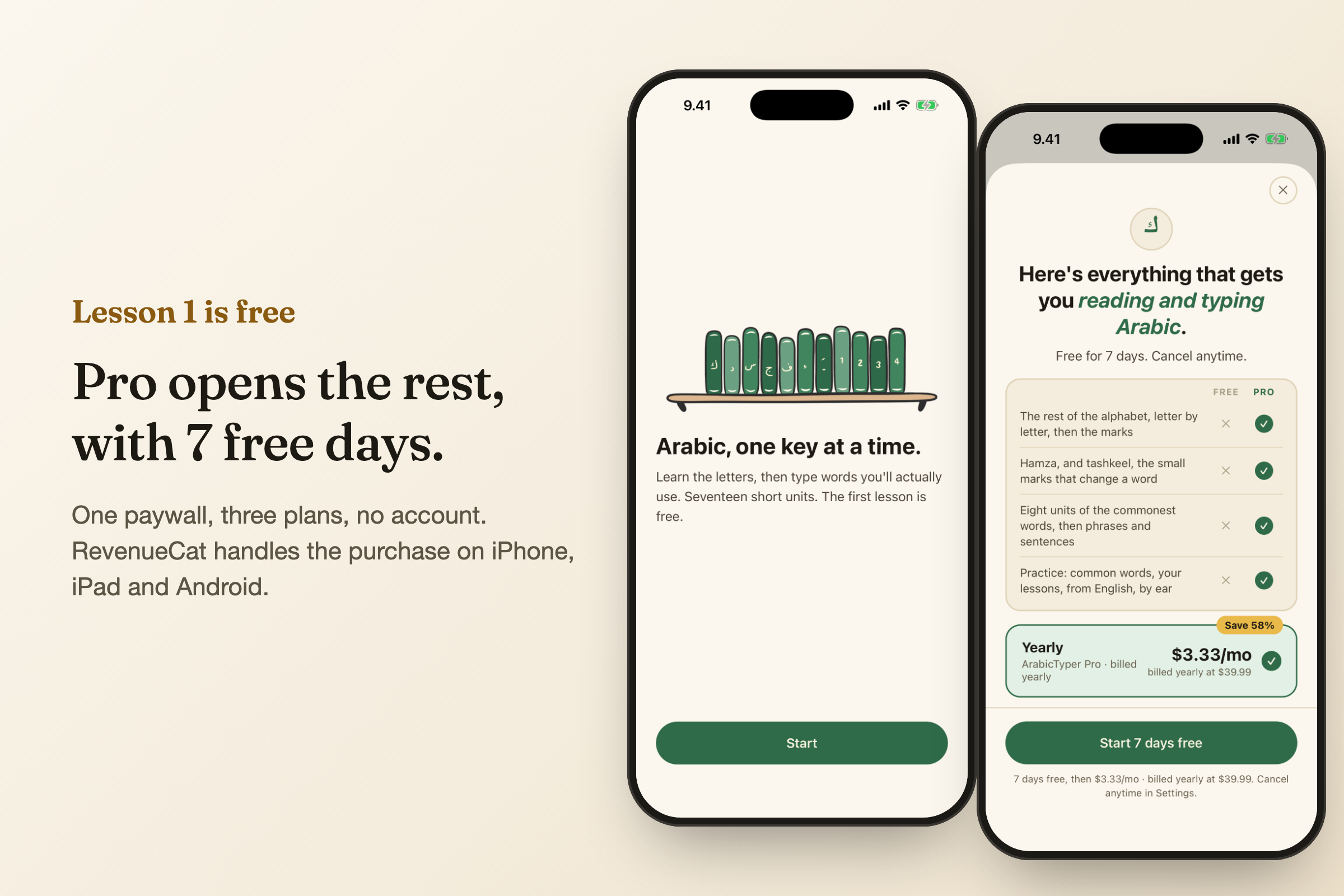
Lesson 1 is free. Pro is monthly, yearly with 7 free days, or lifetime. RevenueCat handles the purchase on iOS and Android.
-
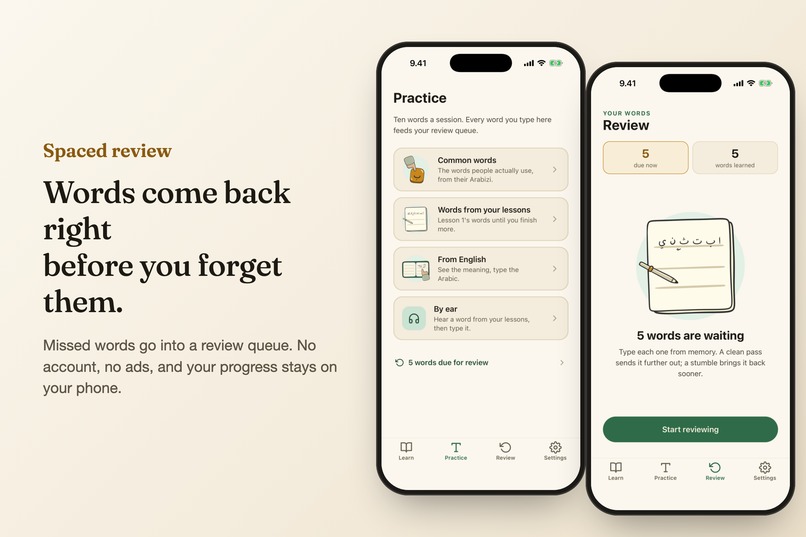
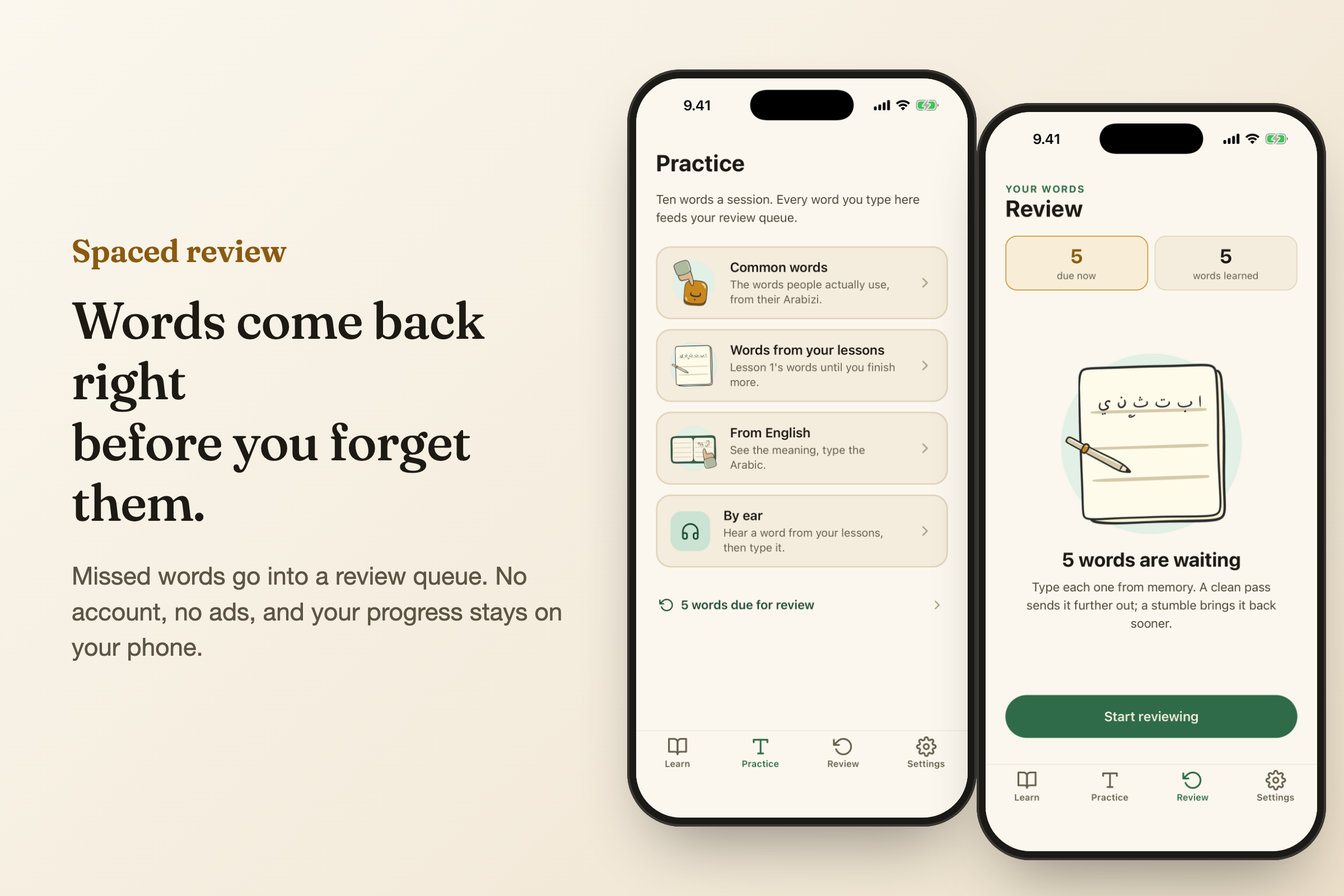
Missed words come back for review, spaced further apart each time you get them right. No account, no ads.
-
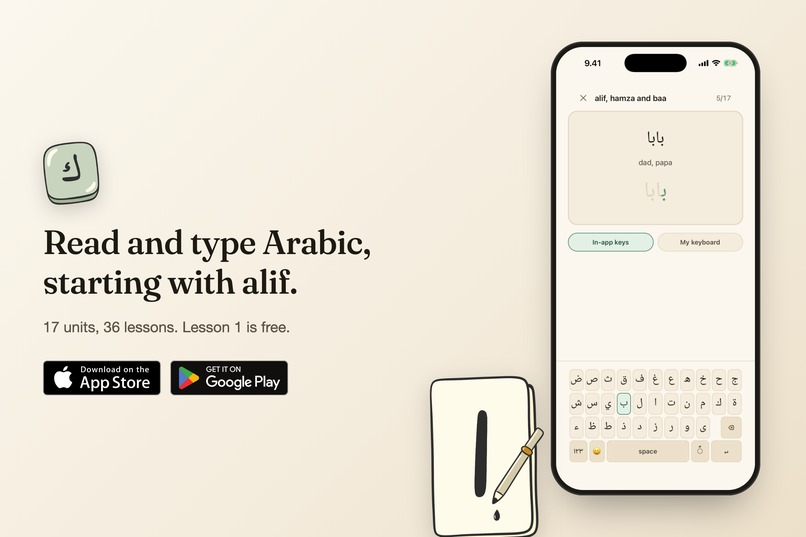
ArabicTyper teaches you to read and type Arabic from the first letter. 17 units, 36 lessons, on iPhone, iPad and Android. Lesson 1 is free.
-
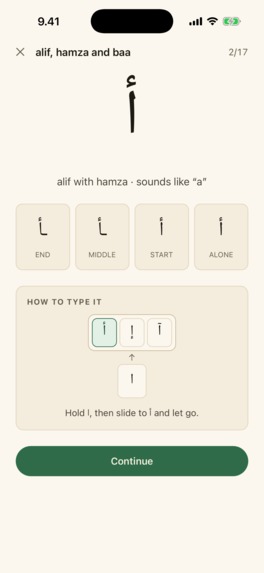
Letter card for alif with hamza: its four forms, how it sounds, and how to type it with a hold on the alif key.
-
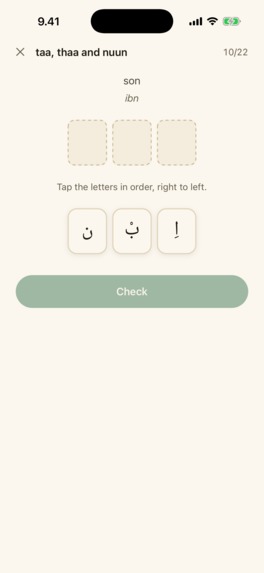
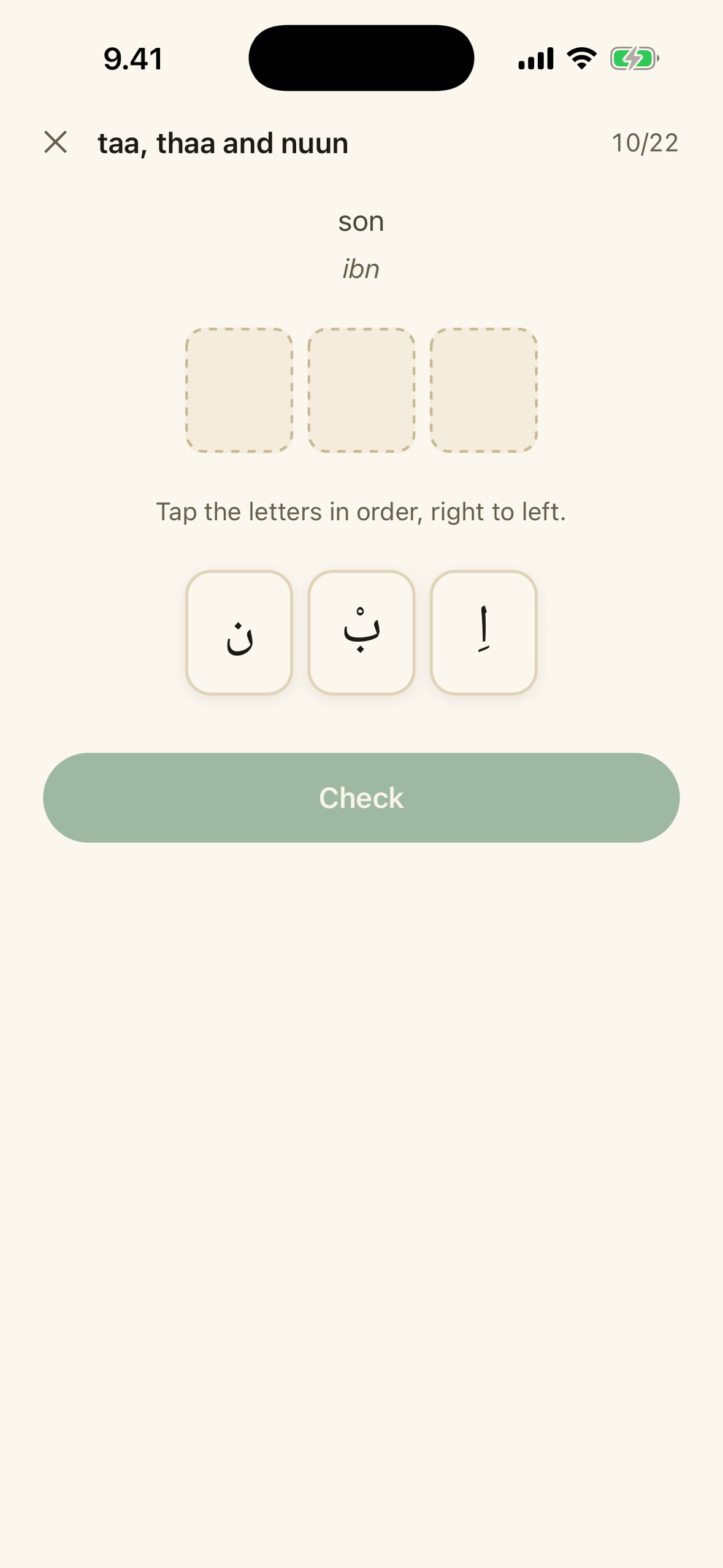
Build the word. Tap the letter tiles in order, right to left, then check.
-
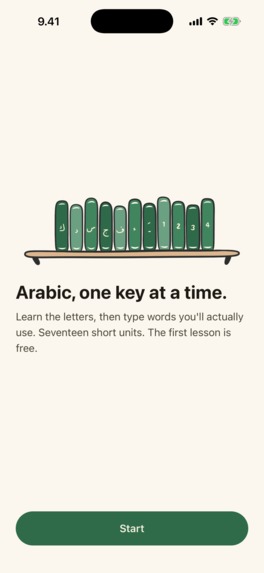
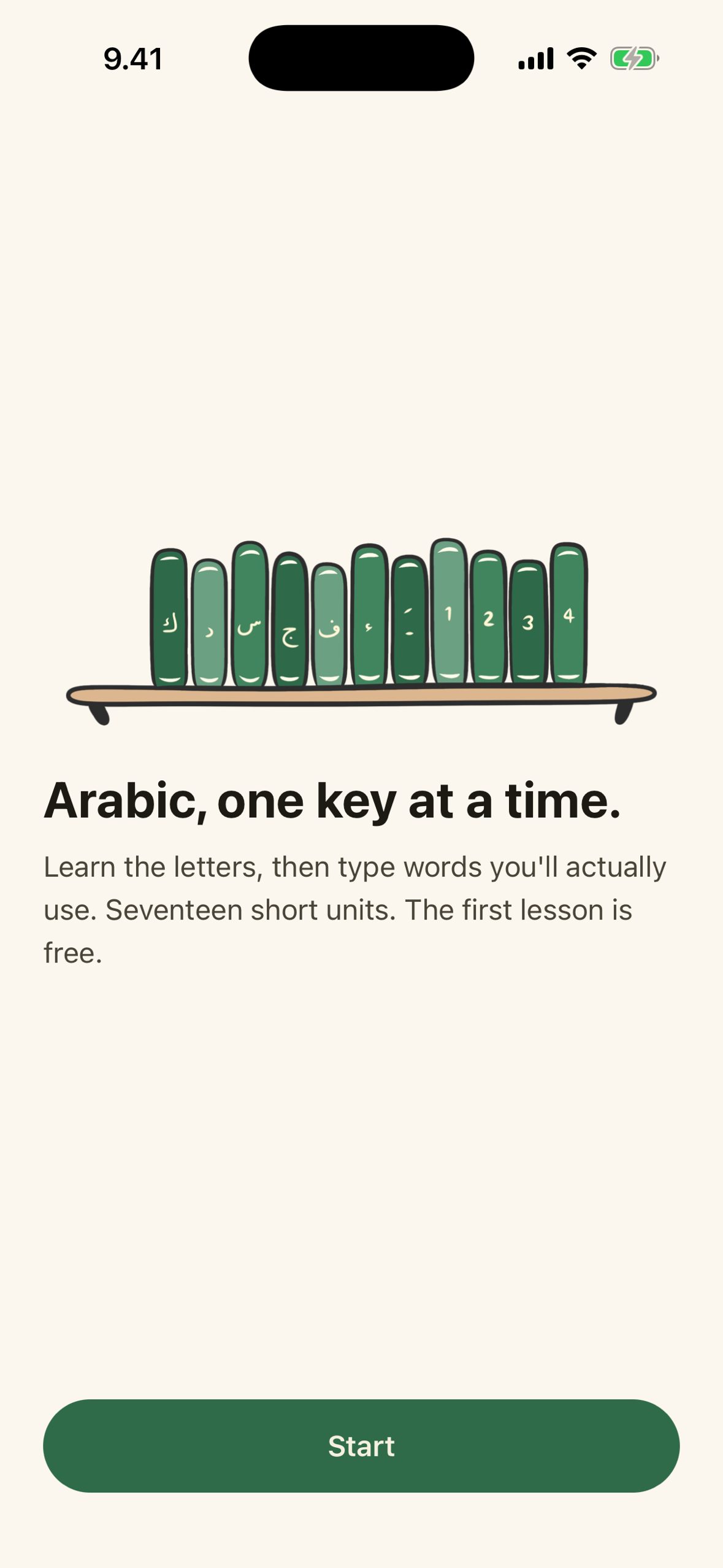
Welcome screen. Onboarding asks your goal and keyboard preference, then drops you into lesson 1.
-
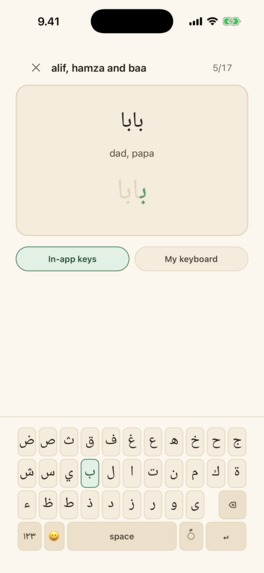
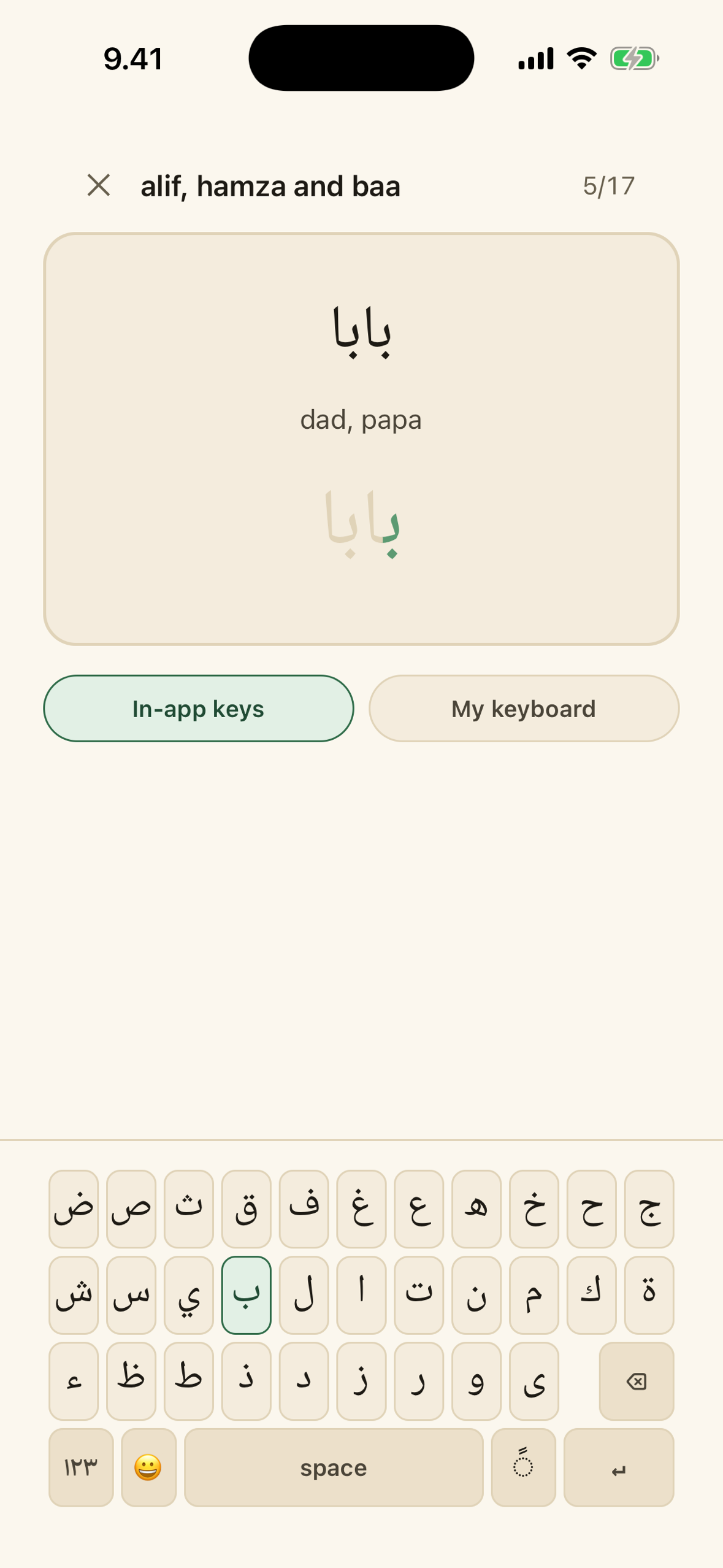
Typing exercise. Type baba on the app's Arabic keyboard, with the next key highlighted. Switch to your phone's keyboard any time.
-
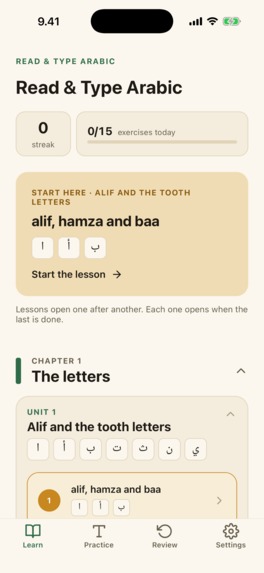
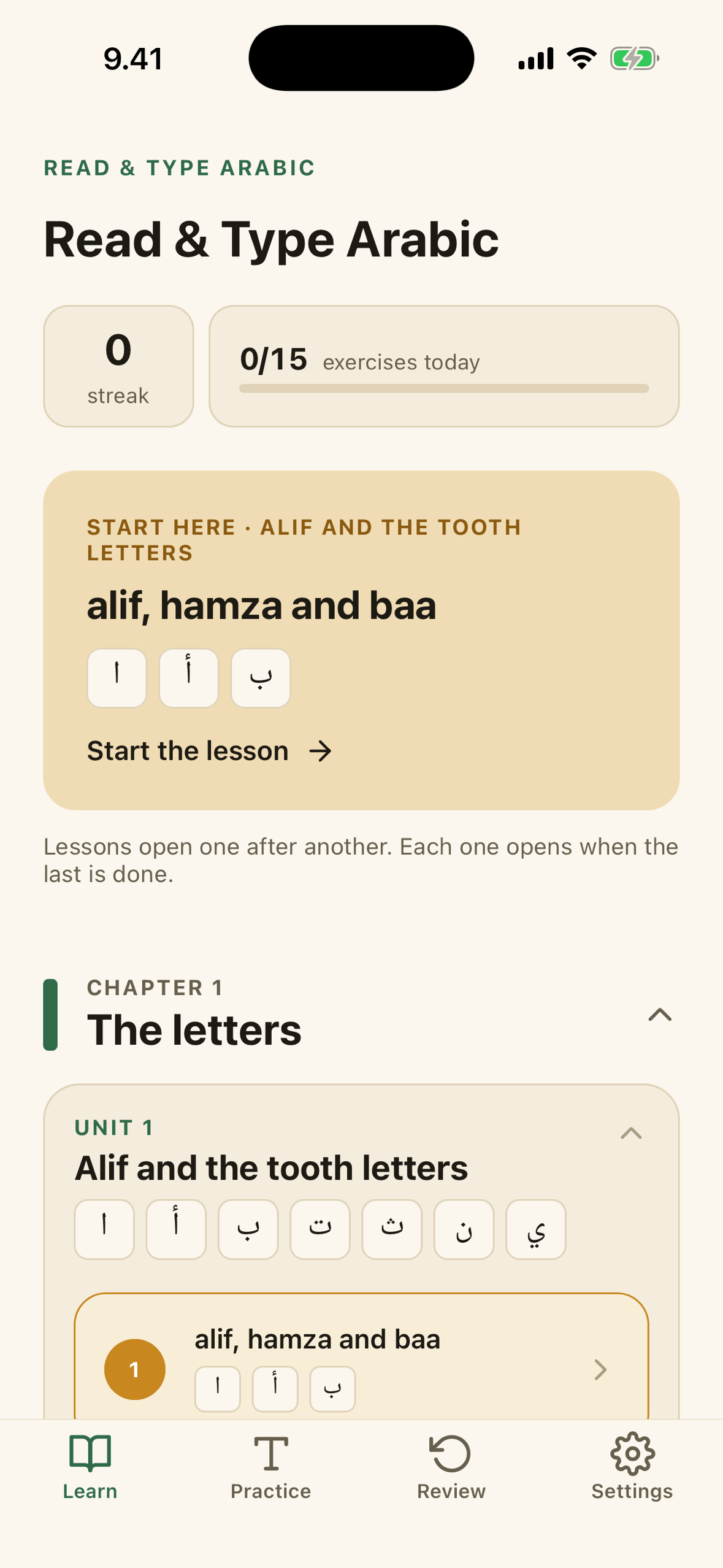
Course map. 17 units in chapters, one open at a time. Lessons unlock in order, and today's goal and streak sit at the top.
-
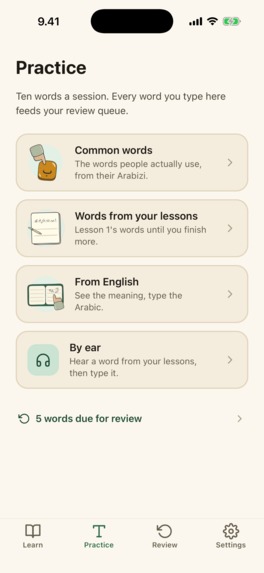
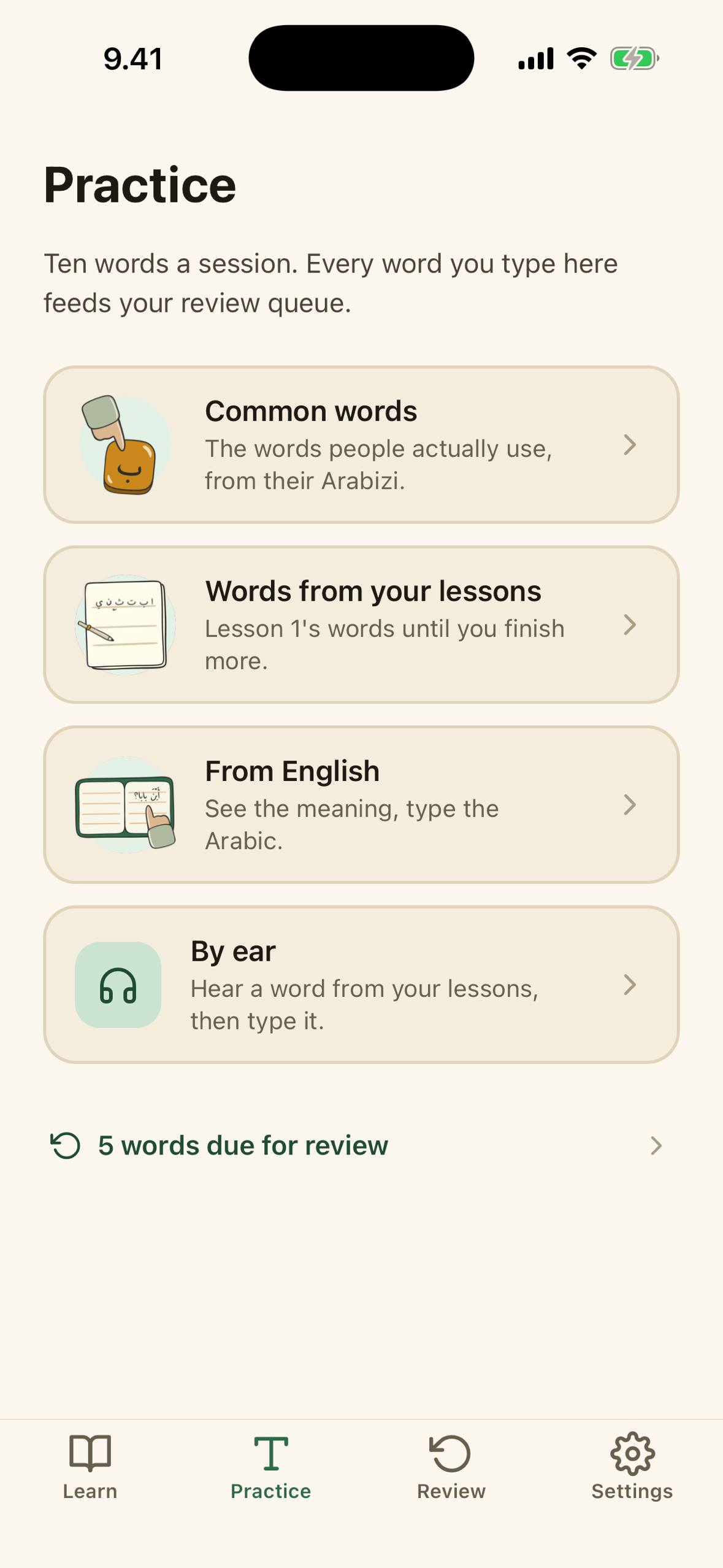
Practice. Four modes outside the course: common words, words from your lessons, from English, and by ear.
-
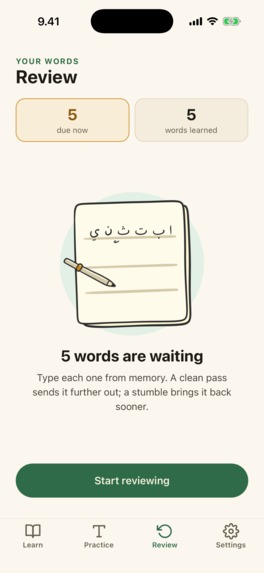
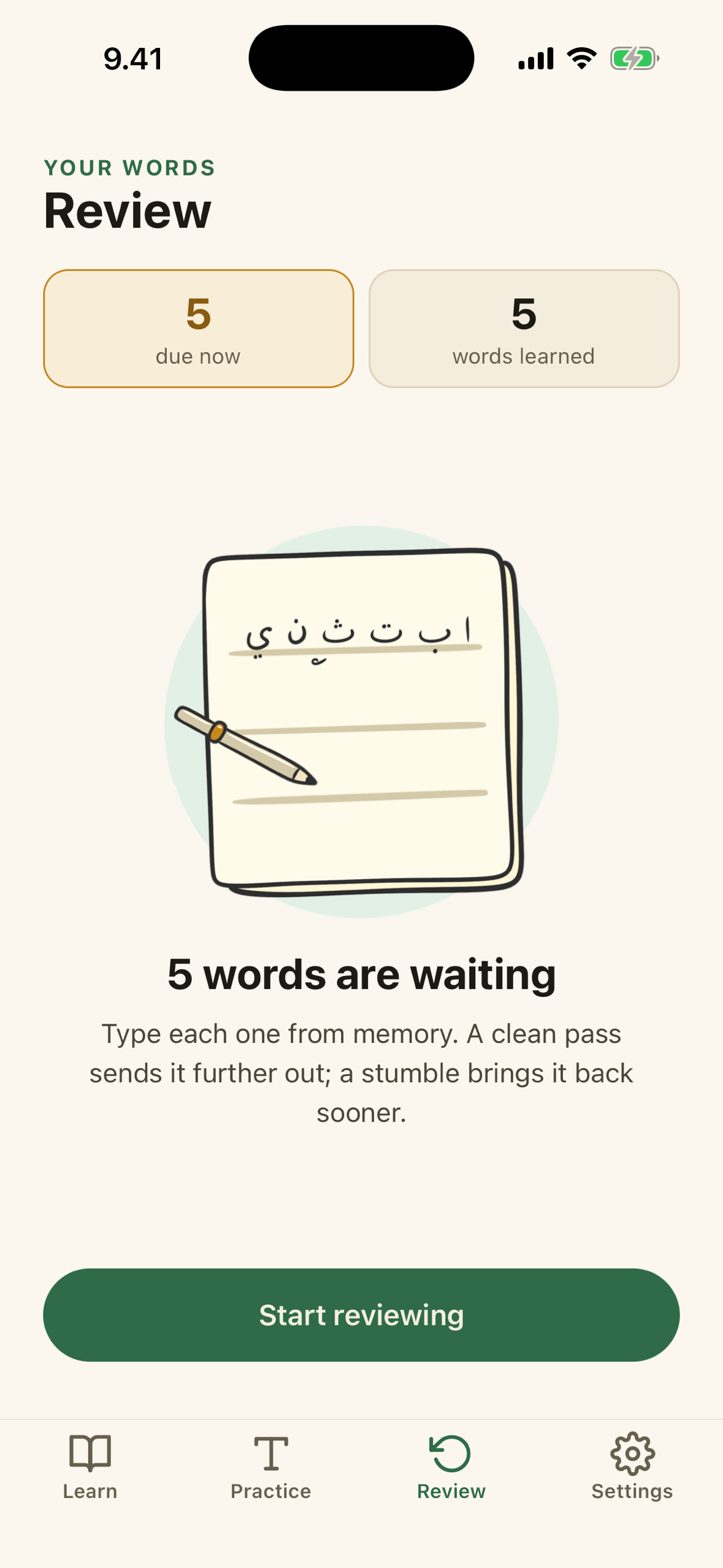
Review tab. Missed words wait here and come back on a spaced schedule, further apart each time you get them right.
-
App icon: a keycap with the letter kaf.
Inspiration
It started as a personal problem. I was trying to learn to read and write Arabic, and it was harder than it should have been. Textbooks teach handwriting, which made sense in 1990 but not today: the place you actually use Arabic is a phone keyboard, texting family, reading messages, searching. There was no straightforward course for learning to read Arabic through typing, so we decided to build the one I wished existed, for myself and for everyone stuck on the same problem. The letters connect, change shape depending on position, and run right to left, so to a beginner it all looks like squiggles. The app's job is to fix that.
What it does
A structured course that takes you from your first Arabic letter to reading and typing real words. Letters are introduced in small groups, each with native-quality audio, and every lesson ends with typing practice on an on-screen Arabic keyboard. Typing forces active recall in a way flashcards don't: you can't type ب if you can't recognize it. Progress lives in local SQLite, no account required. Monetization is a RevenueCat paywall with monthly, annual, and lifetime options, with our website arabictyper.com continuing as the free discovery surface.
How we built it
React Native with Expo, sharing code with the existing Next.js website through a pnpm monorepo (apps/web, apps/mobile, packages/core, packages/data). The shared packages hold the keyboard layout definitions, word schemas, and audio logic so web and mobile never drift apart.
Audio for every letter and word runs through our own pipeline and is cached in Vercel Blob. The cache key is a SHA-256 hash of the normalized text plus voice settings, so changing anything invalidates exactly the right entries and nothing is processed twice.
We iterated fast with Expo Go and the iOS simulator for day-to-day work, EAS development builds on a real iPhone for anything native, and EAS Update pushing preview builds via GitHub Actions so both of us always had the latest version on our devices.
Challenges we ran into
Data licensing. Our original word dataset was scraped from a Duolingo course, fine for a free hobby site and completely unacceptable for a paid product. We rebuilt it from open-licensed sources, combining the kaikki.org Wiktionary extract with an OpenSubtitles frequency list lemmatized with CAMeL Tools, so the app teaches genuinely common words with clean provenance.
Arabic is hard to render, not just hard to read. Letters change shape depending on position and everything flows right to left, which the lesson player and on-screen keyboard have to get exactly right. Highlighting a single letter inside a connected word is trickier than it sounds.
Retention without dark patterns. We wanted streaks, but not the guilt-trip kind. The app uses an auto-freeze mechanic that forgives missed days, and PostHog analytics are in from day one specifically to check whether the mechanic earns its place instead of assuming it does.
Accomplishments that we're proud of
Shipping a real, paid product to the App Store, not a demo. Building a word dataset with clean, open-licensed provenance from the ground up. A monorepo where the website and app genuinely share code instead of drifting into two implementations of the same rules. And designing retention mechanics we'd be comfortable defending to our own users.
What we learned
That a free web tool and a paid app aren't competitors, they're a funnel. That open-licensed data is a prerequisite for charging money, not a nice-to-have. And that shipping beats polishing: an app in review teaches you more than another week of tweaks.
What's next for ArabicTyper
An Arabizi course (the "3arabi" chat alphabet) built on the same lesson player. Growing our user base, and building more features our user love.
Built With
- expo.io
- git
- next.js
- pnpm
- python
- react-native
- revenuecat
- sqlite
- tailwindcss
- typescript
- vercel


Log in or sign up for Devpost to join the conversation.