Inspiration :
Long hours spent on ECE problem sets and frustration visualizing convoluted circuits caused these four CMU undergrads to create a circuit visualization system that would also help them solve circuits. A member of the team is currently in the intro ECE course: "Well it's not bad, I guess." - Team Member
What it does:
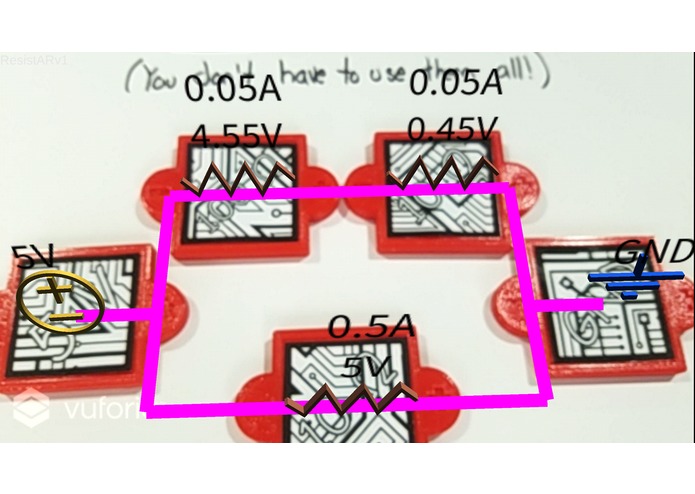
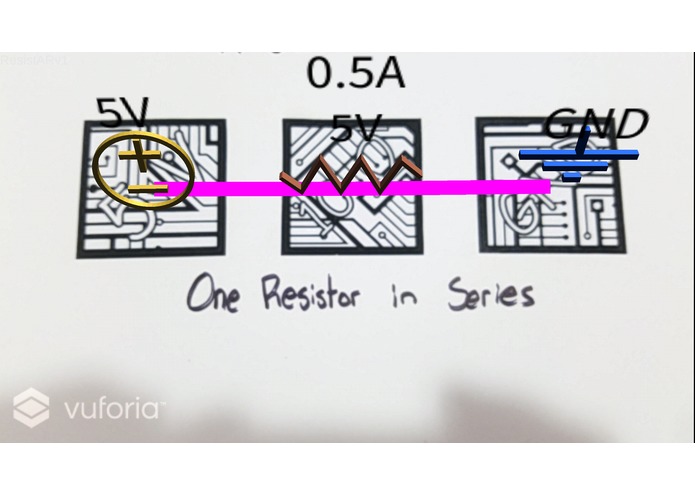
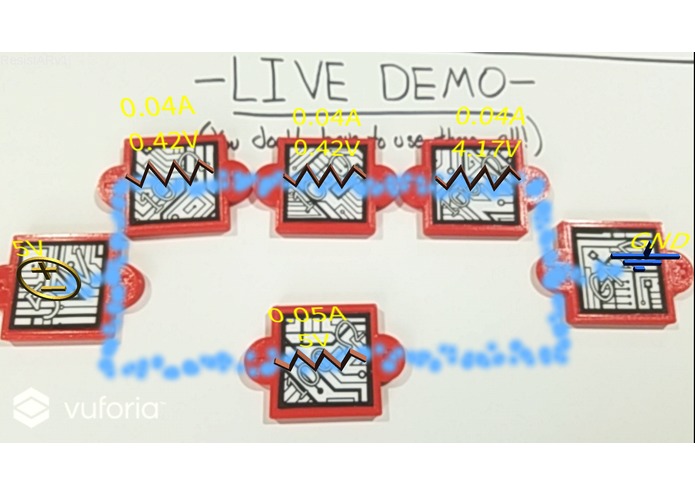
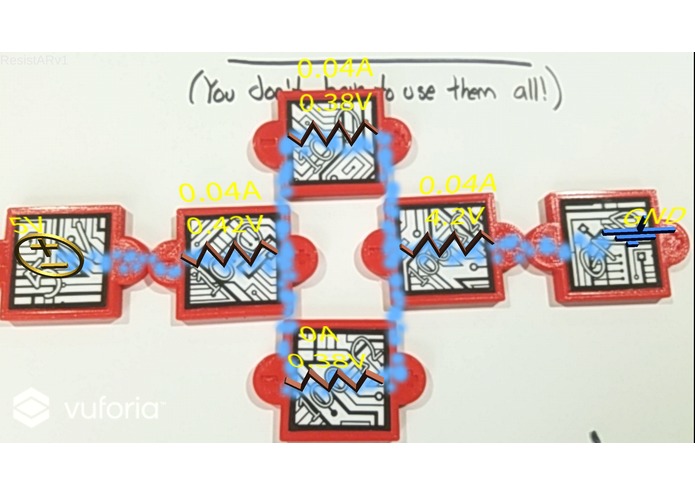
AR Resist is an Augmented Reality Circuit Visualizer and Solver. A user can place down circuit elements in parallel and series configurations and AR Resist will solve the current through and voltage across each element of the circuit. It gives the user an easy way to see (sharp) the circuit.
How we built it :
We first began with 3D printed chassis for the VuMark targets. These targets are identified and parsed by the program and cross checked against our cloud database on Vuforia. We then created 3D, textured, models in Blender that will hover over the VuMark targets. We then wrote the code in Unity that will calculate voltage and current values using concepts from vector calculus and matrix algebra.
Challenges we ran into :
The math was very difficult and attempting to rush a 3D printed design was also difficult but there was a rush because 3D printing would be a very time consuming process. Thus we also had to create a lot of our latter designs around the already 3D printed parts. VuMarks were also difficult to create. VuMarks must be very easily distinguishable from each other and non-symmetric along any axis, and therefore took a while to get finely tuned and calibrated. Finally the math was a very difficult thing to visualize. We had to go from 3D space to 2D space and there were some difficulties with projections. The coders did end up writing relatively bug-free code, but not before a long, arduous thinking process.
Accomplishments that we're proud of :
The math was very difficult and attempting to rush a 3D printed design was also difficult but there was a rush because 3D printing would be a very time consuming process. Thus we also had to create a lot of our latter designs around the already 3D printed parts. VuMarks were also difficult to create. VuMarks must be very easily distinguishable from each other and non-symmetric along any axis, and therefore took a while to get finely tuned and calibrated. Finally the math was a very difficult thing to visualize. We had to go from 3D space to 2D space and there were some difficulties with projections. The coders did end up writing relatively bug-free code, but not before a long, arduous thinking process.
What we learned :
we learned new technology related to project.
What's next for AR Resist :
It gives the user an easy way to see (sharp) the circuit. The series configurations and AR Resist will solve the current through and voltage across each element of the circuit. We first began with 3D printed chassis for the VuMark targets.




Log in or sign up for Devpost to join the conversation.