Inspiration
By the age of 7 years, a child reaches the age where most of their neural architecture is developed, where the child establishes most of the neural connection and develops the logical mind. which makes it the most important learning phase of life for a person. In these 7 years, play, observations, social interactions and specialised education act as the primary building blocks of building a strong neural network architecture. But, with Pandemic stretching for more than 2 years, social isolation and physical restrictions children between the ages of 1-7 have been affected the most in their brain maturation phase, which has the potential to impact them for the rest of their life. Realising the need for a whole rounded cognitive development of a child while imparting education, we came up with ‘AR Playground’ an educational game, targeting different aspects of learning and cognitive development. Restricted in small physical spaces at home, with parents unequipped with teaching methodologies for children of this age group, there is a hidden problem which is arising, the problem of declining cognitive development of children, which is visible with the learning difficulties faced by children. While the problem is widely discussed in different research aspects, little has been done to address the problem area. “We find that children born during the pandemic have significantly reduced verbal, motor, and overall cognitive performance compared to children born pre-pandemic. Moreover, we find that males and children in lower socioeconomic families have been most affected.”(Deoni et al., 2021)
What it does
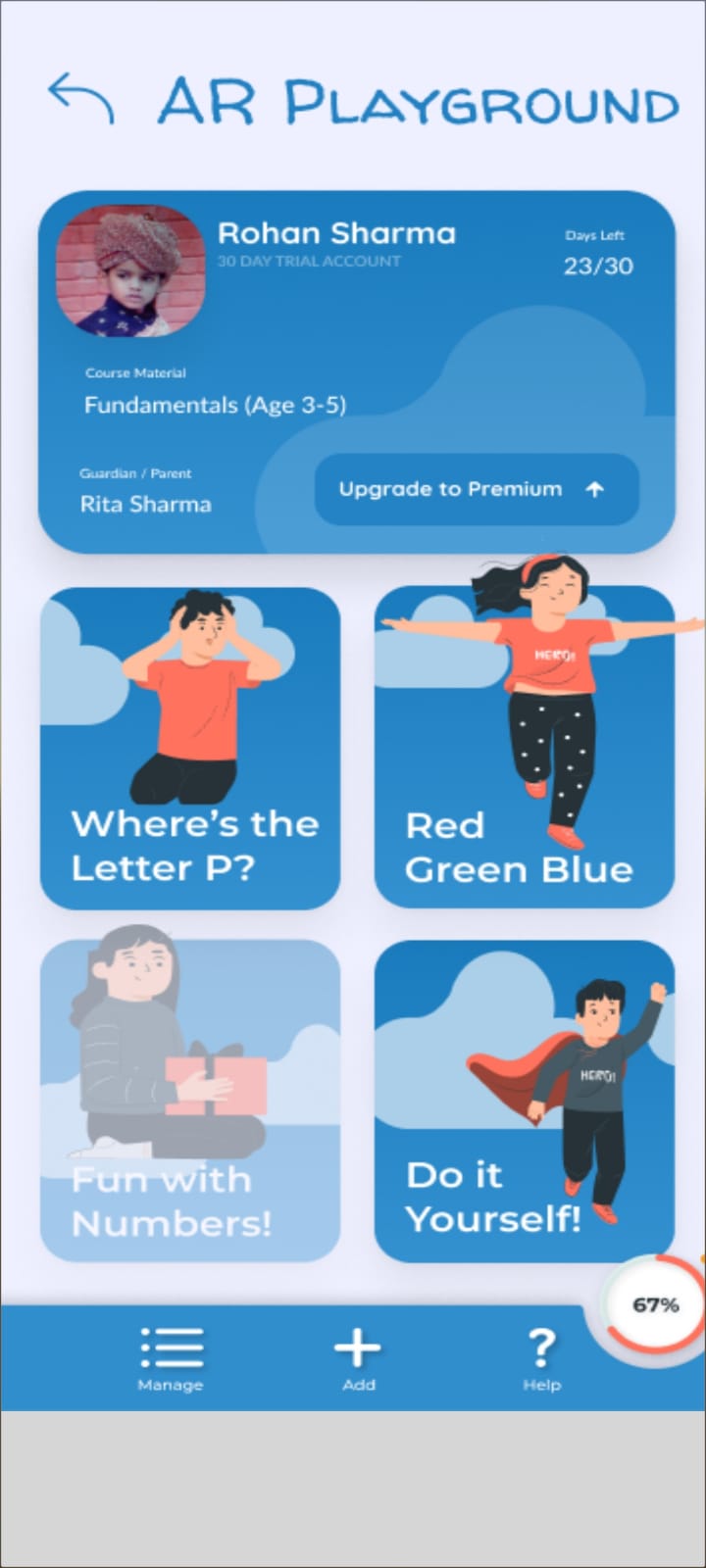
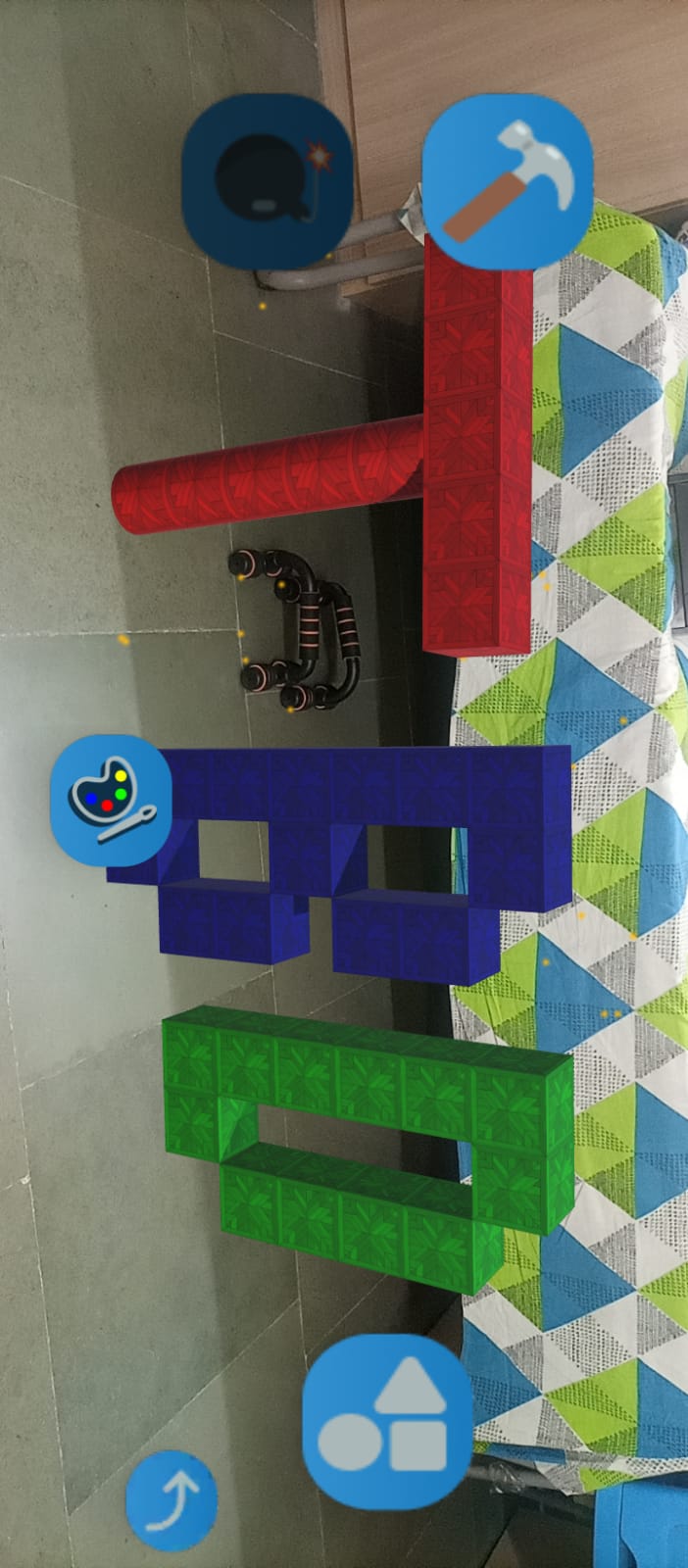
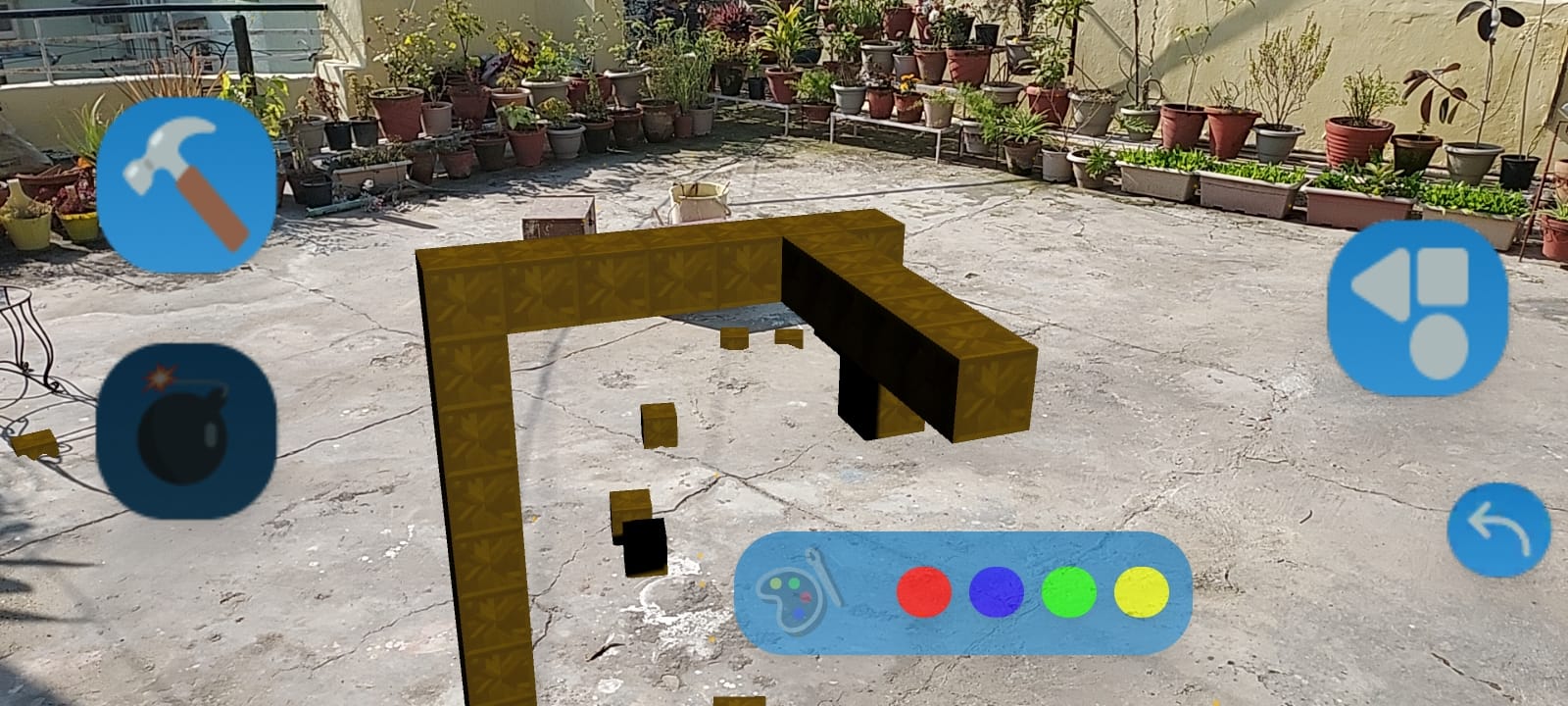
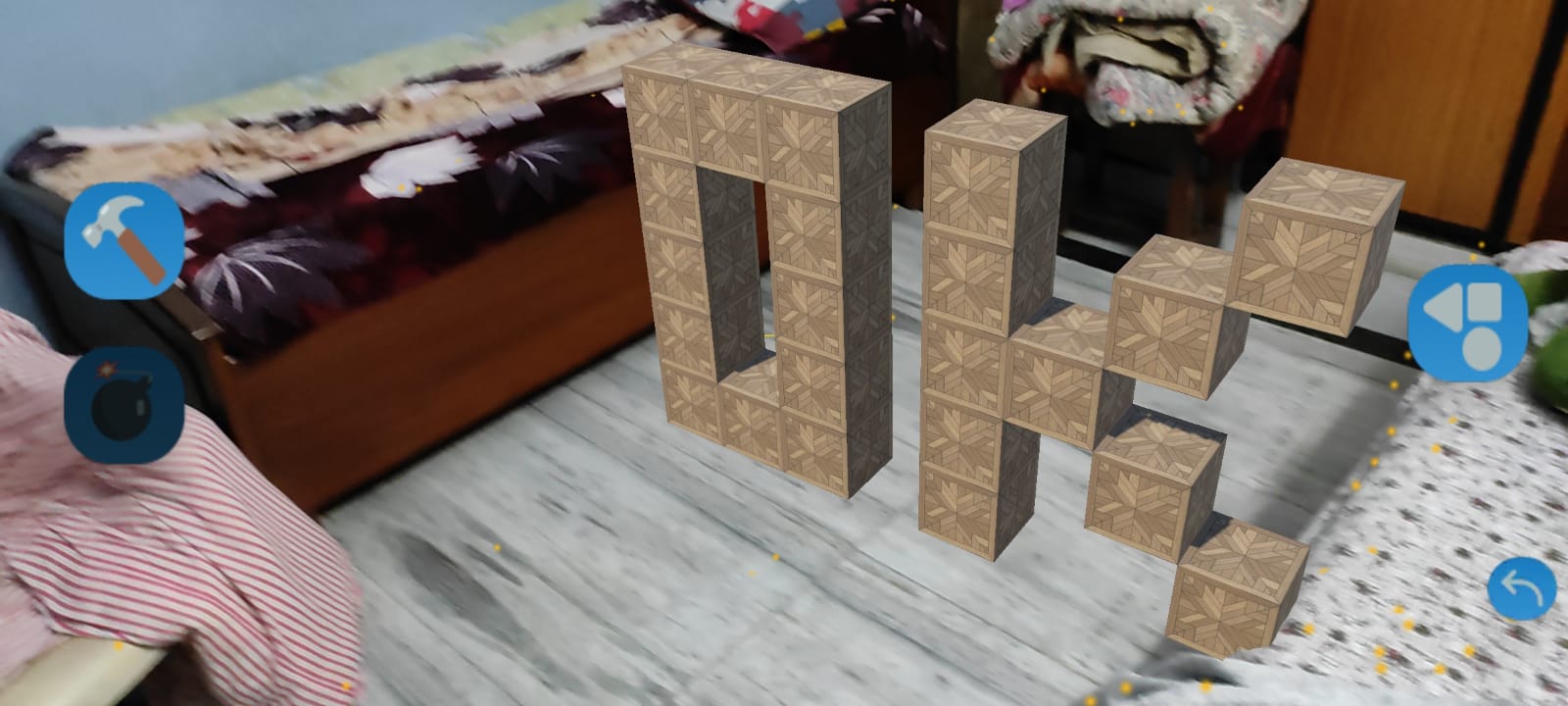
AR Playground attempts to use the emerging technology of Augmented Reality to create an experiential learning experience, revolving around the fundamental learning and cognitive development of children. With the amalgamation of intentional play and the just-right challenge (Costa, 2008), we have created a game, which involves tasks requiring muscle movement, sensory integration to teach children the basics of curriculum according to the age of the child. With the limited housing set-up, we aim to revisualize the empty spaces of the room and utilise them as a part of the play. The child can learn about phonetics and alphabets with reimagined alphabet learning experience involving hearing, speaking and seeing - sensory experiences with movement and running around the room picking up objects with the matching alphabets or phonetics. They can be involved in sorting out different colour objects and then rearranging and stacking them according to shapes, sizes. Or they can be left to their own devices, but to reimagine and create their own little worlds, with augmented reality playing blocks, which can allow them to build their houses and experience the spaces in 3-dimensional space (and even allowing them to see it from inside)
How we built it
The possibilities are endless, and our endeavours are not limited to this. We are still building on the activities, allowing a holistic development experience according to different age groups and course materials, which can be used by parents/ guardians for their children of any economic background in any physical space, with the convenience of a handheld phone.` Technology is advancing at an ever-growing pace, a lot of innovation is being done in the ed-tech space catering to different people of different educational levels across economic strata. However, the focus on innovation has been highly skewed towards the education of high school students and young professionals, mostly perceived as the “market consumers” of ed-tech. There has been little to no attempt to address the gaps in education prevalent in the primary education sector, which is the most crucial age group for fundamental development in the cognitive as well and learning sphere of life. Our idea has the ability to provide experiential learning to children at home, who currently do not have the possibility to get specialized education and share of time. Underprivileged refers to someone who does not enjoy the same standard of living or rights as others and is deprived of the resources available to the rest, which forces us to not turn a blind eye to those who do not attain complete basic cognitive development and allied learning due to unaffordability of toys, resources, and lack of time and specialised skills for parents to help their children in their day to day learning.
Language: C# Software development tool: Unity 3D Unity Plugins: Fantom UI prototyping tool: Figma Technology: Augmented reality with Phones (ARCore, Unity XR) Other tools: Git, Visual Studio
Challenges we ran into
It was a tough work understanding the user needs, empathise with the lives of the children and do something that had the potential to help people.
Accomplishments that we're proud of
As technology has been actively playing a role in bringing a change, a lot of it is restricted for those who can afford the technology. Virtual reality, expensive gears, phones, child development toys and other gizmos have made learning an even more expensive affair. Taking a step to make primary learning more affordable, we created an AR-based game, helping children grasp basic, yet essential concepts like alphabets, numbers, shapes and colours in their pre-educational skill age. AR has always been a futuristic concept where augmented displays and widgets are used as computer interaction systems. Different educational apps have already been developed commercially to give life to textbook photos and videos to show a three-dimensional view of the diagrams and objects, however very little has been done to go beyond it, and there are little to no advancements in seeing AR as a medium of imparting knowledge and brain development.
What's next for AR Playground
Our idea has the ability to provide experiential learning to children at home, who currently do not have the possibility to get specialized education and share of time. Underprivileged refers to someone who does not enjoy the same standard of living or rights as others and is deprived of the resources available to the rest, which forces us to not turn a blind eye to those who do not attain complete basic cognitive development and allied learning due to unaffordability of toys, resources, and lack of time and specialised skills for parents to help their children in their day to day learning.


Log in or sign up for Devpost to join the conversation.