-
-
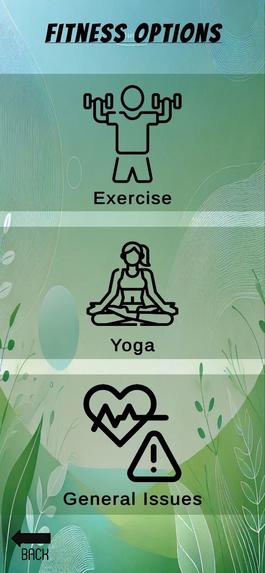
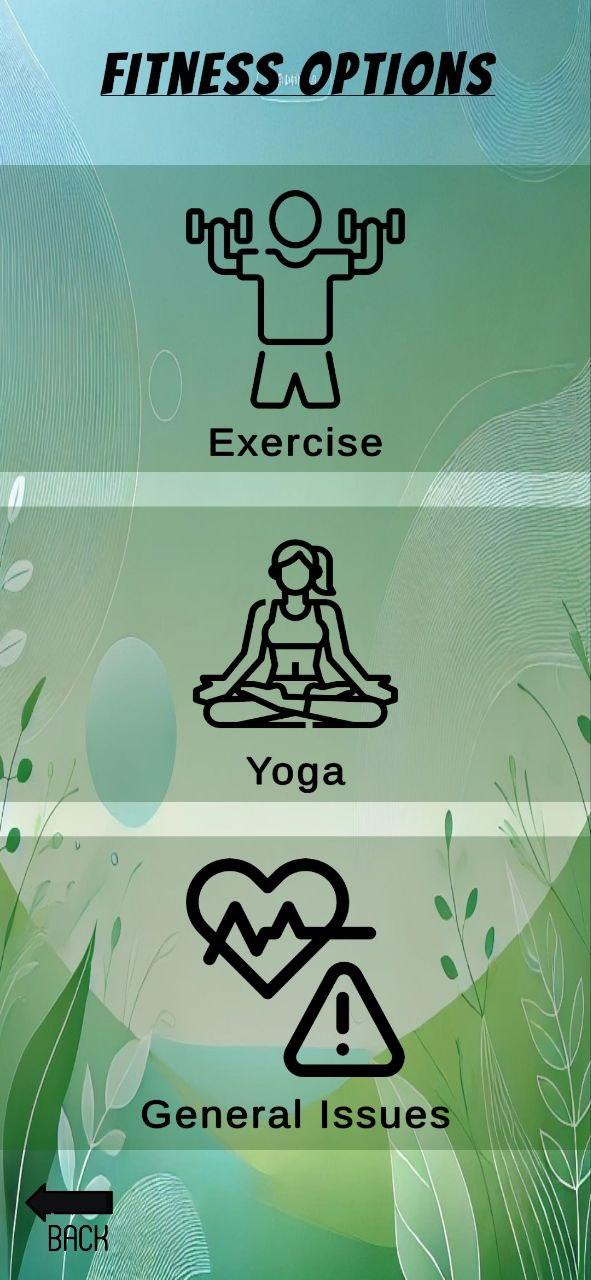
Fitness Options
-

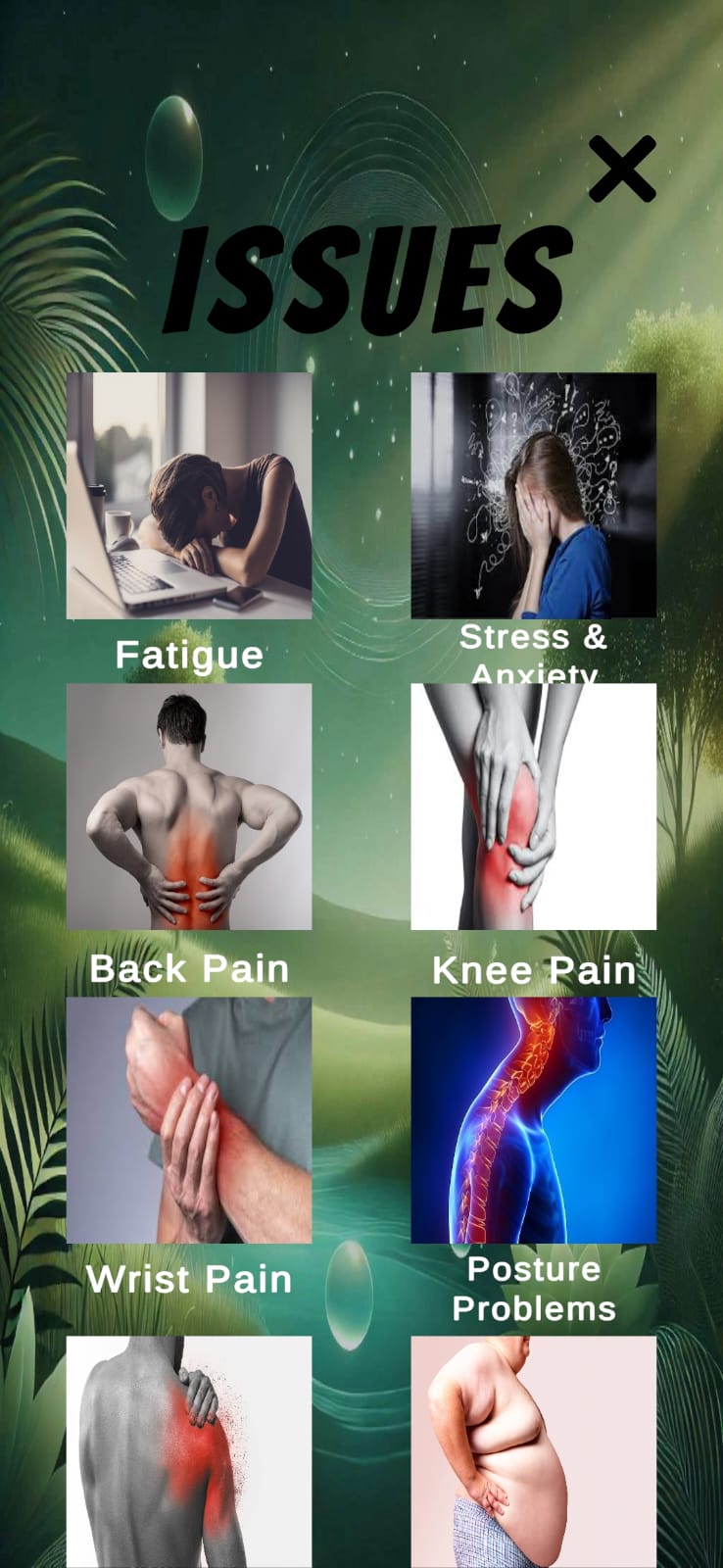
Health Issue with Solutions
-

Yoga Scene
-
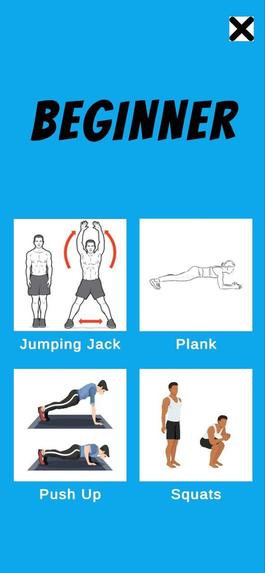
Exercise based on difficulty level

AR-Fit: Transforming Spaces, Transforming Lives
Inspiration
The inspiration for AR-Fit came from the challenges people face in maintaining a consistent fitness routine. Limited access to gyms, time constraints, and the absence of personalized guidance often discourage individuals from prioritizing their health. We envisioned an app that leverages augmented reality to bring the gym and personal trainer experience into any space, making fitness accessible, engaging, and effective for everyone.
What it does
AR-Fit is an AR-based fitness application that transforms any space into a personal workout zone. With a 3D virtual trainer, users receive real-time guidance for exercises and yoga poses, ensuring proper form and reducing injury risks. The app offers:
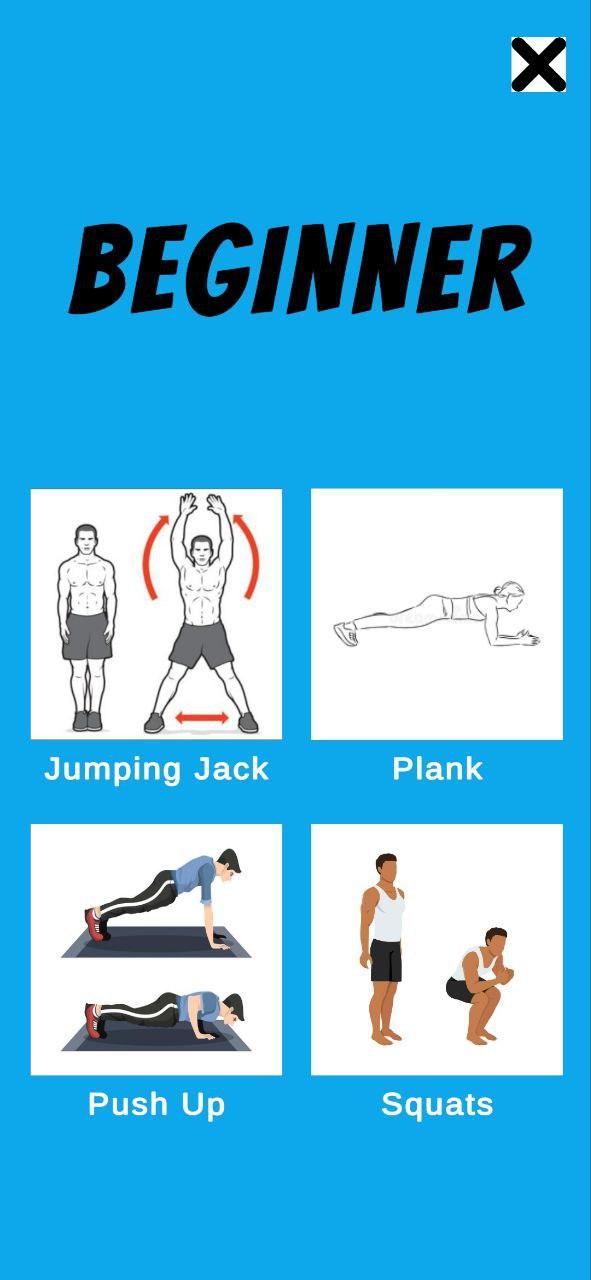
- Categorized fitness levels (beginner, intermediate, advanced).
- Personalized routines tailored to health concerns like back pain, stress, and mental fatigue.
- Gamification through achievements and badges to motivate users.
- Progress tracking for calories burned, daily exercise time, and milestones.
- Integration of yoga (e.g., Surya Namaskar) for holistic well-being.
How we built it
- Software: Unity 3D Game Engine, Figma for design, and Dall-E for generating creative concepts.
- Scripting Language: C#.
- SDKs: XR Foundation, ARCore, and ARKit for AR capabilities.
- Tools: Maya and Mixamo for creating and animating 3D models.
- Hardware: Mobile devices (Android/iOS).
We designed intuitive user interfaces and implemented AR interactions, enabling users to place and interact with a 3D trainer in their real-world environment.
Challenges we ran into
- Ensuring accurate motion tracking and posture guidance using AR technologies.
- Balancing simplicity for beginners with features that challenge advanced users.
- Creating 3D animations for exercises and yoga poses that are visually accurate and user-friendly.
- Integrating real-time progress tracking with visual feedback to keep users motivated.
- Technical issues with device compatibility and optimizing the app for different hardware specifications.
Accomplishments that we're proud of
- Successfully building a functional prototype that offers a unique and immersive AR fitness experience.
- Incorporating gamified elements to enhance user motivation and engagement.
- Designing user-friendly interfaces that make the app accessible to a diverse audience.
- Developing a scalable solution with a future roadmap for VR integration and AI-powered posture correction.
What we learned
- The immense potential of augmented reality in revolutionizing fitness and well-being.
- Effective collaboration within a team to overcome technical and design challenges.
- The importance of user feedback in refining features and improving usability.
- How to create a balance between functionality, aesthetics, and user engagement in app development.
What's next for AR-Fit
- Motion Tracking: Integrating computer vision for real-time posture correction and movement tracking.
- AI-Powered Customization: Implementing AI to analyze user performance and provide personalized coaching.
- VR Integration: Creating immersive workout environments like virtual gyms and scenic landscapes.
- Enhanced Gamification: Introducing leaderboards, community challenges, and social engagement features.
- Localization: Adding culturally relevant content such as Indian yoga practices to make the app globally appealing.
- Accessibility: Offering a free version to promote fitness among underserved communities.
AR-Fit aims to redefine fitness by merging cutting-edge technology with personalized health solutions, empowering users to stay fit and healthy anytime, anywhere.


Log in or sign up for Devpost to join the conversation.