-
-
-
-
-
-
-
o
-
-
-
split
-
payments
-
-
-
Inspiration
A great meal shouldn't end with an awkward conversation about money. We've all experienced it: a group finishes dinner, the bill arrives, and suddenly everyone is calculating what they ordered, splitting shared dishes, and deciding who should pay first. Usually, one person covers the entire bill and has to chase everyone else for reimbursement. We noticed something missing from existing bill-splitting solutions: most calculate who owes what, but leave the actual settlement to the diners. That inspired AquilaTab. We wanted to build something that doesn't just split a restaurant bill, but connects the entire experience—from understanding the receipt to verifying that each diner has paid the restaurant. One receipt. Individual shares. Independent payments.
What it does
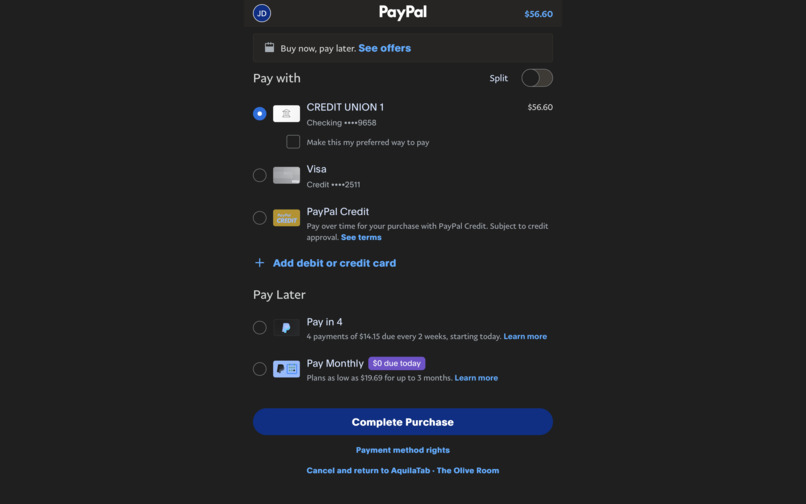
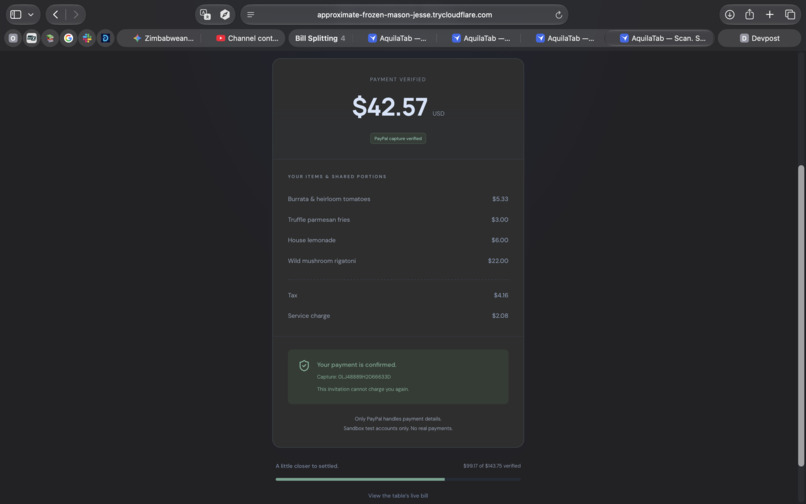
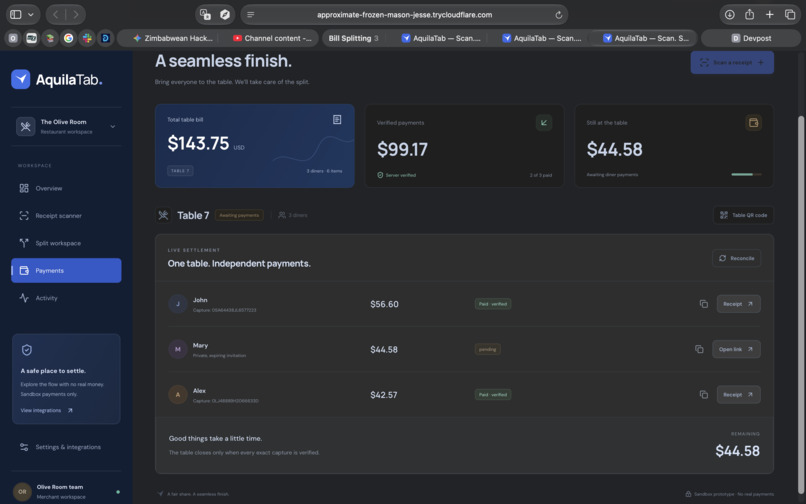
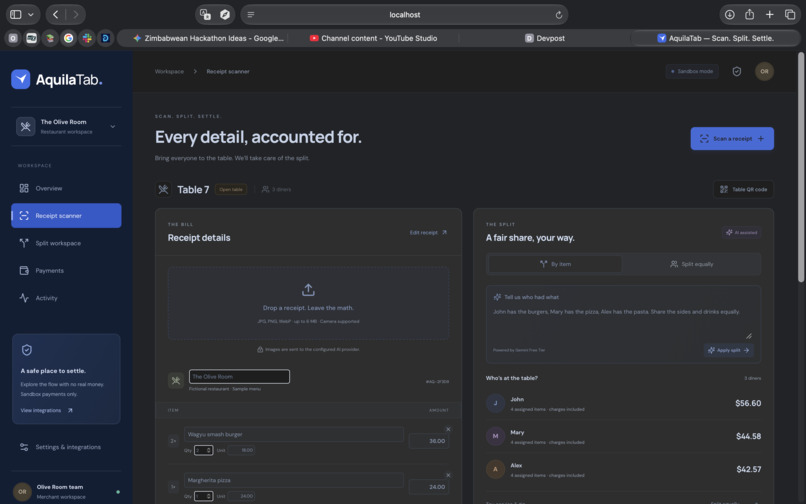
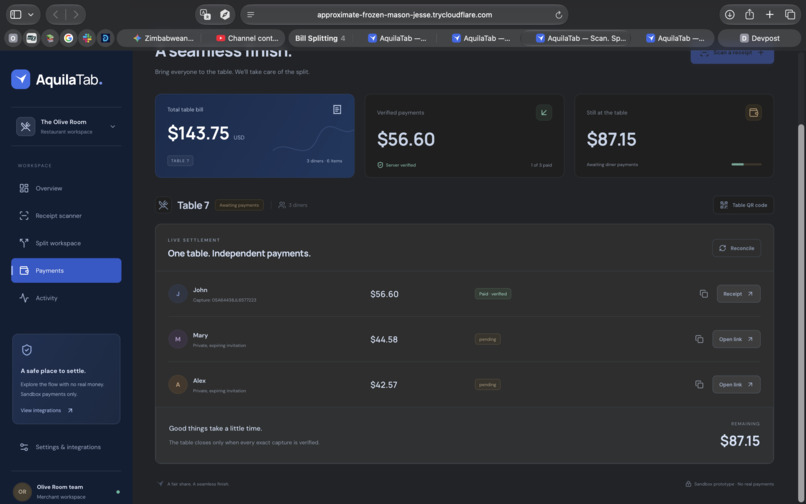
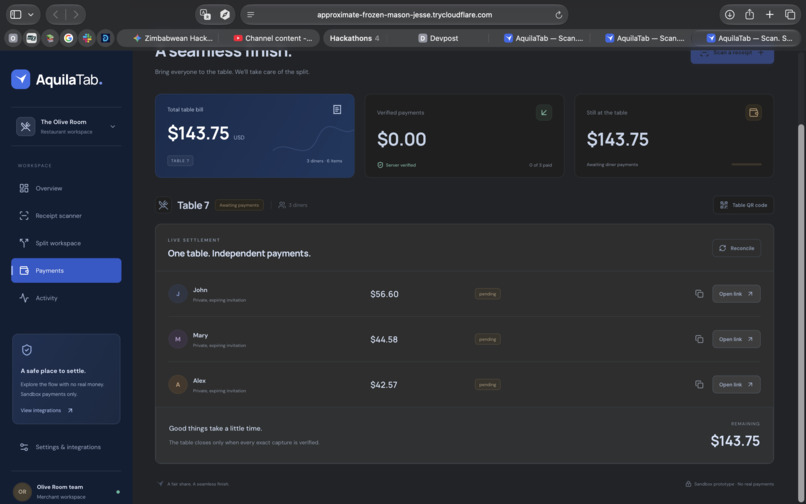
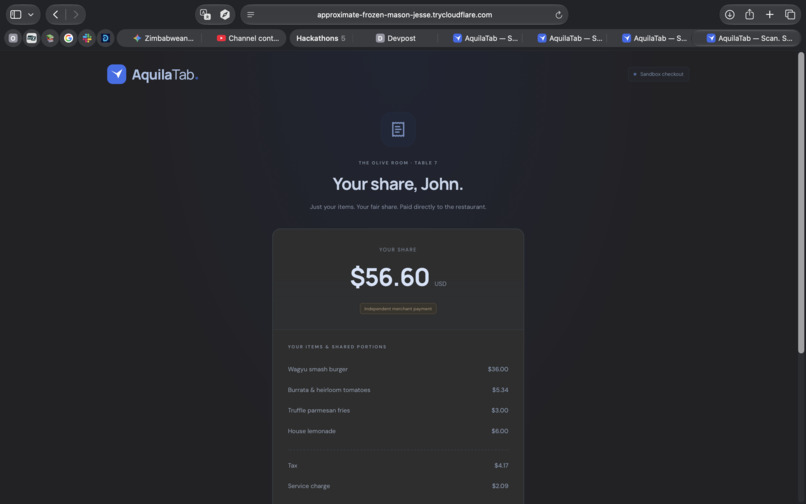
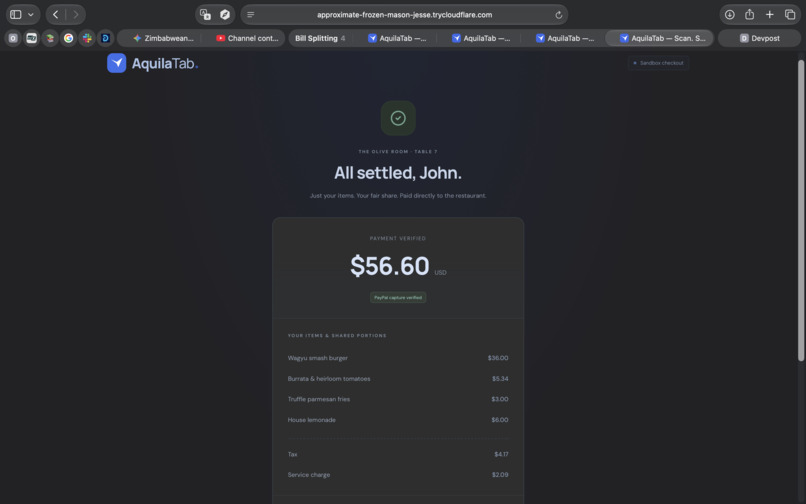
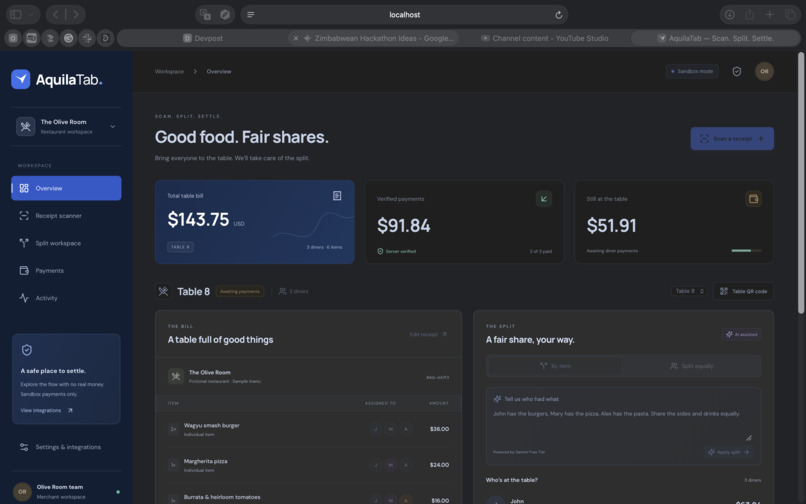
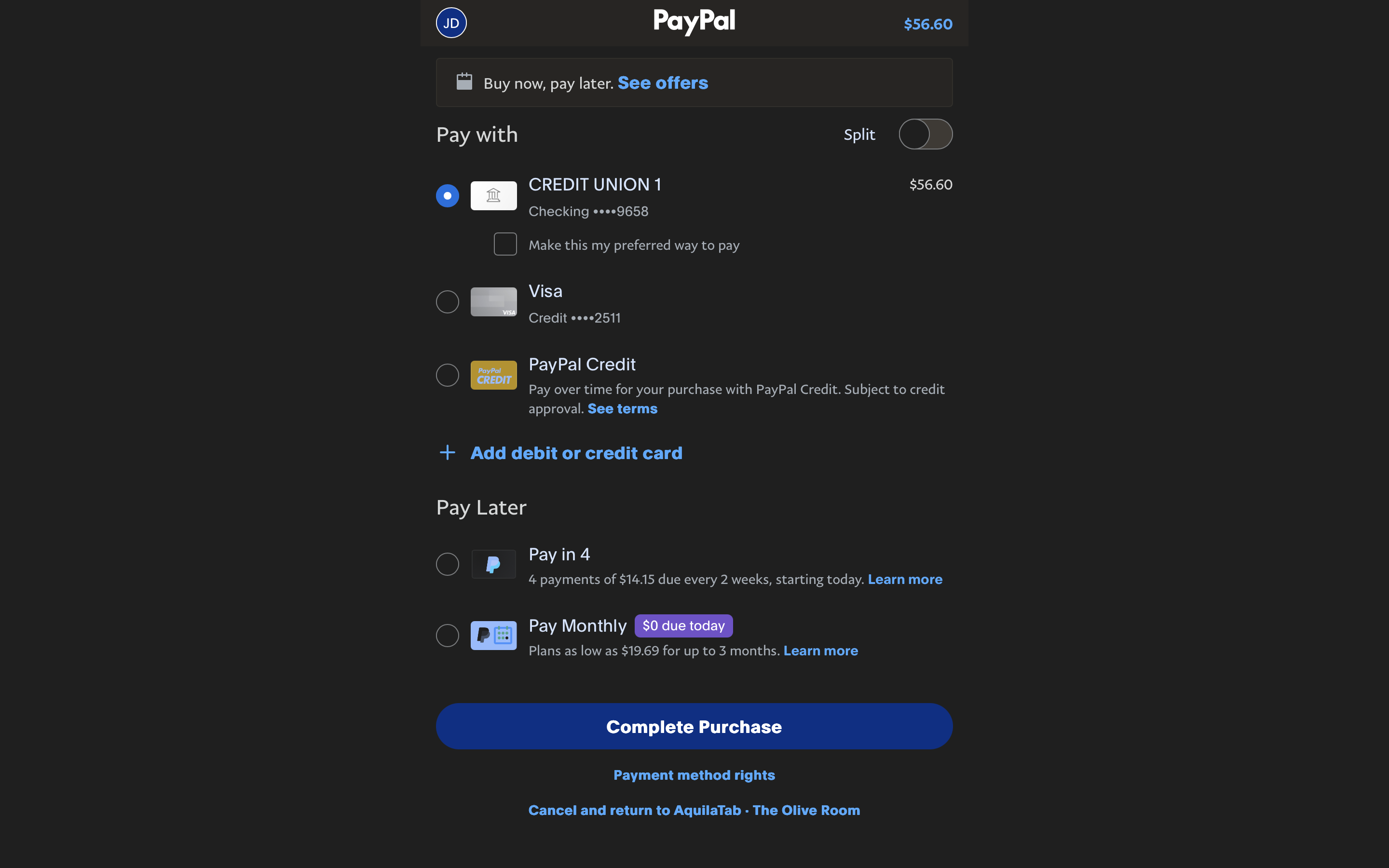
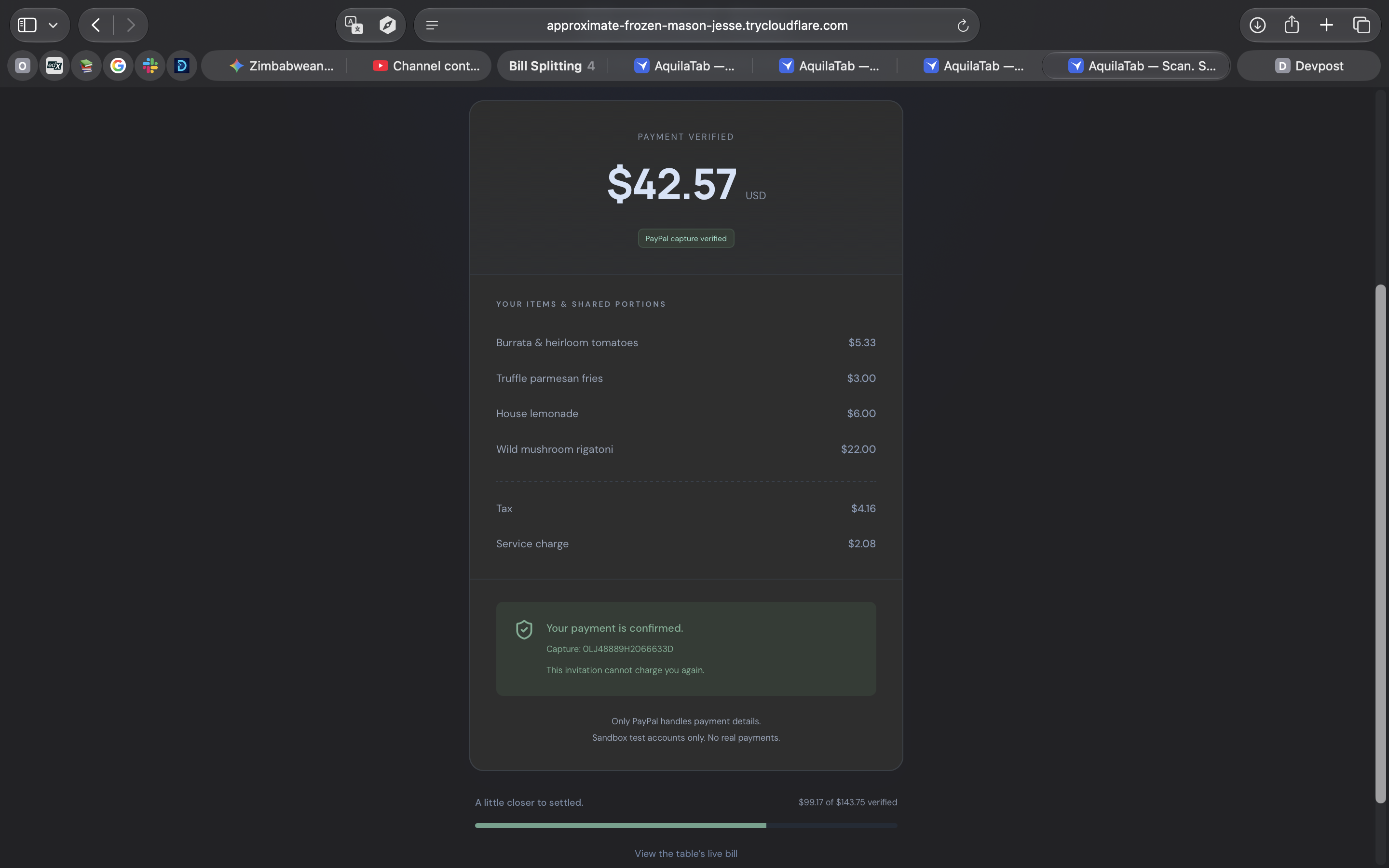
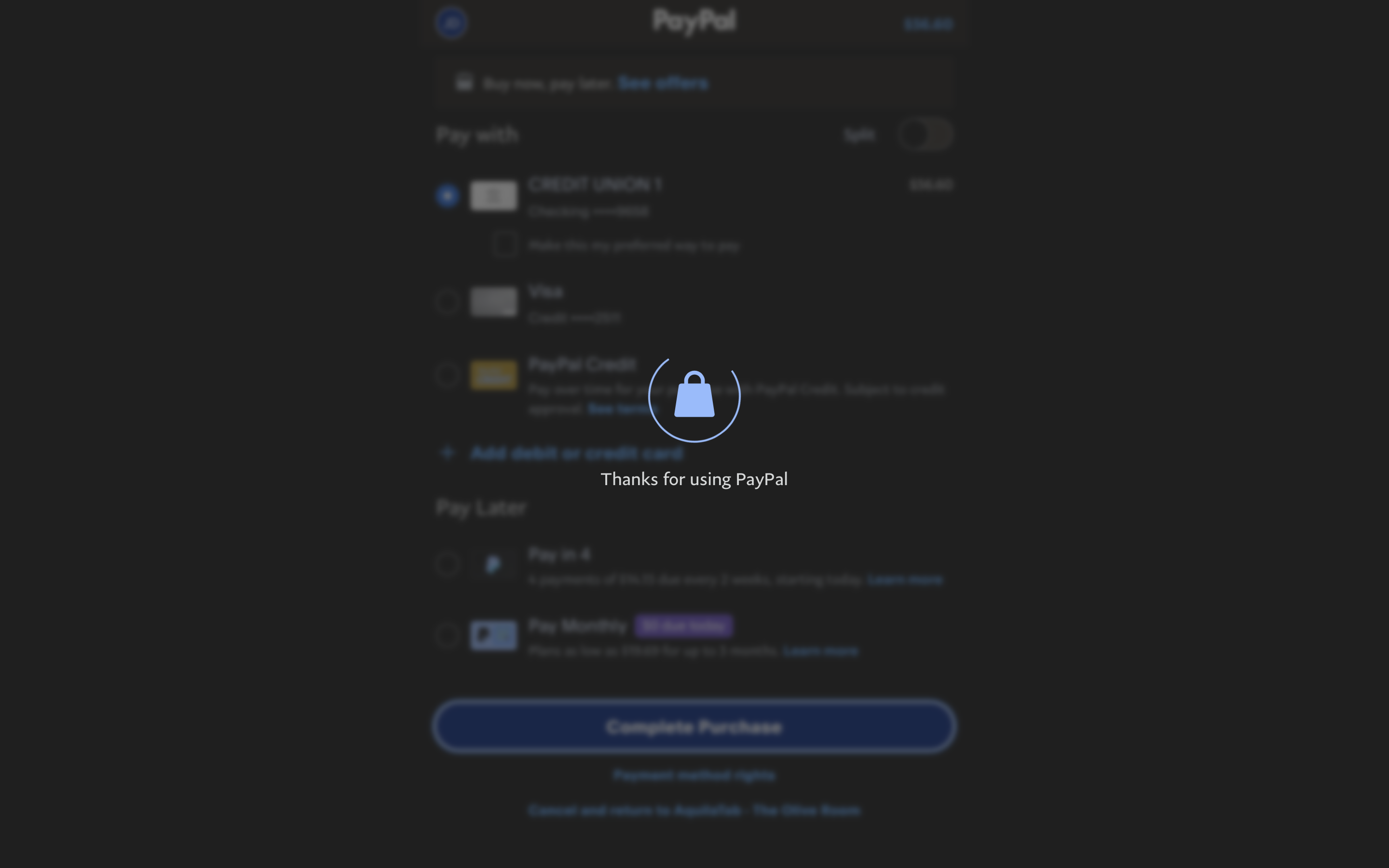
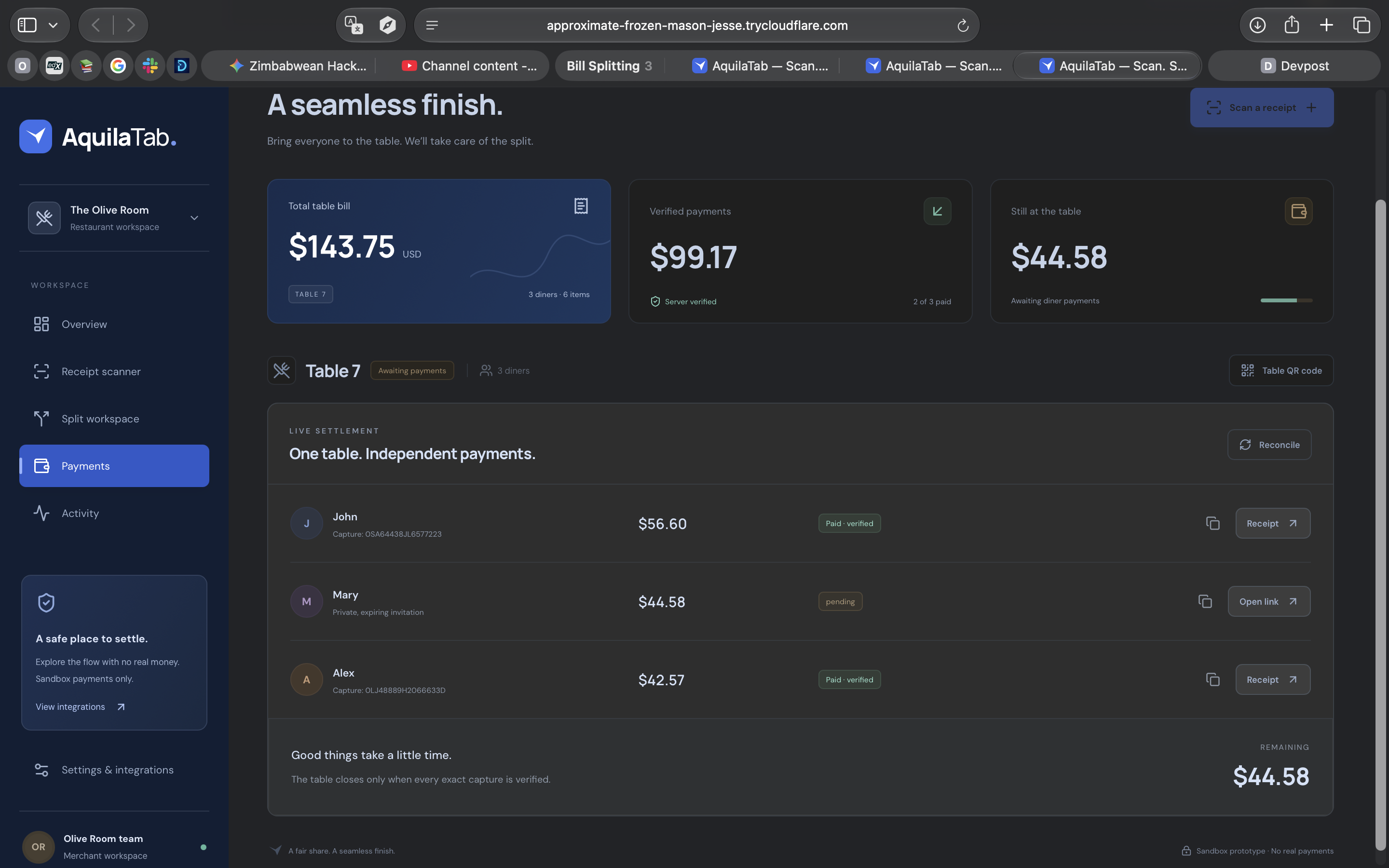
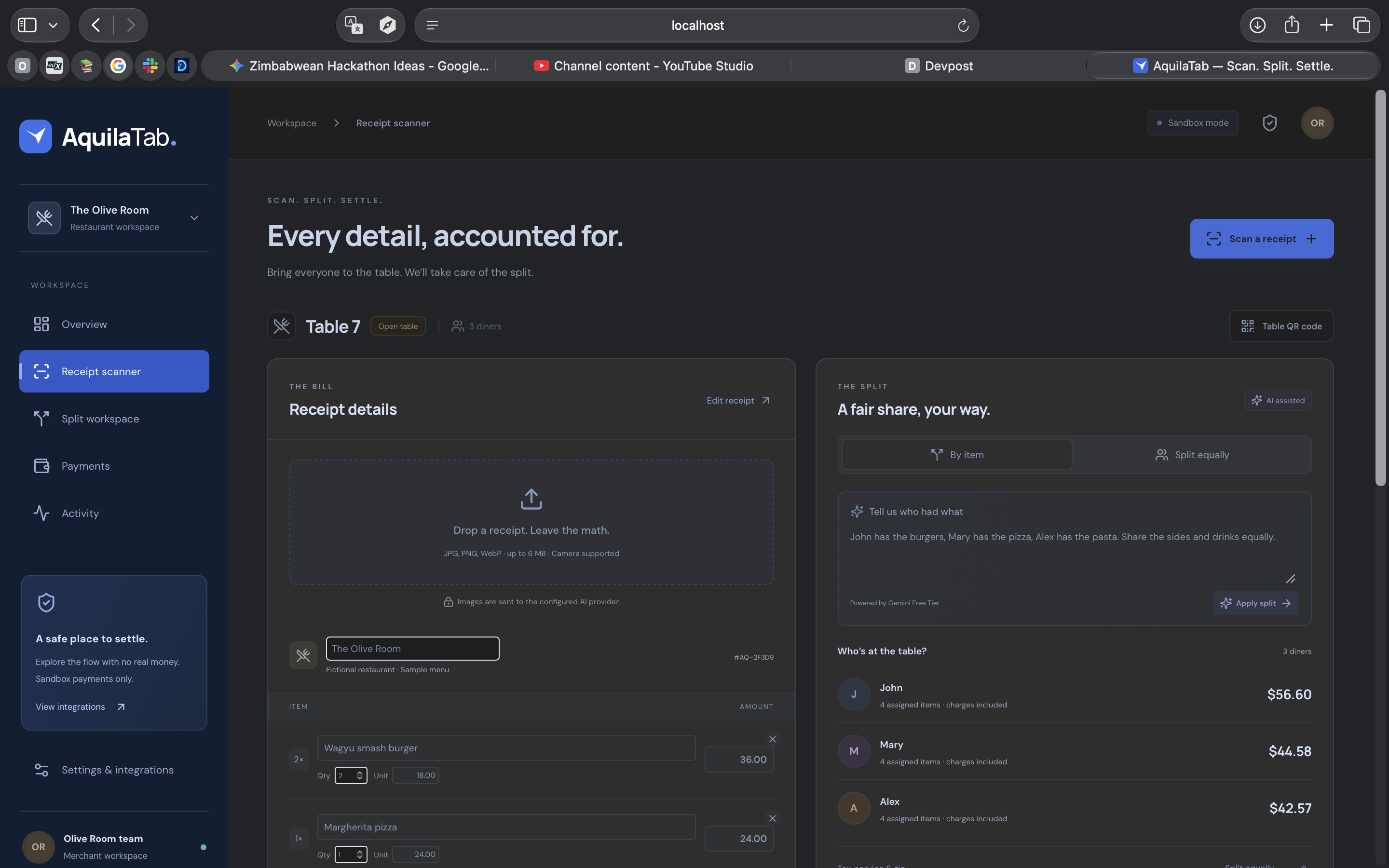
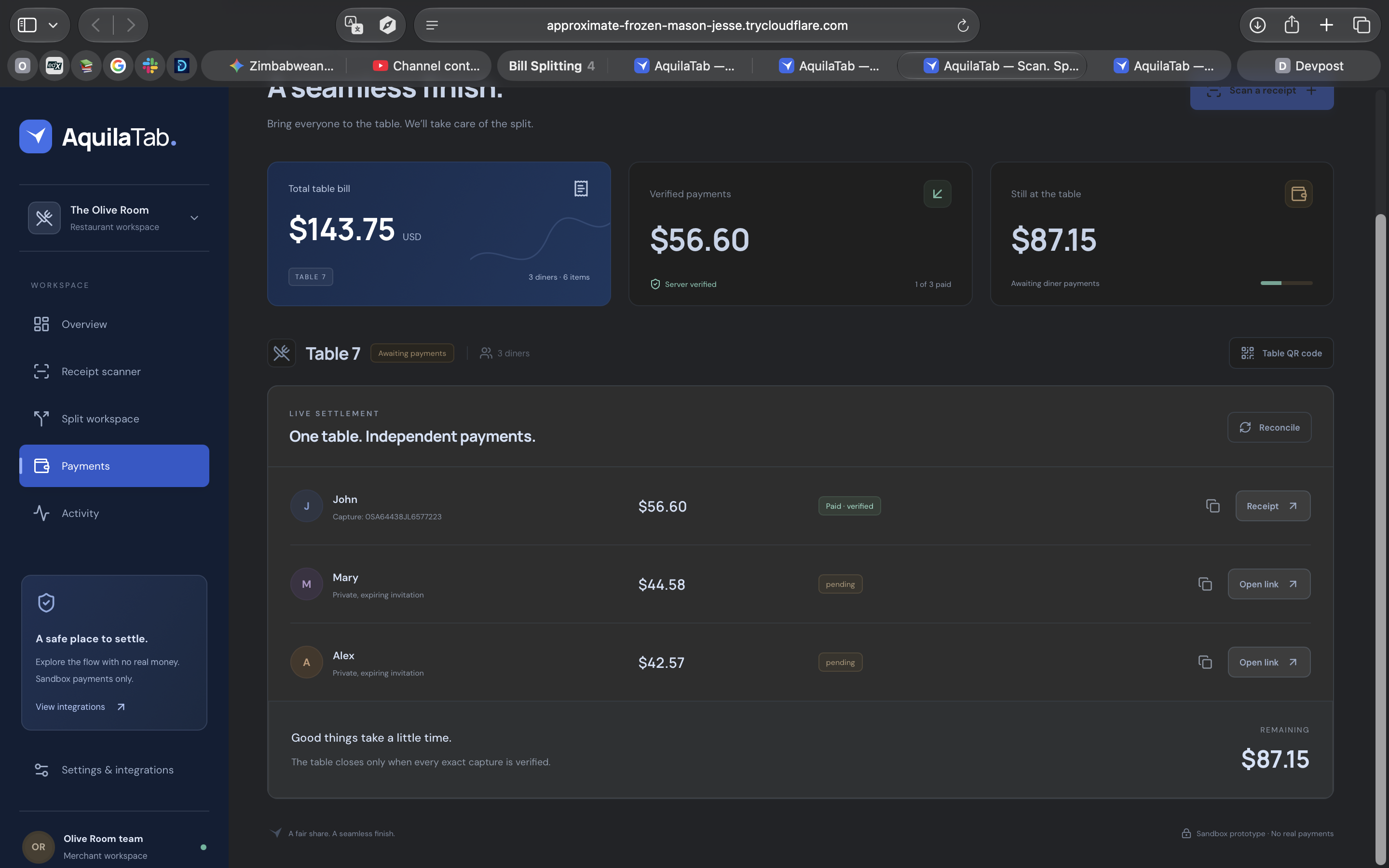
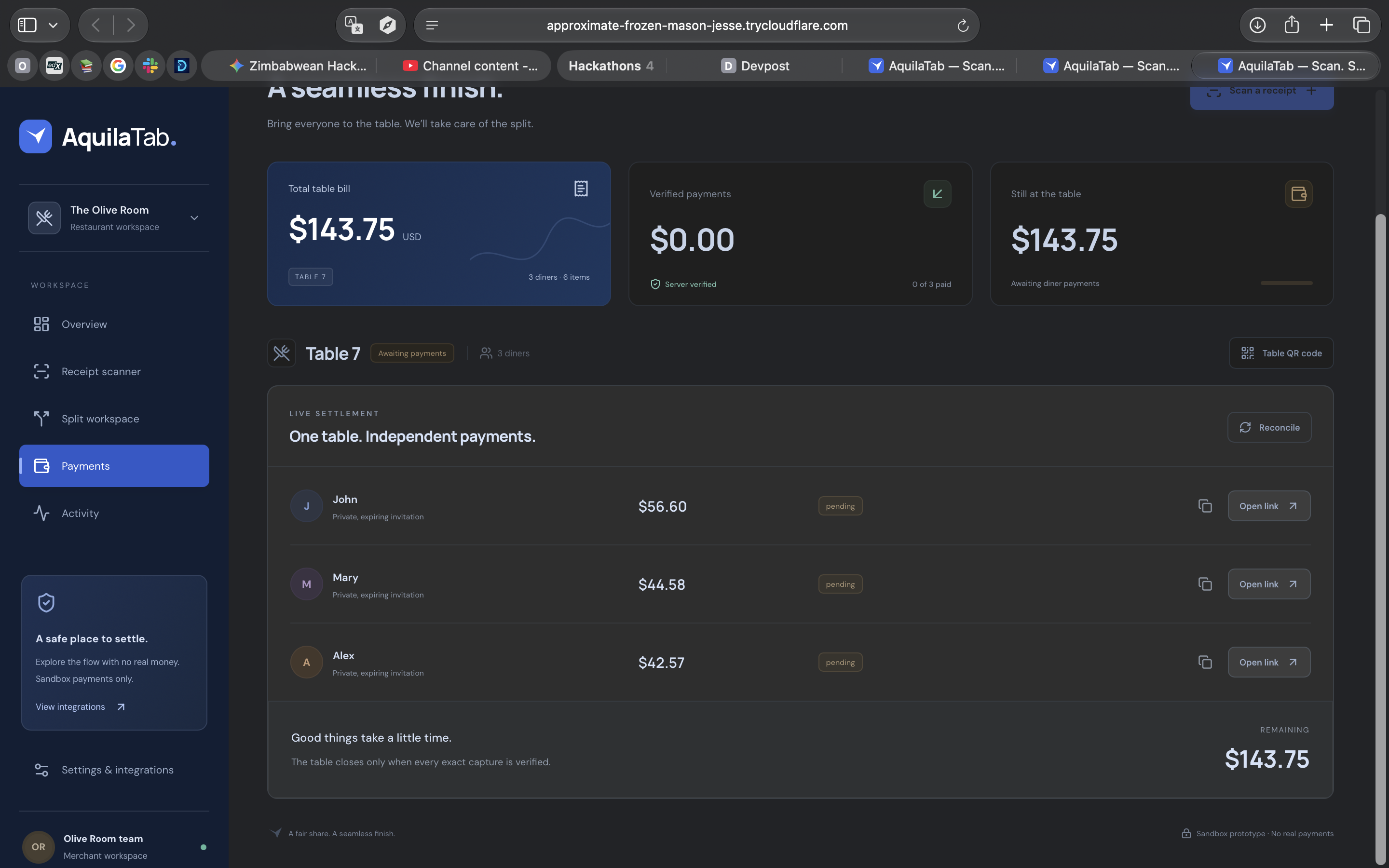
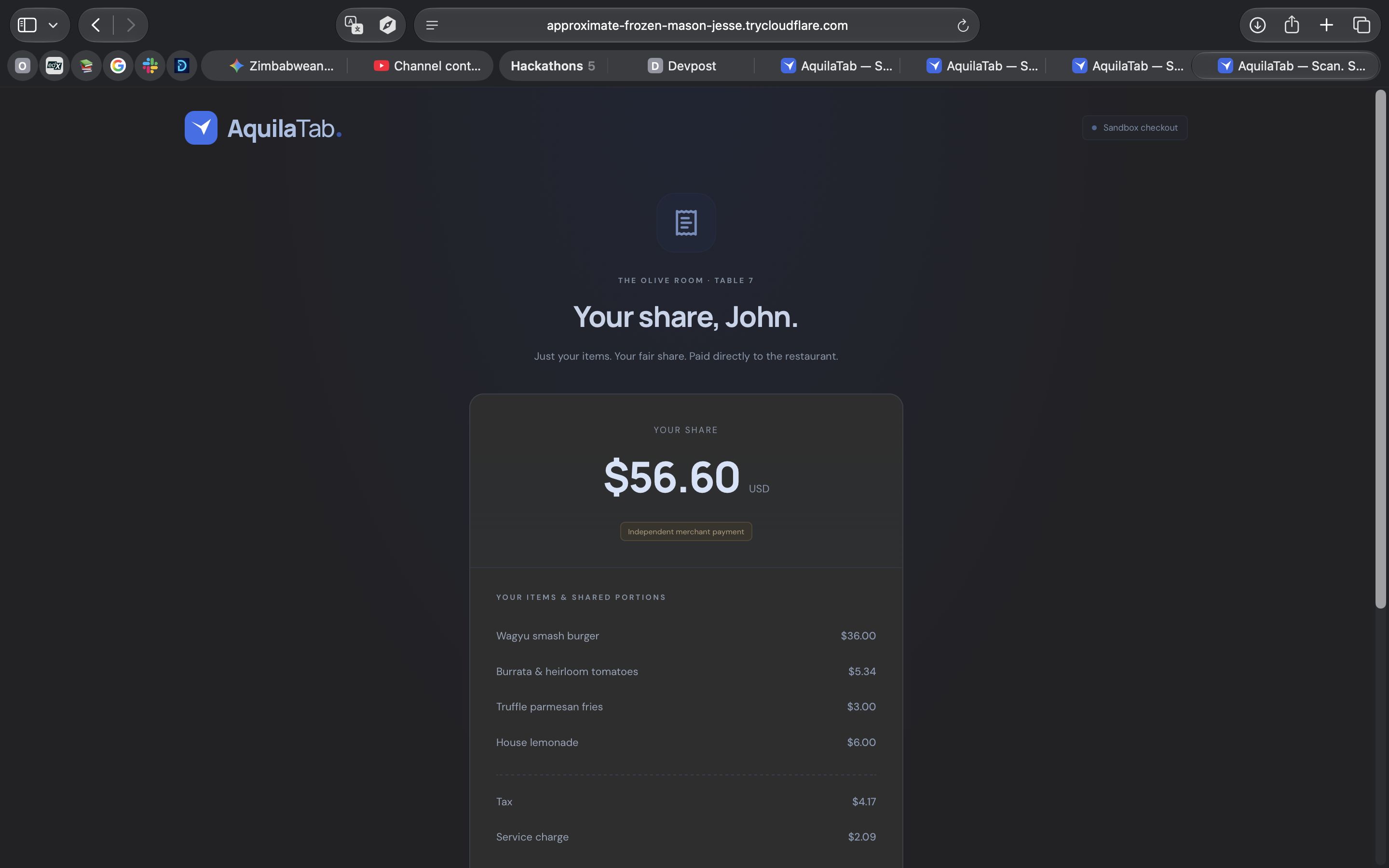
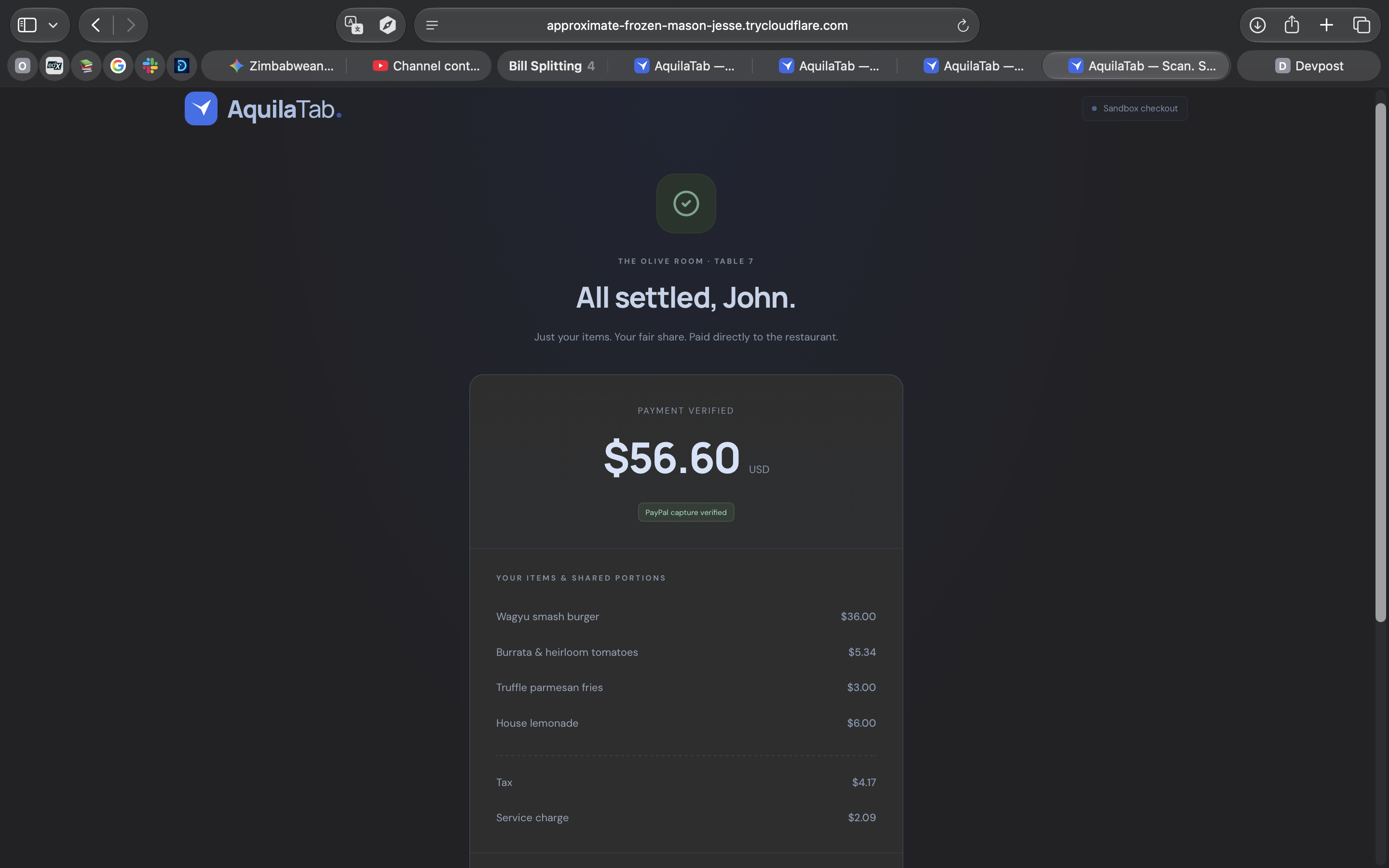
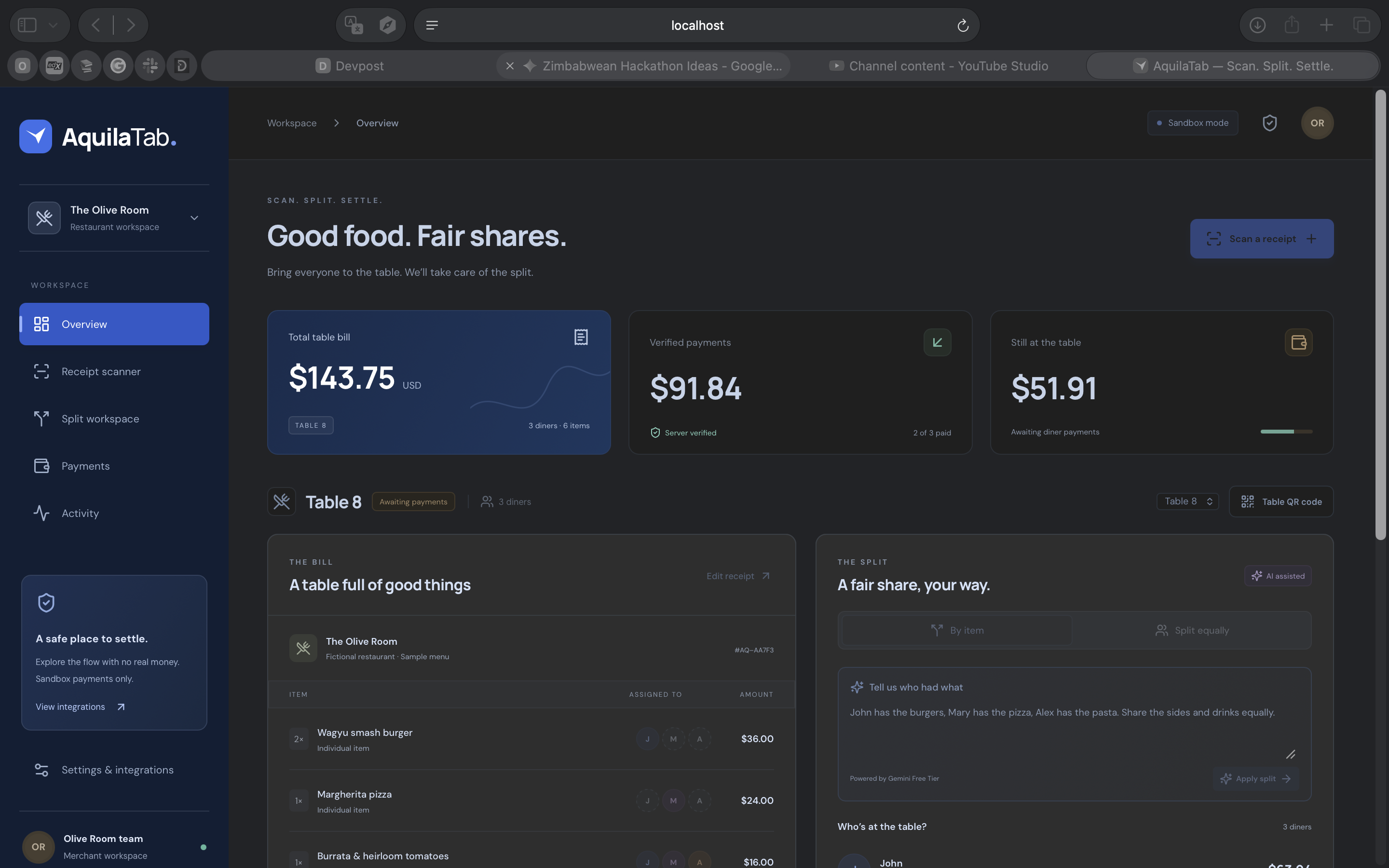
AquilaTab is an AI-powered restaurant bill-splitting and payment platform that connects intelligent receipt scanning with direct-to-merchant settlement. The experience follows five core steps: Scan: Google Gemini AI extracts menu items, quantities, and prices from a receipt image. Split: Diners assign individual items, divide shared dishes, and allocate taxes, tips, and service charges. AI-assisted natural-language instructions make allocation easier. Review: Each diner receives a private invitation showing their exact share before approving payment. Settle: PayPal Sandbox enables each diner to pay the restaurant's test merchant account independently. Verify: Server-side payment validation and PayPal webhook handling help the restaurant track completed payments and outstanding balances. Unlike traditional expense-sharing apps, AquilaTab is designed to close the gap between calculating a debt and settling it. We don't just answer "Who owes what?" We address "Has everyone actually paid?"
How we built it
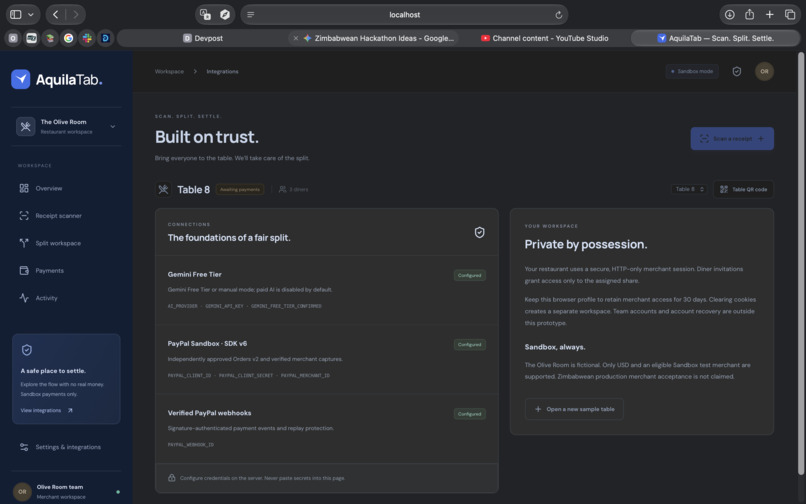
We built AquilaTab using a full-stack architecture that combines generative AI, deterministic financial calculations, and PayPal's payment infrastructure. Frontend: Next.js, React, and TypeScript power the responsive restaurant dashboard, receipt scanner, split workspace, and diner payment experience. Artificial Intelligence: Google Gemini processes receipt images and provides structured extraction results. It also supports natural-language suggestions for assigning items to diners. Financial calculation engine: Instead of letting AI determine the final amounts, we use deterministic integer-cent calculations to distribute shared items, taxes, discounts, and rounding adjustments accurately. Payments: PayPal Orders v2 and JavaScript SDK v6 support independent Sandbox checkout flows. Server-side verification checks payment details before recording a share as paid. Backend and persistence: SQLite stores restaurant sessions, bills, allocations, invitations, and payment records. Zod provides structured validation. Security: We implemented signed payment invitations, explicit diner approval, merchant-bound payment verification, and idempotency safeguards to reduce duplicate-processing risks. The architecture deliberately separates AI interpretation from financial authority: AI makes suggestions, people approve, and verified payment records determine settlement.
Challenges we ran into
- Making AI reliable enough for financial workflows Receipts are inconsistent. Prices can be unclear, discounts may be missing, and extracted totals can be wrong. We addressed this with validation, human review, and safeguards that prevent inconsistent amounts from being confirmed.
- Making every cent count Splitting shared dishes, taxes, discounts, and tips creates rounding challenges. We developed deterministic allocation logic to ensure the individual shares reconcile with the original bill.
- Designing independent payment flows We needed each diner to approve and pay only their own share while allowing the restaurant to track the entire table. This required secure invitations, payment state management, PayPal order verification, and webhook-aware reconciliation.
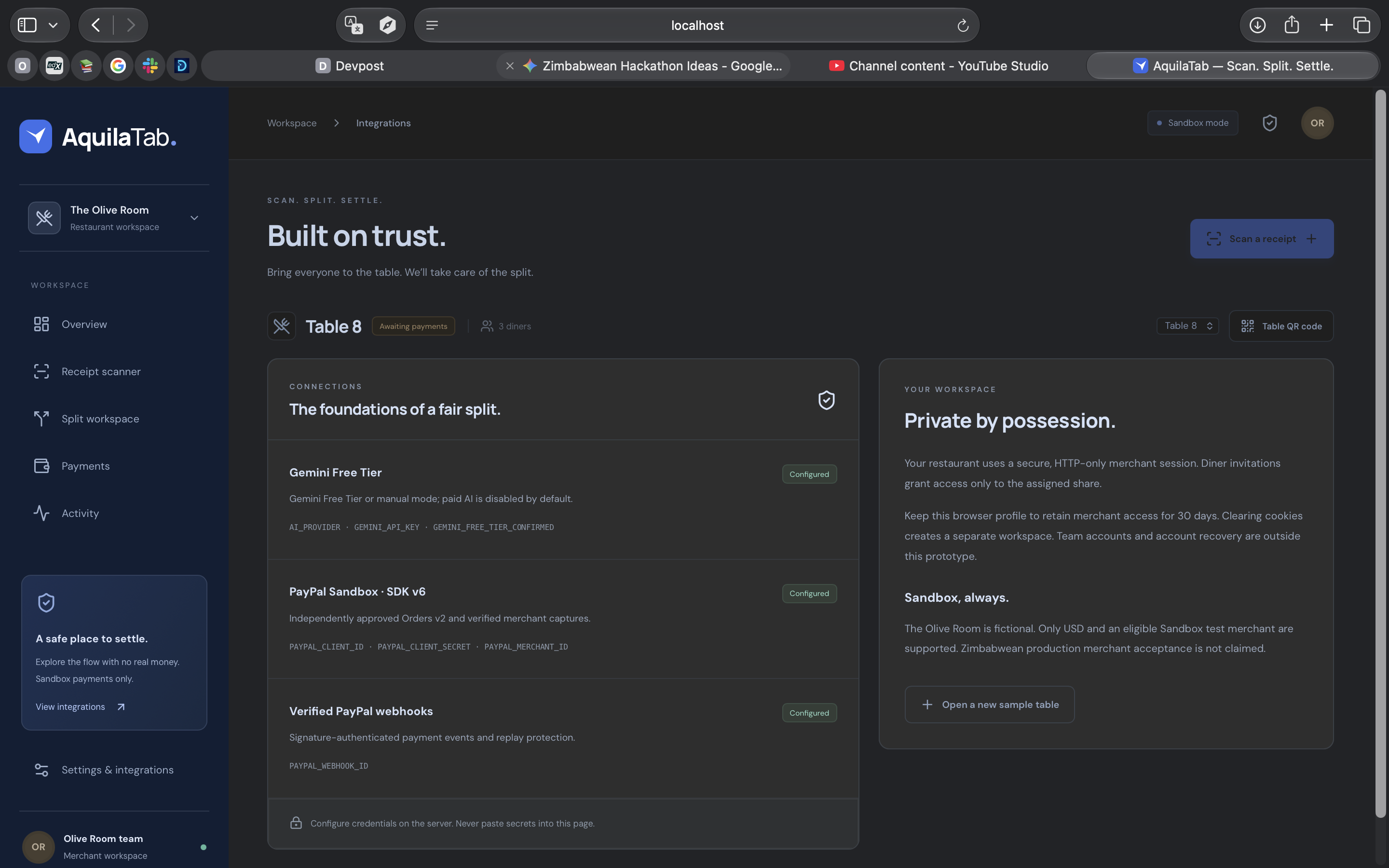
- Integrating external services on a zero-dollar budget Connecting Gemini, PayPal Sandbox, and public HTTPS webhook delivery involved credential configuration, local testing, and network troubleshooting. We used free development services and a temporary Cloudflare Tunnel rather than purchasing hosting.
Accomplishments that we're proud of
Our biggest accomplishment is building more than a bill calculator: AquilaTab combines receipt understanding, allocation, payment approval, and merchant settlement tracking into one product. We're particularly proud of: integrating Gemini-powered receipt extraction and AI-assisted allocations. Supporting individual and shared-item splits with accurate monetary reconciliation. Creating private invitations where diners independently review and approve their shares. integrating PayPal Sandbox checkout with server-side capture verification and webhook-handling infrastructure. Building a restaurant dashboard that distinguishes verified payments from outstanding balances. Passing 60 automated tests and 42 Chromium desktop/mobile browser checks during documented development verification. Making AquilaTab open source and reproducible without requiring paid infrastructure. The result is a functional Sandbox prototype with a clear path toward real-world restaurant use.
What we learned
The biggest lesson was that AI should simplify financial decisions without becoming the authority over money. Generative AI is excellent at understanding unstructured receipts and interpreting natural-language instructions. However, accurate monetary calculations require deterministic rules, validation, and human approval. We also learned how important payment integrity is. A successful-looking checkout screen is not sufficient evidence of settlement; payment records must be independently checked. Finally, we learned that building useful fintech products requires thinking beyond features. Reliability, transparency, accessibility, security, and user trust matter just as much as the interface.
What's next for AquilaTab
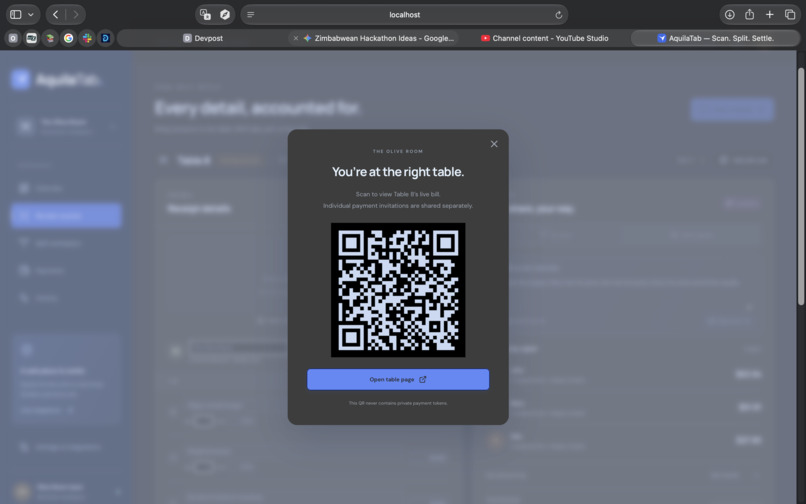
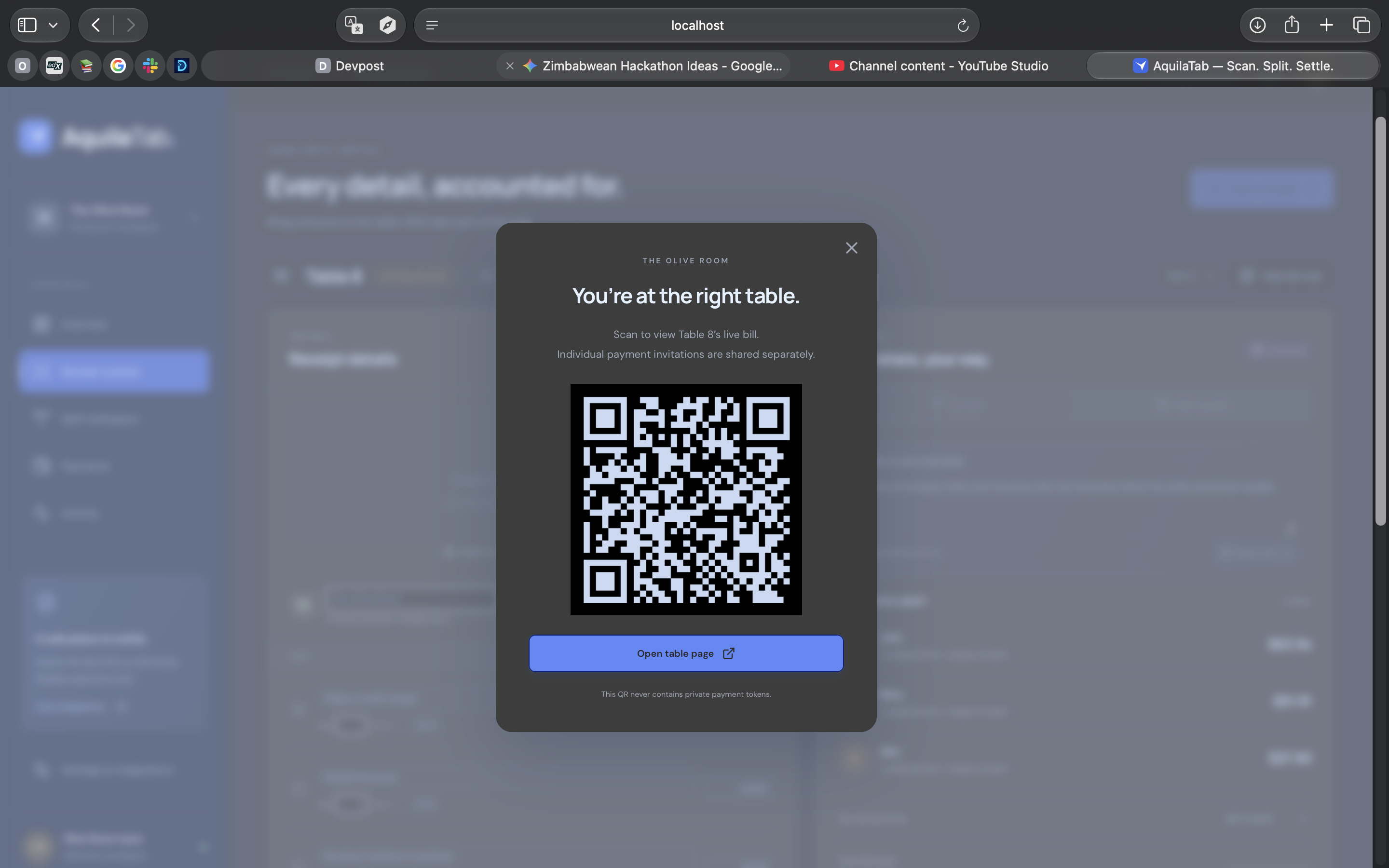
AquilaTab currently operates as a prototype with PayPal Sandbox payments, not live commercial transactions. Our next priorities are: Restaurant pilots: Test the experience with actual restaurant staff and diners using controlled environments. Mobile-first experiences: Improve receipt scanning, QR-code access, and one-tap diner payment flows. Broader payment support: Explore additional currencies, eligible markets, and payment methods. Production readiness: Develop merchant onboarding, stronger account management, monitoring, and operational security. Smarter AI: Improve receipt accuracy, multilingual extraction, and conversational bill allocation. Our long-term vision is to make restaurant checkout effortless, transparent, and fair for everyone at the table.
AquilaTab — Scan. Split. Settle.

