Inspiration
AquaYogis began with a simple question: How can we help people continue to move well, swim well, and pursue meaningful physical challenges throughout life?
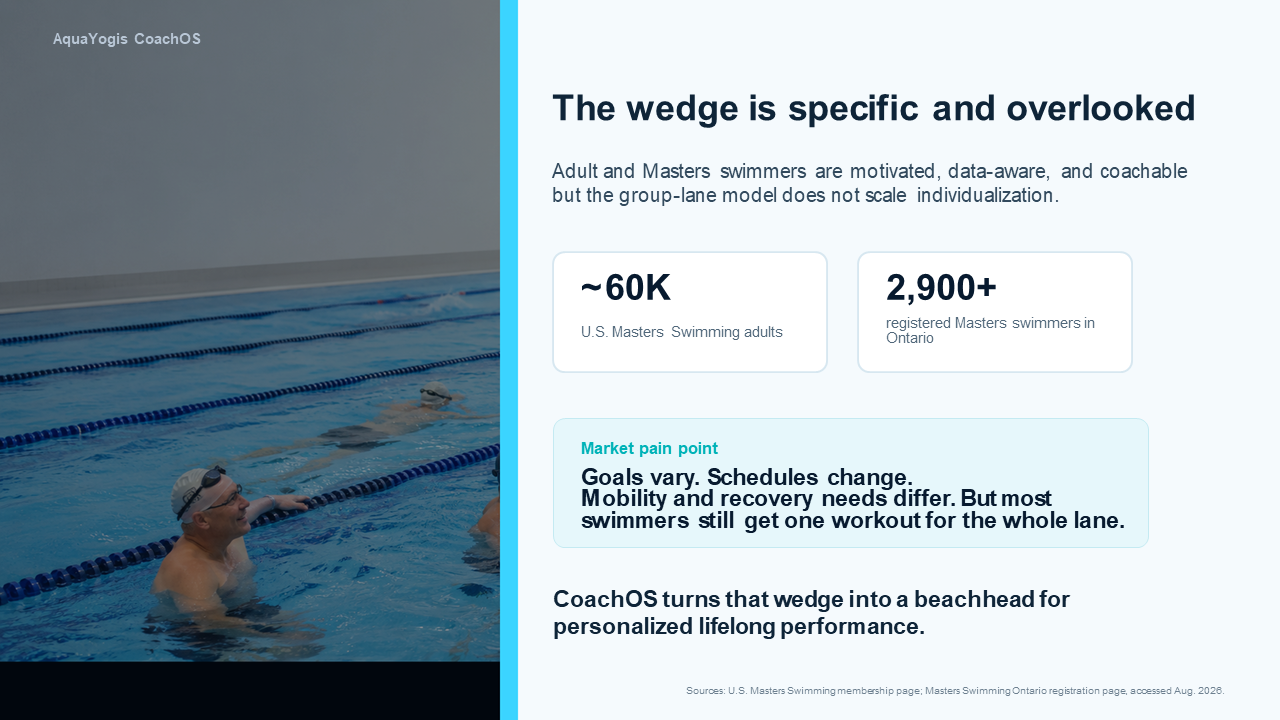
As a Masters swimmer, yoga teacher, and educator, I have seen how different adult athletes are from one another. Two swimmers in the same lane may have completely different goals, histories, injuries, mobility limitations, schedules, and levels of experience, yet they often receive essentially the same workout.
Personalized coaching can address that problem, but one-to-one coaching is difficult to scale.
Generative AI creates an opportunity to rethink that model.
AquaYogis is developing CoachOS, an AI-powered coaching environment designed initially for Masters swimmers. The goal is not to replace human coaches. It is to make high-quality personalization more accessible and to help both swimmers and coaches make better use of the information already available to them.
What it does
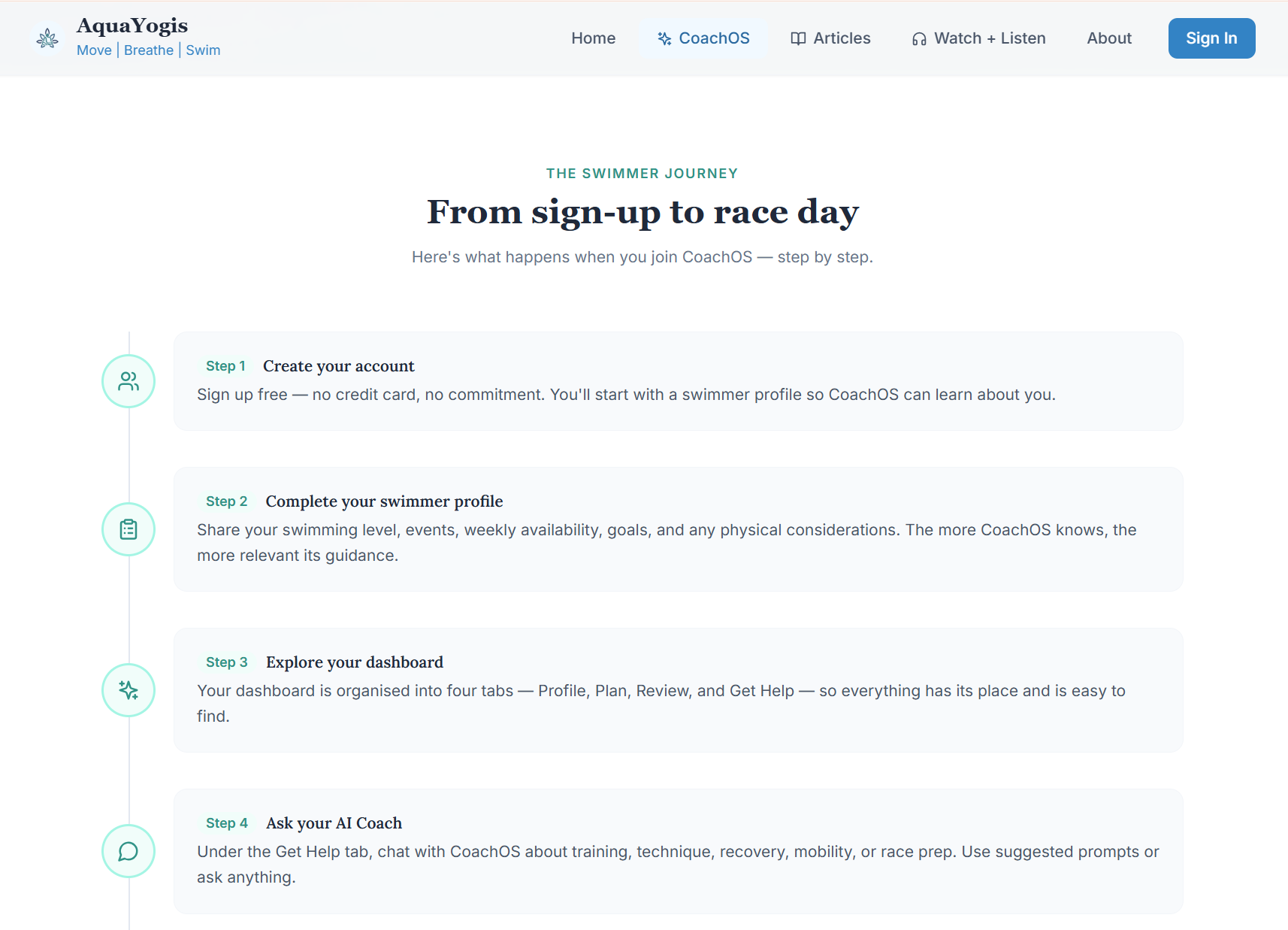
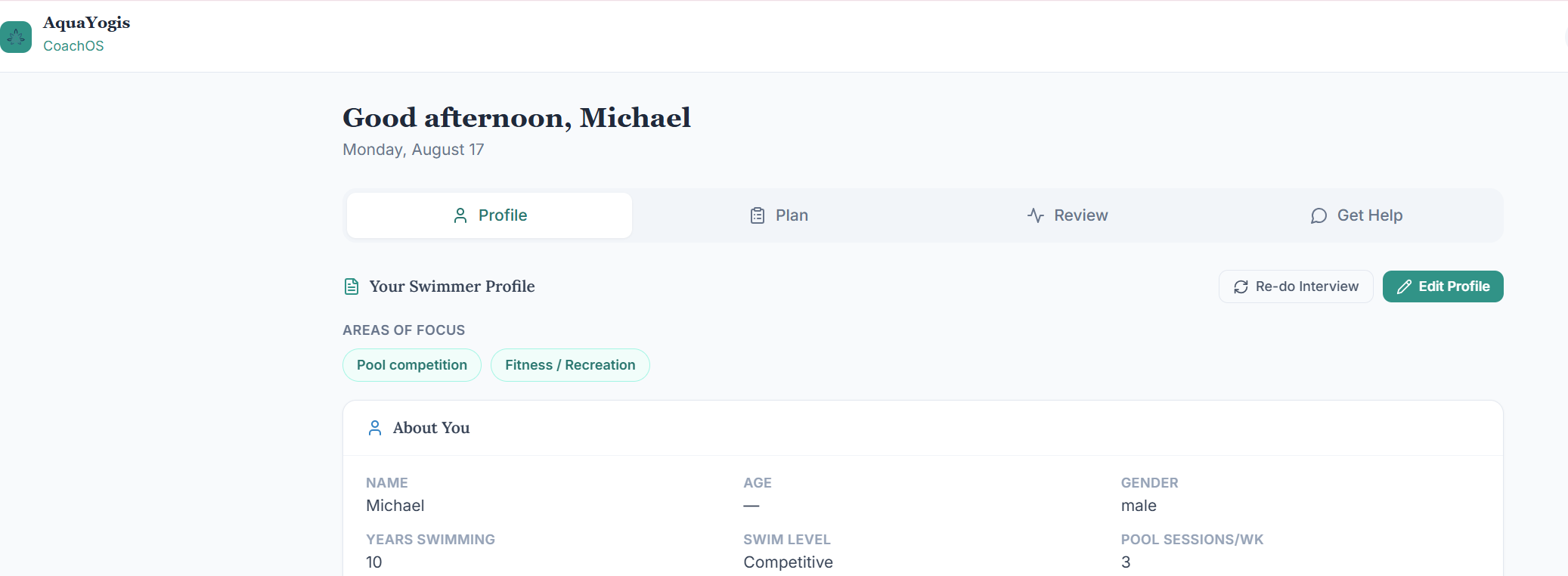
CoachOS creates a personalized coaching experience around the individual swimmer.
Instead of simply generating a generic workout, the system can consider information such as the swimmer's goals, experience, available training time, recent training, preferred events, mobility and recovery needs, and feedback from previous sessions.
This allows the athlete to have an ongoing conversation with a coaching system that can help with:
- individualized swim training
- race and event preparation
- technique-focused practice
- dryland and mobility work
- yoga and recovery
- adaptation when circumstances change
- reflection on progress and future goals
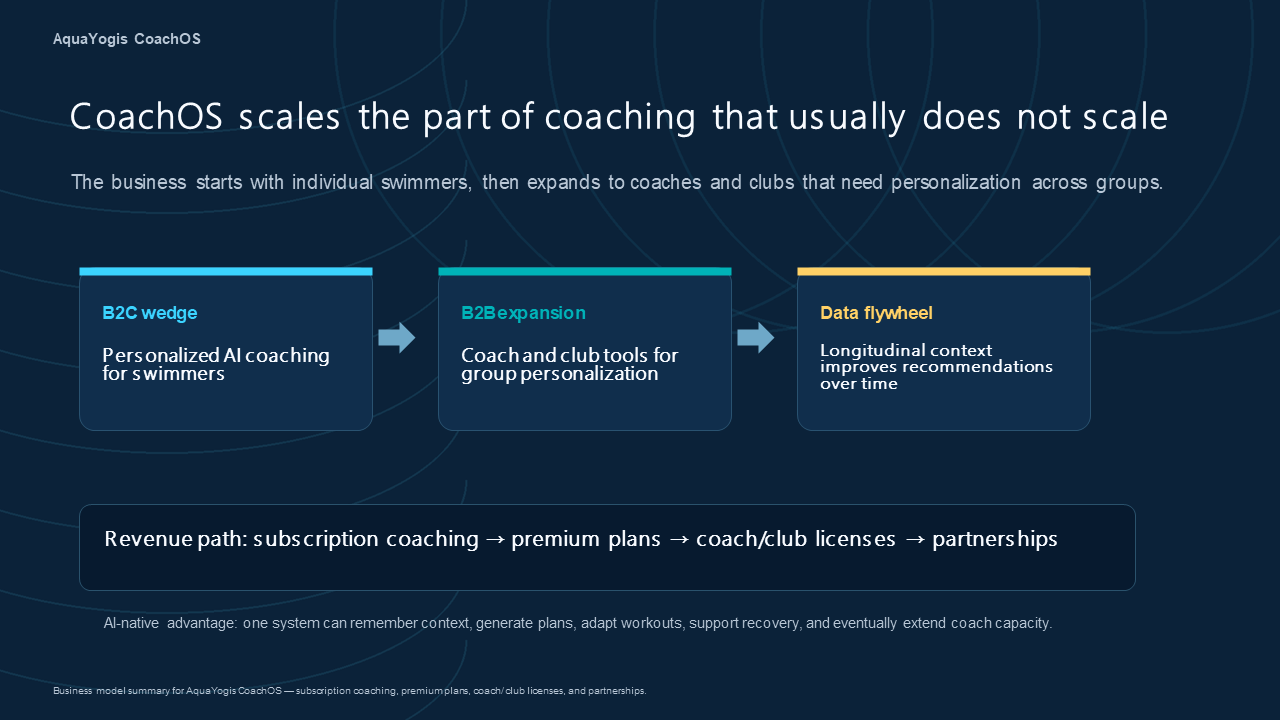
AquaYogis also explores how this type of AI coaching can complement human coaching. Over time, the same technology could help a coach provide greater personalization across an entire group of swimmers without requiring the coach to manually create a separate program for every athlete.
How we built it
AquaYogis combines domain knowledge in Masters swimming, yoga, mobility, recovery, and adult learning with a modern AI-native application architecture.
CoachOS is built with a React, TypeScript, and Vite frontend connected to a Bolt Database PostgreSQL backend, with row-level security (RLS) used to protect and separate user data.
The AI layer is powered by Google Gemini 2.5 Flash through three Deno edge functions, each handling a distinct part of the coaching experience:
- AI coaching — provides contextual, personalized interaction with the swimmer
- Onboarding interviews — gathers information about the athlete's goals, experience, training environment, preferences, and constraints
- Plan generation — turns athlete context into personalized training recommendations and plans
Rather than treating Gemini as a general-purpose chatbot, CoachOS provides the model with structured athlete context so its responses can reflect the swimmer's individual objectives, training history, constraints, and current coaching needs.
The system is designed around an iterative coaching cycle:
athlete context → AI-supported recommendation → athlete action → feedback → adaptation
Google OAuth provides account sign-in and authentication, while Resend supports email communications. Stripe billing infrastructure has been scaffolded but is not yet live, reflecting the project's current transition from product development and testing toward commercialization.
This architecture allows CoachOS to move beyond one-time workout generation toward an ongoing, personalized coaching relationship in which athlete information can inform future recommendations and adaptations.
Challenges
One of the biggest challenges has been determining where generative AI adds genuine coaching value rather than simply producing more information.
Swimming training is highly contextual. A recommendation that is appropriate for one swimmer may be inappropriate for another because of differences in ability, experience, health, recovery, technique, or goals.
That makes context, continuity, and responsible personalization critical.
Another challenge is finding the right relationship between AI and human expertise. AquaYogis is being developed around the idea that AI should augment human judgment rather than eliminate it.
For athletes working with a coach, the technology should strengthen that relationship. For swimmers without access to individualized coaching, it can provide a much more personalized starting point.
What we learned
One of the most important lessons from building AquaYogis is that the value of AI may not come from having it produce the "perfect workout."
Its greater value may be its ability to continuously adapt.
People change. Training changes. Goals change. An athlete gets tired, misses a week, develops a mobility issue, enters a competition, decides to try a new event, or simply discovers that something is not working.
Traditional programs are often static. An AI-supported coaching system can respond.
That creates an opportunity to move from programming toward something closer to an ongoing learning and coaching relationship.
What's next
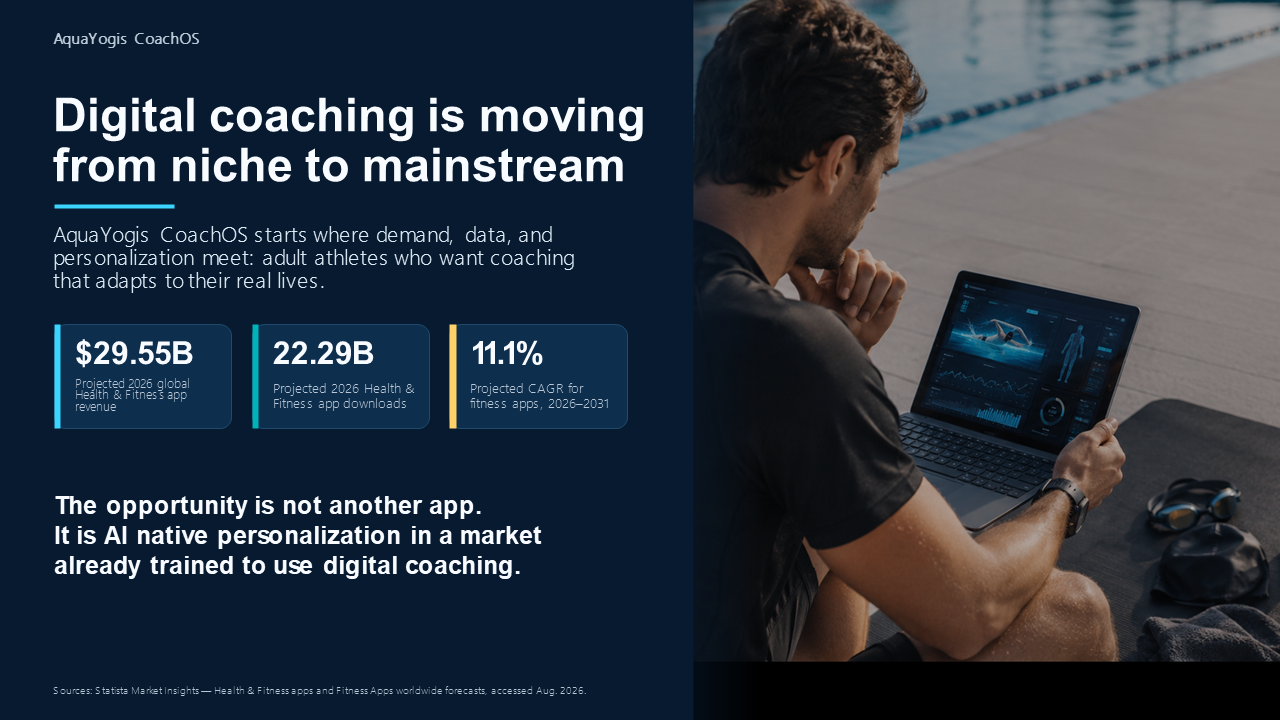
Masters swimming is the starting point, but the larger opportunity is lifelong human performance.
We want to continue testing CoachOS with real swimmers, learn how athletes interact with an AI coach over time, and explore a second use case in which human coaches use the platform to provide more individualized support to their swimmers.
The longer-term vision is an AI-native coaching platform that helps people continue learning, adapting, moving, and performing throughout their lives.
AquaYogis is built around a simple idea:
Move well. Swim well. For life.
Built With
- ai-coaching
- ai-onboarding
- bolt-database
- conversational-ai
- deno
- edge-functions
- gemini-2.5-flash
- gemini-api
- google-ai-studio
- google-oauth
- masters-swimming
- meet-preparation
- mobility
- plan-generation
- postgresql
- react
- recovery
- resend
- rls
- tailwind-css
- typescript
- vite
- workout-generation
- yoga

Log in or sign up for Devpost to join the conversation.