Inspiration
AquaWatch AI was inspired by a simple but serious real-world problem: when water at home is poor, unsafe, or unavailable, people often do not know where to find trusted water nearby. We wanted to build something practical that could help users make faster, safer decisions instead of guessing or wasting time searching blindly.
What it does
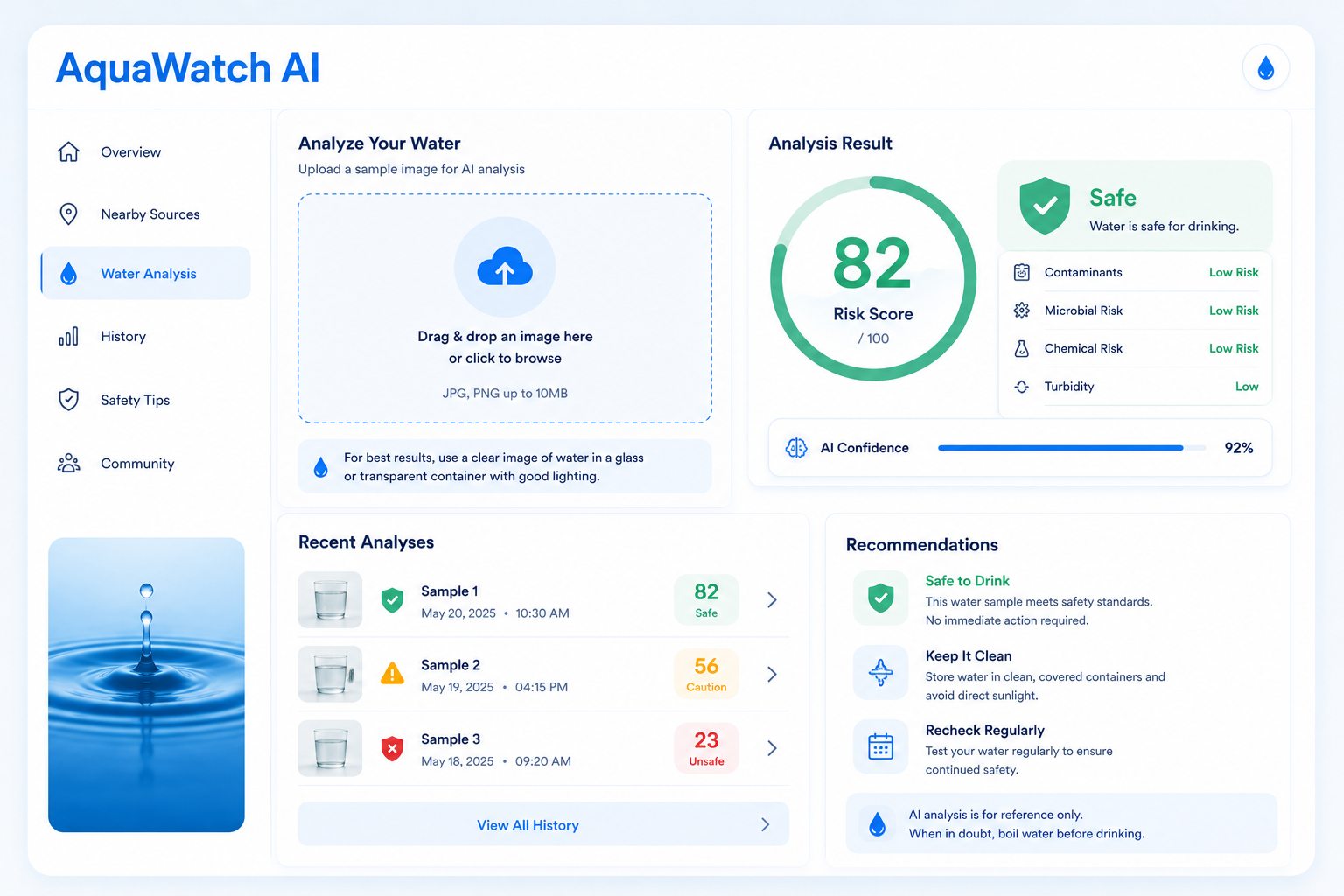
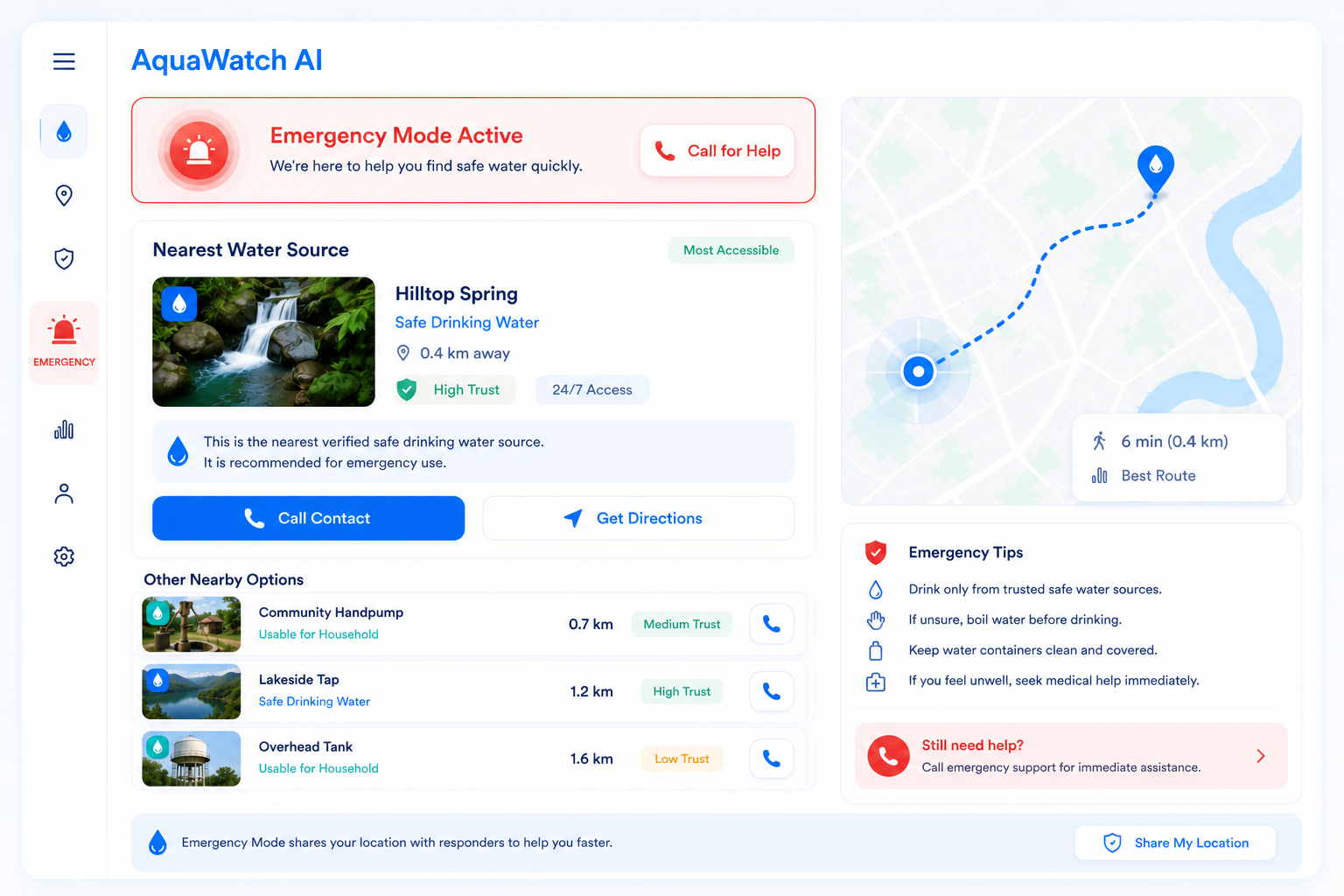
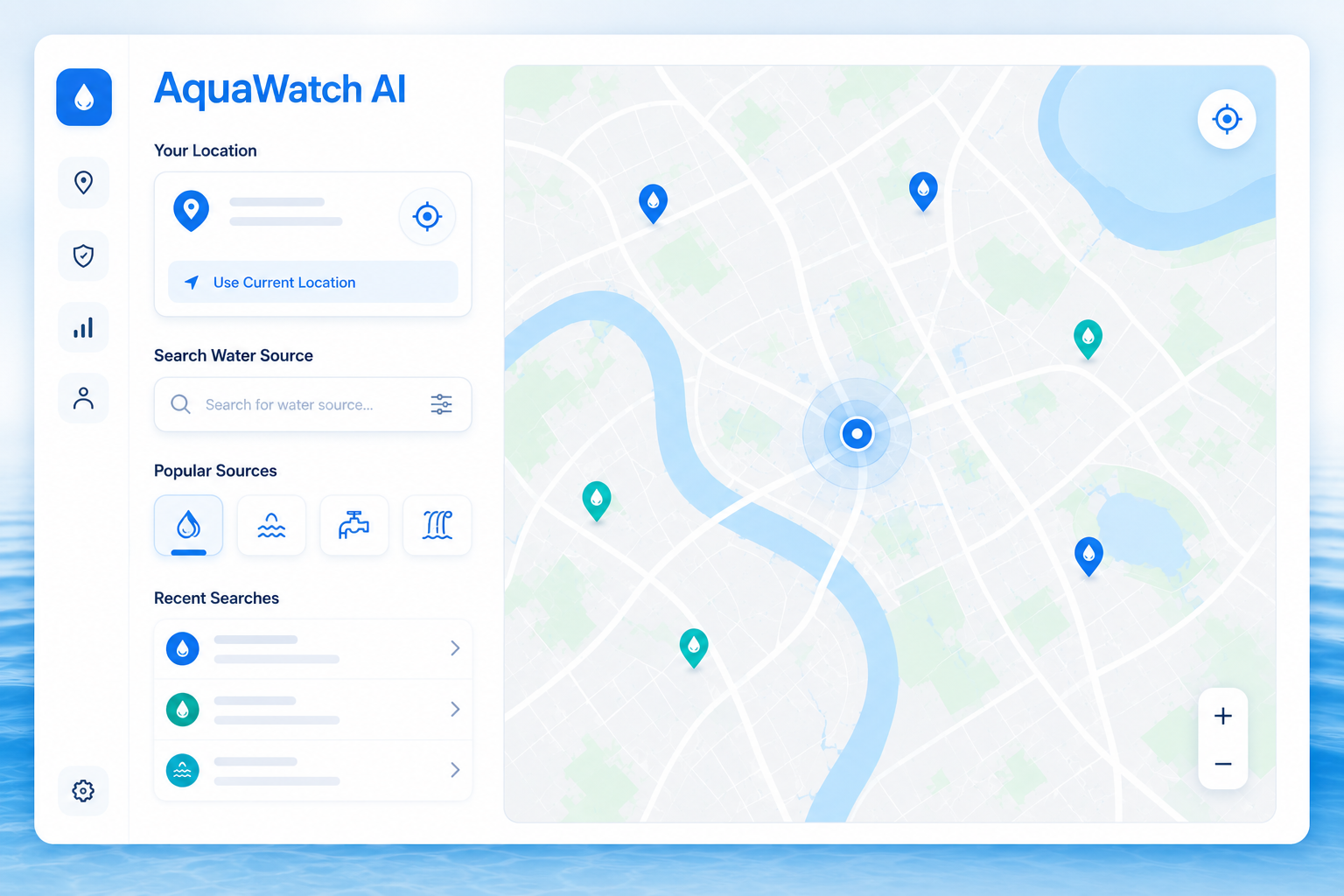
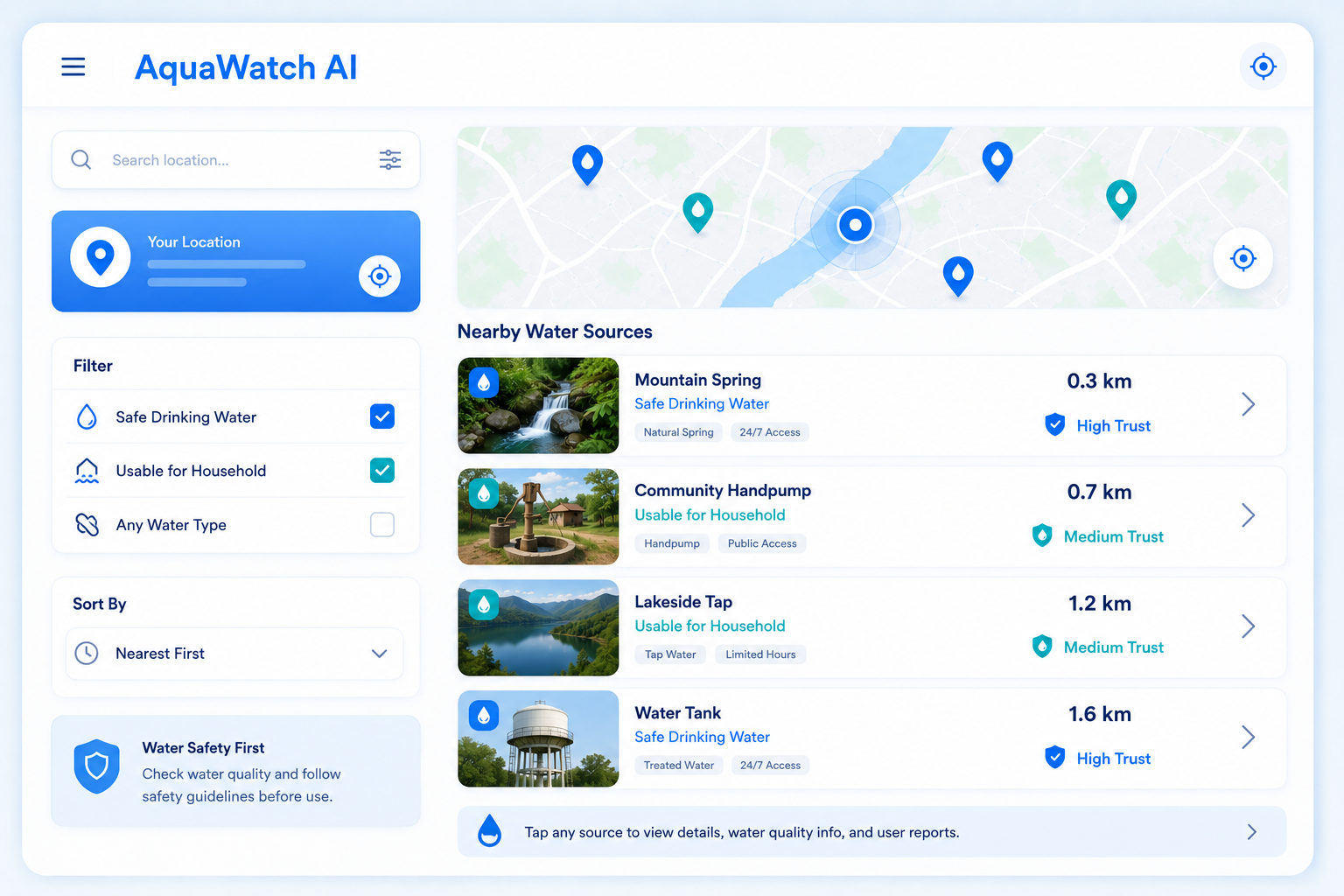
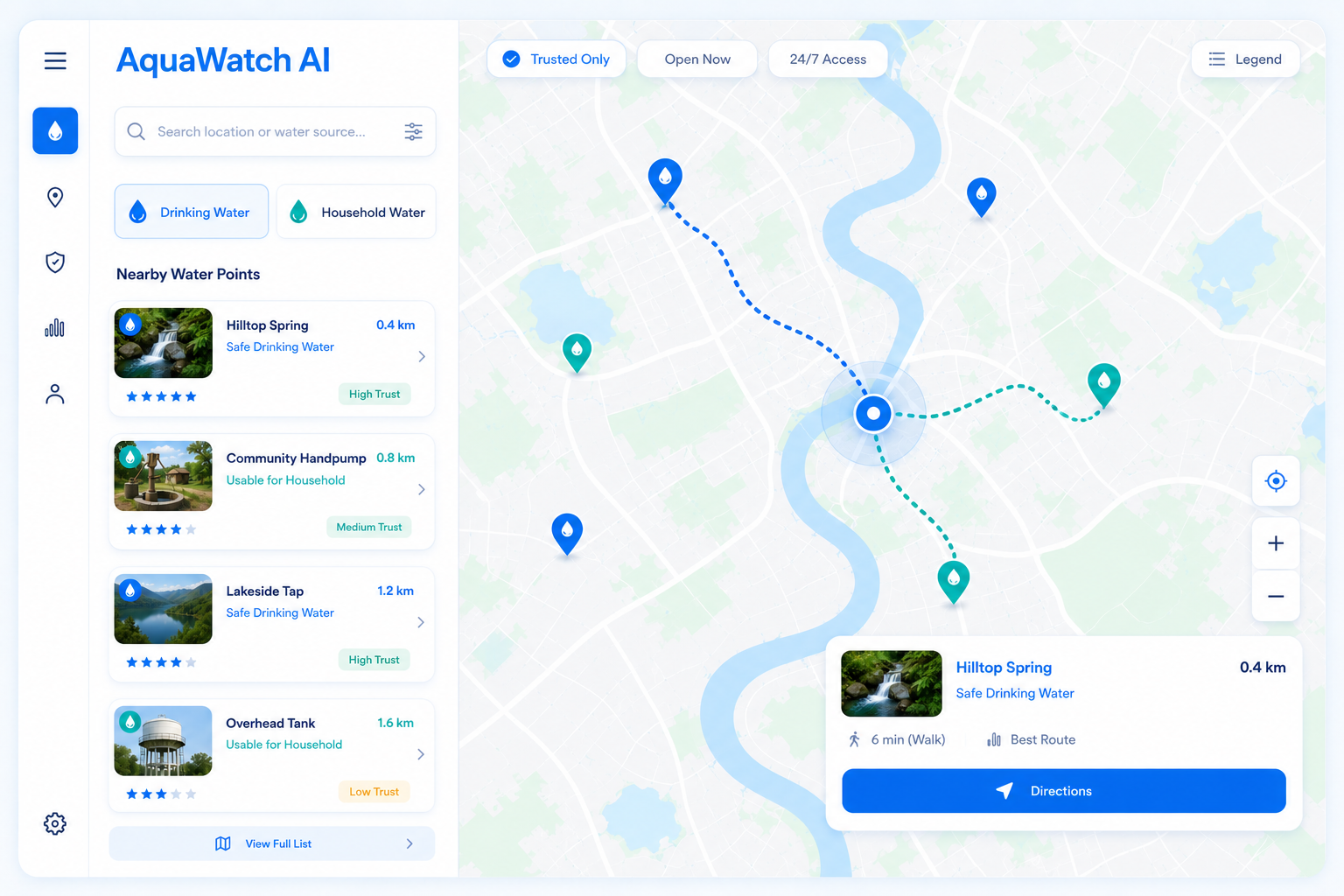
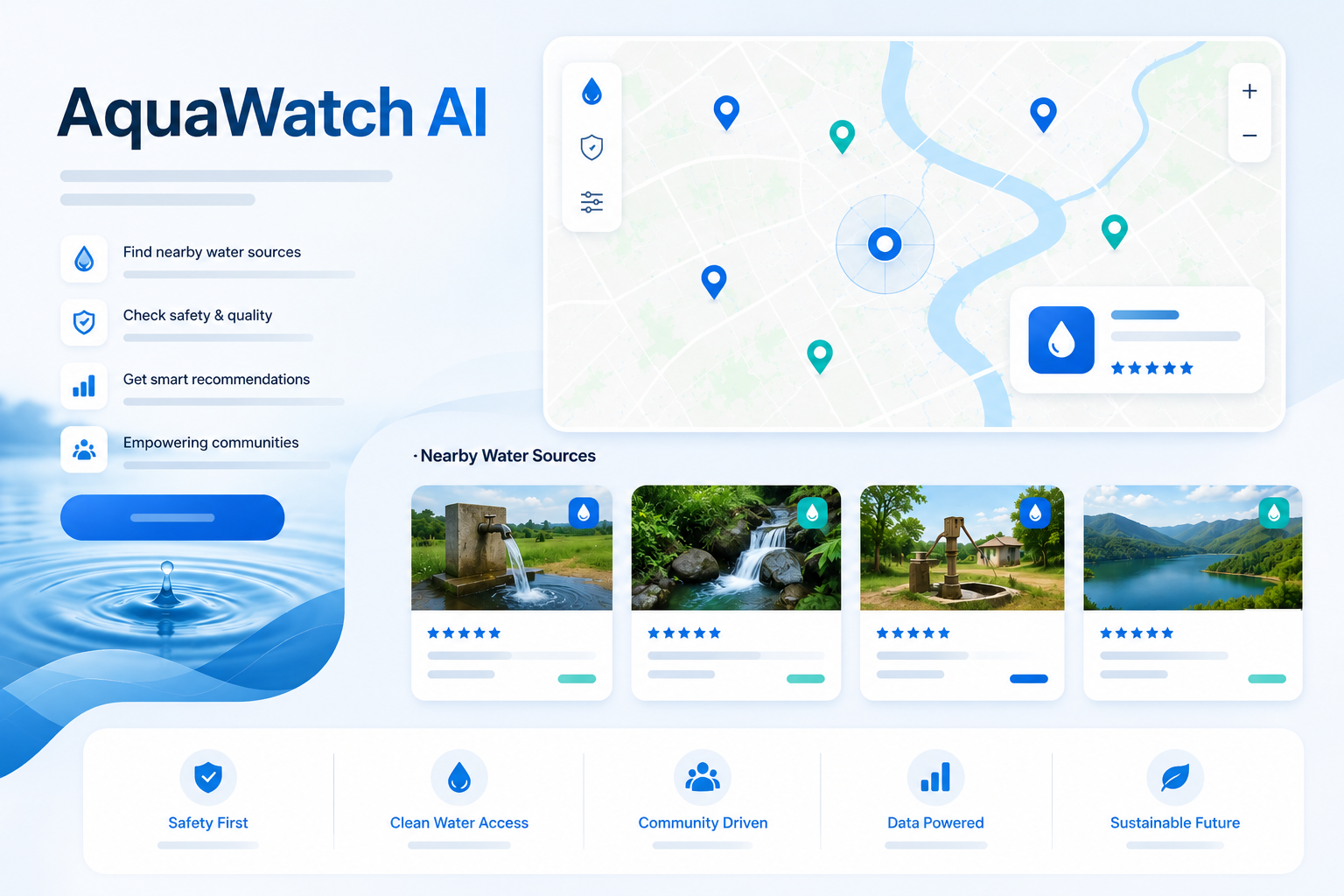
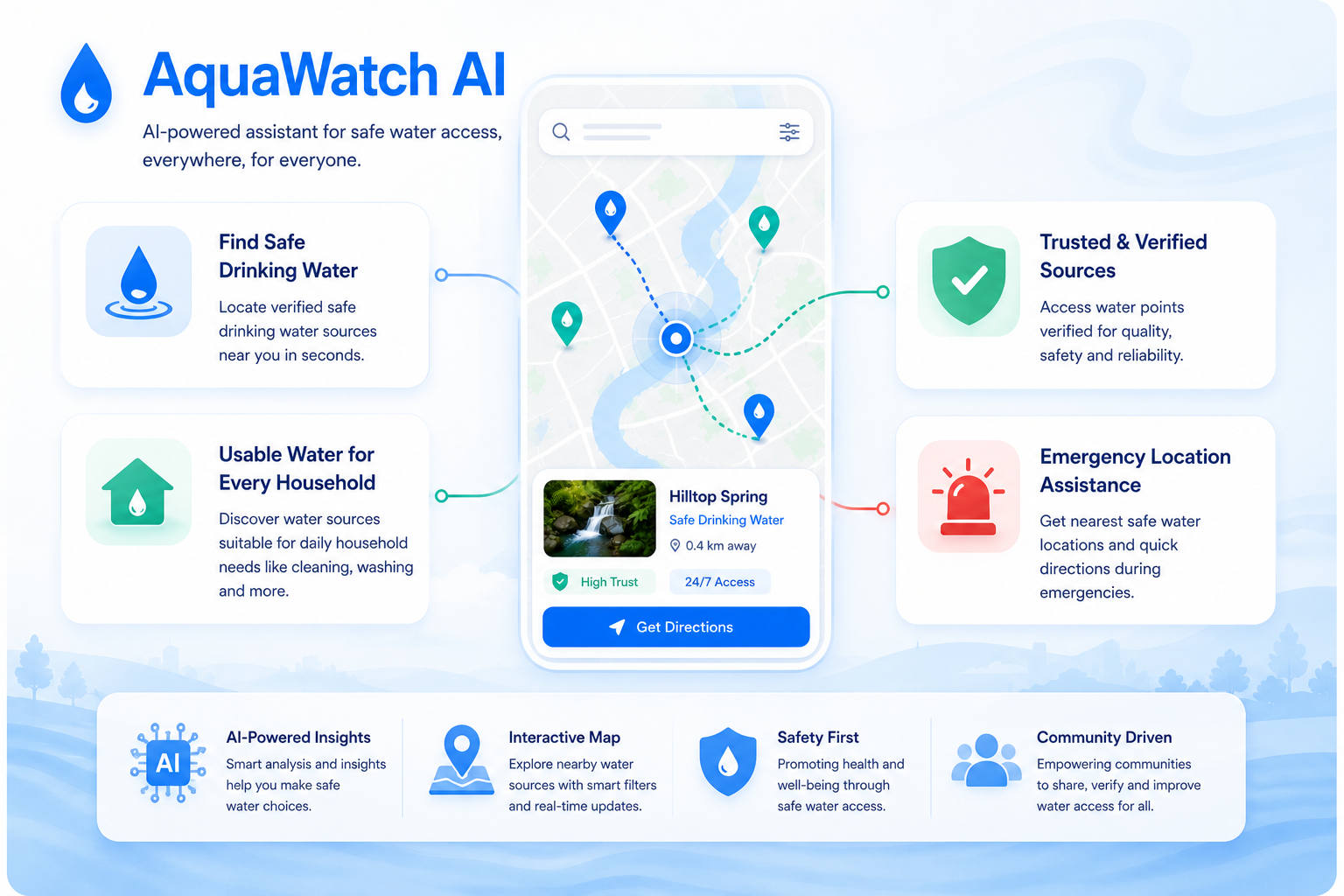
AquaWatch AI helps users find nearby safe drinking water and usable water sources using location-based assistance and AI-supported guidance. The app shows trusted source options, approximate distance, trust levels, and emergency actions so users can respond quickly in urgent situations.
How we built it
We built AquaWatch AI as a clean full-stack web application with a mobile-friendly interface and a modular backend. The frontend focuses on clarity and ease of use, while the backend provides analysis and recommendation logic through a simple API. We structured the project so it is easy to run locally, easy to understand, and easy to extend later with more advanced AI or map features.
Challenges we ran into
One challenge was narrowing a broad water-access problem into a version that could be built and demonstrated well during a hackathon. Another challenge was balancing usefulness with simplicity, because the app needed to feel real while still staying lightweight enough to finish on time.
Accomplishments that we're proud of
We are proud that AquaWatch AI turns a basic but important daily problem into a clear, usable product concept. We are also proud of the clean project structure, the judge-friendly story, and the fact that the app is designed around a real need rather than a flashy feature set.
What we learned
We learned how important it is to design around the user’s real situation instead of building features in isolation. We also learned how to organize a hackathon project so the code, demo, README, and story all support the same idea.
What's next for AquaWatch AI
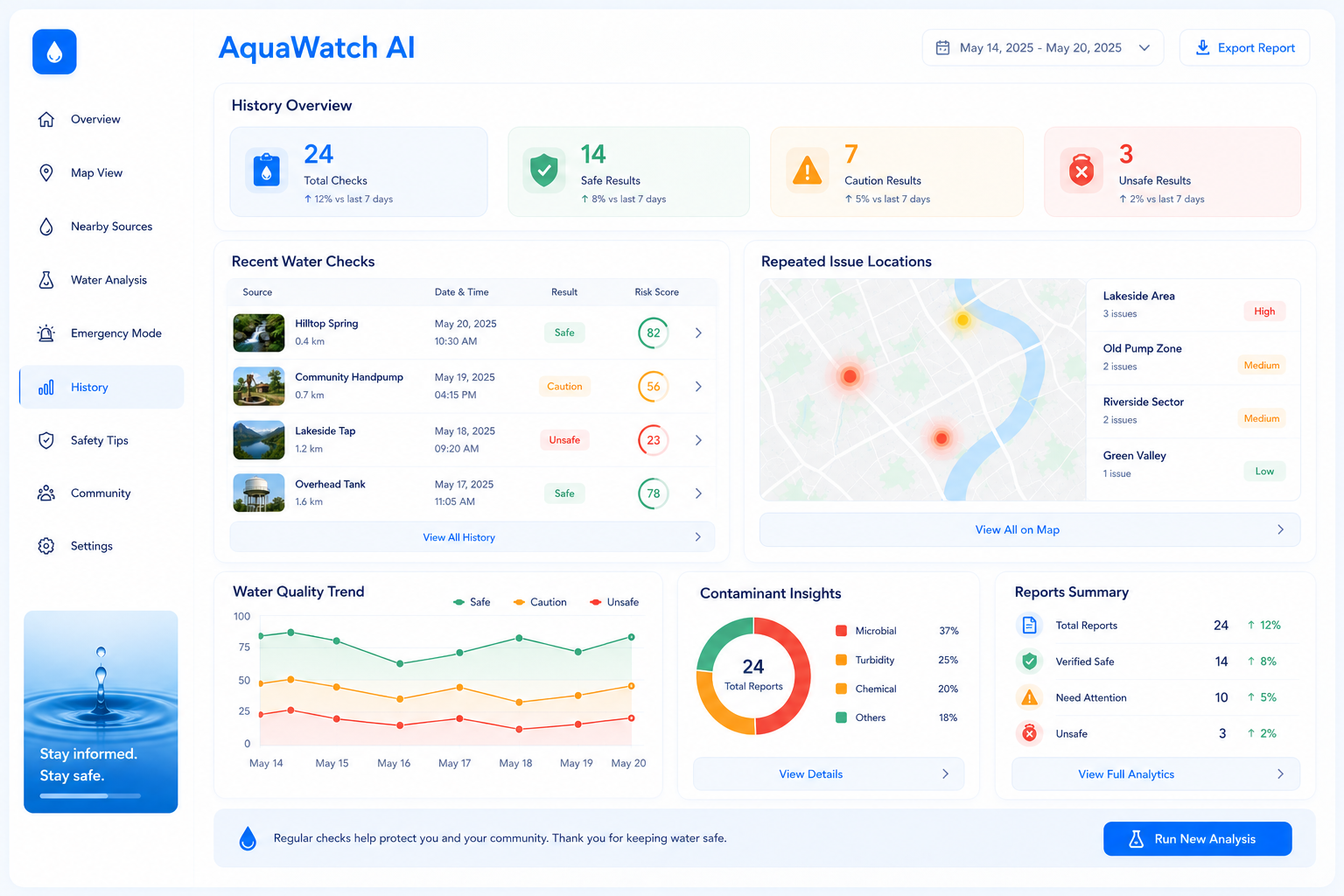
Next, we want to make AquaWatch AI smarter by improving water source accuracy, adding better map-based navigation, and expanding the emergency support flow. We also want to add stronger AI analysis, more reliable source verification, and a better dashboard for repeated water issue tracking.

Log in or sign up for Devpost to join the conversation.