-
-
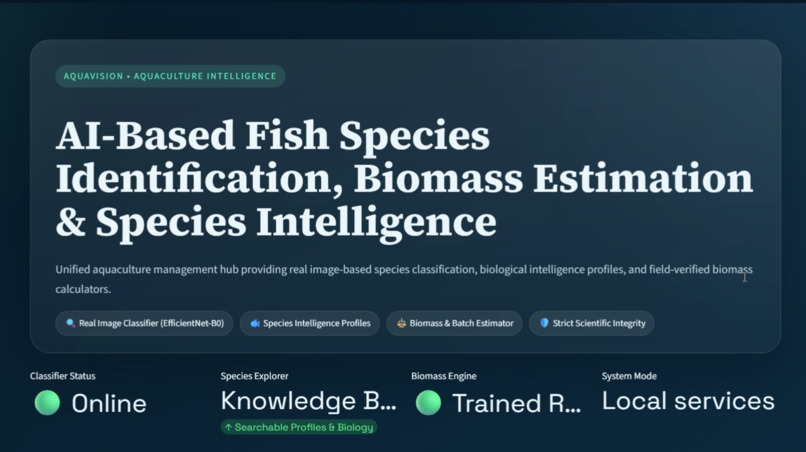
Main course
-
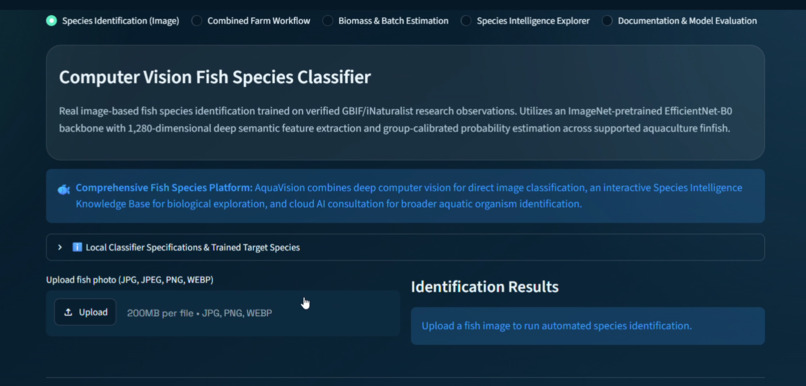
Species Identification
-
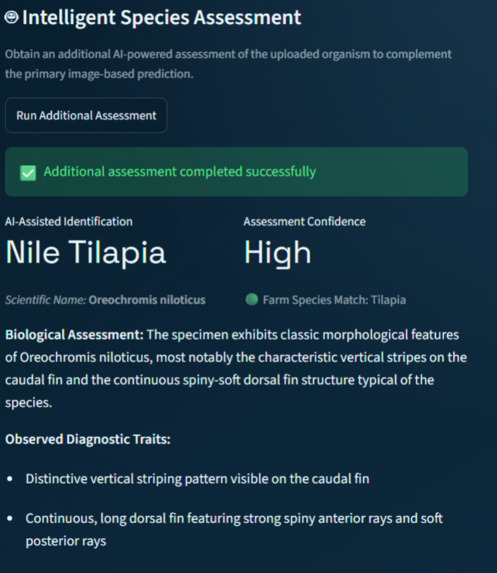
Report section
-
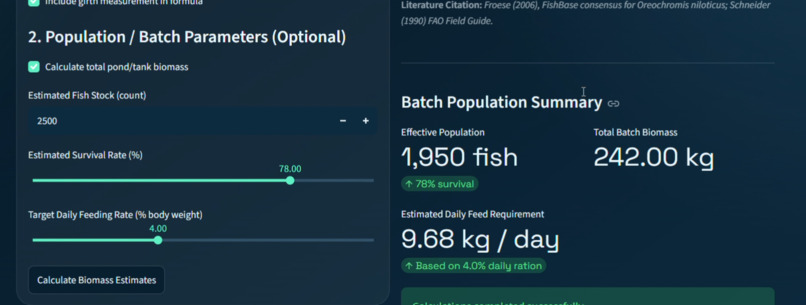
Biomass identification , Harvest type
-
Global connect for species and day to day news related to domain
-
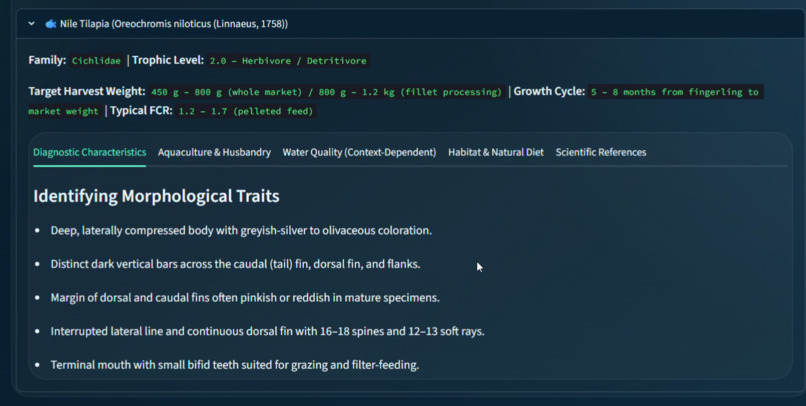
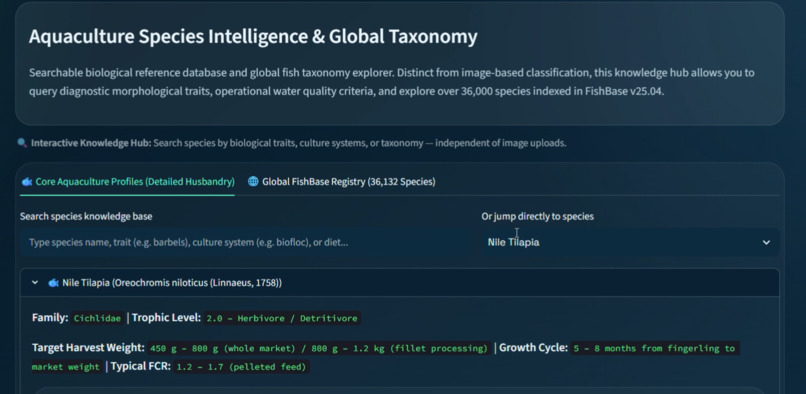
Species Specification details
-
Data's related to aquatic life and species
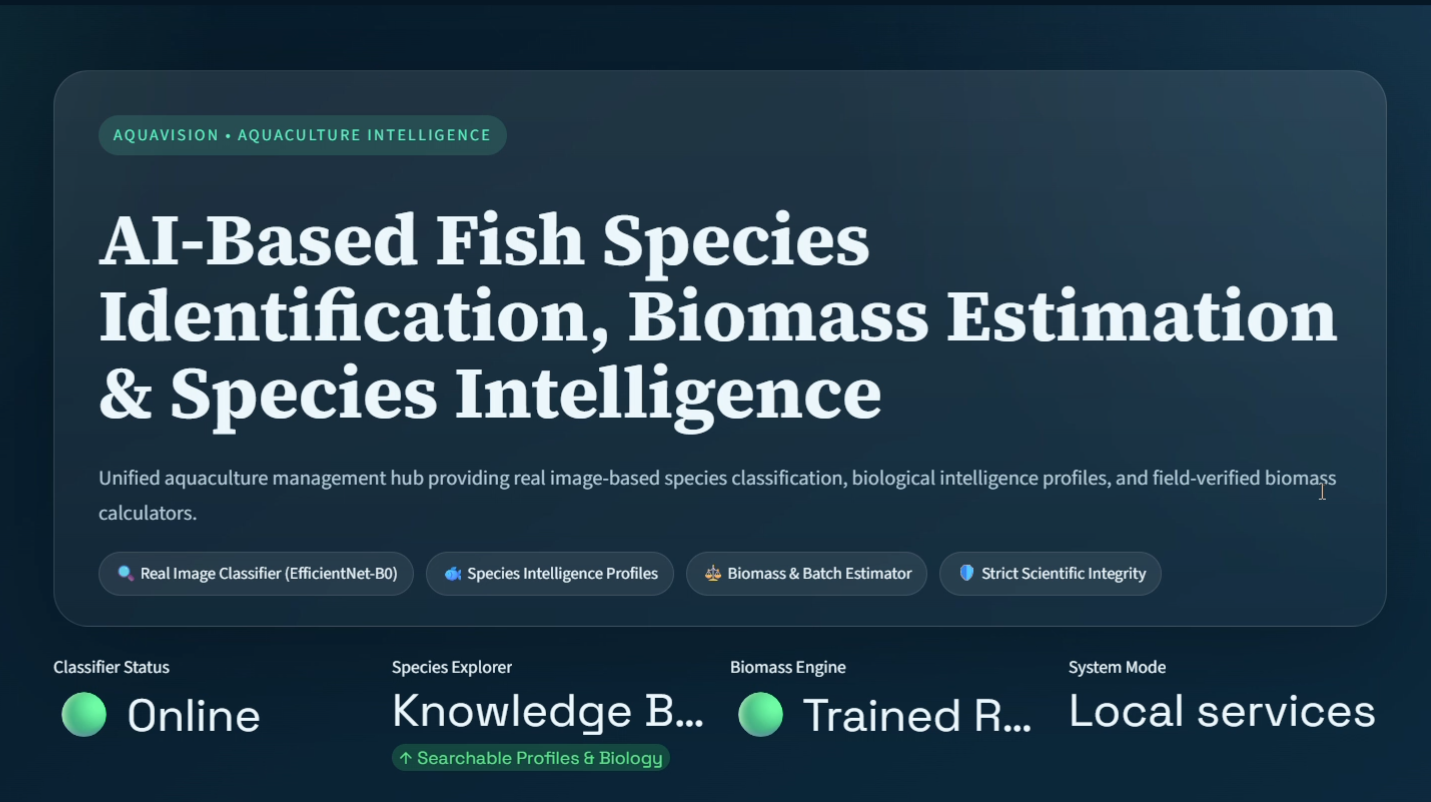
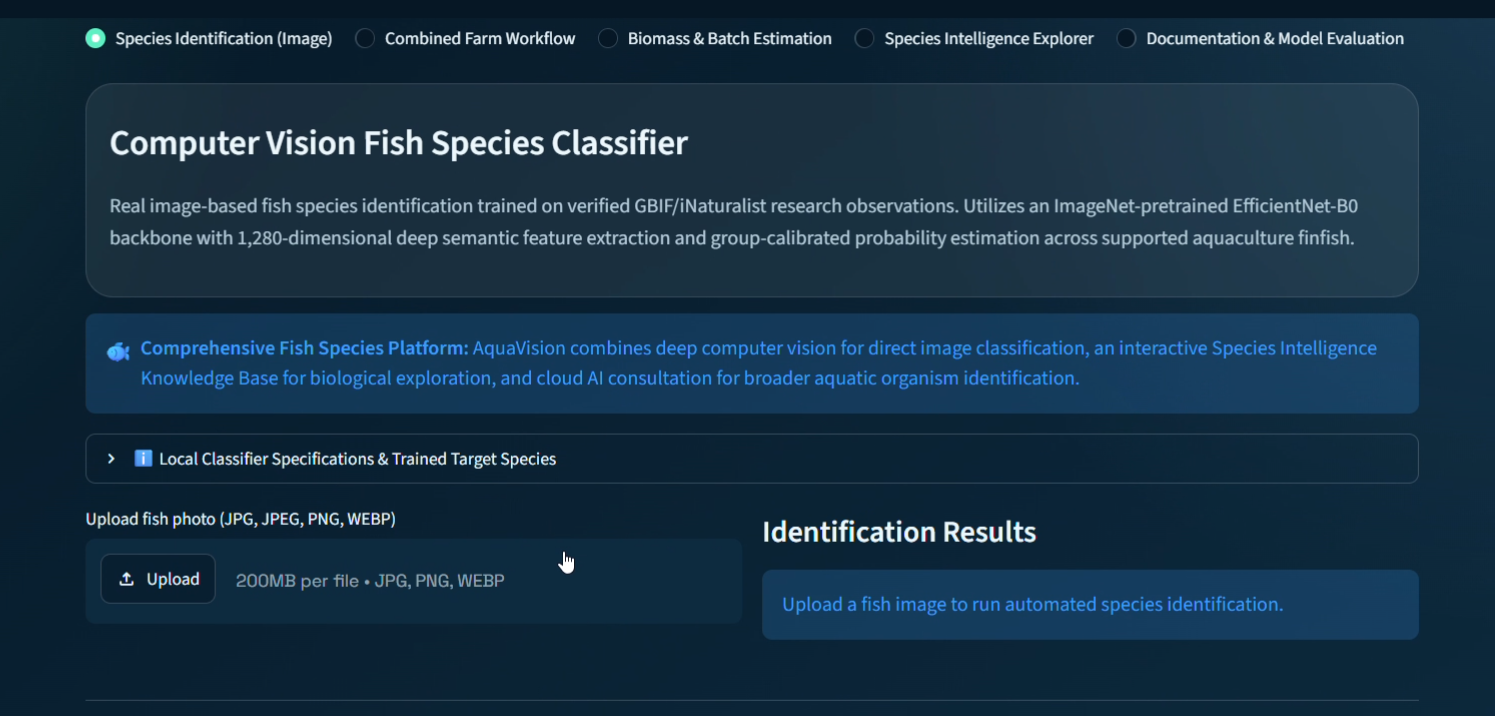
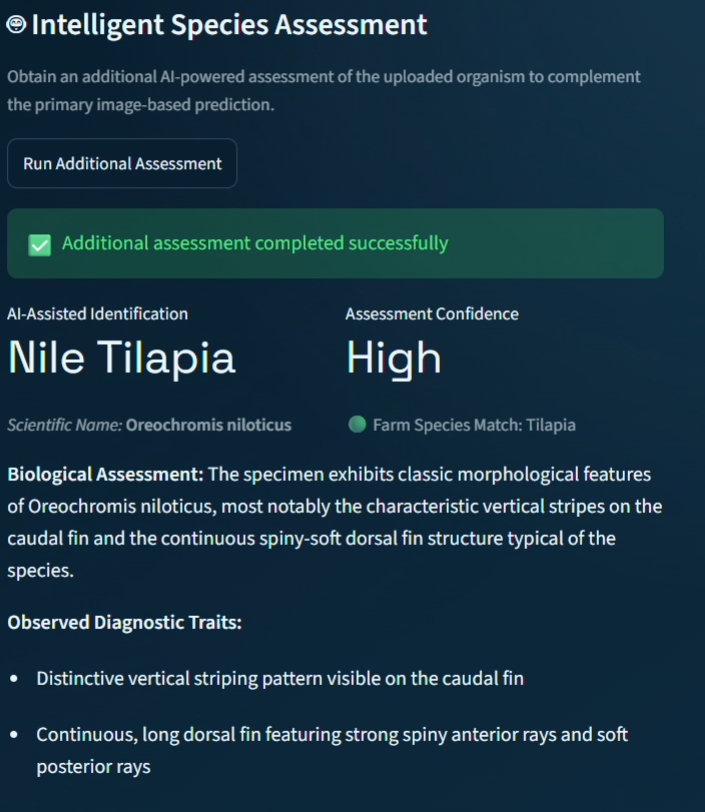
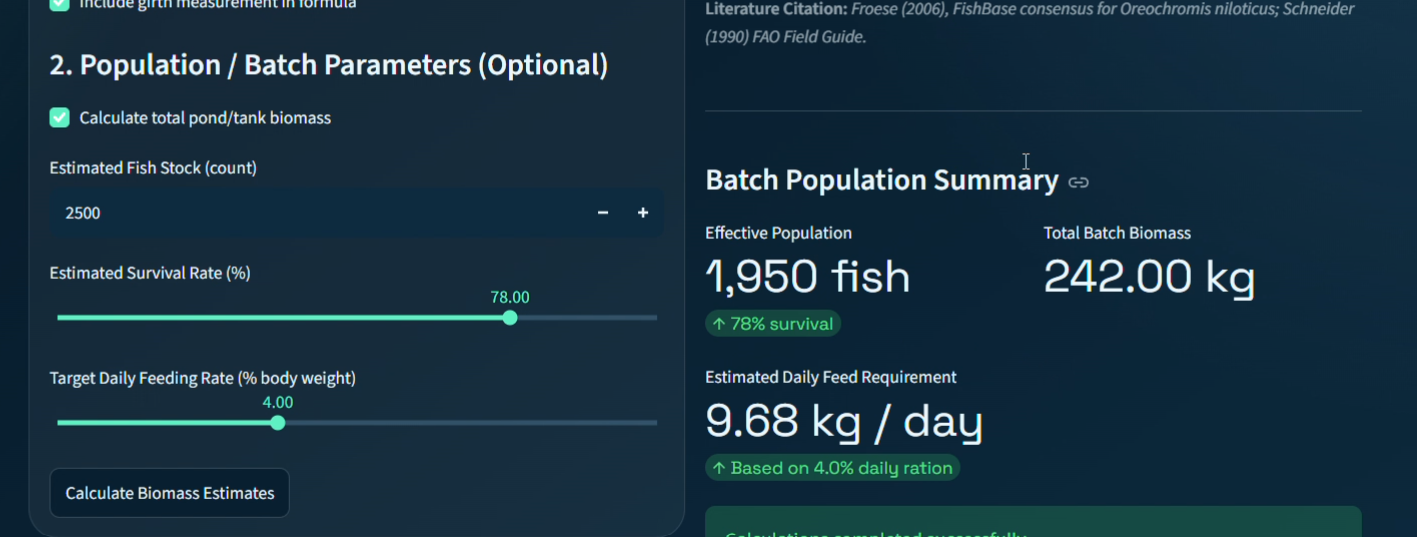
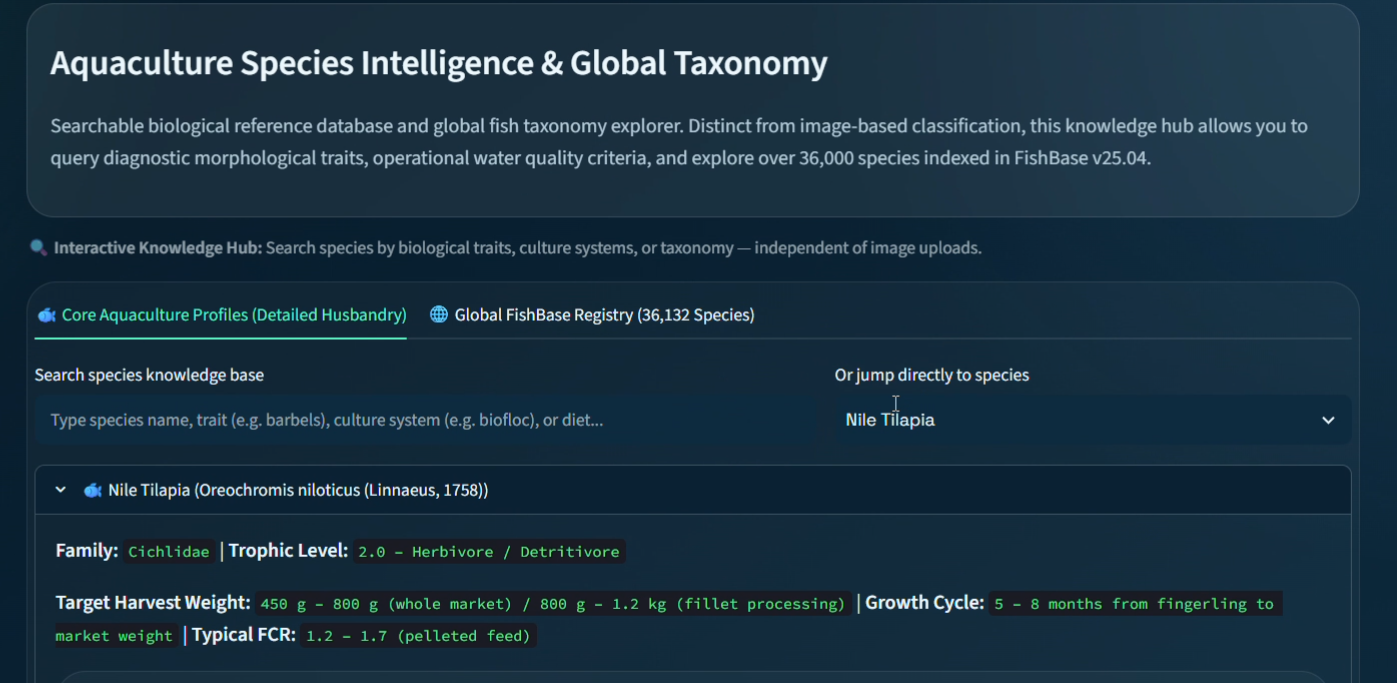
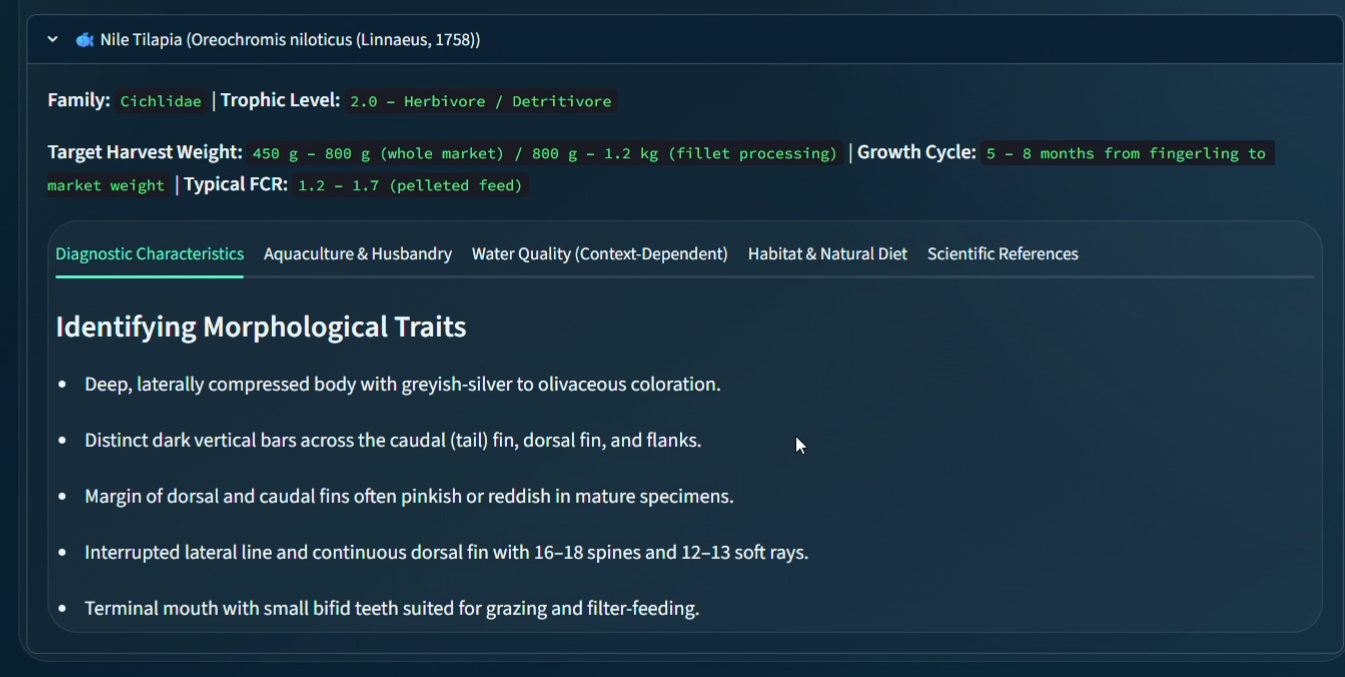
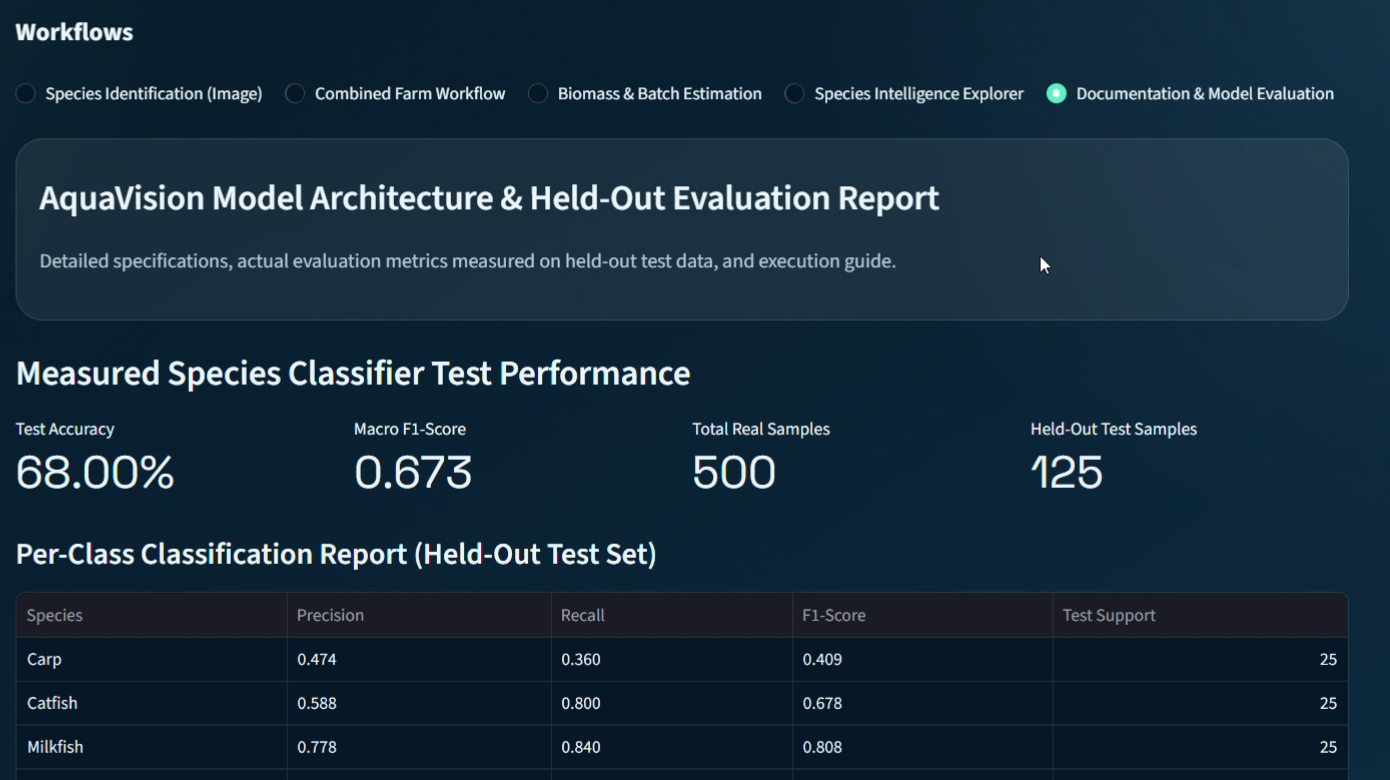
Inspiration I was inspired by the vast opportunities to explore both technical innovation and business applications in aquaculture. I saw the potential for AI to support food-related industries, including aquaculture and seafood businesses, through fish identification, biomass estimation, and data-driven decision-making.
What It Does AquaVision uses computer vision to identify fish species and species-specific biological equations to estimate biomass using fish length and farm-level inputs. It aims to help farmers understand their stock and make informed decisions about feeding and farm management.
How I Built It I developed AquaVision using Python, a pretrained EfficientNet-B0 feature extractor, a machine-learning classifier, Streamlit interfaces, and a FastAPI backend. I also integrated FishBase reference data to provide useful species information.
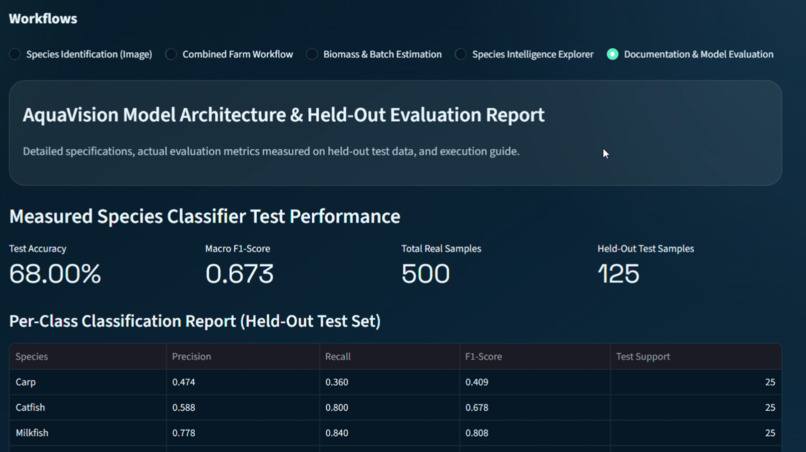
Challenges We Faced Building a reliable fish classification system with limited data was challenging. I focused on testing model performance, preventing data leakage during evaluation, and understanding the limitations of AI predictions. The project also highlighted the importance of accurate measurements for biomass estimation.
What I Learned I gained practical experience in computer vision, machine learning, API development, data integration, and model evaluation. I also learned how to connect technical capabilities with real business problems.
AI + Business Impact AquaVision demonstrates how AI can support aquaculture and food-related businesses by reducing manual effort and improving access to useful farming insights. With further validation and real-world testing, it could help businesses improve stock assessment, feed planning, and operational decision-making.
Built With
- artificialintelligence
- azure
- computervision
- cuda
- fastapi
- machine-learning
- n8n
- restapi
- scikit-learn

Log in or sign up for Devpost to join the conversation.