Inspiration
The inspiration for AQUAVIGIL stems from the "silent pandemic" of Antimicrobial Resistance (AMR), which is projected to claim 10 million lives annually by 2050. In my research, I found that in industrial hubs across Africa, pharmaceutical companies often discharge wastewater with antibiotic concentrations up to 40 times higher than WHO safety limits. Traditional regulatory audits are easily evaded because they require factory access—giving companies the chance to "clean up" specifically for audit days. I was inspired to create a tool that bypasses this corporate permission bottleneck, moving the surveillance from private pipes to public waterways to ensure true ESG accountability.
What it does
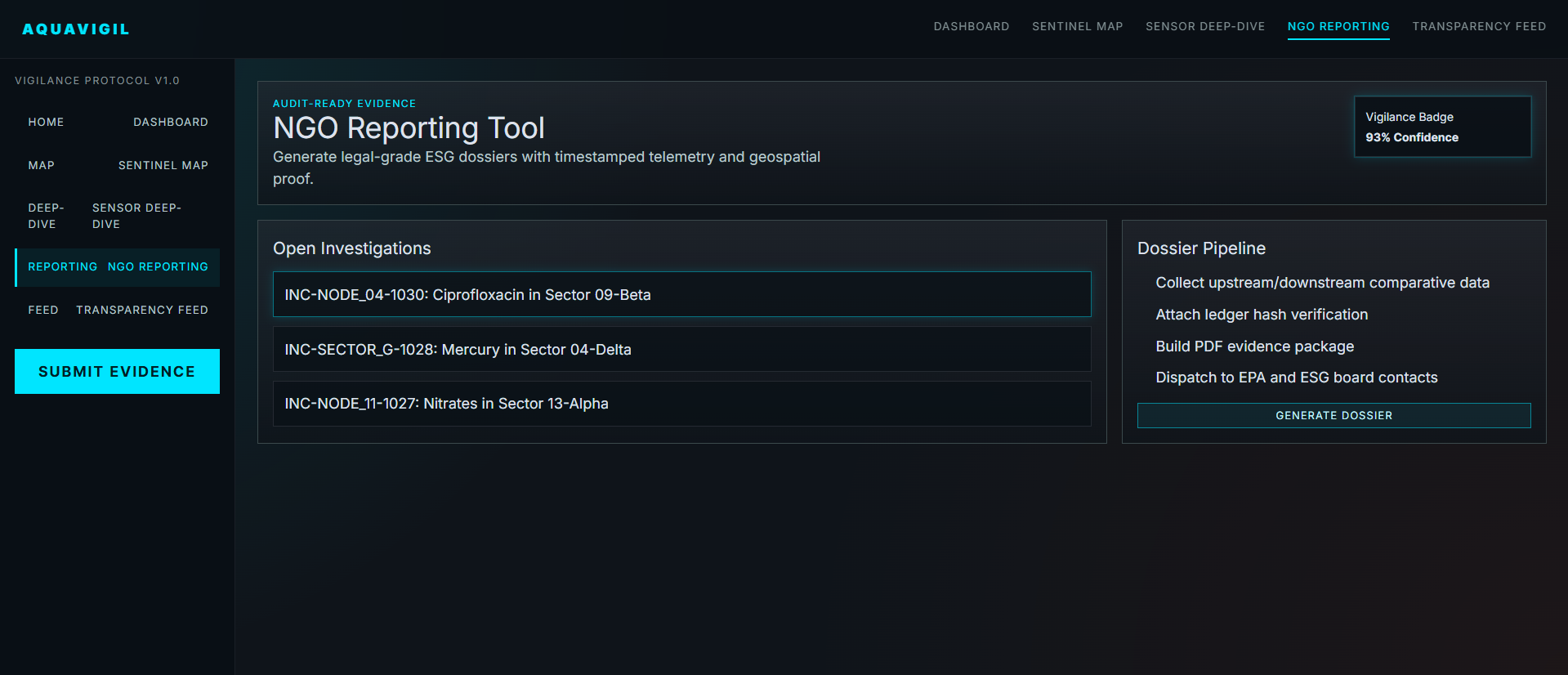
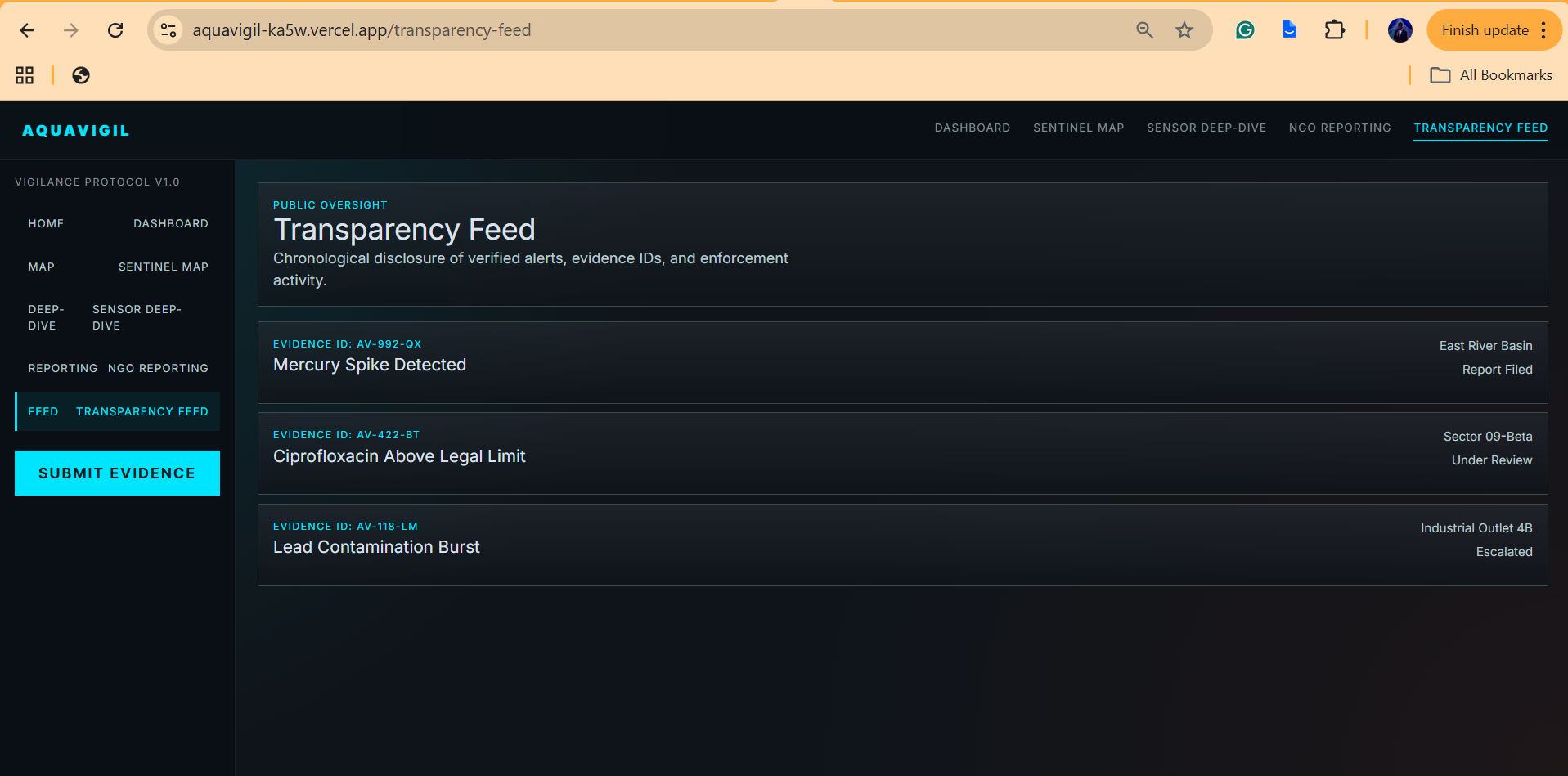
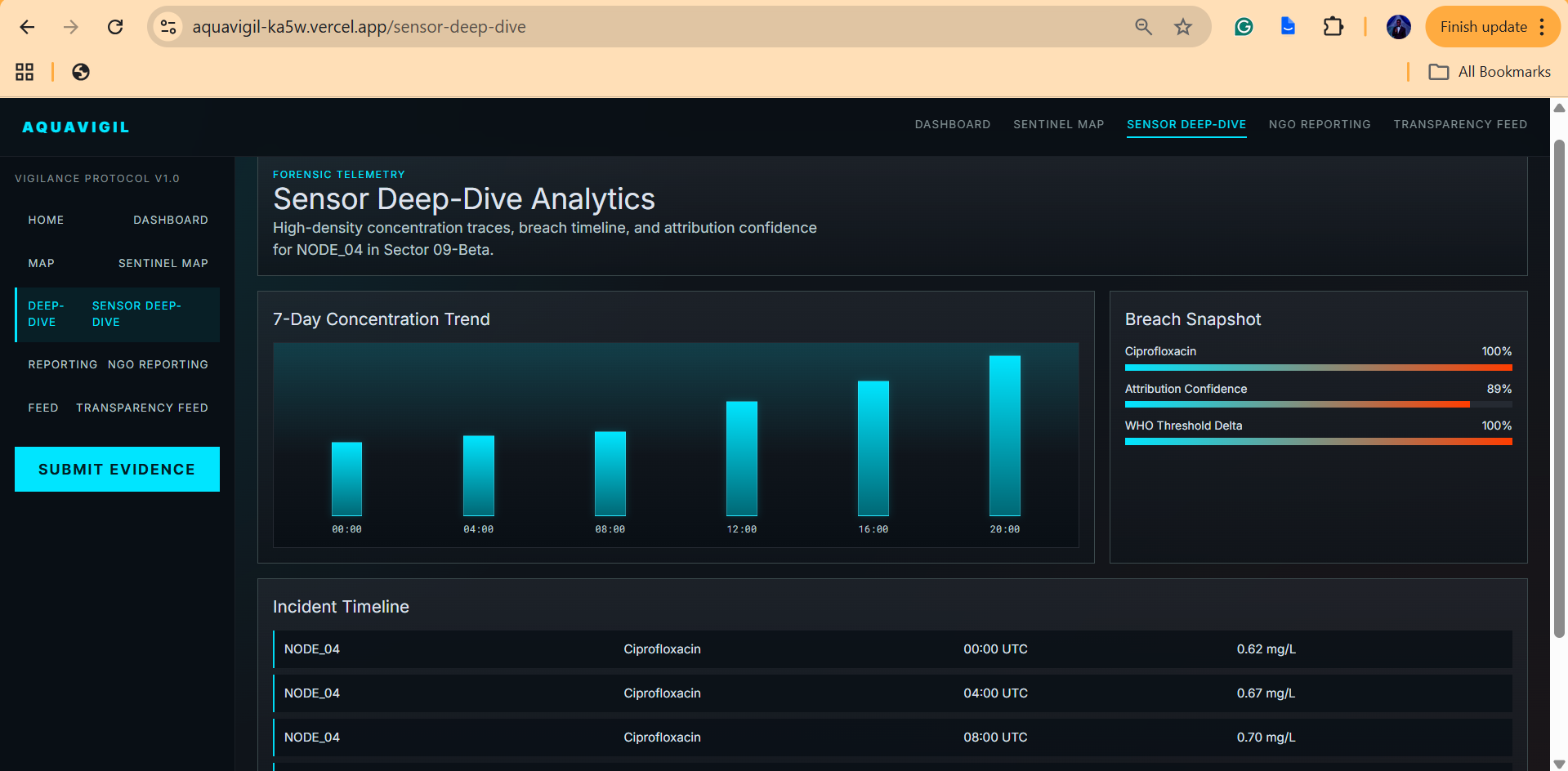
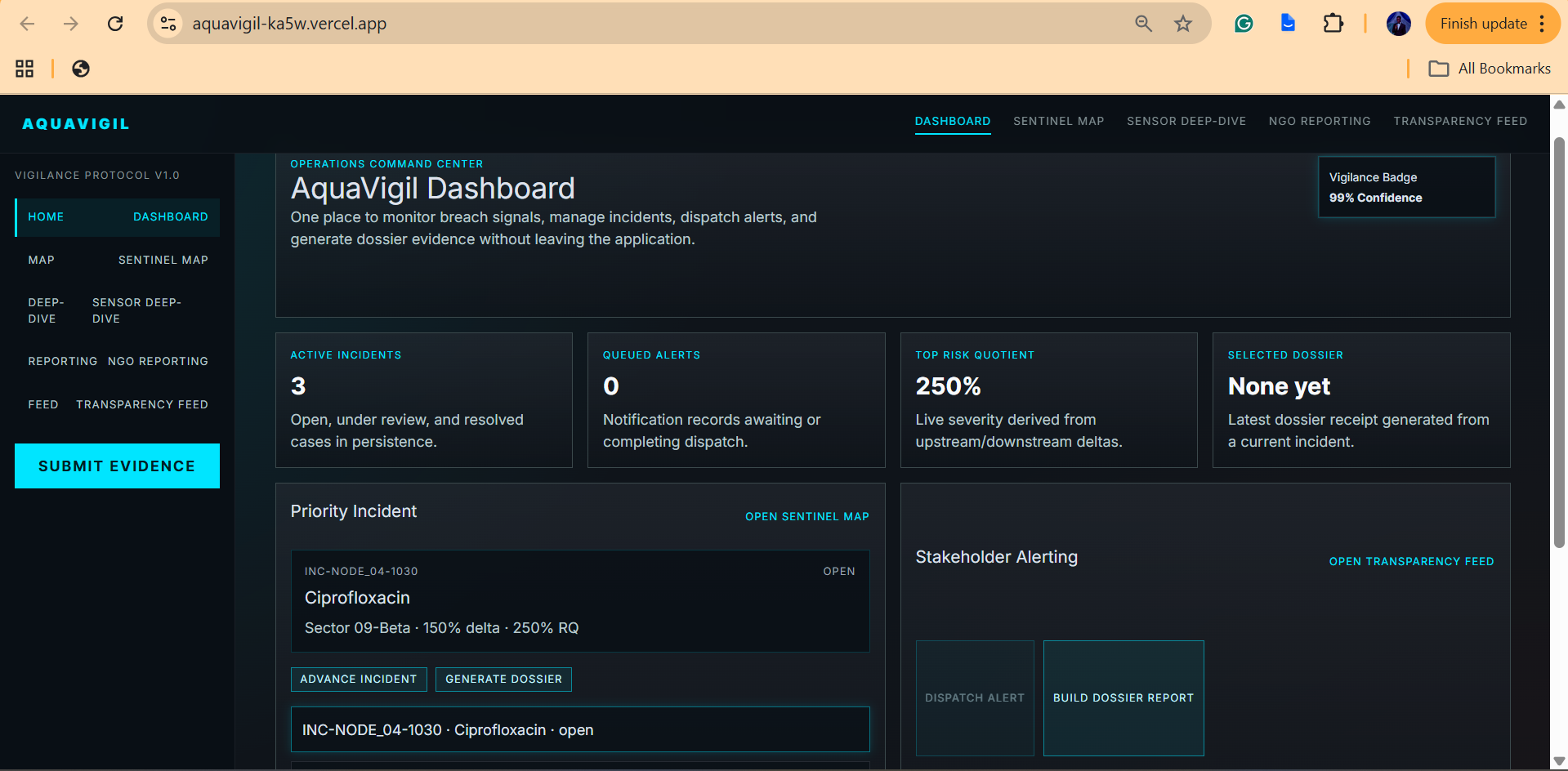
I designed AQUAVIGIL as an AI-powered environmental monitoring platform that uses low-cost biochar sensors to track industrial runoff in real-time. By placing sensors in public waterways both upstream and downstream of industrial sites, I utilize my Delta-X Methodology to calculate the specific antibiotic contribution of a facility without needing to step foot on private property. The platform visualizes these "AMR Hotspots" on a public dashboard and automatically generates immutable, "Audit-Ready" ESG dossiers for NGOs to use in legal and public advocacy.
How we built it
I built AQUAVIGIL using a hybrid "Vibe Coding" and engineering workflow:
- Design: I used Banani to iterate on the "Vigilante Tech" user flows and UI system.
- Hardware Logic: I integrated my ongoing research on biochar-based electrochemical sensors, which utilize the high surface area of pyrolyzed waste to detect trace antibiotics like Ciprofloxacin.
- Frontend & Backend: I scaffolded the web application in Lovable, utilizing a Supabase backend for sensor telemetry and Mapbox GL JS for geospatial visualization.
- Data Integrity: I implemented a cryptographic hashing protocol to ensure that once a sensor reading is recorded, it becomes a permanent part of the public audit trail.
Challenges we ran into
One of the primary challenges I faced was ensuring the sensitivity of the sensors in "raw" wastewater without expensive laboratory pretreatment. I had to refine the mathematical thresholds to distinguish between baseline environmental levels and active industrial discharge peaks. Another challenge was designing a UI that could handle high-density geospatial data while remaining accessible to NGO investigators who may not be data scientists.
Accomplishments that we're proud of
I am incredibly proud of the Delta-X Methodology, which provides a tactical solution to the governance gap in environmental monitoring. By demonstrating that we can achieve a $90\%$ reduction in data falsification through public-proxy surveillance, I’ve created a viable pathway for community-led enforcement of UN SDG 3 and 6.
What we learned
Through this project, I learned that the technical solution is only half the battle; the real innovation lies in the Strategic Implementation. I learned that by leveraging low-cost materials like biochar—costing less than $\$0.10$ per test—we can scale surveillance frequencies by $100\times$ compared to traditional lab-based methods.
What's next for AQUAVIGIL
The next step for AQUAVIGIL is a pilot deployment in industrial river basins in Lagos and Nairobi. I aim to integrate my platform with the networks of the Global NGO Executive Committee (GNEC) and the World Assembly of Youth (WAY) to put these tools directly into the hands of frontline environmental defenders. My goal is to turn "invisible" runoff into undeniable evidence, protecting the global microbiome one riverbank at a time.
Built With
- nextjs
- typescript

Log in or sign up for Devpost to join the conversation.