-
-
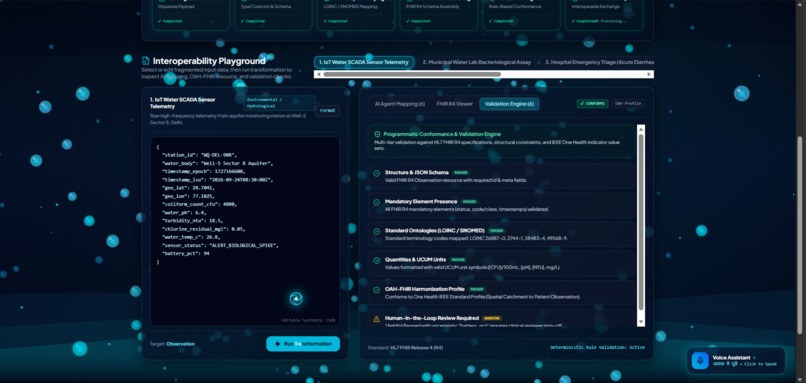
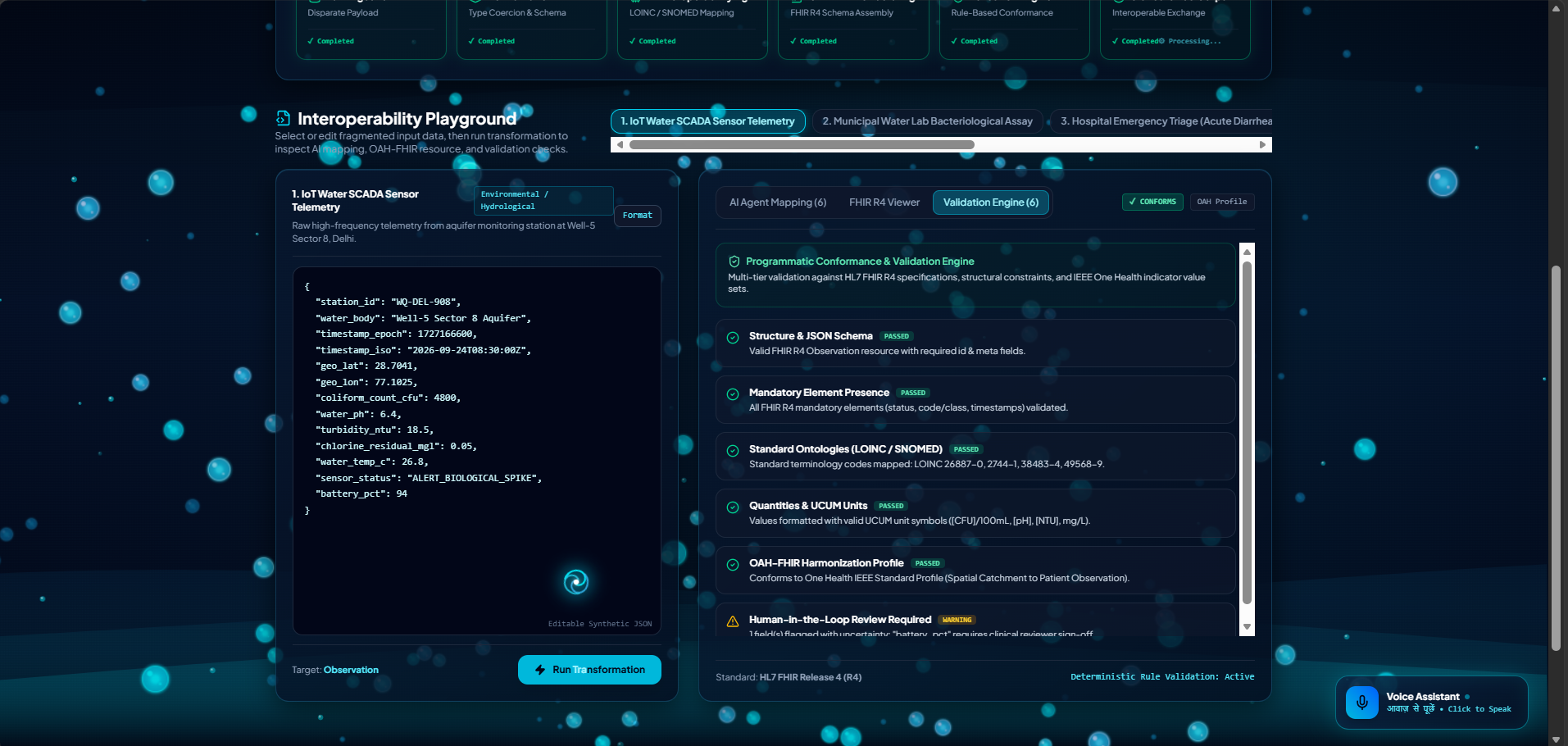
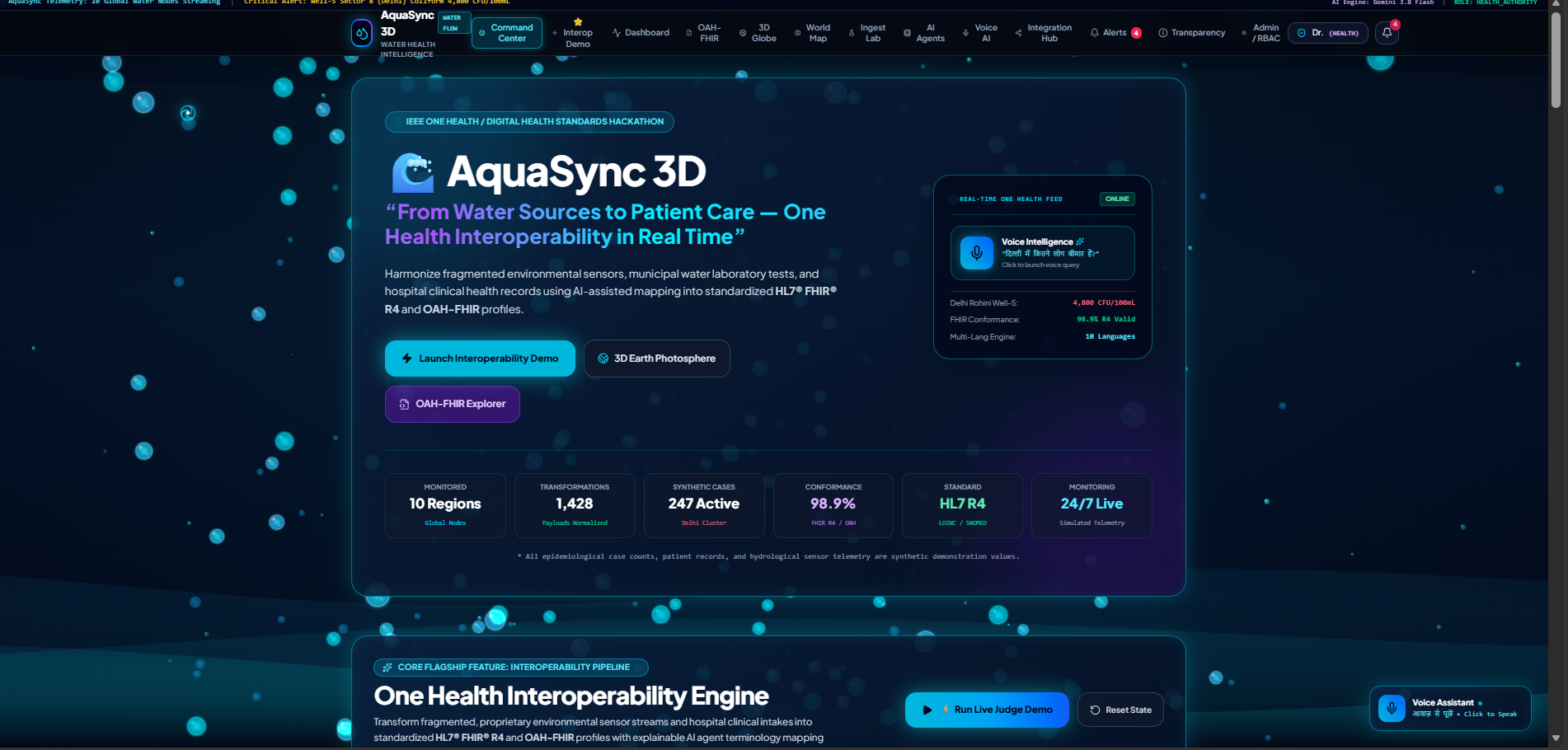
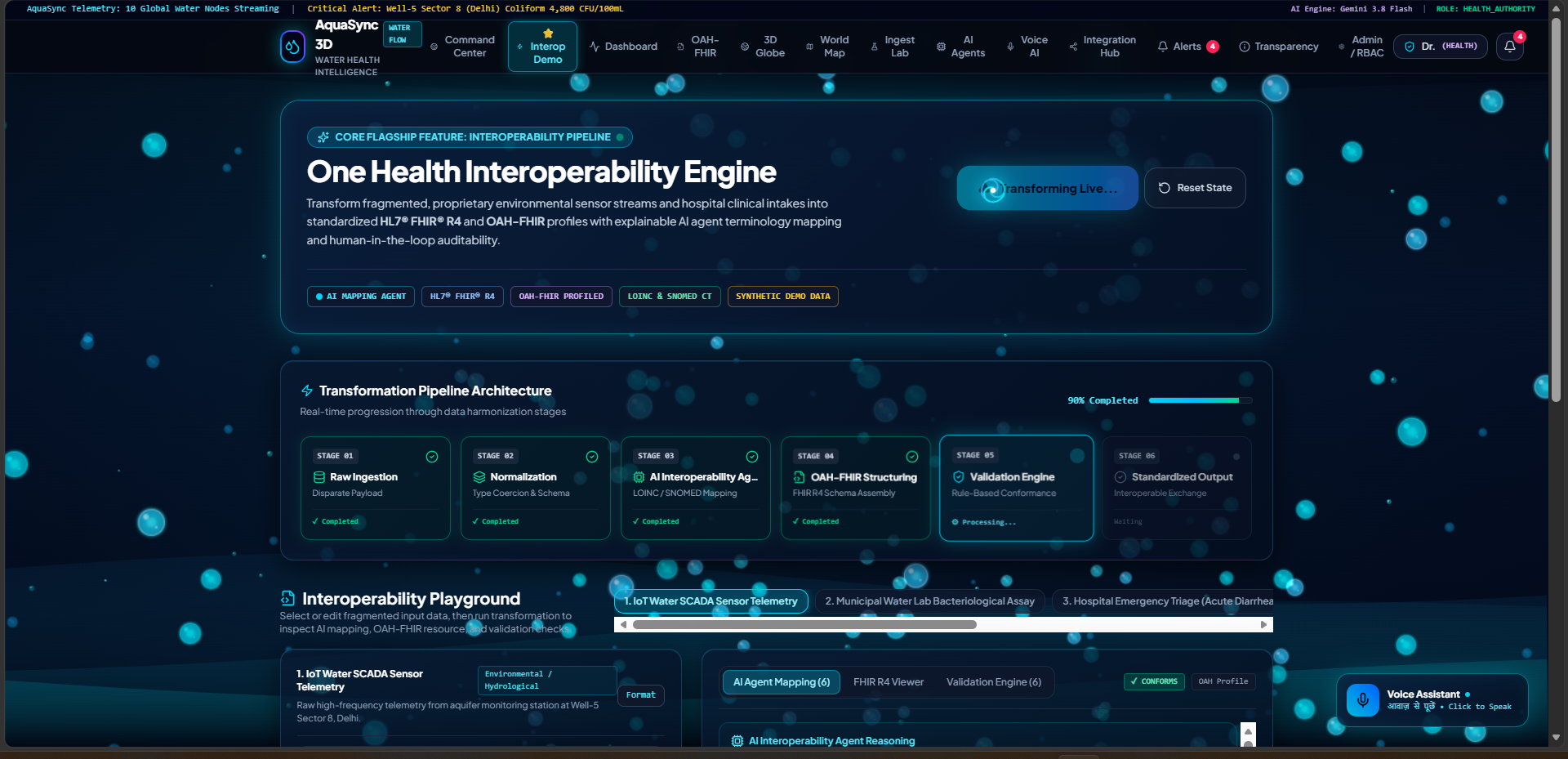
Interoperability Playground - Demonstrates how ai agent works in this model.
-
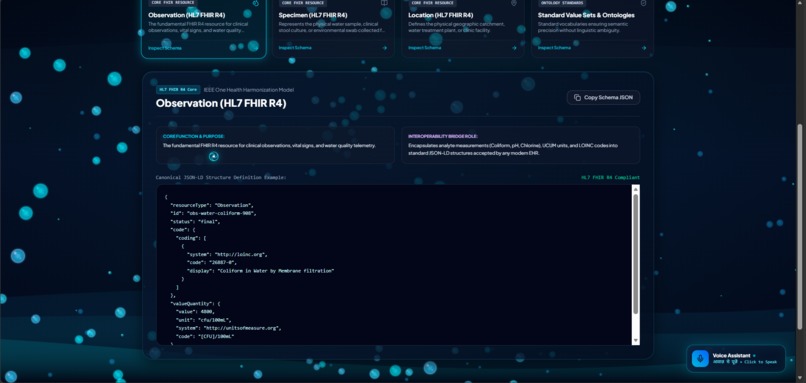
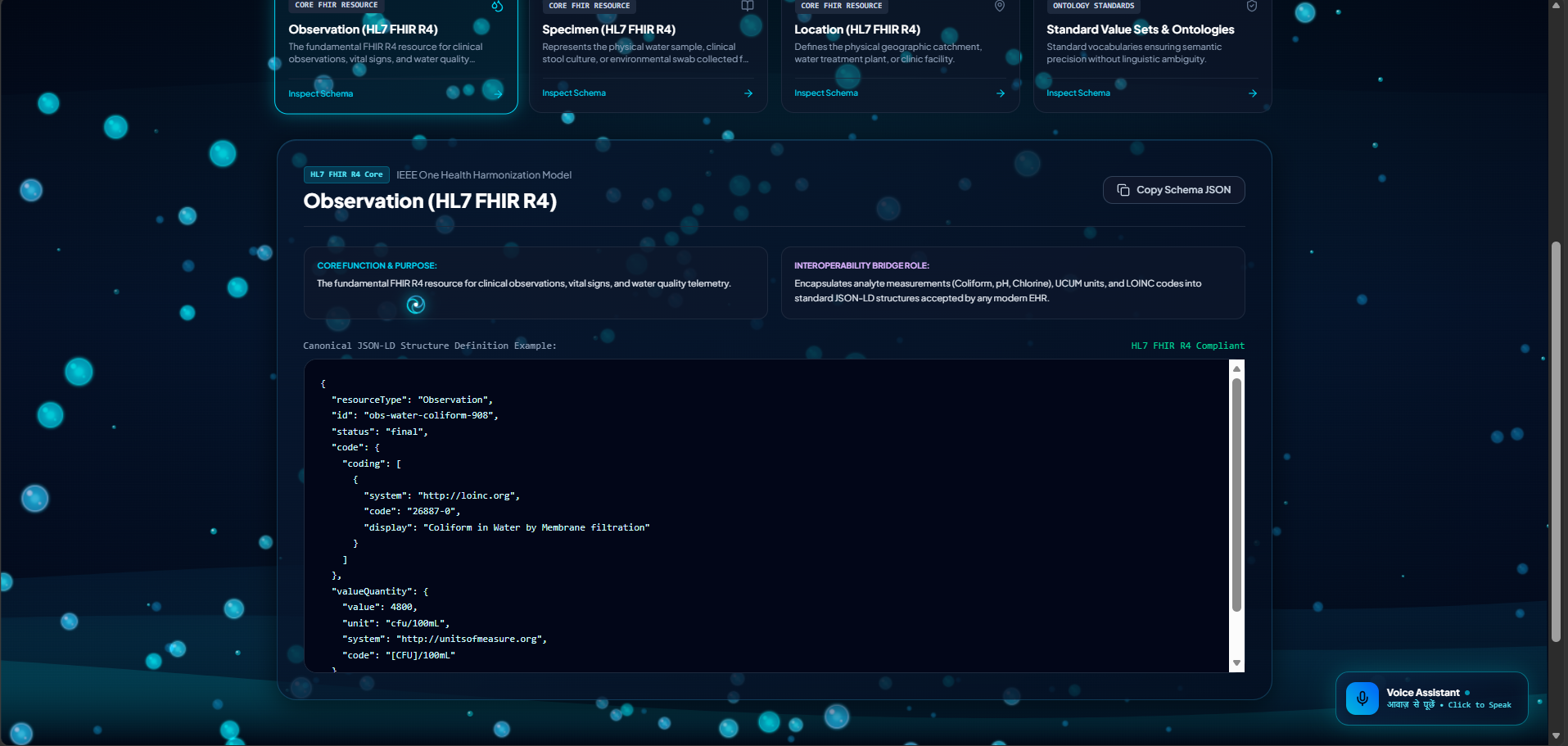
Observation of HL7 FHIR model: shows real data of FHIR model
-
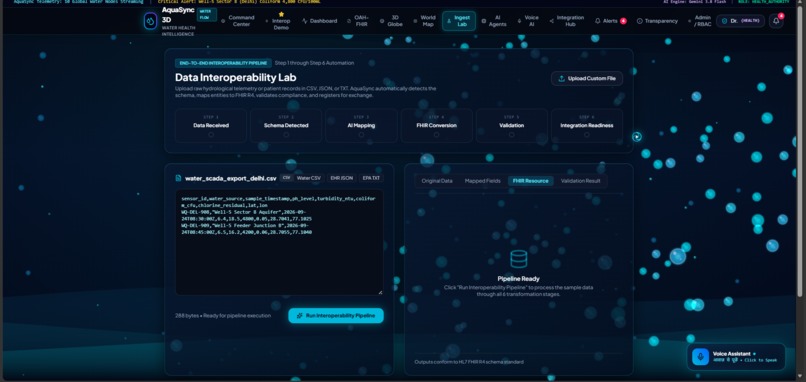
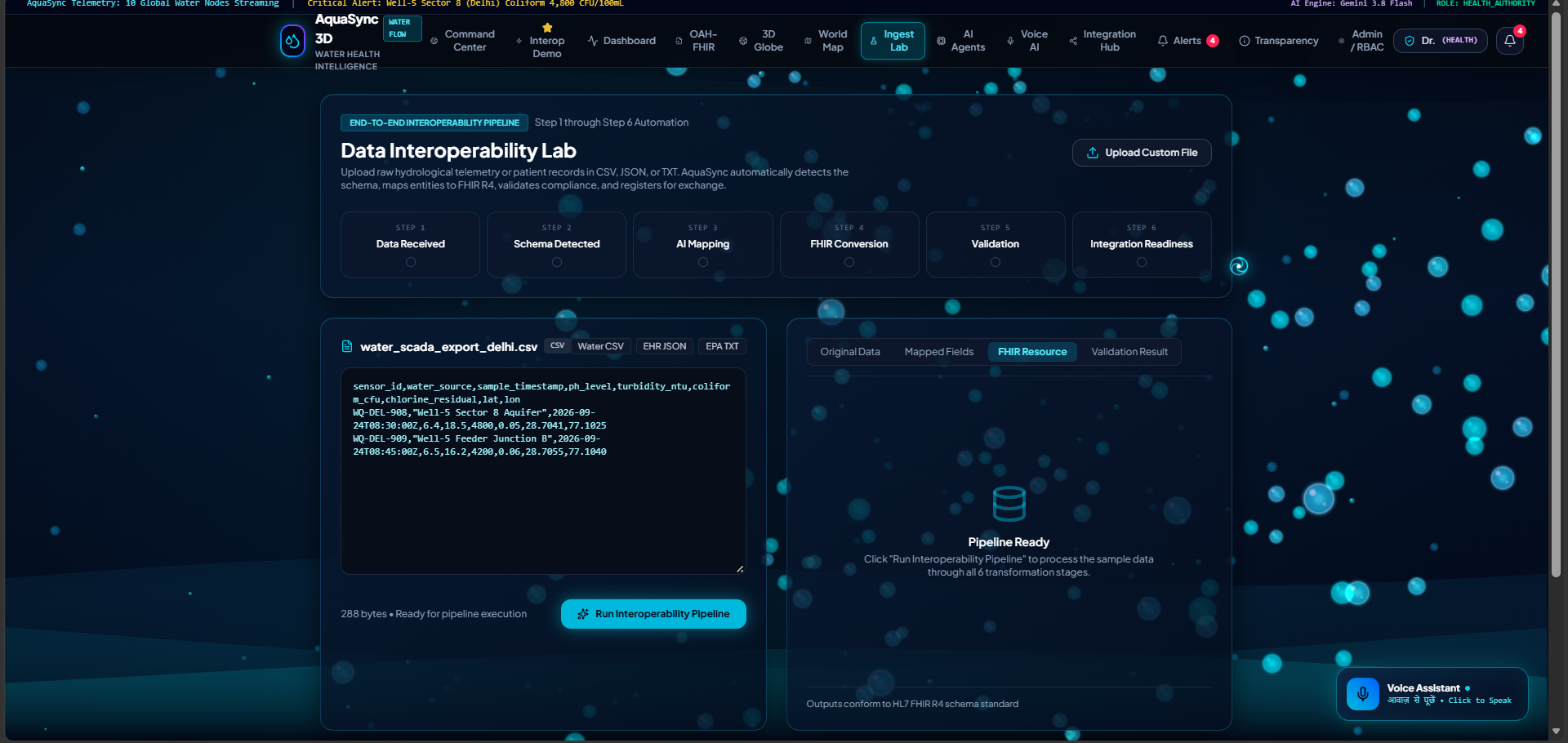
Data Interoperability lab - upload file and show real time data .
-
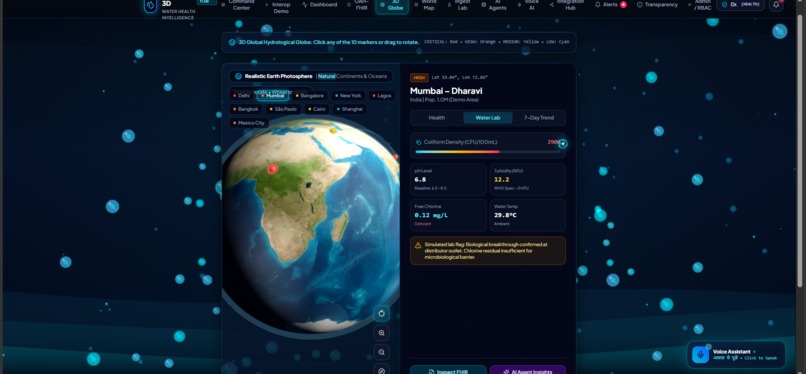
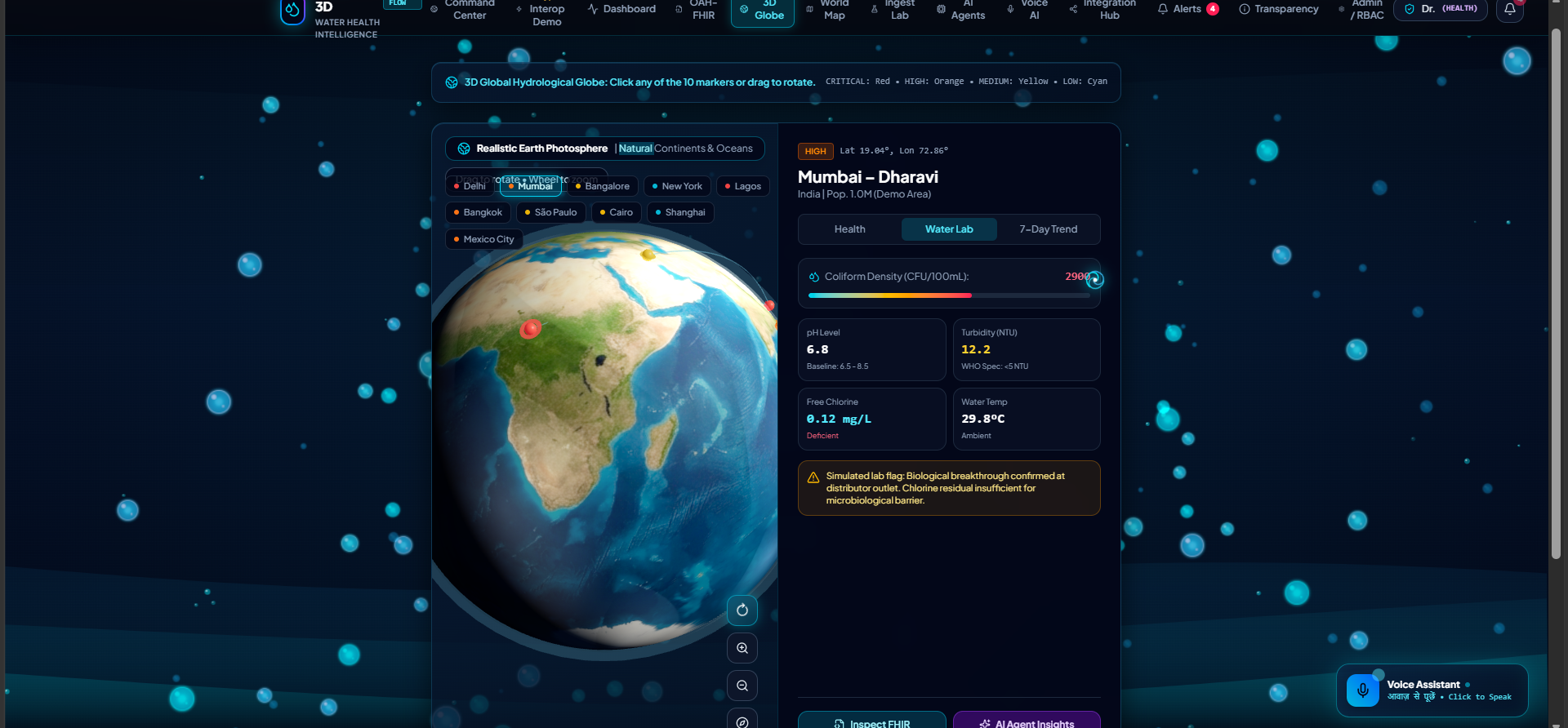
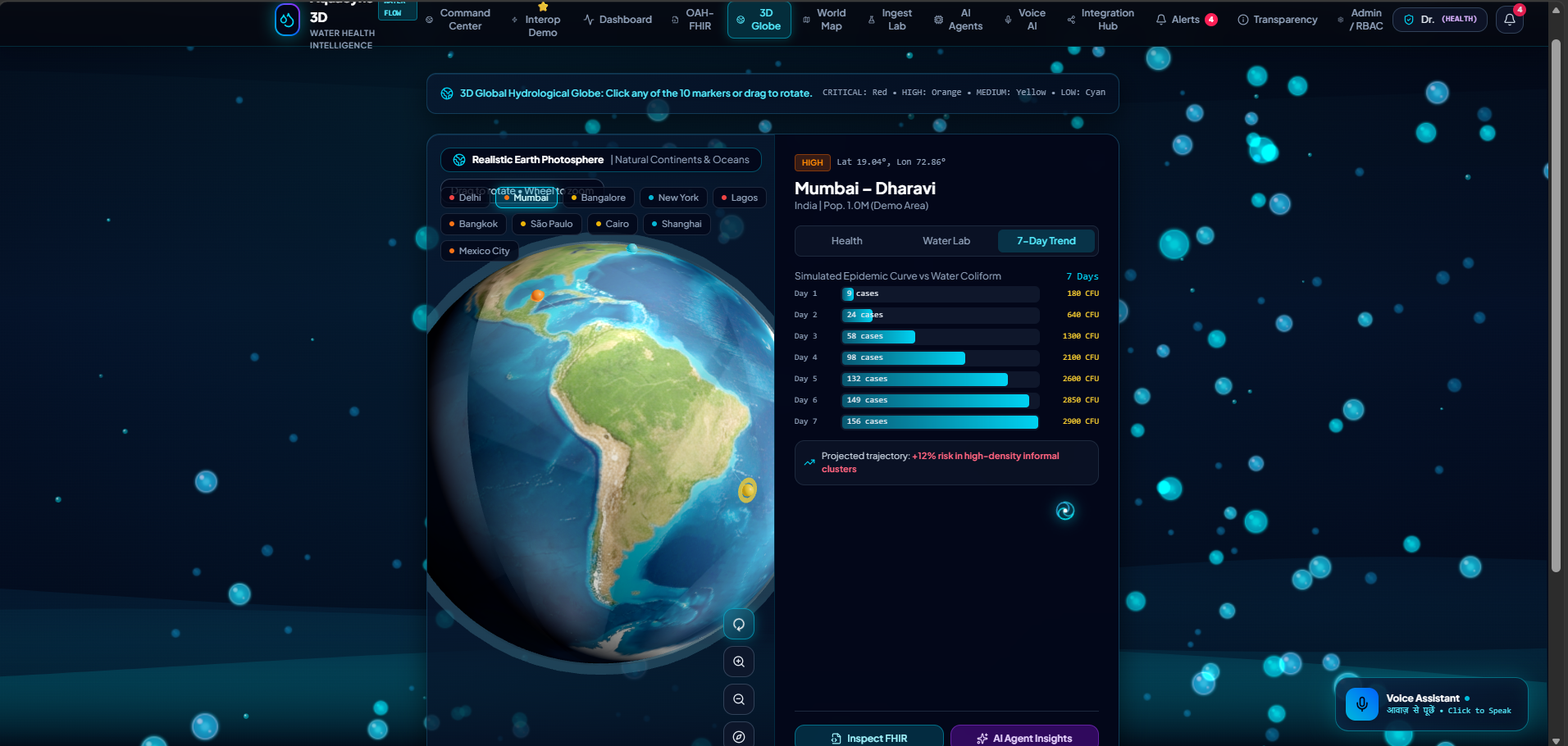
3D Water Globe - interacting visualization of Water-quality selected regions.
-
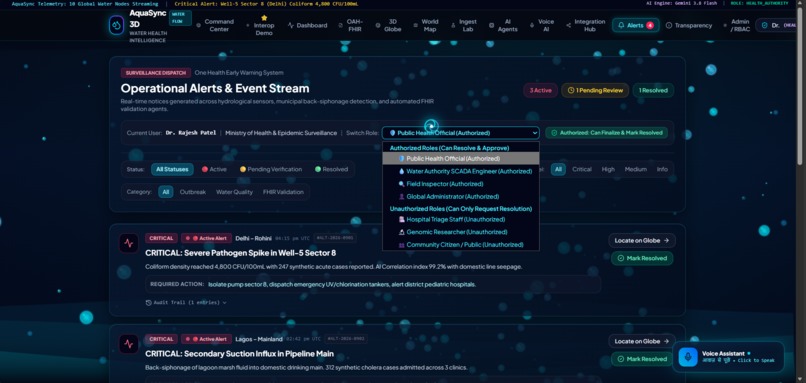
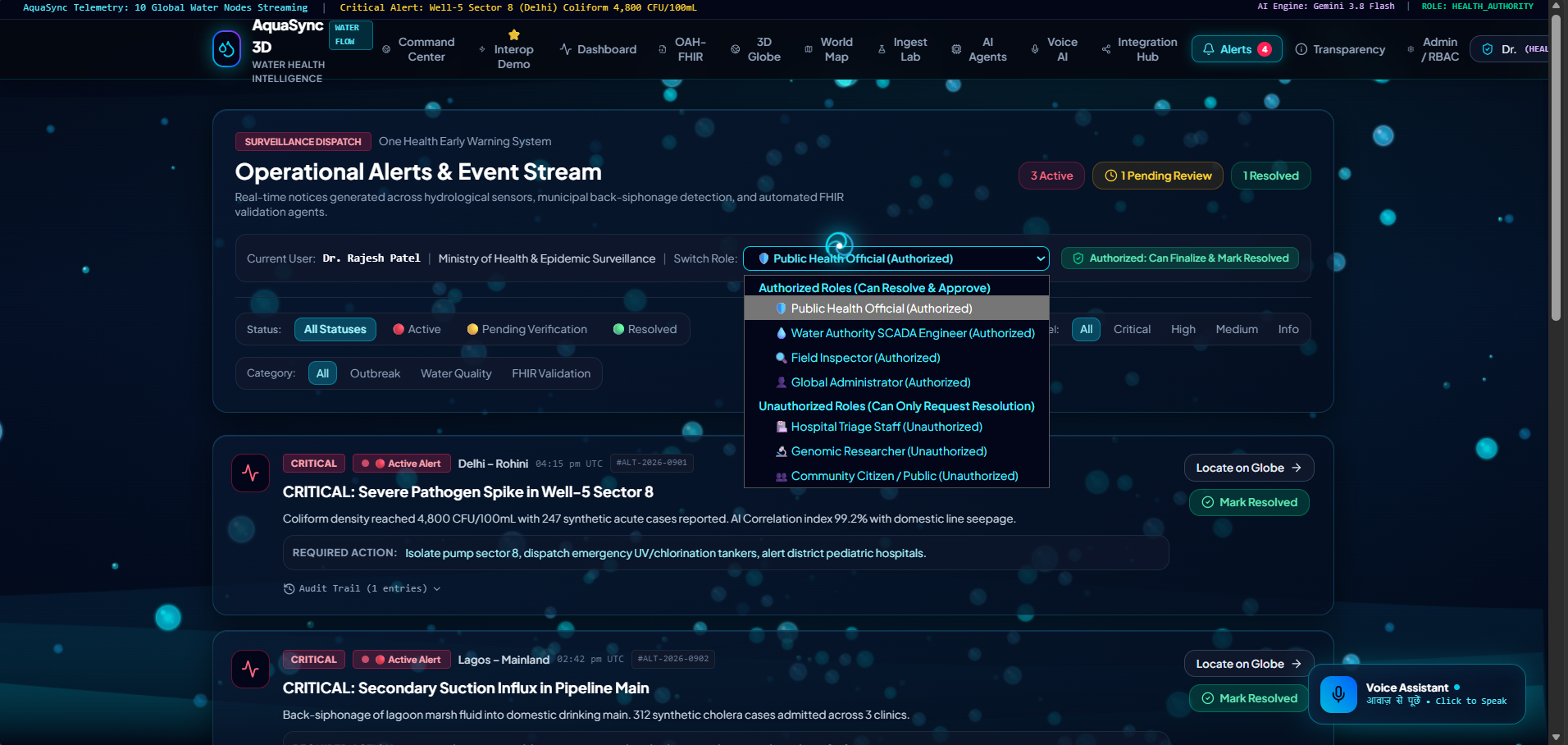
Alerts & Monitoring - Displays important water-health alerts and their current status.
-
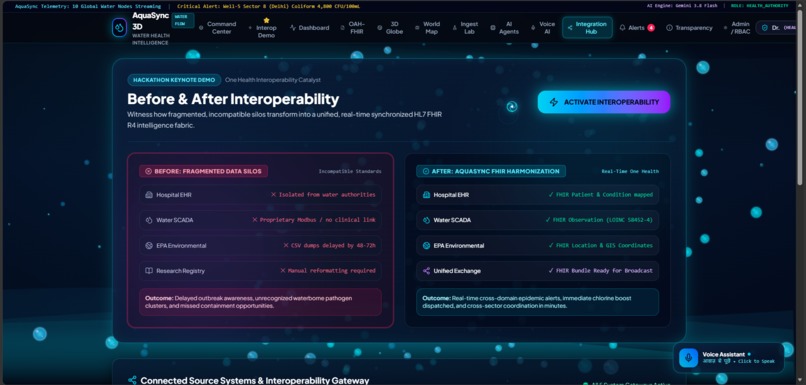
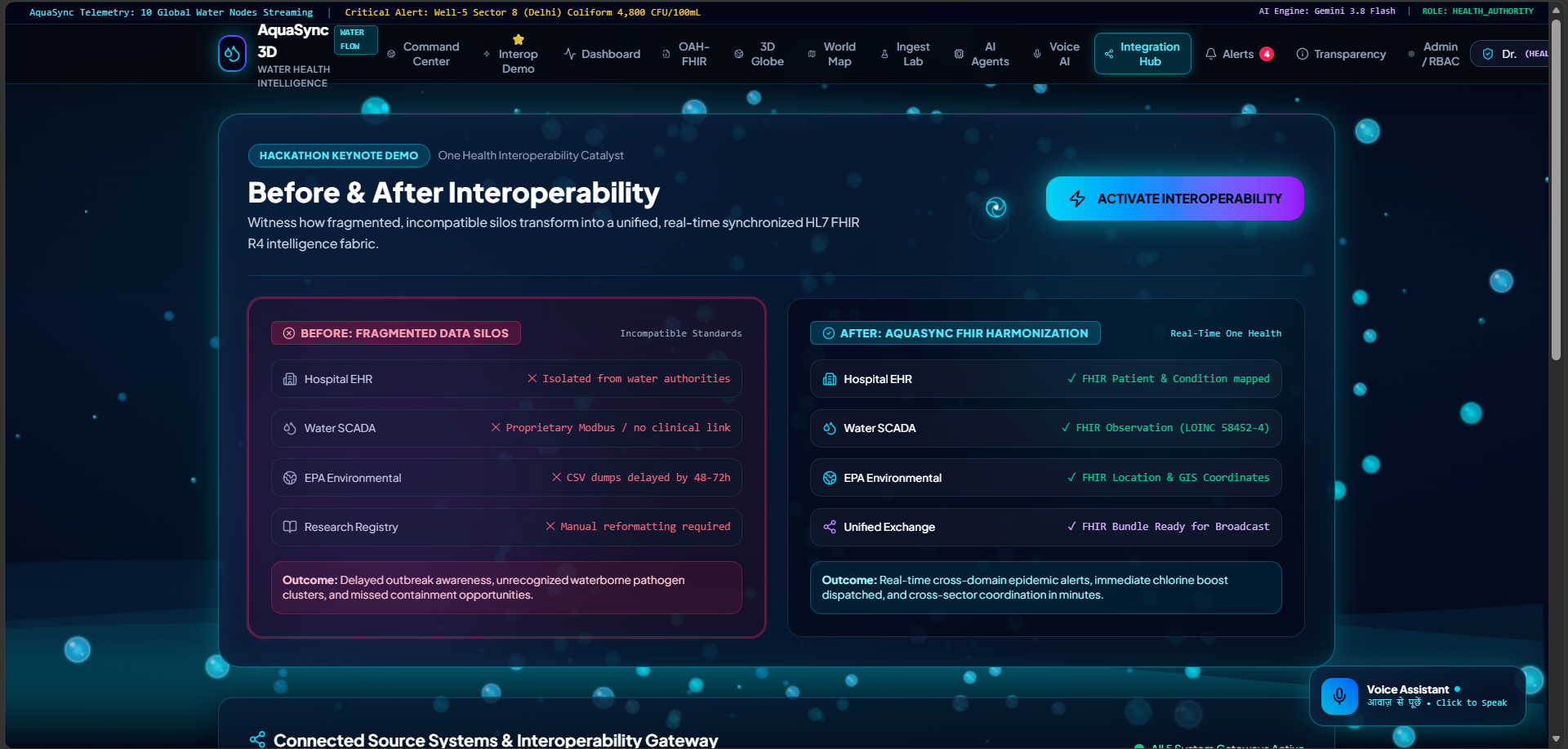
Showing data - it shows before and after situation for aqua health system.
-
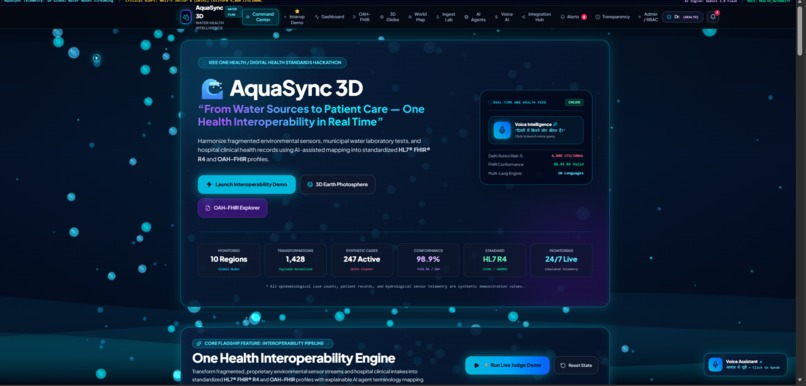
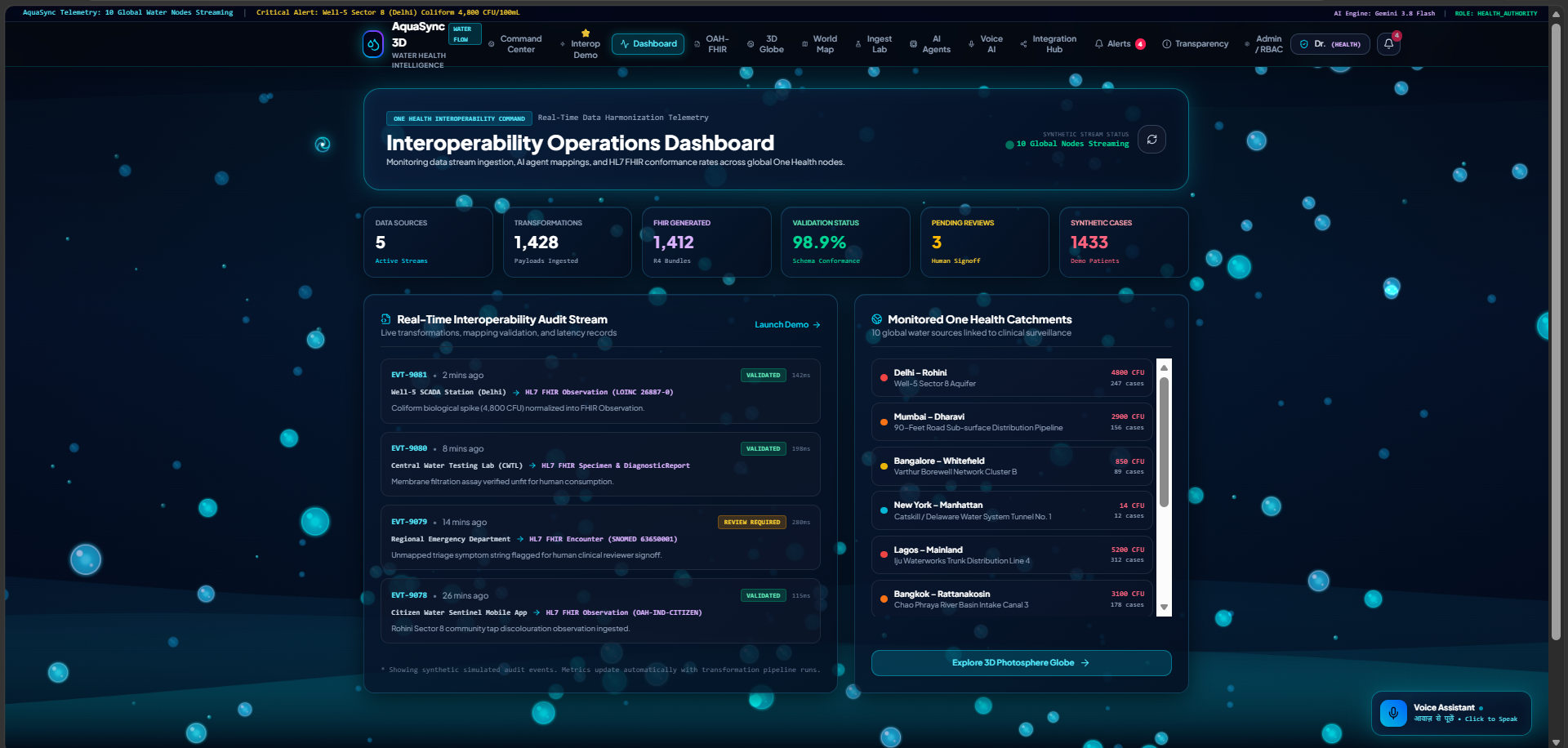
Home page-Overview of the Aquasync plateform and key water-health insights.
-
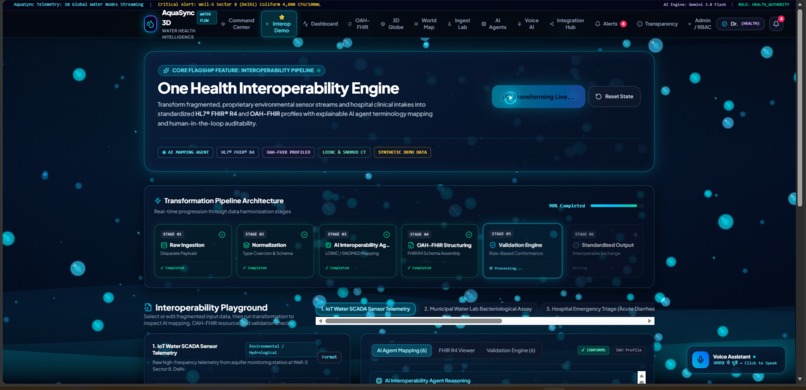
Interoperability View - Demonstrates how standardized data can be shared between systems.
-
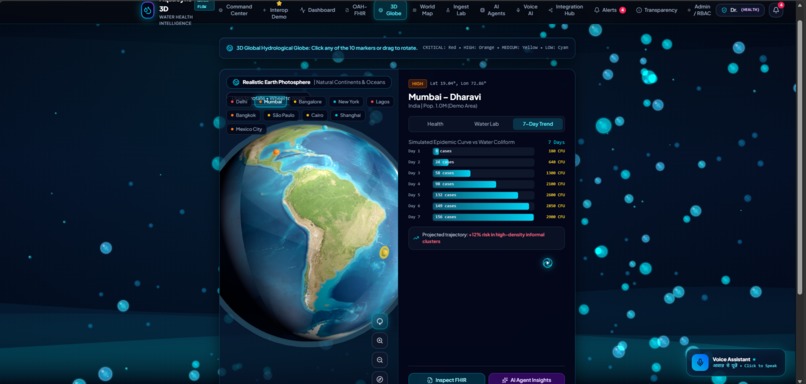
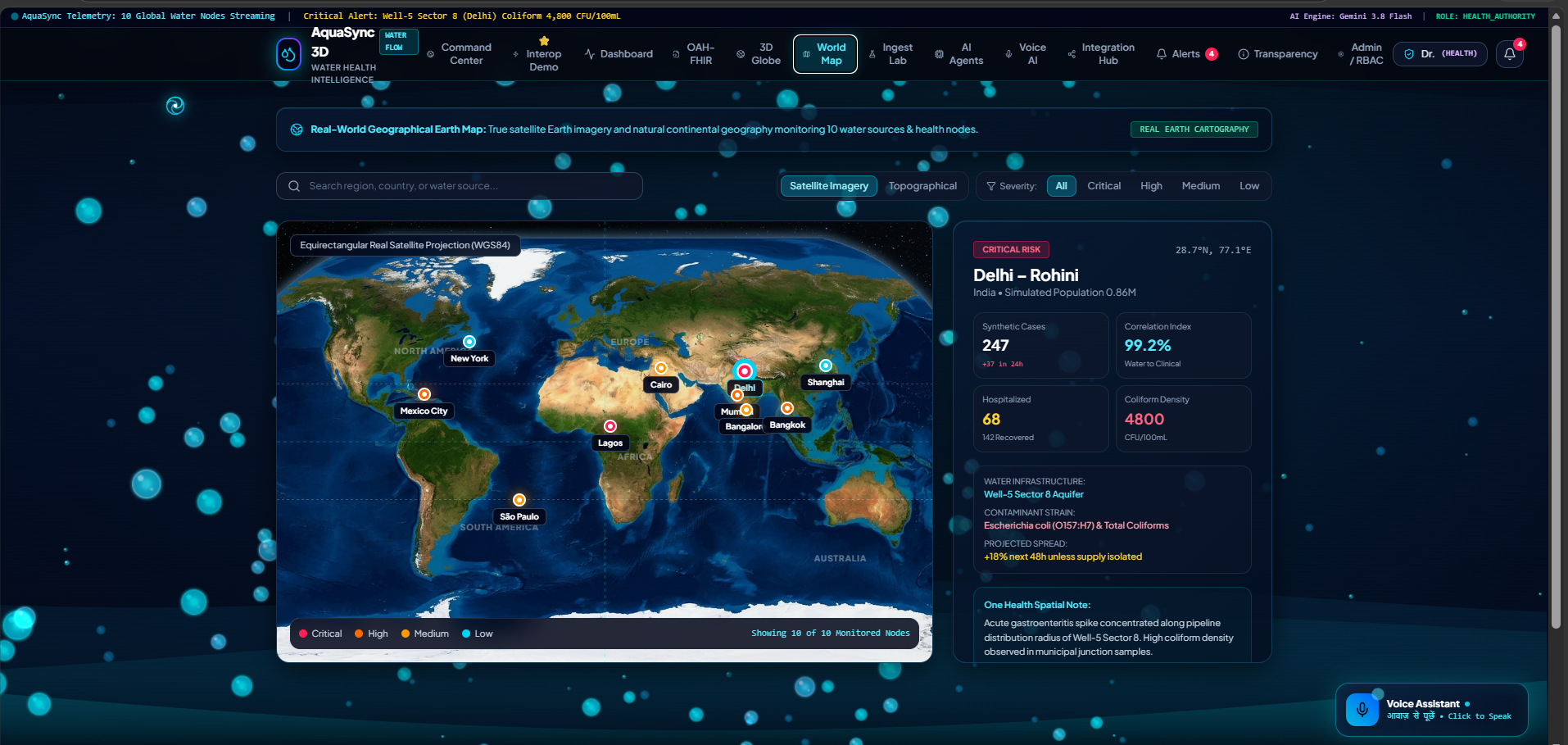
Regional Health data - interacting visualization of public-health data for selected regions.
-
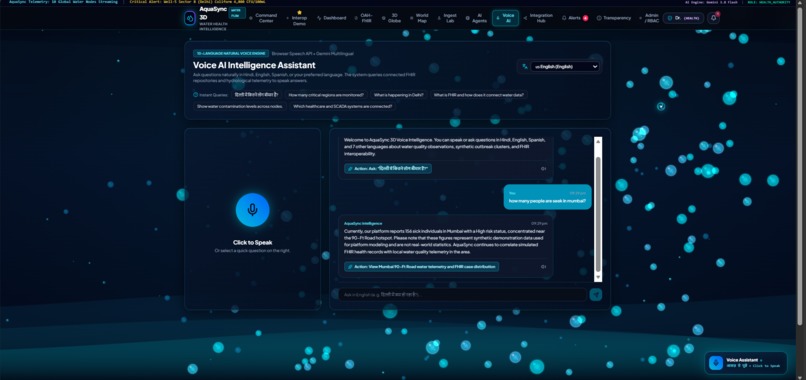
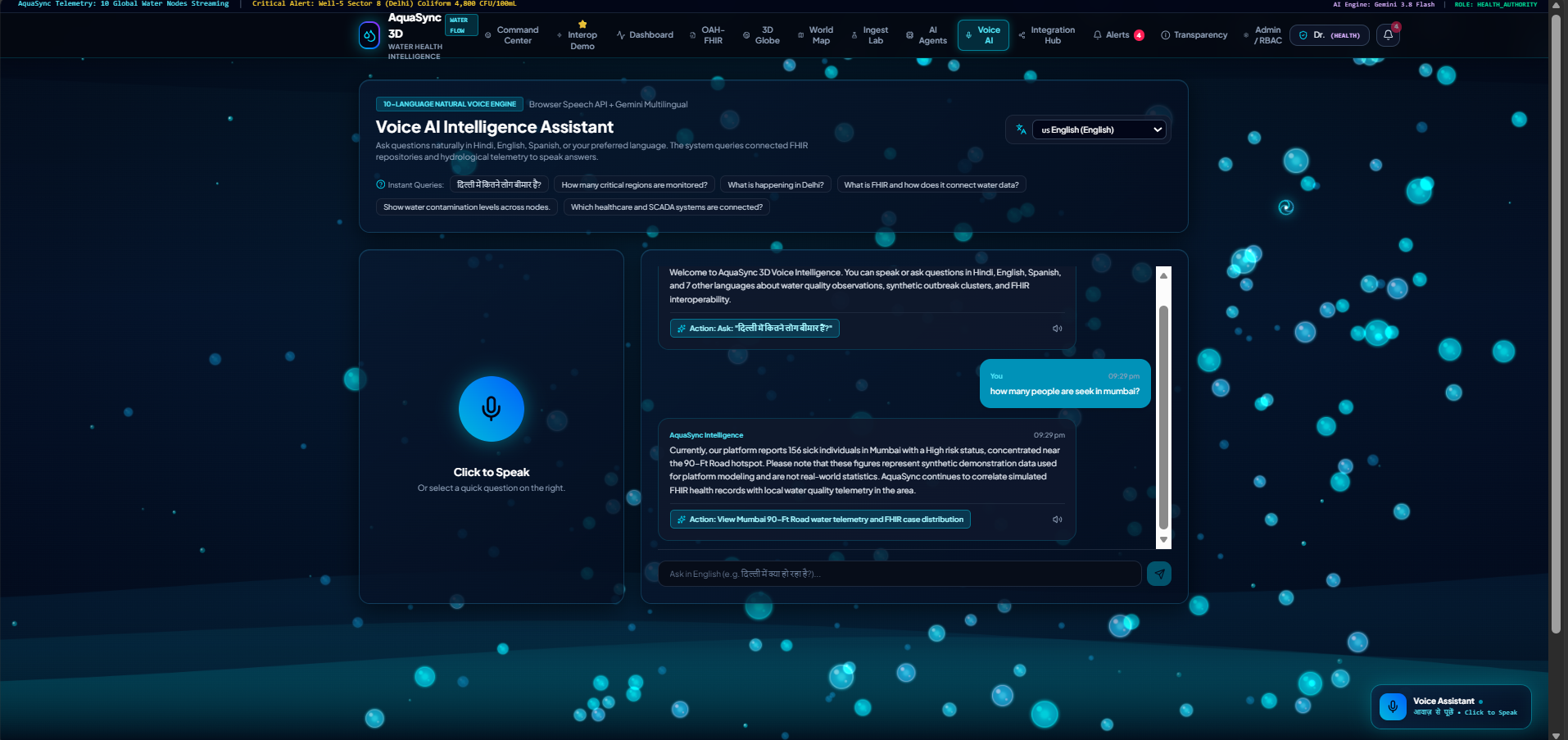
Voise assistance - Allowing 10 different language for question and answering.
-
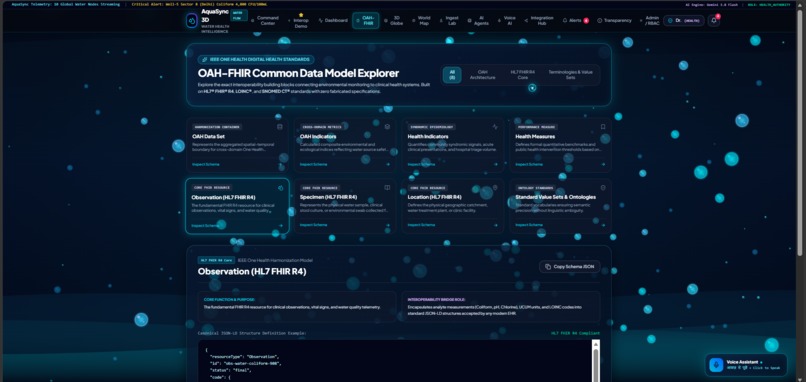
OAH-FHIR model - Demonstrate the FHIR-based healthcare data structure for interoperability.
-
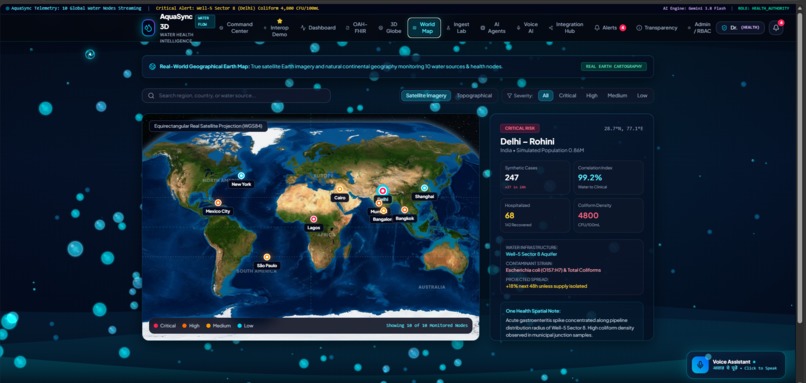
World map - showing location in world map of particular place and their patients data.
-
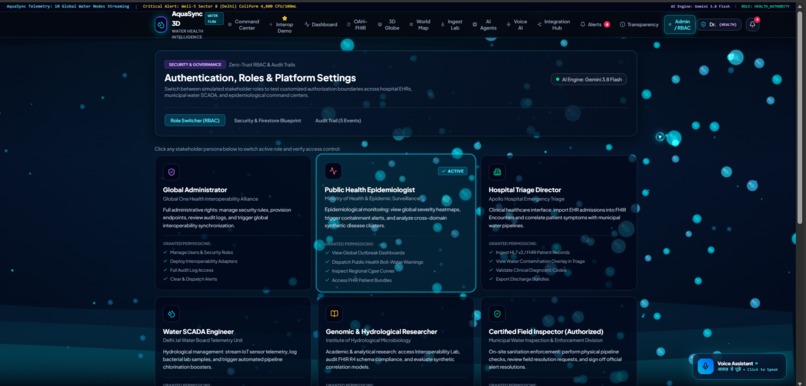
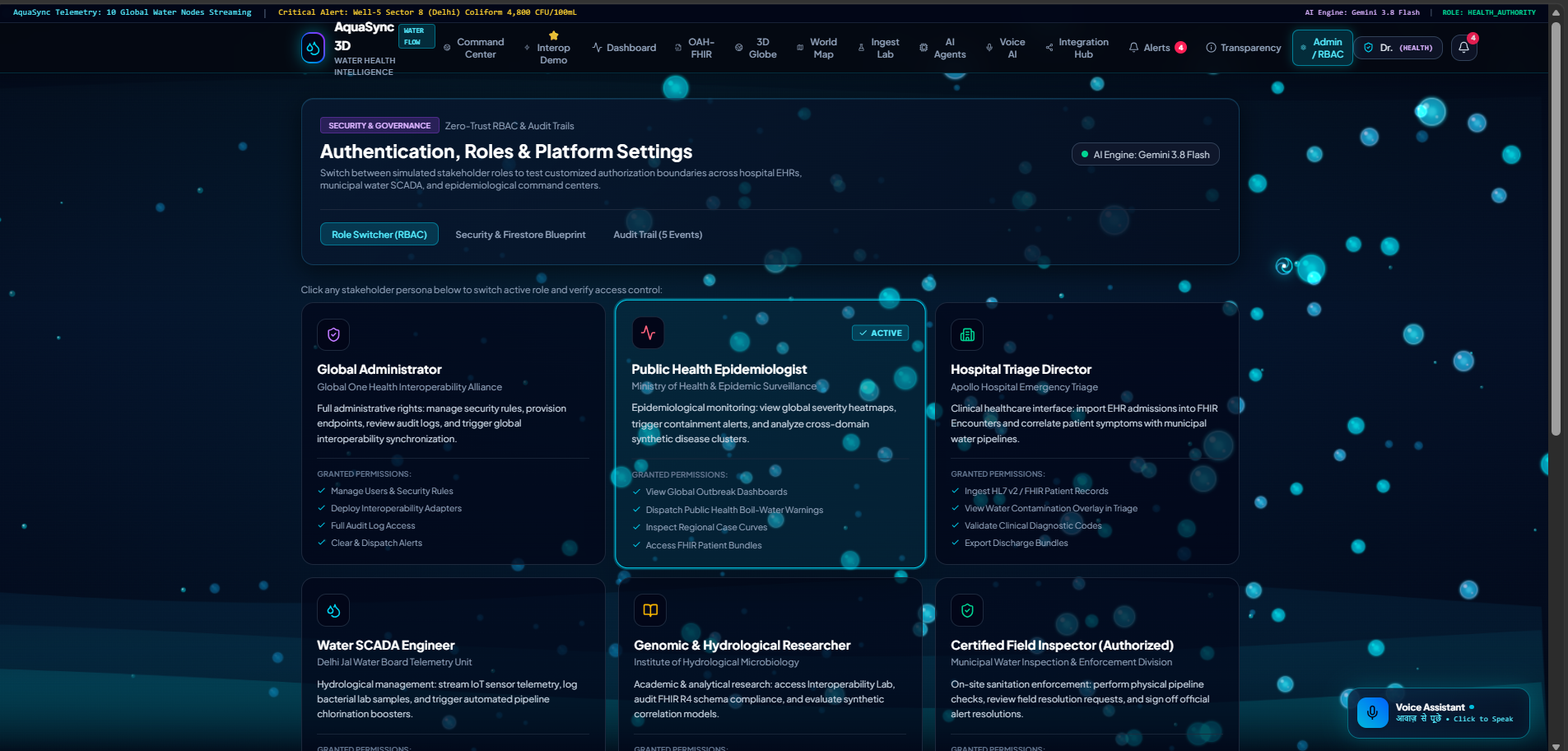
Authentication & Role and plateform setting - showing your profile .
-
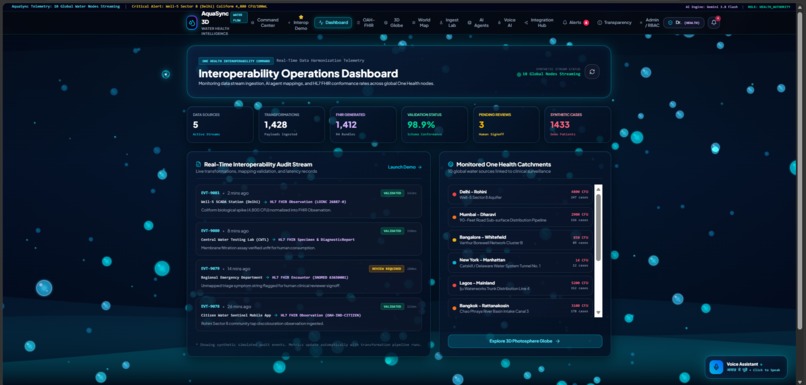
AI-Agent Dashboard- show analysis, insights and interoperability.

Inspiration
Water is one of the most important factors affecting human health, yet water-health information is often fragmented across different systems, organizations, formats, and geographic locations.
While working on the OneAquaHealth IEEE Global Hackathon, we focused on a fundamental question:
What if water-health data could communicate with health systems in a standardized way, and AI could turn that connected data into actionable intelligence?
This led us to build AquaSync — Water Health Intelligence.
Our inspiration came from the idea that the problem is not simply a lack of data. There is already a huge amount of information being generated by water monitoring, environmental systems, laboratories, and health-related systems.
The deeper problem is that these systems often do not speak the same language.
We wanted to explore how FHIR-based interoperability, AI, geographic intelligence, and secure workflows could work together to create a connected water-health ecosystem.
Our core idea became:
Fragmented Data → Standardized Data → Interoperable Systems → AI Intelligence → Actionable Insights
What it does
AquaSync is a water-health intelligence and interoperability platform that brings together water-health information, FHIR-based data structures, AI-powered intelligence, geographic visualization, and secure alert workflows.
The platform demonstrates how fragmented information can move through a connected pipeline:
Data Sources → Data Processing → FHIR → AI Intelligence → Risk Insights → Geographic Alerts → Secure Response
🔗 FHIR-Based Interoperability
FHIR (Fast Healthcare Interoperability Resources) is a central part of our approach.
We use FHIR concepts to represent health-related information in a standardized structure, creating a foundation for exchanging information between different systems.
This allows us to think beyond a single application and toward an ecosystem connecting:
- Water and environmental systems
- Laboratories
- Healthcare systems
- Public-health organizations
- Digital health platforms
🤖 AI-Powered Intelligence
AquaSync adds Generative AI and AI agents on top of structured information.
The AI layer can assist with interpreting information, identifying potentially important conditions, and transforming data into useful insights.
Our approach is based on an important principle:
AI becomes more useful when the information it works with is structured, standardized, and interoperable.
🌍 Geographic Intelligence
Water-health events are inherently connected to location.
AquaSync therefore includes an interactive 3D globe that allows water-health information and alerts to be understood geographically.
This creates a connection between:
Data + Location + Risk + Intelligence
🚨 Secure Alert Workflow
AquaSync also demonstrates a controlled approach to alert management.
Instead of treating an alert as resolved simply because someone clicks a button, the workflow separates requesting a resolution from authorizing it:
🔴 Active Alert ↓ 🟡 Resolution Requested / Pending Verification ↓ 🟢 Resolved
This helps create a more accountable workflow for sensitive actions.
🎙️ Accessible Interaction
We also explored Web Speech API and multilingual voice interaction to make interaction with the platform more accessible.
How we built it
We built AquaSync as a web-based application using a combination of modern web technologies, interoperability standards, AI, cloud infrastructure, and visualization.
🛠️ Technology Stack
Vite • TypeScript • WebGL • 3D Globe • HL7 FHIR • Generative AI • AI Agents • Node.js • Firebase • Firestore • Web Speech API • Multilingual Voice • Synthetic Datasets • REST/API Integration • Firestore Security Rules • Cloud Deployment
🏗️ Our architecture
At a high level, the system follows this flow:
Water / Health Data
        ↓
Data Processing
        ↓
FHIR-Based Representation
        ↓
AI Intelligence
        ↓
Risk & Alert Insights
        ↓
3D Geographic Visualization
        ↓
Secure Response Workflow
We used synthetic demonstration data for the prototype rather than real patient information.
We also designed the project around interoperability rather than building only a standalone dashboard. This helped us keep the hackathon challenge — "Enable interoperability across systems" — at the center of the architecture.
Challenges we ran into
Building AquaSync in a hackathon environment came with several challenges.
1. Making interoperability more than a buzzword
One of our biggest challenges was understanding that simply saying "we use FHIR" is not enough.
We needed to think about what information should be standardized, how it should be represented, and why another system would benefit from receiving it.
This changed our thinking from:
"Let's build a water-health dashboard."
to:
"Let's build an interoperability layer that can connect fragmented water-health information."
2. Connecting AI with structured data
Another challenge was deciding where AI should actually add value.
We did not want AI to be an isolated chatbot sitting beside the application.
Instead, we explored how AI could work with structured water-health information and support analysis, risk understanding, and actionable insights.
3. Geographic visualization
Representing water-health information geographically while keeping the interface understandable was another challenge.
The 3D globe became an important part of the project because it allowed us to connect individual data points and alerts with their geographic context.
4. Designing a safer alert workflow
We also recognized that simply allowing every user to mark an alert as "resolved" would create an accountability problem.
This led us to introduce a role-aware workflow where resolution can involve a request and verification process rather than an unrestricted status change.
5. Building under hackathon constraints
We had to balance ambitious ideas with what could realistically be demonstrated within the hackathon timeframe.
That meant continuously asking:
What solves the actual problem?
What can we demonstrate technically?
What should be part of the prototype now, and what belongs in the future roadmap?
Accomplishments that we're proud of
We are proud that AquaSync evolved beyond a conventional monitoring dashboard into a prototype centered around interoperability.
🌐 Interoperability-first thinking
We placed FHIR and standardized data at the center of the project rather than treating interoperability as an additional feature.
🤖 AI + structured information
We explored how AI agents can operate on structured information and support water-health intelligence.
🌍 3D geographic intelligence
We built an interactive geographic experience that allows users to understand water-health information spatially.
🚨 Controlled alert management
We designed a resolution workflow that distinguishes between viewing an alert, requesting resolution, and authorized resolution.
🔗 One connected concept
The biggest accomplishment is bringing multiple ideas together into one workflow:
Water Data → FHIR → AI → Geographic Intelligence → Alerts → Secure Response
Rather than solving only one part of the problem, AquaSync demonstrates how these components can work together as an interconnected system.
What we learned
Building AquaSync taught us that interoperability is not simply a technical standard — it is an architectural mindset.
We learned that a successful system needs to consider not only how data is collected, but also:
- How it is structured
- How it is standardized
- How another system can understand it
- How AI can use it
- How users interact with it
- How sensitive actions are controlled
- How information can be understood geographically
We also learned an important lesson about AI:
Adding AI does not automatically make a system intelligent. The quality, structure, context, and interoperability of the underlying data matter.
Most importantly, the project changed how we think about digital health.
Instead of asking:
"What can our application display?"
we started asking:
"What information can our system make understandable and useful to another system?"
That shift became one of the most valuable lessons of the project.
What's next for AquaSync
AquaSync is currently a hackathon prototype, but we see several opportunities to develop it further.
🔗 Deeper FHIR interoperability
We want to expand the FHIR implementation with a broader set of resources, profiles, validation, and standards-based APIs so that AquaSync can integrate more realistically with external health and environmental systems.
🌊 Real-world water data
The current prototype uses synthetic demonstration data.
The next step would be connecting the platform to real-world water-quality sensors, laboratory systems, environmental datasets, and public-health data sources where appropriate.
🤖 More specialized AI agents
Future versions could include specialized agents for:
- Water-quality analysis
- Risk assessment
- Public-health intelligence
- Anomaly detection
- Alert investigation
- Data quality and FHIR validation
🏥 Cross-system integration
We envision AquaSync connecting water authorities, laboratories, healthcare organizations, and public-health systems through interoperable standards rather than requiring every organization to adopt the same software.
🔐 Stronger security and governance
Future development could include stronger identity verification, granular permissions, comprehensive audit trails, consent and data-governance mechanisms, and production-grade security.
🌍 From prototype to ecosystem
Our long-term vision is to move from a demonstration platform toward an interoperable Water + Health Intelligence ecosystem.
The ultimate goal is:
Fragmented Water Data ↓ Standardized & Interoperable Information ↓ AI-Powered Intelligence ↓ Geographic Risk Awareness ↓ Verified Response ↓ Better Connected Water-Health Systems
AquaSync started as a hackathon idea, but the larger question behind it remains:
What if water-health data could move as easily between systems as the people and communities it is meant to protect?
That is the direction we want AquaSync to explore.
Built With
- ai-agents
- cloud
- data-visualization
- firebase
- firestore
- generative-ai
- google-web-speech-api
- hl7fhir
- multilingual-voice
- node.js
- react.js
- rest-api
- three.js
- typescript
- vercel
- vite
- webgl


Log in or sign up for Devpost to join the conversation.