-
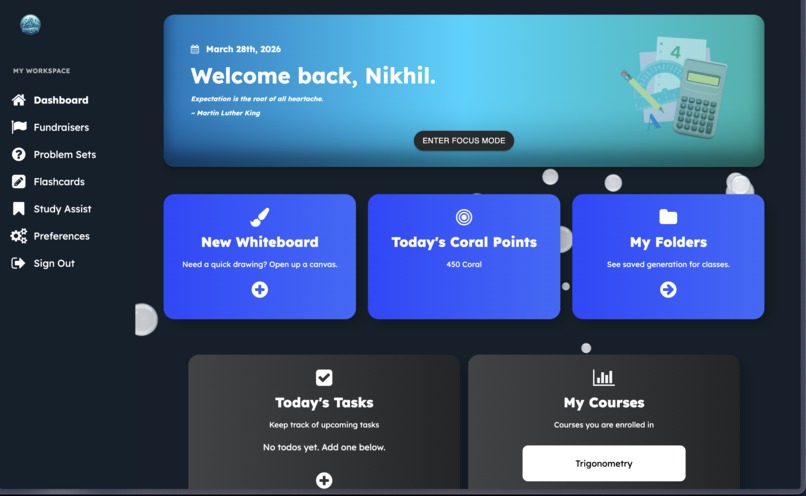
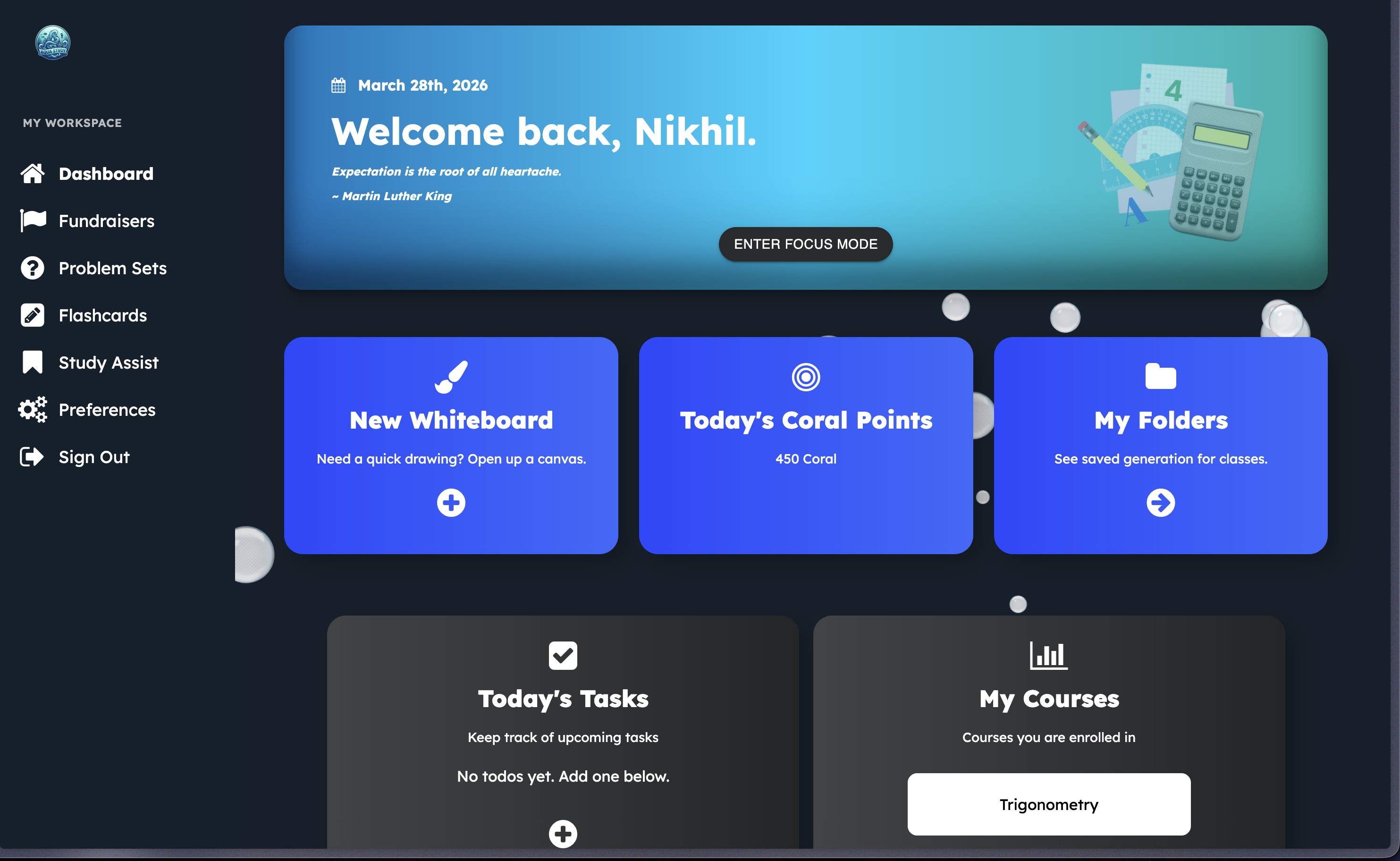
dashboard
-
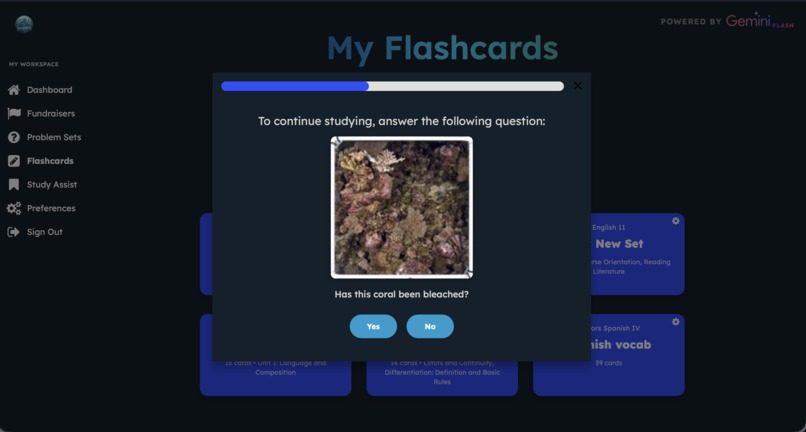
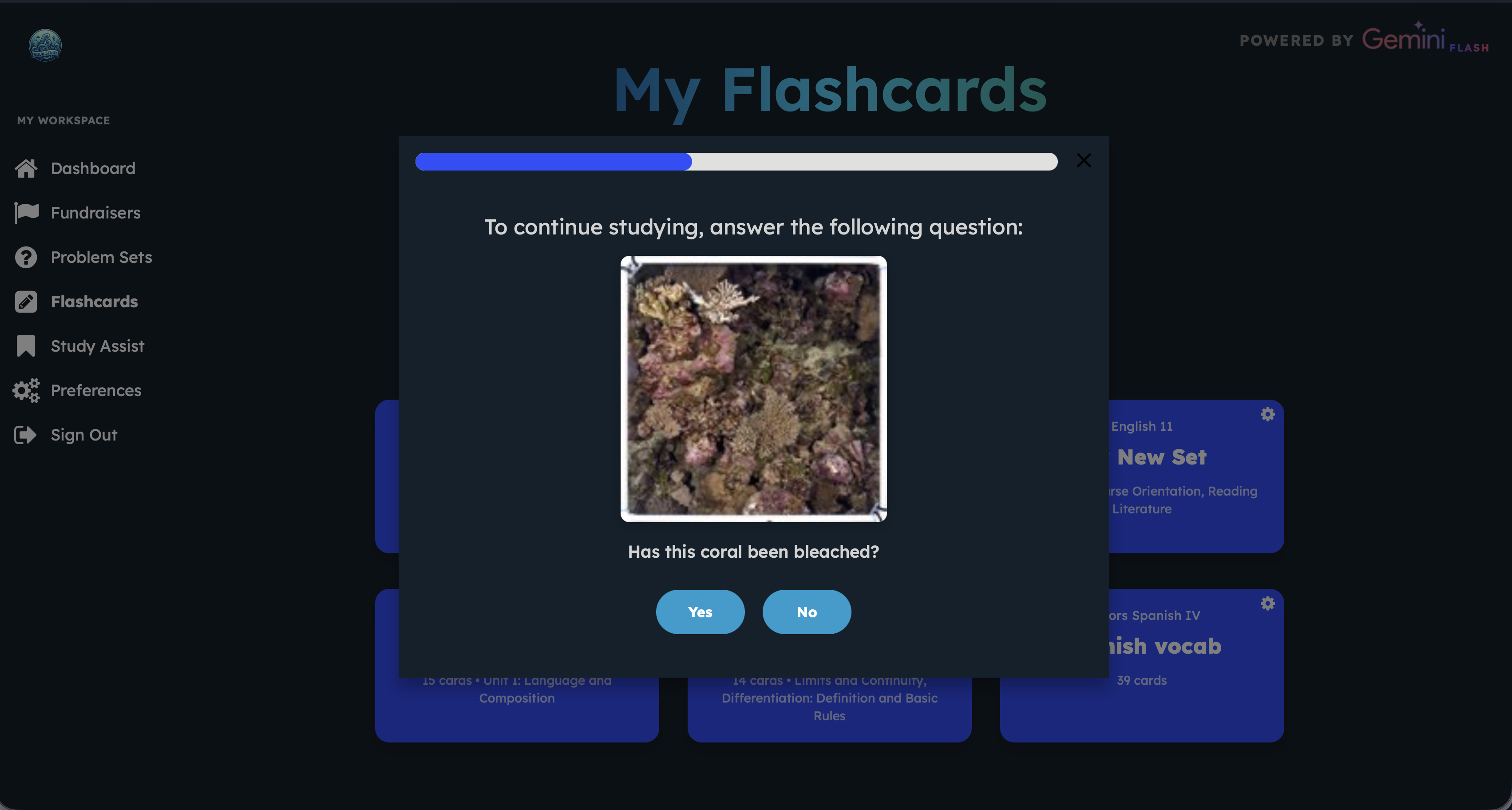
flashcard studying
-
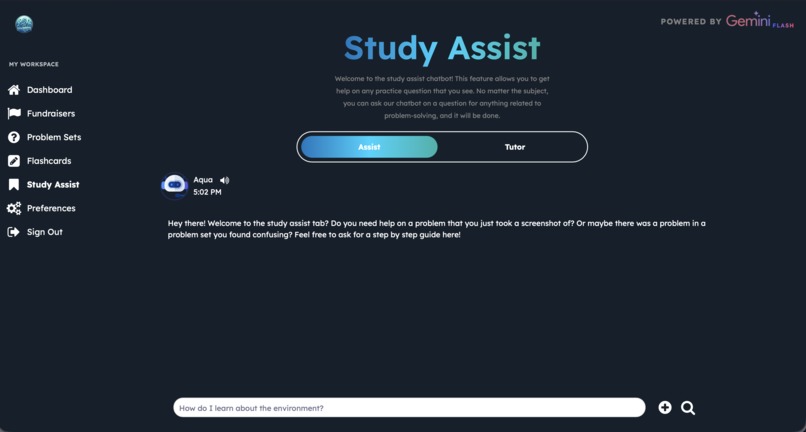
study assist
-
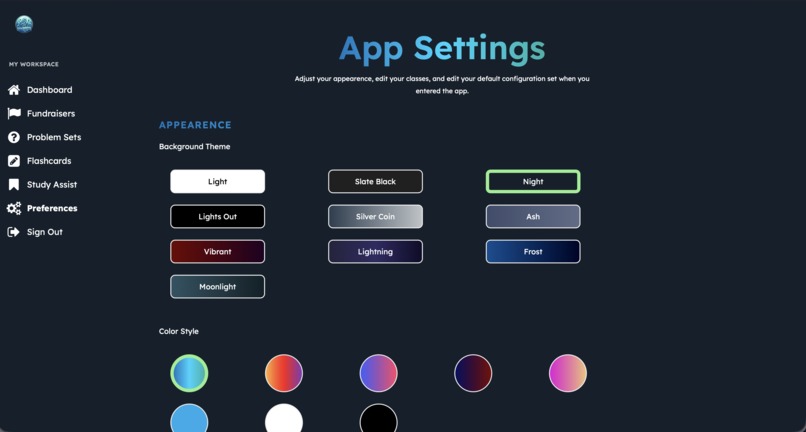
change settings
-
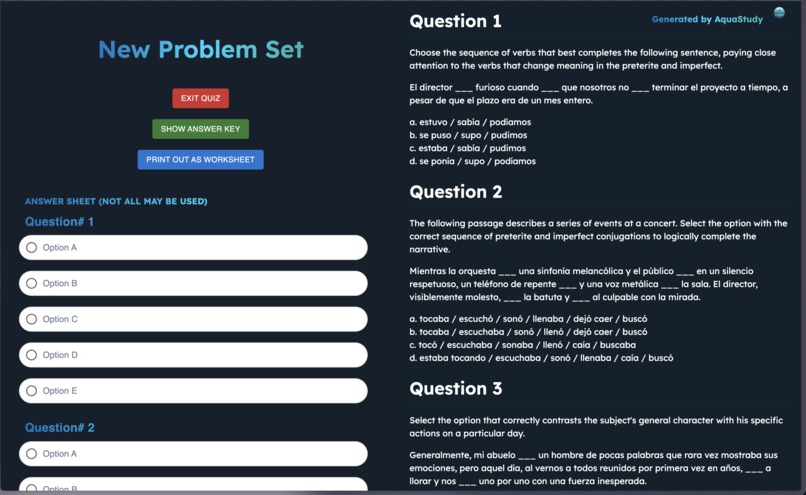
Taking a quiz
-
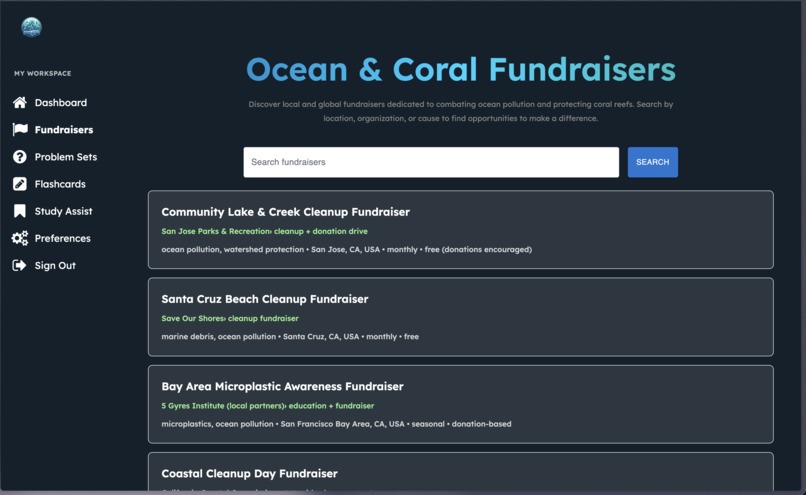
Fundraisers
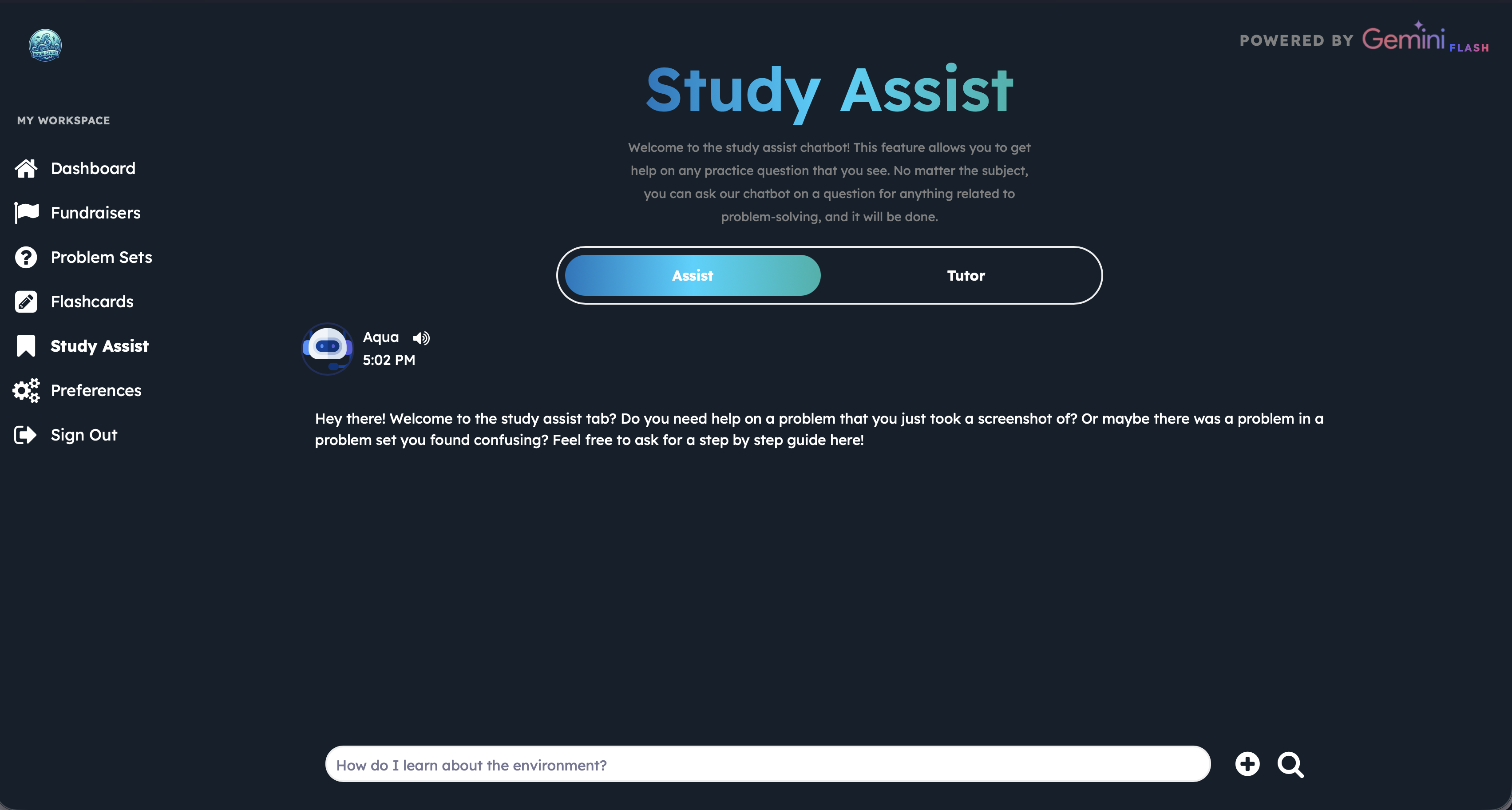
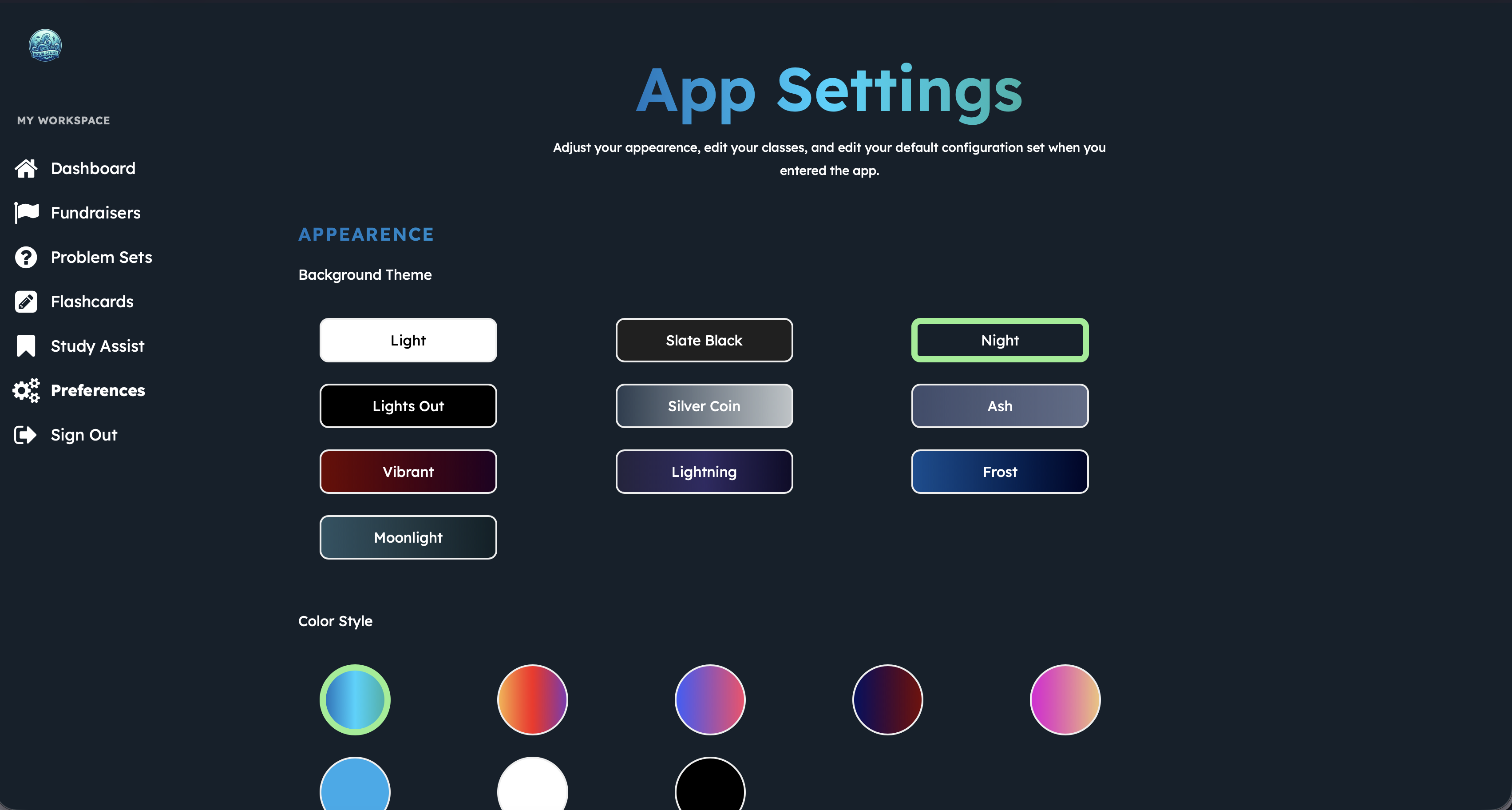
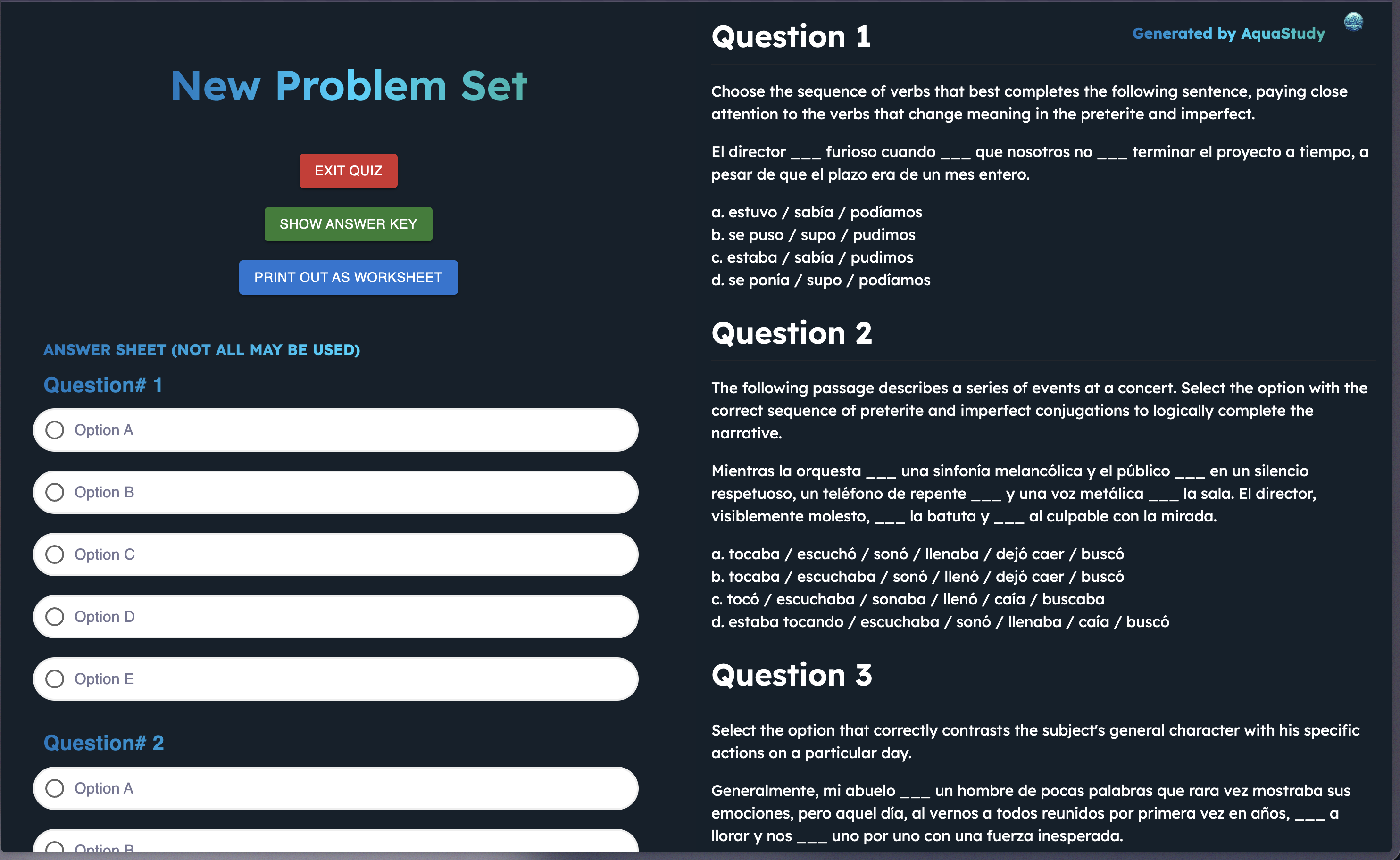
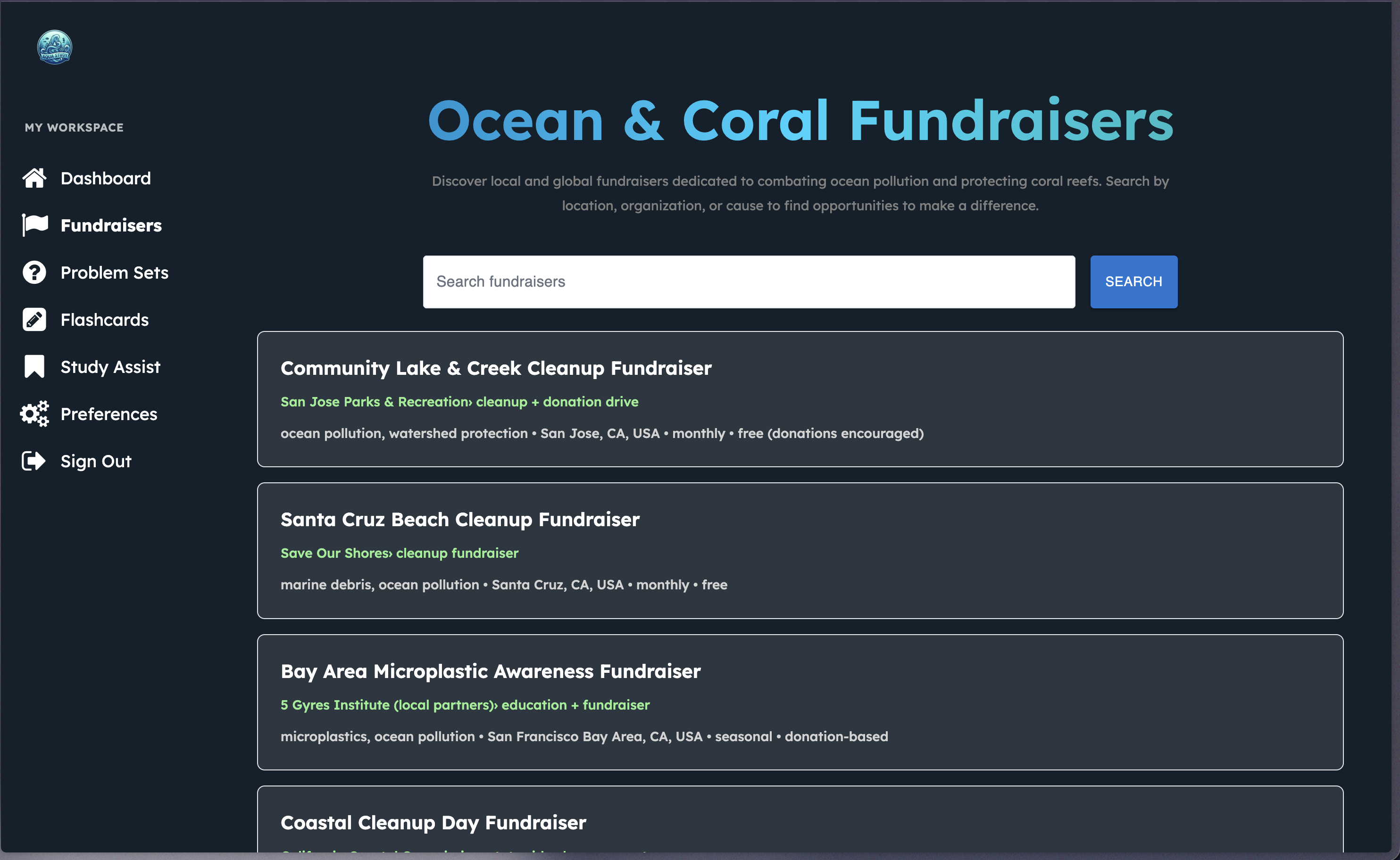
AquaStudy: Turning Learning into Ocean Impact
Inspiration
Most study platforms are designed to improve individual performance, but they don’t create any real-world impact. At the same time, ocean ecosystems are under serious threat, and researchers often lack the labeled data needed to monitor issues like coral bleaching at scale.
We wanted to connect these two problems. The idea was simple: students already spend hours studying every day—what if that time could also contribute to something meaningful?
This led us to build a system where learning and environmental impact happen together.
What We Built
AquaStudy is an AI-powered adaptive learning platform that turns studying into a form of environmental contribution.
Core Features
- Multi-agent AI tutor for personalized learning
- AI-generated problem sets and flashcards
- Real-time adaptation based on student performance
- Coral reef image classification tasks
- Integrated ocean awareness prompts
Learn → Apply → Impact
Our system follows a simple loop:
$$ \text{Learning} \rightarrow \text{Skill Development} \rightarrow \text{Application} \rightarrow \text{Impact} $$
As students work through problem sets, they periodically apply their skills to real-world tasks by classifying coral reef images as healthy or bleached. These classifications can contribute to datasets used in environmental research.
How We Built It
System Architecture
| Component | Function |
|---|---|
| Teacher Agent | Generates adaptive problem sets |
| Evaluator Agent | Identifies mistakes and misconceptions |
| Strategist Agent | Adjusts the learning path |
| Difficulty Controller | Maintains appropriate challenge level |
| Impact Module | Handles coral classification and awareness |
Machine Learning Approach
We implemented a lightweight system to track and respond to student errors.
Error Representation $$ \mathbf{e} = f(\text{error}) $$
Clustering $$ \text{Cluster} = \arg\min_k ||\mathbf{e} - \mathbf{c}_k|| $$
Adaptation
- Conceptual errors → deeper explanations
- Careless mistakes → timed practice
- Repeated patterns → targeted drills
- Conceptual errors → deeper explanations
Coral Classification Pipeline
| Step | Description |
|---|---|
| 1 | Display coral reef image |
| 2 | User selects: healthy or bleached |
| 3 | Store response |
| 4 | Aggregate responses across users |
| 5 | Compute agreement/confidence |
$$ \text{Confidence} = \frac{\text{Majority Votes}}{\text{Total Votes}} $$
Sample Impact Metrics
| Metric | Value |
|---|---|
| Problems Solved | 120 |
| Coral Images Classified | 35 |
| Average Agreement | 82% |
| Topics Mastered | 6 |
What We Learned
- Multi-agent AI systems allow more flexible and realistic personalization
- Gamification is most effective when tied to feedback, not just rewards
- Adding real-world impact increases engagement and motivation
- Even simple ML techniques can meaningfully improve user experience
Challenges
Connecting learning and impact
It was difficult to make the transition between studying and coral classification feel natural rather than forced.
Data selection
We needed images that were realistic enough to be credible, but simple enough for users to classify quickly.
Balancing complexity and usability
We built a fairly complex backend system while trying to keep the user interface simple and intuitive.
Time constraints
Implementing multiple AI agents, adaptive learning, and an impact system within a short timeframe required prioritizing the most important features.
Conclusion
AquaStudy reframes studying as more than just self-improvement.
By combining adaptive AI learning with real-world environmental contribution, it shows how everyday activities can be redirected toward solving larger global problems.
Built With
- express.js
- firebase
- next.js
- node.js
- react.js
- typescript

Log in or sign up for Devpost to join the conversation.