Inspiration
Across Africa, smallholder farmers struggle with inefficient fertilizer usage, water scarcity, and lack of access to precision agriculture technologies. Rising input costs and climate variability worsen crop productivity.
At the same time, digital identity systems are expanding across Africa, but their integration with agriculture remains limited.
AquaSignal was inspired by the need to merge smart material science, AI optimization, and digital identity infrastructure to create a responsive, traceable, and intelligent nutrient-water delivery system tailored for smallholder farmers.
What it does
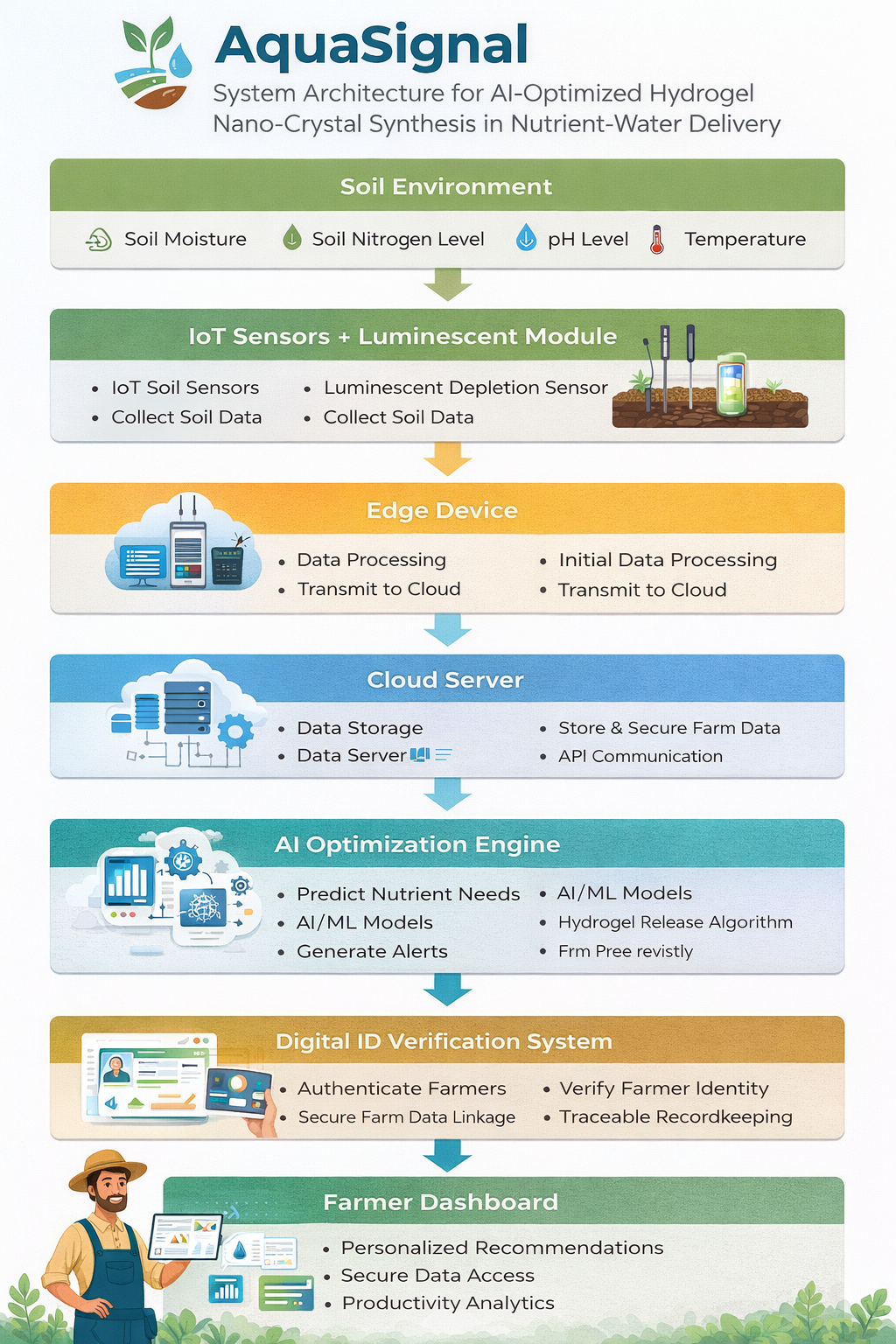
AquaSignal is an AI-optimized hydrogel nano-crystal system embedded with luminescent depletion sensors that enables responsive nutrient and water delivery based on real-time soil conditions. The system:
- Stores water and nutrients in a hydrogel nano-matrix
- Uses AI models to predict crop nutrient demand
- Releases nutrients responsively based on moisture, pH, and environmental triggers
- Uses luminescent sensors to signal nutrient depletion levels
- Links farm data to verified farmer digital identity profiles
By integrating digital identity authentication, the system ensures traceable input distribution, transparent subsidy allocation, and secure farm productivity records.
How we built it
Our system consists of four major components:
AI Optimization Engine
- Built using Python-based machine learning models
- Predicts nutrient demand based on soil and crop parameters
- Built using Python-based machine learning models
Smart Hydrogel Nano-Crystal Matrix
- Designed for controlled water and nutrient retention
- Responsive release mechanism
- Designed for controlled water and nutrient retention
Embedded Luminescent Depletion Sensors
- Fluorescent nano-sensors detect nutrient exhaustion
- Provides visual and digital alerts
- Fluorescent nano-sensors detect nutrient exhaustion
Digital ID Integration Layer
- Farmer authentication system
- Secure farm-level data linkage
- Designed for integration with digital ID platforms (e.g., MOSIP sandbox environment)
- Farmer authentication system
Challenges we ran into
Designing a scalable nano-hydrogel model suitable for field conditions
- Simulating luminescent sensor integration with soil systems
- Aligning agricultural innovation with digital identity infrastructure
- Ensuring the solution remains affordable for smallholder farmers
--
What we learned
Digital identity can transform agriculture beyond financial inclusion.
- Smart materials combined with AI can significantly improve input efficiency.
- Data traceability is critical for sustainable agricultural policy implementation.
What's next for Aquasignal
Field prototype testing
- Integration with agricultural extension services
- Pilot deployment with farmer cooperatives
- Optimization of AI predictive accuracy
- Partnership with digital public infrastructure providers
Built With
- amazon-web-services
- cloud-computing
- digital-id-api-integration
- firebase
- fluorescent-nanosensors
- hydrogel-nano-materials
- iot-soil-sensors
- machine
- python
- pytorch
- rest-apis
- tensorflow
