Inspiration
Inspiration
Urban freshwater ecosystems face severe contamination threats from unmonitored industrial discharges and sudden chemical shocks. Traditional manual sampling fails to detect rapid ecological disruption, endangering public health and aquatic life. AquaSentinel AI was conceived to bridge this gap through continuous bio-telemetry and real-time machine learning anomaly isolation.
What it does
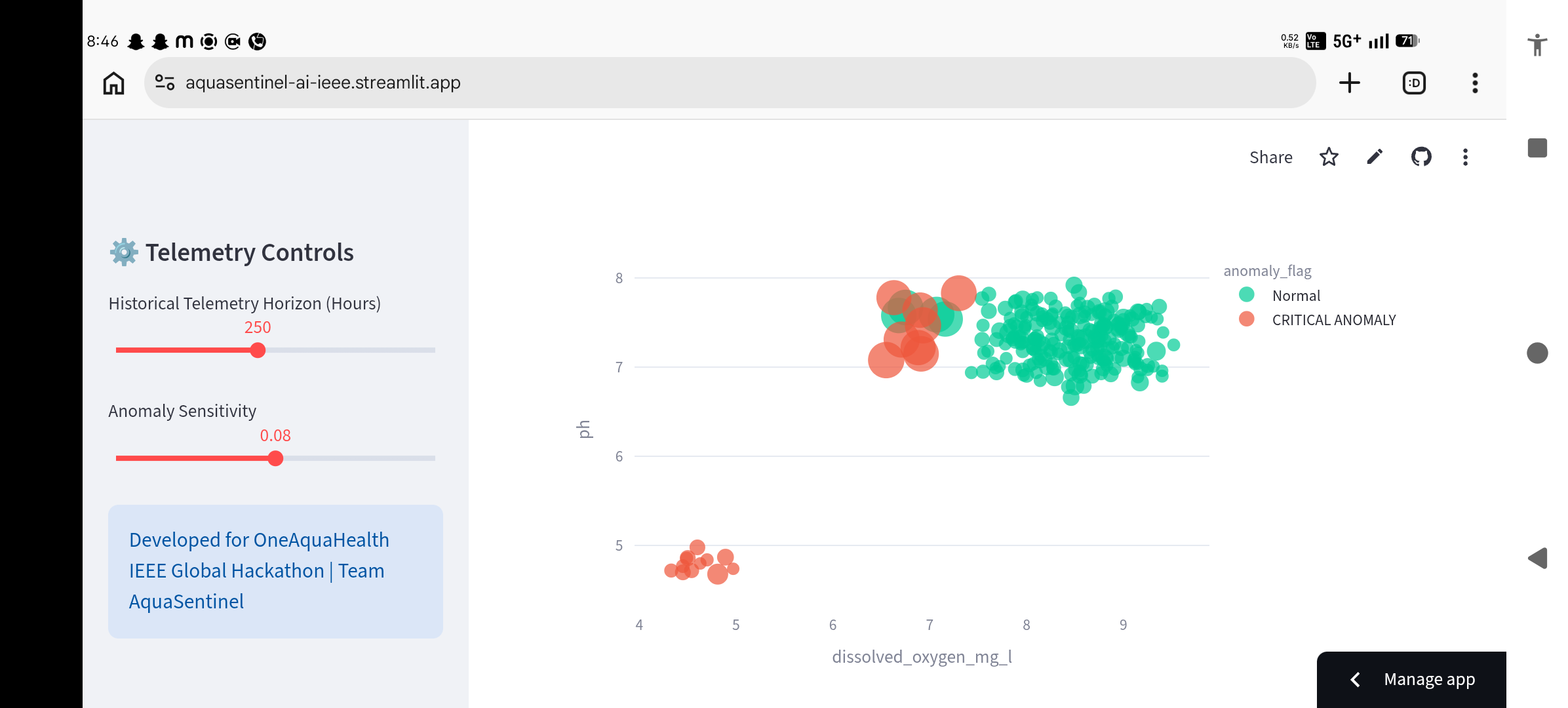
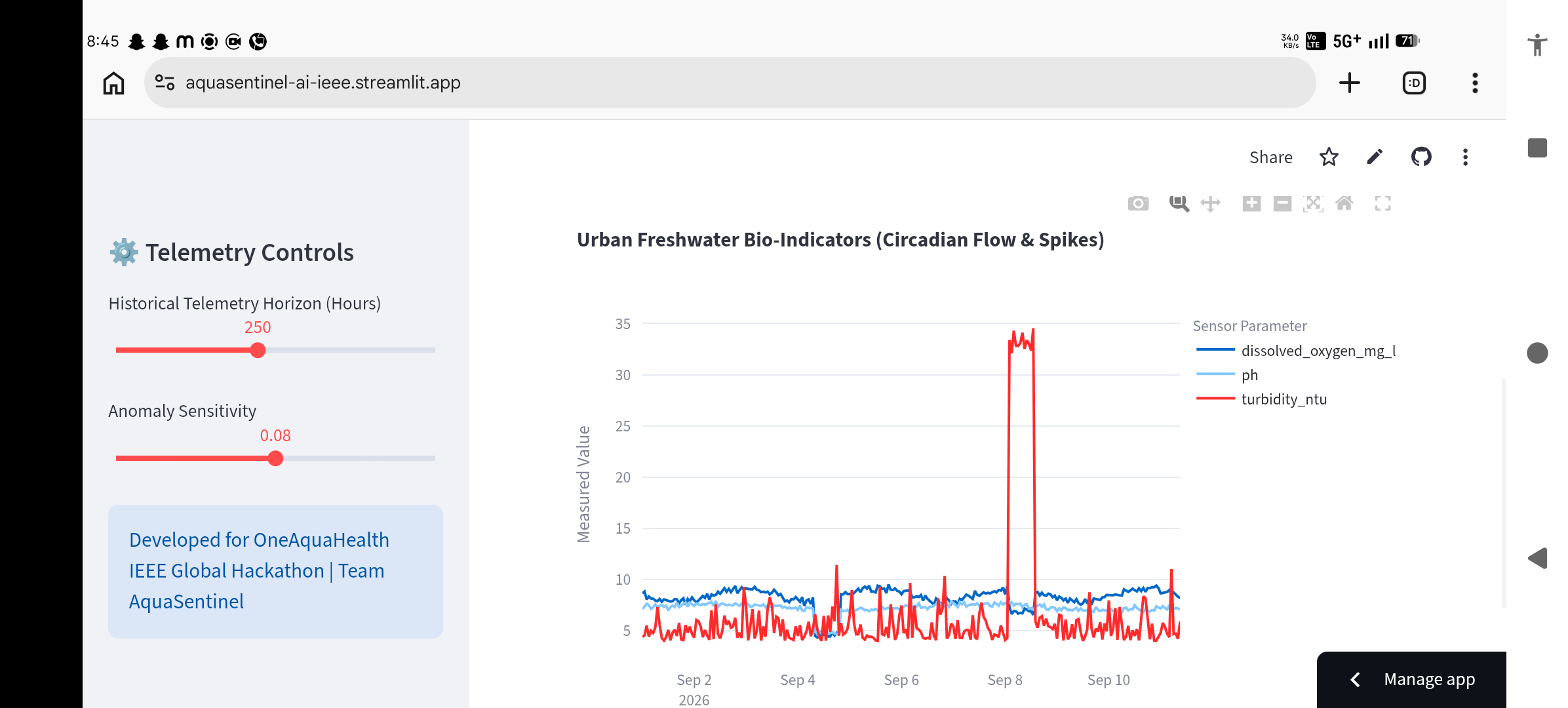
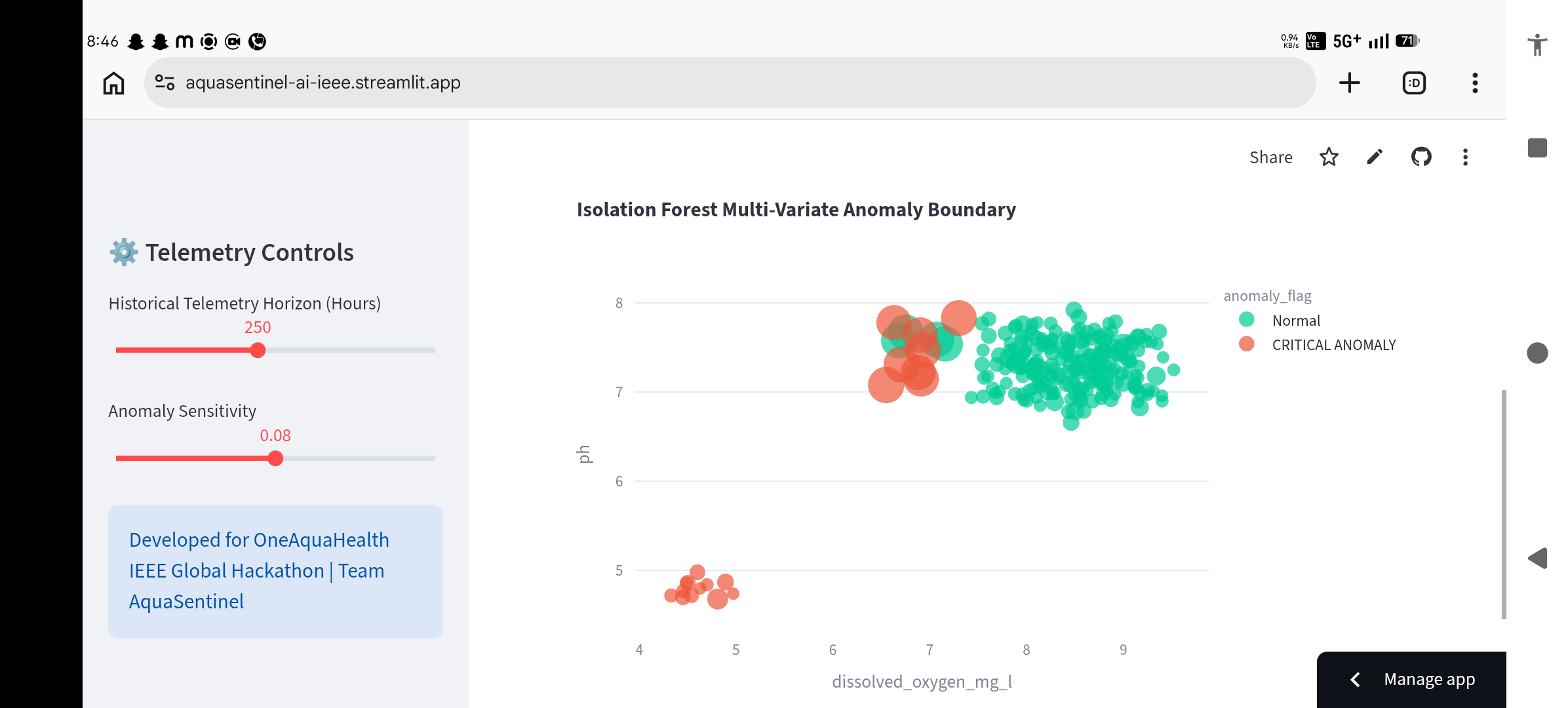
AquaSentinel AI ingests multi-stream freshwater bio-telemetry (Dissolved Oxygen, Water pH, Turbidity, and Conductivity) while factoring in natural circadian cycles. It leverages an unsupervised Isolation Forest model to flag environmental anomalies and computes an intuitive 0-100 Aquatic Health Index (AHI) to provide instant risk assessment and predictive warning.
How we built it
Built using Python, Scikit-Learn for unsupervised anomaly detection, Pandas and NumPy for telemetry modeling, and Plotly integrated with Streamlit for a responsive, interactive web dashboard.
Challenges we ran into
Calibrating the anomaly thresholds to clearly distinguish between natural circadian fluctuations (day/night biological variances) and genuine hazardous contamination spikes without requiring pre-labeled training datasets.
Accomplishments that we're proud of
Successfully deployed an end-to-end telemetry pipeline and interactive dashboard with instant multi-variate anomaly mapping and automated index classification.
What's next for AquaSentinel AI
Integrating edge IoT microcontrollers with LoRaWAN connectivity for true field telemetry ingestion and deploying predictive early-warning alert notifications via webhooks.
What it does
How we built it
Challenges we ran into
Accomplishments that we're proud of
What we learned
What's next for AquaSentinel AI
Built With
- iot
- machine-learning
- pandas
- plotly
- python
- scikit-learn
- streamlit

Log in or sign up for Devpost to join the conversation.