-
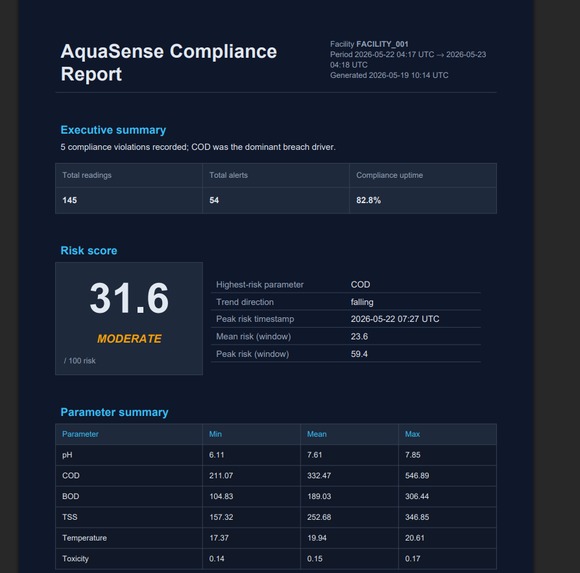
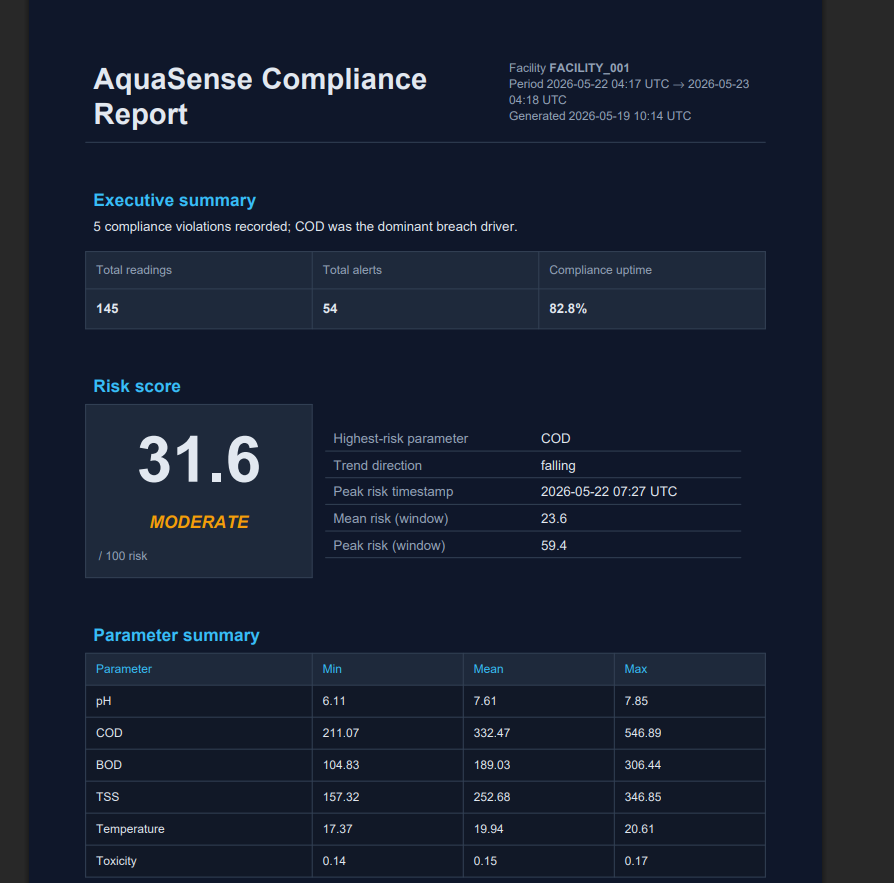
automated report page 1
-
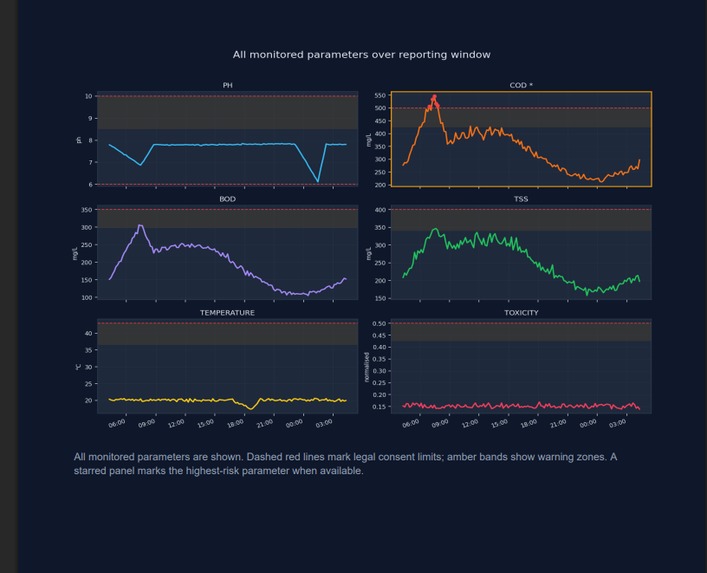
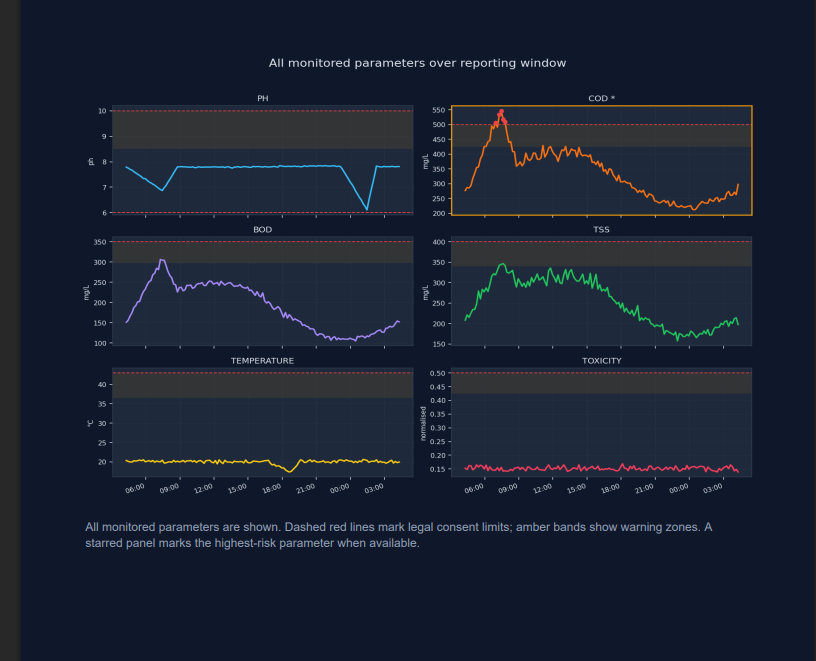
automated report page 2
-
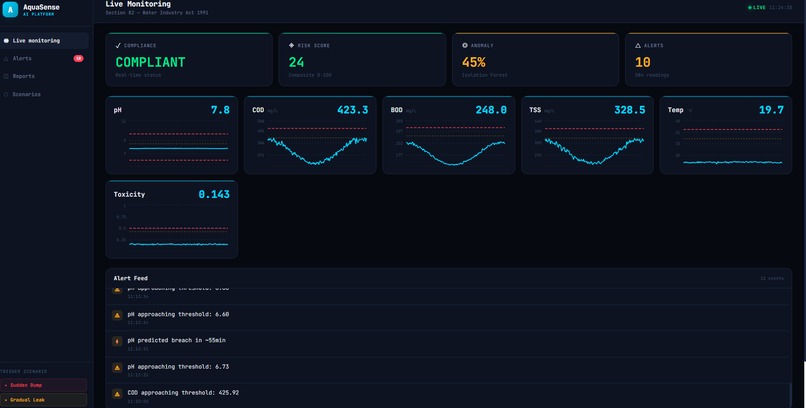
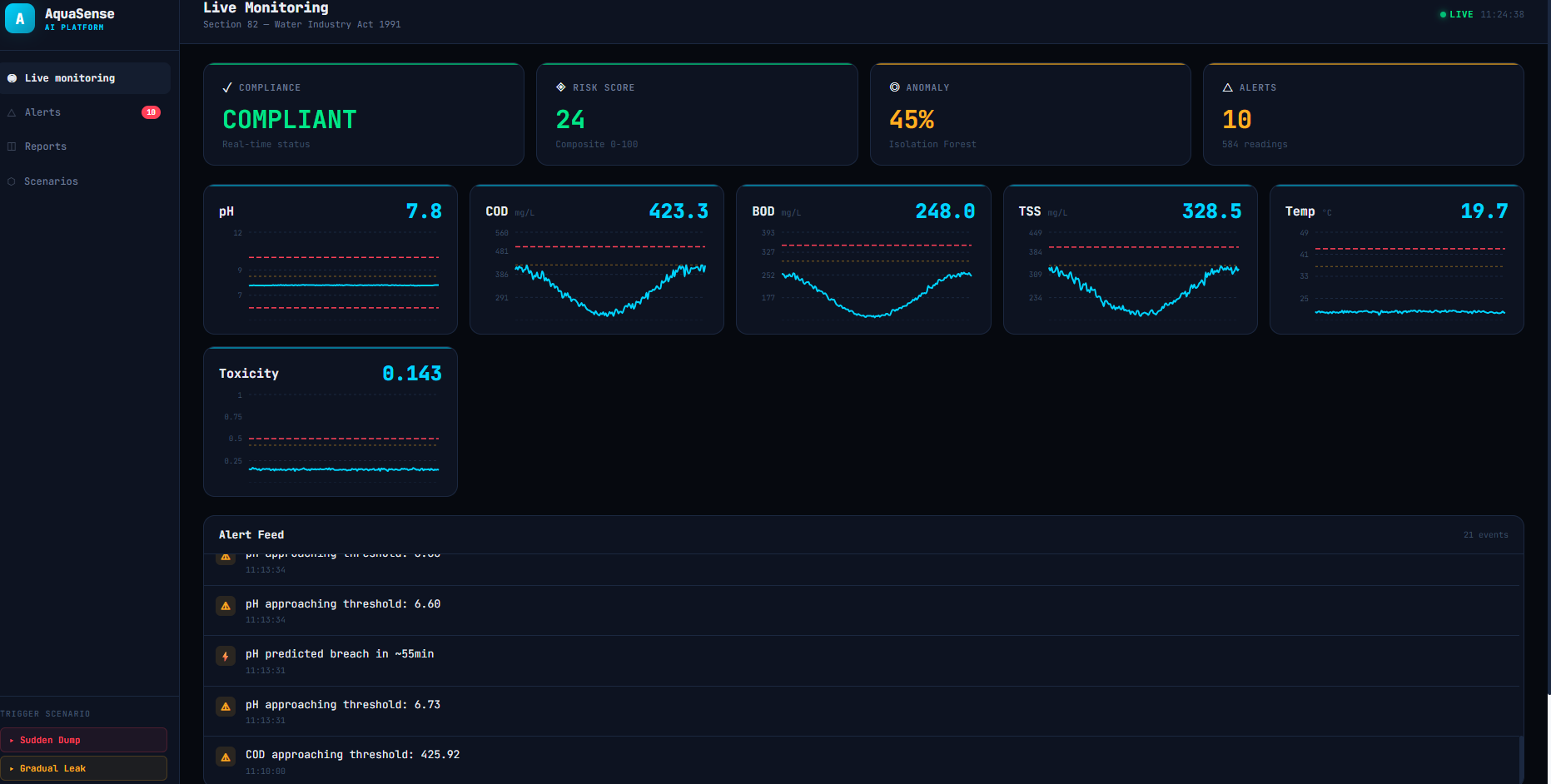
live dashbord
-
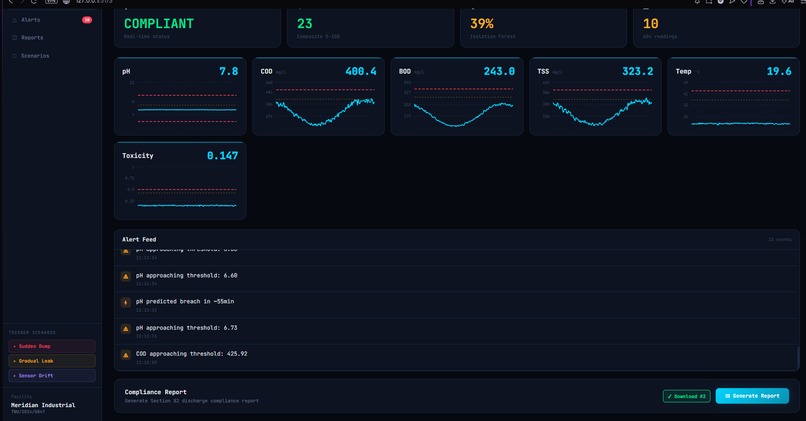
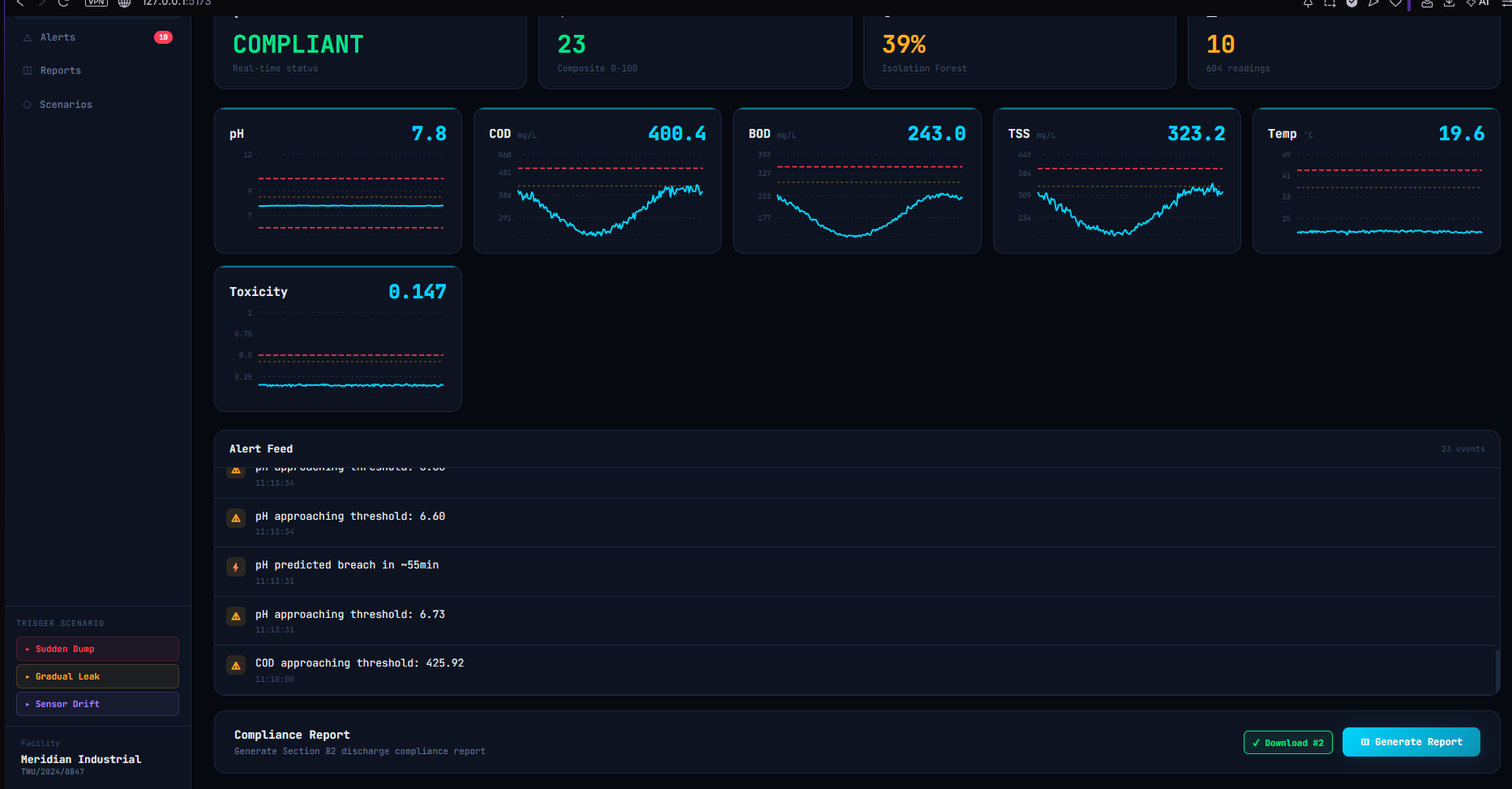
live dashbord
Inspiration
Industrial wastewater compliance is often reactive. Facilities may rely on manual testing, spreadsheets, and delayed lab reports to check whether discharge is safe. By the time a breach is discovered, environmental damage or regulatory risk may already have happened.
We were inspired by the idea of turning wastewater compliance into a real-time, intelligent system. Instead of only showing sensor readings, we wanted AquaSense AI to analyse live wastewater behaviour, detect unusual patterns, predict possible breaches, and generate compliance evidence automatically.
What It Does
AquaSense AI is a real-time wastewater compliance monitoring platform.
It monitors simulated sensor readings for pH, COD, BOD, TSS, temperature, and toxicity. Each reading is processed through an analysis pipeline that:
- checks compliance against consent limits
- detects unusual sensor patterns using an anomaly detection model
- predicts whether parameters may breach limits soon
- calculates a risk score
- generates alerts for operators
- stores readings and analysis results
- creates downloadable PDF compliance reports
The product also includes scenario simulation, so we can trigger events like a sudden dump, gradual leak, or sensor drift and demonstrate how the system responds.
How We Built It
We built the backend with FastAPI and Python. The backend exposes REST endpoints and a WebSocket stream for live sensor readings.
The main processing pipeline combines three layers:
- A rules-based compliance engine that checks readings against consent limits.
- An anomaly detection model that learns normal wastewater behaviour and flags unusual sensor combinations.
- A breach prediction system that analyses recent trends and estimates whether a parameter may exceed its limit soon.
We built the frontend with React and Vite. The dashboard connects to the backend through WebSockets, showing live charts, compliance status, risk score, anomaly score, alerts, scenario controls, and report generation.
We used SQLite with SQLAlchemy to store readings, analyses, alerts, and generated report metadata. For reporting, we generate PDF compliance reports with summaries and charts.
Challenges We Faced
One challenge was making the product feel like more than a static dashboard. We wanted each reading to go through a real analysis pipeline, so we had to connect compliance checks, anomaly detection, prediction, alerts, persistence, and reporting into one flow.
Another challenge was creating realistic data. Since we did not have access to live industrial sensors, we built a simulator that produces wastewater readings and supports realistic failure scenarios.
We also had to make the frontend and backend data contracts line up correctly, especially for live prediction fields, anomaly scores, and WebSocket updates.
What We Learned
We learned how real-time monitoring systems need more than visualisation. Raw sensor data is useful, but operators need interpretation: what is normal, what is risky, what is changing, and what needs action.
We also learned how to combine different backend components into one pipeline: simulation, compliance rules, anomaly detection, prediction, persistence, and reporting.
From a technical perspective, we improved our understanding of FastAPI, WebSockets, SQLAlchemy, React dashboards, PDF generation, and how AI-style models can support environmental monitoring.
Accomplishments
We are proud that AquaSense AI is a working end-to-end prototype. It can stream live data, analyse readings, detect anomalies, predict breaches, trigger alerts, simulate incidents, store results, and generate compliance reports.
The strongest part of the project is that it moves wastewater monitoring from passive dashboards to intelligent decision support.
Built With
- fastapi
- javascript
- python
- react
- vite
