🌊 About AquaPredict
💡 Inspiration
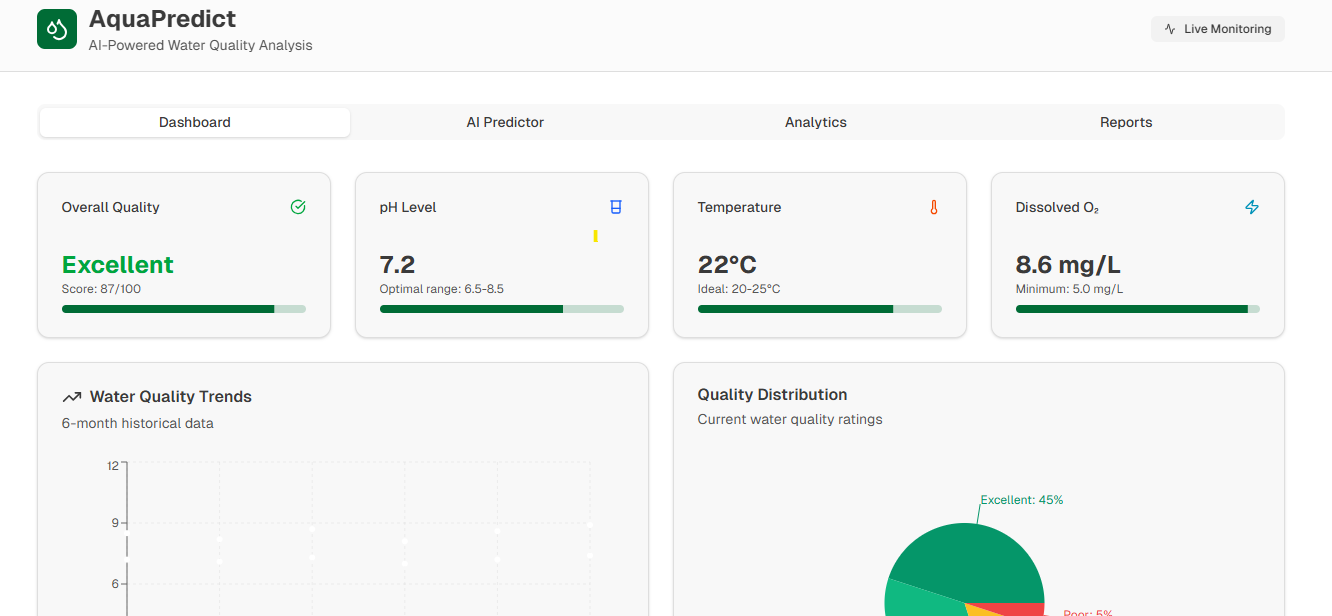
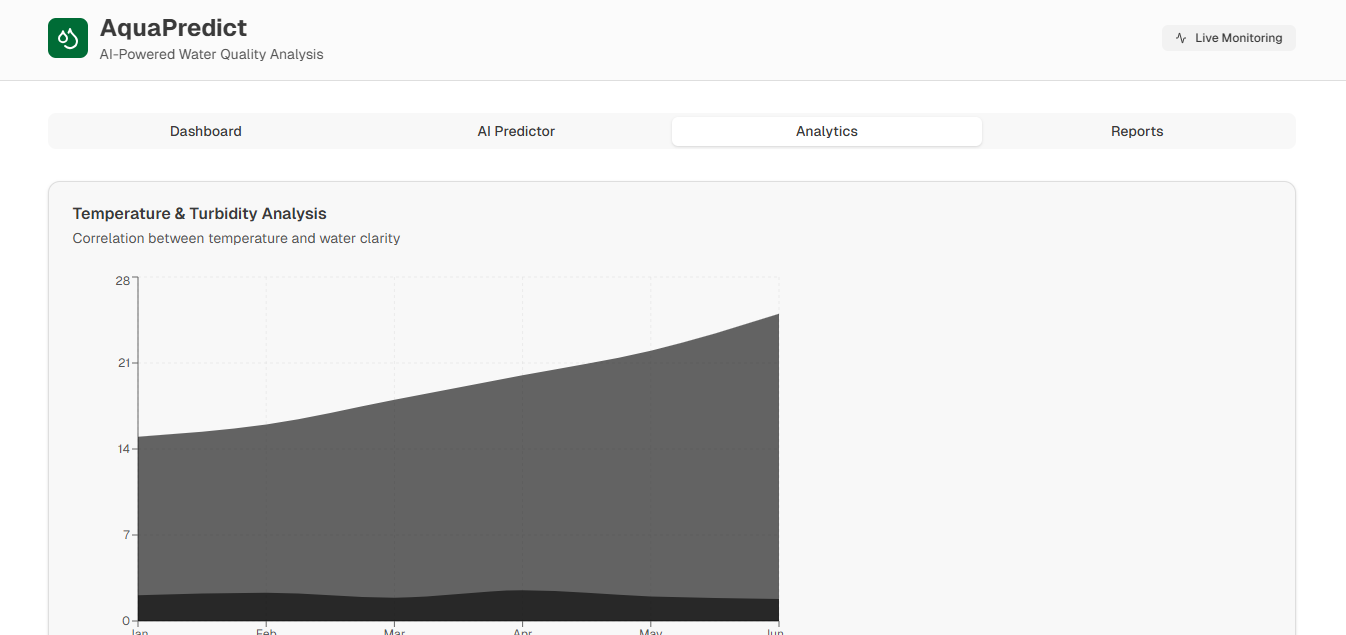
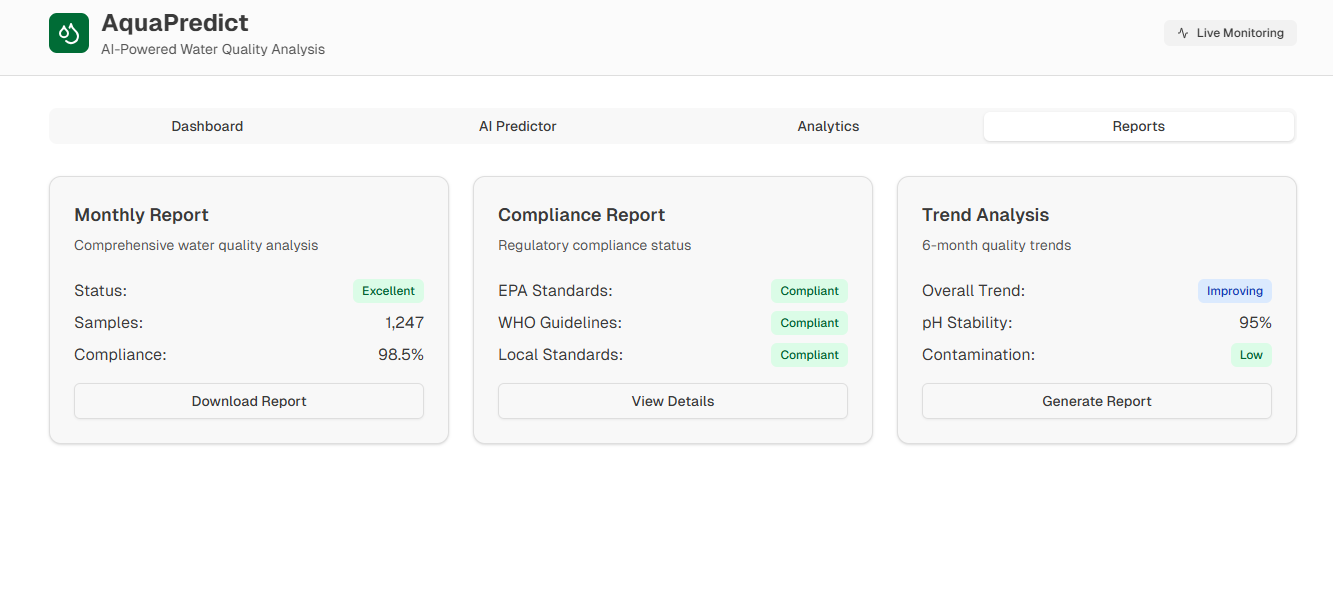
Access to clean and safe water is one of the biggest global challenges. We wanted to build a solution that not only monitors but also predicts water quality trends, empowering communities, policymakers, and individuals to make sustainable water management decisions.
🛠️ How We Built It
- Frontend: Built using Next.js (React framework) with TypeScript for type safety.
- Styling: Designed a clean, modern UI with Tailwind CSS.
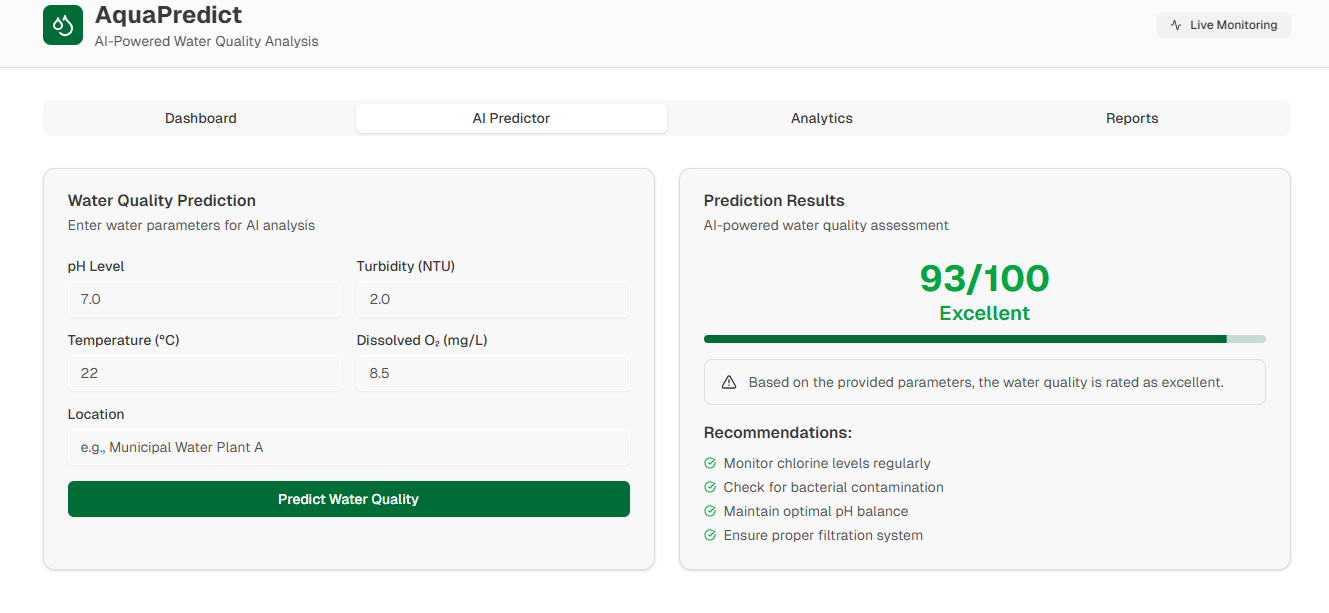
- Prediction Model: Implemented a data-driven model to evaluate and forecast water quality parameters.
- For example, given features like $pH$, turbidity, dissolved oxygen $(DO)$, and temperature $T$,
our model outputs a water quality index (WQI):
- For example, given features like $pH$, turbidity, dissolved oxygen $(DO)$, and temperature $T$,
$$ WQI = f(pH, \; DO, \; T, \; \text{turbidity}, \ldots) $$
- Deployment: Hosted on Vercel for seamless CI/CD and scalability.
📚 What We Learned
- How to integrate data modeling with modern web frameworks.
- The importance of UI/UX design in communicating scientific insights clearly.
- How to use pnpm and optimize Next.js builds for deployment.
- Working as a team under time pressure to ship a product quickly.
🚧 Challenges We Faced
- Integrating the prediction model with a fast and scalable frontend.
- Handling large datasets and ensuring the app remained performant.
- Configuring deployment with pnpm on Vercel.
- Balancing between accuracy of predictions and real-time performance.
🌍 Impact
AquaPredict demonstrates how technology + data can help tackle real-world problems like water quality and environmental sustainability. It’s a step toward ensuring safe, accessible, and sustainable water for all.
Built With
- ai
- nextjs
- tailwindcss
- typscript
- vercel

Log in or sign up for Devpost to join the conversation.