-
-
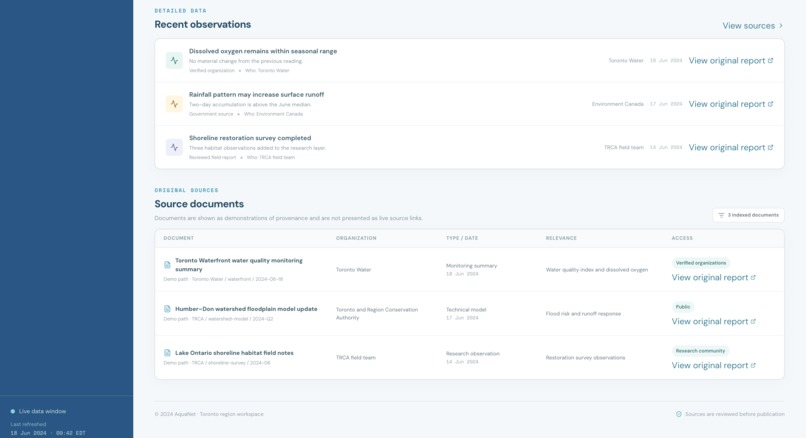
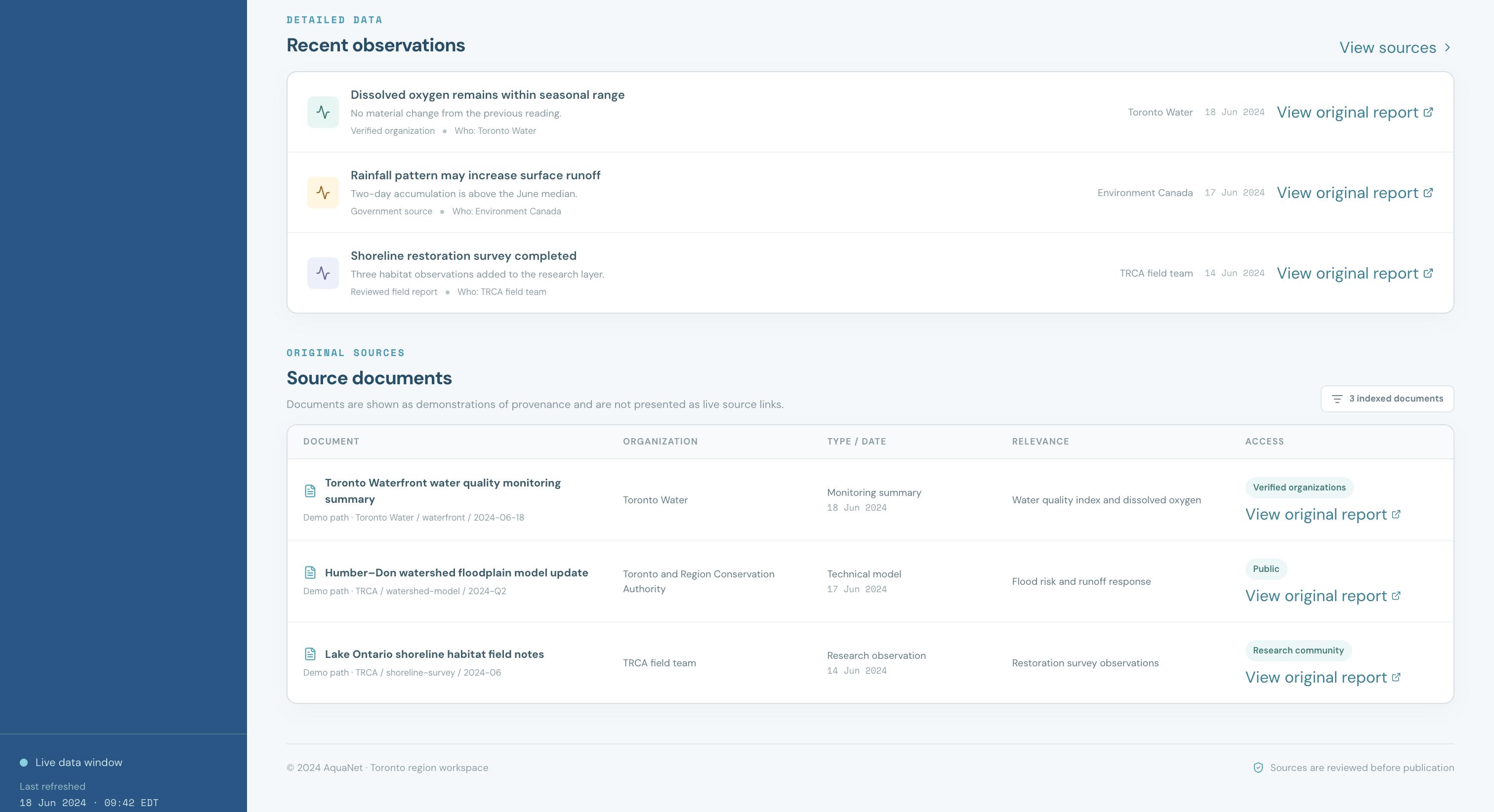
Government & Companies' homepage citing the sources for information displayed
-
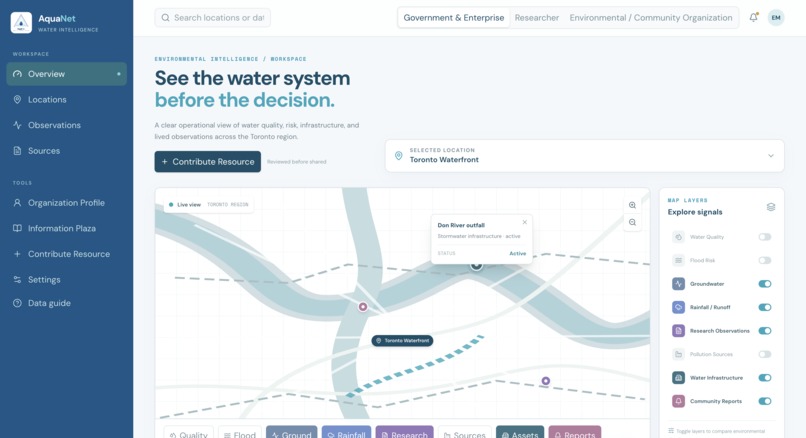
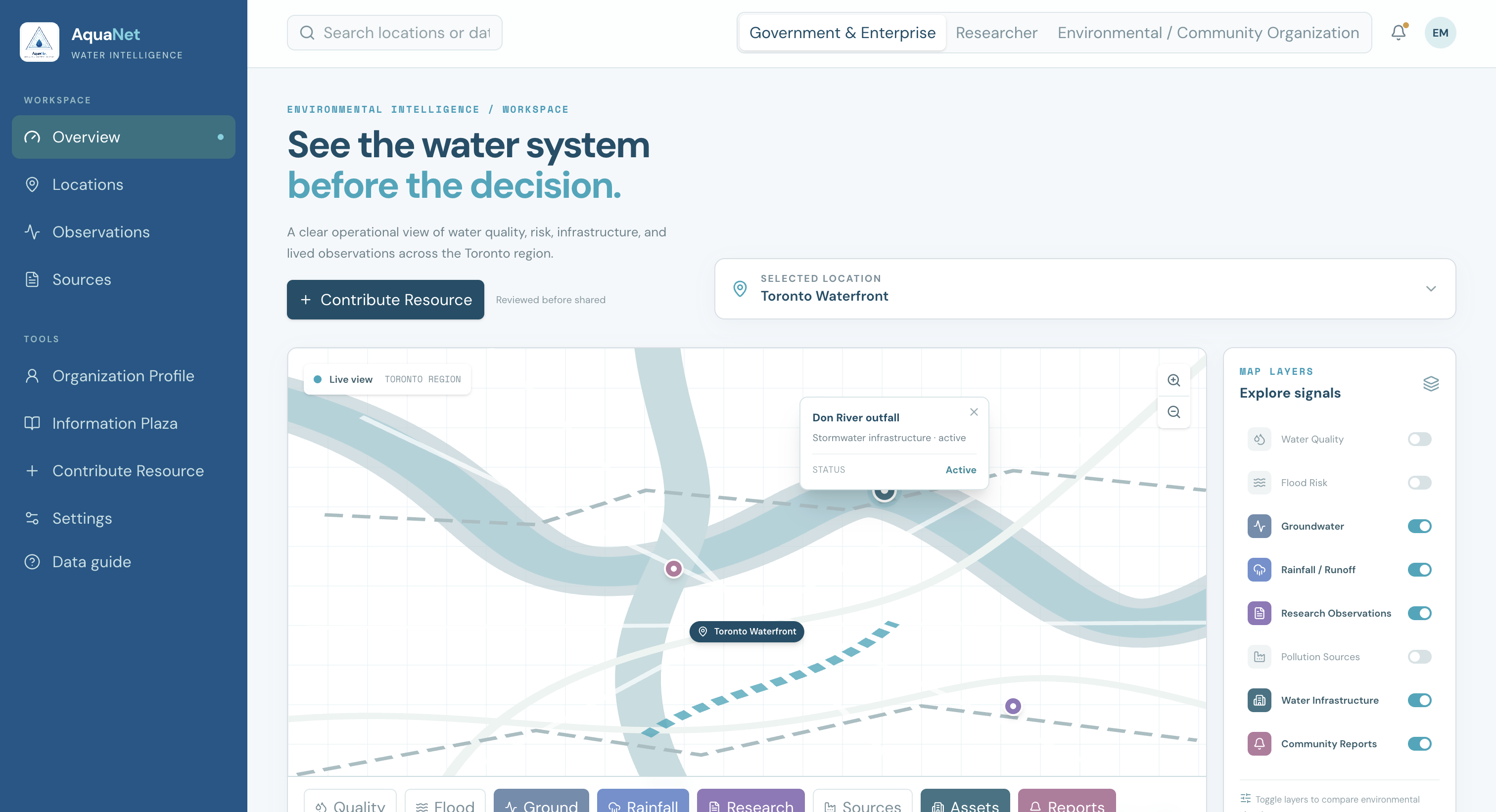
Government & Companies' homepage displaying information map of selected area
-
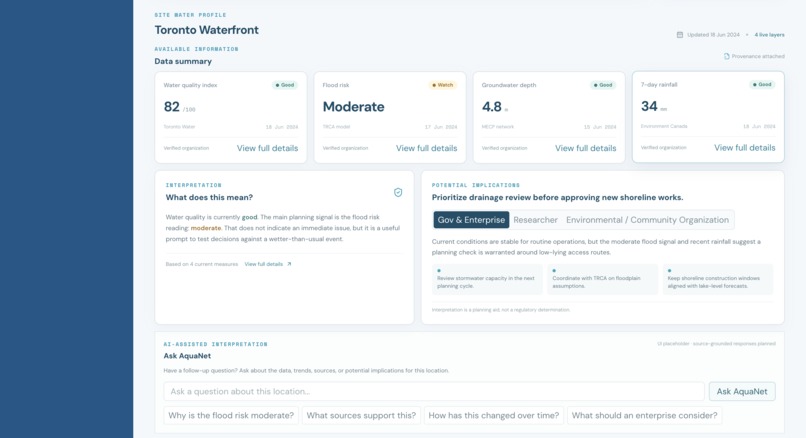
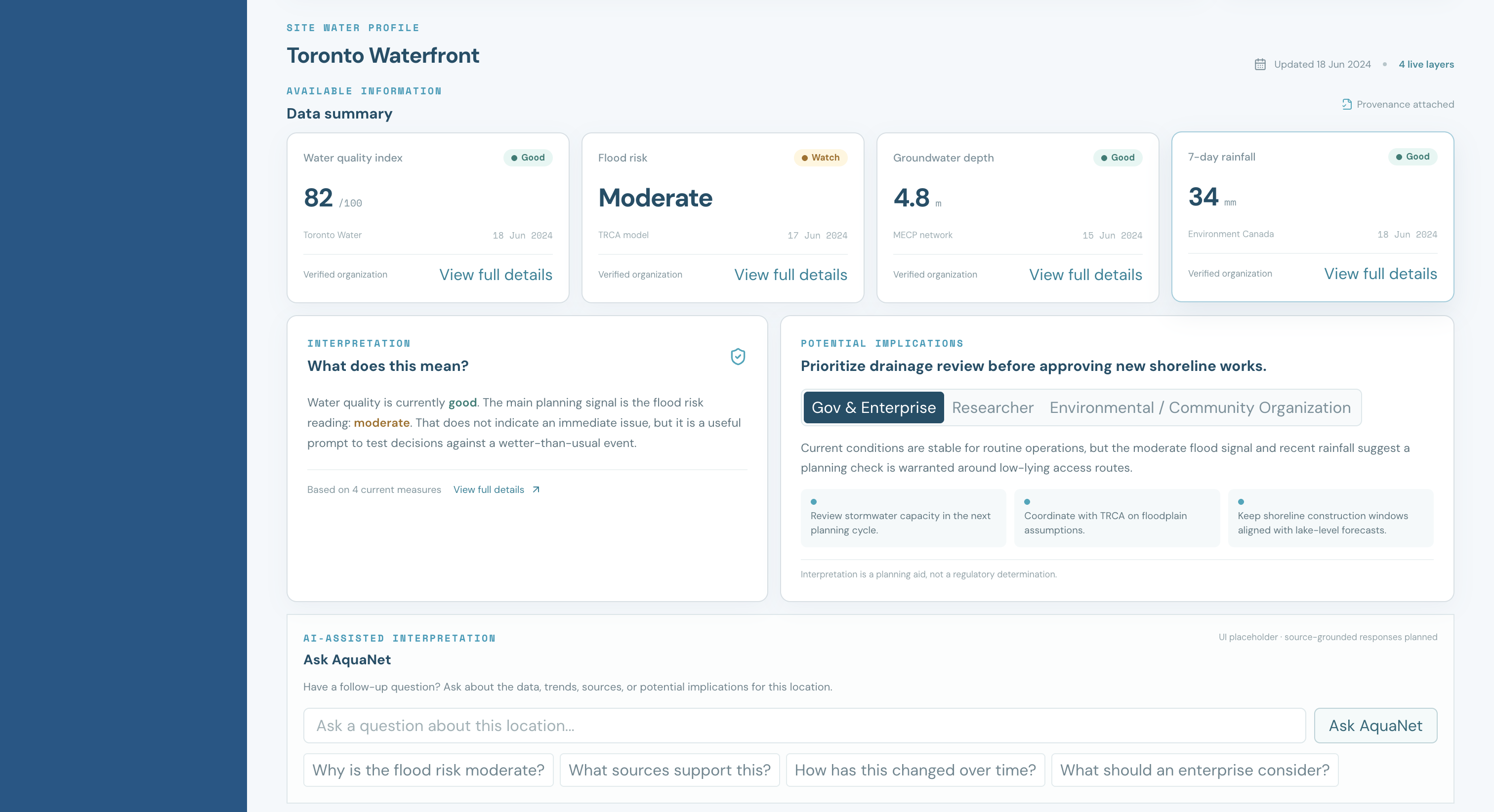
Government & Companies' homepage displaying summary and key findings of selected area
Inspiration
Our inspiration began when one of our team members took an environmental science course last year. During a water-quality testing activity, they discovered that the coliform level in the water exceeded the recommended limit. This finding was surprising because Canada is widely recognized for having some of the world’s safest and highest-quality water. However, as we conducted further research, we realized that water contamination has affected certain communities for many years and remains unresolved. This discovery inspired us to create AquaNet.
What it does
AquaNet is a collaborative environmental platform connecting researchers, companies, and community members to address water-quality concerns. Users can explore reported pollution incidents and ongoing investigations on an interactive map, access local environmental information, discover projects, and communicate with stakeholders. Researchers contribute professional expertise, while community members report concerns and participate in solutions. Companies can provide resources and use platform data to develop products tailored to local needs, such as water-filtration systems designed for specific contaminants. By connecting these three groups, AquaNet improves transparency, accelerates environmental action, and creates practical, community-driven solutions to long-standing water issues.
How we built it
We began with the idea of a stable triangular structure in which researchers, companies, and community members support one another. We then divided our research among these three perspectives, collecting evidence and data to validate the needs of each stakeholder group and strengthen our concept. Based on these findings, we designed AquaNet’s functions, user flow, and collaboration model. Finally, we used AI-assisted tools and vibe coding to develop a functional website demo and create the presentation slides used to communicate our solution.
Challenges we ran into
One of our biggest challenges was the limited development time. We also struggled to determine how broad or specific our focus should be within water and environmental issues. Since none of our team members had a strong computer science background, building a functional platform prototype was another major learning curve. Initially, we were concerned that focusing on water-related problems might create a market that was too narrow. However, further research and supporting data showed that water-quality concerns affect many communities and remain unresolved, confirming the relevance and potential of our solution.
Accomplishments that we're proud of
We are proud that we successfully validated the existence and significance of the problem through extensive research and supporting evidence. Our findings showed that AquaNet represents not only a promising market opportunity but also a meaningful way to contribute to environmental protection and community well-being. By connecting researchers, companies, and community members, we developed a solution that can support practical environmental action while encouraging collaboration and innovation. Most importantly, our project demonstrates how technology and community engagement can work together to create a cleaner, healthier, and more sustainable future.
What we learned
Validate the problem before building the solution: Research and reliable data helped us confirm that water-quality concerns are real, widespread, and worth addressing. Collaboration creates stronger solutions: Researchers, companies, and community members each contribute different knowledge, resources, and perspectives that are necessary for meaningful environmental action. Technology can accelerate idea development: Despite our limited computer science experience, AI-assisted tools and vibe coding enabled us to quickly transform our concept into a functional website prototype.
What's next for AquaNet
AquaNet’s next step is to launch its first project addressing a real community environmental concern and use it to test our triangular collaboration model among researchers, companies, and community members. After validating the model, we plan to expand beyond the GTA into other parts of Ontario, Canada, and eventually other countries. We will also introduce a sustainable funding model through company membership fees, allowing businesses to access platform resources while supporting AquaNet’s long-term operation, development, and environmental impact.
Built With
- css
- html
- javascript
- lucide-react
- pnpm
- react
- replit
- tailwind-css
- typescript
- vite
- wouter

Log in or sign up for Devpost to join the conversation.