-
-
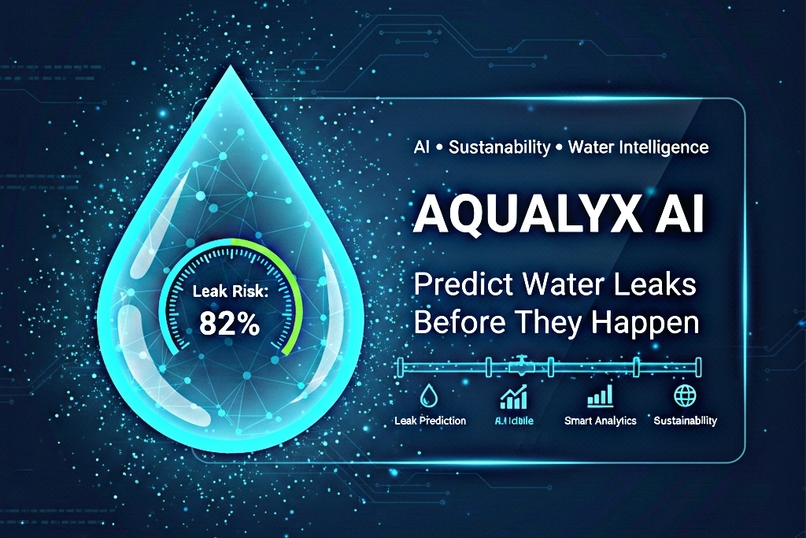
Aqualyx AI: Intelligence That Protects Every Drop
-
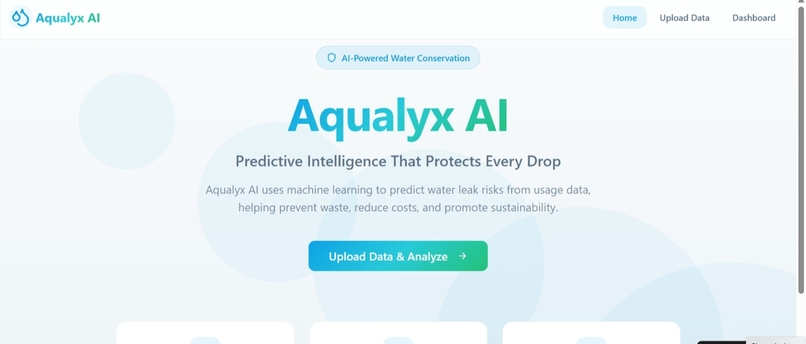
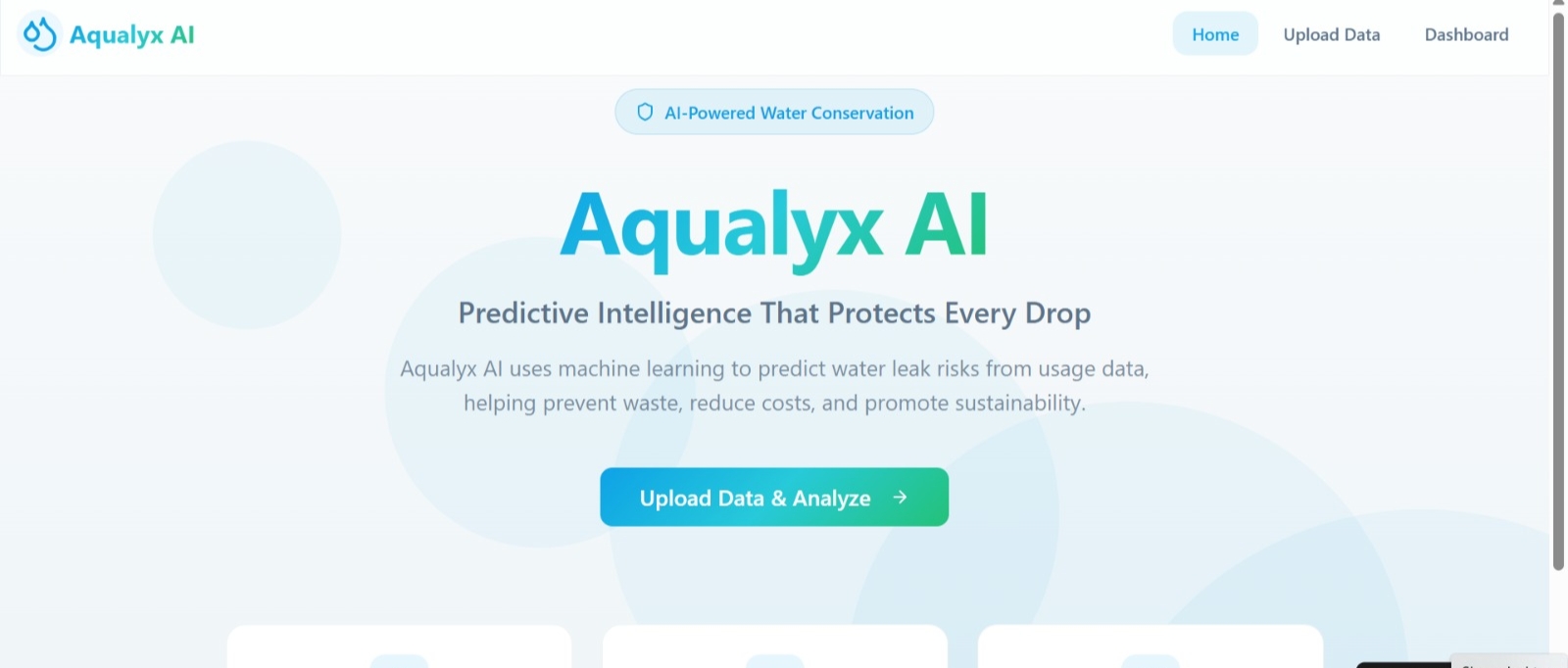
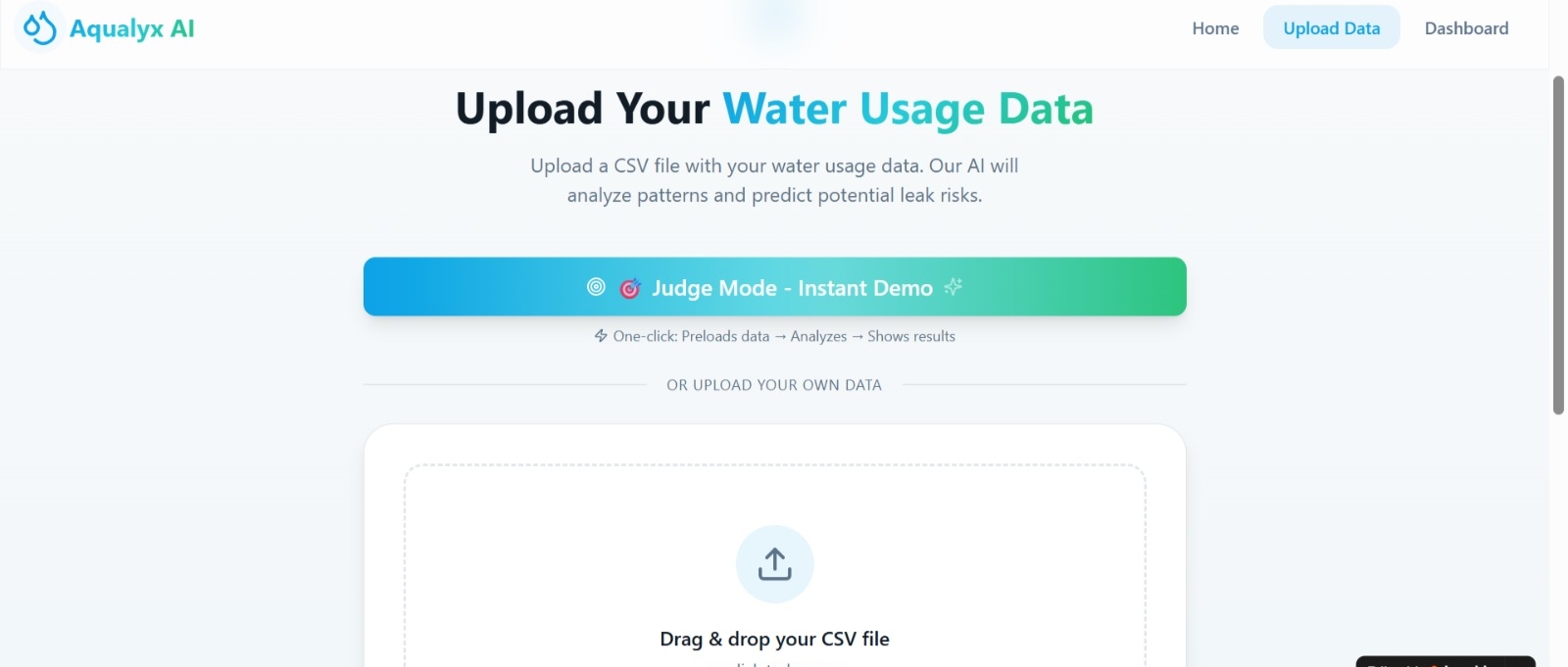
Home Page
-
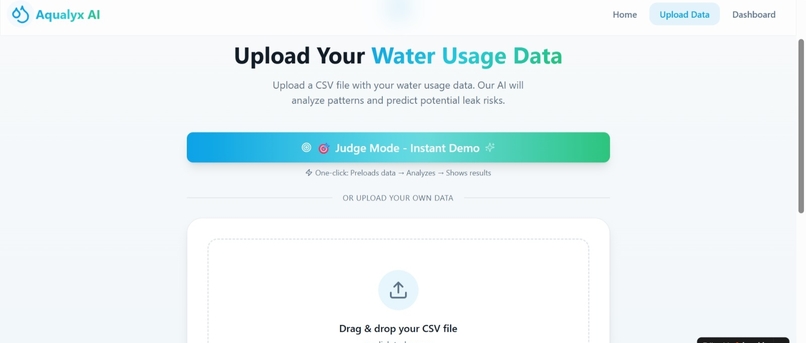
Upload Data
-
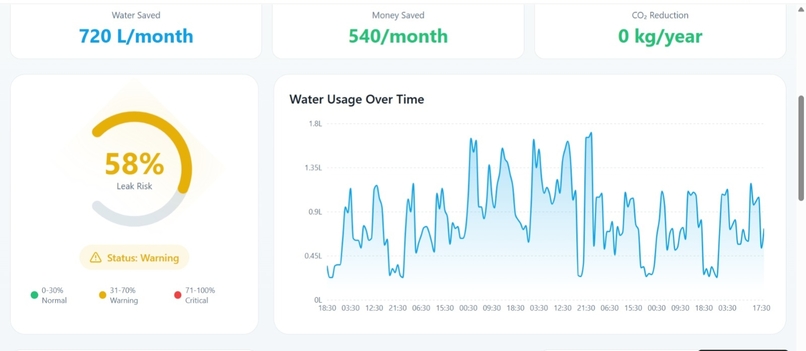
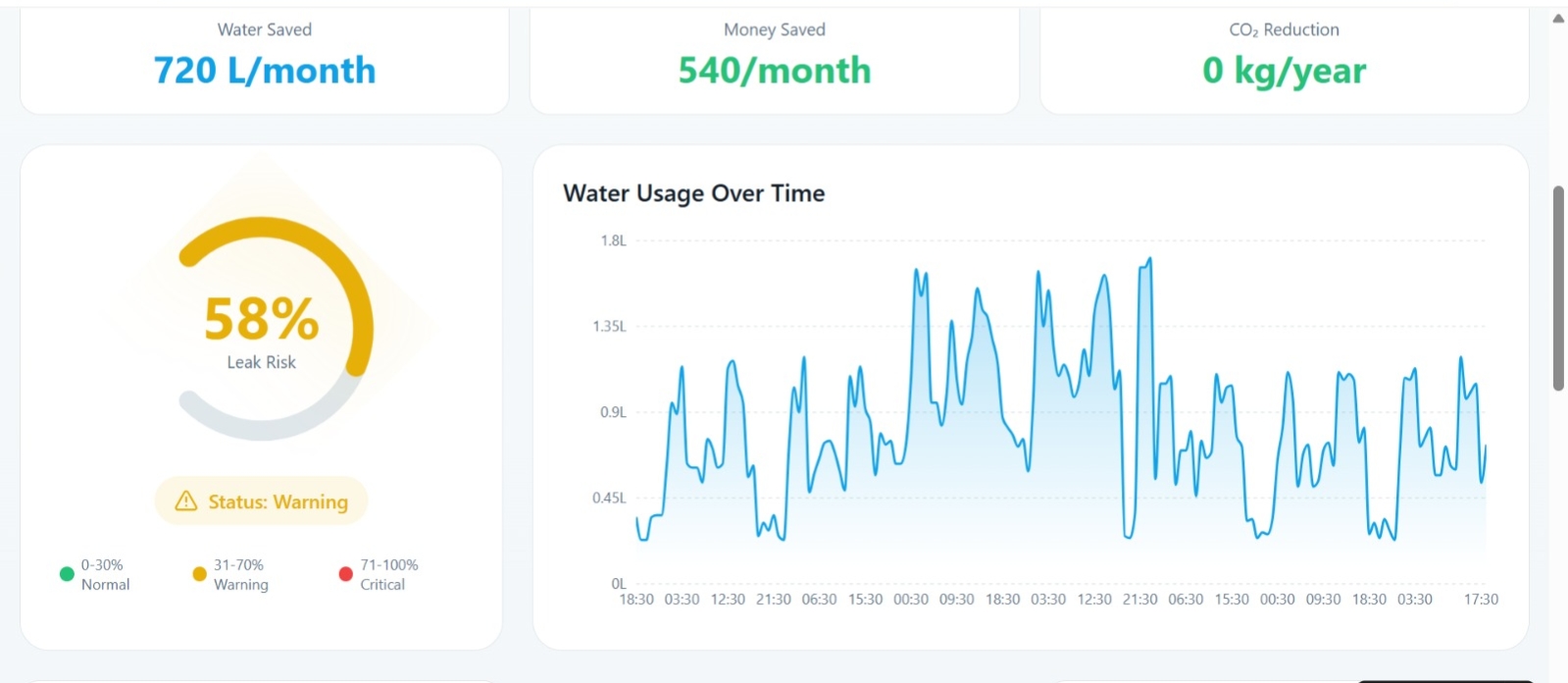
Analysis Dashboard
-
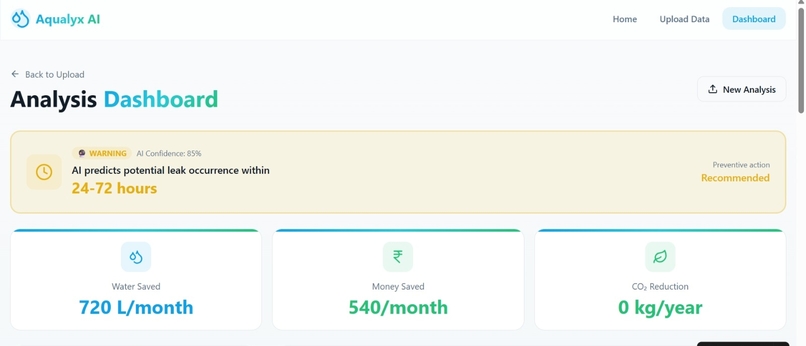
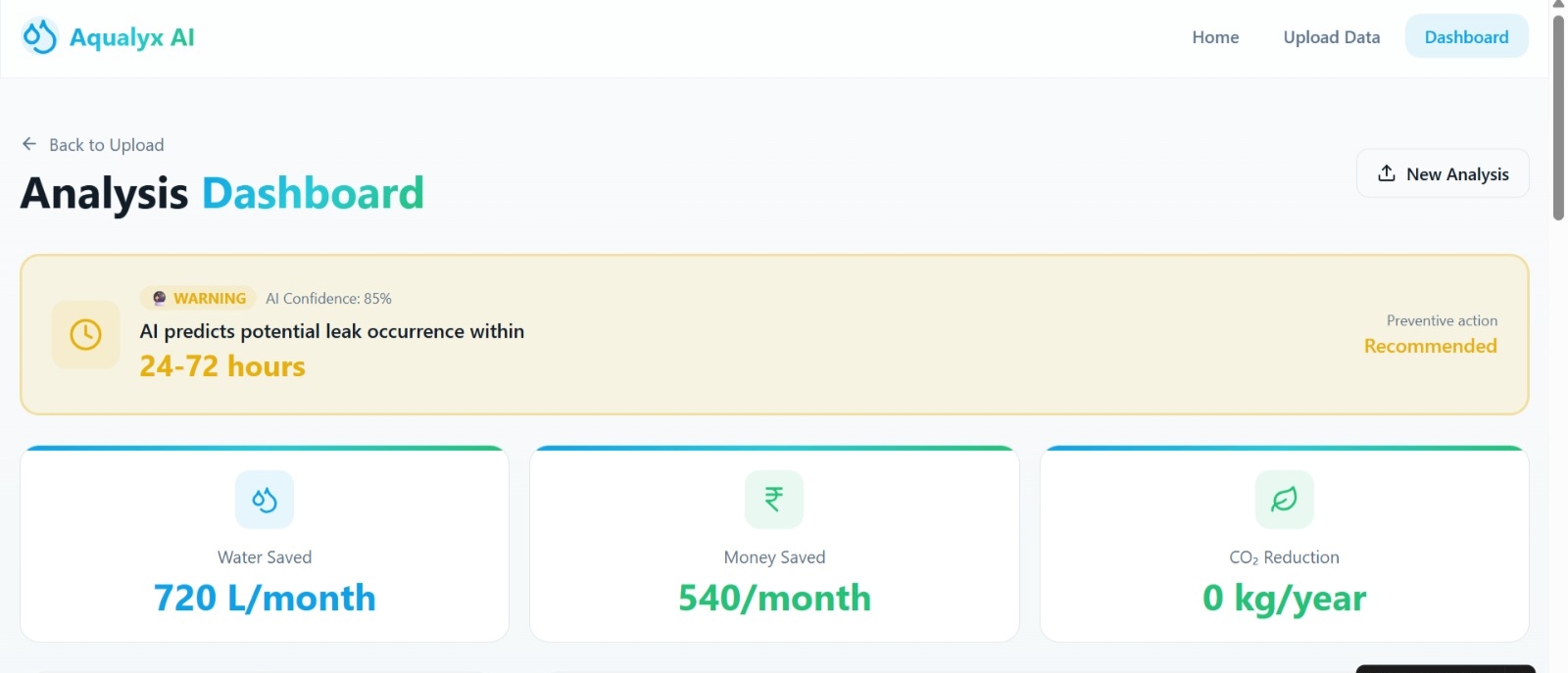
Analysis Dashboard
-
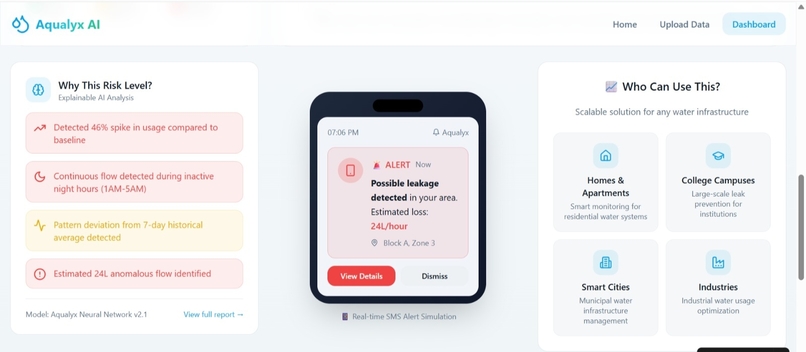
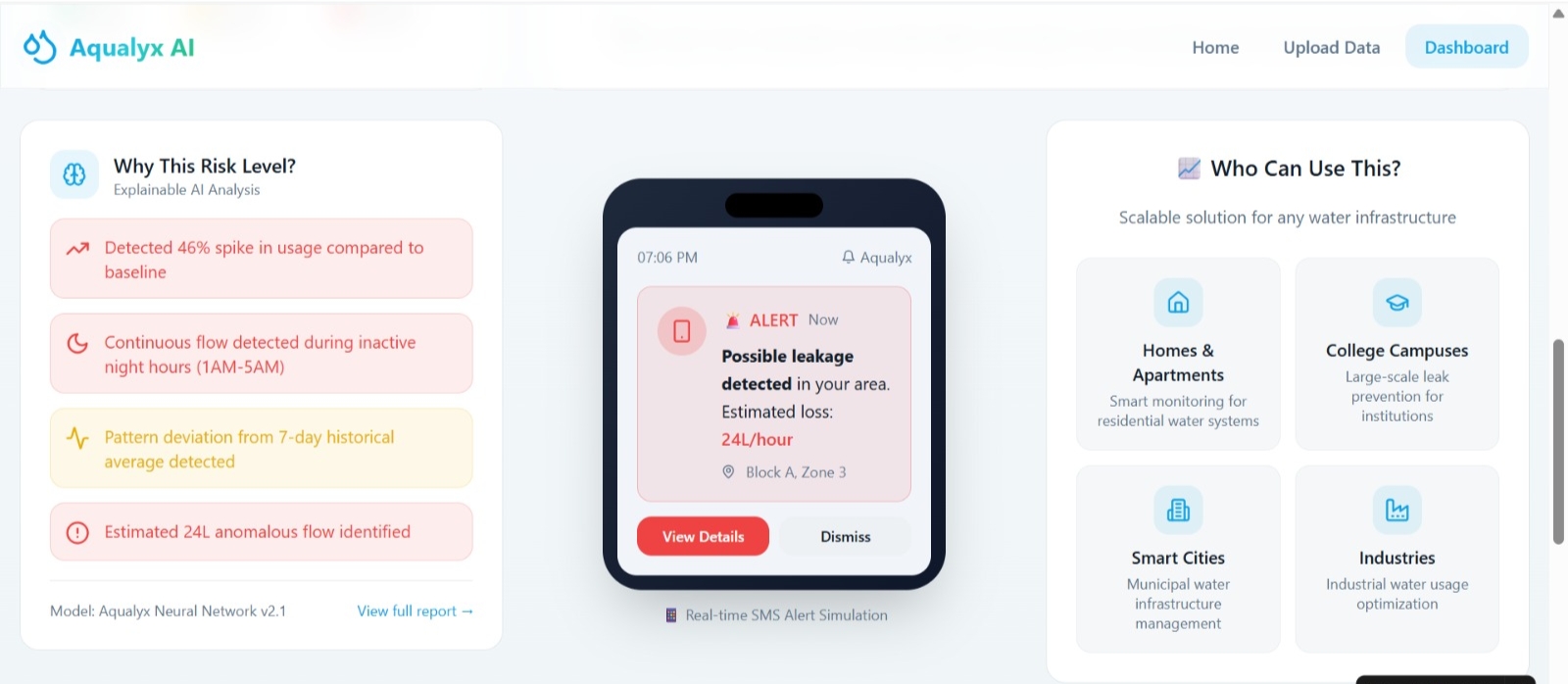
Analysis Dashboard
Inspiration
Water loss caused by hidden leaks and abnormal consumption is a silent but serious problem. Most existing water monitoring systems only visualize usage after wastage has already occurred.
As a B.Tech Computer Science student, I was inspired by how machine learning can transform water management from reactive monitoring to proactive prevention. Aqualyx AI was built with the belief that intelligent systems should anticipate risk and protect resources before damage happens.
What it does
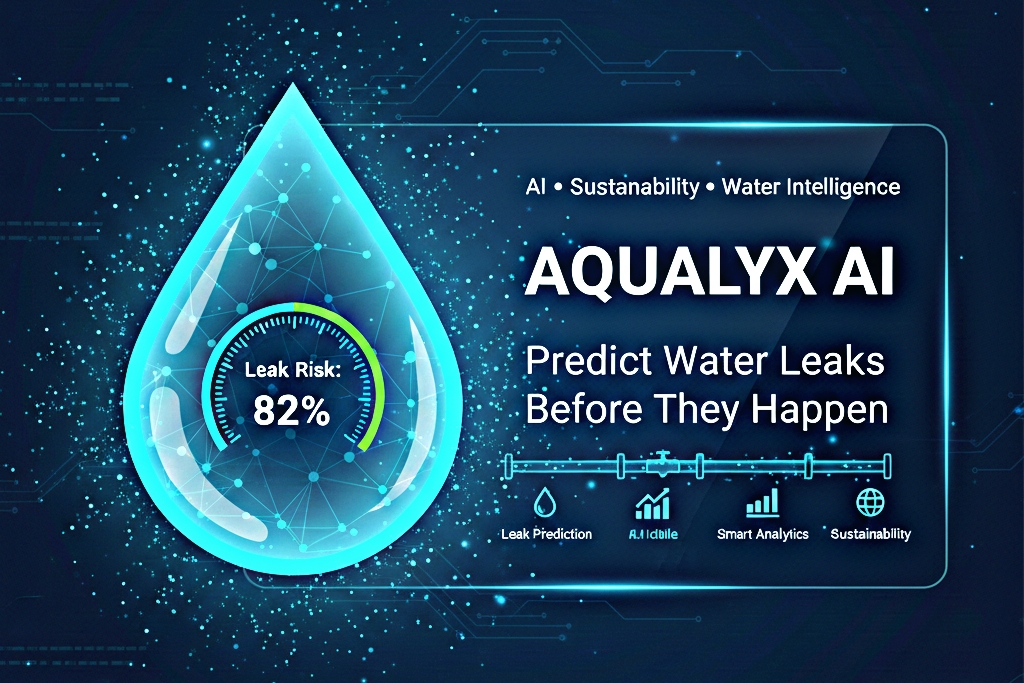
Aqualyx AI is an AI-powered water intelligence platform that predicts leaks and abnormal usage patterns before they result in water loss or financial damage.
The system:
- Analyzes historical and usage-pattern data
- Detects abnormal spikes and irregular consumption behavior
- Predicts leak probability using machine learning
- Classifies usage as Normal, Warning, or Critical
- Estimates water, cost, and sustainability impact
By focusing on early detection, Aqualyx AI helps households, campuses, and cities conserve water more efficiently.
How we built it
Aqualyx AI was developed as an end-to-end intelligent system using modern web and machine learning technologies.
Tech Stack:
- Frontend: React + Tailwind CSS
- Backend: FastAPI (Python)
- Machine Learning: Scikit-learn (Random Forest)
- Database: SQLite
- Deployment: Cloud-ready architecture
The machine learning model was trained on historical water usage data and engineered features such as:
- Daily consumption values
- Usage variance
- Sudden spike percentages
- Historical averages
- Time-based behavior patterns
The model outputs a leak probability score and usage classification. Performance was evaluated using standard ML metrics:
[ \text{Accuracy}, \quad \text{Precision}, \quad \text{Recall} ]
The frontend dashboard visualizes these insights in a clean and user-friendly manner, making complex AI predictions actionable.
Challenges we ran into
Building Aqualyx AI as a solo developer presented several challenges:
- Limited availability of labeled real-world water leak datasets
- Balancing model accuracy with interpretability
- Managing full-stack development, ML modeling, and UI design independently
- Designing a system that remains scalable within limited development time
Each challenge required thoughtful trade-offs and iterative refinement.
Accomplishments that we're proud of
- Designed and implemented a complete AI-powered solution from data ingestion to deployment
- Shifted water management focus from post-usage analysis to predictive prevention
- Built a professional, product-grade dashboard
- Successfully combined AI, sustainability, and software engineering
- Delivered the entire project as a solo B.Tech CSE developer
What I learned
Through this project, I gained hands-on experience in:
- Applying machine learning to real-world sustainability problems
- Feature engineering and model evaluation
- Designing scalable and modular system architectures
- Translating technical insights into intuitive user experiences
Most importantly, I learned that impactful innovation comes from solving the right problem with the right level of technology.
What's next for Aqualyx AI: Intelligence That Protects Every Drop
Future plans for Aqualyx AI include:
- Integration with IoT-based smart water meters
- Real-time data streaming and anomaly detection
- Automated alerts via mobile notifications and SMS
- Advanced predictive models for large-scale deployments
- Expansion to campus-level and smart city use cases
Aqualyx AI aims to evolve into a comprehensive platform for predictive, intelligent, and sustainable water management.
Built With
- anomaly-detection
- canva
- fastapi
- figma
- git
- github
- javascript
- matplotlib
- numpy
- pandas
- plotly
- predictive-modeling
- python
- react
- render
- scikit-learn
- sqlite
- tailwind-css
- time-series-analysis
- vercel


Log in or sign up for Devpost to join the conversation.