-
-
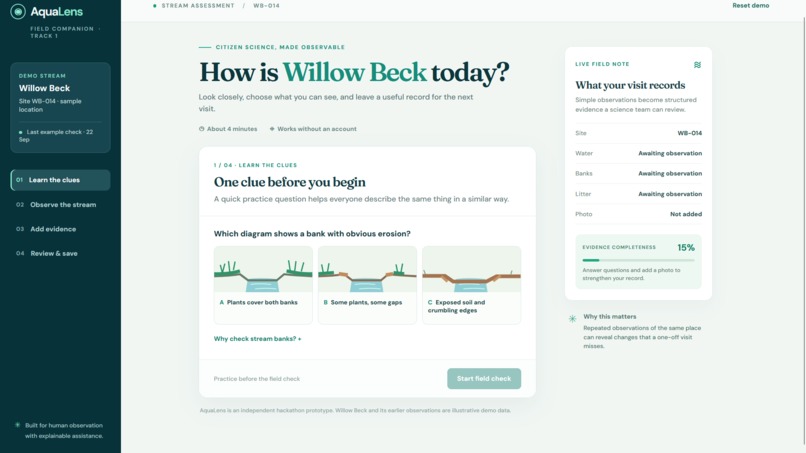
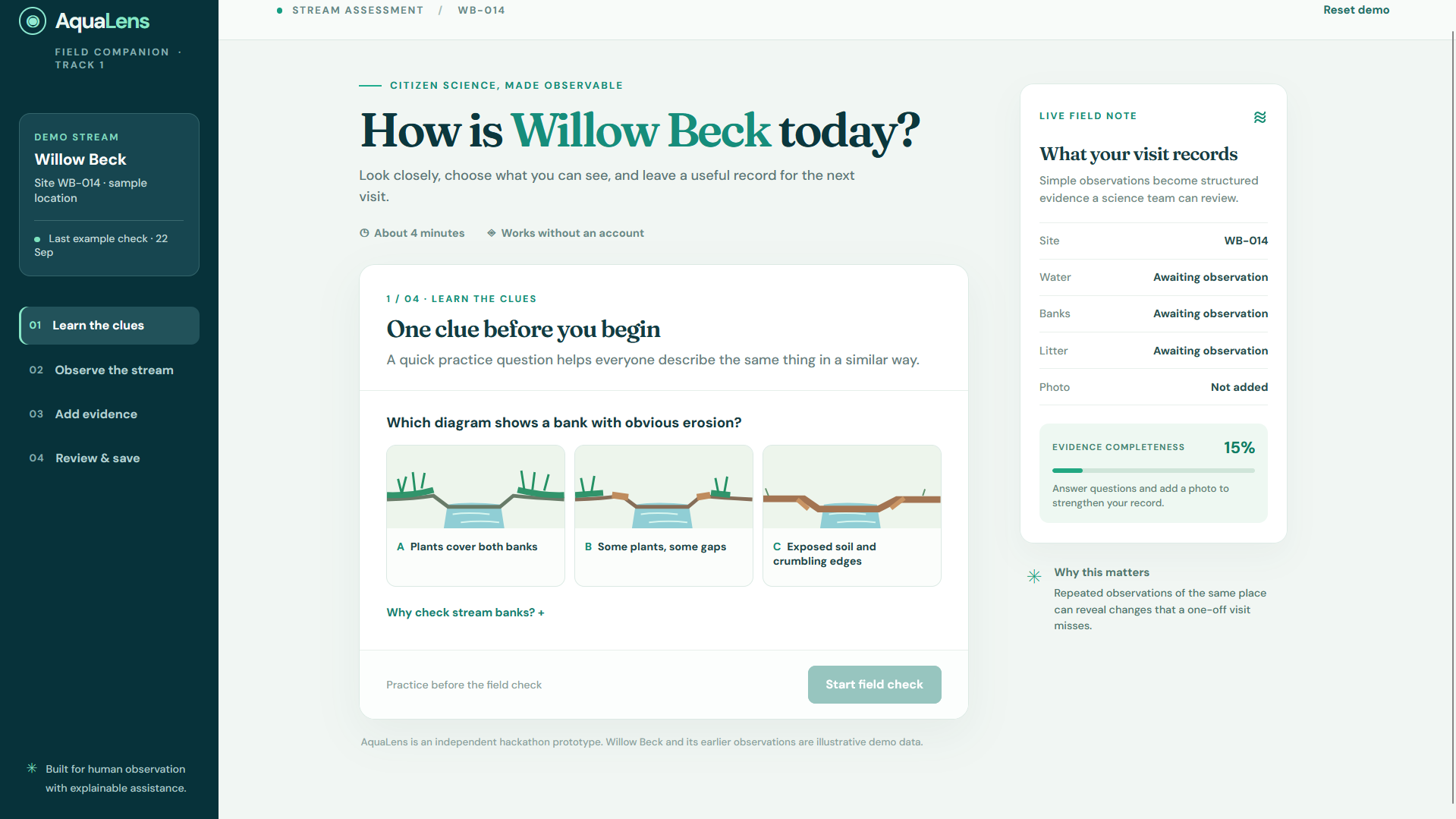
Learn the Clues — Visual guidance helps users recognize stream-bank erosion before starting the assessment.
-
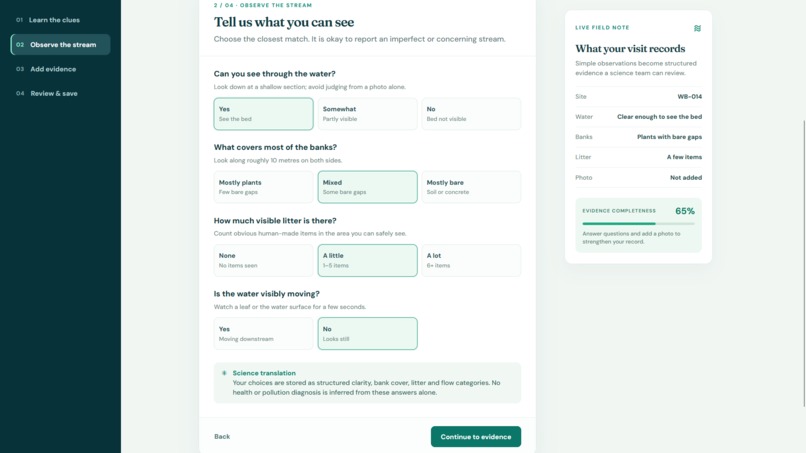
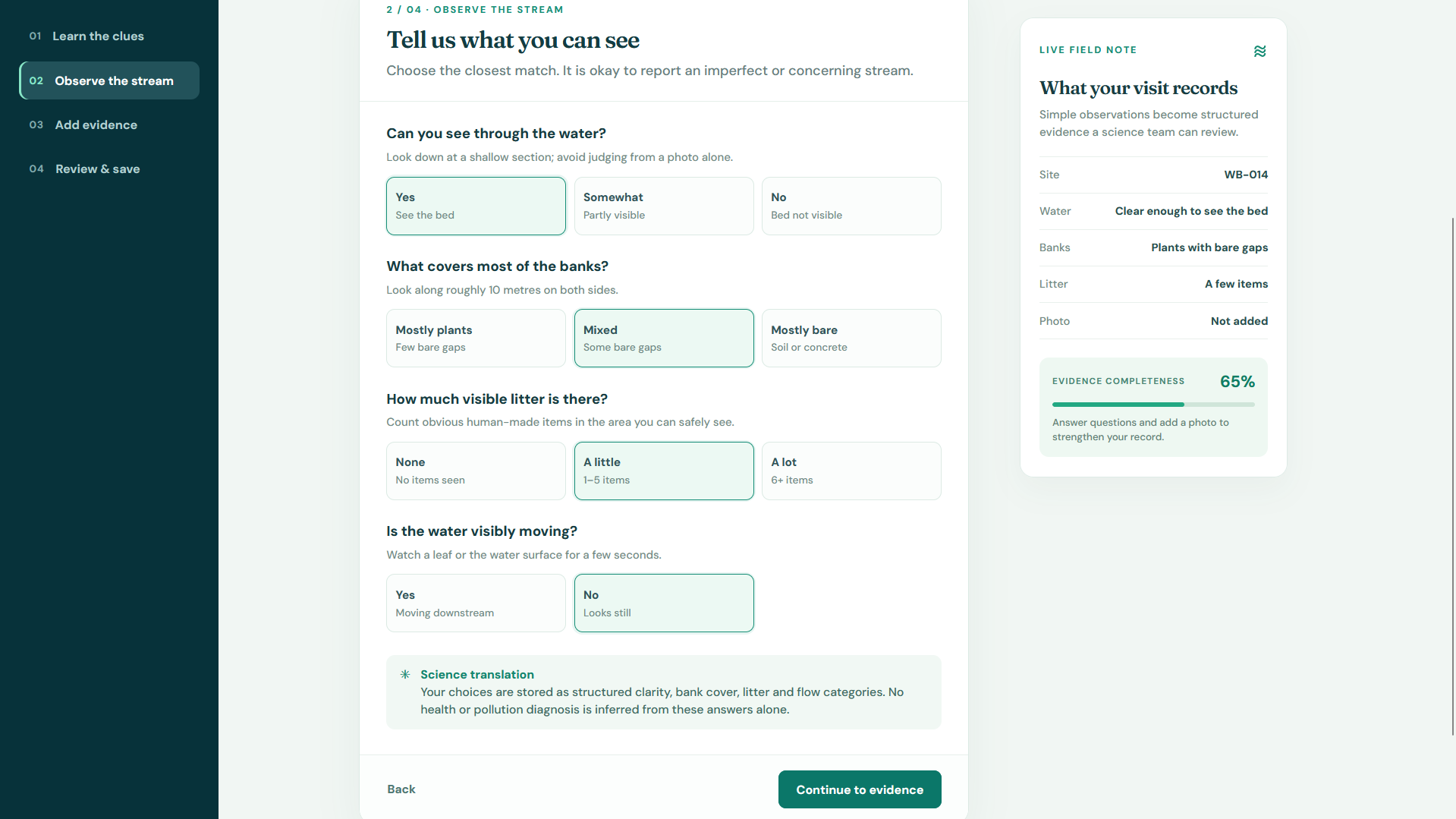
Observe the Stream — Users record water clarity, bank cover, litter, and flow using simple questions.
-
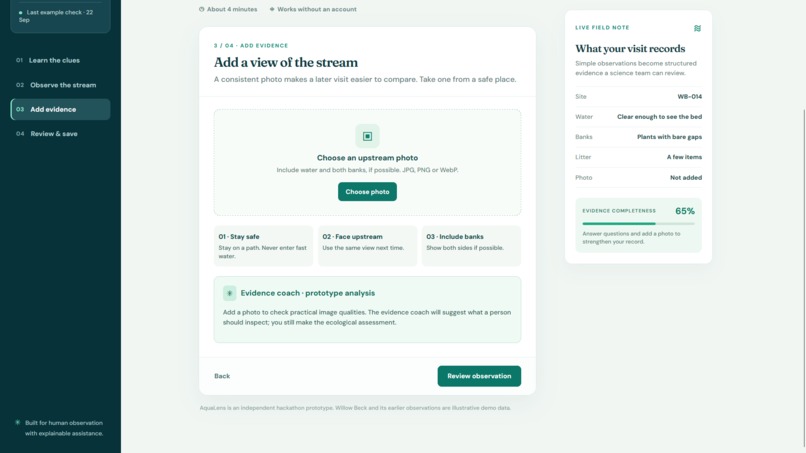
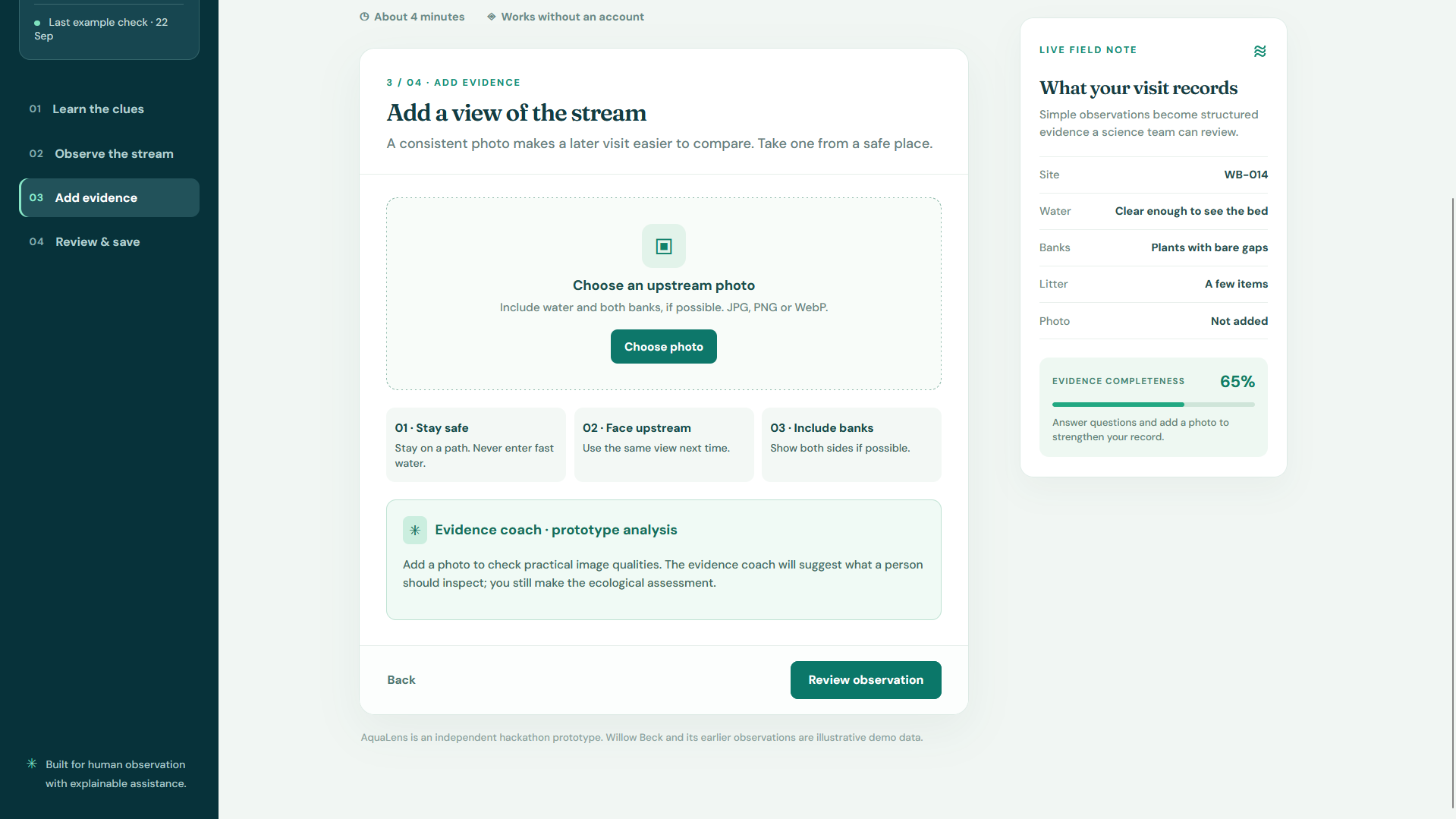
Add Photo Evidence — Users upload a stream photo to strengthen and document the observation.
-
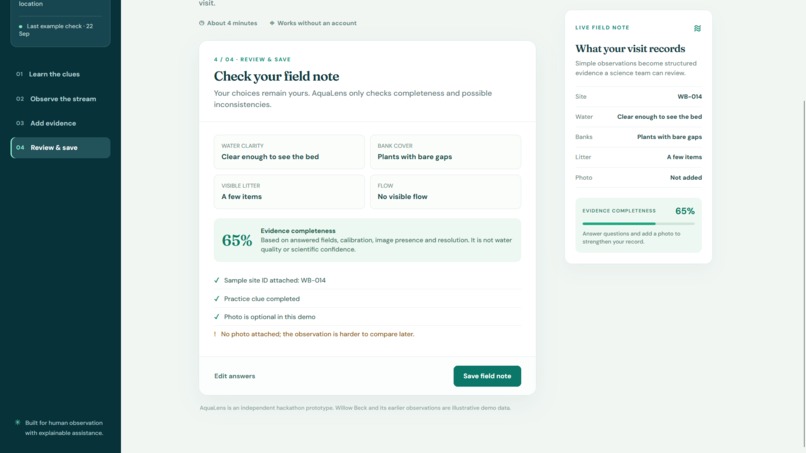
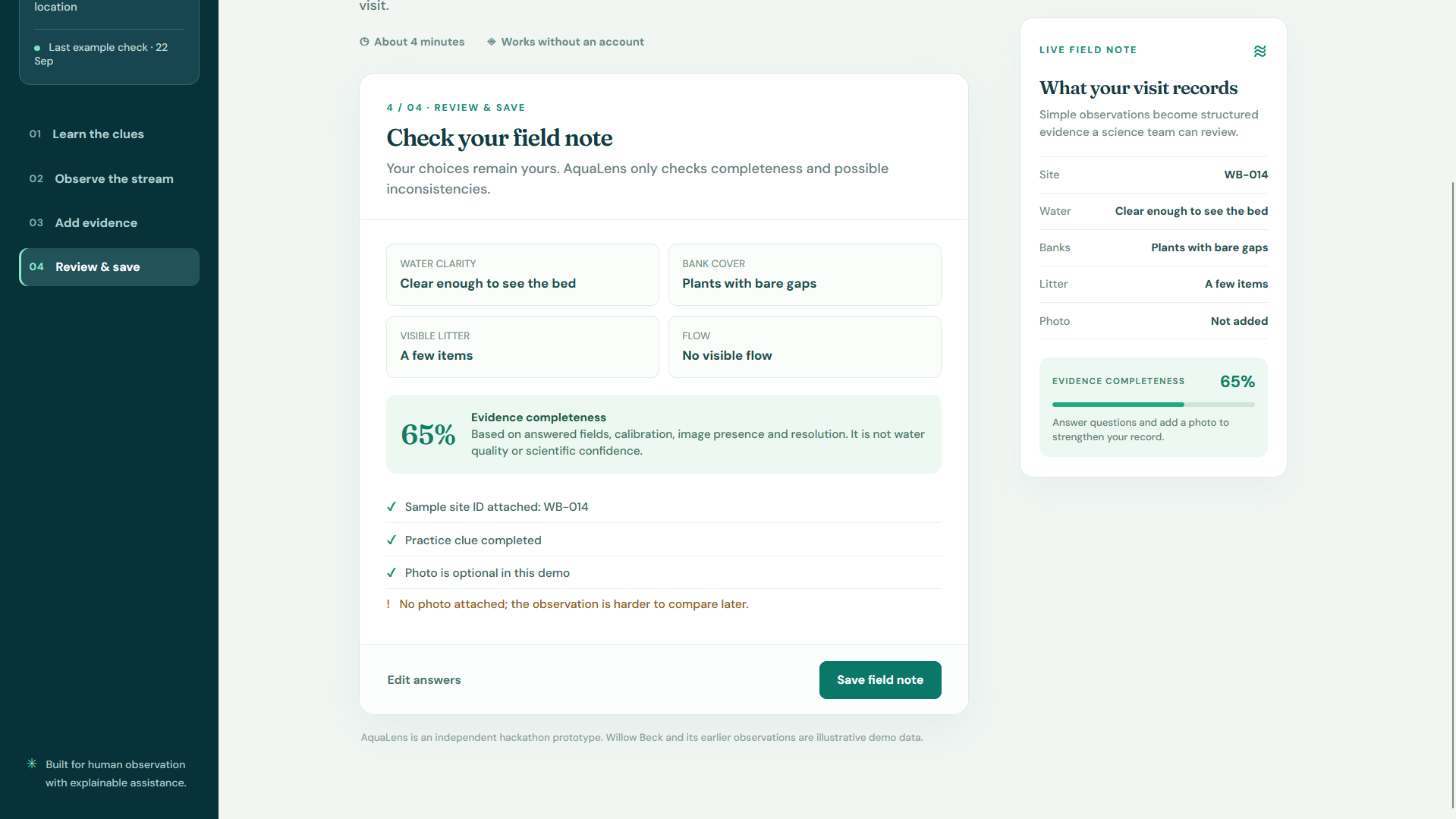
Review the Field Note — AquaLens summarizes the visit and shows how complete the recorded evidence is.
-
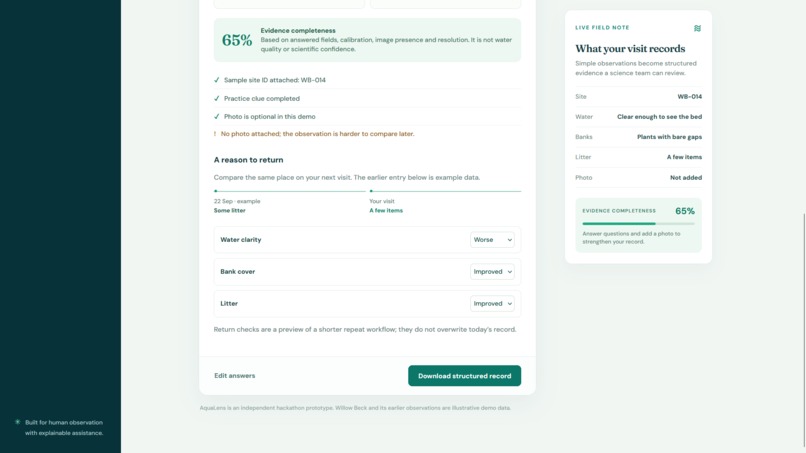
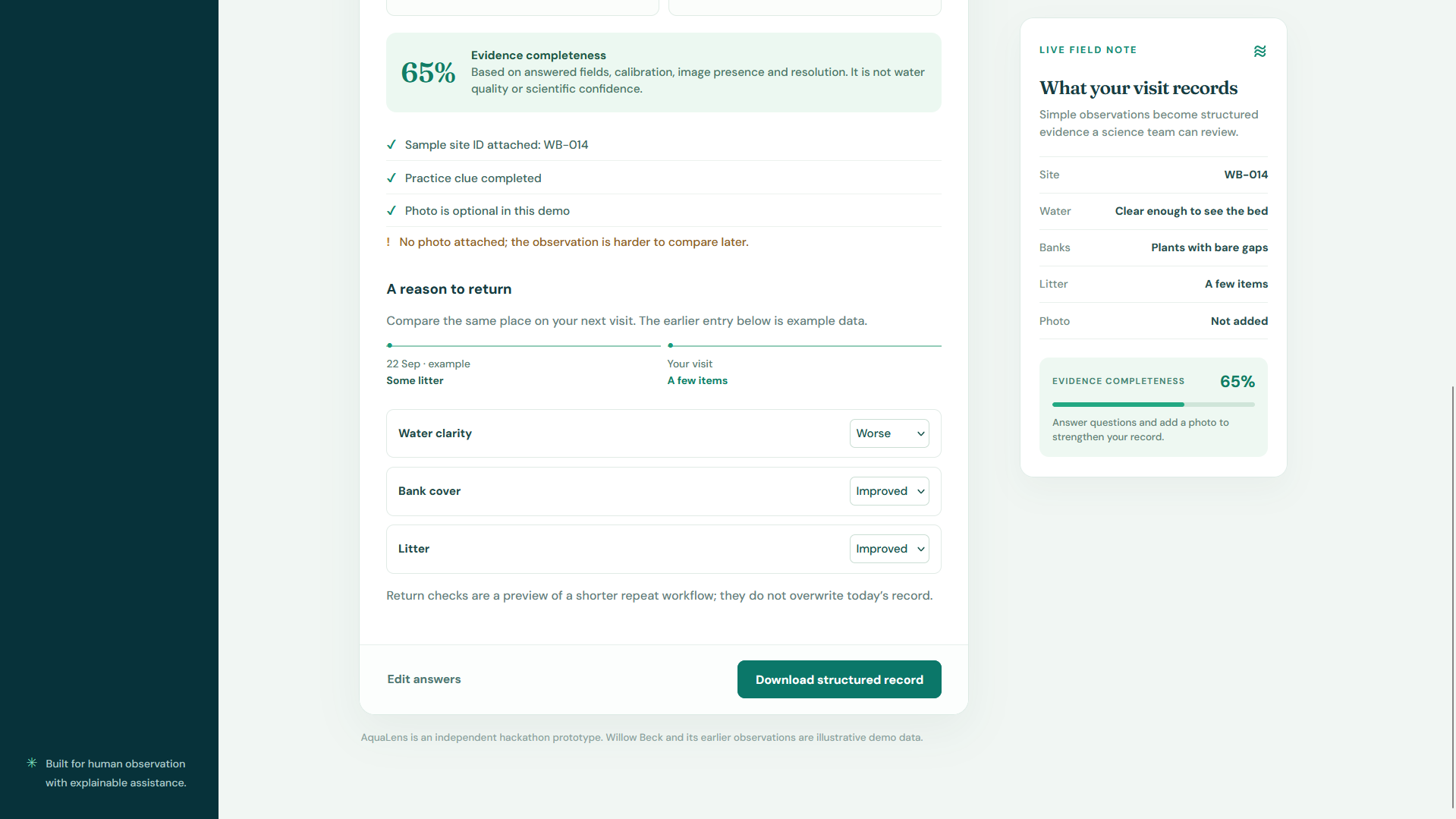
Compare Repeat Visits — Users compare current and past observations to spot changes in stream conditions.
Inspiration
A citizen can notice a changing stream without knowing terms such as “riparian vegetation” or “bank degradation.” The challenge is helping that person turn what they see into a clear, useful observation.
AquaLens addresses Track 1: Citizen Science UX. Its central idea is to make stream assessment easier through visual learning, plain-language questions, and evidence feedback. It is designed as a potential interface extension for the OneAquaHealth ecosystem.
What it does
AquaLens guides a volunteer through four steps:
- Learn the clues: A short visual calibration question teaches users to recognise exposed soil and crumbling stream banks.
- Observe the stream: Simple questions capture water clarity, bank vegetation, visible litter, and water movement.
- Add evidence: Photo guidance encourages a consistent upstream view that includes the water and banks. A local evidence coach checks image resolution, brightness, and approximate green colour cues.
- Review and save: Users review their answers, resolve contradictions, and see an evidence completeness score before saving their observation.
For example, selecting “fast current” and later choosing “no visible flow” triggers a warning. The conflict must be resolved before the record can be saved.
After saving, users can compare their observation with a clearly labelled example visit and explore a shorter return-check workflow. They can also download a structured JSON record.
How it was built
The prototype uses HTML, CSS, and vanilla JavaScript, with SVG diagrams for visual calibration, the browser Canvas API for image checks, and localStorage for saving the assessment.
It is packaged as a single HTML file that can be opened directly in a browser. Photos are processed locally, and the exported JSON includes observation categories, evidence metadata, completeness information, and provenance.
The photo coach currently uses explainable pixel heuristics rather than a trained ecological AI model. Its suggestions guide human inspection; they do not determine pollution, species, or water safety.
The export format is a prototype schema. Integration with OneAquaHealth would require mapping it to the project's approved fields and APIs.
Challenges
The main design challenge was simplifying the questions while keeping their meaning useful. Each prompt needed to describe something a volunteer could actually observe.
Another challenge was presenting evidence feedback without creating false confidence. AquaLens therefore distinguishes evidence completeness from water quality or scientific certainty.
Repeat participation also required attention. The prototype gives users a comparison view and a preview of a shorter return visit, connecting today's contribution to future monitoring.
Accomplishments
The prototype brings calibration, guided observation, photo assistance, validation, and structured export into one coherent workflow.
It demonstrates how an interface can support data quality while remaining accessible to people without ecological training. Its responsive layout supports desktop and mobile screens, and its standalone format makes the demo easy to distribute.
What I learned
Citizen science UX influences both participation and the usefulness of collected data. A clearer question can help a volunteer understand what to inspect and how to record it.
I also learned that assistance should explain its limits. A useful observation record preserves what the citizen reported, what evidence supports it, and what still needs expert review.
What's next
The next step is to test AquaLens with volunteers and an ecologist. The evaluation would measure completion time, missing answers, observer agreement, and willingness to return.
Further development would include approved OneAquaHealth integration, richer visual references, a complete repeat-assessment workflow, and validated vision assistance with human confirmation.
The intended impact is more accessible participation and more consistent observations that can support ecosystem monitoring, protection, and awareness of the connections between environmental, animal, and human health.
Built With
- css3
- html5
- javascript
- json
- localstorage

Log in or sign up for Devpost to join the conversation.