-
-
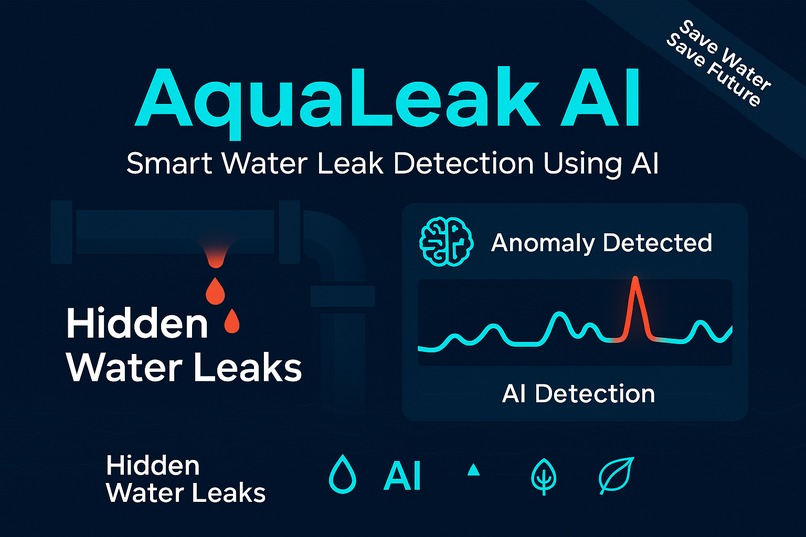
AquaLeak AI: Smart Water Leak Detection Using AI
-
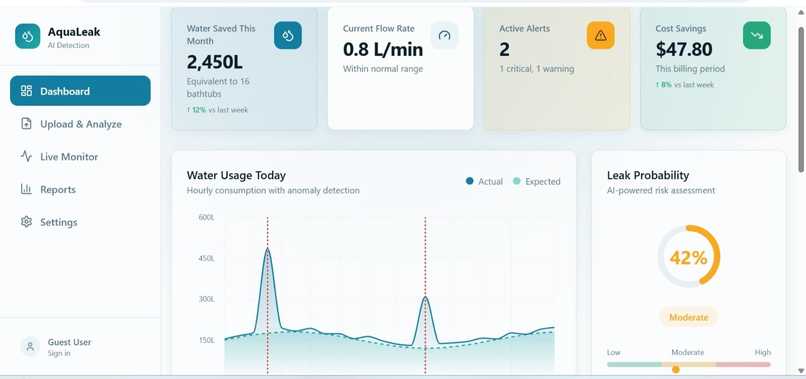
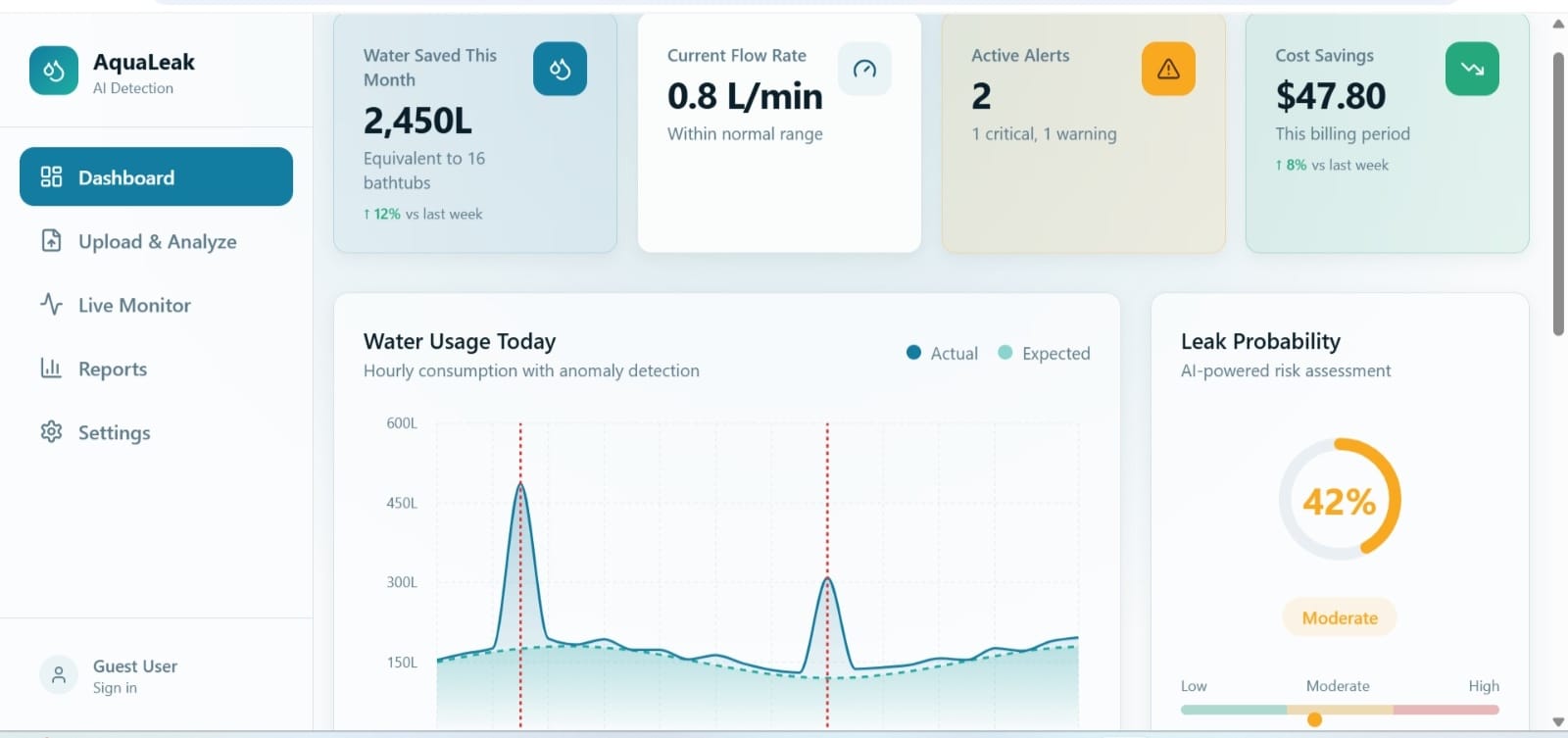
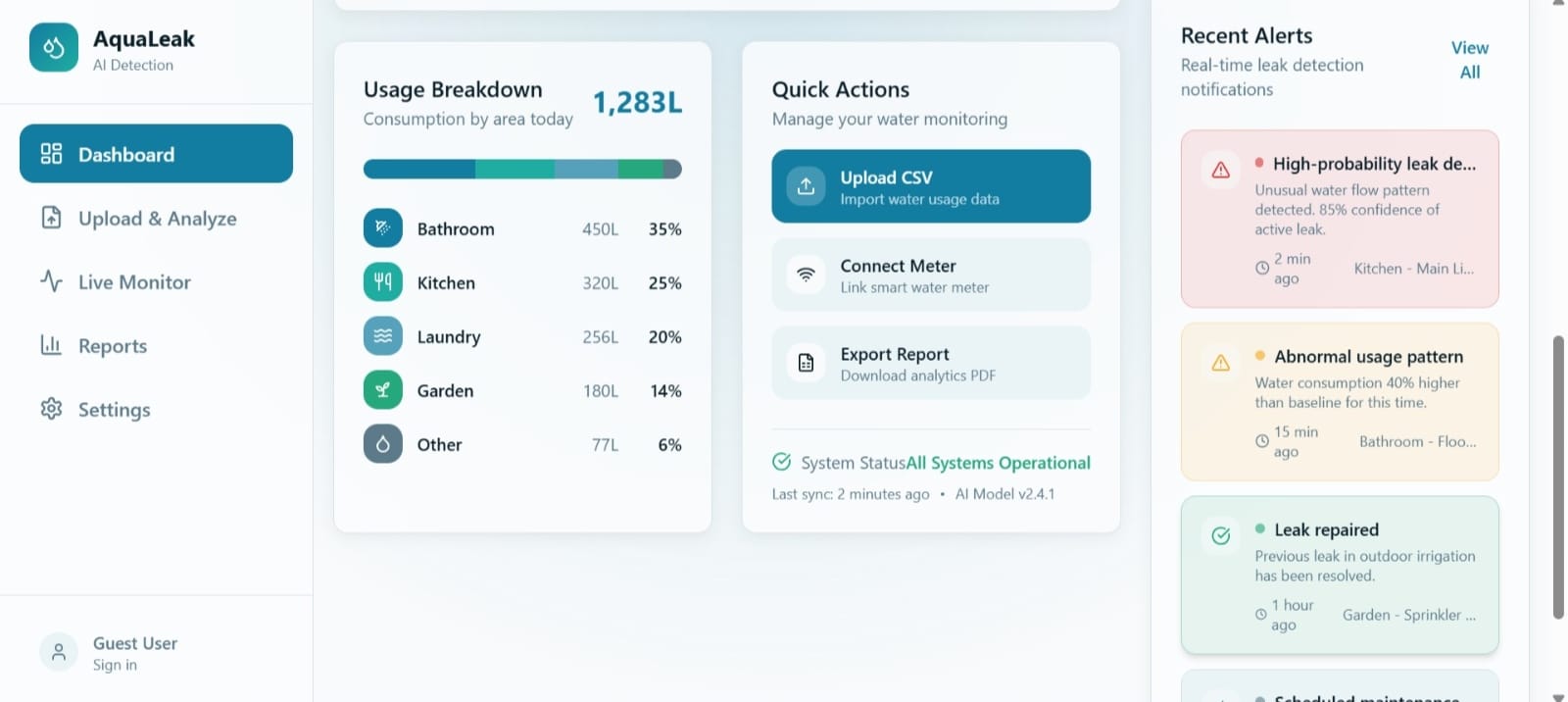
Dashboard
-
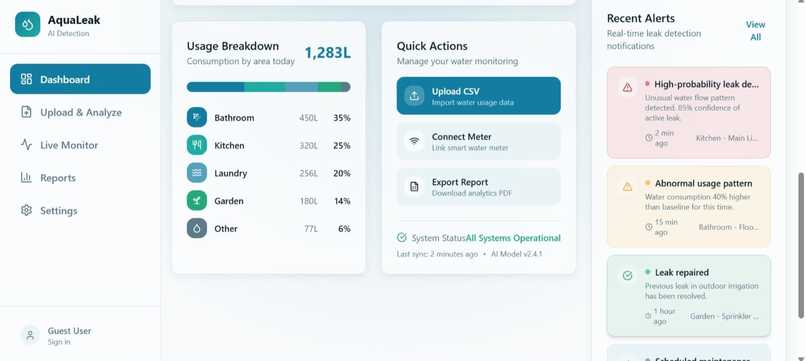
Dashboard
-
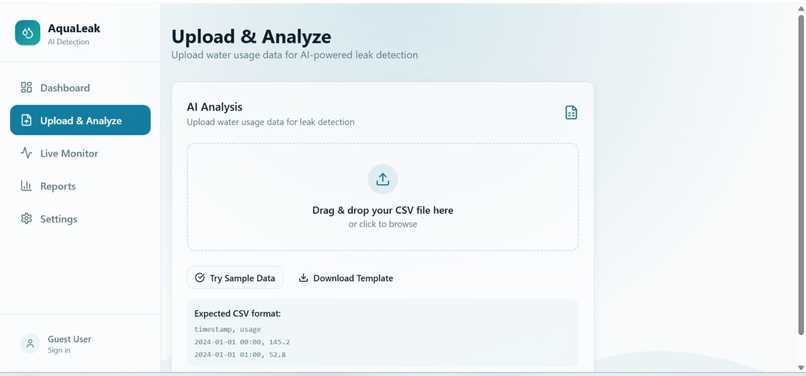
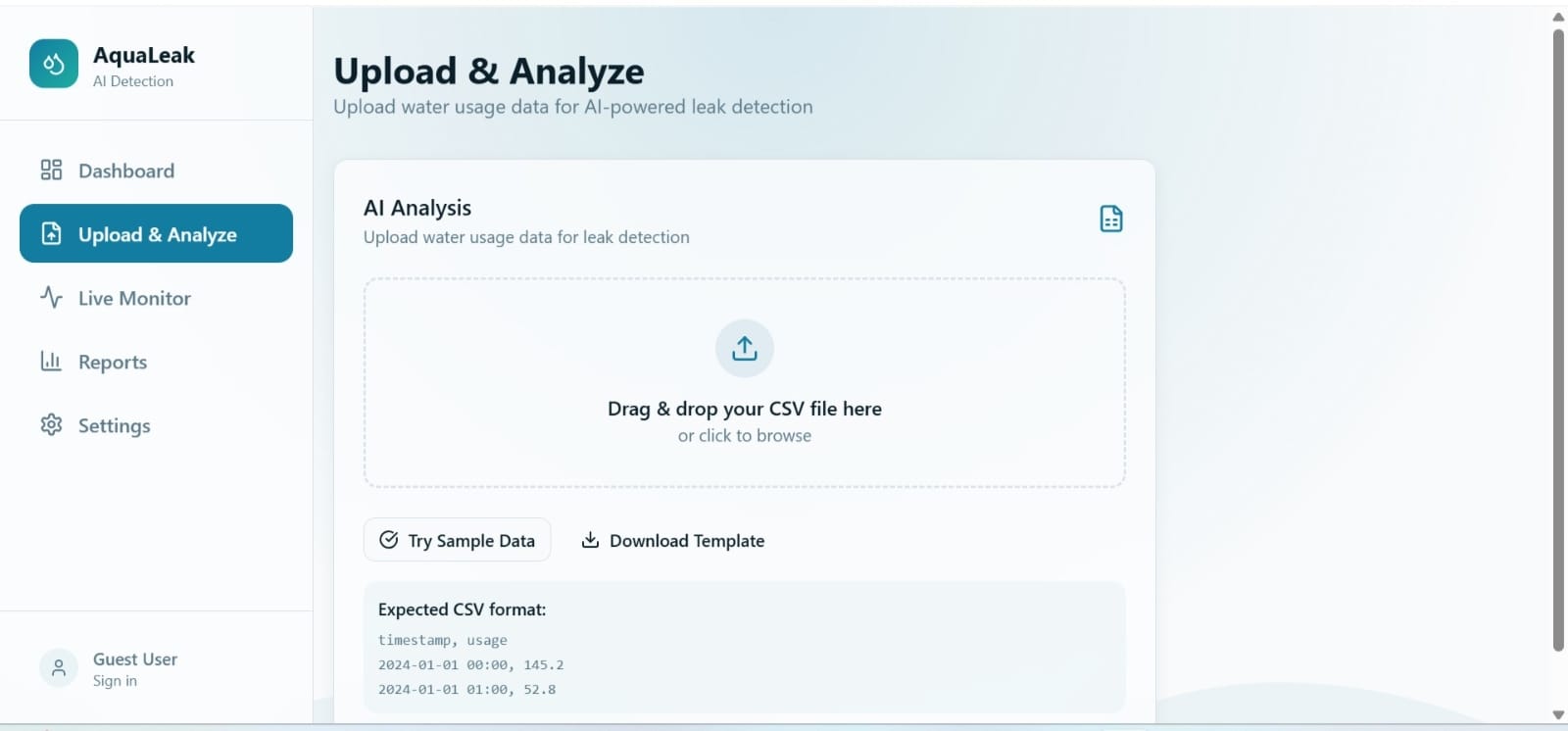
Upload & Analyze
-
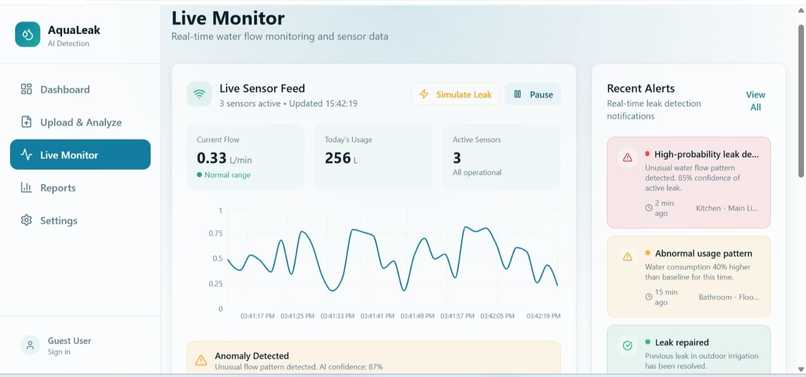
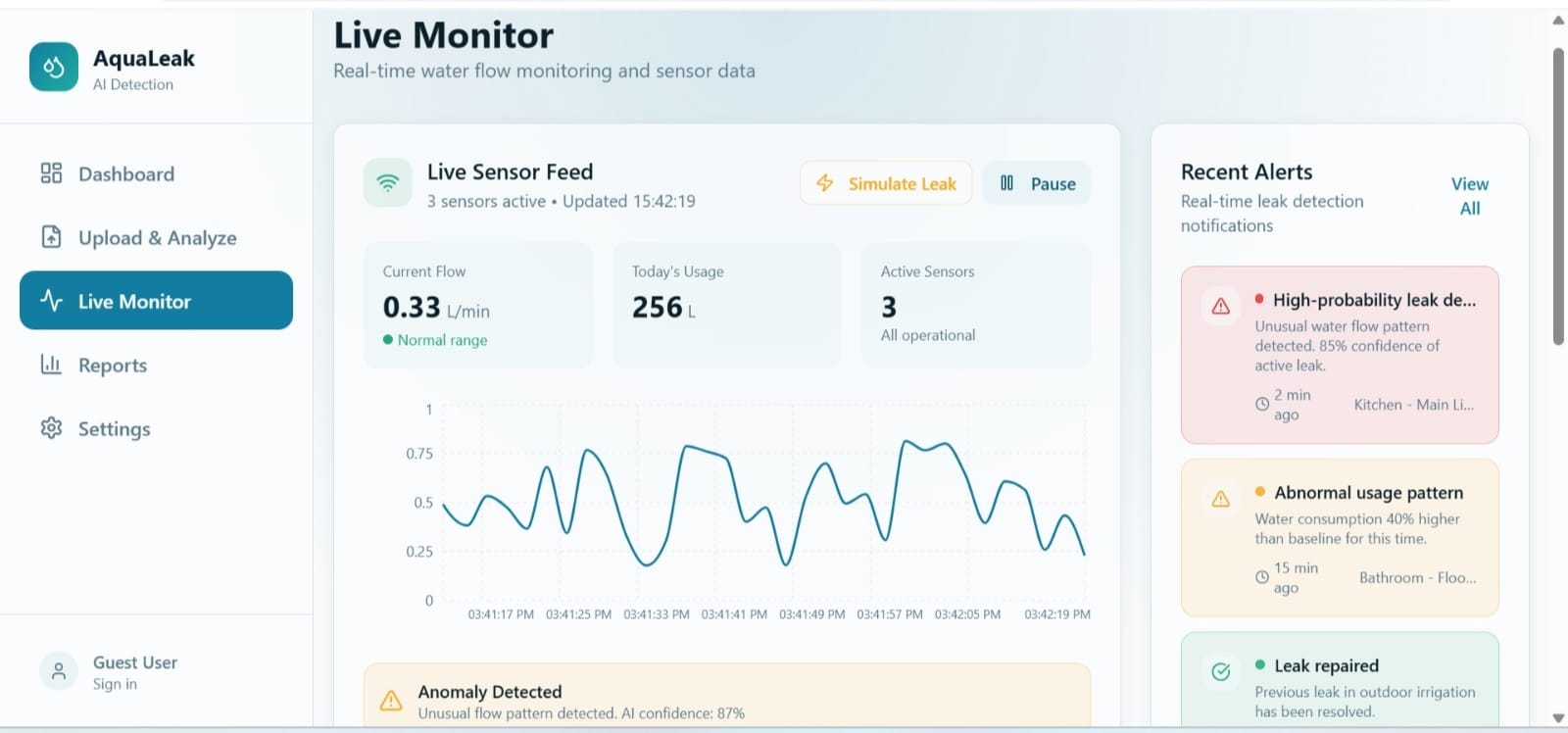
Live Monitor
-
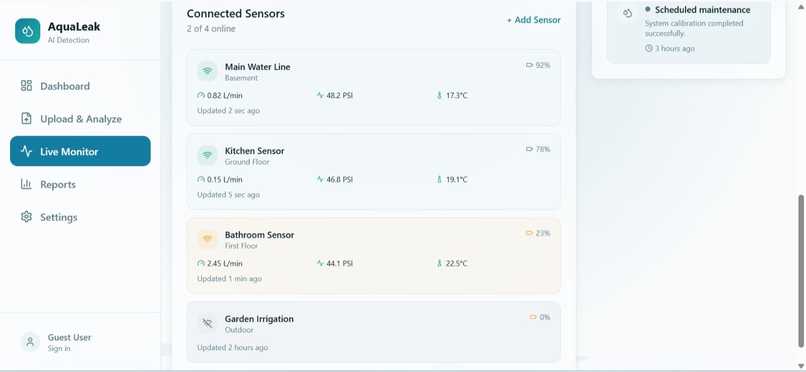
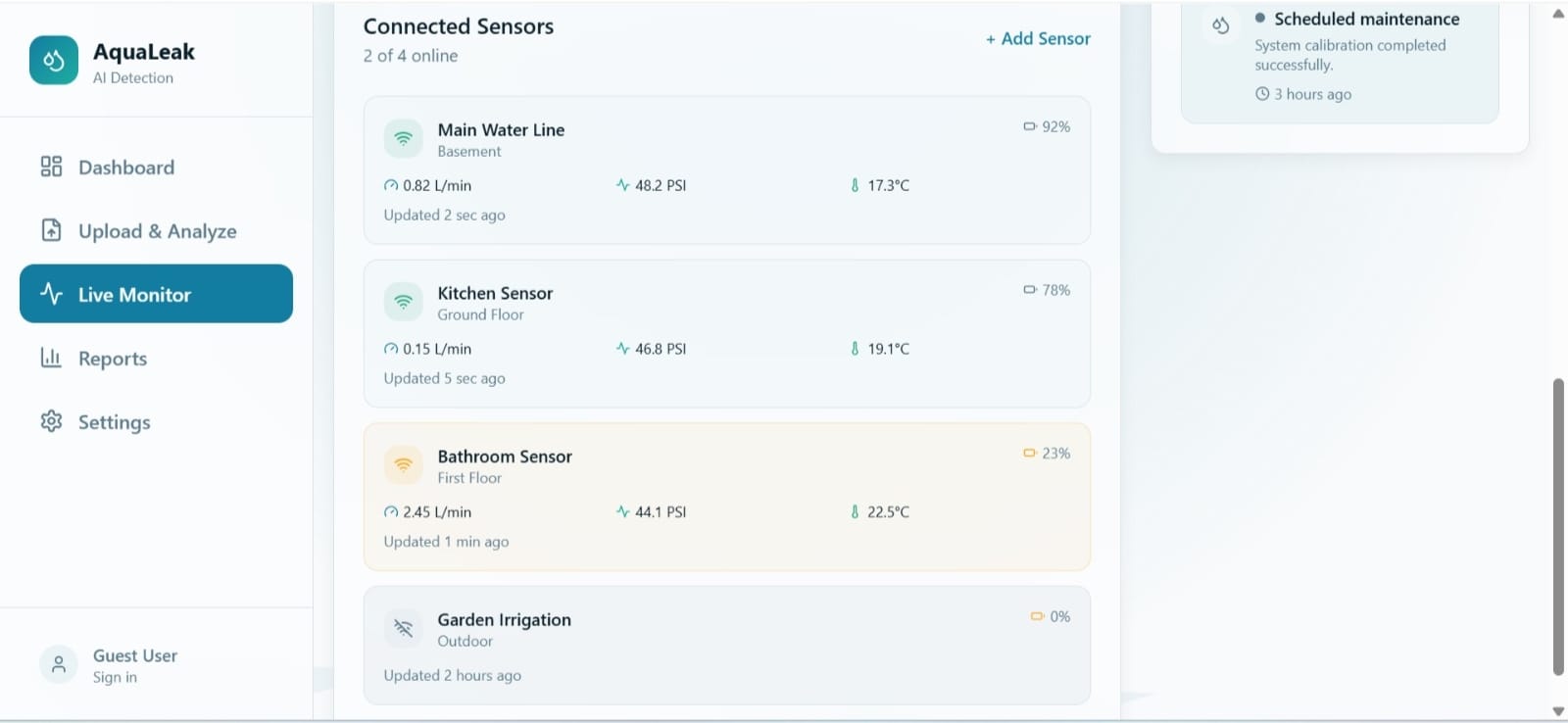
Live Monitor
-
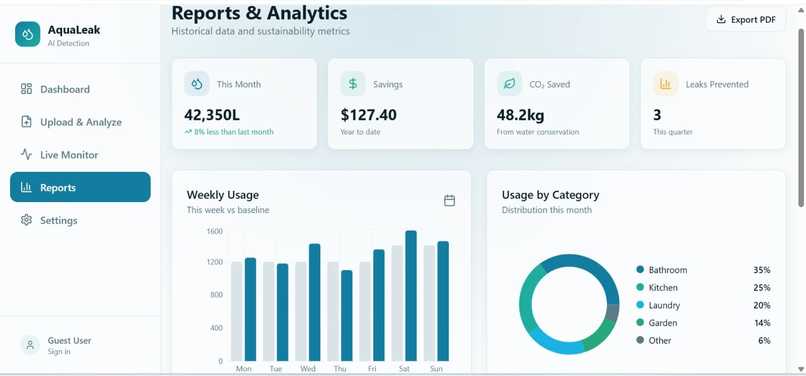
Reports & Analytics
-
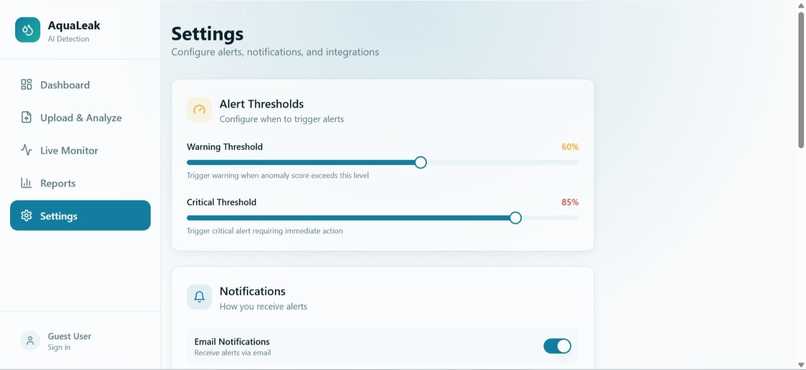
Settings
-
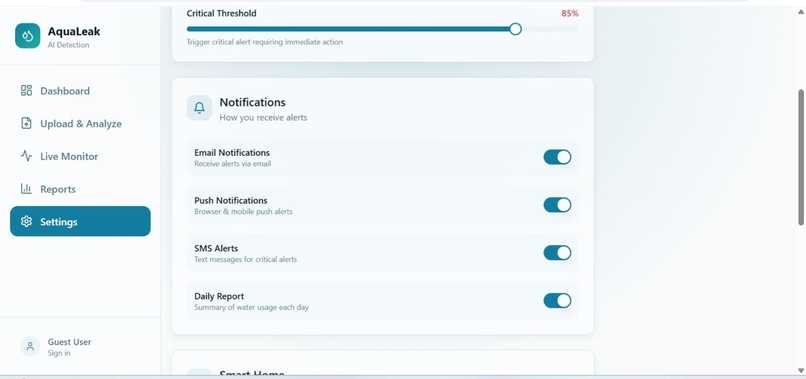
Settings
-
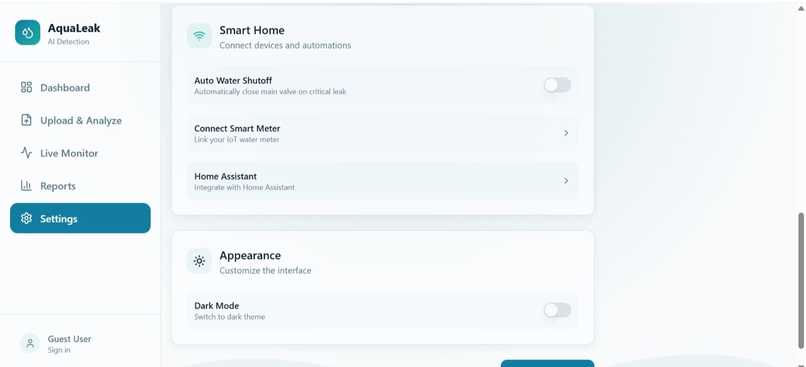
Settings
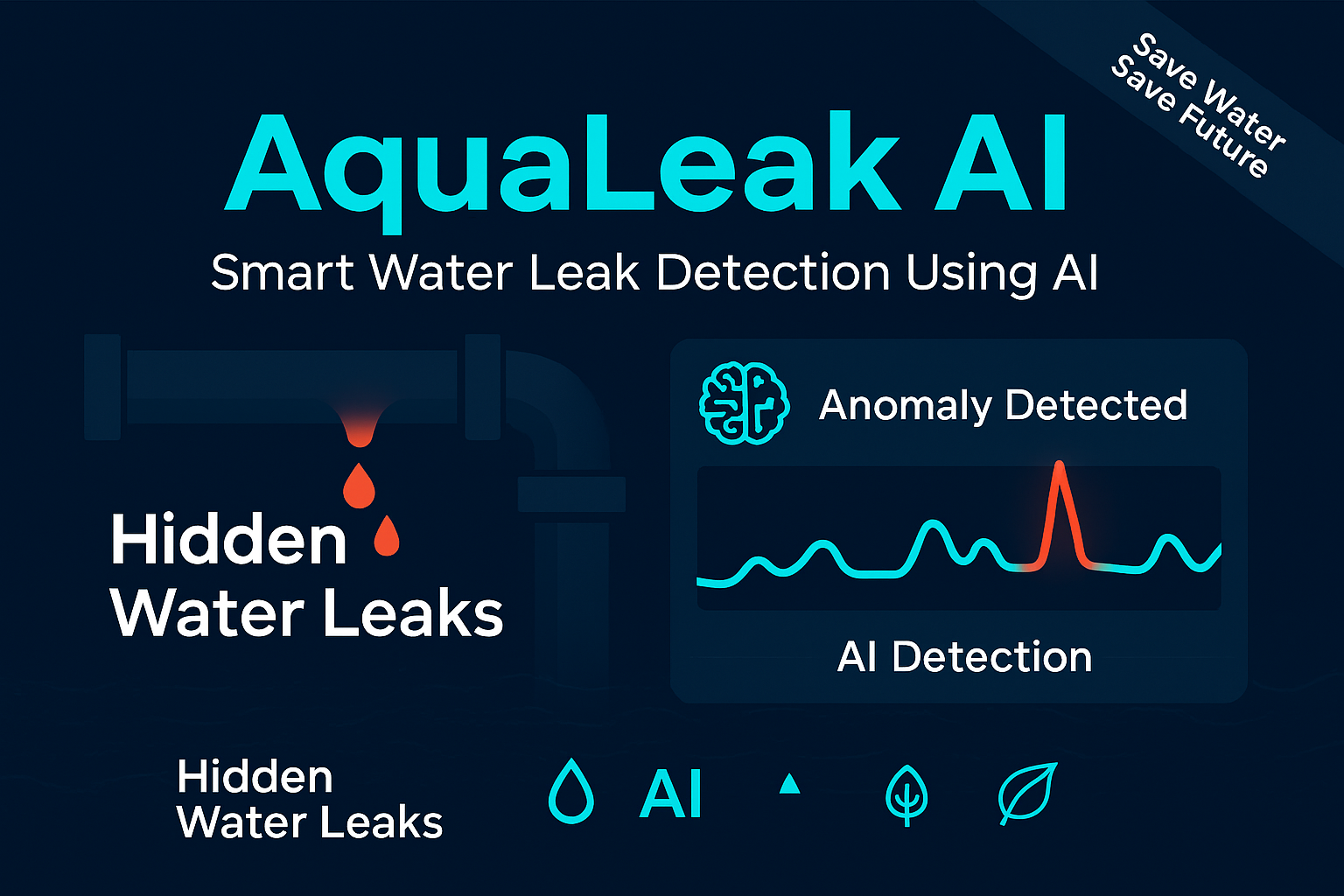
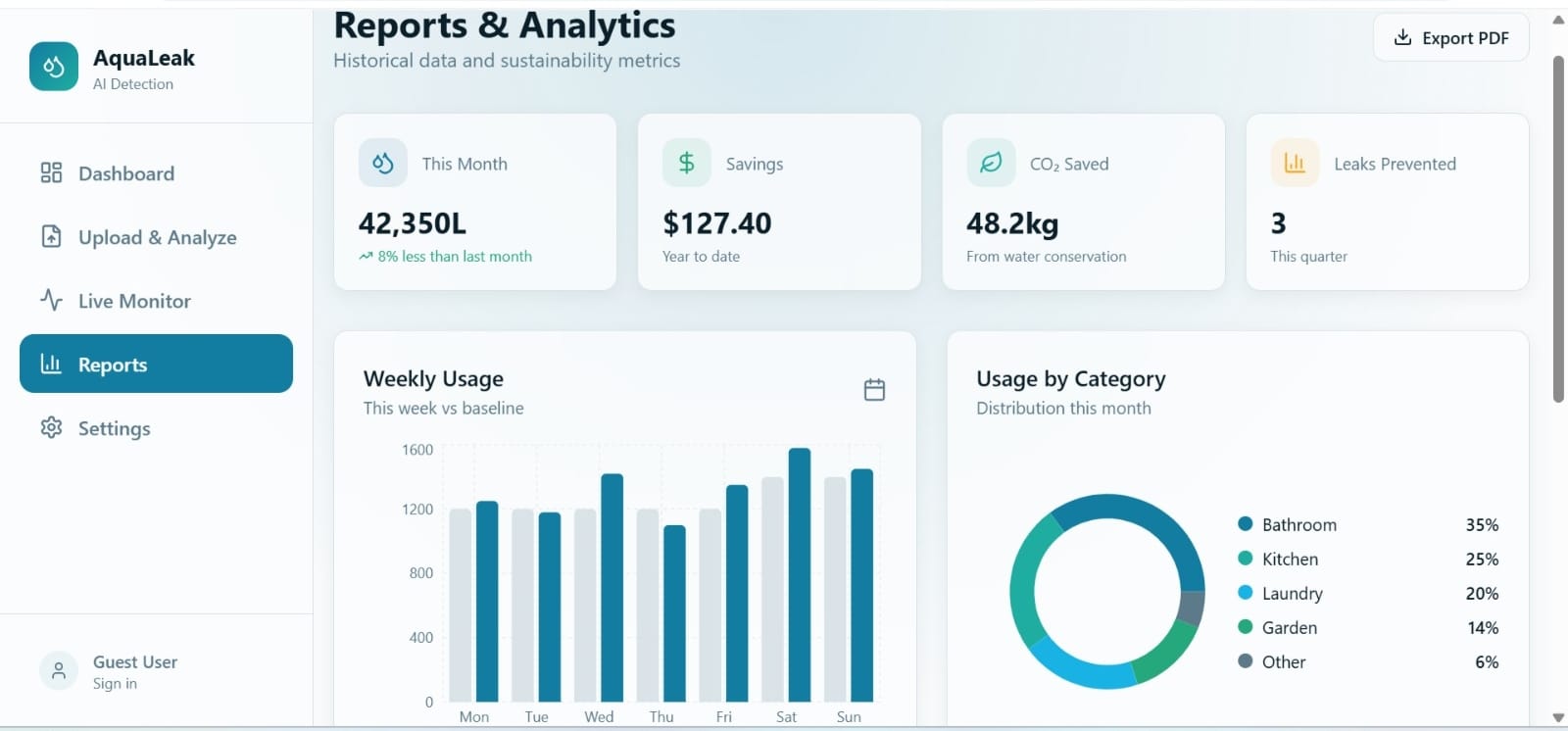
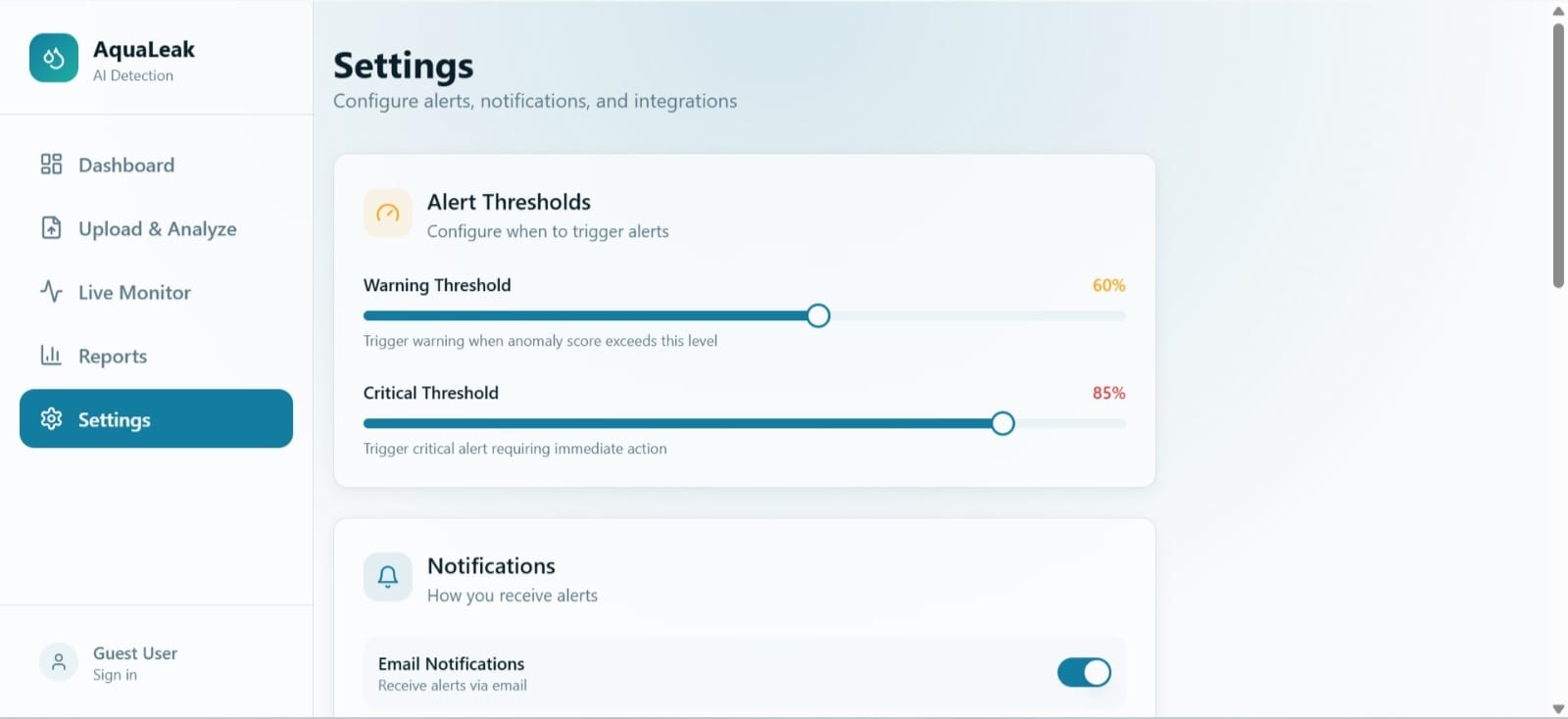
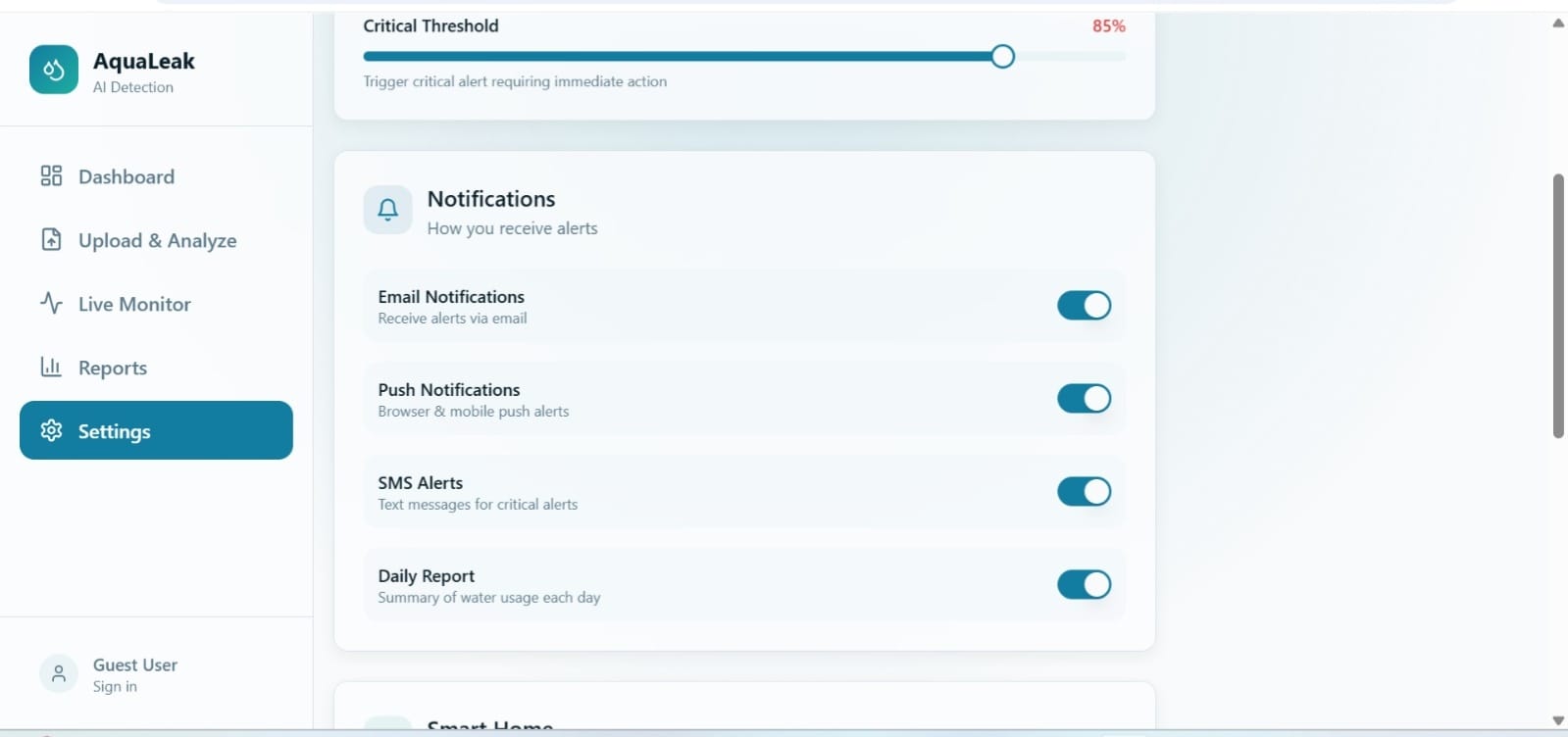
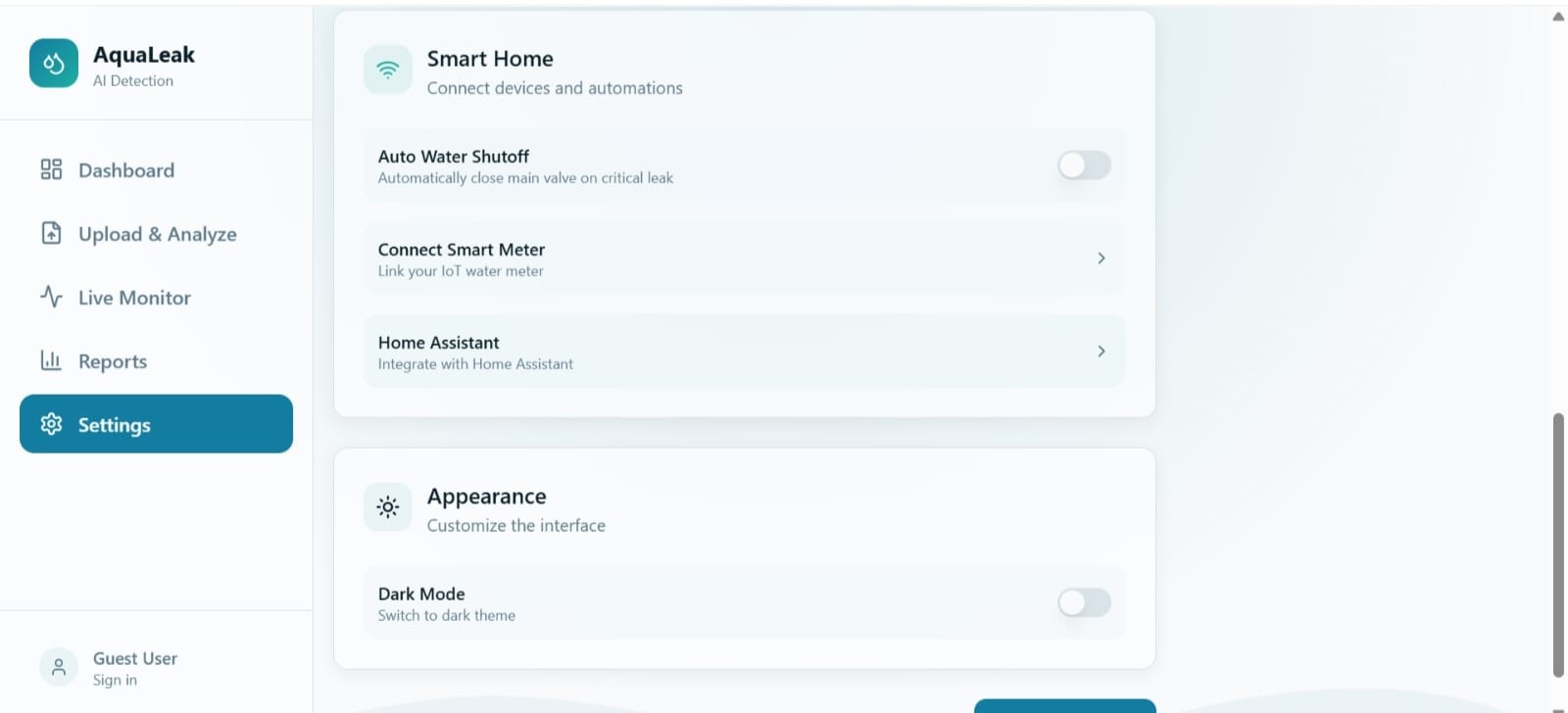
AquaLeak AI
Smart Water Leak Detection Using Artificial Intelligence for Sustainable Cities
Inspiration
Water scarcity is rapidly becoming one of the most pressing global challenges of the 21st century. Rapid urbanization, climate change, population growth, and aging infrastructure have placed enormous stress on freshwater resources. Despite advancements in water supply systems, a large percentage of treated water is lost every day due to unnoticed leaks.
What makes this problem even more alarming is that most water leakage is invisible. Underground pipelines, internal building plumbing, and aging municipal systems can leak for months without detection. By the time the issue becomes visible, irreversible damage and massive water loss have already occurred.
The inspiration behind AquaLeak AI came from a simple yet powerful question:
What if water leaks could be detected before humans even notice them?
Artificial Intelligence has proven its ability to detect hidden patterns in data across industries such as healthcare, finance, and cybersecurity. We believed the same intelligence could be applied to water conservation. Our aim was to build a solution that empowers individuals, communities, and cities to take proactive control of water usage and sustainability.
Problem Background
Water leakage contributes significantly to what is known as Non-Revenue Water (NRW) — water that is produced but never reaches the consumer. This includes physical losses from leaks, bursts, and overflows.
Key issues include:
- Aging infrastructure in cities
- Lack of real-time monitoring
- Reactive maintenance strategies
- High costs of manual inspection
- Environmental impact of water wastage
Traditional systems rely heavily on periodic inspections or physical sensors that are expensive and difficult to deploy at scale. There is a clear need for a data-driven, scalable, and intelligent solution.
What AquaLeak AI Does
AquaLeak AI is an intelligent system that detects potential water leaks by analyzing water consumption data using machine learning.
Instead of waiting for visible signs of leakage, AquaLeak AI:
- Learns normal water usage behavior
- Detects unusual consumption patterns
- Flags anomalies that may indicate leaks
- Presents results in a clear, understandable format
The system is designed to assist:
- Households
- Apartment complexes
- Commercial buildings
- Municipal water authorities
- Smart city initiatives
Why AI for Water Leakage Detection
Water usage data is inherently complex and time-based. Human monitoring alone is inefficient for identifying subtle patterns that may indicate leakage.
AI provides:
- Continuous monitoring
- Pattern recognition beyond human capability
- Early detection of hidden issues
- Scalable analysis without manual effort
By using machine learning, AquaLeak AI transforms raw data into actionable insights, enabling proactive decision-making.
System Architecture
The AquaLeak AI system follows a modular and explainable architecture:
Data Collection Layer
Water usage data collected from meters or simulated sources.Data Processing Layer
Cleaning, normalization, and preparation of data.AI Intelligence Layer
Machine learning model trained to detect anomalies.Visualization Layer
Interactive interface displaying insights and alerts.Decision Layer
User interpretation and action based on detected leaks.
This layered approach ensures clarity, maintainability, and scalability.
How We Built It
We intentionally selected technologies that are:
- Beginner-friendly
- Widely supported
- Easy to deploy
- Transparent and explainable
Technology Stack
- Python: Core development language
- Scikit-learn: Machine learning framework
- Isolation Forest: Anomaly detection model
- Pandas & NumPy: Data processing
- Streamlit: Interactive web application
- GitHub: Version control and collaboration
Machine Learning Model Explained
We used the Isolation Forest algorithm due to its effectiveness in anomaly detection tasks.
Why Isolation Forest?
- Does not require labeled data
- Efficient for large datasets
- Excellent at detecting rare events
- Interpretable results
How It Works:
- Randomly partitions data
- Anomalies are isolated faster
- Shorter path lengths indicate abnormal behavior
In AquaLeak AI:
- Normal water usage patterns form dense clusters
- Leak-related usage spikes stand out as anomalies
- These anomalies are flagged as potential leak events
Data Strategy
Due to privacy and accessibility limitations, real-world smart meter data is difficult to obtain.
To overcome this:
- We created simulated datasets based on realistic usage patterns
- Included daily and hourly consumption variations
- Introduced controlled anomalies to represent leaks
This approach ensures ethical data usage while maintaining realism and model effectiveness.
User Experience & Interface
AquaLeak AI prioritizes usability and clarity.
The Streamlit interface allows users to:
- Upload water usage datasets
- Trigger AI-based analysis
- View results instantly
- Identify suspicious consumption patterns
- Understand outcomes without technical knowledge
The interface is designed for:
- Students
- Homeowners
- City officials
- Non-technical stakeholders
Challenges We Ran Into
Data Availability
Lack of real-world datasets required careful simulation of realistic usage patterns.
Model Sensitivity
Balancing false positives and false negatives required extensive experimentation.
Interpretability
Ensuring AI results were understandable to non-experts was a key challenge.
Time Constraints
Building an end-to-end solution within a hackathon timeline demanded focused prioritization.
Each challenge strengthened the robustness of the final system.
Accomplishments That We're Proud Of
- Built a complete AI-powered sustainability solution
- Successfully applied anomaly detection to water conservation
- Delivered a working demo with real insights
- Created a scalable and extensible system
- Maintained clarity and explainability throughout the project
What We Learned
This project enhanced our understanding of:
- Machine learning for sustainability
- Data-driven decision-making
- Ethical AI development
- System design and architecture
- Communicating impact-driven solutions
We also learned that simple, well-explained solutions often outperform complex ones.
Environmental & Social Impact
AquaLeak AI directly contributes to:
- Water conservation
- Reduced environmental stress
- Cost savings for consumers
- Sustainable urban development
Early detection of leaks can prevent thousands of liters of water from being wasted annually per household.
Scalability & Real-World Deployment
AquaLeak AI is designed with scalability in mind:
- Can integrate with IoT sensors
- Supports city-scale deployment
- Can be adapted for industrial use
- Cloud-ready architecture
What's Next for AquaLeak AI
Planned enhancements include:
- Real-time data ingestion
- IoT sensor integration
- Automated alert systems
- Advanced deep learning models
- Municipal dashboards
- Mobile application support
Our long-term goal is to deploy AquaLeak AI as a core smart city utility.


Log in or sign up for Devpost to join the conversation.