-
-
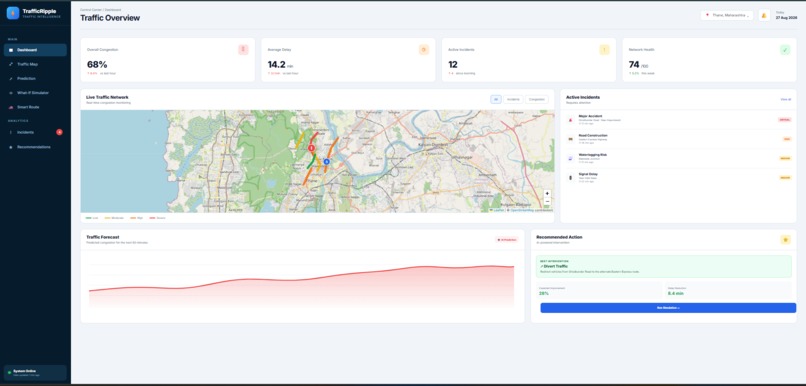
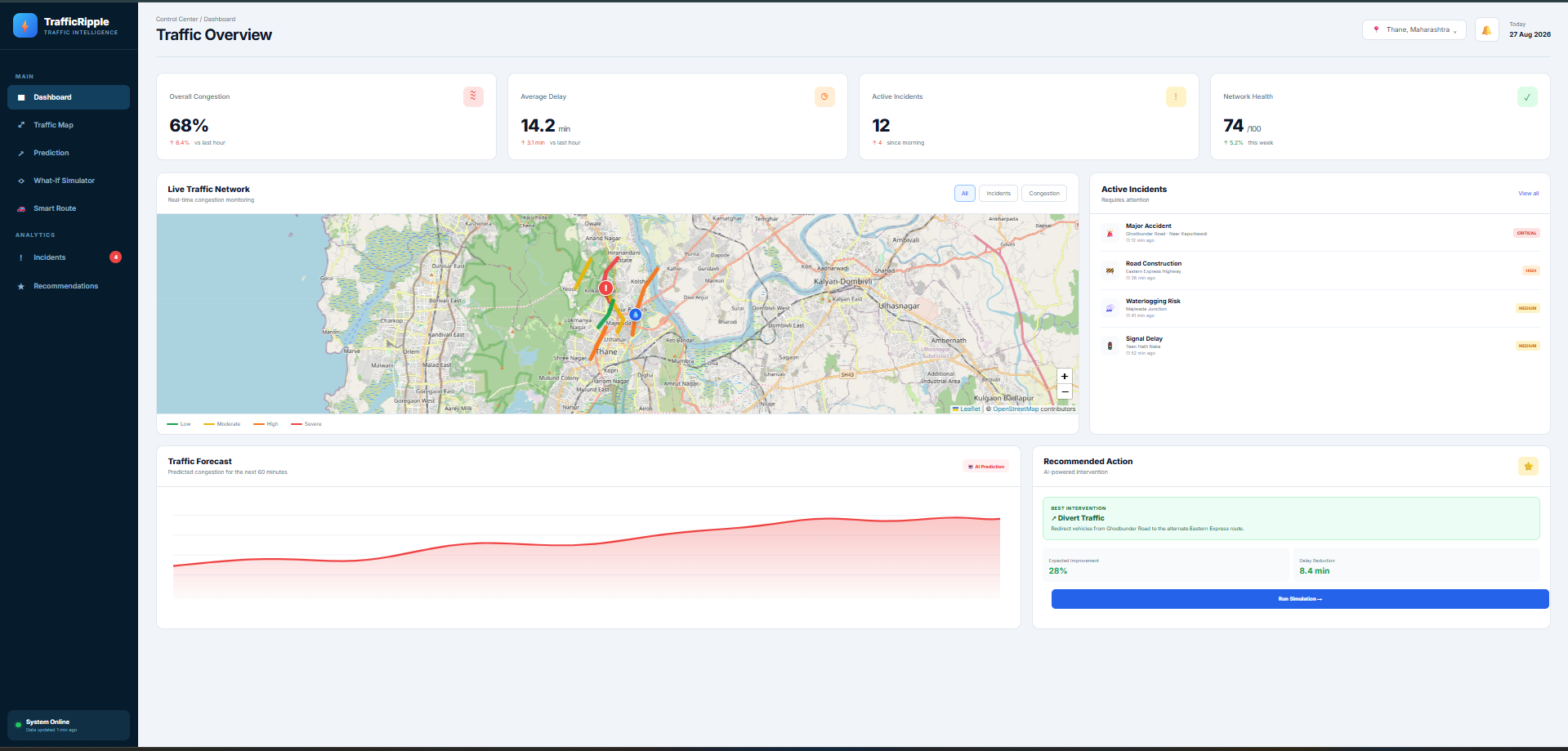
DashBoard
-
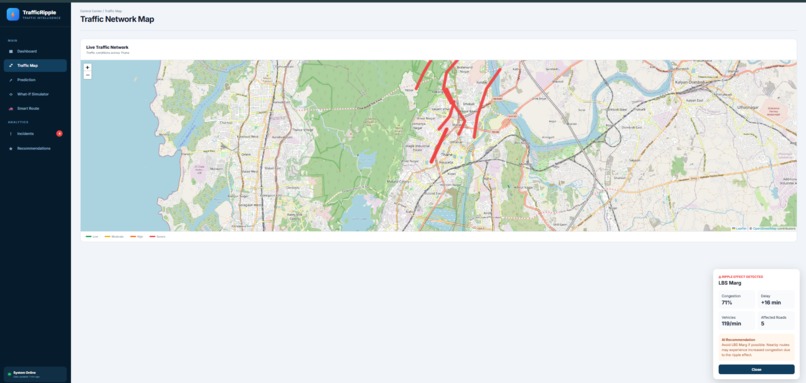
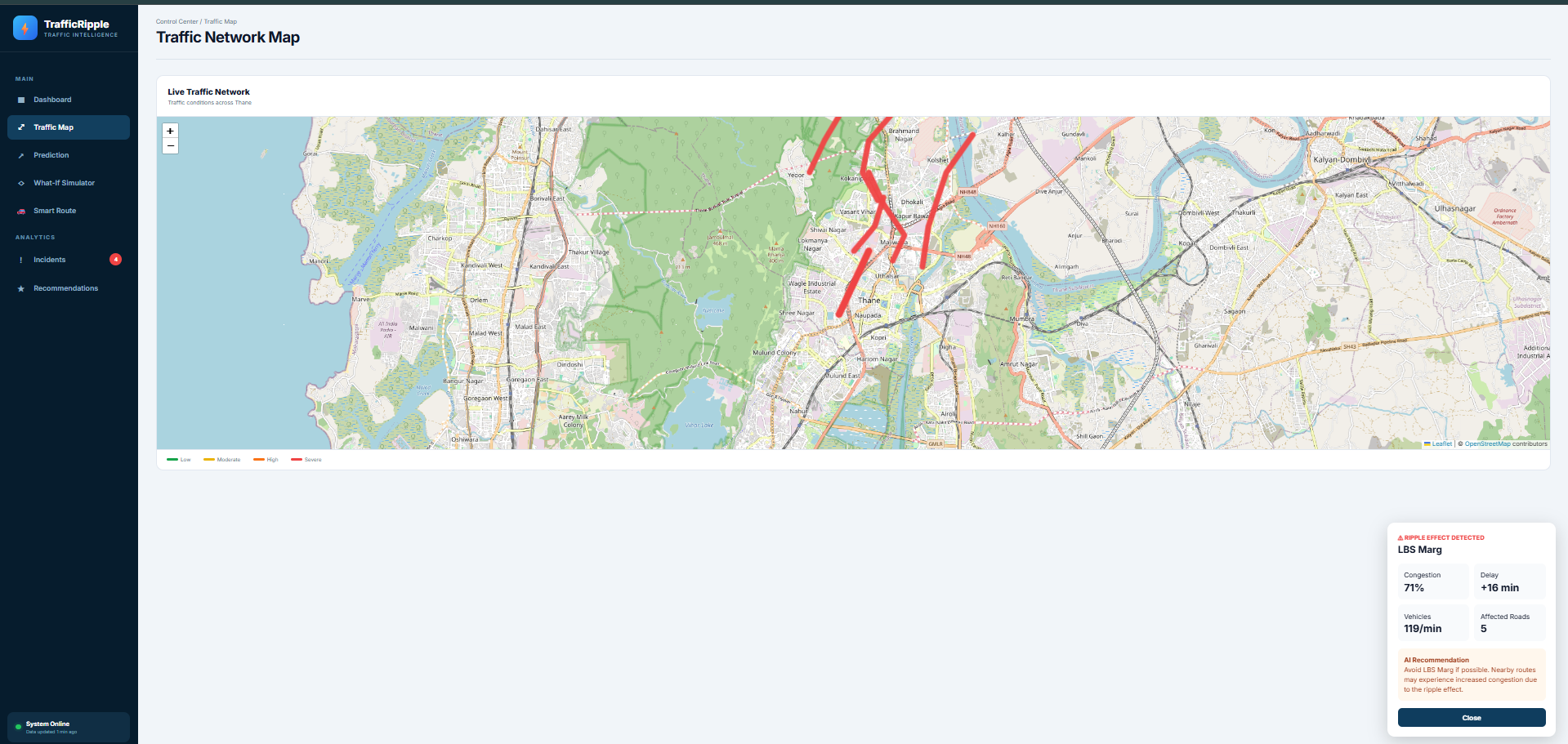
Traffic Map
-
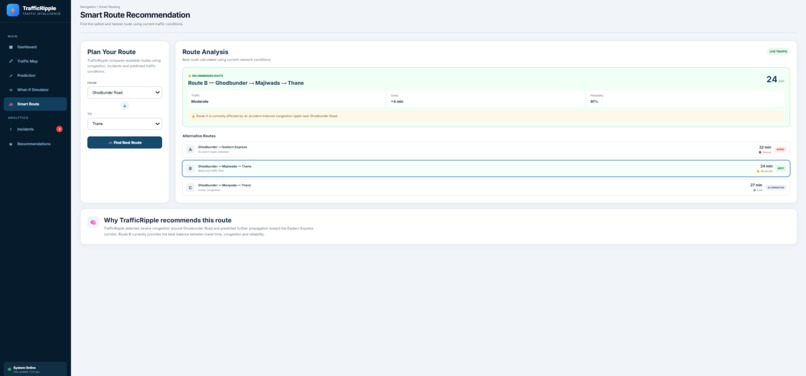
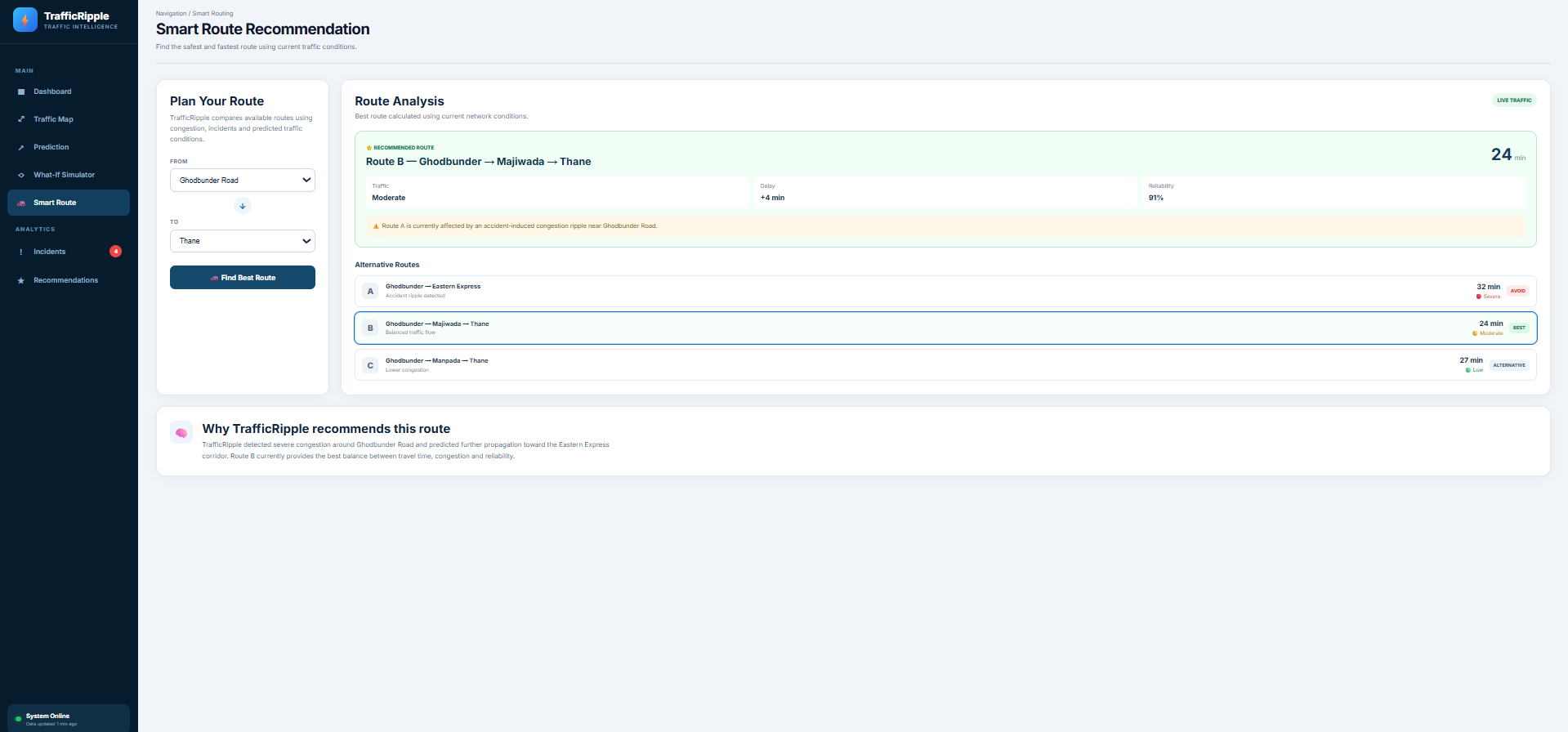
Smart Route
-
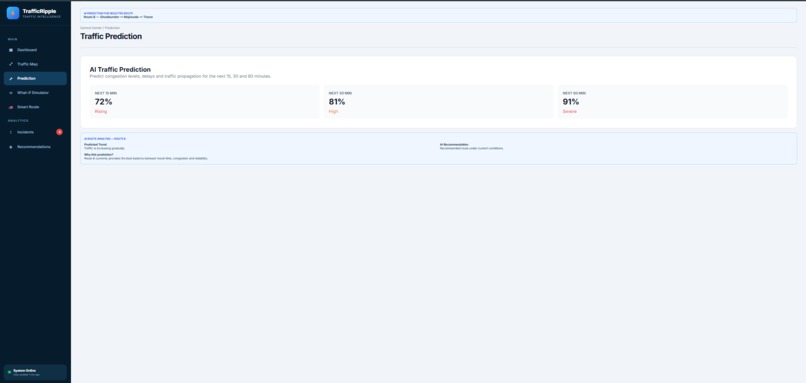
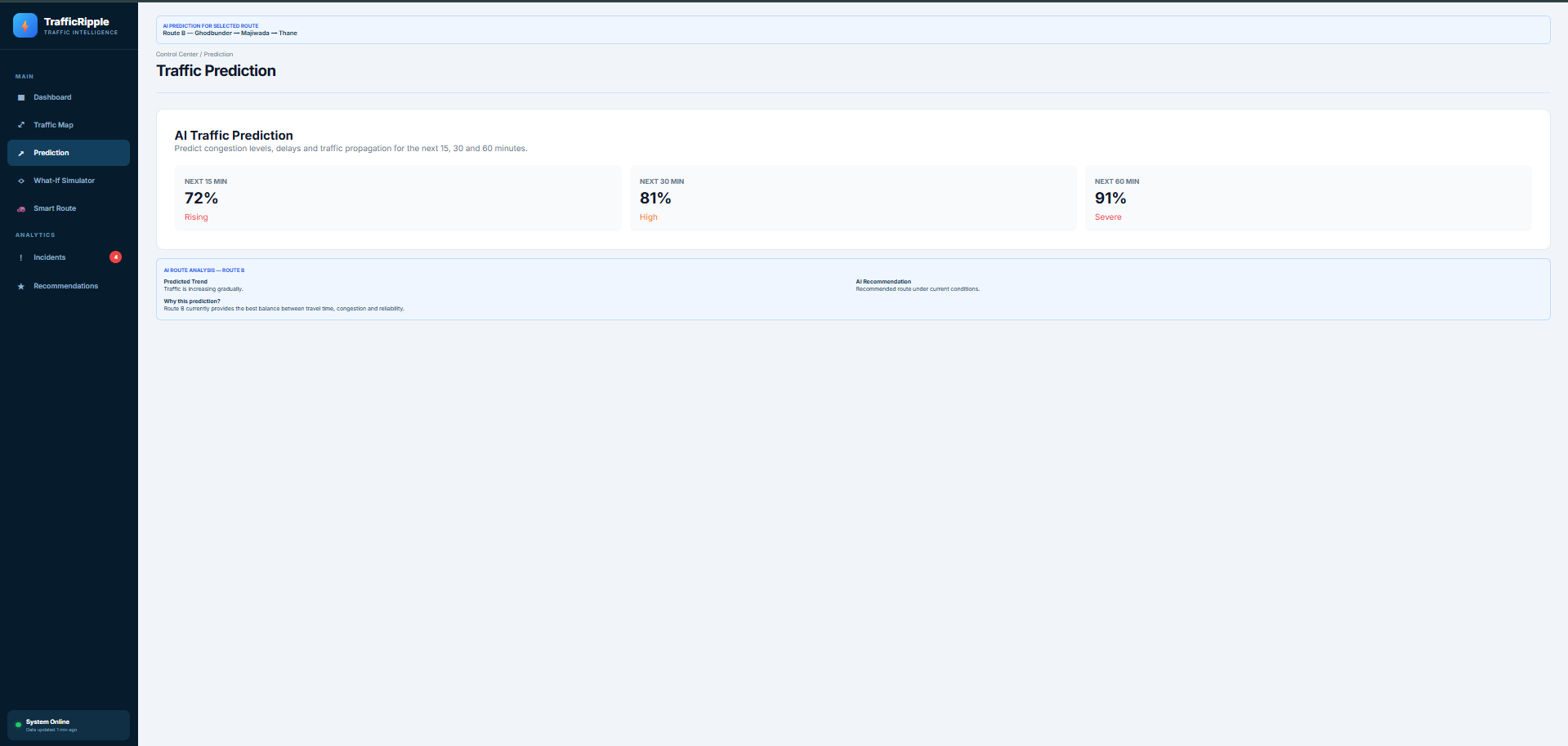
Prediction
-
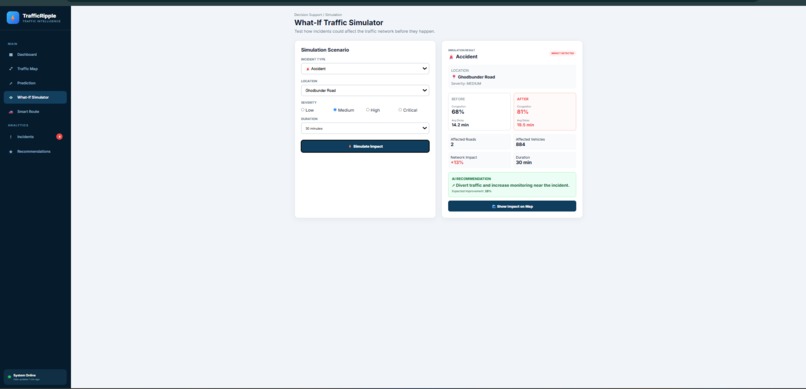
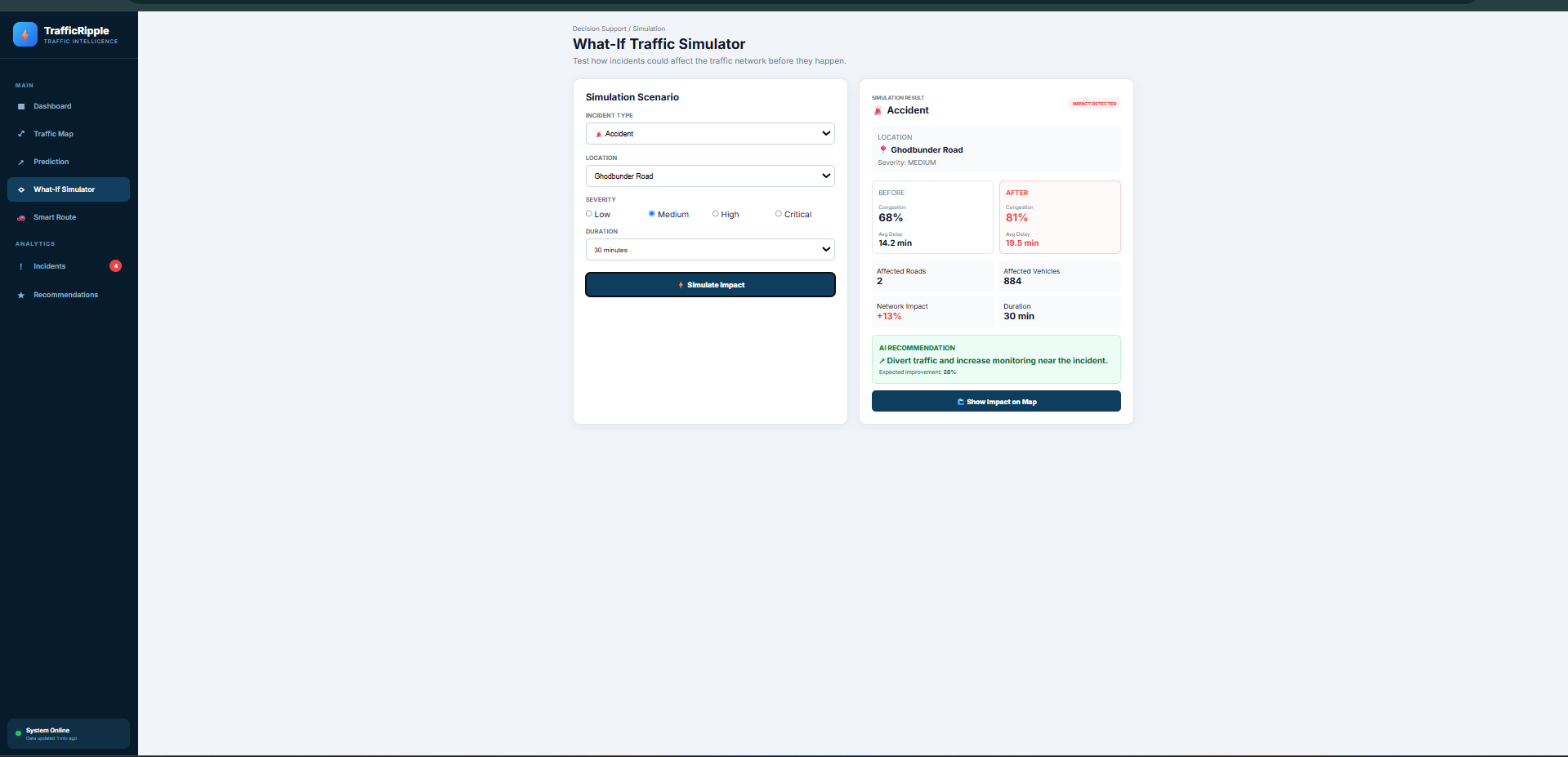
What-if-Simulator
-
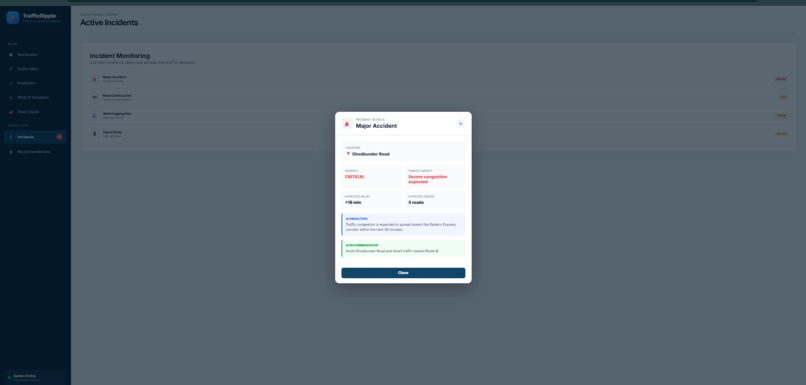
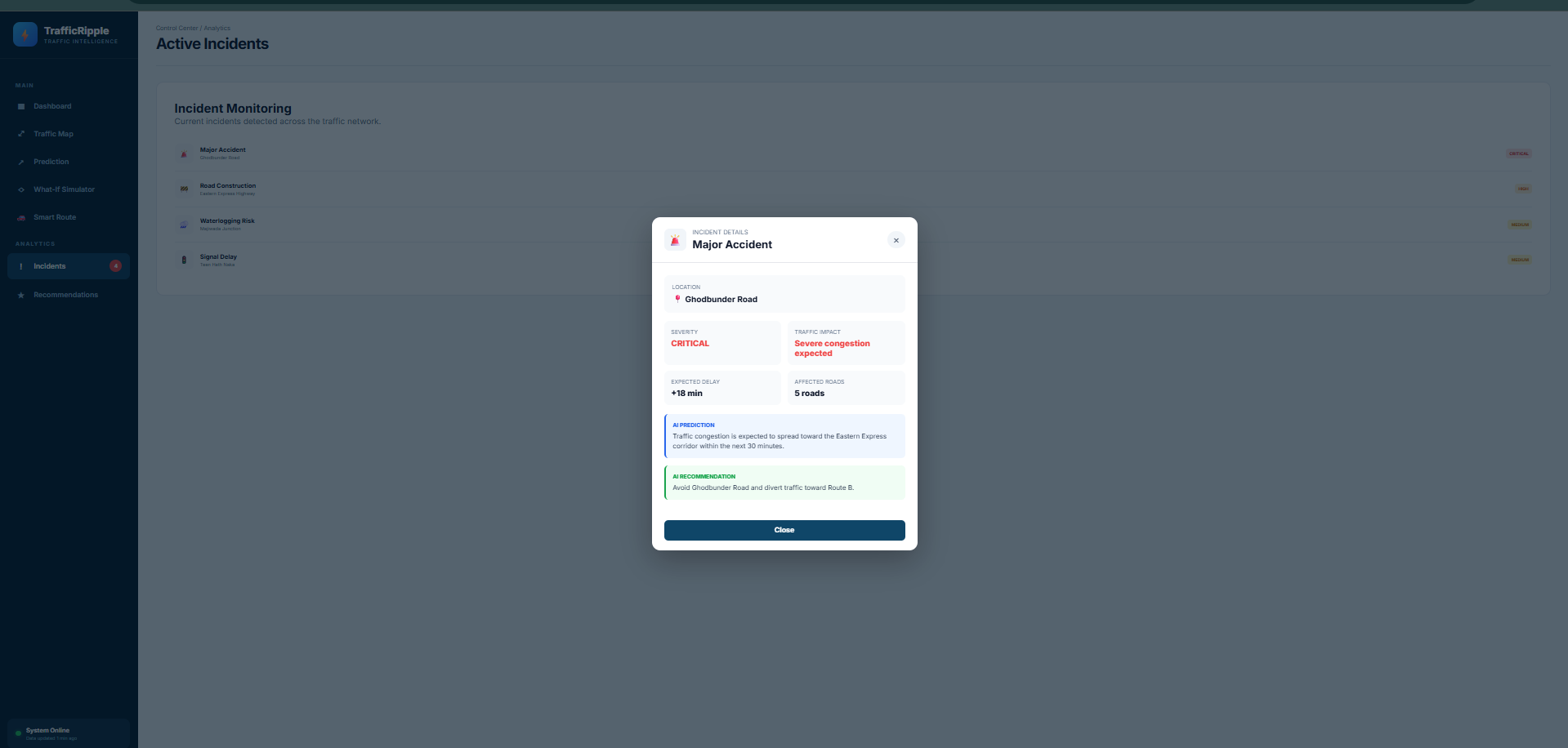
Incidents (Major Accidents)
-
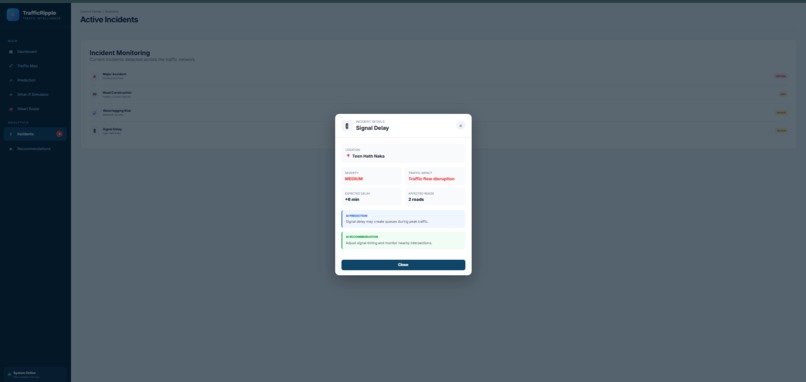
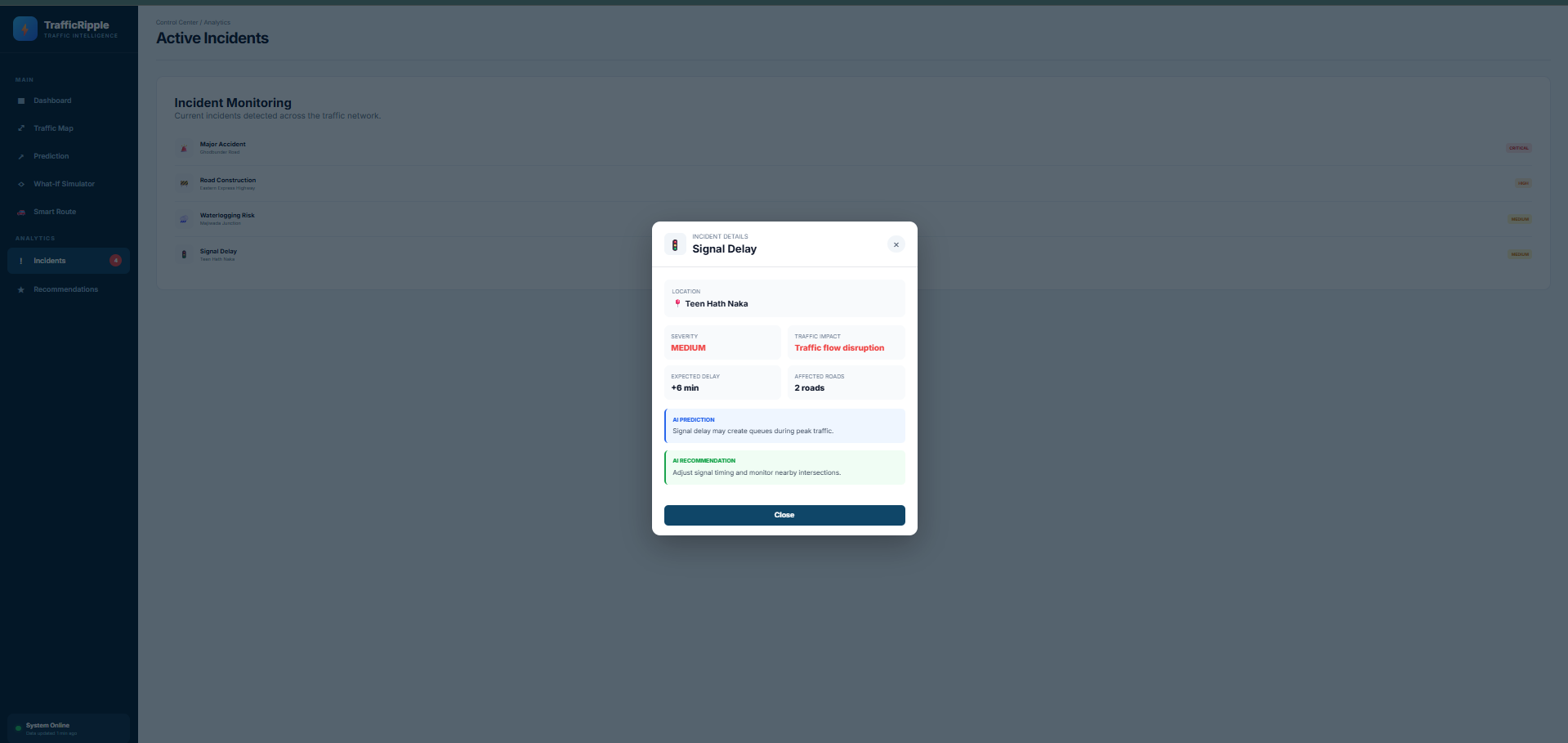
Incidents (Signal Delay)
-
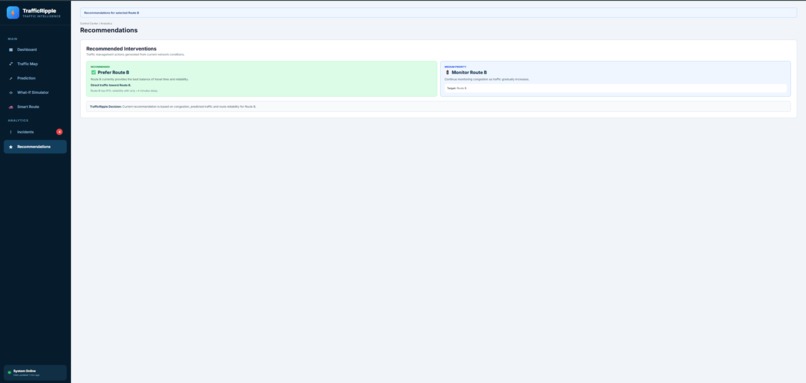
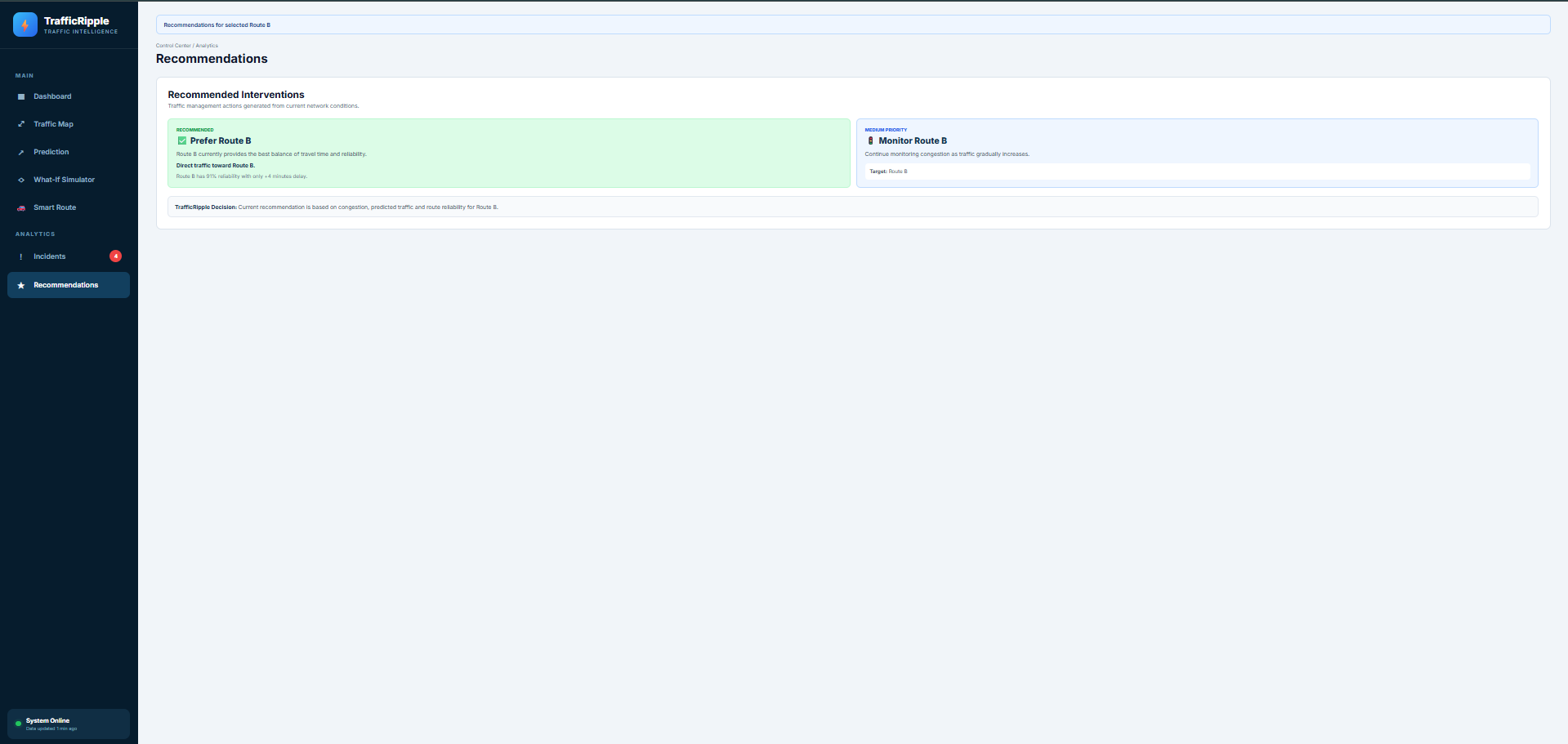
Recommendation
Inspiration
Traffic congestion and unexpected incidents make daily travel unpredictable. Commuters often know their destination but do not know which route will currently be faster, safer, or more reliable.
TrafficRipple was created to provide a simple smart-routing solution that considers traffic conditions and incidents before recommending a route.
What it does
TrafficRipple is a traffic intelligence and smart route recommendation platform.
Users select their starting location and destination, and the system compares multiple available routes. It provides:
- Recommended route
- Estimated travel time
- Traffic level
- Delay information
- Route reliability
- Alternative routes
- Incident and congestion-based explanations
The system dynamically updates the route recommendation according to the selected locations.
How we built it
TrafficRipple was built as a web-based application using HTML, CSS and JavaScript.
The frontend provides an interactive dashboard and smart-routing interface. JavaScript handles route selection, route comparison, traffic conditions, estimated travel times, reliability values and dynamic updates of the recommendation and alternative route cards.
The application is designed so that the routing logic can be extended in the future with real-time traffic APIs, historical traffic data and machine-learning-based traffic prediction.
Challenges we ran into
One of the main challenges was making the route recommendation change dynamically according to the user's selected source and destination instead of displaying static route information.
We also had to ensure that the recommended route, travel time, traffic level, reliability and alternative routes remained synchronized whenever the user changed the selected locations.
Accomplishments that we're proud of
We built a functional smart-routing interface where users can select locations and receive a route recommendation with alternative routes.
We are particularly proud of the dynamic route-selection interface and the way traffic conditions, estimated travel time and route reliability are presented in a simple format.
What we learned
We learned how to connect frontend user interactions with JavaScript logic, dynamically update webpage elements and structure a web application around a real-world problem.
We also learned how route recommendation systems can combine multiple factors such as travel time, congestion, incidents and reliability.
What's next for TrafficRipple
Our next goal is to connect TrafficRipple with real-time traffic and map APIs.
We also plan to add historical traffic analysis, machine-learning-based congestion prediction, live incident data and more accurate route calculations so that the system can provide recommendations based on real-world traffic conditions.


Log in or sign up for Devpost to join the conversation.