-
-
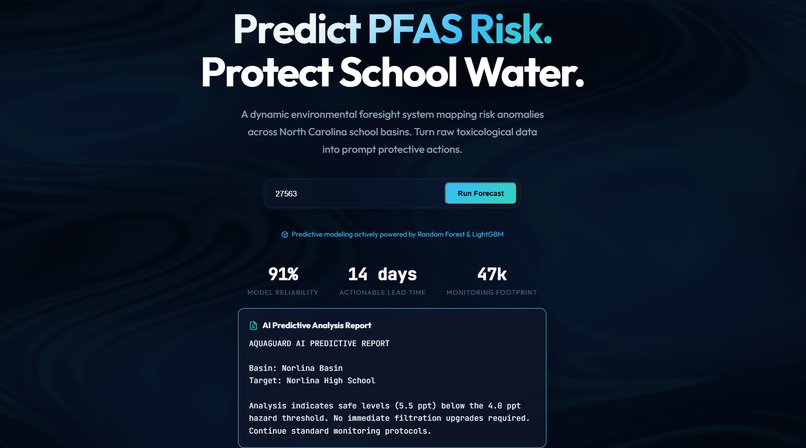
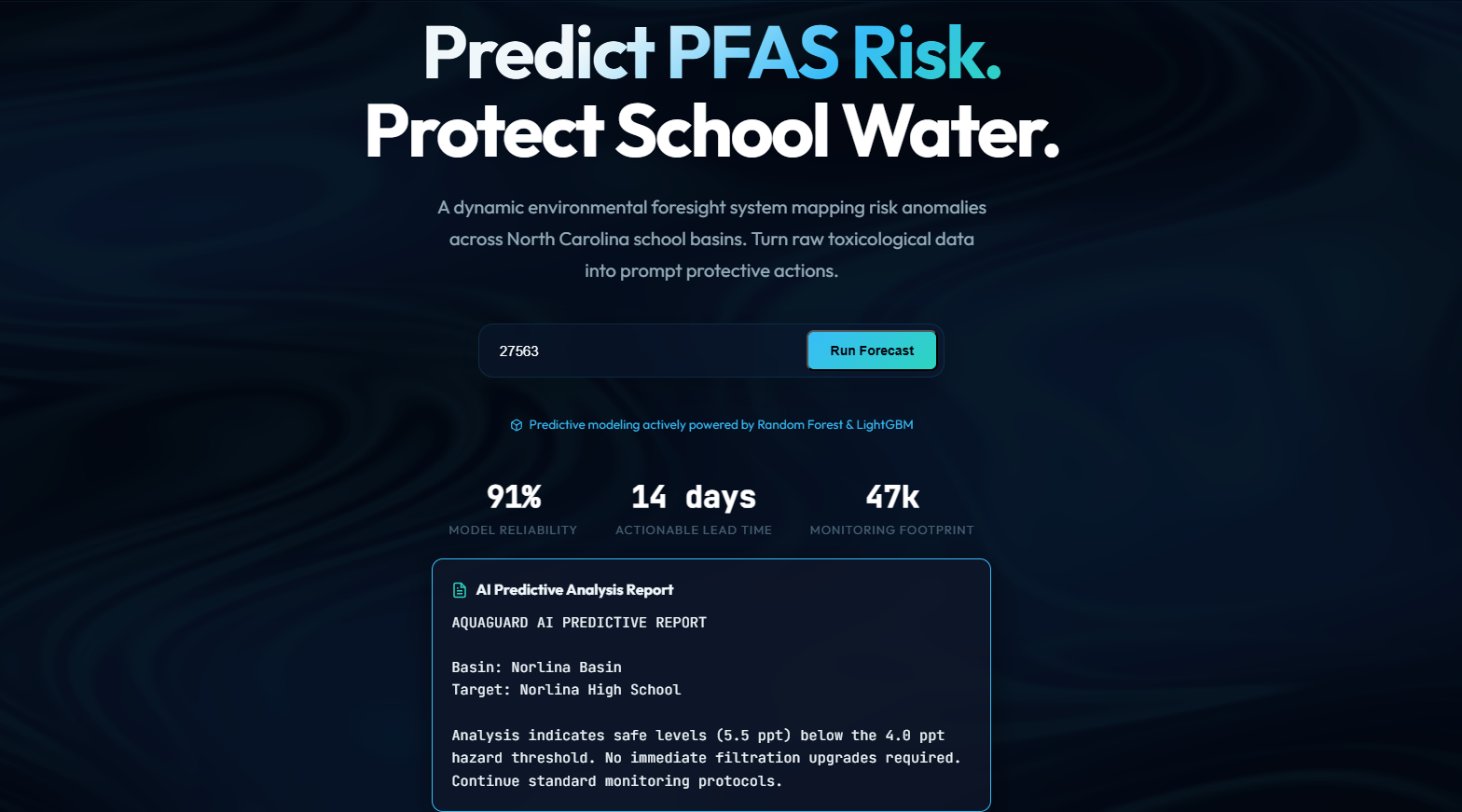
Landing Page
-
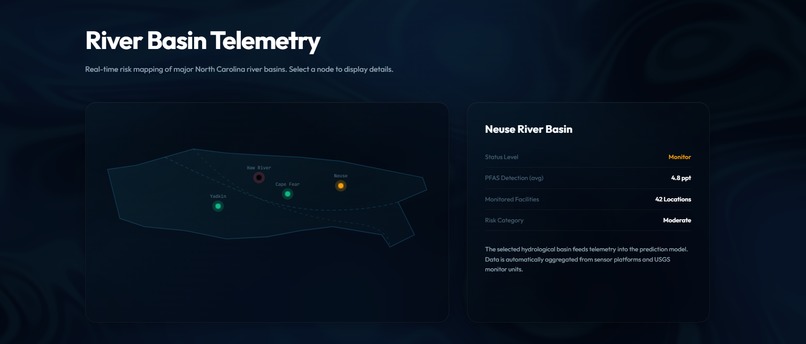
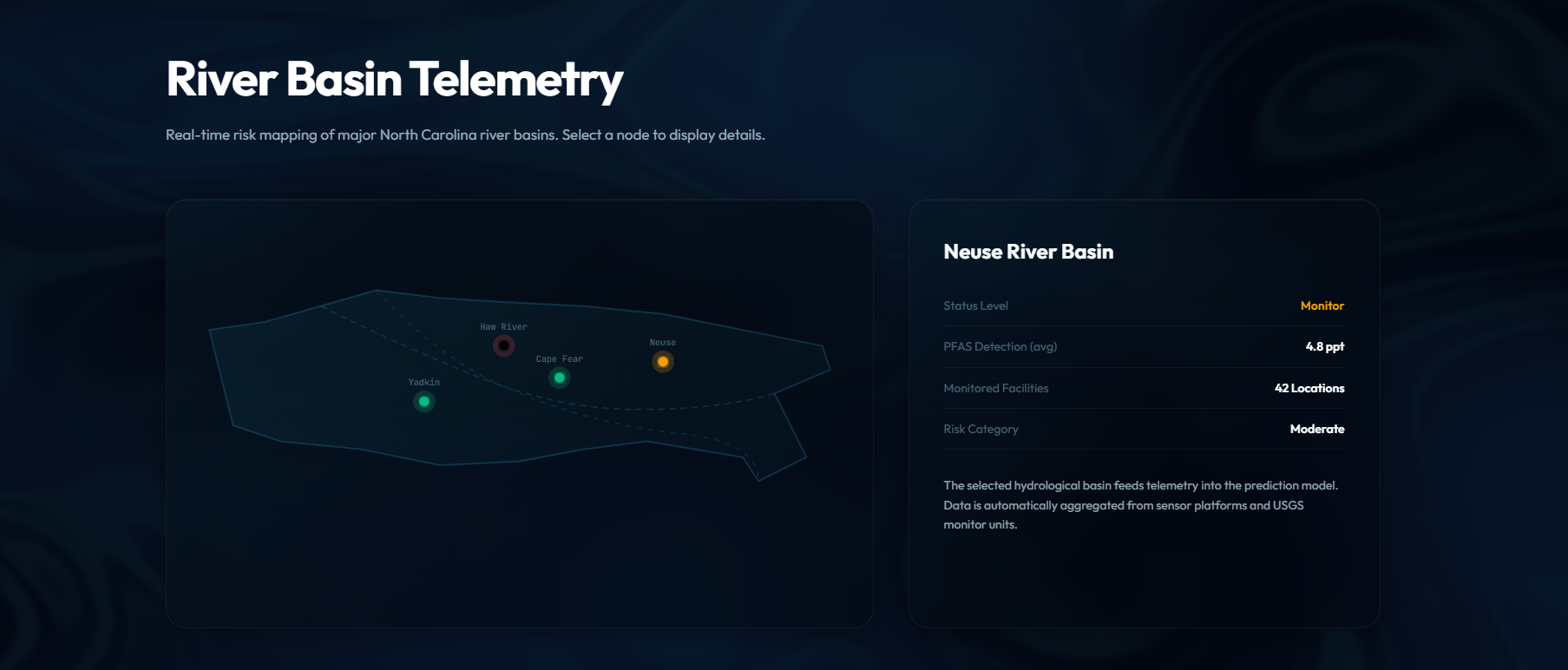
River Basin
-
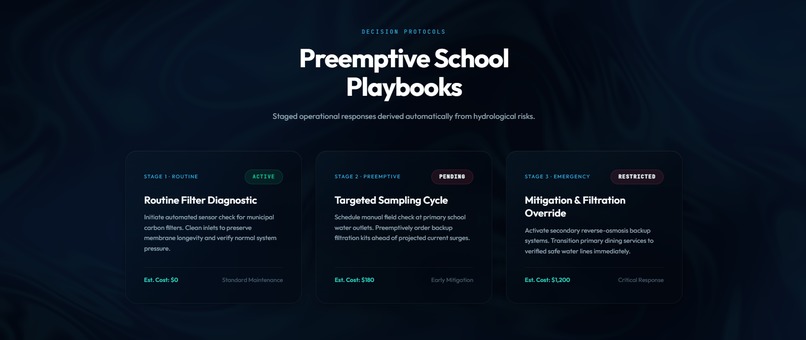
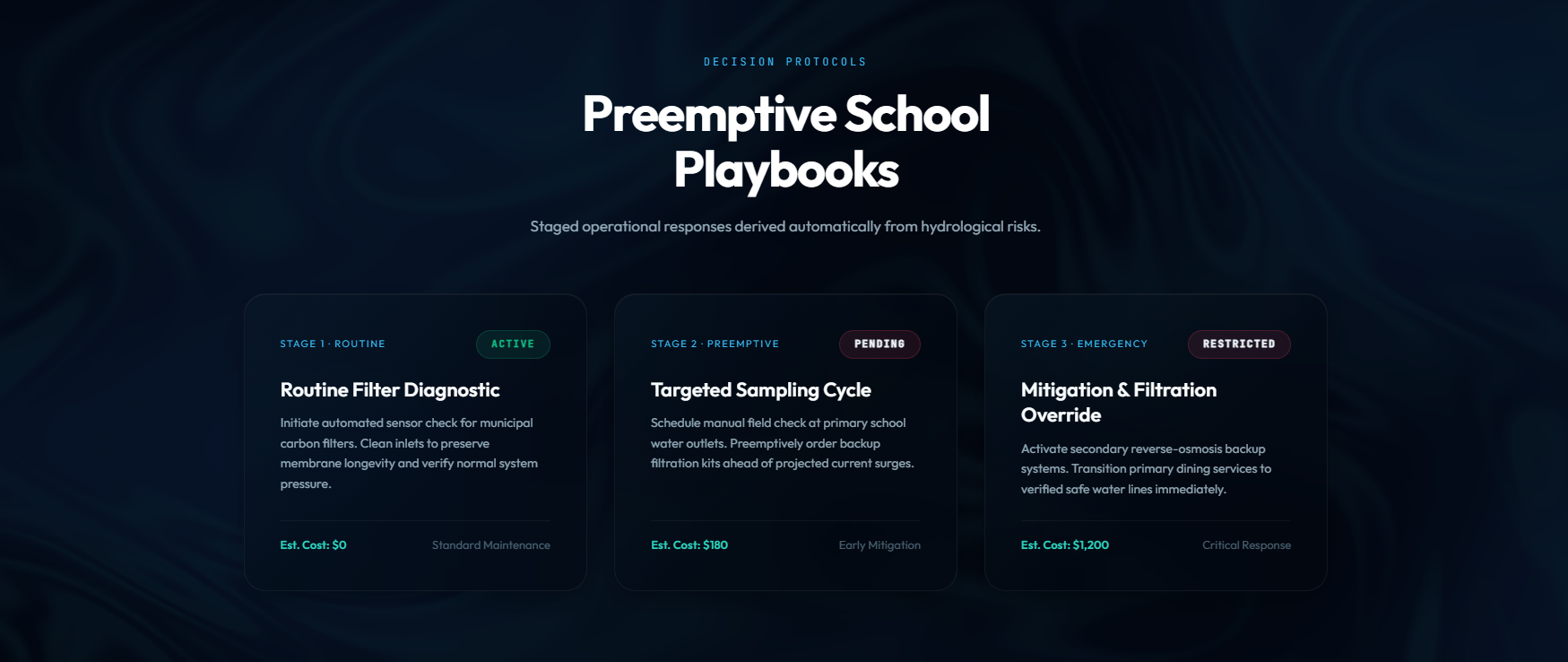
School Playbooks
-
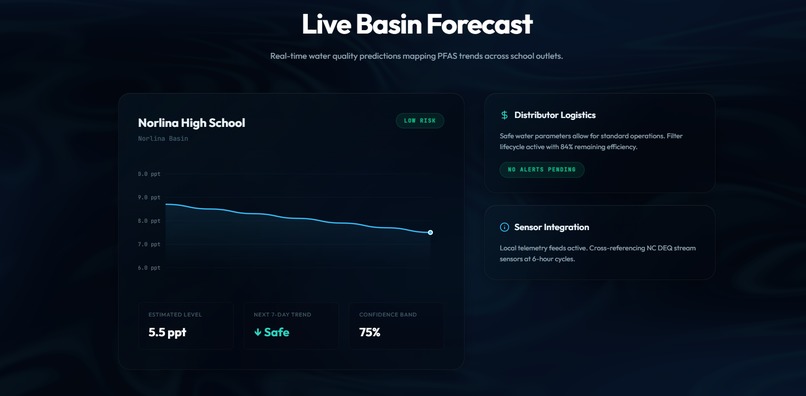
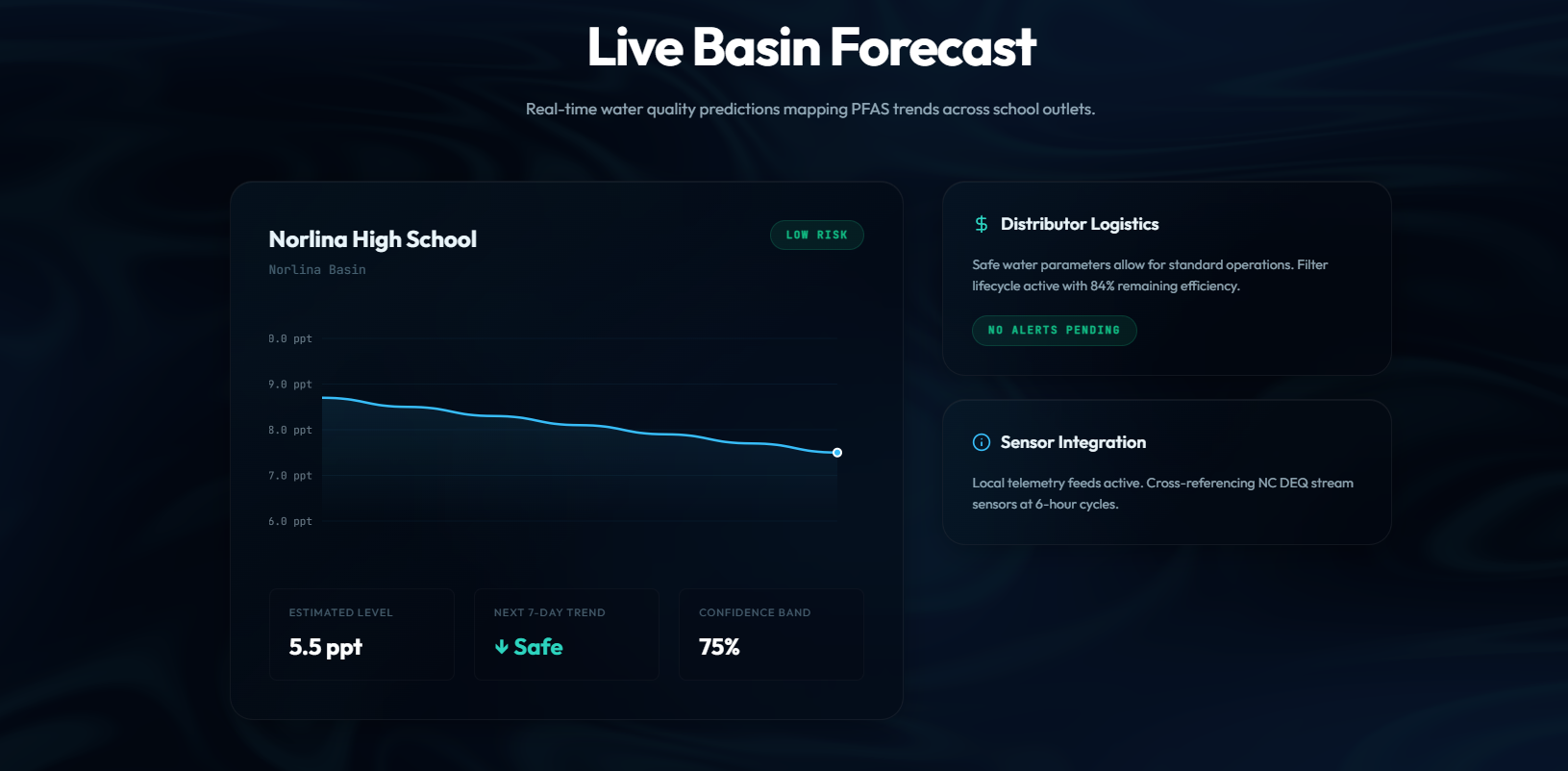
Forecast
Inspiration
This project was inspired by the rising concerns around PFAS contamination in North Carolina water systems, especially in communities near industrial and agricultural runoff zones like the Cape Fear River basin. We noticed that while data exists, it’s often too technical or delayed for schools and local organizations to act on in real time. We wanted to turn environmental risk into something understandable and actionable.
What it does
AquaGuard NC is an AI-powered decision support tool that predicts potential PFAS risk levels for NC schools and communities. It translates environmental and synthetic sensor data into simple risk forecasts and generates clear, practical recommendations—such as when to adjust filtration systems or reduce bottled water usage. It also helps users understand the tradeoff between water safety actions and plastic waste reduction.
How we built it
We built a full-stack system with a Python (FastAPI) backend and a React frontend. A synthetic dataset simulates environmental conditions like rainfall and runoff, which are used to model PFAS level trends. A lightweight machine learning model generates short-term forecasts, and a generative AI layer converts those predictions into plain-language action steps for non-technical users. The frontend visualizes risk levels, trends, and recommendations through an interactive dashboard.
Challenges we ran into
One major challenge was working with limited real-world PFAS data, which forced us to design a realistic synthetic dataset. Another challenge was ensuring the AI outputs were helpful without overstating certainty, since environmental prediction inherently involves uncertainty. Balancing technical depth with usability for school staff and community users was also difficult.
Accomplishments that we're proud of
We successfully combined predictive modeling with generative AI to move beyond simple dashboards into actionable decision support. We also designed a system that connects environmental safety with sustainability tradeoffs like plastic waste reduction, which made the project feel more realistic and impactful. The interface presents complex data in a way that is accessible to non-technical users.
What we learned
We learned how to structure an end-to-end AI system that combines data simulation, machine learning, and natural language generation. We also gained experience in communicating uncertainty responsibly and designing outputs that prioritize clarity over complexity. Additionally, we learned how important it is to frame technical systems around real user decisions, not just data visualization.
What's next for Aquaguard
Next, we plan to integrate real environmental datasets from NC sources to replace synthetic data. We also want to improve the forecasting model with more advanced time-series methods and expand the AI recommendation engine to include budgeting and infrastructure planning support for schools. Eventually, we aim to scale AquaGuard into a broader environmental decision platform for multiple regions.
Built With
- chartjs
- fastapi
- googlegeminiapi
- including-synthetic-pfas-dataset-generation-and-forecasting-logic.-a-lightweight-machine-learning-model-using-scikit-learn-for-time-series-style-prediction-of-pfas-risk-levels.-react-(vite)-for-the-frontend-dashboard
- leaflet.js
- mapbox
- numpy
- openaiapi
- pandas
- python
- react
- recharts
- responsive-interface.-chart.js-/-recharts-for-interactive-visualizations-of-pfas-trends-and-risk-forecasts
- scikitlearn
- shadcnui
- styled-with-tailwindcss-and-shadcn/ui-for-a-clean
- supabase
- tailwindcss
- vite

Log in or sign up for Devpost to join the conversation.