-
-
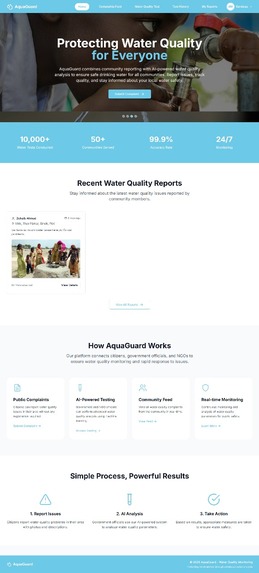
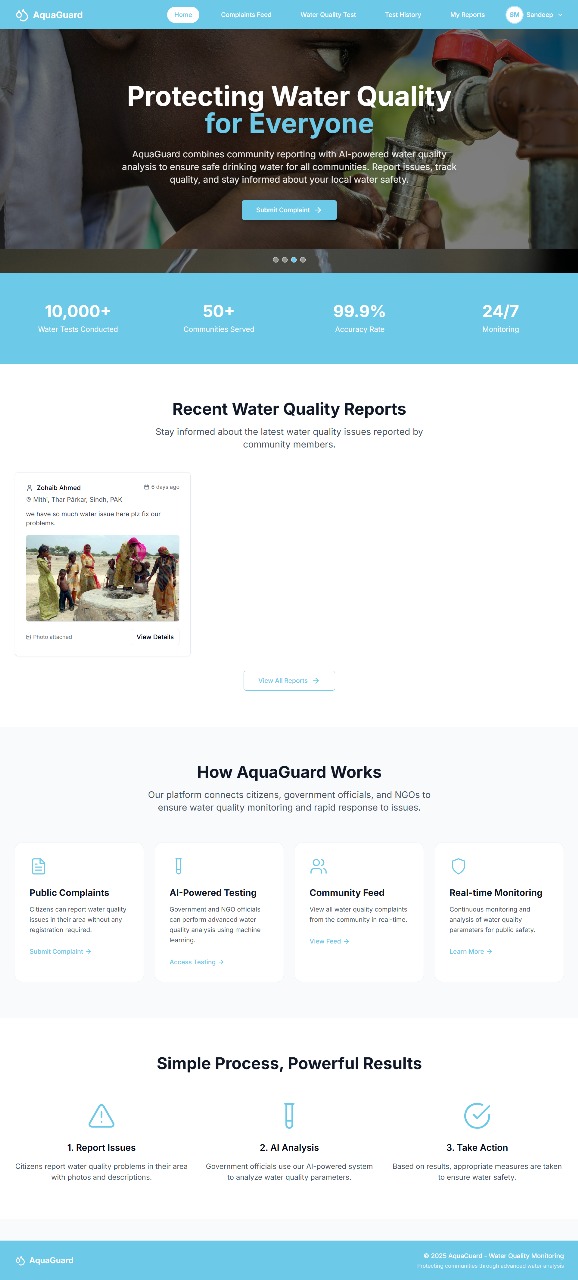
Complaint Report Feed
-
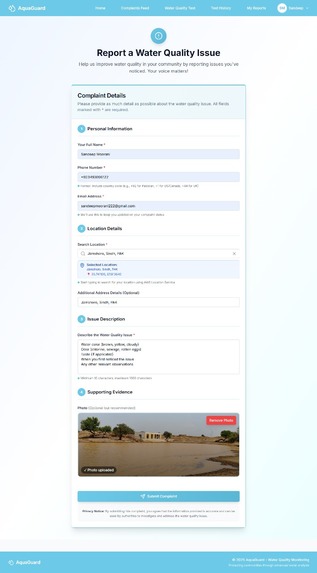
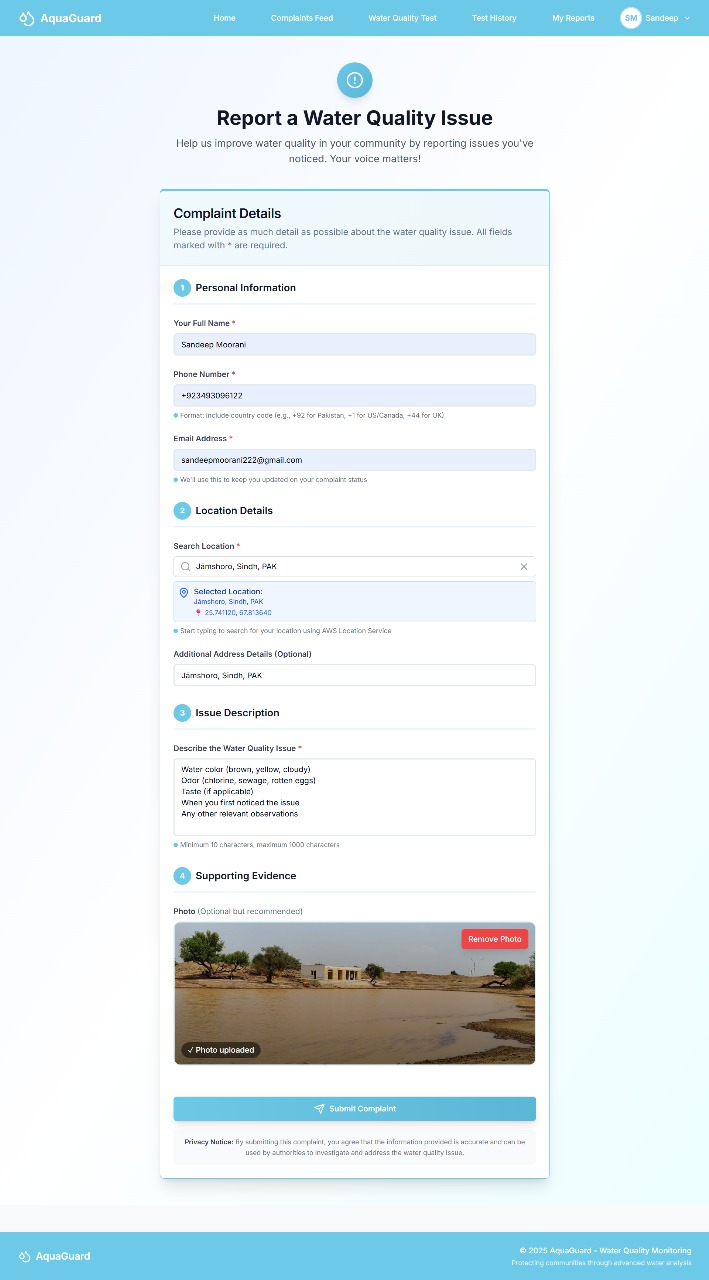
Submit Complaint
-
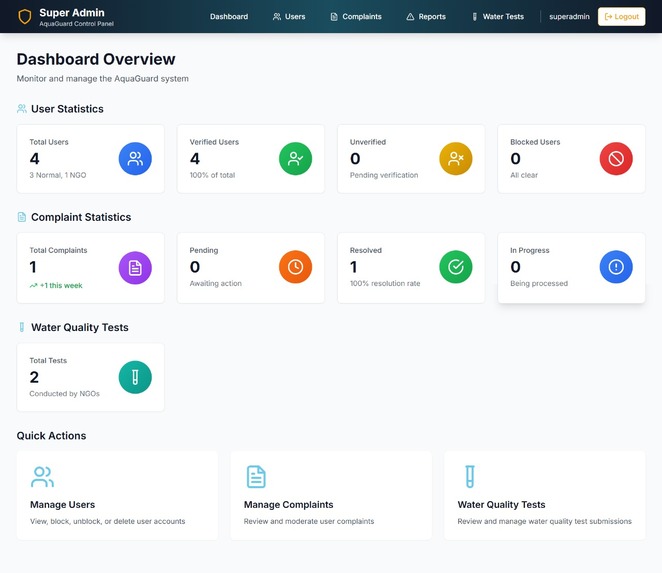
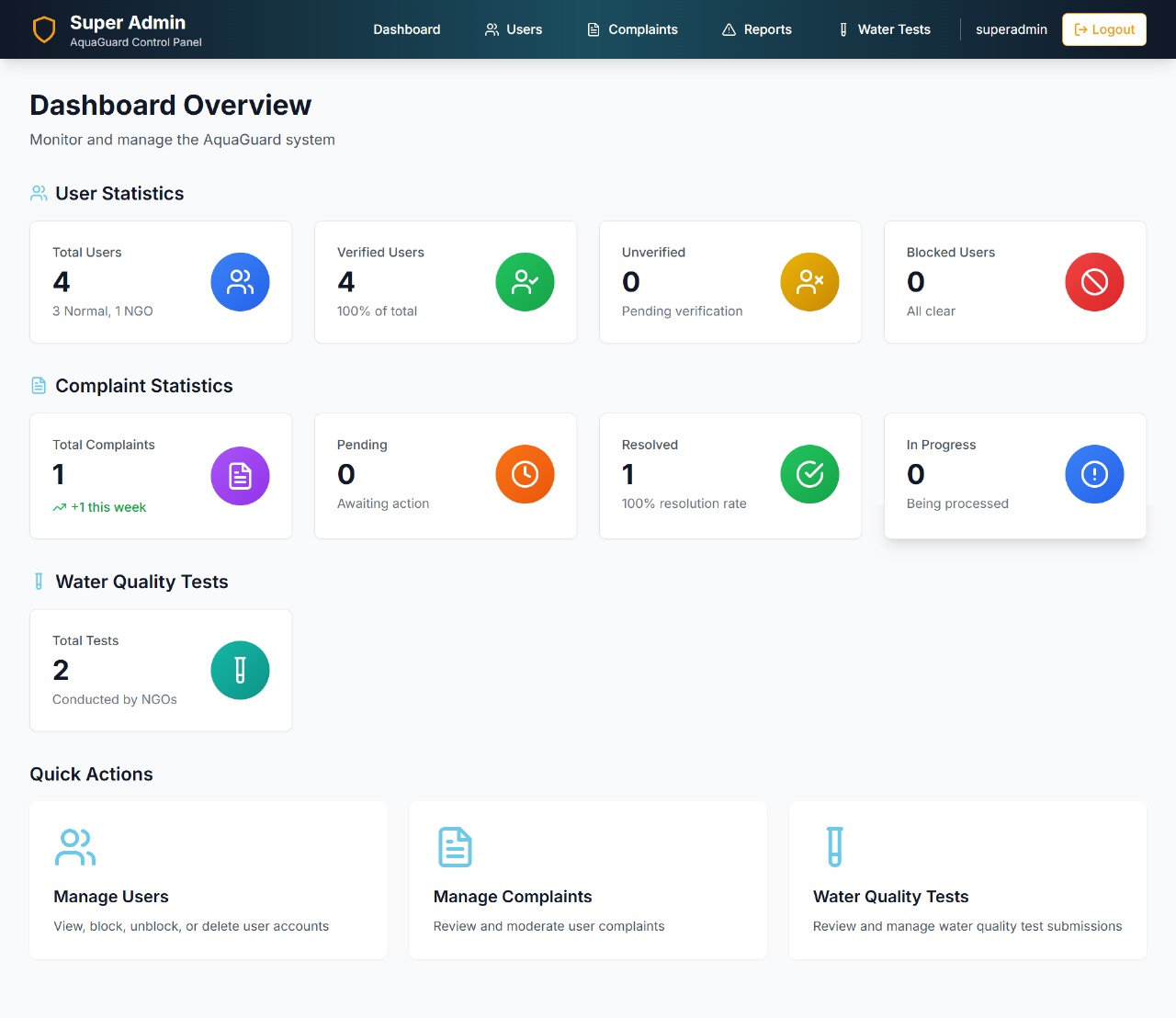
Admin Dashboard
-
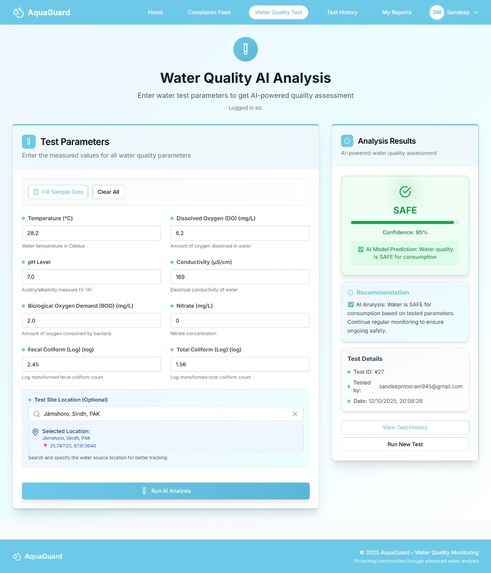
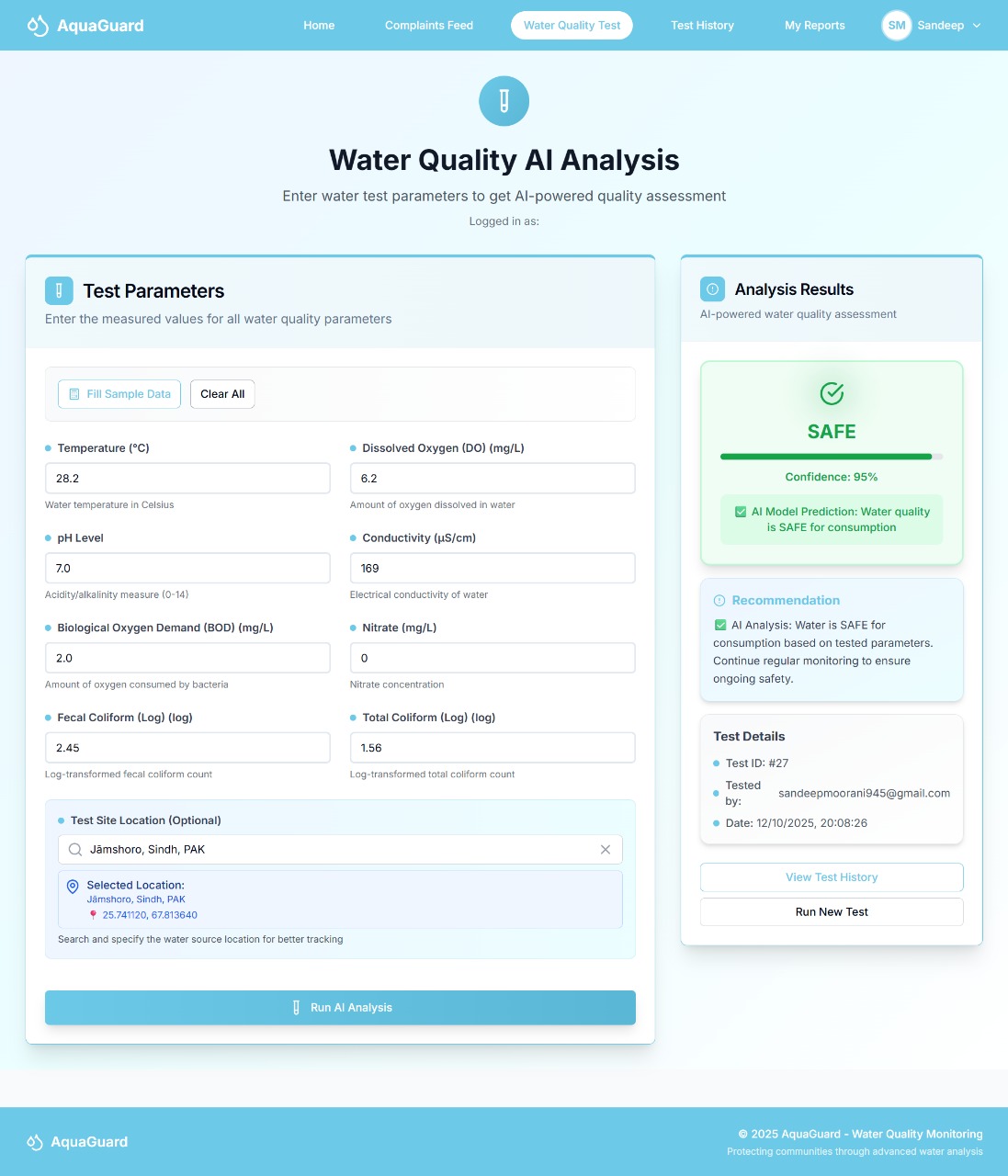
AI Water Quality Testing
Inspiration
Our inspiration for AquaGuard came from one of our teammates who belongs to Thar, a remote region in Pakistan where water scarcity and contamination are part of daily life. Seeing families walk miles for unsafe water deeply moved us. We realized that while technology is solving countless problems, clean water access — the most basic human right — still lacks innovation and accountability.
That’s when we decided to build AquaGuard, an AI-powered water quality monitoring and complaint system that empowers citizens to report unsafe water and helps governments and NGOs take faster, data-driven action.
What it does
AquaGuard is an AI-powered water quality monitoring and complaint system that connects citizens, NGOs, and governments to make clean water management transparent and efficient.
Here’s how it works:
1.Citizens submit complaints about unsafe water with photos and location details. 2.Complaints appear publicly on the platform to promote transparency. 3.NGOs and government officials enter laboratory test parameters such as pH, DO, BOD, conductivity, and coliform levels. 4.Our AI model (Random Forest) instantly predicts whether the water is Safe or Unsafe. 5.Authorities use these predictions and public reports to take faster, data-driven actions.
AquaGuard merges community input with AI predictions — giving water a digital voice and enabling quicker responses where it matters most.
How we built it
Frontend: React + Tailwind CSS
Backend: Node.js + Express
Database: PostgreSQL on AWS RDS
Storage: AWS S3 (for images and attachments)
Authentication: AWS Cognito
Deployment: AWS EC2
Machine Learning Model: Random Forest (Python)
Challenges we ran into
Building AquaGuard was not without its challenges:
Data Availability: Reliable water-quality datasets from Pakistan were difficult to find, so we had to adapt and train our model using Indian datasets while ensuring contextual relevance. Model Accuracy: Balancing accuracy and performance with limited data required deep tuning and experimentation. Integration: Connecting the AI model seamlessly with the Node.js backend and ensuring real-time updates was technically demanding. Design Simplicity: Creating a system intuitive enough for citizens yet powerful enough for authorities tested our design skills. Time & Infrastructure: Deploying across multiple AWS services with limited resources was a tough learning curve but immensely rewarding.
Accomplishments that we're proud of
Successfully built and deployed a working prototype hosted on AWS. Integrated a machine learning model for real-time water safety classification. Created a public complaint feed for transparency and accountability. Designed an intuitive and accessible interface suitable for both citizens and officials. Overcame technical and data challenges to deliver an end-to-end AI-driven environmental solution.
Most importantly, we’re proud that AquaGuard has the potential to save lives by ensuring cleaner, safer water for communities that need it most.
What we learned
Working on AquaGuard taught us more than just technical skills. We learned about: The complexity of water quality parameters like pH, Dissolved Oxygen (DO), Biochemical Oxygen Demand (BOD), and coliform levels. How machine learning models, such as the Random Forest classifier, can transform scientific data into actionable insights. The importance of user-centered design, ensuring even non-technical users — such as villagers or NGO field workers — can report and track issues easily. And most importantly, we learned that technology can inspire collective responsibility — when people are empowered with the right tools, they become part of the solution.
What's next for AquaGuard
Our journey doesn’t stop here. In the coming months, we plan to: Onboard NGOs and local water testing labs to expand real-world usage. Launch awareness camps in rural areas to educate communities about clean water practices. Gather localized datasets to retrain our model with region-specific parameters. Develop a mobile app for faster, on-the-go reporting. Integrate IoT-based sensors in future versions for continuous real-time monitoring.
Built With
- amazon-ec2
- amazon-rds-relational-database-service
- amazon-web-services
- aws-location-service
- express.js
- github
- node.js
- postgresql
- python
- react
- tailwind


Log in or sign up for Devpost to join the conversation.