Inspiration
Every rainy season, plastic waste blocked in drains and waterways becomes a visible problem across many Nigerian communities. Flooding increases, waste reaches rivers, and people often feel powerless because there is no easy way to report issues early or coordinate action. We wanted to build something that transforms environmental concern into measurable community action.
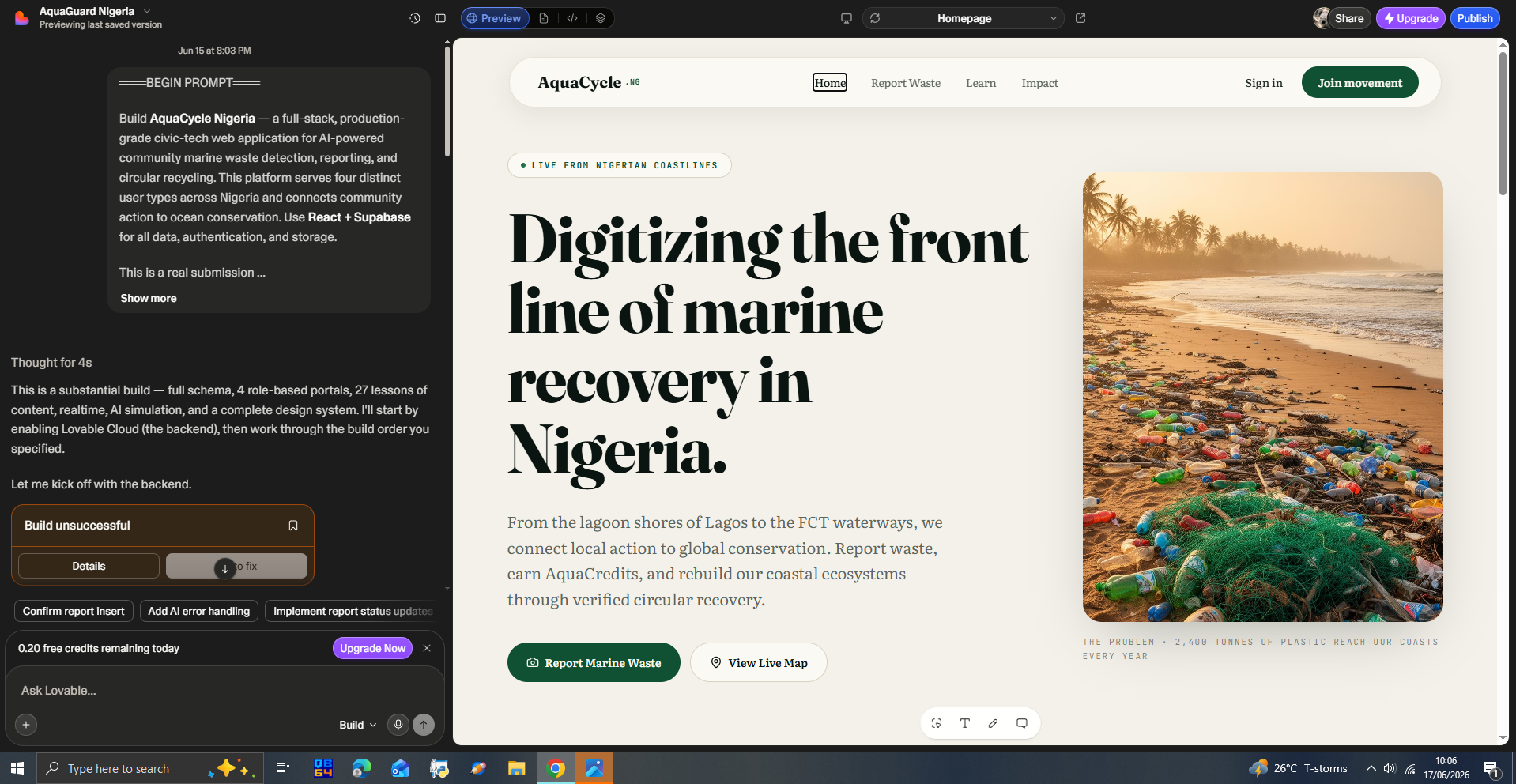
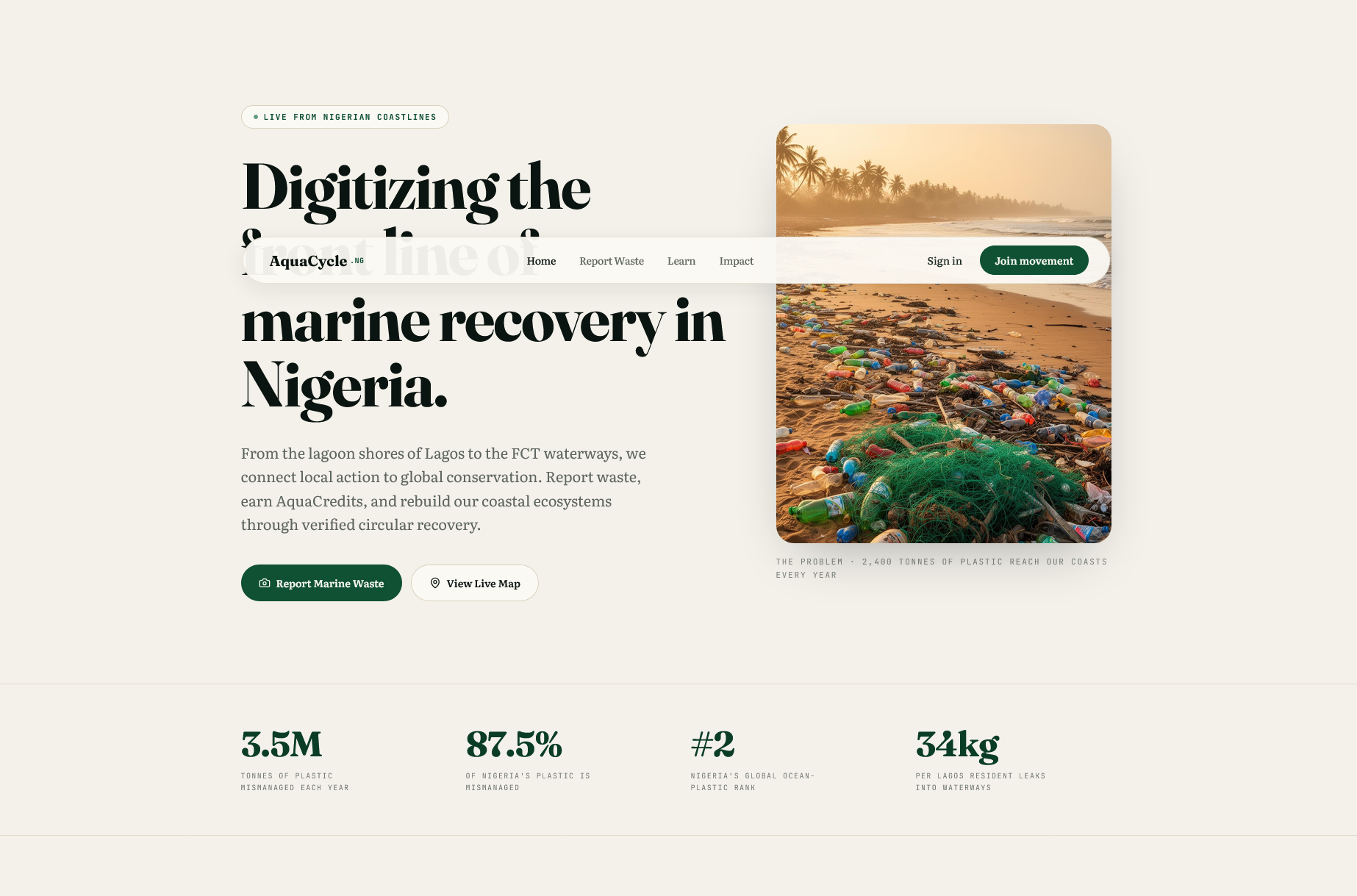
That idea became AquaCycle Nigeria — an AI-powered marine waste detection and recovery platform designed to help students, citizens, coordinators, and environmental agencies identify waste risks before they become larger environmental problems.
Our goal was not just to create another reporting tool, but to create a system that turns local observations into actionable environmental intelligence.
What It Does
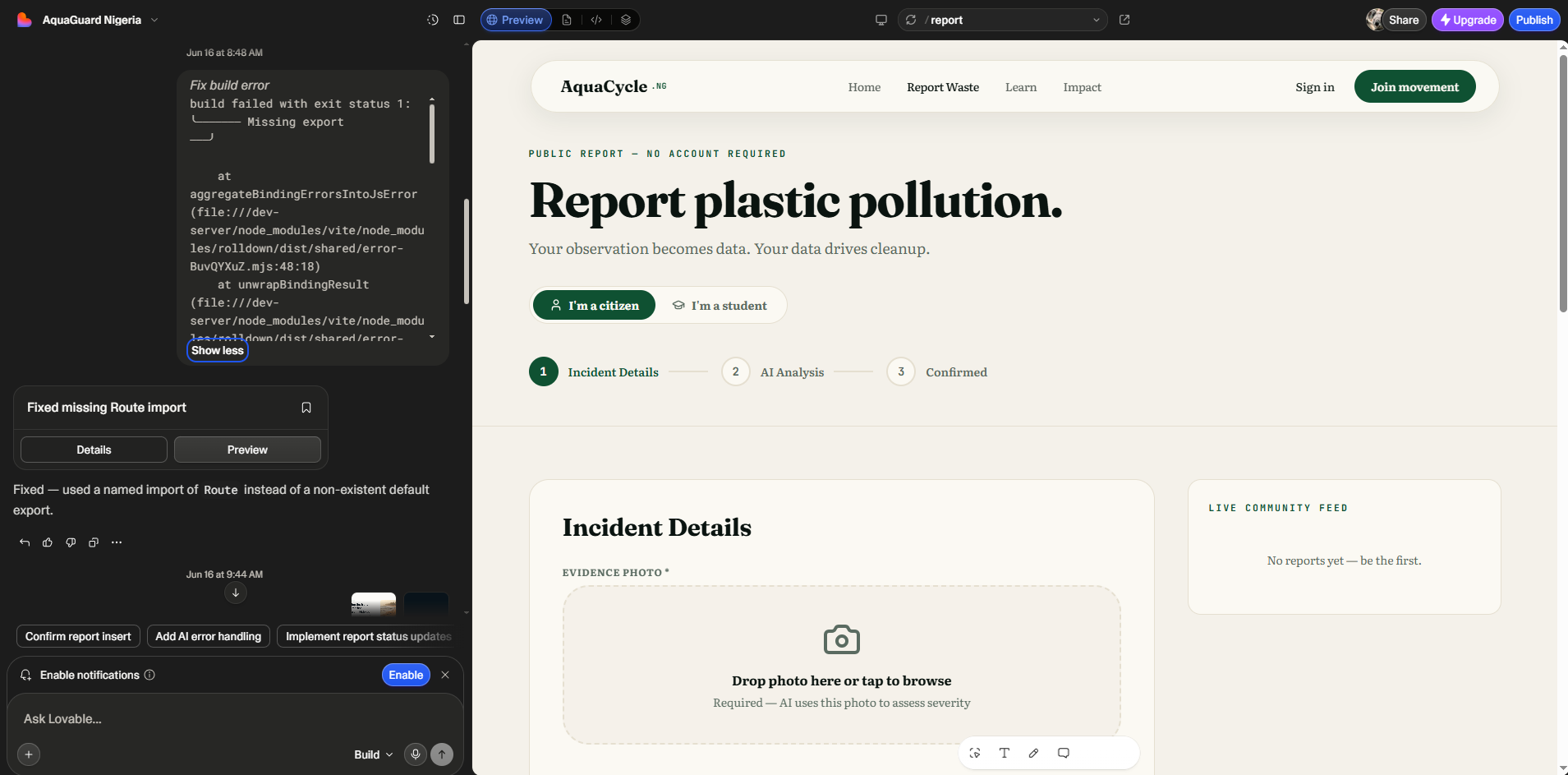
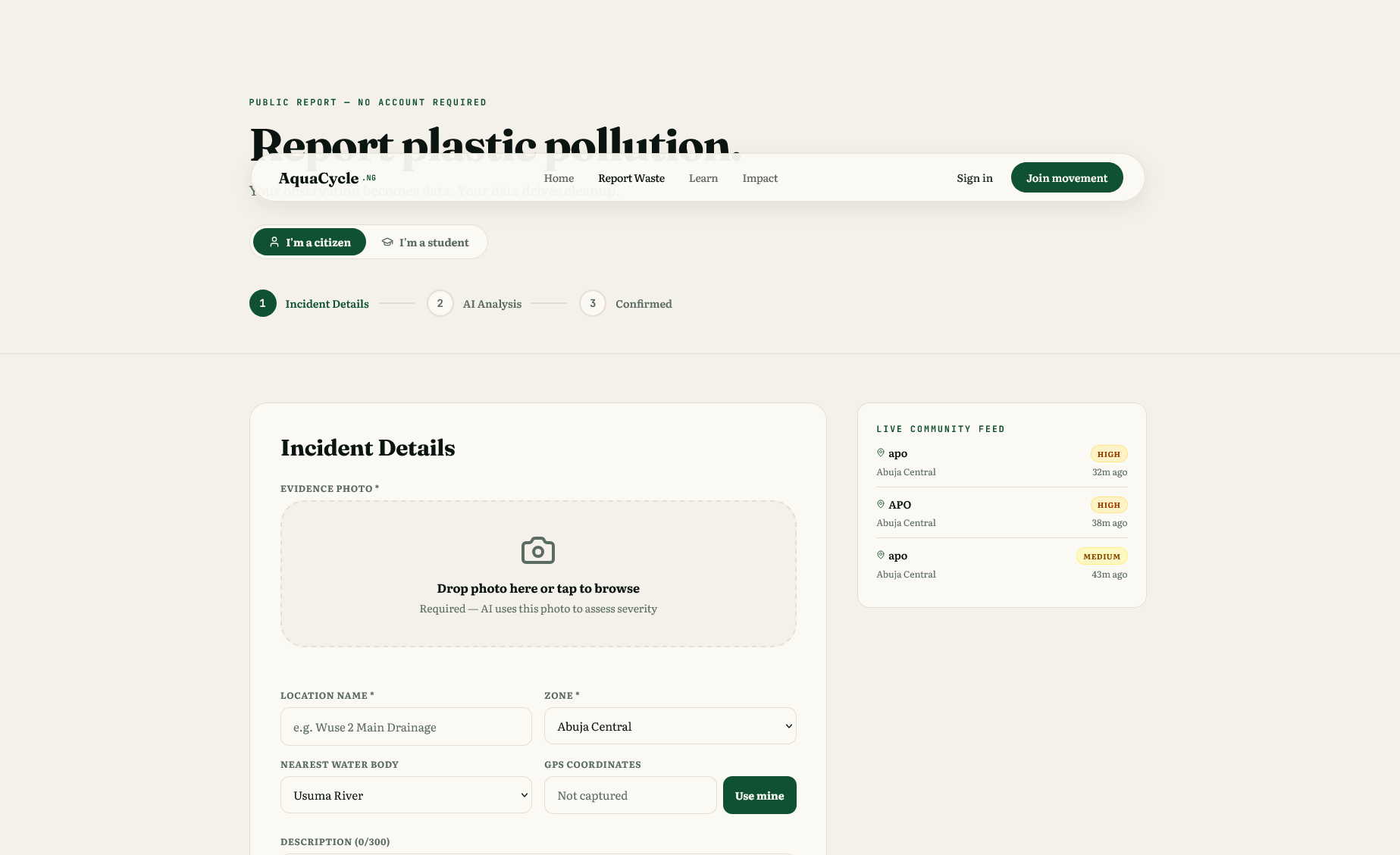
AquaCycle allows users to submit waste reports using a photo, location, and short description. AI analyses the report to classify waste type, estimate severity, calculate waterway risk, and recommend actions.
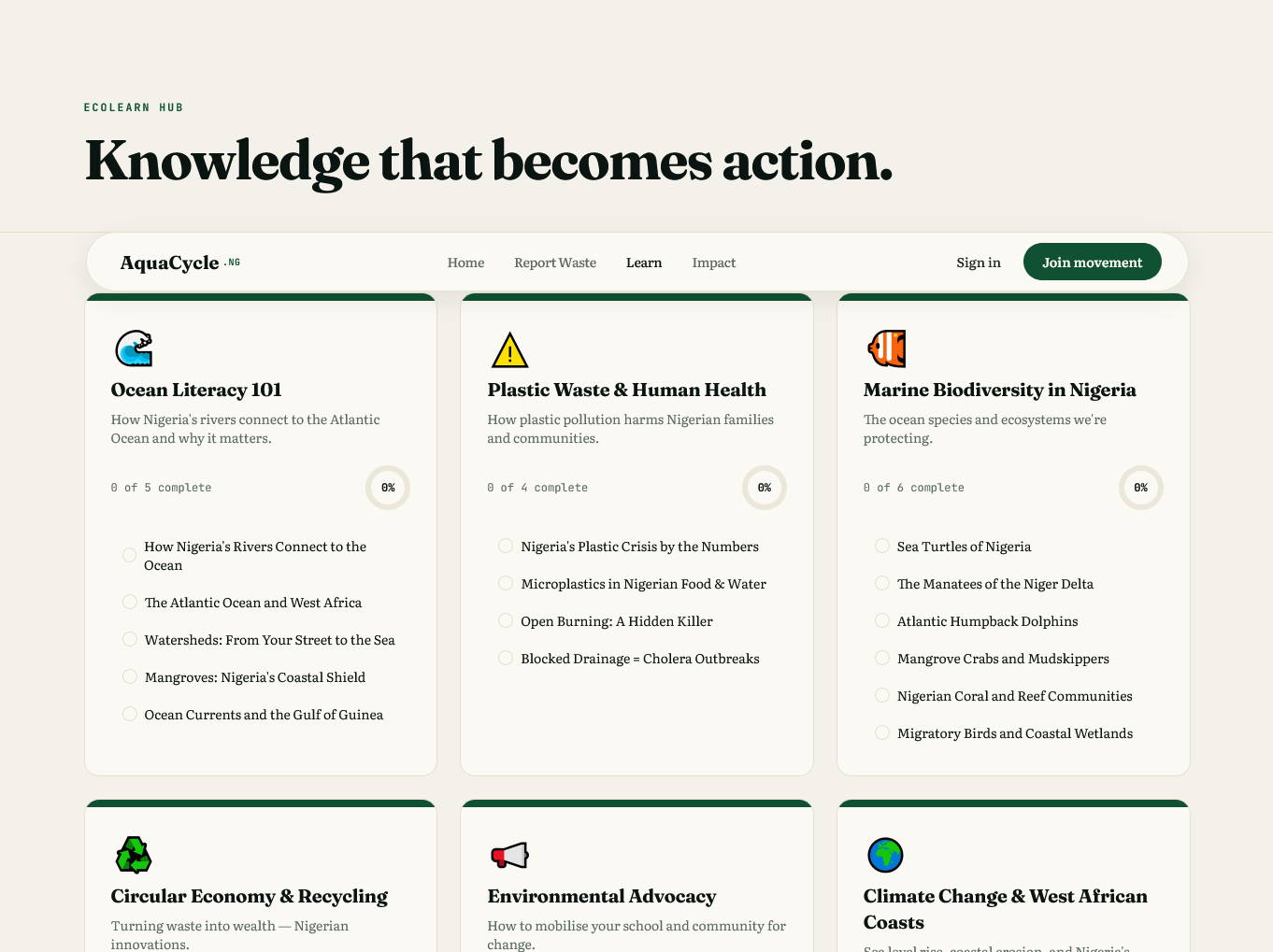
The platform visualises reports on an interactive map so cleanup coordinators and government partners can prioritise response efforts. Users also earn engagement rewards through AquaCredits and learn environmental concepts through the EcoLearn Hub.
How We Built It
We designed AquaCycle as a complete end-to-end workflow:
Citizen Report → AI Analysis → Risk Mapping → Human Verification → Cleanup Action → Community Impact
The frontend was built to make reporting simple and fast, while the backend stores and processes environmental data securely using React, Supabase, and a custom AI classification engine deployed as an Edge Function.
Our AI layer combines multimodal understanding with geographic context to evaluate waste reports and identify emerging hotspots before they escalate.
Challenges We Faced
One of our biggest challenges was balancing automation with human oversight.
Environmental decisions affect real communities, so we designed the system so AI never acts independently. Instead, AI recommends while humans remain responsible for verification and response.
Another challenge was ensuring realistic environmental impact rather than making broad sustainability claims. We focused on creating measurable outcomes, transparent review processes, and scalable architecture.
What We Learned
This project taught us that technology alone does not solve environmental problems — people, trust, and action do.
We learned how AI can support decision-making responsibly, how environmental data systems work, and how thoughtful product design can encourage community participation.
Most importantly, we learned that small local reports, when connected through intelligent systems, can create meaningful environmental change.
What's Next
Our next step is piloting AquaCycle with schools and communities, improving prediction accuracy, expanding reporting access, and building stronger partnerships for environmental response.
Our long-term vision is to make AquaCycle a platform that helps communities across Nigeria and eventually West Africa detect, report, and reduce marine waste before it reaches waterways.
Built With
- auth
- claude
- deno
- edge-functions
- lovable.app
- react-18
- realtime)
- recharts
- row-level-security
- storage
- supabase-(postgresql
- tailwind-css
- typescript


Log in or sign up for Devpost to join the conversation.